Key Takeaways
- Concussion symptoms can appear immediately or take 24-72 hours to fully develop — headache, dizziness, confusion, and nausea are the most common early signs
- You do not need to lose consciousness to have a concussion — most people with concussion never black out at all
- Red flags such as a worsening headache, repeated vomiting, seizures, slurred speech, or weakness on one side of the body require emergency care immediately, not a routine appointment
- Most adults recover within 7-14 days, while children and teenagers often take 2-4 weeks because the developing brain needs more time to heal
- Current guidance favours 24-48 hours of relative rest followed by a gradual, symptom-guided return to school, work, and activity — not prolonged bed rest in a dark room
- A head CT scan is used in the emergency setting to rule out bleeding or a skull fracture, while brain MRI is reserved for symptoms that persist or a CT that does not explain the clinical picture
- Symptoms lasting beyond four weeks may signal post-concussion syndrome, which responds well to structured neurological evaluation and rehabilitation
- DCDC in Dubai Healthcare City offers same-day neurology consultation with on-site CT and MRI imaging, so head injuries can be assessed and, if needed, scanned in a single visit
A bump on the head — from a fall at home, a road traffic incident, a padel or football collision, or a school playground tumble — is one of the most common reasons people in the UAE seek urgent medical advice. Most of these knocks are minor, but some result in a concussion, a mild traumatic brain injury that can cause real symptoms even when there is no visible cut or bruise. Knowing which signs are harmless, which need a same-day check-up, and which are true emergencies can make a meaningful difference to recovery. At Doctors Clinic Diagnostic Center (DCDC) in Dubai Healthcare City, our neurology consultation service combines a focused clinical assessment with on-site CT and MRI imaging, so adults and children with a head injury in Dubai can get clear answers quickly.
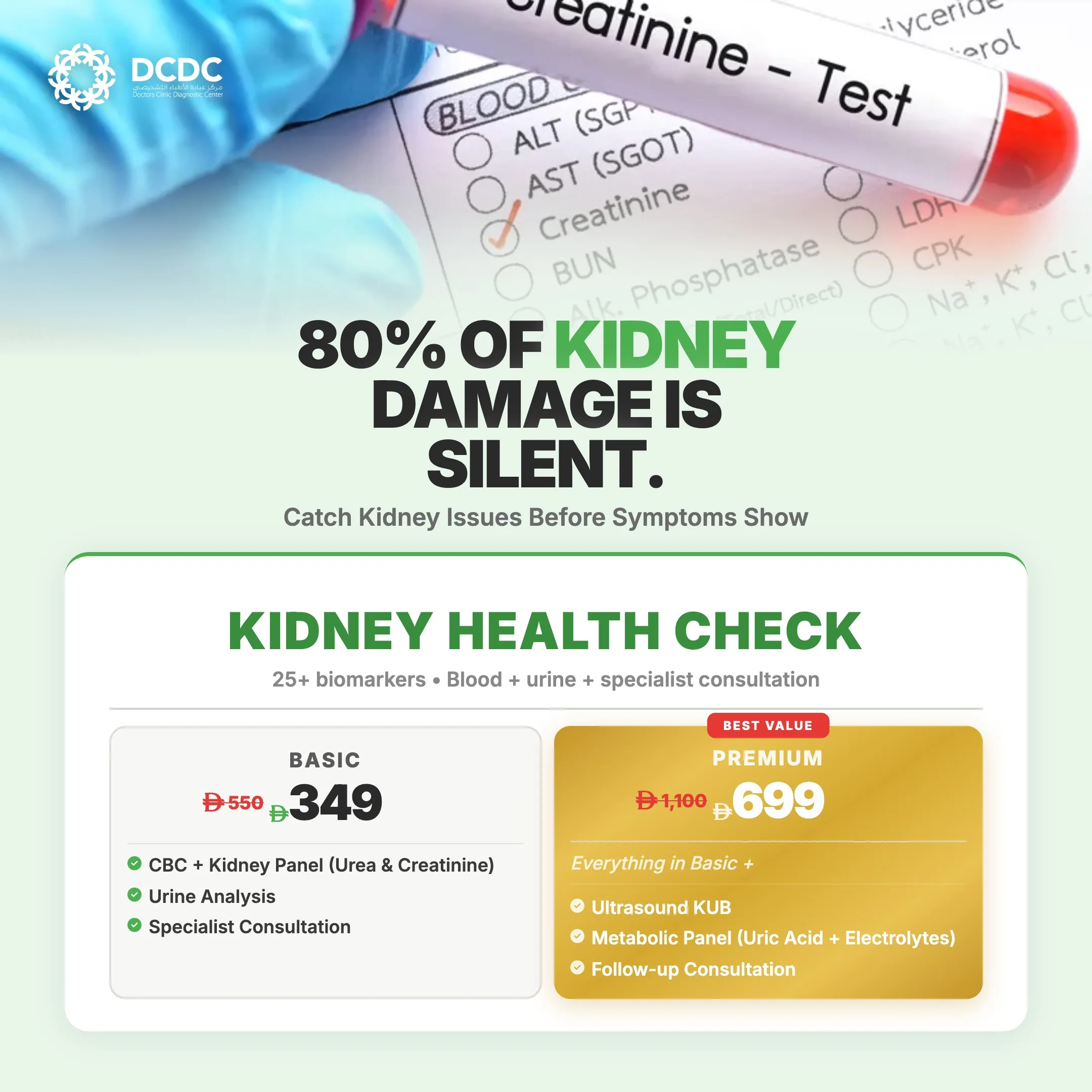
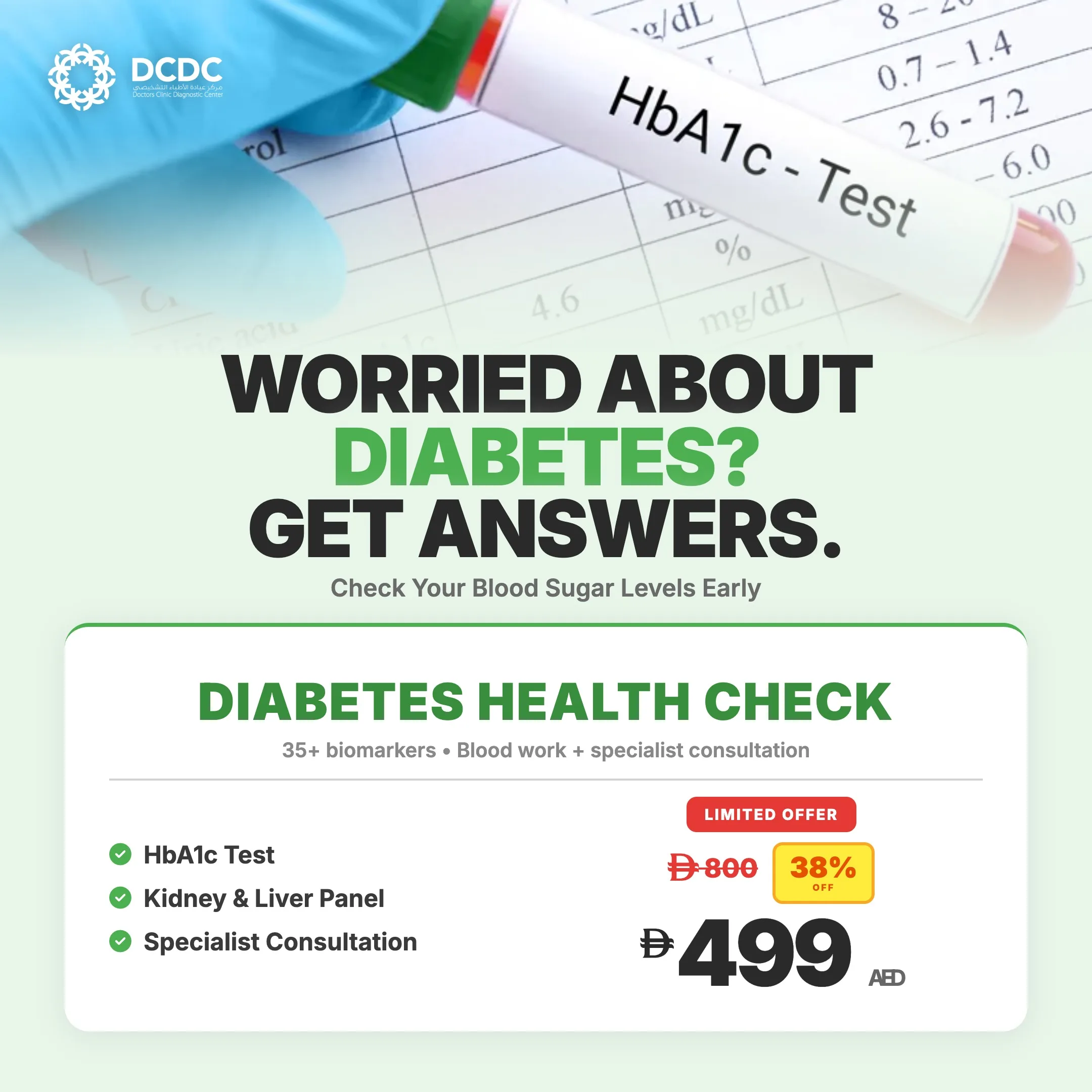
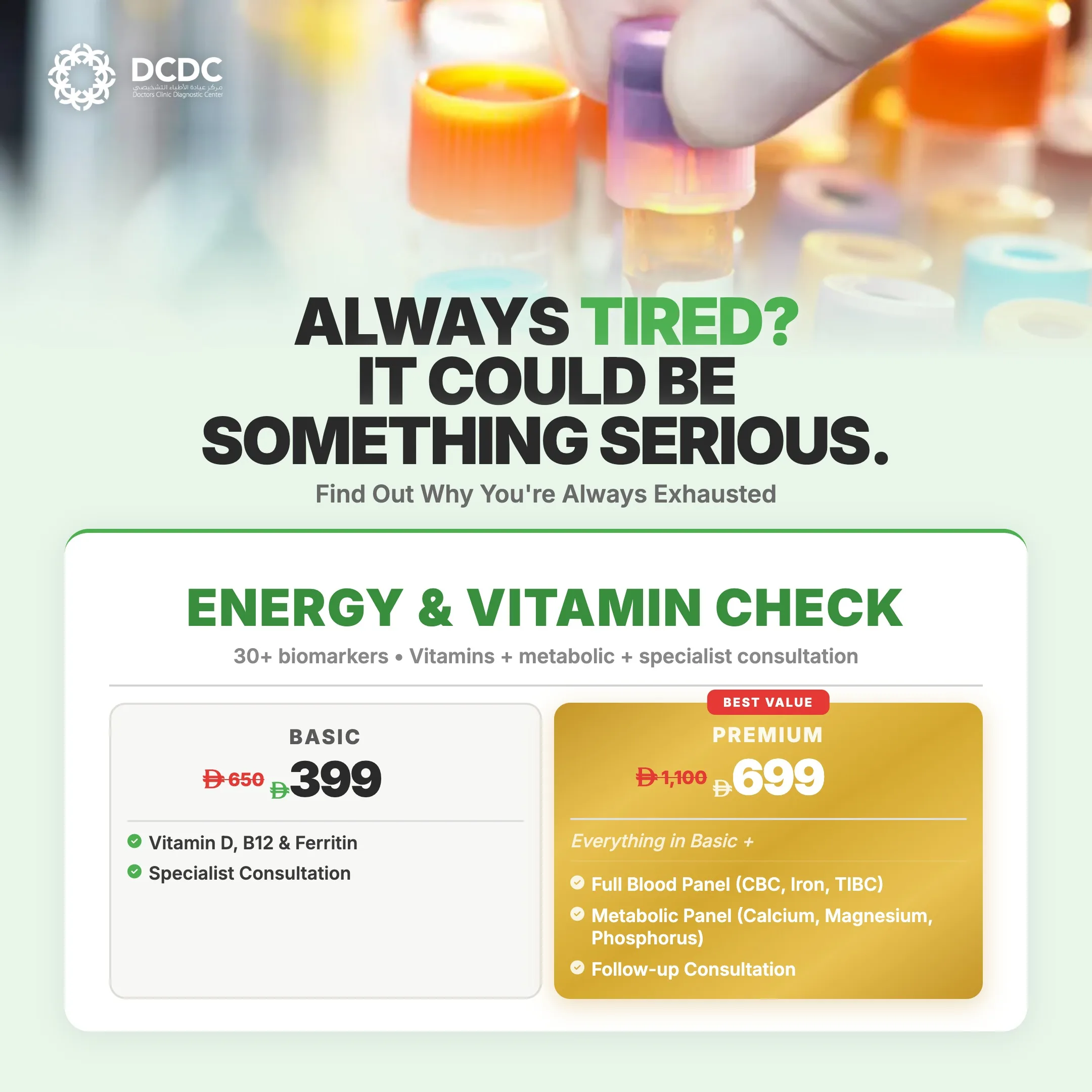
Health Screening Packages
Save with our bundled screening packages — specialist consultation included



What Is a Concussion? A Mild Traumatic Brain Injury Explained
A concussion is a mild traumatic brain injury caused by a sudden blow, jolt, or rapid movement of the head that makes the brain move quickly back and forth inside the skull. This motion stretches and twists nerve fibres, temporarily disrupting the brain's normal electrical and chemical signalling. Importantly, a concussion is a functional injury — in most cases, standard imaging shows no bleeding, bruising, or structural damage, even though the person feels genuinely unwell.
In Dubai, the most common causes we see include falls at home or on stairs, cycling and scooter accidents, road traffic collisions, contact sports such as football, rugby, and padel, gym-related falls, and playground injuries in children. Direct impact to the head is not always necessary — a whiplash-type force, such as a rear-end car collision or a hard tackle, can cause the brain to move inside the skull and trigger concussion symptoms even without the head striking anything.
Common Concussion Symptoms: The Full Checklist
Concussion symptoms fall into four broad categories, and it is common to experience symptoms from more than one group at once. Some signs appear within minutes of the injury, while others — particularly cognitive and sleep-related symptoms — may not become obvious until the following day. Use this checklist to review what you or the injured person are experiencing.
Physical Symptoms
- Headache or a feeling of pressure in the head — the single most common concussion symptom
- Dizziness, unsteadiness, or a spinning sensation
- Nausea or vomiting
- Blurred or double vision, or sensitivity to light and noise
- Ringing in the ears (tinnitus)
- Fatigue or feeling unusually drowsy
- Loss of balance or coordination
Cognitive Symptoms
- Feeling mentally "foggy" or slowed down
- Difficulty concentrating or remembering new information
- Confusion about recent events, or repeating the same question
- Amnesia for the moments just before or after the injury
- Answering questions slowly or appearing dazed
Emotional and Behavioural Symptoms
- Irritability or unusual crankiness, especially in children
- Sadness, anxiety, or feeling more emotional than usual
- Nervousness or a general sense that "something isn't right"
- Uncharacteristic behaviour change noticed by family or colleagues
Sleep-Related Symptoms
- Sleeping more or less than usual
- Difficulty falling asleep
- Waking up feeling unrested despite adequate sleep
In infants and very young children, concussion can be harder to recognise because they cannot describe how they feel. Watch for excessive crying, refusal to feed, unusual sleepiness, loss of new skills such as balance or speech, and a change in play behaviour.
Red Flags: When Concussion Symptoms Are a Medical Emergency
Most concussion symptoms are manageable at home once a doctor has assessed the injury, but certain signs point to a more serious brain injury — such as bleeding inside the skull — and require emergency care immediately. Call an ambulance or go straight to the nearest emergency department if you notice any of the following after a head injury:
- A headache that keeps getting worse rather than gradually improving
- Repeated vomiting — more than one or two episodes
- Seizures or convulsions, where the arms or legs shake uncontrollably
- Weakness, numbness, or loss of coordination on one side of the body
- Slurred speech or sudden difficulty finding words
- Unequal pupil size or pupils that do not react normally to light
- Increasing confusion, agitation, or unusual behaviour that continues to worsen
- Difficulty waking up, or a level of consciousness that is dropping
- Loss of consciousness, even briefly, following the injury
- Clear fluid or blood draining from the nose or ears, which can indicate a skull base fracture
- Neck pain after a high-impact injury, which may signal an associated spinal injury
These red flags matter because a small number of head injuries involve bleeding around or within the brain (an intracranial haemorrhage), which can become life-threatening if it is not identified and treated promptly. Do not wait to see if symptoms settle on their own — a same-day emergency evaluation, which typically includes a CT scan, is the safest course of action.
Suspect a Serious Head Injury?
If you notice any red flag symptoms after a head injury, go to the nearest emergency department immediately. For all other concussion concerns, DCDC offers same-day neurology consultations with on-site CT and MRI imaging.
When to See a Doctor for a Head Injury (Even Without Red Flags)
Not every bump to the head needs an ambulance, but any suspected concussion should be assessed by a doctor — ideally on the same day or the next day. You should book an appointment (rather than wait it out) if any of the following apply:
- You or your child hit your head hard enough to feel dazed, dizzy, or "not quite right" afterwards
- Symptoms such as headache, dizziness, or nausea have not improved within a few days
- You are unsure whether you briefly lost consciousness
- You are taking blood thinners or have a bleeding disorder — even a mild head injury needs review
- The injury happened during sport, and a return-to-play decision needs to be made
- A new or persistent headache develops after the injury — it is worth understanding headache types and when to worry, since post-traumatic headaches can mimic other headache patterns
- You are over 65, or the injured person is under 2 years old — both age groups are at higher risk of complications from head injury
Self-Assessment: Could This Be a Concussion?
While only a clinical examination can confirm a diagnosis, the following questions can help you decide how urgently to seek care after a knock to the head. Answering "yes" to any of them is a reason to book a neurology assessment promptly:
- Did you experience a direct blow to the head, face, or neck, or a whiplash-type force to the body?
- Did you feel dazed, confused, or "foggy" in the moments immediately afterwards?
- Do you have any gap in your memory of events just before or after the impact?
- Have you developed a headache, dizziness, or nausea since the injury?
- Do bright lights, screens, or noise feel more bothersome than usual?
- Has anyone who witnessed the injury said you seemed "different" — slower to respond, unsteady, or unusually emotional?
- Are you finding it harder than usual to concentrate, read, or follow conversations?
This self-check is a screening tool, not a diagnosis. Sports concussion assessment tools used by clinicians, such as the SCAT6, combine a symptom checklist like this one with balance testing and cognitive screening for a more complete picture.
Concussion Severity: Understanding the Grading System
Clinicians historically classified concussions into grades based on whether consciousness was lost and how long confusion or amnesia lasted. While modern practice focuses more on individual symptom recovery than a fixed grade, this classification is still useful for understanding severity at a glance.
| Grade | Loss of Consciousness | Confusion or Amnesia | Typical Duration |
|---|---|---|---|
| Grade 1 (Mild) | None | Symptoms resolve in under 15 minutes | Same day, no LOC |
| Grade 2 (Moderate) | None | Symptoms or amnesia last more than 15 minutes | Hours to days |
| Grade 3 (Severe) | Brief loss of consciousness (seconds to minutes) | Amnesia and confusion, often more prolonged | Days to weeks |
Traditional concussion grading. Any grade of concussion warrants a medical assessment — grading alone should never be used to decide when to return to sport or work.
It is worth stressing that loss of consciousness occurs in fewer than 10% of concussions. A person can have a significant concussion — including one that later develops into post-concussion syndrome — without ever blacking out. This is why symptom tracking matters more than the grade itself.
How Concussion Is Diagnosed: Clinical Exam, CT Scan & Brain MRI
There is no blood test or single scan that diagnoses a concussion. Instead, diagnosis is clinical, based on the mechanism of injury, your symptoms, and a focused neurological examination that checks memory, concentration, balance, coordination, reflexes, and eye movements. Standardised tools such as the SCAT6 (Sport Concussion Assessment Tool) help clinicians track symptoms objectively over time and guide return-to-activity decisions.
Imaging is not needed for every concussion. In fact, current clinical guidance recommends against routine CT or MRI scanning for a straightforward concussion with no red flag symptoms, since a typical concussion does not show up as a structural abnormality. However, imaging becomes important in specific situations:
- Head CT scan: The first-line emergency investigation when a red flag is present — for example, worsening headache, vomiting, loss of consciousness, or a high-impact mechanism. CT is fast and highly sensitive for detecting bleeding, skull fractures, and swelling that need urgent treatment
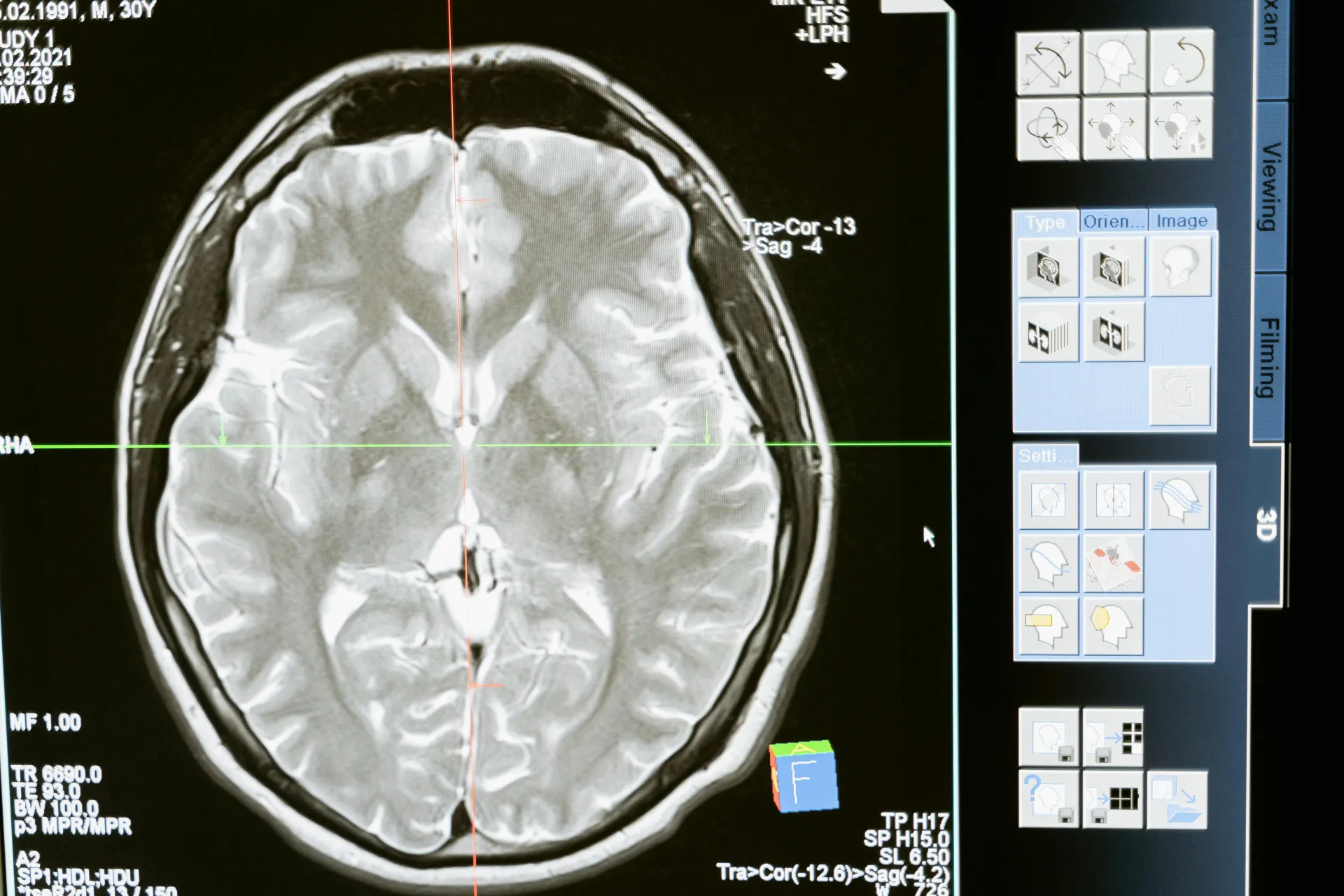
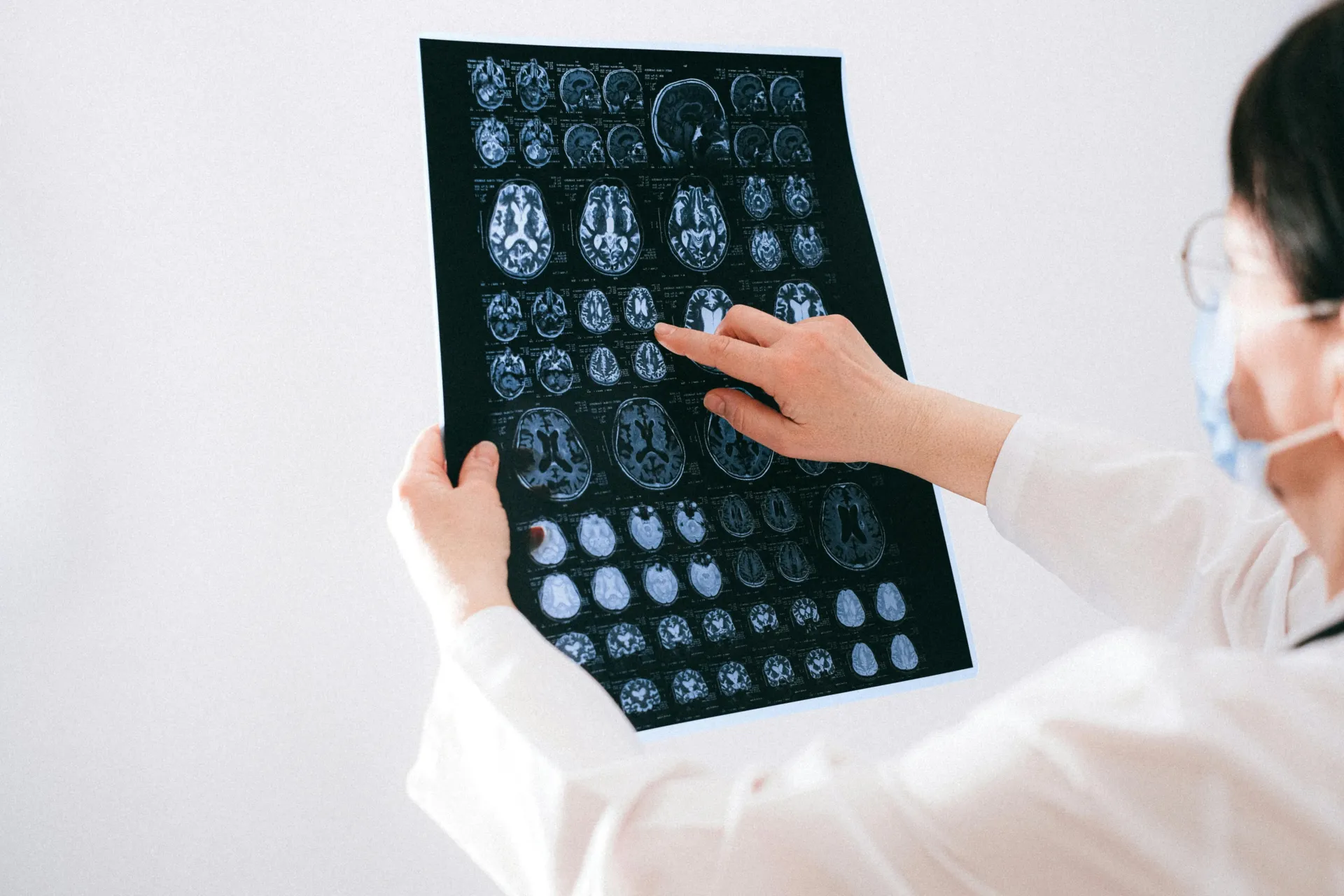
- Brain MRI: Recommended when a CT scan is normal but symptoms are severe, unusual, or do not follow the expected recovery pattern, or when a patient develops brain MRI scan-appropriate symptoms weeks after the injury. MRI is more sensitive than CT for detecting small areas of injury to brain tissue and is radiation-free, which makes it preferable for children and for follow-up scans
- When neither is needed: A patient with a clear mechanism, no red flags, a normal neurological exam, and steadily improving symptoms typically does not require any imaging at all — clinical monitoring is sufficient
If symptoms persist for weeks rather than days, it is also reasonable to rule out other causes with a broader work-up — for example, checking for brain tumor warning signs if a headache is progressively worsening rather than improving, since this pattern is atypical for a straightforward concussion.
Dr. Trabulsi's Clinical Perspective on Concussion Assessment
"The question I get asked most often after a head injury is 'do I need a scan?' — and the honest answer is that most concussions don't require one," says Dr. Riad Trabulsi, Neurologist at DCDC. "What matters far more is a careful history and a structured neurological examination: how the injury happened, whether there were any red flags, and how the symptoms are evolving over the following hours and days. Imaging is a tool we use selectively — to rule out bleeding when there's a genuine red flag, or to look deeper when recovery isn't following the expected course. Having CT and MRI available on-site means that when a scan is genuinely needed, we don't have to send a worried patient across the city and wait days for results."
What to Expect at DCDC: Neurological Assessment for Concussion in Dubai
If you book a neurology consultation at DCDC for a suspected concussion, here is what the visit typically involves:
- Detailed history: Your neurologist will ask exactly how the injury occurred, whether you lost consciousness, and how your symptoms have changed since the injury
- Focused neurological examination: Testing memory, concentration, balance, coordination, reflexes, and eye movements to identify any signs that need urgent attention
- Symptom scoring: Using a standardised checklist to establish a baseline, so recovery can be tracked accurately at follow-up
- On-site imaging when indicated: DCDC has a multi-slice CT scanner for rapid detection of bleeding or fractures, and a Siemens 1.5T wide-bore MRI (70cm opening) for detailed brain imaging when a CT is normal but symptoms warrant further investigation
- Subspecialty reporting: Brain MRIs at DCDC are read by neuroradiologists, adding an extra layer of expert interpretation
- Fast results: Reports are typically available within 18-24 hours, with same-day turnaround for urgent cases, and can be accessed digitally through our patient portal
- A personalised recovery plan: Guidance on rest, gradual return to school, work, driving, or sport, and a clear plan for follow-up if symptoms are slow to resolve
Book a Same-Day Concussion Assessment
DCDC offers neurology consultations with on-site CT and MRI imaging, so a suspected concussion can be assessed — and scanned if needed — in a single visit.
Concussion Recovery Timeline: What to Expect Week by Week
Recovery speed varies from person to person, but there are useful general patterns. Most adults recover within 7 to 14 days, while children and teenagers often take 2 to 4 weeks, because the developing brain is more sensitive to injury and needs more time to fully recover.
The First 24-48 Hours: Relative Rest
Current guidance has moved away from strict bed rest in a dark room. Instead, "relative rest" is recommended for the first day or two — this means avoiding activities that clearly worsen symptoms (screens, driving, contact sport, alcohol), while still allowing light activities of daily living and short, gentle walks that do not aggravate symptoms.
Days 3-10: Gradual Return to Light Activity
Once the acute phase has passed, a graded return to school, work, and light exercise usually begins — provided activities do not significantly worsen symptoms. Most children can return to school within one to two days, sometimes with temporary adjustments such as rest breaks, reduced homework, or extra time for tests.
Days 10-21+: Full Return to Normal Activity and Sport
For athletes, return to sport follows a step-by-step graduated protocol — light aerobic activity, sport-specific exercise, non-contact training, full-contact practice, and finally competitive play — with at least 24 hours between stages and medical clearance required before returning to unrestricted play. Never return to contact sport on the same day as the injury, regardless of how quickly symptoms seem to settle.
Treatment and Recovery Strategies After a Concussion
There is no medication that cures a concussion — recovery relies on the brain healing naturally, supported by sensible pacing of activity. The following strategies help most people recover more comfortably:
- Prioritise sleep: Aim for consistent, adequate sleep, as this supports the brain's natural recovery processes
- Stay hydrated and eat regularly: Dehydration, common in Dubai's heat, can worsen headache and fatigue after a head injury
- Pace screen time and reading: Reduce, rather than eliminate, activities that clearly bring on symptoms, and gradually build back up
- Avoid alcohol and recreational drugs until you have fully recovered, as they can slow healing and mask worsening symptoms
- Be cautious with pain medication: Paracetamol is generally preferred over NSAIDs (such as ibuprofen) in the first 24-48 hours after a head injury, as your doctor will advise, since NSAIDs can theoretically increase bleeding risk
- Address dizziness and balance issues early: Persistent unsteadiness after a concussion sometimes benefits from targeted vertigo treatment or vestibular rehabilitation
- Manage post-traumatic headaches appropriately: Headaches after concussion can resemble migraine, and approaches used for migraine treatment are sometimes adapted for post-traumatic headache management under specialist guidance
- Do not rush back to contact sport, driving, or safety-critical work until symptoms have fully resolved and you have medical clearance
Post-Concussion Syndrome: When Symptoms Don't Go Away
In a minority of cases — roughly 10-15% of concussions — symptoms persist beyond the expected recovery window of days to a few weeks. When symptoms such as headache, dizziness, fatigue, poor concentration, irritability, or sleep disturbance continue for more than four weeks, this is described as post-concussion syndrome.
Post-concussion syndrome is not a sign that something is permanently wrong with the brain — it usually reflects a slower-than-average recovery, sometimes influenced by factors such as a history of migraine, anxiety, poor sleep, or multiple previous concussions. Management typically involves a structured neurological review, targeted therapies for specific symptoms (such as vestibular rehabilitation for dizziness or graded exercise for fatigue), and, occasionally, further imaging to make sure nothing else explains the ongoing symptoms.
Preventing Head Injury and Concussion in Dubai
While not every head injury can be prevented, several practical steps meaningfully reduce risk in everyday life in Dubai:
- Wear a properly fitted helmet when cycling, using an e-scooter, skateboarding, or riding a motorbike — a major cause of preventable head injury on busy roads
- Always use seatbelts and appropriate child car seats, given how much daily driving happens across the city
- Use age-appropriate protective headgear for contact sports such as football, rugby, and combat sports, and follow proper tackling and technique coaching
- Install stair gates, secure rugs, and use night lights to reduce fall risk for young children and older adults at home
- Keep floors clear of trip hazards, particularly around pools and bathrooms, which are common fall sites in local villas and apartments
- Follow playground and school safety guidelines, including supervised play on age-appropriate equipment
Why Choose DCDC for Concussion Assessment in Dubai
Doctors Clinic Diagnostic Center is a MOHAP-licensed facility located in Building 64, Block A, Al Razi Medical Complex, Dubai Healthcare City — around 10 minutes from Downtown, with free on-site parking. Patients consistently rate us 4.8/5 from more than 1,000 verified Google reviews, with a 98% patient satisfaction rate.
- Same-day appointments for suspected head injury and concussion, with an average wait time of just 15 minutes
- On-site imaging under one roof: a multi-slice CT scanner and a Siemens 1.5T wide-bore MRI (70cm opening), avoiding referrals across the city
- Neuroradiologist-reported brain MRIs for accurate, subspecialty-level interpretation
- Fast turnaround: results within 18-24 hours, with same-day reporting for urgent cases, accessible via our patient portal
- Direct billing with 20+ insurance providers, including Daman, AXA, and Bupa
- Convenient hours: Saturday to Thursday, 8 AM-10 PM, and Friday, 9 AM-9 PM, to accommodate work and school schedules
Concerned About a Head Injury?
Book a neurology consultation at DCDC today. Our team can assess concussion symptoms and arrange on-site CT or MRI imaging the same day if it is clinically needed.
Related Services at DCDC
Expert care and advanced diagnostics at Dubai Healthcare City
Frequently Asked Questions
Final Thoughts
A concussion can feel alarming, but most people recover fully within a couple of weeks once the injury has been properly assessed and managed. The key is knowing which symptoms are expected, which require urgent attention, and how to pace your return to normal life. When in doubt after any head injury — however minor it may seem — a same-day neurological assessment offers reassurance and, in the rare cases where imaging is needed, the ability to act quickly.
At Doctors Clinic Diagnostic Center in Dubai Healthcare City, our neurology team combines careful clinical assessment with on-site CT and MRI imaging, so head injuries can be evaluated thoroughly without unnecessary delays or referrals. If you or a family member has recently experienced a head injury, book a neurology consultation today for expert guidance on your recovery.
Sources & References
This article was reviewed by our medical team and references the following sources:
- CDC HEADS UP — Signs and Symptoms of Concussion
- CDC HEADS UP — Returning to Activities After Concussion
- Mayo Clinic — Concussion: Symptoms and Causes
- NICE Guideline NG232 — Head Injury: Assessment and Early Management
- BMJ Best Practice — Concussion and Mild Traumatic Brain Injury
- World Health Organization — Global Burden of Traumatic Brain Injury
Medical content on this site is reviewed by DHA-licensed physicians. See our editorial policy for more information.

Written by
Dr. Riad Trabulsi
Neurologist
MD, Neurology
Dr. Riad Trabulsi is a Neurologist at Doctors Clinic Diagnostic Center (DCDC) in Dubai Healthcare City.
Related Articles
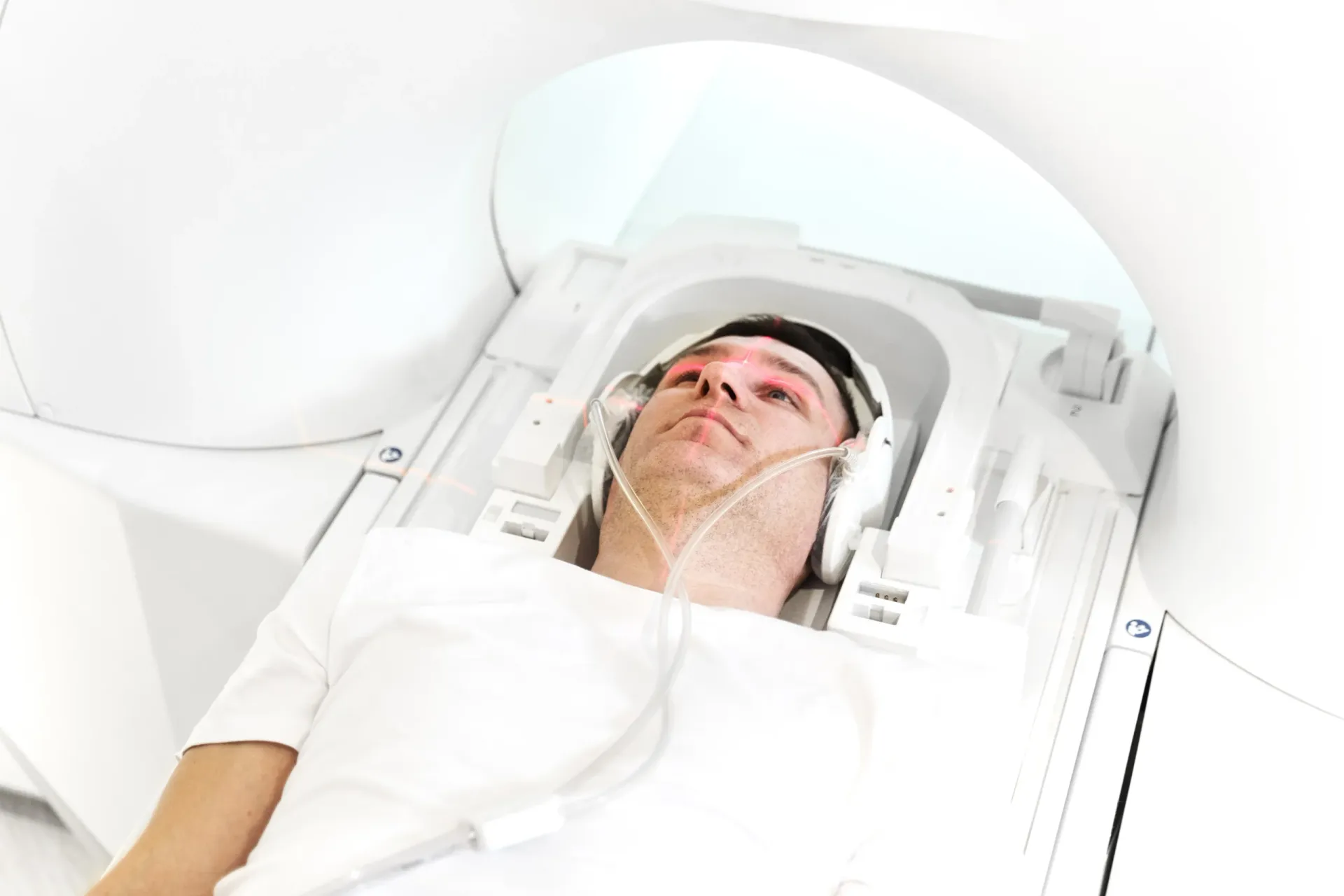
Brain MRI Dubai: What It Detects & Cost

Headache Types Dubai: When to See a Doctor
Brain Tumor Warning Signs: When to Get an MRI
Migraine Treatment Dubai: Relief & Prevention
Vertigo Treatment Dubai: Causes & Care
More in Neurology
EEG Test Meaning: Preparation & Results Guide (2026)
Read MoreEMG Test: Procedure, Pain & Preparation Guide (2026)
Read More
German Neurologist in Dubai: Dr. Heike Jacobs at DCDC (2026)
Read MoreNerve Conduction Study: NCS & NCV Explained (2026)
Read MoreNeurologist Dubai: When to See One (2026)
Read MoreEssential Tremor vs Parkinson’s Dubai (2026)
Read More© 2026 Doctors Clinic Diagnostic Center (DCDC), Dubai Healthcare City. Originally published at https://doctorsclinicdubai.ae/blog/concussion-symptoms-dubai. All rights reserved. Unauthorized reproduction is prohibited.