Key Takeaways
- MRI scans in Dubai start from AED 900 for a single-region scan (knee, brain, or spine) and range up to AED 3,850 for a full body MRI at DCDC in Dubai Healthcare City, with direct billing available for 20+ insurance providers
- Different body parts require different MRI preparation: brain, spine, and joint MRIs need no fasting, while abdominal and pelvic MRIs require 4-6 hours of fasting, and contrast-enhanced scans require 2 hours of fasting plus a kidney function test
- DCDC operates a Siemens 1.5T wide-bore MRI scanner with a 70 cm opening, 10 cm wider than standard scanners, making it suitable for claustrophobic patients and larger body types
- Open MRI eliminates the tunnel entirely for patients with severe claustrophobia, though wide-bore closed MRI produces higher-quality images and is recommended when tolerable
- Gadolinium contrast dye is used in 30-40 percent of MRI scans to enhance visibility of blood vessels, tumors, and inflammation. A kidney function blood test (eGFR) is required before contrast administration
- MRI results at DCDC are available within 18-24 hours, read by subspecialty radiologists (neuroradiologists for brain scans, musculoskeletal radiologists for joint scans), with same-day reporting for urgent cases
- MRI uses zero ionizing radiation, making it safe for repeated scans, pregnancy (after the first trimester), and children, unlike CT scans or X-rays
Whether you have been referred for your first MRI scan or need a follow-up study, understanding what is involved transforms the experience from intimidating to routine. MRI (Magnetic Resonance Imaging) is one of the most powerful diagnostic tools in modern medicine, using magnetic fields and radio waves instead of radiation to produce extraordinarily detailed images of the body's internal structures. In the UAE alone, hundreds of thousands of MRI scans are performed each year across hospitals and imaging centres. This guide covers every aspect of MRI scanning in Dubai: the different types of MRI available for each body part, how much each costs, how to prepare depending on your scan type, the differences between open and closed MRI, what gadolinium contrast involves, safety considerations for implants and pacemakers, strategies for managing claustrophobia, and what happens after your scan at DCDC in Dubai Healthcare City.
MRI scanning has evolved significantly since its introduction in the 1970s. Today's scanners produce images with sub-millimetre resolution, enabling radiologists to detect conditions ranging from tiny ligament tears to early-stage tumours that would be invisible on X-ray or ultrasound. At DCDC, our Siemens 1.5T wide-bore scanner combines diagnostic precision with patient comfort, and every scan is interpreted by a subspecialty radiologist whose expertise matches the body region being imaged.



What Is an MRI Scan and How Does It Work?
MRI stands for Magnetic Resonance Imaging. Unlike CT scans and X-rays, which use ionizing radiation, MRI creates images using a powerful magnetic field (approximately 30,000 times stronger than the Earth's natural magnetic field) combined with radiofrequency pulses. When you lie inside the scanner, the magnetic field aligns the hydrogen atoms in your body's water molecules. Short bursts of radio waves then knock these atoms out of alignment, and as they realign, they emit signals that are captured by receiver coils and processed by a computer into detailed cross-sectional images.
This technology produces images with exceptional soft tissue contrast, making MRI the gold standard for evaluating the brain, spinal cord, joints, ligaments, tendons, muscles, and internal organs. Unlike CT, MRI can differentiate between types of soft tissue with remarkable clarity. A brain MRI can distinguish between grey matter, white matter, and cerebrospinal fluid. A knee MRI can reveal a partial ligament tear just millimetres in size. This level of detail is why physicians rely on MRI for definitive diagnosis across virtually every medical specialty.
MRI Types by Body Part: What Each Scan Shows
MRI scanning is not a one-size-fits-all examination. Each body part requires specific coils, positioning, sequences, and clinical protocols. Understanding the different types helps you know what to expect and why your doctor has ordered a particular scan.
| MRI Type | What It Evaluates | Common Indications | Duration | Contrast Needed? | Price at DCDC (AED) |
|---|---|---|---|---|---|
| Brain MRI | Brain tissue, white matter, blood vessels, pituitary gland | Headaches, seizures, stroke, MS, tumors, memory loss | 20-40 min | Often yes | From 900 (without), From 1,200 (with contrast) |
| Spine MRI (cervical) | Cervical vertebrae, discs, spinal cord, nerve roots | Neck pain, radiculopathy, disc herniation, myelopathy | 30-45 min | Sometimes | From 900 |
| Spine MRI (thoracic) | Thoracic vertebrae, spinal cord | Mid-back pain, trauma, tumors, cord compression | 30-45 min | Rarely | From 900 |
| Spine MRI (lumbar) | Lumbar vertebrae, discs, cauda equina, nerve roots | Low back pain, sciatica, disc herniation, spinal stenosis | 30-45 min | Sometimes | From 900 |
| Knee MRI | Meniscus, cruciate ligaments, cartilage, bone marrow | Knee pain, sports injury, ACL/MCL tear, meniscal tear | 30-45 min | Rarely | From 900 |
| Shoulder MRI | Rotator cuff, labrum, biceps tendon, joint capsule | Shoulder pain, impingement, rotator cuff tear, instability | 30-45 min | Sometimes (arthrogram) | From 900 |
| Pelvis MRI | Pelvic organs, prostate, uterus, ovaries, bladder, rectum | Pelvic pain, cancer staging, fibroids, prostate assessment | 40-60 min | Usually yes | From 1,500 |
| Abdomen MRI | Liver, kidneys, pancreas, spleen, adrenal glands | Liver lesions, kidney masses, pancreatic assessment | 40-60 min | Usually yes | From 1,500 |
| Cardiac MRI | Heart chambers, valves, myocardium, pericardium, great vessels | Cardiomyopathy, myocarditis, congenital heart disease, viability | 45-60 min | Usually yes | From 2,500 |
| Breast MRI | Breast tissue, lesion characterization, implant integrity | High-risk screening, cancer staging, implant evaluation | 30-45 min | Almost always | From 1,800 |
| Hip MRI | Hip joint, labrum, cartilage, femoral head, bursae | Hip pain, labral tear, AVN, impingement | 30-45 min | Sometimes | From 900 |
| Full Body MRI | Brain, spine, chest, abdomen, pelvis (comprehensive screening) | Executive health screening, cancer surveillance, peace of mind | 60-90 min | Usually yes | From 3,850 |
MRI types by body part with indications, duration, contrast requirements, and pricing at DCDC Dubai Healthcare City. All prices are starting prices; final cost depends on clinical complexity and insurance coverage.
Each MRI type uses different radiofrequency coils shaped to fit the body part being imaged. A brain MRI uses a head coil that surrounds your head like a cage, a knee MRI uses a cylindrical knee coil, and an abdominal MRI uses a surface coil placed over your torso. These dedicated coils maximize image quality for the specific anatomy being evaluated. For detailed information on specific body-part scans, see our guides on knee MRI in Dubai, brain MRI, and spine MRI cost.
MRI Preparation by Body Part
Different types of MRI scans have different preparation requirements. The most important distinction is whether fasting is needed, which depends on the body part being scanned and whether contrast is being used. Following the correct preparation prevents cancelled or suboptimal scans.
| Body Part | Fasting Required? | Contrast Likely? | Special Preparation | Clothing/Metal Notes |
|---|---|---|---|---|
| Brain / Head | No (2 hours if contrast) | Often | Remove all hair accessories, earrings, facial piercings. Inform about dental implants/braces. | Remove glasses, hearing aids |
| Cervical Spine | No | Sometimes | Remove necklaces and scarves. Note any spinal hardware from previous surgery. | Remove any upper body metal |
| Thoracic / Lumbar Spine | No | Rarely | Remove back braces with metal. Bring knee bolster if lower back pain makes lying flat difficult. | Remove belt, metal zippers |
| Knee / Ankle / Foot | No | Rarely | Remove joint braces, compression sleeves. Note any previous surgical hardware. | Remove shoes, leg jewelry |
| Shoulder / Elbow / Wrist | No | Sometimes | Remove sling, brace, or support with metal. Report previous shoulder surgery or anchors. | Remove watches, bracelets, rings |
| Abdomen | 4-6 hours | Usually | May need to drink water or oral contrast before scan. Empty bladder as instructed. | Hospital gown provided |
| Pelvis | 4-6 hours | Usually | Moderately full bladder required (drink 2 glasses of water 1 hour before, do not urinate). | Hospital gown provided |
| Cardiac | 4 hours | Usually | No caffeine 24 hours before. May need beta-blocker to slow heart rate. Kidney function test required. | Hospital gown provided |
| Breast | 2 hours (contrast always used) | Always | Schedule during days 7-14 of menstrual cycle. Remove all jewelry and piercings in chest area. | Hospital gown provided, lie face-down |
| Hip | No | Sometimes | Report any hip replacement or metal implants. Inform about cochlear implants. | Remove belt, metal zippers |
| Full Body | 4-6 hours | Usually | Kidney function test required. Hydrate well in the 48 hours before. Allow 90 minutes total appointment time. | Hospital gown provided |
MRI preparation requirements by body part. Always confirm specific instructions with your imaging centre when booking, as protocols may vary based on clinical indication.
Open MRI vs Closed MRI: Which Should You Choose?
One of the most common questions patients ask is whether they should have an open MRI or a closed (conventional) MRI. Understanding the differences helps you make the right choice for your situation.
A closed MRI (also called a conventional or tunnel MRI) is a cylindrical tube that the patient lies inside. Standard closed MRI scanners have a bore diameter of approximately 60 cm. DCDC's Siemens 1.5T wide-bore scanner has a 70 cm opening, which is 10 cm wider than standard and accommodates patients of all body types more comfortably. Wide-bore technology represents a significant improvement for anxious patients while maintaining full diagnostic capability.
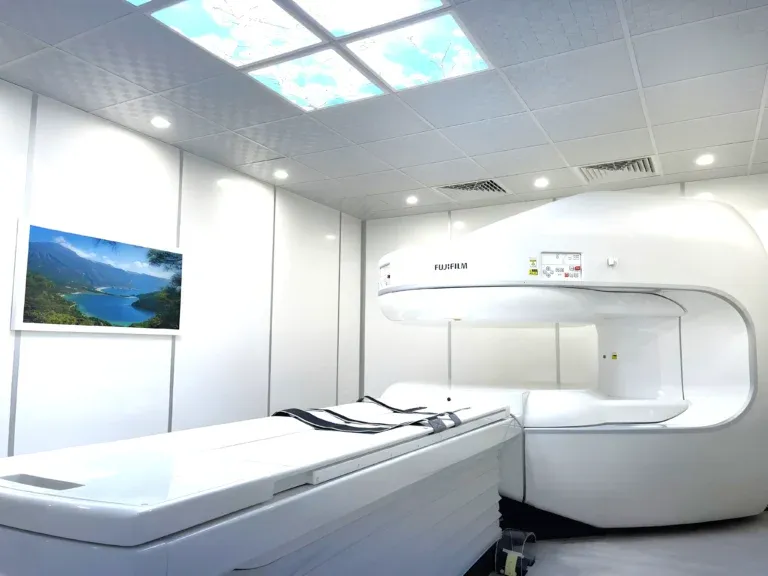
An open MRI eliminates the tunnel entirely. The magnet is positioned above and below the patient with open sides, creating a spacious, non-enclosed scanning environment. This design was specifically developed for patients with severe claustrophobia, children, and individuals whose body size exceeds the bore of a closed scanner.
| Feature | Closed MRI (Wide-Bore) | Open MRI |
|---|---|---|
| Design | Cylindrical tunnel, 70 cm diameter at DCDC | Open on 2 or 3 sides, no tunnel |
| Magnetic field strength | 1.5T (most common) or 3T | 0.2T to 1.2T (typically lower) |
| Image quality | Excellent — gold standard for diagnosis | Good for many applications, lower resolution for some |
| Scan duration | 20-60 min depending on body part | Often 30-50% longer due to lower signal |
| Best for | Most clinical indications, detailed soft tissue imaging | Severe claustrophobia, large body habitus, children, elderly |
| Limitations | May trigger claustrophobia in some patients | Lower field strength means some advanced sequences are not available |
| Contrast capability | Full contrast protocols available | Contrast can be used but some advanced sequences limited |
| Noise level | Louder (85-120 dB, earplugs provided) | Generally quieter |
| Availability at DCDC | Yes — Siemens 1.5T wide-bore | Yes — available for appropriate cases |
| Cost | From AED 900 | Similar pricing range |
Open MRI vs closed (wide-bore) MRI comparison at DCDC Dubai Healthcare City. For most diagnostic purposes, wide-bore closed MRI is recommended; open MRI is reserved for patients who cannot tolerate any degree of enclosure.
Dr. Osama Elzamzami, Consultant Radiologist at DCDC, advises: "I generally recommend our wide-bore closed MRI as the first option because the image quality and diagnostic capability are superior. The 70 cm opening is tolerable for the vast majority of patients, including many who describe themselves as claustrophobic. We reserve the open MRI for patients who have attempted the wide-bore scanner and genuinely cannot complete the scan, or for patients whose body habitus requires the open configuration. In my experience, approximately 90 percent of patients who are anxious about claustrophobia manage the wide-bore scanner successfully with the right preparation and support."
At DCDC Dubai Healthcare City, our MRI scan service uses a Siemens 1.5T wide-bore scanner with subspecialty radiologist interpretation and results within 18-24 hours. For a comprehensive comparison including pricing and patient suitability criteria, see our dedicated guide on open MRI in Dubai: cost and benefits.
What to Expect During Your MRI Scan
Understanding exactly what happens during the scan eliminates the fear of the unknown, which is one of the biggest anxiety triggers for first-time MRI patients. A typical MRI appointment takes 45 to 90 minutes total, with the actual scanning time ranging from 20 to 60 minutes depending on the body part.
- Positioning: You lie on the MRI table (a narrow, padded platform). The technologist positions you based on the body part being scanned, using foam pads, cushions, and straps to keep you comfortable and still. A coil (specialized receiving antenna) is placed over or around the body part being imaged.
- Communication: You receive a squeeze-bulb alarm that you can press at any time to stop the scan. The technologist communicates with you through a built-in speaker and microphone system. You are never truly alone during the scan.
- Table movement: The table slides smoothly into the scanner bore. For head, spine, and abdominal scans, most of your body enters the bore. For knee or foot scans, only your lower body enters and your head remains outside.
- Noise: MRI machines produce loud knocking, tapping, and buzzing sounds (85-120 decibels) during scanning. You will be given earplugs, headphones, or both. Many centres offer music through MRI-compatible headphones.
- Sequences: A complete MRI consists of multiple sequences, each lasting 2 to 7 minutes with brief pauses between. The technologist tells you when each sequence starts and how long it lasts.
- Breath holds: For abdominal and cardiac MRI, you will be asked to hold your breath for 15-25 seconds during certain sequences. The technologist guides you: "Take a deep breath in... hold... and breathe."
- Contrast injection: If contrast is required, the table may be partially withdrawn midway through so the technologist can inject gadolinium through an IV line. You may feel a brief cool sensation. Then the post-contrast sequences are completed.
5 Strategies for Managing MRI Claustrophobia
Claustrophobia during MRI is more common than most patients expect. Studies estimate that 5-15 percent of patients experience significant anxiety inside a conventional MRI scanner, and 1-2 percent cannot complete the scan without intervention. The good news is that multiple strategies can help you manage anxiety and complete your scan successfully.
- 1. Choose a wide-bore or open scanner: DCDC's Siemens 1.5T wide-bore scanner has a 70 cm opening, compared to the standard 60 cm. This 10 cm difference is significant in terms of comfort. If you have severe claustrophobia, our open MRI option eliminates the tunnel entirely.
- 2. Keep your eyes closed from the start: Close your eyes before the table starts moving and keep them closed throughout the scan. This simple technique prevents the visual trigger of seeing the tunnel walls close to your face. Many patients report this alone makes the experience manageable.
- 3. Use controlled breathing: Practice slow, rhythmic breathing: inhale for 4 counts, hold for 4 counts, exhale for 6 counts. This activates the parasympathetic nervous system and reduces the physical symptoms of anxiety (racing heart, sweating). Practice at home before scan day.
- 4. Request mild sedation: Your referring physician can prescribe a mild oral anxiolytic (such as lorazepam) to be taken 30-60 minutes before the scan. This reduces anxiety without putting you to sleep. You will need someone to drive you home afterward.
- 5. Bring a companion: At DCDC, a family member or friend can be present in the scan room (after passing metal screening) to hold your hand or foot and provide reassurance throughout the scan. This physical connection is surprisingly effective at reducing anxiety.
For a complete guide including visualization techniques and real patient experiences, read our detailed article on managing MRI claustrophobia.
MRI Contrast Dye: Gadolinium Explained
Approximately 30-40 percent of MRI scans involve the injection of a gadolinium-based contrast agent (GBCA) through an intravenous line. Understanding what gadolinium is, why it is used, and what to expect removes the anxiety many patients feel about having "dye" injected.
What Is Gadolinium and Why Is It Used?
Gadolinium is a rare-earth metal that has unique magnetic properties. When injected into the bloodstream, it alters the magnetic resonance signal in areas where blood flow is increased, such as tumors, inflammation, infections, and active lesions. This makes abnormalities "light up" on certain MRI sequences, dramatically improving the ability to detect and characterize pathology. Contrast is particularly important for brain tumors, multiple sclerosis lesions, liver and kidney masses, breast lesions, cardiac inflammation, infection assessment, and post-surgical evaluation.
Gadolinium Safety Profile
- Side effects are rare: The most common reactions are mild and transient: a brief cold sensation during injection (reported by up to 15% of patients), and less commonly a mild headache or nausea. True allergic reactions are extremely rare, occurring in less than 0.1% of patients.
- Kidney function test required: A blood test measuring eGFR (estimated Glomerular Filtration Rate) must confirm adequate kidney function before gadolinium administration. This is because gadolinium is eliminated through the kidneys, and impaired kidney function can lead to a rare condition called nephrogenic systemic fibrosis (NSF). Your eGFR should be above 30 mL/min/1.73m2.
- Elimination timeline: In patients with normal kidney function, over 90 percent of gadolinium is cleared from the body within 24 hours, and virtually all within a few days.
- Pregnancy: Gadolinium contrast is generally avoided during pregnancy as it crosses the placenta. Non-contrast MRI sequences are used instead.
- Breastfeeding: Less than 0.04 percent of the injected dose passes into breast milk. Current guidelines consider it safe to continue breastfeeding after gadolinium injection.
For a comprehensive guide on contrast-enhanced MRI including what to expect before, during, and after the injection, read our MRI with contrast guide.
MRI Safety: Metals, Implants & Pacemaker Checklist
MRI safety centres on one critical concern: the interaction between the powerful magnetic field and metallic or electronic devices. The scanner's magnetic field is always on, even when no scan is being performed, which is why strict safety protocols apply from the moment you enter the MRI zone.
MRI Safety Checklist
Before your scan, the MRI safety screening questionnaire covers all potential contraindications. The following checklist summarizes what you must disclose:
| Item / Device | MRI Safety Status | Action Required |
|---|---|---|
| Cardiac pacemaker (modern MRI-conditional) | Conditional | Scan possible under specific protocols with cardiology oversight. Bring device ID card. |
| Cardiac pacemaker (older/non-conditional) | Unsafe | MRI cannot be performed. Alternative imaging (CT, ultrasound) recommended. |
| Cardiac defibrillator (ICD) | Conditional (newer models) | Requires cardiology team assessment and programming before and after scan. |
| Cochlear implant | Conditional (newer models at 1.5T) | Some newer models are MRI-compatible at 1.5T. Bring implant documentation. |
| Joint replacements (hip, knee, shoulder) | Generally safe | Most modern implants are MRI-compatible. Inform the team; no documentation usually needed. |
| Orthopedic hardware (screws, plates, rods) | Generally safe | Almost all modern hardware is titanium and MRI-compatible. Inform the team. |
| Dental implants | Safe | MRI-safe but may cause local image distortion in jaw area. |
| Coronary stents | Safe after 6 weeks | Modern stents are non-ferromagnetic. Wait 6 weeks after placement. |
| IUD (intrauterine device) | Safe | Both copper and hormonal IUDs are MRI-compatible. |
| Metallic foreign body (e.g., metal fragments in eyes) | Potentially unsafe | Screening X-ray of the orbits may be required before MRI if history of metal work. |
| Spinal cord stimulator | Conditional | Requires manufacturer verification. Bring device documentation. |
| Insulin pump | Unsafe in MRI room | Must be removed before entering the scan room. |
| Medication patches (nicotine, fentanyl) | Remove before scan | Some patches contain metallic foil that can cause burns. |
MRI safety checklist for implants and devices. Always bring implant documentation (device card, surgical records) to your MRI appointment. When in doubt, the MRI team will verify compatibility before proceeding.
If you have questions about implant compatibility or safety, DCDC's radiographers complete a thorough safety screening before every scan. Book your MRI scan at DCDC online or call our team for pre-scan guidance. For a detailed exploration of MRI safety concerns including common myths, read our article on MRI safety: myths and facts.
1 Week Before Your MRI: Scheduling and Insurance
Proper preparation begins well before scan day. Handling the administrative and medical steps in advance ensures a smooth experience.
- Insurance pre-authorization: Most insurance providers in Dubai (including Daman, AXA, Bupa, MetLife, and Cigna) require prior authorization for MRI scans. This takes 2-5 working days. At DCDC, our insurance coordination team handles pre-authorization for all 20+ partner insurance companies with direct billing.
- Obtain your referral letter: MRI scans in Dubai require a physician referral specifying the body region, clinical indication, and whether contrast is required.
- Disclose your medical history: Inform the imaging centre about metal implants, previous surgeries, kidney disease (if contrast is planned), pregnancy or possible pregnancy, and claustrophobia.
- Request sedation if needed: If you have severe claustrophobia, discuss mild oral sedation with your physician at least one week before the scan.
- Arrange kidney function test: If your scan requires gadolinium contrast, ensure you have a recent eGFR/creatinine blood test (ideally within 30 days).
Day of Your MRI: What to Wear, Bring, and Remove
What to Wear
- Ideal clothing: Cotton T-shirt or pullover without metal snaps, sweatpants or joggers with elastic waistband, slip-on shoes, sports bra without underwire.
- Avoid: Jeans (metal rivets and zipper), underwire bras, hoodies with metal zippers, belts with metal buckles, clothing with metallic thread.
What to Bring
- Emirates ID or passport
- Insurance card and pre-authorization approval
- Referral letter from your physician
- Previous imaging CDs or reports (for comparison)
- Kidney function blood test results (if contrast scan)
- Implant documentation (device cards, surgical records)
- A companion to drive you home (if taking sedation)
What to Remove Before the Scan
- All jewelry: rings, necklaces, earrings, bracelets, watches, body piercings
- Hairpins, hair clips, and hair ties with metal
- Glasses and sunglasses
- Hearing aids and removable dental work (dentures, retainers with metal)
- Mobile phone, wallet, credit cards (the magnetic field erases magnetic strips)
- Keys, coins, pens, belt
- Nicotine patches, medication patches with metallic foil backing
- Cosmetics with metallic particles (certain eye shadows, foundations, nail polishes)
Pro tip: Leave all jewelry and valuables at home rather than bringing them to the imaging centre. This eliminates the risk of forgetting an item and saves preparation time.
Book Your MRI Scan at DCDC
Schedule your MRI at Dubai Healthcare City with free parking, 20+ insurance partners with direct billing, and subspecialty radiologist interpretation. Our Siemens 1.5T wide-bore scanner and experienced team ensure a comfortable experience.
Walk-ins welcome Saturday to Thursday 8 AM to 10 PM. Call or WhatsApp to book.
What to Expect at DCDC: Your MRI Patient Journey
At Doctors Clinic Diagnostic Center (DCDC) in Dubai Healthcare City, we have designed our MRI experience to be as smooth and comfortable as possible. Here is exactly what happens from the moment you arrive:
- Step 1 — Arrival and registration (5 minutes): Park in our free dedicated parking area and enter Building 64, Block A, Al Razi Medical Complex. Our reception team checks you in, verifies your insurance and pre-authorization, and confirms your appointment details. Average wait time at DCDC is just 15 minutes.
- Step 2 — MRI safety screening (5-10 minutes): You complete a comprehensive MRI safety questionnaire covering medical history, surgical history, implants, and potential metal exposure. An MRI technologist reviews your answers personally.
- Step 3 — Preparation and changing (5 minutes): You change into a gown (if needed) in a private changing area and secure your belongings in a locker.
- Step 4 — The scan (30-60 minutes): Our Siemens 1.5T wide-bore MRI scanner with 70 cm opening accommodates patients of all body types comfortably. Our MRI technologists are experienced in working with anxious patients and guide you through every step.
- Step 5 — Post-scan (5 minutes): You change back into your clothes. If contrast was administered, you are observed briefly for any adverse reaction.
- Step 6 — Results (18-24 hours): Your images are interpreted by a subspecialty radiologist: brain MRIs by neuroradiologists, joint MRIs by musculoskeletal radiologists, and so on. This subspecialty interpretation means complex findings that a general radiologist might miss are identified accurately. Same-day reporting is available for urgent cases.
DCDC holds a 4.8/5 Google rating from over 1,000 patient reviews and maintains a 98% patient satisfaction rate, reflecting our commitment to making diagnostic imaging accessible and comfortable for every patient in Dubai. Our MOHAP licence (No. NIMY7VY5-240925) confirms our clinic meets the highest regulatory standards.
Who Reads Your MRI? Subspecialty Radiologist Interpretation
Not all MRI reports are equal. The accuracy of an MRI depends not only on the scanner quality but critically on who interprets the images. At DCDC, every MRI is read by a radiologist whose subspecialty training matches the body part being scanned.
- Brain and spine MRIs are interpreted by a neuroradiologist trained in identifying stroke, demyelination, tumours, and vascular malformations
- Knee, shoulder, hip, and joint MRIs are interpreted by a musculoskeletal radiologist trained in ligament tears, cartilage damage, and bone marrow pathology
- Abdominal and pelvic MRIs are interpreted by a body imaging radiologist trained in liver, kidney, pancreatic, and pelvic organ assessment
- Cardiac MRIs are interpreted by a radiologist with cardiac imaging fellowship training
- Breast MRIs are interpreted by a radiologist with breast imaging subspecialty experience
Research published in the American Journal of Roentgenology demonstrates that subspecialty radiologist interpretation improves diagnostic accuracy by 10-20 percent compared to general radiologist reads, particularly for complex or subtle findings. This is one of DCDC's key differentiators.
MRI Results Timeline and Next Steps
Understanding the timeline for results and your next steps helps you plan accordingly after your scan.
- Standard results: 18-24 hours at DCDC. Your referring physician receives the report directly, and you can access images and report through the patient portal.
- Urgent results: Same-day reporting for acute injuries, suspected stroke or tumour, and pre-surgical planning.
- After a contrast scan: Drink extra water for 24 hours to help kidneys flush gadolinium. Mild headache or nausea is rare and resolves within hours.
- No activity restrictions: Unless you received sedation, you can drive, work, eat normally, and resume all activities immediately.
- Follow-up: Schedule a follow-up with your referring physician to discuss findings and next steps. Do not attempt to interpret your own images.
MRI Scan Pricing in Dubai: Complete Cost Guide
MRI costs in Dubai vary based on the body region, whether contrast is required, the scanner type, and the facility. Below is a comprehensive pricing guide. At DCDC, direct billing is available for 20+ insurance providers, meaning many patients pay zero out-of-pocket.
| MRI Type | Duration | Price at DCDC (AED) | Market Range Dubai (AED) |
|---|---|---|---|
| Brain MRI (without contrast) | 20-40 min | From 900 | 900-2,500 |
| Brain MRI (with contrast) | 30-50 min | From 1,200 | 1,200-3,000 |
| Spine MRI (single region) | 30-45 min | From 900 | 900-2,500 |
| Knee / Shoulder / Joint MRI | 30-45 min | From 900 | 900-2,500 |
| Hip MRI | 30-45 min | From 900 | 900-2,500 |
| Abdominal MRI | 40-60 min | From 1,500 | 1,500-3,500 |
| Pelvic MRI | 40-60 min | From 1,500 | 1,500-3,500 |
| Breast MRI | 30-45 min | From 1,800 | 1,800-4,000 |
| Cardiac MRI | 45-60 min | From 2,500 | 2,500-5,000 |
| Full Body MRI | 60-90 min | From 3,850 | 3,850-8,000 |
MRI pricing at DCDC Dubai Healthcare City vs market range. Prices may vary based on clinical complexity and insurance coverage. DCDC offers direct billing with 20+ insurance providers.
The Full Body MRI at DCDC is available from AED 3,850 (regularly AED 5,500), covering brain, spine, chest, abdomen, and pelvis in a single session. This comprehensive screening is popular among Dubai residents seeking proactive health assessment. For a full pricing breakdown, read our complete MRI guide and pricing for Dubai.
Special Cases: Pregnancy, Children, and Sedation
MRI During Pregnancy
- MRI does not use ionizing radiation, making it safer than CT or X-ray during pregnancy.
- MRI is generally avoided during the first trimester as a precautionary measure, not because of demonstrated harm.
- After the first trimester, MRI is considered safe and is routinely used for fetal imaging and maternal conditions.
- Gadolinium contrast is generally avoided during pregnancy as it crosses the placenta.
MRI for Children
- Children over age 7 can usually complete an MRI awake with proper preparation, distraction techniques, and parental presence.
- Children under 6-7 may require sedation or general anaesthesia to remain still.
- Explain the scan in age-appropriate terms. Let them know it will be loud but not painful.
- Bring a comfort item (stuffed animal without metal) and plan a reward activity afterward.
Common MRI Preparation Mistakes to Avoid
After conducting thousands of MRI scans at DCDC, we have identified the most common preparation mistakes that lead to delays, cancellations, or suboptimal images.
- Forgetting underwire bras: The number one forgotten metal item. Wear a sports bra without wire.
- Not disclosing implants during booking: Discovering an undisclosed implant during screening can cancel your appointment.
- Arriving without pre-authorization: Without insurance pre-authorization, you may face full out-of-pocket costs or rescheduling.
- Eating before an abdominal MRI: Food creates motion artifacts that degrade image quality.
- Applying metallic cosmetics: Glittery eye shadow, certain sunscreens, and metallic nail polish cause artifacts and localized heating.
- Arriving late: MRI appointments have tight scheduling. Late arrival means insufficient safety screening time.
- Not mentioning claustrophobia until scan day: Last-minute disclosure leaves no time to arrange sedation or book an open MRI.
- Skipping the kidney function test before contrast: Without a recent eGFR result, the radiologist cannot safely approve gadolinium.
Complete MRI Preparation Checklist
Use this comprehensive checklist to ensure you are fully prepared. Save it to your phone or print it out.
1 Week Before
- Submit insurance pre-authorization request (allow 2-5 working days)
- Obtain referral letter from your physician
- Inform imaging centre about implants, claustrophobia, or pregnancy
- Request sedation prescription from your doctor if needed
- Arrange kidney function blood test if contrast scan is planned
48 Hours Before
- Confirm your appointment time and location
- Check fasting requirements for your specific scan type
- Ensure kidney function results are available (for contrast scans)
- Drink plenty of water for good hydration
- Practice breathing exercises if you are anxious
Morning Of
- Follow fasting instructions (if applicable)
- Take regular medications with a small sip of water
- Avoid metallic cosmetics
- Leave jewelry and valuables at home
- Arrive 20-30 minutes before your appointment
- Bring a companion if you are taking sedation
Need Help Preparing for Your MRI?
Our team at DCDC Dubai Healthcare City can answer all your preparation questions and guide you through the process. With 20+ insurance partners, free parking, and results within 18-24 hours, we make MRI simple.
MOHAP Licensed (License No. NIMY7VY5-240925). Open Saturday to Thursday 8 AM to 10 PM, Friday 9 AM to 9 PM.
MRI Safety: Myths vs Facts
- Myth: MRI uses radiation. Fact: MRI uses magnetic fields and radio waves. Zero ionizing radiation. You can have as many MRIs as clinically needed without cumulative radiation exposure.
- Myth: The MRI machine can hurt you. Fact: The MRI is painless. The only sensation is lying still and hearing loud noises (mitigated by earplugs and headphones).
- Myth: Gadolinium stays in your body forever. Fact: Over 90 percent is cleared within 24 hours in patients with normal kidney function.
- Myth: All metal implants prevent MRI. Fact: The majority of modern orthopedic and dental implants are MRI-safe or MRI-conditional.
- Myth: MRI is dangerous during pregnancy. Fact: MRI has no known harmful effects on the fetus and is routinely used for fetal imaging after the first trimester.
- Myth: Open MRI is always better for claustrophobia. Fact: Wide-bore closed MRI (70 cm opening) works for approximately 90 percent of anxious patients and produces superior image quality.
Related Services at DCDC
Expert care and advanced diagnostics at Dubai Healthcare City
Frequently Asked Questions
Final Thoughts: Preparation Makes Your MRI Experience Better
Proper MRI preparation is straightforward once you understand what is required for your specific scan type. The key insight is that most MRI scans (brain, spine, joints) require minimal preparation beyond removing metal objects, while abdominal, pelvic, and contrast-enhanced scans have additional dietary and medical requirements. By handling administrative steps (referral, insurance, booking) in advance and following the body-part-specific instructions in this guide, you eliminate the uncertainty that causes most patient anxiety.
At DCDC in Dubai Healthcare City, our team is available to answer any preparation questions. With our Siemens 1.5T wide-bore scanner (70 cm opening), open MRI option for severe claustrophobia, subspecialty radiologist interpretation, and results within 18-24 hours, you receive both a comfortable scan experience and accurate, expert-level diagnostic reporting. Whether it is your first MRI or your tenth, whether you need a simple knee scan or a comprehensive full body screening, proper preparation transforms the experience from stressful to straightforward. Contact us by phone, WhatsApp, or walk in during our extended hours to schedule your MRI scan today.
Sources & References
This article was reviewed by our medical team and references the following sources:
- American College of Radiology — MRI Safety Guidelines
- Radiological Society of North America (RSNA) — MRI Patient Information
- European Society of Radiology — MRI Safety Recommendations
- American College of Radiology — Manual on Contrast Media (Gadolinium)
- NHS — Having an MRI Scan: Patient Preparation Guide
- American Journal of Roentgenology — Subspecialty Radiology Interpretation Accuracy
- Mayo Clinic — MRI: What You Can Expect
- Cleveland Clinic — MRI (Magnetic Resonance Imaging)
Medical content on this site is reviewed by DHA-licensed physicians. See our editorial policy for more information.

Written by
Dr. Osama Elzamzami
Diagnostic Radiology
MD, FRCR
Dr. Osama Elzamzami is a Diagnostic Radiologist at Doctors Clinic Diagnostic Center (DCDC) in Dubai Healthcare City, specializing in subspecialty imaging interpretation.
Related Articles
Complete Guide to MRI Scan in Dubai
MRI Claustrophobia: Tips to Get Through Your Scan
MRI With Contrast: What You Need to Know
Open MRI in Dubai: Cost and Benefits
CT vs MRI: Which Scan Do You Need?
MRI Safety: Myths and Facts
More in Diagnostic Imaging
CT Scan Cost Dubai: Prices & Types (2026)
Read More
DEXA Scan Dubai: Cost, T-Score & Who Needs It (2026)
Read More![Full Body MRI Cost Dubai: AED 5,000-15,000 [2026]](/wp-media/blog/full-body-mri-scan.webp)
Full Body MRI Cost Dubai: AED 5,000-15,000 [2026]
Read More
CBCT Scan: 3D Dental Imaging Guide Dubai (2026)
Read More
Ultrasound Preparation Dubai: What to Expect (2026)
Read More
3D vs 2D Mammogram Dubai: Key Differences (2026)
Read More© 2026 Doctors Clinic Diagnostic Center (DCDC), Dubai Healthcare City. Originally published at https://doctorsclinicdubai.ae/blog/mri-scan-preparation-dubai. All rights reserved. Unauthorized reproduction is prohibited.