Key Takeaways
- Hypothyroidism means an underactive thyroid that produces too little hormone, slowing the body down; hyperthyroidism means an overactive thyroid producing too much hormone, speeding the body up
- The two conditions cause almost opposite symptoms — hypothyroidism causes fatigue, weight gain, and feeling cold; hyperthyroidism causes anxiety, weight loss, and feeling hot
- Both conditions are diagnosed with the same first blood test: TSH (thyroid-stimulating hormone). A high TSH usually points to hypothyroidism; a low TSH usually points to hyperthyroidism
- Up to 15% of the UAE population may have some form of thyroid dysfunction, and many cases go undiagnosed because early symptoms are mistaken for stress, diet, or aging
- Hypothyroidism is treated with daily thyroid hormone replacement (levothyroxine); hyperthyroidism is treated with anti-thyroid medication, radioactive iodine, or occasionally surgery
- Autoimmune disease is the leading cause of both conditions in adults — Hashimoto's thyroiditis causes most hypothyroidism, while Graves' disease causes most hyperthyroidism
- A same-day TSH, T3, and T4 blood panel, combined with a thyroid ultrasound when needed, is usually enough to tell the two conditions apart
- Thyroid consultations at DCDC in Dubai Healthcare City start from AED 299, with same-day blood results and direct billing available through 20+ insurance partners
Hypothyroidism and hyperthyroidism are the two most common thyroid disorders, and despite sharing the same gland, they produce almost opposite effects on the body. Hypothyroidism means the thyroid is underactive and isn't making enough hormone, which slows metabolism down. Hyperthyroidism means the thyroid is overactive and making too much hormone, which speeds metabolism up. Because the symptoms can be subtle, easy to mistake for stress, or blamed on Dubai's summer heat and long work hours, many people live with an undiagnosed thyroid disorder for months or years. This guide compares both conditions side by side — symptoms, causes, blood test results, and treatment — and explains how the Thyroid Clinic at DCDC in Dubai Healthcare City diagnoses and manages both.
The thyroid is a small, butterfly-shaped gland at the base of the neck that produces hormones (T3 and T4) controlling how fast every cell in the body uses energy. When this gland malfunctions, it can either slow down (hypothyroidism) or speed up (hyperthyroidism), and the resulting symptoms can affect weight, heart rate, mood, digestion, skin, hair, and menstrual cycles. Thyroid disorders are common across the UAE, with an estimated 15% of the population affected to some degree, and women are affected considerably more often than men. Because the two conditions require opposite treatment approaches, an accurate diagnosis through blood testing is essential before starting any treatment.
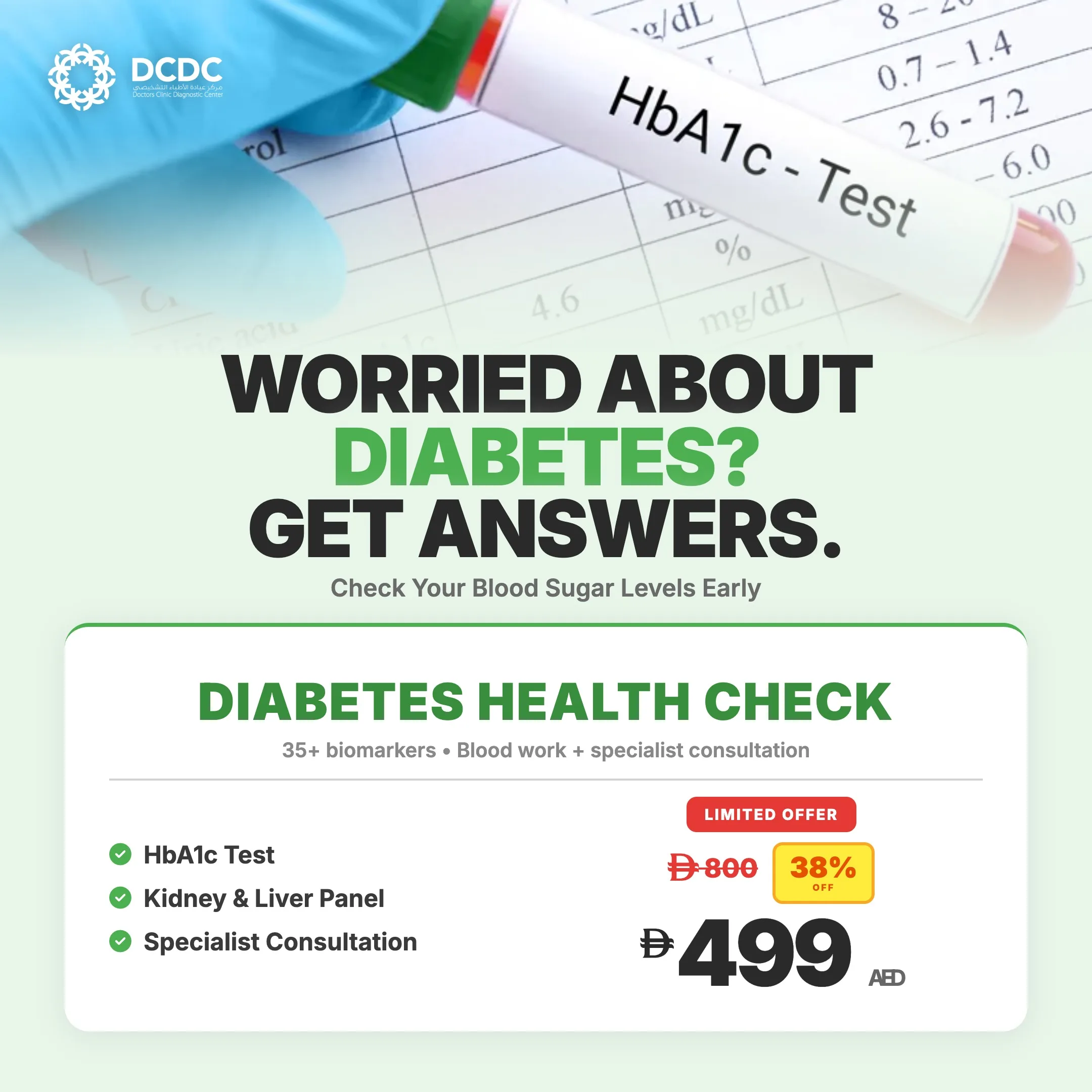
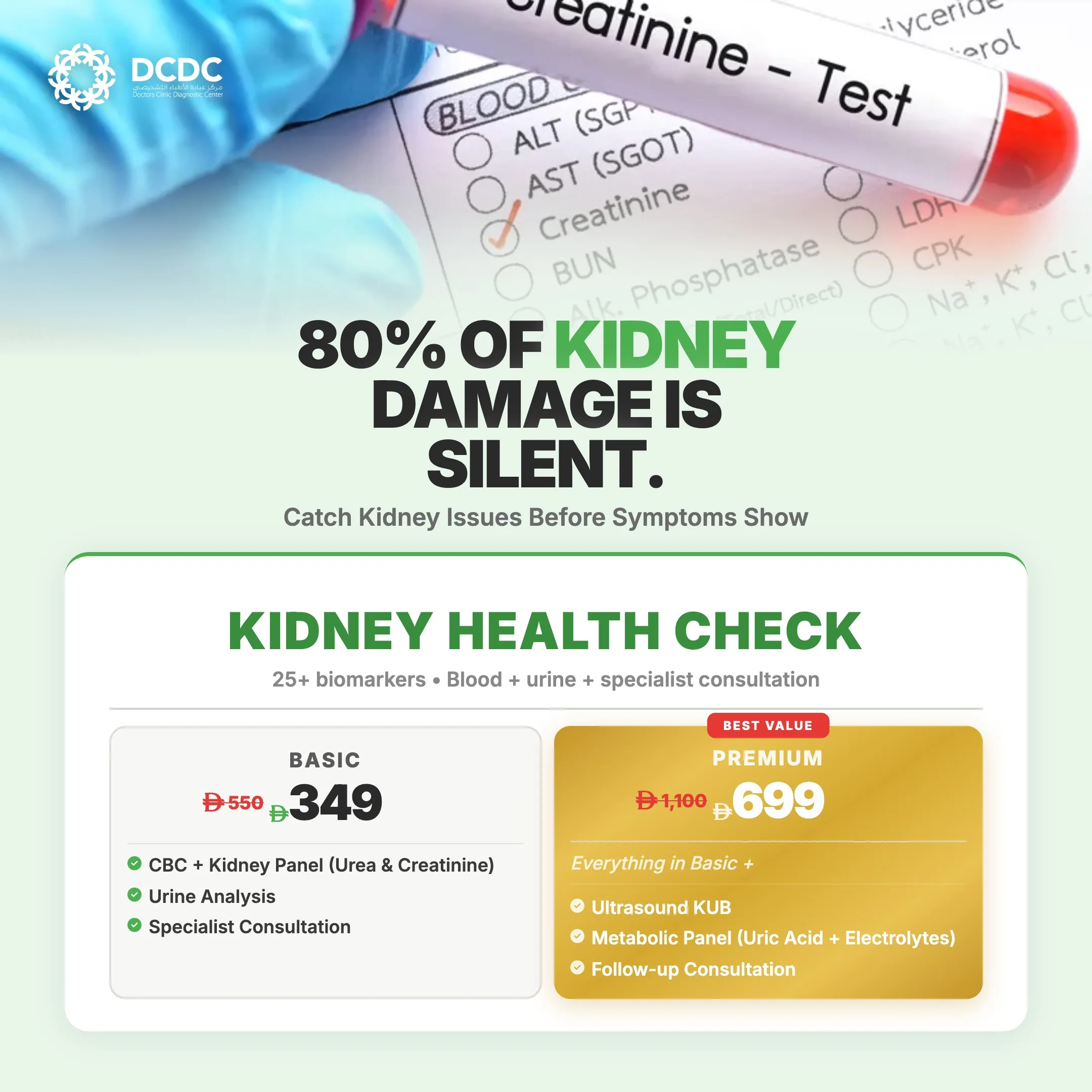
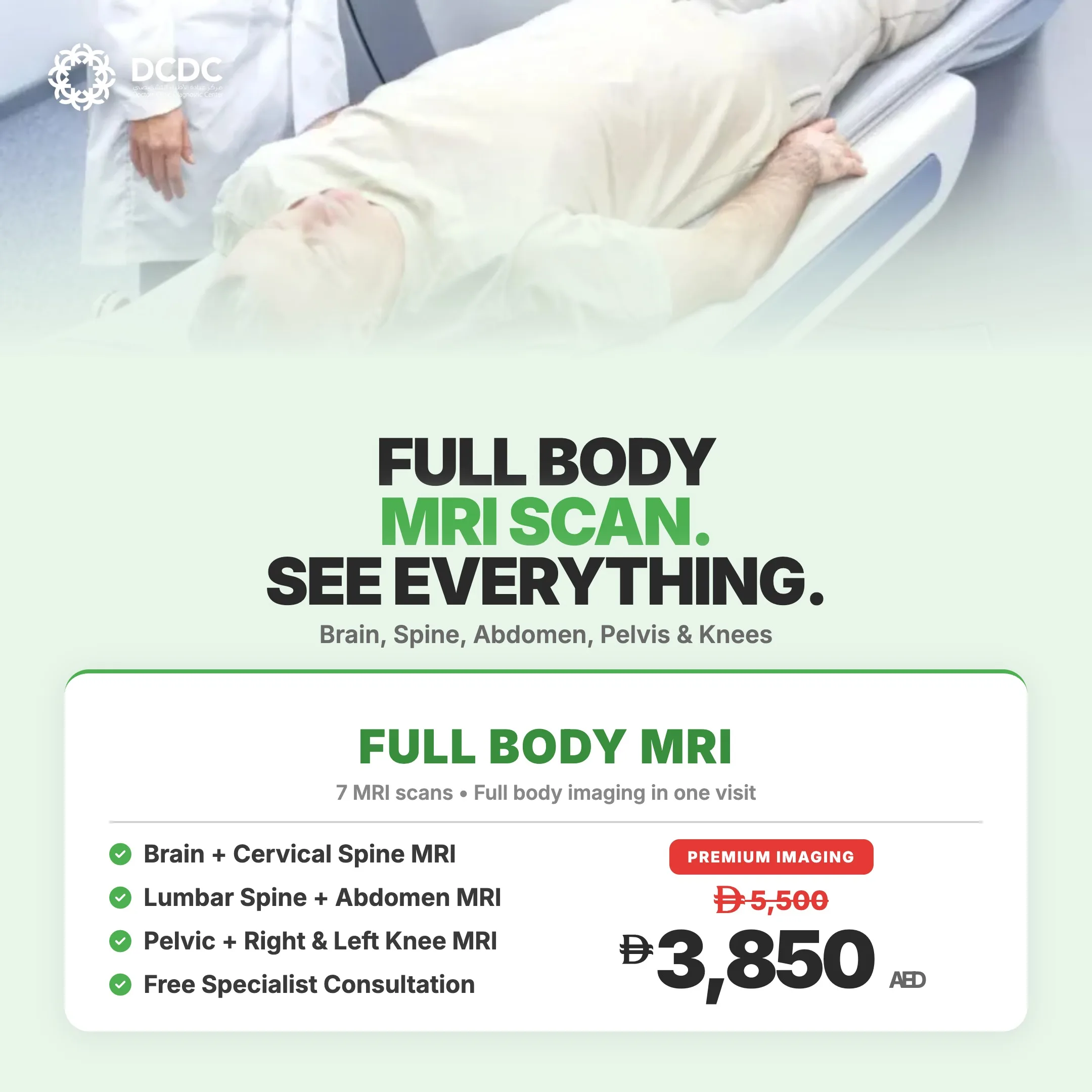
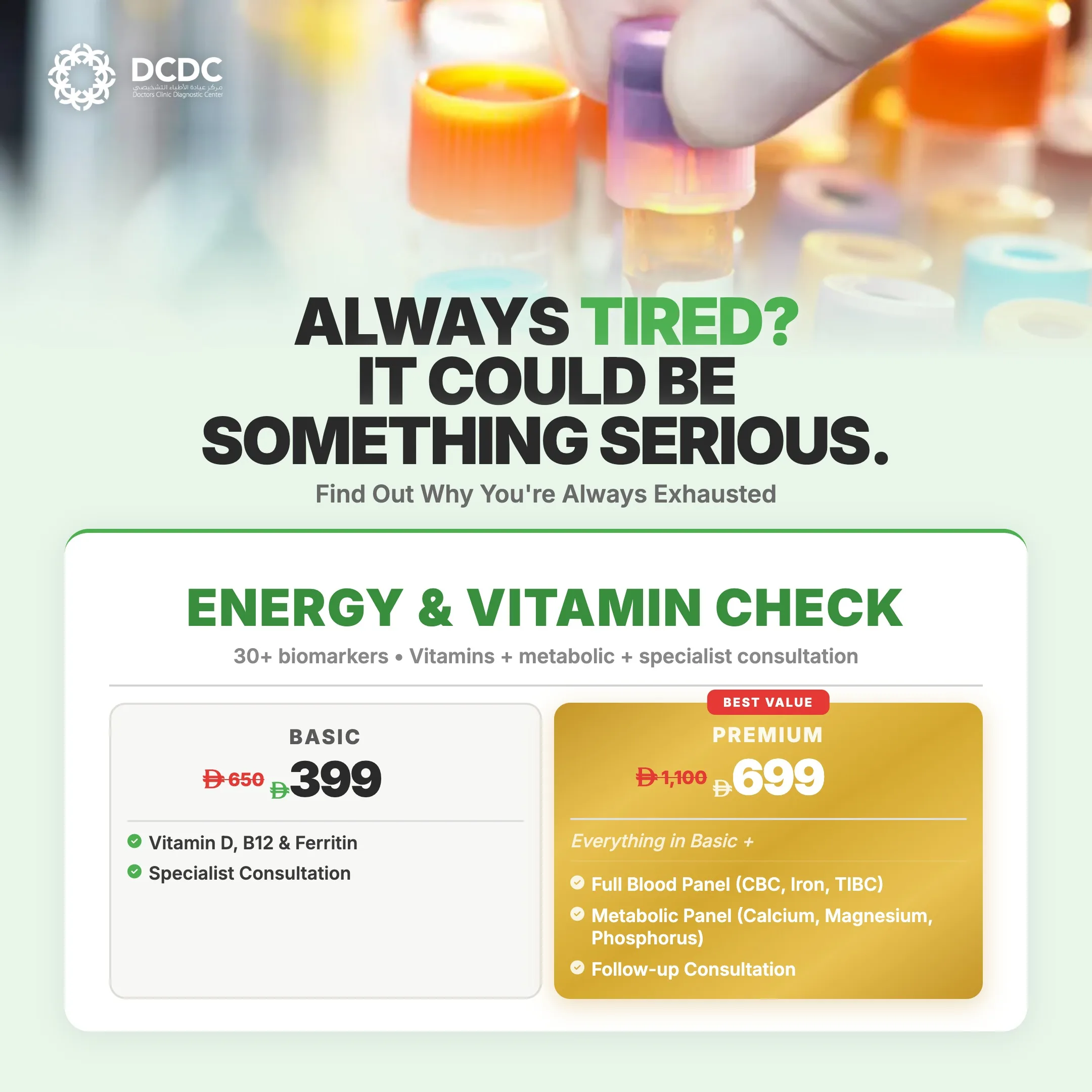
Health Screening Packages
Save with our bundled screening packages — specialist consultation included

Hypothyroidism vs Hyperthyroidism: Quick Comparison Table
Before going into detail, here is a side-by-side summary of the two conditions. Both are common in Dubai, both are diagnosed with a simple blood test, and both are highly manageable once correctly identified.
| Feature | Hypothyroidism (Underactive) | Hyperthyroidism (Overactive) |
|---|---|---|
| Thyroid hormone level | Too low | Too high |
| TSH level | High | Low |
| Metabolism | Slows down | Speeds up |
| Weight change | Weight gain | Weight loss |
| Energy level | Fatigue, low energy | Restlessness, hyperactivity |
| Heart rate | Slow (bradycardia) | Fast (tachycardia), palpitations |
| Temperature tolerance | Feeling cold | Feeling hot, excess sweating |
| Mood | Depression, sluggishness | Anxiety, irritability, nervousness |
| Bowel habits | Constipation | Frequent bowel movements, diarrhea |
| Skin and hair | Dry skin, hair thinning, brittle nails | Warm/moist skin, fine brittle hair |
| Most common cause | Hashimoto's thyroiditis (autoimmune) | Graves' disease (autoimmune) |
| First-line treatment | Levothyroxine (hormone replacement) | Anti-thyroid drugs, radioactive iodine, or surgery |
What Is Hypothyroidism?
Hypothyroidism occurs when the thyroid gland does not produce enough thyroid hormone (T3 and T4) to meet the body's needs. Without enough hormone, every process that relies on metabolism — from heart rate to digestion to brain function — slows down. It is the more common of the two conditions and tends to develop gradually, which is why many people attribute early hypothyroidism symptoms to being busy, stressed, or simply getting older. Left untreated, hypothyroidism can lead to high cholesterol, heart problems, infertility, and in rare severe cases, a life-threatening condition called myxedema coma. For a deeper look at management options, see our full hypothyroidism treatment in Dubai guide.
Common Causes of Hypothyroidism
- Hashimoto's thyroiditis: An autoimmune condition where the immune system attacks the thyroid gland — the leading cause of hypothyroidism worldwide
- Iodine deficiency: The thyroid needs iodine to produce hormones; low dietary iodine can impair function
- Previous thyroid surgery or radioactive iodine treatment: Removing or destroying thyroid tissue reduces hormone output
- Certain medications: Lithium and some heart medications (like amiodarone) can suppress thyroid function
- Postpartum thyroiditis: Temporary thyroid inflammation after childbirth that can lead to lasting hypothyroidism
- Congenital hypothyroidism: Some infants are born with an underdeveloped or missing thyroid gland
What Is Hyperthyroidism?
Hyperthyroidism is the opposite condition — the thyroid produces too much hormone, pushing the body's metabolism into overdrive. This can cause a racing heart, unintentional weight loss despite a normal or increased appetite, anxiety, tremor, and heat intolerance. Hyperthyroidism tends to develop faster than hypothyroidism and its symptoms are often more noticeable, which can prompt earlier diagnosis. However, untreated hyperthyroidism carries serious risks, including atrial fibrillation, heart failure, osteoporosis, and a rare but dangerous complication called thyroid storm. Distinguishing hyperthyroidism from anxiety disorders or generalized restlessness is one of the most common reasons patients are referred for thyroid testing in Dubai.
Common Causes of Hyperthyroidism
- Graves' disease: An autoimmune condition where antibodies stimulate the thyroid to overproduce hormone — the leading cause of hyperthyroidism
- Toxic nodular goiter: One or more thyroid nodules become overactive and produce excess hormone independently
- Thyroiditis: Inflammation of the thyroid (viral, postpartum, or subacute) that causes a temporary surge of stored hormone into the bloodstream
- Excess iodine intake: Certain supplements, contrast dyes, or medications containing high iodine levels can trigger overactivity
- Taking too much thyroid medication: Overcorrection in patients already being treated for hypothyroidism
Detailed Symptom Comparison: Hypothyroidism vs Hyperthyroidism
Because the two conditions push the body's metabolism in opposite directions, most symptoms mirror each other. Recognizing this pattern is often the first clue in telling underactive and overactive thyroid disease apart before blood work confirms the diagnosis.
| Symptom Category | Hypothyroidism Symptoms | Hyperthyroidism Symptoms |
|---|---|---|
| Weight | Unexplained weight gain | Unexplained weight loss despite normal or increased appetite |
| Energy | Persistent fatigue, sluggishness | Restlessness, difficulty sitting still |
| Heart | Slow heart rate | Rapid heart rate, palpitations, irregular rhythm |
| Temperature | Cold intolerance, cold hands/feet | Heat intolerance, excessive sweating |
| Mental/Emotional | Low mood, brain fog, forgetfulness | Anxiety, irritability, mood swings |
| Sleep | Excessive sleepiness | Insomnia, difficulty falling asleep |
| Muscles | Muscle weakness, aches, cramps | Muscle weakness, especially in the upper arms and thighs |
| Digestion | Constipation | Frequent bowel movements or diarrhea |
| Menstrual cycle | Heavy or irregular periods | Light or infrequent periods |
| Hair and skin | Dry, coarse skin; thinning hair; brittle nails | Warm, moist skin; fine hair; nail separation |
| Neck | Possible goiter (enlarged thyroid) | Possible goiter, sometimes with visible bulging eyes (Graves' disease) |
| Tremor | Not typical | Fine hand tremor is common |
How Thyroid Blood Tests Tell the Two Apart
Diagnosis always starts with the same blood test — TSH (thyroid-stimulating hormone) — because it is the most sensitive marker of thyroid function. TSH is produced by the pituitary gland and works on a feedback loop: when thyroid hormone levels are low, the pituitary releases more TSH to stimulate the thyroid; when thyroid hormone levels are high, TSH drops because the pituitary senses the body already has enough. This is why interpreting thyroid blood test results correctly means looking at TSH in the opposite direction of the actual thyroid hormone level.
| Result Pattern | TSH | Free T4 / T3 | Likely Diagnosis |
|---|---|---|---|
| Normal thyroid function | Normal | Normal | Euthyroid (healthy thyroid) |
| Overt hypothyroidism | High | Low | Underactive thyroid — treatment usually needed |
| Subclinical hypothyroidism | Mildly high | Normal | Early or mild underactivity — monitor or treat depending on symptoms |
| Overt hyperthyroidism | Low | High | Overactive thyroid — treatment usually needed |
| Subclinical hyperthyroidism | Mildly low | Normal | Early or mild overactivity — monitor or investigate cause |
Once TSH indicates a likely direction, Free T4 and Free T3 confirm the severity, and thyroid antibody tests (TPO antibodies, TSH receptor antibodies) can identify whether an autoimmune condition like Hashimoto's or Graves' disease is the underlying cause. If you're unsure which test to request, our guide comparing TSH versus a full thyroid panel explains when each is appropriate.
Thyroid Test Costs at DCDC Dubai
DCDC offers same-day thyroid blood testing at the Building 64, Block A laboratory in Dubai Healthcare City, with results typically ready the same day. Pricing below reflects individual test and consultation costs; insured patients may pay a reduced co-payment through direct billing with 20+ insurance partners, including Daman, AXA, and Bupa.
| Service | Price (AED) | Notes |
|---|---|---|
| GP thyroid consultation | from 299 | Includes symptom review and exam by Dr. Hadeel Elnur |
| Specialist thyroid consultation | up to 599 | For complex cases or ongoing management |
| TSH test | 149 | First-line screening test, same-day results |
| Full thyroid panel (TSH + T3 + T4) | 399 | Recommended when TSH is abnormal or symptoms persist |
| Thyroid antibody panel (TPO/TSH receptor Ab) | from 180 | Confirms autoimmune thyroid disease such as Hashimoto's or Graves' |
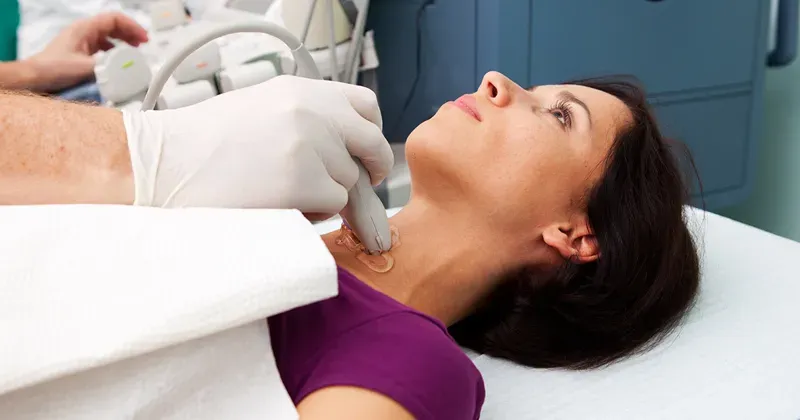
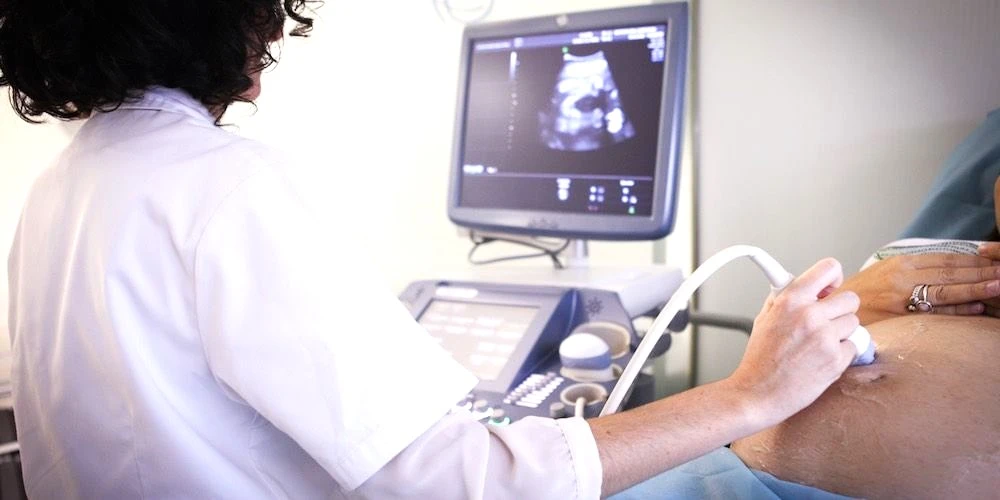
| Thyroid ultrasound with TI-RADS | from 250 | In-house imaging to assess nodules and gland structure |
For a full breakdown of pricing tiers and what influences the final cost, read our dedicated guide on thyroid treatment cost in Dubai.
Treatment Comparison: Managing Hypothyroidism vs Hyperthyroidism
Because the two conditions are essentially opposite hormone imbalances, treatment approaches differ significantly. Hypothyroidism is generally simpler to manage long-term, while hyperthyroidism treatment depends more on the underlying cause and severity.
| Aspect | Hypothyroidism Treatment | Hyperthyroidism Treatment |
|---|---|---|
| Main approach | Daily hormone replacement (levothyroxine) | Anti-thyroid medication (methimazole, carbimazole) |
| Goal | Restore normal hormone levels | Reduce excess hormone production |
| Other options | Dose adjustment based on periodic TSH checks | Radioactive iodine therapy or surgical thyroidectomy for select cases |
| Monitoring frequency | Every 6-8 weeks during dose titration, then annually | Every 4-8 weeks until stable, then every few months |
| Duration | Usually lifelong | May be temporary (thyroiditis) or lifelong depending on cause |
| Beta-blockers used? | Not typically needed | Often used short-term to control rapid heart rate and tremor |
Which Do I Have? A Simple Decision Guide
If you're trying to work out which condition might explain your symptoms before seeing a doctor, this quick self-check can help point you in the right direction — though only a blood test can confirm a diagnosis.
- Gaining weight, feeling cold, tired, and constipated? These point toward hypothyroidism (underactive thyroid)
- Losing weight despite eating normally, feeling hot, anxious, and your heart racing? These point toward hyperthyroidism (overactive thyroid)
- Noticed a lump or swelling in your neck? This can occur with either condition and warrants a thyroid ultrasound to evaluate
- Symptoms don't clearly fit either pattern, or you have a mix of both? This isn't unusual — some thyroiditis cases cause brief hyperthyroid symptoms followed by hypothyroidism as the gland recovers, so testing is the only reliable way to know
- Family history of thyroid disease? Both hypothyroidism and hyperthyroidism run in families, particularly the autoimmune forms, and this raises your risk of either condition
If you recognize your symptoms in the comparison table above but aren't sure which side you fall on, our overview of thyroid problem symptoms in Dubai walks through red-flag signs worth acting on sooner rather than later.
Not Sure Which Thyroid Condition You Have?
A same-day TSH, T3, and T4 blood panel at DCDC can tell you within hours whether your thyroid is underactive, overactive, or normal. Book online or walk in to Building 64, Block A, Al Razi Medical Complex, Dubai Healthcare City.
Thyroid consultations from AED 299. Same-day blood results. Direct billing with 20+ insurance partners.
Can You Have Both Hypothyroidism and Hyperthyroidism?
Not at the same time in the classic sense, but it is possible to move between the two states, or to have periods of each. The clearest example is thyroiditis (inflammation of the thyroid), which often begins with a hyperthyroid phase — as inflamed thyroid tissue releases stored hormone into the bloodstream — followed weeks later by a hypothyroid phase as the gland's hormone reserves are depleted and inflammation subsides. Postpartum thyroiditis follows exactly this pattern in some women after childbirth. Patients already being treated for one condition can also swing toward the other if their medication dose needs adjusting, which is why regular monitoring matters even after a diagnosis is confirmed and treatment has started.
Thyroid Nodules: A Complication of Either Condition
Thyroid nodules — small lumps within the thyroid gland — can occur alongside either hypothyroidism or hyperthyroidism, or independently of both. Most nodules are benign and don't affect hormone levels, but some (called toxic nodules) actively produce excess hormone and can cause hyperthyroidism on their own. Others can coexist with an underactive thyroid. Because nodules can only be properly evaluated with imaging rather than blood tests alone, a thyroid ultrasound with TI-RADS classification is used to assess their size, structure, and risk level. If you've noticed a lump in your neck or a nodule was mentioned during a routine exam, our guide to thyroid nodule diagnosis in Dubai explains what happens next.
Who Is at Risk in Dubai?
Thyroid disorders are more common than many residents realize — current estimates suggest up to 15% of the UAE population may have some degree of thyroid dysfunction, with a large proportion undiagnosed. Several factors make thyroid screening particularly relevant in Dubai: a large expatriate population with varying baseline iodine intake from their home countries, high rates of autoimmune thyroid conditions among women of reproductive age, and busy professional lifestyles where fatigue, weight change, or mood shifts are often dismissed as stress rather than investigated. Women are affected by both hypothyroidism and hyperthyroidism far more often than men, and risk increases with age, pregnancy, and family history of thyroid or other autoimmune disease.
What to Expect at DCDC: Your Thyroid Evaluation Journey
A thyroid evaluation at DCDC in Dubai Healthcare City is designed to move from first consultation to a clear diagnosis as quickly as possible, without unnecessary repeat visits. DCDC is MOHAP licensed (License No. NIMY7VY5-240925), rated 4.8/5 on Google with 98% patient satisfaction, and average wait times of around 15 minutes, so most patients are seen, tested, and given an initial answer within a single visit.
- Step 1 — GP consultation: You'll start with a General Practitioner, such as Dr. Hadeel Elnur, who reviews your symptoms, medical history, and family history, and performs a physical exam of the neck to check for goiter or nodules
- Step 2 — Same-day blood draw: If thyroid dysfunction is suspected, TSH and, when needed, Free T4/T3 and antibody tests are drawn on-site the same visit
- Step 3 — Same-day results: Most thyroid blood test results are available the same day, allowing your GP to interpret them and explain what they mean without a long wait
- Step 4 — Imaging if needed: If a goiter, nodule, or structural abnormality is suspected, an in-house thyroid ultrasound with TI-RADS classification is performed to assess the gland further
- Step 5 — Diagnosis and treatment plan: Based on results, your GP either starts treatment directly for straightforward cases or coordinates a referral to endocrinology for complex or borderline cases
- Step 6 — Follow-up monitoring: Regular blood tests every 6-8 weeks initially, then less frequently once hormone levels stabilize, ensure treatment stays on track

General Practice
Dr. Hadeel Elnur is a General Practitioner at Doctors Clinic Diagnostic Center (DCDC) in Dubai Healthcare City.
"Patients almost never walk in saying 'I think my thyroid is underactive' or 'I think it's overactive' — they come in describing fatigue, or a racing heart, or unexplained weight change, and it's our job to work out which direction the thyroid is pulling them," says Dr. Hadeel Elnur, General Practitioner at DCDC. "As the first point of contact, my role is to take a careful history, examine the neck, and order the right first test — usually TSH — rather than jumping straight to a full panel or imaging that may not be needed yet. If the picture is straightforward, we can often start managing hypothyroidism directly. If it looks more complex — antibodies suggesting Graves' disease, a nodule on exam, or symptoms that don't fully match the blood results — I coordinate the next steps with our lab and imaging team, and refer on to endocrinology when specialist input is needed. What matters most to patients is getting a clear answer quickly, and that's exactly what a same-day TSH result lets us give them."
Living With a Thyroid Condition: What to Expect Long-Term
Both hypothyroidism and hyperthyroidism are, in the vast majority of cases, highly manageable long-term conditions rather than emergencies. For hypothyroidism, most patients feel back to normal within 4-6 weeks of starting the correct levothyroxine dose, with periodic blood tests to fine-tune dosing over time — needs can change with age, weight, pregnancy, or other medications. For hyperthyroidism, symptom improvement with anti-thyroid medication typically begins within a few weeks, though full normalization of thyroid hormone levels can take a few months; some patients ultimately choose radioactive iodine or surgery for a more permanent solution rather than staying on medication indefinitely. In both cases, once hormone levels are stabilized, most people return to their normal weight, energy levels, and mood without any lasting restrictions on daily activity.
Get a Clear Thyroid Diagnosis at DCDC Dubai
Whether your symptoms point toward an underactive or overactive thyroid, the DCDC Thyroid Clinic in Dubai Healthcare City offers same-day TSH, T3, and T4 testing plus in-house thyroid ultrasound with TI-RADS classification, all coordinated by a GP who can refer to endocrinology when needed. Book online or walk in to Building 64, Block A, Al Razi Medical Complex.
Rated 4.8/5 with 98% patient satisfaction. MOHAP licensed. Free parking. Open Saturday-Thursday 8 AM-10 PM, Friday 9 AM-9 PM.
Related Services at DCDC
Expert care and advanced diagnostics at Dubai Healthcare City
Frequently Asked Questions
Final Thoughts
Hypothyroidism and hyperthyroidism sit at opposite ends of the same spectrum — one slows the body down, the other speeds it up — but both are common, both are easy to miss in their early stages, and both are diagnosed with the same simple first step: a TSH blood test.
If your symptoms match one side of the comparison table more than the other, that's a useful starting clue, but only blood work can confirm which condition you actually have and guide the right treatment.
In Dubai, where busy schedules and heat often mask early thyroid symptoms, same-day testing removes the biggest barrier to diagnosis — waiting. At DCDC in Dubai Healthcare City, a same-day TSH result, in-house thyroid ultrasound, and GP-led evaluation mean most patients leave their first visit with a clear answer, not just more questions.
Sources & References
This article was reviewed by our medical team and references the following sources:
- World Health Organization - Iodine Deficiency and Thyroid Disorders
- NHS - Underactive Thyroid (Hypothyroidism)
- NHS - Overactive Thyroid (Hyperthyroidism)
- Mayo Clinic - Hypothyroidism (Underactive Thyroid)
- Mayo Clinic - Hyperthyroidism (Overactive Thyroid)
- American Thyroid Association - General Information
- Endocrine Society - Thyroid Disease
Medical content on this site is reviewed by DHA-licensed physicians. See our editorial policy for more information.
Written by
Dr. Hadeel Elnur
General Practitioner
MD, General Practice
Dr. Hadeel Elnur is a General Practitioner at Doctors Clinic Diagnostic Center (DCDC) in Dubai Healthcare City.
Related Articles

Hypothyroidism Treatment Dubai: Full Guide
Thyroid Problems Symptoms Dubai
Thyroid Test Dubai: TSH, T3 & T4 Guide
Thyroid Treatment Cost Dubai: From AED 250
TSH vs Full Thyroid Panel: Which Test?
Thyroid Nodule Dubai: Causes & Treatment
Endocrinologist Dubai: Diabetes & Thyroid Care
Thyroid Ultrasound Dubai: When You Need It
More in Internal Medicine

Enlarged Prostate Dubai: BPH Symptoms (2026)
Read More
Hiatal Hernia Dubai: Symptoms & Treatment (2026)
Read MoreDiabetic Foot Care Dubai: Warning Signs (2026)
Read MoreColonoscopy vs Endoscopy Dubai: Guide (2026)
Read MoreDiabetic Diet Plan Dubai: Foods & Tips (2026)
Read MoreCholesterol-Lowering Foods & Diet Dubai (2026)
Read More© 2026 Doctors Clinic Diagnostic Center (DCDC), Dubai Healthcare City. Originally published at https://doctorsclinicdubai.ae/blog/hypothyroidism-vs-hyperthyroidism-dubai. All rights reserved. Unauthorized reproduction is prohibited.