
Key Takeaways
- Not all gynecologists specialize in menopause — look for doctors with specific training in menopause management, HRT prescribing, and hormone optimization (e.g. BMS, IMS, or NAMS certification)
- A good menopause specialist will spend 30–60 minutes on your first consultation, review your complete medical history, and create a personalized treatment plan — not a one-size-fits-all prescription
- Your first visit should include comprehensive hormone testing (FSH, estradiol, progesterone, thyroid), bone density assessment, cardiovascular risk evaluation, and symptom severity scoring
- Red flags include a doctor who dismisses your symptoms as "just ageing," refuses to discuss HRT without medical reason, only offers antidepressants, or rushes through a 10-minute consultation
- DCDC Dubai Healthcare City offers same-week menopause consultations with DHA-licensed specialists, in-house laboratory testing, and on-site DEXA scanning — from AED 300
Finding the right menopause doctor in Dubai can be the difference between years of unnecessary suffering and effective, life-changing treatment. Yet menopause remains one of the most under-taught areas in medical education — the average medical student receives just 9 hours of menopause training across their entire degree. This means not every gynecologist, and certainly not every GP, has the expertise to manage your menopause optimally. Our Menopause Management service at DCDC offers same-day appointments in Dubai Healthcare City.
This guide will help you identify what makes a doctor a true menopause specialist, the qualifications and certifications to look for, the right questions to ask before committing to a doctor, exactly what should happen at your first consultation, and how to recognize red flags that signal it is time for a second opinion. Whether you are in perimenopause, surgical menopause, or post-menopause, choosing the right specialist is the most important decision you will make for your health during this transition.
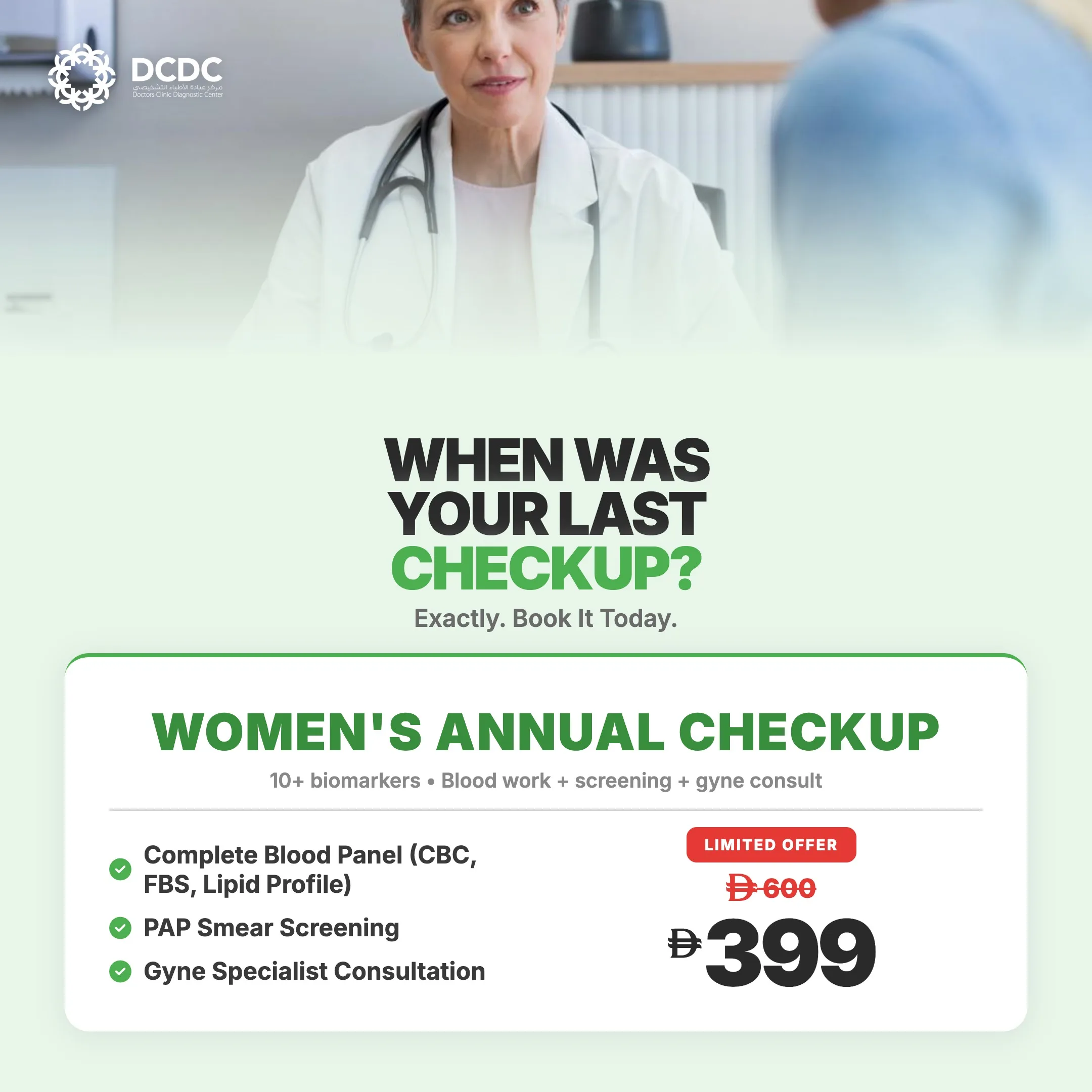
Health Screening Packages
Save with our bundled screening packages — specialist consultation included





Why You Need a Menopause Specialist, Not Just Any Doctor
Menopause affects every organ system in the body — from your brain and bones to your heart and metabolism. Yet it receives remarkably little attention in medical training. A 2021 survey published in the journal Menopause found that 80% of medical residents felt "barely comfortable" discussing menopause management. In the UK, a survey by the British Menopause Society found that only 41% of GPs felt confident prescribing HRT.
This is not a criticism of general practitioners — it is a reflection of a systemic gap in medical education. The result, however, is that many women in Dubai are told to "wait it out," are prescribed antidepressants instead of HRT, or are given outdated information about hormone therapy risks based on misinterpretations of the 2002 WHI study. A menopause specialist stays current with the latest evidence and can offer you the full range of treatment options.
The Difference Between a GP and a Menopause Specialist
| Aspect | General Practitioner | Menopause Specialist |
|---|---|---|
| Menopause training | Limited (part of general curriculum) | Extensive — dedicated courses, certifications, conferences |
| HRT knowledge | May know 1–2 formulations | Knows all formulations, delivery methods, and dosing nuances |
| First-line approach | May suggest "wait and see" or antidepressants | Comprehensive symptom assessment with tailored treatment plan |
| Consultation length | 10–15 minutes typical | 30–60 minutes for initial assessment |
| Ongoing monitoring | Annual check-up | Regular reviews at 3, 6, and 12 months with dose adjustments |
| Bone & heart risk | May refer out | Integrated assessment with DEXA and cardiovascular screening |
Key differences between a GP visit and a dedicated menopause consultation. A specialist approach covers the full picture — symptoms, risks, and long-term health.
What to Look For in a Menopause Doctor in Dubai
Dubai has over 4,000 licensed physicians across hundreds of clinics. Finding the right menopause specialist requires looking beyond a generic "gynecologist" title. Here are the specific qualifications, approaches, and practical factors that distinguish an excellent menopause doctor from an average one.
Qualifications and Certifications
The following credentials indicate that a doctor has invested significant additional training specifically in menopause medicine:
- BMS (British Menopause Society) certification: Considered the gold standard in menopause education — indicates completion of a rigorous menopause-specific training programme
- IMS (International Menopause Society) membership: Active membership demonstrates ongoing engagement with the latest global menopause research and guidelines
- NAMS (North American Menopause Society) certification: NCMP (NAMS Certified Menopause Practitioner) credential requires passing a comprehensive exam
- Fellowship in Obstetrics & Gynecology: FRCOG, FACOG, or equivalent — the foundation of surgical and medical women's health expertise
- Subspecialty in reproductive endocrinology: Deep expertise in hormonal medicine — though not all reproductive endocrinologists focus on menopause
- Active CME (Continuing Medical Education): Regular attendance at menopause conferences and workshops — ask your doctor about their most recent training
Approach and Treatment Philosophy
Credentials matter, but so does how a doctor practises. The best menopause doctors in Dubai share these characteristics:
- Listens without dismissing: Takes your symptoms seriously, regardless of your age or how "mild" they may seem on paper
- Offers multiple treatment options: Does not push only HRT or only "natural" approaches — presents the full evidence-based spectrum and lets you decide
- Explains risks and benefits clearly: Uses current data (not the debunked WHI headlines) and personalizes risk assessment to your medical history
- Monitors and adjusts: Recognizes that menopause management is not a single prescription but an ongoing process with regular follow-ups and dose adjustments
- Considers your whole health: Assesses bone density, cardiovascular risk, mental health, sexual health, and metabolic changes — not just hot flashes
- Respects your preferences: If you prefer non-hormonal approaches, supports that choice with evidence-based alternatives rather than dismissing your concerns
Practical Considerations in Dubai
- DHA licensing: Verify your doctor is licensed by the Dubai Health Authority — the regulator ensuring practitioner qualifications and standards
- Insurance panel acceptance: Confirm your insurance covers the specialist before booking — most major Dubai insurers cover gynecology consultations
- In-house testing facilities: Clinics with on-site laboratories and imaging (DEXA, ultrasound) save you time and provide faster results
- Location and accessibility: Dubai Healthcare City (DHCC) is home to many of the city's top specialists, centrally located and purpose-built for healthcare
- Wait times: A good menopause clinic should offer appointments within 1–2 weeks, not months — menopause symptoms should not wait
- Language support: Dubai's multicultural population means your doctor should be comfortable consulting in your preferred language, or have translation support available
Book a Menopause Consultation at DCDC
Our DHA-licensed specialists at Doctors Clinic Diagnostic Centre in Dubai Healthcare City offer comprehensive menopause assessments with in-house lab testing and DEXA scanning. Book your appointment — same-week availability.
10 Questions to Ask Your Menopause Doctor
Walking into your first menopause consultation with the right questions puts you in control. These ten questions will help you evaluate whether a doctor is the right fit and whether they have the expertise to manage your menopause effectively: For related information, see our guide on ENT Doctor Dubai: When to See a Specialist.
- "What specific training do you have in menopause management?" — A specialist will be happy to share their qualifications. Vague answers are a warning sign.
- "How many menopause patients do you see each week?" — Volume matters. A doctor who sees menopause patients daily is more experienced than one who sees them occasionally.
- "What are my treatment options beyond HRT?" — A well-rounded specialist knows about non-hormonal medications (SSRIs, gabapentin, clonidine), CBT, and lifestyle interventions.
- "Which HRT formulations and delivery methods do you prescribe?" — If the answer is only oral tablets, the doctor may not be up-to-date on transdermal patches, gels, sprays, and body-identical options.
- "How do you assess cardiovascular and bone health risk?" — Menopause accelerates bone loss and cardiovascular risk. Your doctor should proactively screen for both.
- "How often will I have follow-up appointments?" — Expect a review at 3 months after starting treatment, then every 6–12 months. "Come back if you have problems" is insufficient.
- "Do you offer in-house hormone testing?" — On-site lab testing means faster results and fewer appointments. Ask about turnaround times.
- "What is your approach to perimenopause?" — Many women seek help during perimenopause when symptoms first appear. A specialist should have a clear management strategy for this phase.
- "Can you help with non-vasomotor symptoms?" — Brain fog, joint pain, mood changes, and urogenital symptoms are often overlooked. A comprehensive specialist addresses them all.
- "What should I expect at today's consultation?" — A good doctor will outline the consultation structure, tests to be ordered, and next steps before you leave.
What Happens at Your First Menopause Consultation
Knowing what to expect removes anxiety and helps you make the most of your appointment. A thorough first menopause consultation typically lasts 30–60 minutes and follows a structured assessment.
Before the Appointment: How to Prepare
- Track your symptoms for 2–4 weeks: Note which symptoms you experience, their frequency, and severity (mild/moderate/severe). Apps like "Balance" or a simple diary work well.
- List all current medications: Include supplements, vitamins, and over-the-counter products — some interact with HRT or affect hormone levels.
- Gather your family medical history: Particularly breast cancer, ovarian cancer, osteoporosis, heart disease, blood clots (DVT/PE), and early menopause. This directly influences treatment decisions.
- Note when symptoms started: "About a year ago" is helpful; "I've always been tired" is less so. Be as specific as possible about onset and progression.
- Write down your questions: Bring the list from the section above. You will forget in the moment otherwise.
- Bring previous test results: Any recent blood work, imaging, or specialist reports. This avoids duplicating tests and gives your doctor baseline data.
During the Consultation: What Your Doctor Will Assess
A comprehensive menopause consultation covers far more than just hot flashes. Your specialist should systematically assess:
- Menstrual history: Last period, cycle changes, flow changes — establishing whether you are in perimenopause, menopause, or post-menopause
- Symptom severity scoring: Using validated tools like the Menopause Rating Scale (MRS) or Greene Climacteric Scale to quantify symptom impact
- Medical history review: Previous conditions, surgeries, family history of breast cancer, blood clots, osteoporosis, and cardiovascular disease
- Medication review: Current medications and supplements that may interact with or influence hormone therapy options
- Lifestyle assessment: Exercise, diet, sleep, stress levels, alcohol, smoking — all influence menopause symptoms and treatment choices
- Mental health screening: Anxiety, depression, mood changes — which are frequently under-recognized menopause symptoms
- Sexual health discussion: Vaginal dryness, pain during intercourse, reduced libido — important quality-of-life issues that many doctors skip
- Physical examination: Blood pressure, weight, BMI, and (if appropriate) breast and pelvic examination
Tests Your Menopause Doctor May Order
| Test | Purpose | Available at DCDC |
|---|---|---|
| FSH (follicle-stimulating hormone) | Elevated levels help confirm menopausal status — though not always necessary for diagnosis | Yes — same-day results |
| Estradiol (E2) | Measures circulating oestrogen levels — useful for monitoring HRT dosing | Yes — same-day results |
| Progesterone | Confirms ovulation status in perimenopause | Yes — same-day results |
| Thyroid panel (TSH, T3, T4) | Thyroid dysfunction mimics many menopause symptoms — must be ruled out | Yes — same-day results |
| Vitamin D | Deficiency is extremely common in Dubai (up to 80% of residents) and worsens bone loss | Yes — same-day results |
| Lipid profile | Menopause increases LDL cholesterol and cardiovascular risk | Yes — same-day results |
| HbA1c and fasting glucose | Screens for insulin resistance and diabetes risk, which increases after menopause | Yes — same-day results |
| Bone profile (calcium, phosphate, ALP) | Baseline for monitoring bone health alongside DEXA | Yes — same-day results |
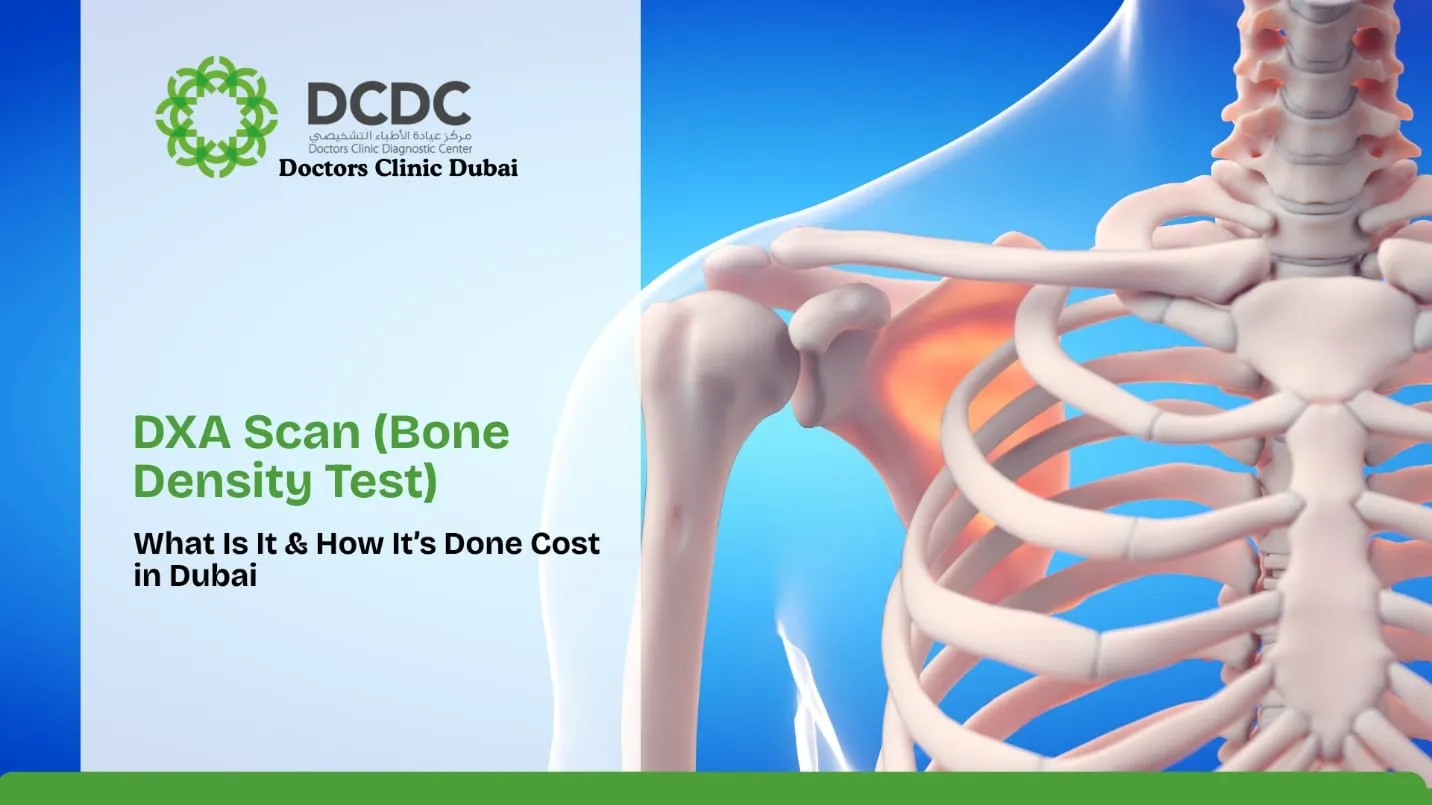
| DEXA bone density scan | Gold standard for assessing osteoporosis risk — recommended for all menopausal women | Yes — on-site DEXA scanner |
| Pelvic ultrasound | Evaluates uterine and ovarian health — important before starting HRT | Yes — on-site imaging |
Common tests ordered during a menopause consultation. At DCDC, all laboratory and imaging tests are available in-house for convenience.
Types of Menopause Specialists in Dubai
Several types of doctors in Dubai manage menopause. Understanding their backgrounds helps you choose the right fit for your needs:
| Specialist Type | Best For | Typical Approach |
|---|---|---|
| Gynecologist with menopause training | Most women — first-line menopause care | Comprehensive management including HRT, non-hormonal options, screening, and ongoing monitoring |
| Reproductive endocrinologist | Complex hormonal cases, premature menopause | Hormone-focused approach; particularly skilled in unusual or resistant cases |
| Endocrinologist | Menopause with thyroid, diabetes, or metabolic complications | Hormone and metabolic management; may not focus on HRT prescribing |
| General practitioner (GP) | Mild symptoms, initial assessment | Can start basic treatment; should refer to specialist for complex cases |
| Functional medicine practitioner | Women preferring integrative approaches | Combines conventional medicine with nutrition, supplements, and lifestyle — verify credentials carefully |
For most women in Dubai, a gynecologist with specific menopause training is the ideal choice. They combine surgical and medical expertise with dedicated menopause knowledge.
See a Menopause Specialist This Week
DCDC Dubai Healthcare City offers same-week menopause consultations with DHA-licensed gynecologists experienced in HRT, perimenopause management, and comprehensive women's health. Contact us or message us on WhatsApp.
Red Flags: When to Get a Second Opinion
Not every consultation goes well, and recognizing red flags early can save you months of inadequate care. Consider seeking a second opinion if your doctor: You may also find our Diabetes Management Dubai: Complete Guide helpful.
- Dismisses your symptoms as "just ageing" or "normal": While menopause is natural, disruptive symptoms are not something you should simply accept. Any doctor who tells you to "just live with it" is not providing adequate care.
- Refuses to discuss HRT without a clear medical reason: If you have no contraindications (active breast cancer, undiagnosed bleeding, active blood clots, severe liver disease) and your doctor still will not discuss HRT, their reluctance may stem from outdated knowledge rather than evidence.
- Only offers antidepressants as first-line treatment: SSRIs and SNRIs have a role in menopause management, but prescribing them instead of addressing the underlying hormonal cause — without discussion — is a red flag.
- Does not order hormone tests or baseline investigations: A menopause consultation without blood work is incomplete. Your doctor should assess hormones, thyroid, metabolic markers, and bone health.
- Rushes through the consultation in under 15 minutes: A thorough first menopause assessment takes at least 30 minutes. If your doctor seems hurried, important symptoms may be missed.
- Shows no interest in follow-up: "Come back if it gets worse" is not a management plan. Proper menopause care includes scheduled reviews to assess treatment effectiveness and adjust dosing.
- Is unaware of current HRT guidelines: If your doctor cites the 2002 WHI study as reason to avoid HRT without acknowledging the decades of reanalysis that have refined those findings, their knowledge may not be current.
Menopause Consultation Cost in Dubai
Understanding costs helps you budget for your menopause care. Dubai offers a range of options across different facility types:
| Service | Typical Cost (AED) | Notes |
|---|---|---|
| Initial menopause consultation | 300–600 | Specialist gynecologist, 30–60 minutes |
| Follow-up consultation | 200–400 | Review appointment, 15–30 minutes |
| Hormone blood panel | 500–1,200 | FSH, estradiol, progesterone, thyroid, vitamin D, lipids |
| DEXA bone density scan | 400–800 | Recommended for all menopausal women |
| Pelvic ultrasound | 400–800 | Baseline assessment before starting HRT |
| HRT prescription (monthly) | 150–400 | Varies by type: tablets, patches, gel, or spray |
| Comprehensive menopause package | 650–1,800 | Some clinics offer bundled consultation + tests |
Prices are approximate and vary by facility. Most Dubai insurance plans cover specialist consultations and diagnostic tests when medically indicated.
Most major Dubai insurance providers — including Daman, Oman Insurance, AXA, Cigna, MetLife, and Dubai Insurance — cover gynecology specialist consultations. Laboratory tests and imaging (including DEXA) are typically covered when ordered by your specialist. HRT medications are usually covered under pharmacy benefits, though co-pay amounts vary by plan. We recommend checking with your insurer before your visit, and our reception team at DCDC can assist with insurance verification.
Menopause Care at DCDC Dubai Healthcare City
At Doctors Clinic Diagnostic Centre (DCDC) in Dubai Healthcare City, our approach to menopause management is comprehensive, evidence-based, and patient-centred. Here is what makes our menopause care different:
- DHA-licensed specialist gynecologists with dedicated menopause training and experience managing the full spectrum of perimenopause, menopause, and post-menopause — meet our team
- In-house laboratory for comprehensive hormone panels, thyroid tests, lipid profiles, and metabolic markers — most results available same-day
- On-site DEXA bone density scanner for immediate osteoporosis risk assessment — no separate appointment needed
- On-site cardiology department for cardiovascular risk evaluation, ECG, and cardiac screening when indicated
- Same-week appointment availability — we understand that menopause symptoms should not wait weeks or months for attention
- Personalized treatment plans that consider your symptoms, medical history, risk factors, and personal preferences — not a cookie-cutter approach
- Multilingual consultations — our team supports English, Arabic, Farsi, Urdu, Hindi, and other languages to serve Dubai's diverse community
- Continuity of care — the same doctor follows your journey from first consultation through ongoing management, building a relationship that improves outcomes
How to Book a Menopause Appointment in Dubai
Booking a menopause consultation at DCDC is straightforward. You do not need a GP referral — you can book directly with our specialist: Read more in our Menopause Treatment Dubai: Symptoms & HRT Options.
- Phone: Call us at +971 54 219 5008 to schedule with our reception team
- WhatsApp: Message us at +971 54 219 5008 for quick booking
- Walk-in: Visit us at Dubai Healthcare City, Building 64, Ground Floor — walk-in appointments accepted subject to availability
- Online: Contact us through our website and our team will call you to confirm
What to bring: Emirates ID or passport, insurance card (if applicable), any previous blood test results or medical reports, a list of current medications and supplements, and your symptom diary if you have been tracking.
Take the First Step — Book Your Menopause Consultation Today
You do not have to navigate menopause alone. Our experienced specialists at Doctors Clinic Diagnostic Centre in Dubai Healthcare City provide compassionate, evidence-based menopause care tailored to you. Contact us today to book your consultation.
Related Services at DCDC
Expert care and advanced diagnostics at Dubai Healthcare City
Frequently Asked Questions
Choosing the Right Menopause Doctor Changes Everything
The right menopause specialist does not just prescribe medication — they listen, educate, and empower you to navigate this transition with confidence. If your current doctor is dismissing your symptoms, rushing through appointments, or offering outdated advice, you deserve better. A good menopause specialist will transform your experience from one of confusion and frustration to one of clarity and control.
At Doctors Clinic Diagnostic Centre in Dubai Healthcare City, our menopause management team provides comprehensive, compassionate care built on the latest evidence. From initial consultation through long-term management, we are with you every step of the way. Book your consultation today.
Sources & References
This article was reviewed by our medical team and references the following sources:
- British Menopause Society — Finding a Menopause Specialist and BMS Certification Programme
- NICE Guidelines — Menopause: Diagnosis and Management (NG23, updated 2024)
- Dubai Health Authority — Licensed Healthcare Professionals Directory
- International Menopause Society — Recommendations for Clinical Care and Practice Guidelines
- Menopause Journal — Medical Education Gaps in Menopause Training (2021 Survey)
- North American Menopause Society (NAMS) — NCMP Certification Standards
Medical content on this site is reviewed by DHA-licensed physicians. See our editorial policy for more information.

Written by
DCDC Medical Team
Doctors Clinic Diagnostic Center
Dubai Healthcare City
DCDC (Doctors Clinic Diagnostic Centre) is a multi-specialty medical center in Dubai Healthcare City offering comprehensive healthcare services across cardiology, orthopedics, gynecology, internal medicine, neurology, radiology, laboratory, and more.
Related Articles

Menopause Treatment in Dubai: HRT, Symptoms & Management
Women's Health Screening Guide
DXA Scan: Bone Density Test Guide
Pap Smear Test in Dubai: What You Need to Know
More in Women's Health

BRCA Test: Who Should Consider Genetic Counselling?
Read More
Breast Cancer Awareness Month: October 2026 Dubai
Read More
Dense Breast Tissue: What Your Mammogram Report Means
Read More
Emsella After Childbirth Dubai: Postpartum Guide (2026)
Read More
How Emsella Works: Pelvic Floor Chair Guide Dubai (2026)
Read More
Pelvic Floor Physiotherapy Dubai: Who Needs It (2026)
Read More© 2026 Doctors Clinic Diagnostic Center (DCDC), Dubai Healthcare City. Originally published at https://doctorsclinicdubai.ae/blog/best-menopause-doctor-dubai. All rights reserved. Unauthorized reproduction is prohibited.