النقاط الرئيسية
- تتراوح تكاليف تخطيط القلب في دبي بين 200 و800 درهم تبعاً لنوع التخطيط والمنشأة ومدى تضمين تفسير أخصائي القلب — يقدم DCDC خدمة تخطيط القلب بدءاً من 200 درهم مع مراجعة أخصائي القلب في اليوم ذاته
- يستغرق تخطيط القلب الاعتيادي ذو 12 مشتقاً 10-15 دقيقة فقط وهو إجراء غير مؤلم تماماً — لا إبر، ولا تحضير مسبق، ولا وقت للتعافي
- في DCDC، يُفسَّر كل تخطيط قلب من قِبَل أخصائي قلب معتمد يمكنه على الفور ربط النتائج بالصورة السريرية للمريض والتوصية بالخطوات التالية
- تغطي معظم خطط التأمين الصحي في دبي فحوصات تخطيط القلب عند الإشارة الطبية مع إحالة من الطبيب — يتعامل DCDC مباشرة مع أكثر من 20 شركة تأمين بما فيها Daman وAXA وBupa
- يوفر DCDC فحصاً قلبياً شاملاً في زيارة واحدة: تخطيط القلب في الراحة والصدى القلبي واختبار الحزام المتحرك ومراقبة هولتر لمدة 24 ساعة — كل ذلك متاح في الموقع
- يُعدّ تخطيط القلب أكثر أدوات فحص القلب الأولية فعالية من حيث التكلفة — إذ يمكنه اكتشاف اضطرابات النظم وأمراض القلب وتضخم الغرف واضطرابات التوصيل في غضون دقائق
إذا كنت تبحث عن فحص تخطيط القلب في دبي، فإن السؤال الأول الذي يتبادر إلى ذهنك على الأرجح هو التكلفة. تتراوح أسعار تخطيط القلب في دبي بين 200 درهم لرسم القلب الكهربائي الأساسي في الراحة وما يزيد على 800 درهم للمراقبة المتقدمة كفحص هولتر لمدة 24 ساعة. في DCDC، تبدأ استشارة القلب مع فحص تخطيط القلب من 200 درهم شاملةً تفسير أخصائي القلب. يستعرض هذا الدليل كل نوع من أنواع تخطيط القلب والعوامل المؤثرة في التكلفة وكيفية الحصول على أفضل قيمة لصحة قلبك.
سواء أوصى طبيبك بفحص روتيني للقلب أو كنت تعاني من ألم في الصدر أو خفقان أو تريد ببساطة فحصاً قلبياً أساسياً، فإن فهم تكاليف تخطيط القلب مسبقاً يساعدك على التخطيط المناسب. نستعرض هنا أسعار تخطيط القلب في الراحة والجهد وهولتر، وتفاصيل التغطية التأمينية، ورحلة المريض الكاملة في DCDC بمدينة دبي الطبية، وكيفية تفسير النتائج — كل ما تحتاج معرفته قبل حجز موعدك.
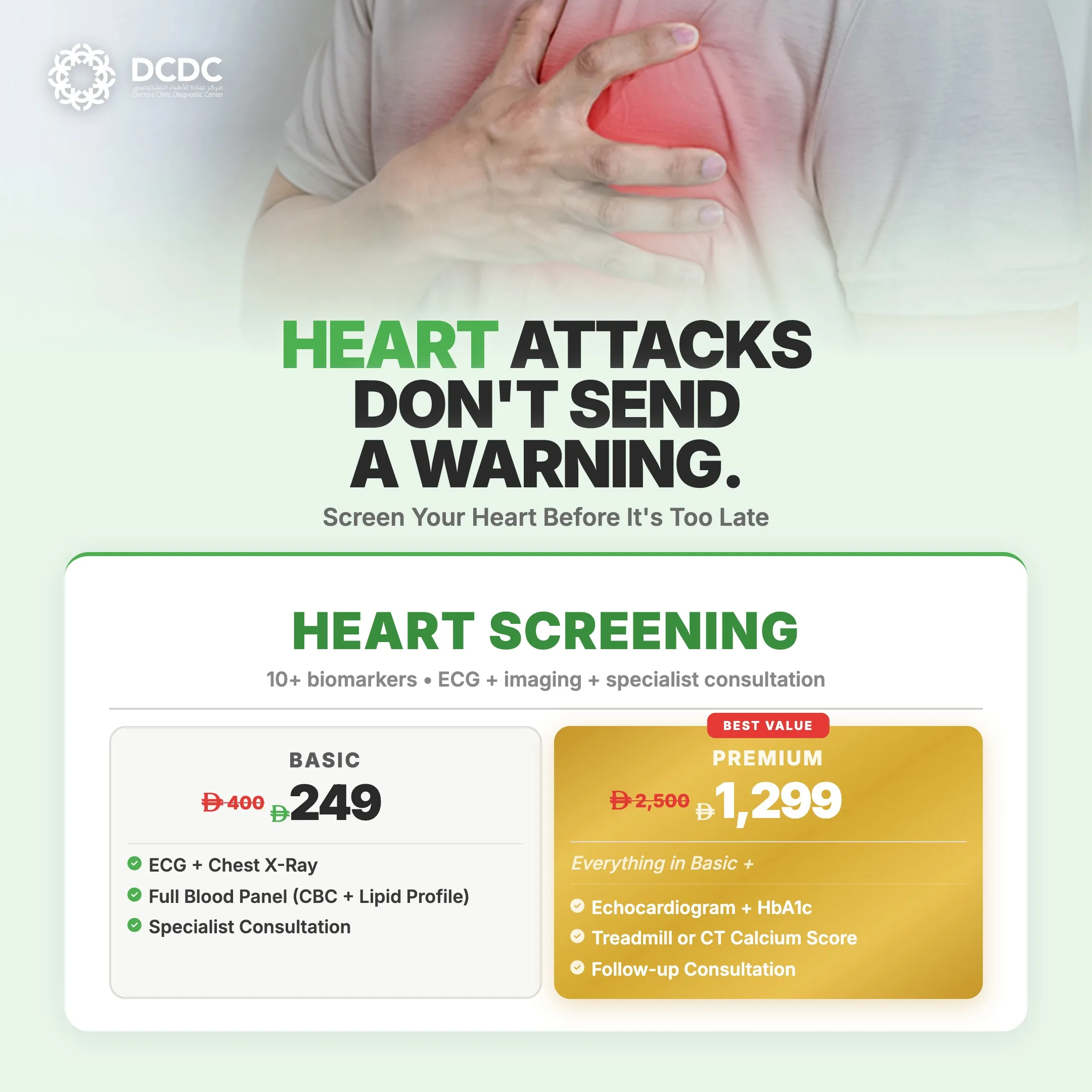
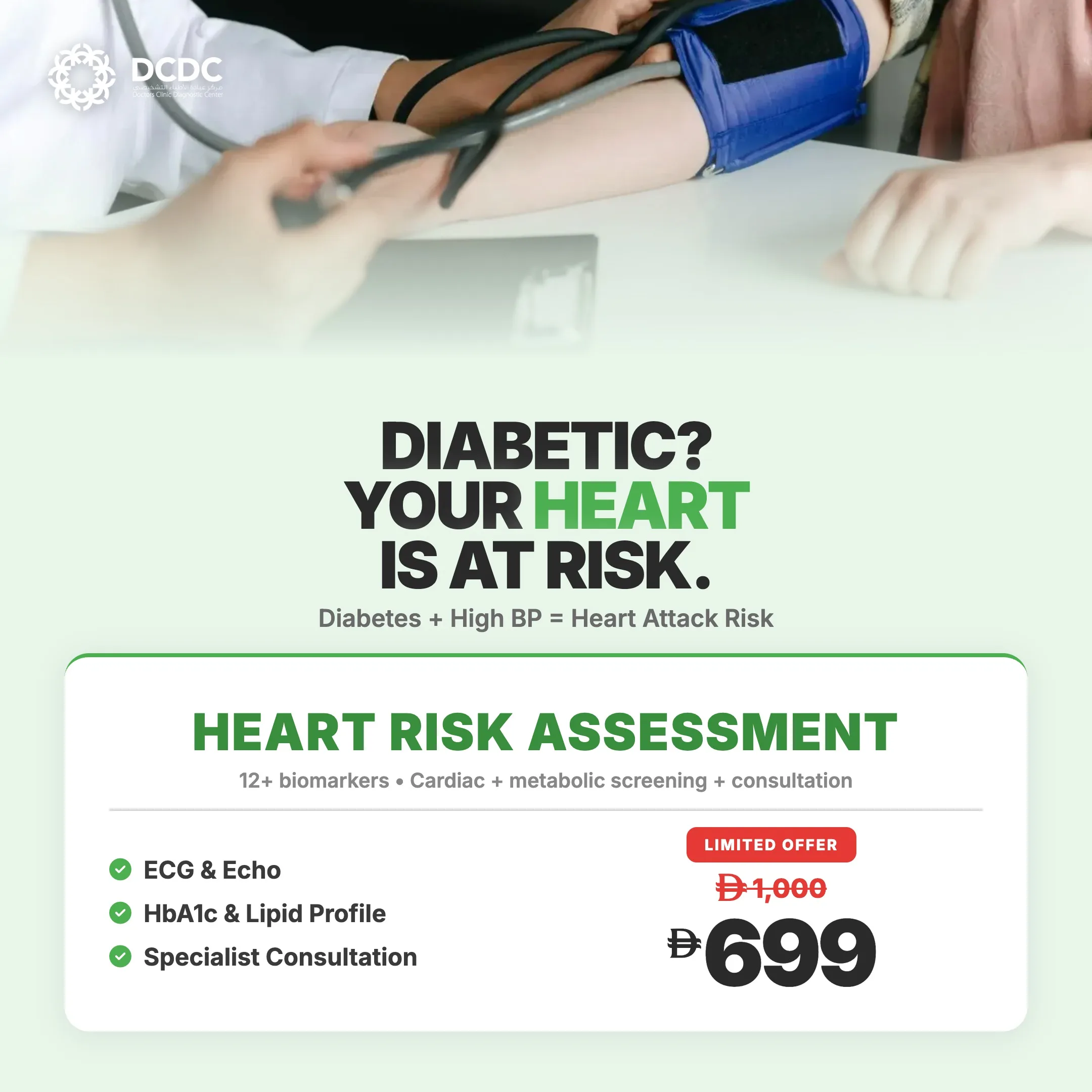
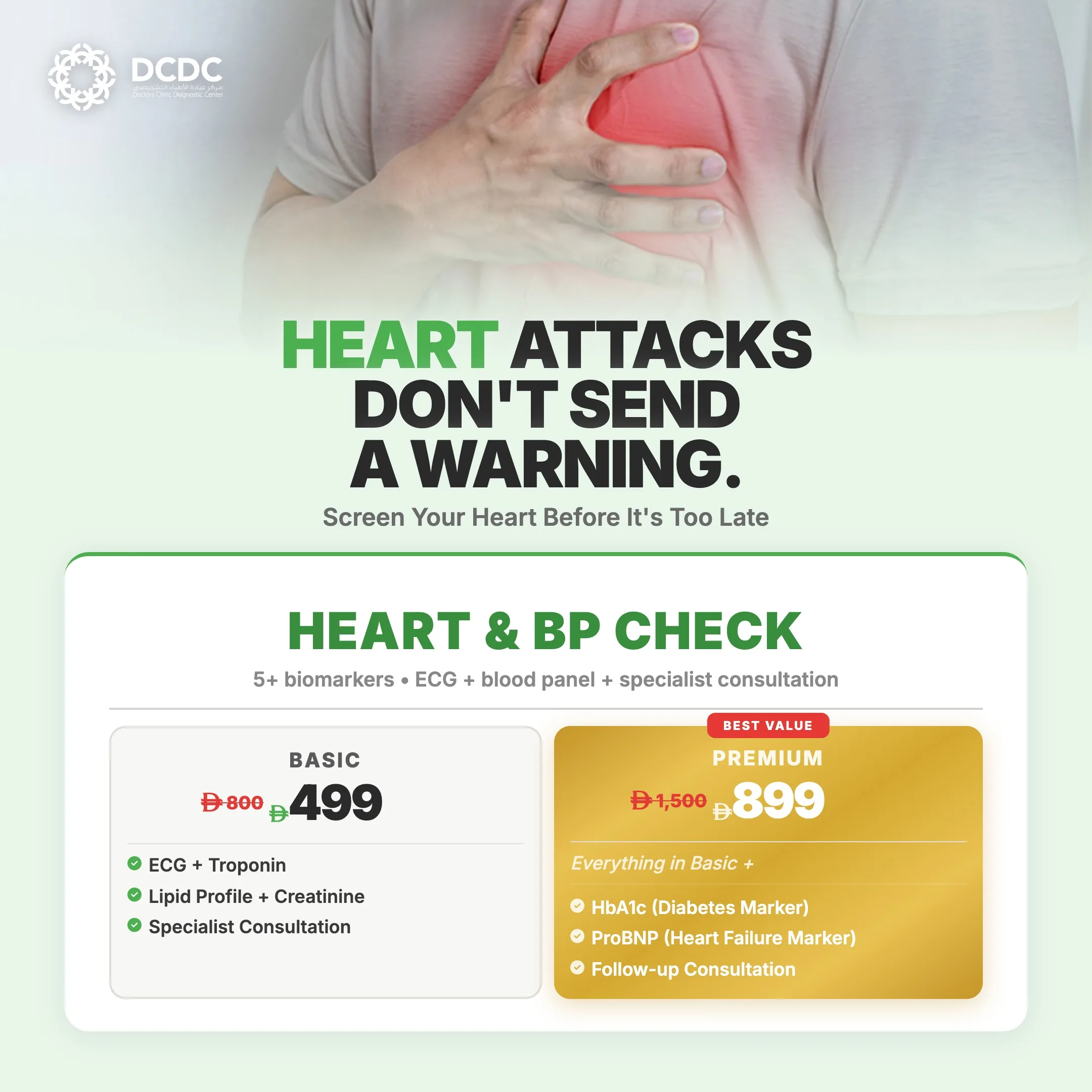
تكلفة تخطيط القلب في دبي: تفصيل شامل للأسعار
تعتمد أسعار تخطيط القلب في دبي أساساً على نوع التخطيط المُجرى ومدى تضمين تفسير أخصائي القلب والمنشأة التي تزورها. فيما يلي تفصيل شامل لنطاقات أسعار تخطيط القلب الحالية في عيادات ومستشفيات دبي. في DCDC، تبدأ أسعار تخطيط القلب من 200 درهم شاملةً التسجيل ومراجعة أخصائي القلب في اليوم ذاته — قارن ذلك بنطاق 200-800 درهم الذي ستجده في عيادات دبي الأخرى.
| نوع التخطيط | نطاق السعر في سوق دبي (درهم) | سعر DCDC (درهم) | يشمل |
|---|---|---|---|
| تخطيط القلب الاعتيادي ذو 12 مشتقاً | 200 - 500 | من 200 | التسجيل + تفسير أخصائي القلب |
| تخطيط القلب مع استشارة قلبية | 400 - 800 | من 350 | استشارة كاملة + تخطيط القلب + التفسير + خطة المتابعة |
| اختبار الجهد على الحزام المتحرك (تخطيط القلب بالجهد) | 500 - 1٬500 | من 500 | تخطيط القلب بالجهد تحت الإشراف + تقرير أخصائي القلب |
| مراقبة هولتر لمدة 24 ساعة | 500 - 1٬500 | من 500 | تركيب الجهاز + التسجيل 24 ساعة + تحليل أخصائي القلب |
| مراقبة هولتر لمدة 48-72 ساعة | 800 - 2٬000 | من 800 | مراقبة ممتدة + تحليل شامل للنظم |
| تخطيط القلب في المنزل (محمول) | 400 - 1٬000 | من 400 | زيارة منزلية للممرض + تخطيط قلب 12 مشتقاً + مراجعة أخصائي القلب |
الأسعار تقريبية وقد تختلف. تواصل مع DCDC للاستفسار عن الأسعار الحالية والتحقق من التغطية التأمينية.
يعود الفارق في السعر بين العيادات في معظمه إلى ما إذا كان تفسير أخصائي القلب مدرجاً أم يُحسب بشكل منفصل، وما إذا كانت المنشأة مستشفى كبيراً (ذا تكاليف تشغيلية أعلى عادةً) أم مركزاً تشخيصياً متخصصاً كـ DCDC. تتقاضى بعض المنشآت رسوماً مقابل التسجيل وحده ثم تُضيف رسوماً منفصلة لقراءة الأخصائي — احرص دائماً على التأكد مما هو مشمول قبل الحجز. للاطلاع على مقارنة تفصيلية لأنواع التخطيط وما يكشفه كل منها، اقرأ دليل فحص تخطيط القلب في دبي.
ما الذي يؤثر في تكلفة تخطيط القلب في دبي؟
ثمة عوامل عدة تحدد ما ستدفعه مقابل تخطيط القلب في دبي. إن فهم هذه المتغيرات يساعدك على مقارنة الأسعار بدقة وتجنب الرسوم غير المتوقعة في الفاتورة.
- نوع تخطيط القلب: يُعدّ تخطيط القلب الاعتيادي ذو 12 مشتقاً الخيار الأكثر تحملاً من حيث التكلفة. تُكلَّف اختبارات الجهد وأجهزة هولتر أكثر لأنها تتطلب معدات متخصصة ووقت مراقبة أطول وتفسيراً أكثر تعقيداً من أخصائي القلب
- تفسير أخصائي القلب: تعرض بعض العيادات سعراً منخفضاً لتخطيط القلب لكنها تتقاضى رسوماً منفصلة لقراءة أخصائي القلب وتفسير النتائج. في DCDC، يُدرج التفسير ضمن سعر تخطيط القلب — إذ يراجع كل تسجيل الدكتور Shahoo Mazhari أو أخصائي قلب معتمد في اليوم ذاته
- نوع المنشأة: تتقاضى المستشفيات الكبرى في دبي عادةً أسعاراً أعلى بسبب تكاليف التشغيل المرتفعة. غالباً ما توفر المراكز التشخيصية المتخصصة والعيادات الخارجية كـ DCDC في مدينة دبي الطبية الجودة ذاتها بأسعار أكثر تنافسية
- حزمة مجمعة مقابل فحص منفرد: كثيراً ما يكون تخطيط القلب المُجرى ضمن استشارة قلبية أو باقة فحص صحي أكثر اقتصادية مقارنةً بحجزه بشكل منفرد. يقدم DCDC باقات مجمعة تشمل استشارة القلب وتخطيط القلب
- التأمين مقابل الدفع الذاتي: يدفع المرضى المؤمَّن عليهم عادةً رسوم المشاركة فقط (10-20% في الغالب) عند الحصول على موافقة مسبقة. يمكن للمرضى الذين يدفعون بأنفسهم في الغالب الحصول على أسعار نقدية تنافسية في المراكز التشخيصية
- الفحوصات الإضافية: إذا أوصى أخصائي القلب بفحوصات إضافية بناءً على نتائج تخطيط القلب — كصدى القلب أو اختبار الجهد — فستزيد التكلفة الإجمالية للتقييم القلبي. إجراء جميع الفحوصات في منشأة واحدة يوفر الوقت والمال
التغطية التأمينية لفحوصات تخطيط القلب في دبي
تغطي معظم خطط التأمين الصحي في دبي فحوصات تخطيط القلب عند الإشارة الطبية ووجود إحالة من الطبيب. استناداً إلى لوائح التأمين الصحي الإلزامي في دبي، تُغطى الخدمات التشخيصية الأساسية بما فيها تخطيط القلب عندما يرى الطبيب المرخص ضرورتها السريرية. ينطبق ذلك على تخطيط القلب في الراحة واختبارات الجهد ومراقبة هولتر على حد سواء.
لاستخدام تأمينك لفحص تخطيط القلب، تحتاج عادةً إلى إحالة من طبيبك المعالج تحدد المؤشر السريري — كألم الصدر أو الخفقان أو ضيق التنفس أو التخليص قبل الجراحة. تتطلب بعض شركات التأمين موافقة مسبقة لاختبارات الجهد وهولتر، بينما يُغطى تخطيط القلب في الراحة الاعتيادي في الغالب دون إذن مسبق. تبلغ رسوم المشاركة في فحوصات تخطيط القلب عادةً 10-20% من التكلفة الإجمالية تبعاً لخطتك.
يتعامل DCDC مباشرة مع أكثر من 20 شركة تأمين بما فيها Daman وAXA وBupa. يتولى فريق الاستقبال لدينا التحقق من تغطيتك التأمينية والتعامل مع إجراءات الموافقة المسبقة قبل موعدك، لتعرف تكلفتك من جيبك مسبقاً. للمرضى غير المؤمَّن عليهم، يقدم DCDC أسعاراً واضحة للدفع الذاتي دون رسوم خفية.
شرح أنواع فحوصات تخطيط القلب
ليست جميع فحوصات تخطيط القلب متماثلة. يلتقط كل نوع معلومات مختلفة حول النشاط الكهربائي لقلبك، وسيوصي أخصائي القلب بالفحص الأنسب بناءً على أعراضك وتاريخك الطبي والسؤال السريري المراد الإجابة عنه.
تخطيط القلب الاعتيادي ذو 12 مشتقاً
يُعدّ تخطيط القلب الاعتيادي ذو 12 مشتقاً الفحص القلبي الأكثر شيوعاً والأقل تكلفة. تُثبَّت اثنا عشر لاصقة إلكترودية على صدرك وذراعيك وساقيك لتسجيل الإشارات الكهربائية لقلبك من زوايا مختلفة. يستغرق الفحص 5-10 دقائق من وضع الإلكترودات حتى الانتهاء وينتج رساماً يكشف معدل القلب ونظمه ونمط التوصيل الكهربائي عبر غرف القلب. يمكنه اكتشاف اضطرابات النظم (عدم انتظام ضربات القلب) وعلامات النوبة القلبية الحالية أو السابقة وتضخم الغرف واختلال توازن الشوارد واضطرابات التوصيل كحصار الحزمة. كثيراً ما يكون تخطيط القلب في الراحة أول فحص يُطلب عندما يأتي المريض بألم في الصدر أو خفقان أو دوار أو ضيق تنفس.
اختبار الجهد على الحزام المتحرك (تخطيط القلب بالجهد)
يُسجَّل في اختبار الجهد على الحزام المتحرك، المعروف أيضاً بتخطيط القلب بالجهد، النشاط الكهربائي لقلبك بينما تمشي ثم تركض على الحزام المتحرك بسرعة وميل يتزايدان تدريجياً. يستمر الفحص 15-30 دقيقة إجمالاً ويكشف مدى استجابة قلبك للجهد البدني — وهو أمر بالغ الأهمية لاكتشاف أمراض الشريان التاجي التي قد لا تظهر في حالة الراحة. يُراقَب معدل قلبك وضغط دمك وتخطيط قلبك باستمرار طوال فترة الجهد. يمكن لاختبار الجهد الكشف عن انخفاض تدفق الدم إلى عضلة القلب (نقص التروية) واضطرابات النظم الناجمة عن الجهد واستجابات ضغط الدم غير الطبيعية. يُطلب عادةً لمرضى لديهم عوامل خطر لأمراض القلب أو من يعانون من ألم في الصدر أثناء النشاط أو كجزء من التخليص القلبي قبل الجراحة. لمزيد من المعلومات حول هذا الفحص، اقرأ دليلنا حول اختبار الإجهاد القلبي في دبي.
مراقبة هولتر لمدة 24 ساعة
جهاز هولتر جهاز محمول يسجل باستمرار النشاط الكهربائي لقلبك لمدة 24 إلى 72 ساعة بينما تمارس أنشطتك اليومية الاعتيادية. وهو المعيار الذهبي لاكتشاف اضطرابات النظم المتقطعة التي قد يفوتها تخطيط القلب في الراحة — كالرجفان الأذيني الانتيابي وحصارات القلب المتقطعة أو الخفقان غير المبرر الذي يأتي ويذهب. الجهاز صغير وخفيف الوزن ويُلبَس تحت ملابسك مع إلكترودات لاصقة على صدرك. تحتفظ بمفكرة لأنشطتك وأي أعراض تشعر بها، وهو ما يربطه أخصائي القلب ببيانات النظم المسجلة. بعد فترة المراقبة، تُعيد الجهاز ويحلل الأخصائي التسجيل الكامل. اعرف المزيد حول هذا الفحص في مقالتنا عن فحص جهاز هولتر.
تخطيط القلب في المنزل
للمرضى الذين يجدون صعوبة في التنقل إلى العيادة — سواء بسبب صعوبات في الحركة أو التعافي بعد الجراحة أو الرغبة في الراحة — يقدم DCDC خدمة تخطيط القلب المنزلية. يزور فني قلب مدرَّب منزلك بجهاز تخطيط قلب محمول ذي 12 مشتقاً، ويُجري التسجيل، ويُرسل النتائج إلى أخصائي قلب للتفسير في اليوم ذاته. هذا خيار ممتاز لكبار السن والمتعافين من الجراحة وأي شخص يحتاج إلى تخطيط قلب متكرر دون زيارة العيادة. للاطلاع على نظرة شاملة حول هذه الخدمة، اقرأ دليلنا حول تخطيط القلب المنزلي في دبي.
متى تحتاج إلى تخطيط قلب؟
قد يُوصى بتخطيط القلب في مجموعة واسعة من الحالات السريرية. سيطلبه طبيبك أو أخصائي القلب بناءً على أعراضك وعوامل خطرك وتاريخك الطبي. الأسباب الشائعة لتخطيط القلب تشمل:
- ألم أو انزعاج في الصدر: السبب الأكثر شيوعاً لطلب تخطيط القلب. يساعد في تحديد ما إذا كان ألم الصدر مرتبطاً بانخفاض تدفق الدم إلى القلب (الذبحة الصدرية أو النوبة القلبية) أم له سبب آخر
- الخفقان أو عدم انتظام ضربات القلب: إذا شعرت بتسارع قلبك أو توقف نبضاته أو رفرفتها، يمكن لتخطيط القلب تحديد نوع اضطراب النظم وتوجيه العلاج
- ضيق التنفس: يمكن أن يشير ضيق التنفس غير المبرر، خاصةً أثناء الجهد، إلى قصور القلب أو اضطراب النظم أو مرض الشريان التاجي
- الدوار أو الإغماء: يمكن أن يكون فقدان الوعي المفاجئ (الإغماء) أو نوبات الإغماء الوشيك ناجماً عن اضطرابات نظم قلبية خطيرة يمكن لتخطيط القلب اكتشافها
- التاريخ العائلي لأمراض القلب: إذا أُصيب أحد أقاربك المقربين بنوبة قلبية أو وفاة قلبية مفاجئة أو حالة قلبية وراثية، قد يوصي طبيبك بتخطيط قلب أساسي للاكتشاف المبكر
- التخليص قبل الجراحة: يطلب كثير من الجراحين تخطيط قلب قبل التخدير العام للتأكد من أن قلبك قادر على تحمل الإجراء بأمان
- مراقبة الحالات القائمة: يحتاج المرضى المصابون بأمراض قلبية معروفة والمتناولون لأدوية قلبية (كمضادات اضطراب النظم) وحاملو أجهزة تنظيم ضربات القلب إلى مراقبة منتظمة بتخطيط القلب
- الفحص الصحي الدوري: تخطيط القلب الأساسي جزء من كثير من باقات الفحص الصحي الشامل، خاصةً للبالغين فوق الأربعين أو أصحاب عوامل خطر القلب والأوعية الدموية كالسكري وارتفاع الضغط وارتفاع الكوليسترول
إذا كنت تعاني من أي من هذه الأعراض أو عوامل الخطر، لا تتأخر. الاكتشاف المبكر لمشاكل القلب من خلال تخطيط قلب بسيط وبأسعار معقولة قد يُنقذ حياتك. انتبه إلى علامات تحذير أمراض القلب التي تستدعي تقييماً فورياً.
احجز فحص تخطيط القلب
احجز موعد تخطيط القلب في DCDC مدينة دبي الطبية. مواعيد في اليوم ذاته متاحة بدءاً من 200 درهم مع تفسير أخصائي القلب.
ما الذي يمكن توقعه في DCDC: رحلة تخطيط القلب
في DCDC، بسّطنا إجراء تخطيط القلب ليكون مريحاً وفعالاً قدر الإمكان. إليك بالضبط ما يحدث منذ لحظة وصولك إلى عيادتنا في مدينة دبي الطبية.
- الوصول وتسجيل الدخول: يقع DCDC في المبنى 64، الجناح أ، مدينة دبي الطبية. تتوفر مواقف سيارات مجانية للمرضى. عند وصولك، سيؤكد فريق الاستقبال موعدك ويتحقق من هويتك وتأمينك (إن وُجد) ويرشدك إلى جناح أمراض القلب. متوسط وقت الانتظار نحو 15 دقيقة
- التحضير: سيطلب منك فني القلب خلع الملابس العلوية والاستلقاء على سرير الفحص. قد تُزوَّد بثوب للراحة والخصوصية. لا يلزم الصيام أو تحضير خاص لتخطيط القلب في الراحة
- وضع الإلكترودات: تُثبَّت عشر لاصقات إلكترودية على مواضع محددة في صدرك ومعصميك وكاحليك. تتصل الإلكترودات بجهاز تخطيط القلب عبر أسلاك رفيعة ومرنة. قد تشعر أن اللاصقات باردة قليلاً لكن الإجراء غير مؤلم تماماً
- التسجيل: ستُطلب منك الاستلقاء بهدوء والتنفس بشكل طبيعي لمدة 10-15 ثانية تقريباً بينما يسجل الجهاز الإشارات الكهربائية لقلبك. يستغرق التسجيل الكامل أقل من دقيقة، وإن كان الموعد الكامل بما فيه التحضير يستغرق 10-15 دقيقة
- مراجعة أخصائي القلب: في DCDC، تُراجَع نتائج تخطيط القلب في اليوم ذاته من قِبَل أخصائي قلب معتمد. خلافاً لكثير من العيادات التي تُسلّم التقرير بعد أيام، يمكن لأخصائي القلب لدينا في الموقع مناقشة نتائجك معك فوراً وشرح أي مستجدات والتوصية بالخطوات التالية عند الحاجة
- فحوصات إضافية عند الحاجة: إذا أظهر تخطيط القلب أي شيء يستوجب مزيداً من الفحص، يمتلك DCDC في الموقع معدات صدى القلب واختبار الجهد على الحزام المتحرك ومراقبة هولتر 24 ساعة — مما يعني أنك تستطيع استكمال تقييمك القلبي الكامل في زيارة واحدة دون الإحالة إلى منشأة أخرى
- الوصول الرقمي: تُرفع نتائج تخطيط القلب وتقرير أخصائي القلب على بوابة المريض الرقمية في DCDC، مما يتيح لك الوصول الآمن إلى سجلاتك من أي مكان. يمكنك مشاركة هذه السجلات مع أطباء آخرين عند الحاجة
هذه القدرة على إنجاز كل شيء في زيارة واحدة ميزة جوهرية. يُفيد كثير من مرضى دبي بأنهم يزورون عيادة لتخطيط القلب وأخرى للصدى وثالثة لاختبار الجهد — مما يهدر الوقت والمال. في DCDC، بتقييم 4.8/5 على جوجل من أكثر من 1000 مراجعة موثقة للمرضى، تحصل على تقييم قلبي شامل تحت سقف واحد في منشأة مرخصة من وزارة الصحة وحماية المجتمع.
فهم نتائج تخطيط القلب
قد تبدو مخططات تخطيط القلب بقممها وأوديتها وخطوطها المتموجة مربكة، لكن كل عنصر يُخبر أخصائي القلب بشيء محدد حول الوظيفة الكهربائية لقلبك. فهم الأساسيات يساعدك على المشاركة في الحوار مع طبيبك حول نتائجك.
المكونات الرئيسية لمخطط تخطيط القلب
ينتج كل نبضة قلبية نمطاً مميزاً على تخطيط القلب يتضمن موجات وفترات ومقاطع محددة. تمثل موجة P الإشارة الكهربائية المنتشرة عبر الغرف العلوية (الأذينين) والتي تدفعهما للانقباض ودفع الدم إلى الغرف السفلية. يمثل مركب QRS — وهو أعلى قمة على المخطط — الإشارة الكهربائية المنتشرة عبر الغرف السفلية (البطينين) التي تُسبب الحركة الضخّية الرئيسية للقلب. تمثل موجة T إعادة الشحن الكهربائي للبطينين استعداداً للنبضة التالية. يمكن أن تشير التغيرات في شكل هذه الموجات أو حجمها أو توقيتها أو نمطها إلى حالات قلبية محددة.
ماذا يمكن لتخطيط القلب أن يكتشف؟
- اضطرابات النظم: أنماط نظم قلبية غير منتظمة كالرجفان الأذيني والتسرع فوق البطيني والتسرع البطيني أو حصار القلب
- النوبة القلبية (حالية أو سابقة): يمكن أن يشير ارتفاع أو انخفاض قطعة ST وموجات Q المرضية وانعكاسات موجة T إلى نقص تروية نشط أو ندبة من نوبة قلبية سابقة
- تضخم الغرف: تشير الجهود المتزايدة أو أنماط الموجات المتغيرة إلى تضخم الأذينين أو البطينين، مما قد يدل على ارتفاع ضغط الدم أو مرض الصمامات أو اعتلال عضلة القلب
- اضطرابات التوصيل: حصارات الحزمة والحصارات الحزيمية وتأخيرات التوصيل الأخرى التي تؤثر على كيفية انتقال الإشارات الكهربائية عبر القلب
- اختلالات الشوارد: يمكن أن تُحدث مستويات البوتاسيوم أو الكالسيوم أو المغنيسيوم غير الطبيعية تغيرات مميزة في تخطيط القلب تُنبّه طبيبك قبل ظهور الأعراض
- التهاب التامور: يُنتج التهاب الكيس المحيط بالقلب نمطاً مميزاً من ارتفاع ST المنتشر في تخطيط القلب
وفقاً للدكتور Shahoo Mazhari، أخصائي القلب في DCDC: "تخطيط القلب هو في الغالب النافذة الأولى على صحة قلبك الكهربائية. ما يهم أكثر ليس التسجيل بحد ذاته، بل التفسير الخبير — في DCDC، يراجع كل تخطيط قلب أخصائيٌ معتمد يمكنه على الفور ربط النتائج بالصورة السريرية للمريض والتوصية بالخطوات التالية عند الحاجة."
تخطيط القلب الطبيعي مقابل غير الطبيعي: متى تقلق؟
يعني تقرير تخطيط القلب «الطبيعي» أن معدل القلب ونظمه ونمط التوصيل الكهربائي كلها تقع ضمن النطاقات المتوقعة. ومع ذلك، من المهم فهم أن تخطيط القلب الطبيعي لا يستبعد جميع الحالات القلبية — فبعض المشاكل، كاضطرابات النظم المتقطعة أو مرض الشريان التاجي في الراحة، قد لا تظهر على تخطيط قلب في الراحة الاعتيادي، وهذا هو السبب الذي قد يدفع أخصائي القلب إلى التوصية بفحوصات إضافية كاختبار الجهد أو هولتر. وعلى العكس، لا يعني تخطيط القلب «غير الطبيعي» دائماً أن لديك مشكلة قلبية خطيرة. بعض تغيرات تخطيط القلب طبيعية لأفراد معينين، وسيُفسر أخصائي القلب المخطط في سياق أعراضك وفحصك البدني وتاريخك الطبي. لفهم كيفية مقارنة تخطيط القلب بالفحوصات التصويرية، اقرأ مقالتنا حول الفروق بين تخطيط القلب وصدى القلب.
تخطيط القلب مقابل فحوصات القلب الأخرى: مقارنة
كثيراً ما يكون تخطيط القلب نقطة البداية للتقييم القلبي، لكن أخصائي القلب يمتلك أدوات أخرى متعددة. إن فهم كيفية مقارنة هذه الفحوصات يساعدك على تقدير سبب توصية طبيبك بفحص بعينه دون غيره — أو بمجموعة من الفحوصات لتقييم شامل.
| الفحص | ما يقيسه | المدة | نطاق التكلفة (درهم) | الأنسب لـ |
|---|---|---|---|---|
| تخطيط القلب في الراحة | النشاط الكهربائي للقلب في الراحة | 5-10 دقائق | 200 - 500 | الفحص الأولي واضطرابات النظم وعلامات النوبة القلبية |
| اختبار الجهد (تخطيط القلب بالجهد) | استجابة القلب الكهربائية للجهد | 15-30 دقيقة | 500 - 1٬500 | مرض الشريان التاجي واضطرابات النظم الناجمة عن الجهد |
| جهاز هولتر | النظم المستمر على مدار 24-72 ساعة | 24-72 ساعة | 500 - 2٬000 | اضطرابات النظم المتقطعة ونوبات الخفقان |
| صدى القلب | بنية القلب والصمامات ووظيفة الضخ | 30-45 دقيقة | 800 - 2٬000 | أمراض الصمامات وقصور القلب وحجم الغرف |
| درجة كالسيوم الشريان التاجي بالـ CT | تكلس الشريان التاجي | 10 دقائق | 800 - 1٬500 | التنبؤ بخطر النوبة القلبية والكشف عن اللويحات |
| تصوير القلب بالرنين المغناطيسي | بنية القلب وأنسجته بالتفصيل | 45-60 دقيقة | 3٬000 - 6٬000 | اعتلال عضلة القلب والتهاب عضلة القلب والتشريح المعقد |
سيوصي أخصائي القلب بالفحص الأنسب أو مجموعة الفحوصات بناءً على أعراضك وعوامل خطرك.
في كثير من الحالات، يكون تخطيط القلب نقطة البداية ويحدد الأخصائي ما إذا كانت فحوصات إضافية ضرورية بناءً على النتائج. في DCDC، جميع هذه الفحوصات — تخطيط القلب واختبار الجهد وهولتر وصدى القلب — متاحة في الموقع، حتى تتمكن من استكمال تقييمك الكامل دون زيارات عيادات متعددة.
كيف توفر في تكاليف تخطيط القلب في دبي؟
رغم أن تخطيط القلب من أكثر الفحوصات القلبية تحملاً من حيث التكلفة، ثمة استراتيجيات عدة لتقليل تكلفتك من جيبك دون المساومة على الجودة.
- اختر مركزاً تشخيصياً لا مستشفى: عادةً ما توفر العيادات الخارجية المتخصصة كـ DCDC جودة تخطيط القلب ذاتها بأسعار أقل من المستشفيات الكبرى بسبب انخفاض تكاليف التشغيل
- تأكد من تضمين التفسير: احرص دائماً على السؤال عما إذا كان السعر المعروض يشمل تفسير أخصائي القلب. تسجيل تخطيط القلب الرخيص دون تحليل متخصص له قيمة سريرية محدودة — تحتاج إلى أخصائي مؤهل لقراءة النتائج وتفسيرها
- استخدم تأمينك: إذا كان لديك تأمين صحي في دبي، يُفترض أن يُغطّى تخطيط القلب الذي يأمر به طبيبك. يتولى DCDC إجراءات الموافقة المسبقة والفوترة المباشرة مع كبار شركات التأمين، مما يُقلص تكلفتك من جيبك إلى مبلغ المشاركة فقط
- اجمع مع الاستشارة: حجز تخطيط القلب ضمن استشارة قلبية أكثر اقتصادية في الغالب من حجز كل منهما على حدة. في DCDC، عادةً ما تشمل رسوم الاستشارة تخطيط القلب عند الإشارة السريرية
- باقات الفحص الصحي: تشمل كثير من باقات الفحص الصحي السنوي تخطيط القلب في الراحة. إذا كان موعد فحصك الصحي العام قريباً، فهذه طريقة اقتصادية للحصول على تخطيط القلب إلى جانب فحوصات الدم والتقييمات الأخرى
- أجرِ جميع الفحوصات في منشأة واحدة: إذا كنت بحاجة إلى فحوصات قلبية متعددة (تخطيط قلب + صدى + اختبار جهد)، فإجراؤها كلها في عيادة واحدة يوفر رسوم الاستشارات المنفصلة ويُقلص الوقت خارج العمل. قدرة DCDC على تقديم الفحص القلبي الكامل في زيارة واحدة مصممة تحديداً لهذا الغرض
التحضير لتخطيط القلب: ما تحتاج معرفته
من أبرز مزايا تخطيط القلب في الراحة أنه يكاد لا يحتاج إلى تحضير مسبق. خلافاً لكثير من الفحوصات الطبية الأخرى، لا تحتاج إلى الصيام أو إيقاف الأدوية أو إجراء أي ترتيبات خاصة. ومع ذلك، ثمة نصائح عملية تساعد على ضمان أن يكون تسجيل تخطيط القلب دقيقاً قدر الإمكان.
- تجنب الكافيين والتدخين: حاول تجنب القهوة والشاي ومشروبات الطاقة والتدخين لمدة ساعتين على الأقل قبل الفحص. يمكن لهذه المنبهات أن تؤثر مؤقتاً على معدل قلبك ونظمه، مما قد يجعل التفسير أقل وضوحاً
- تجنب التمرين الشاق: لا تمارس نشاطاً بدنياً مكثفاً مباشرةً قبل تخطيط القلب في الراحة، إذ إن ارتفاع معدل القلب يمكن أن يؤثر على التسجيل الأساسي
- ارتدِ ملابس مريحة: ستحتاج إلى خلع ملابسك العلوية لوضع الإلكترودات. الطوب الفضفاض ذو الفتح الأمامي يُيسّر ذلك
- تحضير الجلد: قد يحتاج الفني إلى تنظيف مناطق صغيرة من الجلد بمناديل الكحول لضمان التلامس الجيد للإلكترودات. قد يُحلق للرجال ذوي الصدر الكثيف الشعر بقع صغيرة للتثبيت الأفضل
- أحضر قائمة أدويتك: تؤثر أدوية معينة على نمط تخطيط القلب. أخبر أخصائي القلب بجميع الأدوية التي تتناولها حتى يتمكن من مراعاة تأثيرات الأدوية عند تفسير نتائجك
- التحضير لاختبار الجهد: إذا كنت ستخضع لاختبار الجهد على الحزام المتحرك لا لتخطيط القلب في الراحة، ارتدِ حذاءً مريحاً للمشي وملابس مناسبة للتمرين. قد يطلب منك طبيبك إيقاف بعض أدوية القلب قبل 24-48 ساعة من الفحص
أجرِ تخطيط القلب في DCDC
فحوصات تخطيط القلب بدءاً من 200 درهم مع مراجعة أخصائي القلب في اليوم ذاته. فوترة مباشرة مع أكثر من 20 شركة تأمين. احجز موعدك اليوم.
DCDC — المبنى 64، الجناح أ، مدينة دبي الطبية
لماذا تختار DCDC لتخطيط القلب في دبي؟
مع توفر عيادات كثيرة لتخطيط القلب في جميع أنحاء دبي، يهم اختيار المنشأة المناسبة أكثر مما تتصور. تعتمد جودة تخطيط القلب ليس على معدات التسجيل فحسب، بل على خبرة أخصائي القلب الذي يُفسر النتائج والقدرة على التصرف بناءً على ما يُكتشف فوراً.
- أخصائي قلب معتمد في الموقع: يُفسَّر كل تخطيط قلب في DCDC من قِبَل أخصائي قلب معتمد يمكنه مناقشة نتائجك معك فوراً — دون انتظار تقرير لأيام
- جناح تشخيص قلبي كامل: تخطيط القلب ذو 12 مشتقاً وصدى القلب واختبار الجهد على الحزام المتحرك ومراقبة هولتر 24 ساعة — كلها متاحة في الموقع — أتمم تقييمك القلبي الكامل في زيارة واحدة
- منشأة مرخصة من وزارة الصحة وحماية المجتمع: يعمل DCDC بموجب ترخيص كامل من وزارة الصحة وحماية المجتمع في مدينة دبي الطبية، ويلتزم بأعلى معايير الجودة السريرية وسلامة المريض
- نسبة رضا المرضى 98%: بتقييم 4.8/5 على جوجل من أكثر من 1000 مراجعة موثقة للمرضى، يتجلى التزام DCDC برعاية المرضى في نتائج قابلة للقياس
- سهولة التعامل مع التأمين: فوترة مباشرة مع أكثر من 20 شركة تأمين بما فيها Daman وAXA وBupa — يتولى فريقنا إجراءات الموافقة المسبقة نيابةً عنك
- أسعار تنافسية: فحوصات تخطيط القلب بدءاً من 200 درهم شاملةً تفسير أخصائي القلب — أسعار شفافة بلا رسوم خفية
- موقع مريح: المبنى 64، الجناح أ، مدينة دبي الطبية، مع مواقف سيارات مجانية وسهولة الوصول من جميع طرق دبي الرئيسية
خدمات ذات صلة في DCDC
رعاية متخصصة وتشخيص متقدم في مدينة دبي الطبية
الأسئلة الشائعة
خلاصة القول
تخطيط القلب هو أكثر أدوات فحص القلب سهولةً وتحملاً وتوفراً في الطب الحديث. يمكنه الكشف عن معلومات بالغة الأهمية حول صحة قلبك في غضون دقائق — من اضطرابات النظم والنوبات القلبية إلى اضطرابات التوصيل وتضخم الغرف. مع توفر فحص تخطيط القلب في دبي بدءاً من 200 درهم، لا مبرر للتأخر إذا أوصى به طبيبك أو كنت تعاني من أي أعراض قلبية.
ما يهم حقاً ليس مجرد إجراء تخطيط القلب، بل إجراؤه في منشأة يُفسَّر فيها بخبرة ويُتصرف بناءً عليه. في DCDC مدينة دبي الطبية، يراجع كل تخطيط قلب أخصائيٌ قلب معتمد يمكنه مناقشة النتائج معك فوراً وإذا لزم الأمر المضي قدماً في فحوصات إضافية — صدى القلب أو اختبار الجهد أو هولتر — وكل ذلك في الزيارة ذاتها. هذا النهج المبسّط يوفر وقتك ويُقلص التكاليف ويضمن عدم إغفال أي شيء.
سواء احتجت إلى فحص قلب روتيني أو كنت تحقق في أعراض كألم الصدر أو الخفقان أو تريد التخليصاً قلبياً قبل الجراحة، يقدم DCDC تشخيصاً قلبياً شاملاً بأسعار تنافسية مع راحة المواعيد في اليوم ذاته والفوترة المباشرة مع التأمين ومواقف السيارات المجانية في المبنى 64، الجناح أ، مدينة دبي الطبية. تواصل معنا اليوم لحجز تخطيط القلب والبدء في حماية صحة قلبك بثقة.
كتبه
Dr. Shahoo Mazhari
طبيب قلب
دكتوراه في الطب، أمراض القلب
الدكتورة شاهو مزهري طبيبة قلب في مركز أطباء العيادات التشخيصي (DCDC) بمدينة دبي الطبية.
مقالات ذات صلة

فحص تخطيط القلب في دبي: التكلفة والأنواع والنتائج (2026)
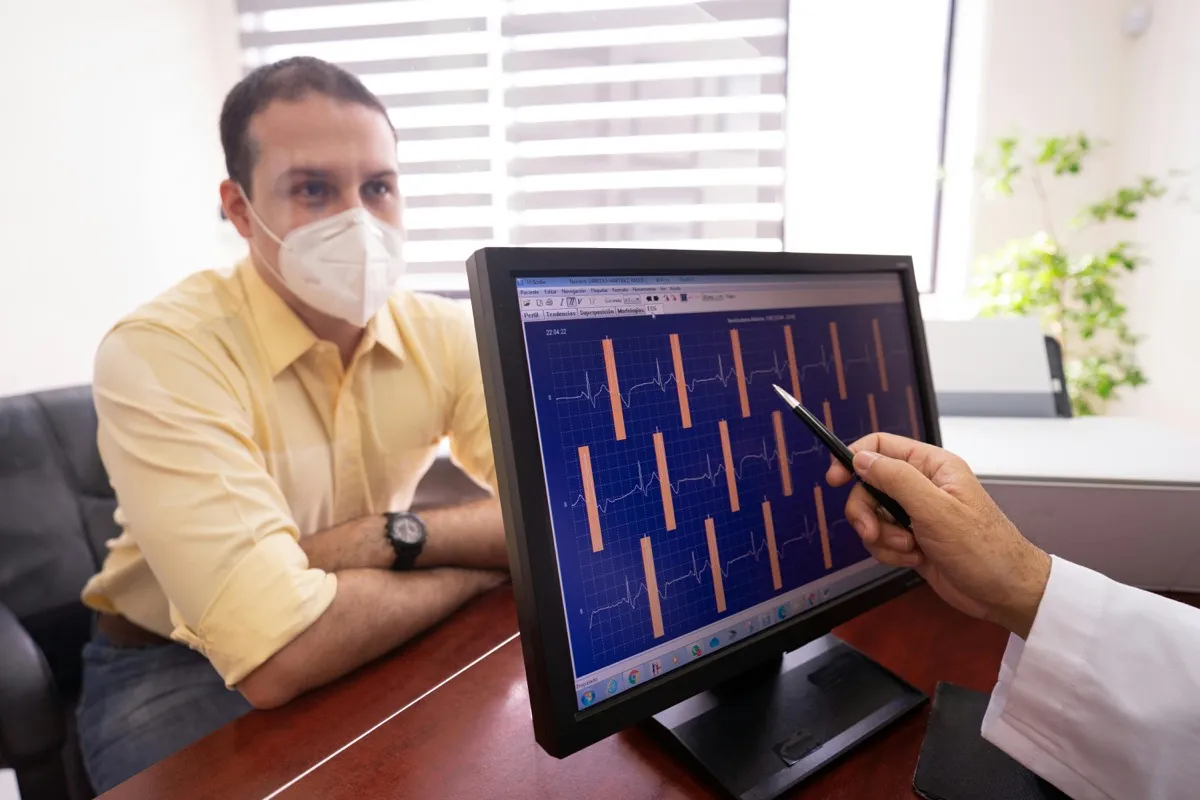
تخطيط القلب مقابل صدى القلب: الفروق موضّحة (2026)
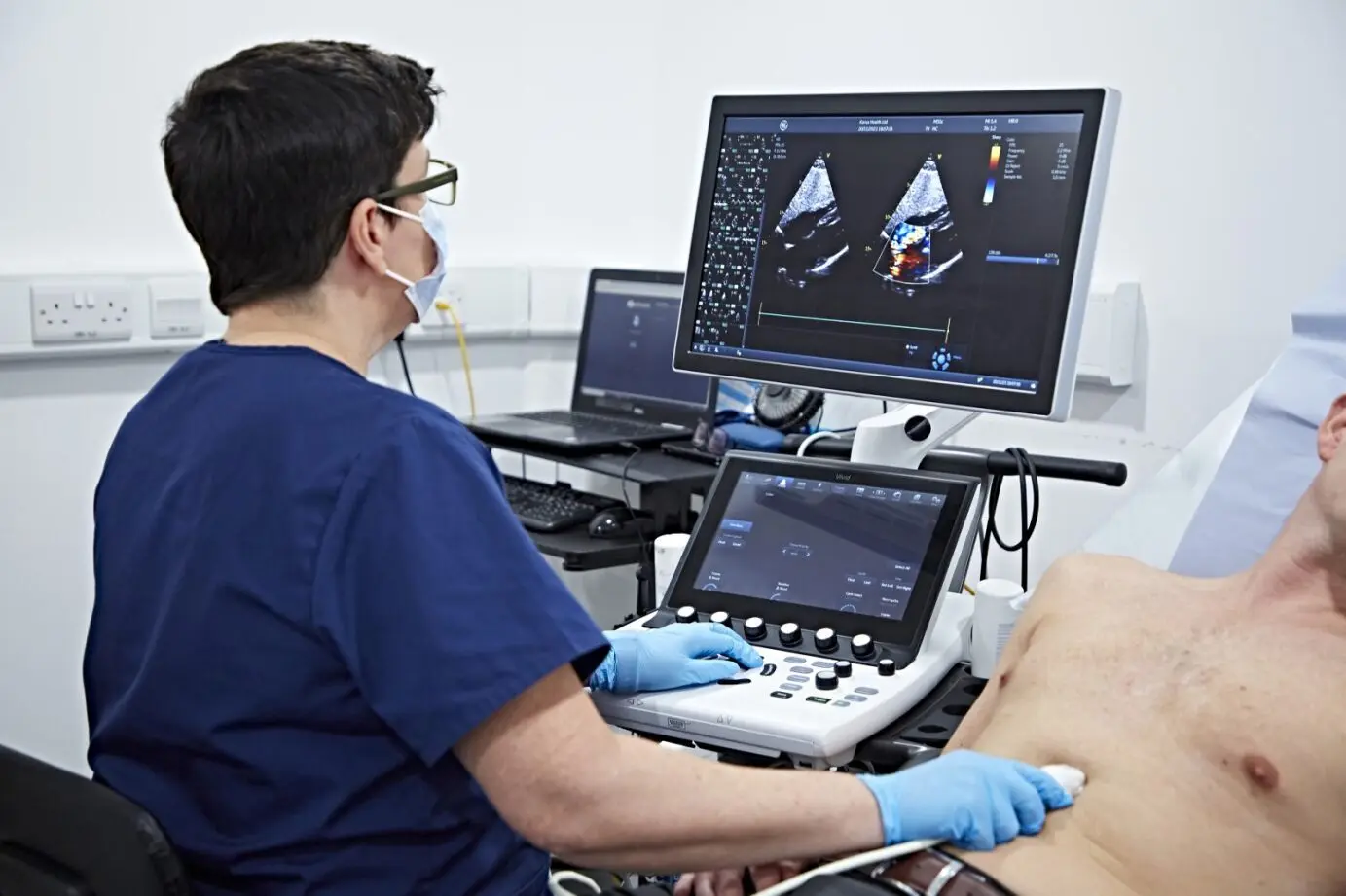
تخطيط القلب المنزلي في دبي: التكلفة وما يمكن توقعه (2026)
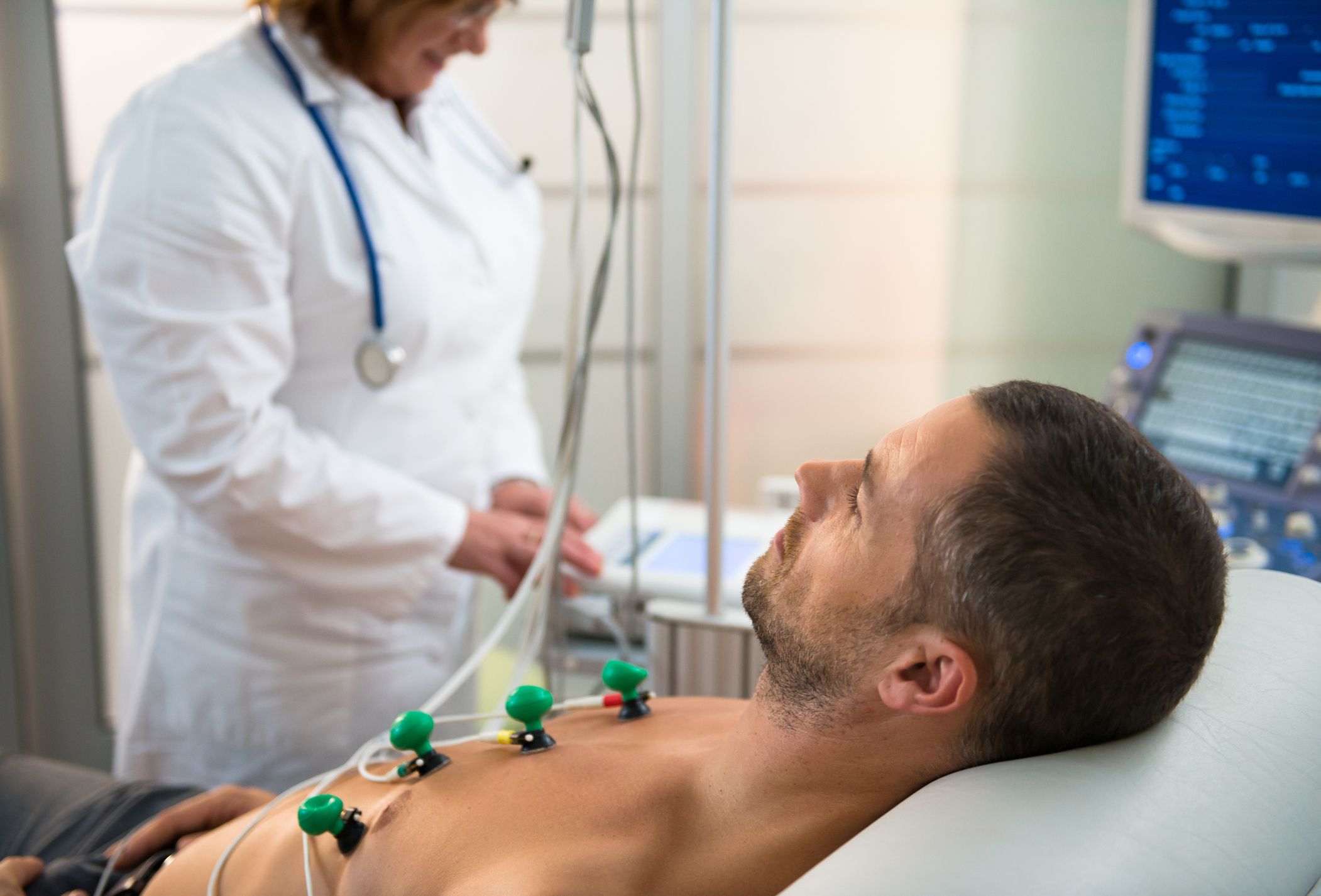
هولتر مقابل تخطيط القلب في دبي: أي فحص تختار؟ (2026)
أعراض أمراض القلب في دبي: 8 علامات تستدعي الانتباه (2026)
المزيد في Cardiology
Holter Monitor Prep Dubai: What to Expect (2026)
اقرأ المزيد
When to See a Cardiologist Dubai (2026)
اقرأ المزيد
Echo Test Preparation Dubai: What to Expect (2026)
اقرأ المزيدHeart Attack vs Panic Attack Dubai: Signs (2026)
اقرأ المزيدHeart Failure Warning Signs Dubai (2026)
اقرأ المزيدStress Test Cost Dubai: AED 800–5,000 (2026)
اقرأ المزيد© 2026 Doctors Clinic Diagnostic Center (DCDC), Dubai Healthcare City. Originally published at https://doctorsclinicdubai.ae/blog/ecg-cost-dubai. All rights reserved. Unauthorized reproduction is prohibited.