نکات کلیدی
- Every minute counts during a stroke — for each minute without treatment, approximately 1.9 million brain cells die, making immediate recognition of stroke warning signs essential
- Use the BE FAST method to recognise stroke: Balance loss, Eyes (vision changes), Face drooping, Arm weakness, Speech difficulty, Time to call emergency services
- There are three main types of stroke: ischaemic (blocked artery, ~87% of cases), haemorrhagic (bleeding in the brain), and TIA or mini-stroke (temporary blockage that resolves within 24 hours)
- In the UAE, stroke patients are on average 10 years younger than in Western countries, with nearly 50% of cases occurring in people under 45 — making early screening critical
- Up to 80% of strokes are preventable through managing controllable risk factors such as high blood pressure, diabetes, smoking, obesity, and physical inactivity
- A TIA (mini-stroke) is a medical emergency — nearly 1 in 5 people who experience a TIA will have a full stroke within 90 days if untreated
A stroke occurs when blood flow to the brain is interrupted, causing brain cells to die within minutes. Recognising stroke warning signs quickly can mean the difference between full recovery and permanent disability or death. According to the World Health Organisation, stroke is the second-leading cause of death globally and the third-leading cause of disability. In the UAE, between 8,000 and 10,000 individuals experience a stroke every year, and research shows that UAE stroke patients are, on average, a decade younger than their counterparts in Western countries. Our Stroke Care service at DCDC Dubai Healthcare City provides comprehensive risk assessment, TIA evaluation, and post-stroke management under specialist neurological care.
This evidence-based guide covers everything you need to know about stroke warning signs, the types of stroke, modifiable and non-modifiable risk factors, TIA (mini-stroke) symptoms, diagnostic approaches available in Dubai, treatment options, prevention strategies, and when to see a neurologist. Whether you are concerned about your own risk or want to be prepared to help a loved one, understanding these warning signs could save a life.
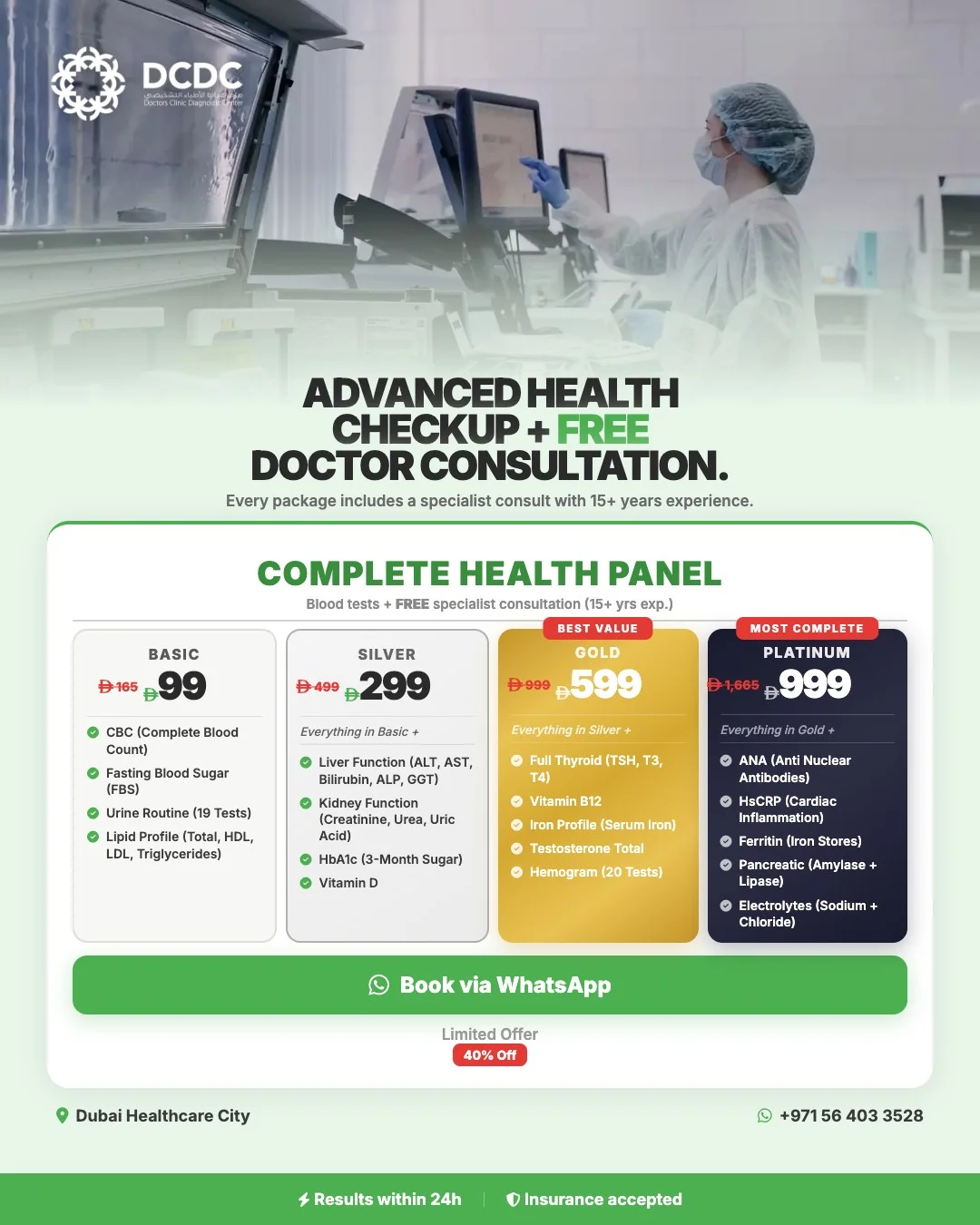
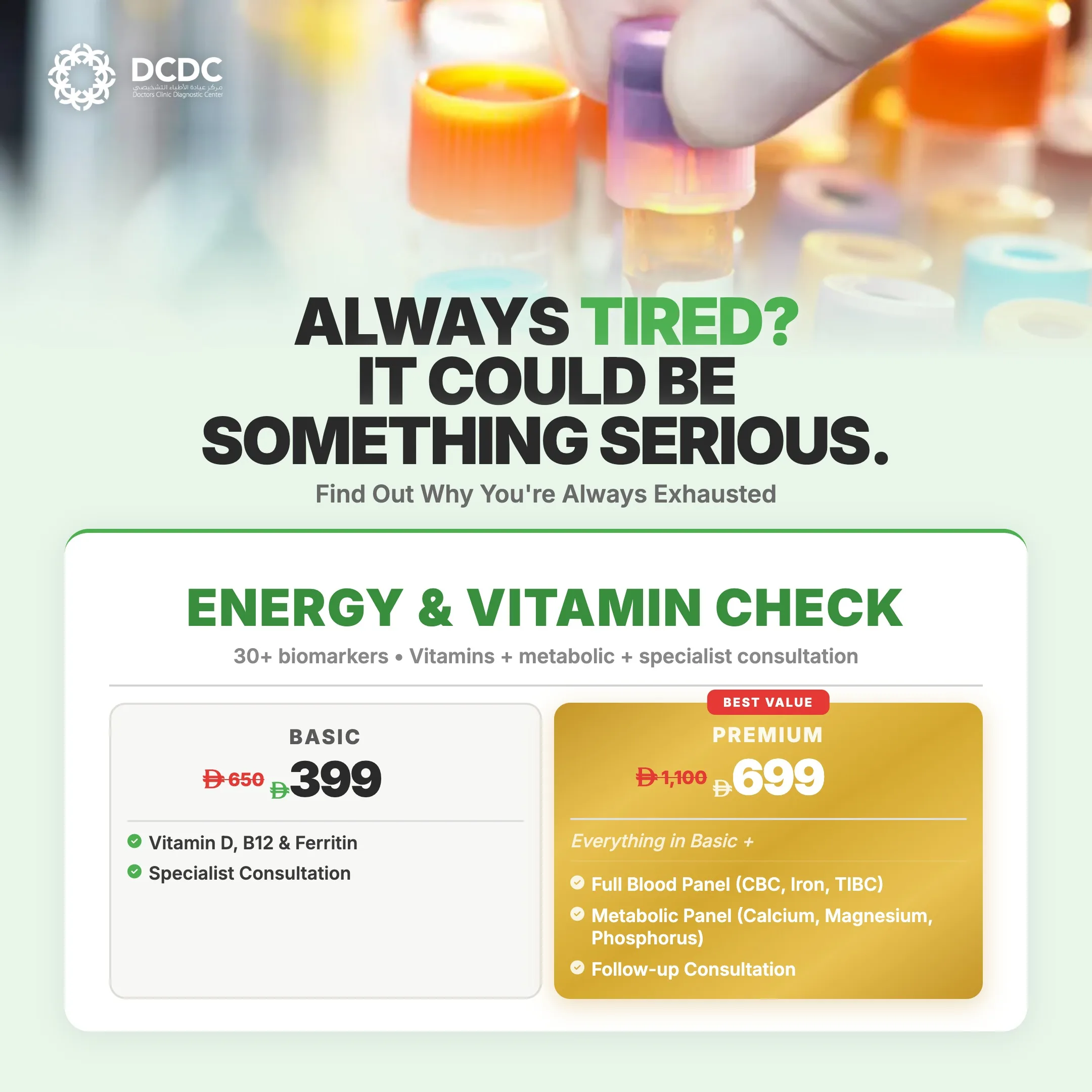
Health Screening Packages
Save with our bundled screening packages — specialist consultation included


Stroke Warning Signs: The FAST Method Explained
The ability to recognise stroke warning signs rapidly is the single most important factor in achieving a good outcome after a stroke. Medical professionals worldwide use the BE FAST acronym as a simple, memorable tool for identifying the most common symptoms. Originally developed as FAST, the expanded BE FAST version adds two critical signs that improve detection rates.
The BE FAST Acronym
| Letter | Stands For | What to Look For |
|---|---|---|
| B | Balance | Sudden loss of balance or coordination, difficulty walking, dizziness |
| E | Eyes | Sudden blurred or double vision, or loss of vision in one or both eyes |
| F | Face | One side of the face droops when asked to smile; numbness on one side |
| A | Arms | One arm drifts downward when both arms are raised; weakness or numbness |
| S | Speech | Slurred or garbled speech; inability to repeat a simple sentence correctly |
| T | Time | Call emergency services (998 in the UAE) immediately if any signs are present |
The BE FAST stroke recognition method recommended by the American Stroke Association
Time is critical because modern stroke treatments, particularly clot-dissolving medications such as tPA (tissue plasminogen activator), are most effective when administered within 4.5 hours of symptom onset. Mechanical thrombectomy, a procedure to physically remove the clot, can extend this window to up to 24 hours in selected patients, but outcomes are still significantly better with earlier treatment.
Additional Stroke Warning Signs Beyond BE FAST
- Sudden severe headache — often described as the worst headache of your life, with no known cause; more common in haemorrhagic stroke
- Confusion — sudden difficulty understanding others or feeling disoriented
- Numbness — sudden numbness or tingling, especially on one side of the body
- Trouble walking — sudden stumbling, loss of coordination, or inability to stand
- Nausea and vomiting — particularly when combined with other neurological symptoms
It is important to note that stroke warning signs appear suddenly. A symptom that develops gradually over days or weeks is less likely to be a stroke, though it still warrants medical evaluation. If symptoms appear and then disappear within minutes, this may indicate a TIA (transient ischaemic attack), which is itself a medical emergency and a strong predictor of a future full stroke.
Types of Stroke: Ischaemic, Haemorrhagic, and TIA
Understanding the different types of stroke helps explain why stroke warning signs can vary and why different treatment approaches are required. All three types involve disruption of blood flow to the brain, but the underlying mechanisms differ significantly.
Ischaemic Stroke (87% of All Strokes)
An ischaemic stroke occurs when a blood clot blocks an artery supplying the brain. The clot may form directly in a brain artery (thrombotic stroke) or travel from elsewhere in the body, typically the heart or carotid arteries in the neck (embolic stroke). Ischaemic strokes account for approximately 87% of all stroke cases according to the American Heart Association. The most common causes include atherosclerosis (fatty plaque buildup in arteries), atrial fibrillation (irregular heartbeat causing blood clots in the heart), and carotid artery disease.
Haemorrhagic Stroke (13% of All Strokes)
A haemorrhagic stroke occurs when a weakened blood vessel ruptures and bleeds into the surrounding brain tissue. There are two subtypes: intracerebral haemorrhage (bleeding within the brain itself) and subarachnoid haemorrhage (bleeding in the space between the brain and the thin tissues covering it). Although less common than ischaemic strokes, haemorrhagic strokes are responsible for approximately 40% of all stroke deaths. Chronic high blood pressure is the leading cause, as it gradually weakens artery walls over time.
TIA (Transient Ischaemic Attack)
A TIA, sometimes called a mini-stroke, produces stroke-like symptoms that typically last only a few minutes to a few hours and resolve completely within 24 hours. Although TIA does not cause permanent brain damage, it is a critical warning sign. According to the American Stroke Association, nearly 1 in 5 people who experience a TIA will have a full stroke within 90 days if left untreated. A TIA should always be treated as a medical emergency.
| Feature | Ischaemic Stroke | Haemorrhagic Stroke | TIA (Mini-Stroke) |
|---|---|---|---|
| Cause | Blood clot blocks artery | Blood vessel ruptures and bleeds | Temporary clot blocks artery briefly |
| Frequency | ~87% of all strokes | ~13% of all strokes | Exact prevalence varies |
| Symptom Duration | Persistent until treated | Persistent; may worsen rapidly | Minutes to hours; resolves within 24h |
| Brain Damage | Yes — permanent if untreated | Yes — often severe | No permanent damage, but high future risk |
| Primary Treatment | tPA clot-busting drug; thrombectomy | Surgery to stop bleeding; blood pressure control | Medication to prevent full stroke |
| Mortality Risk | Moderate (10–20% within 30 days) | High (40–50% within 30 days) | Low immediately, but 10–15% stroke risk within 90 days |
Comparison of the three main types of stroke
Stroke Risk Factors You Can Control
The encouraging reality about stroke is that up to 80% of strokes are preventable. The 2024 AHA/ASA Primary Stroke Prevention Guidelines identified several modifiable risk factors that, when properly managed, dramatically reduce stroke risk. Understanding these controllable factors empowers you to take meaningful action to protect your brain health.
High Blood Pressure (Hypertension)
Hypertension is the single most significant modifiable risk factor for stroke. Individuals with high blood pressure face nearly three times the stroke risk compared to those with normal blood pressure. The 2024 guidelines recommend maintaining blood pressure below 130/80 mmHg for most adults, noting that most patients require at least two antihypertensive medications to achieve this target. In the UAE, hypertension is highly prevalent and frequently undiagnosed, making regular blood pressure monitoring essential. For a comprehensive look at managing blood pressure, read our guide on high blood pressure screening and treatment in Dubai.
Diabetes
Diabetes accelerates atherosclerosis and damages blood vessel walls throughout the body, including the arteries supplying the brain. People with diabetes have approximately 1.5 to 2 times the stroke risk of non-diabetics. The 2024 AHA/ASA guidelines now recommend GLP-1 receptor agonists for patients with diabetes and high cardiovascular risk, as these medications have shown benefits beyond blood sugar control, including reduced stroke incidence.
Smoking
Tobacco use is associated with approximately two-fifths of all stroke deaths among individuals under 65. Smoking damages blood vessel walls, promotes plaque formation, increases blood clot risk, and raises blood pressure. The good news is that stroke risk begins to decline almost immediately after quitting and returns to near non-smoker levels within 5 to 10 years.
Other Controllable Risk Factors
- High cholesterol — particularly elevated LDL (bad) cholesterol, which contributes to arterial plaque buildup
- Obesity — excess body weight increases blood pressure, diabetes risk, and chronic inflammation
- Physical inactivity — sedentary lifestyle increases stroke risk; the guidelines recommend at least 150 minutes of moderate aerobic exercise per week
- Excessive alcohol consumption — heavy drinking raises blood pressure and can trigger atrial fibrillation
- Poor diet — diets high in sodium, saturated fats, and processed foods; the Mediterranean diet may reduce stroke risk by approximately 35%
- Atrial fibrillation — this irregular heart rhythm increases stroke risk five-fold; it is treatable with blood thinners and other interventions
- Sleep apnoea — untreated obstructive sleep apnoea significantly increases stroke risk through repeated episodes of low oxygen
A carotid Doppler ultrasound can directly assess whether plaque buildup in your neck arteries is putting you at risk for stroke. Learn more about this important screening test in our detailed guide on carotid Doppler ultrasound for stroke risk assessment.
Stroke Risk Factors You Cannot Control
While most stroke risk factors are modifiable, certain factors are beyond your control. Knowing whether you fall into a higher-risk category can motivate you to manage controllable risk factors more aggressively and pursue appropriate screening.
- Age — stroke risk doubles every decade after age 55, although strokes can and do occur at any age
- Sex — men have a higher stroke risk at younger ages, but women have higher lifetime stroke risk and are more likely to die from stroke
- Family history — having a parent, grandparent, or sibling who had a stroke increases your risk, particularly if the stroke occurred before age 65
- Ethnicity — people of South Asian, African, and Middle Eastern descent have higher stroke incidence; South Asian populations tend to develop cardiovascular disease at a younger age
- Previous stroke or TIA — if you have already had a stroke or TIA, your risk of a subsequent event is significantly elevated
- Certain genetic conditions — conditions such as sickle cell disease and inherited clotting disorders increase stroke susceptibility
In the UAE context, these non-modifiable risk factors are particularly relevant. Research published in 2025 found that the mean age of stroke patients in the UAE is 55.7 years, significantly younger than in high-income Western countries where 80% of stroke victims are over 65. In the UAE, nearly 50% of stroke patients are under 45, driven by high rates of diabetes, obesity, and hypertension in the younger population. This means that stroke risk assessment should begin earlier in Dubai than traditional guidelines might suggest.
TIA (Mini-Stroke): Warning Signs Not to Ignore
A transient ischaemic attack (TIA) is often dismissed because its symptoms are temporary. This is a dangerous mistake. A TIA produces identical symptoms to a full stroke — face drooping, arm weakness, speech difficulty, vision changes, balance problems — but these symptoms resolve on their own, usually within a few minutes to an hour. Because the symptoms disappear, many people decide not to seek medical attention, reasoning that whatever happened has corrected itself.
However, a TIA is the brain's most urgent warning signal. The Mayo Clinic states that if you have had at least one TIA, you are almost 10 times more likely to have a full stroke than someone of the same age and sex who has not. The American Stroke Association reports that nearly 1 in 5 people who have a suspected TIA will have a stroke within 90 days, with the greatest risk occurring in the first 48 hours.
Unique TIA Warning Signs
- Amaurosis fugax — a sudden, painless loss of vision in one eye that feels like a dark curtain descending over your visual field; this is one of the most distinctive TIA indicators
- Transient aphasia — brief inability to find the right words or to understand spoken language, lasting only minutes
- Unilateral weakness — sudden weakness or numbness in one arm or leg, specifically affecting only one side of the body
- Brief confusion — sudden disorientation or difficulty processing information that resolves quickly
- Transient vertigo — sudden intense dizziness with difficulty maintaining balance
What to Do After a Suspected TIA
Even if symptoms have completely resolved, call emergency services or go to the nearest emergency department immediately. Do not wait to see if symptoms return. A TIA requires urgent investigation including brain imaging (CT or MRI), carotid artery assessment, heart rhythm monitoring, and blood tests to identify the underlying cause and begin preventive treatment. Early intervention after a TIA can reduce subsequent stroke risk by up to 80%.
How Stroke Is Diagnosed in Dubai
When a patient presents with stroke warning signs in Dubai, healthcare providers follow established diagnostic protocols to rapidly confirm the diagnosis, determine the type of stroke, and guide treatment decisions. Speed is essential — the phrase "time is brain" reflects the reality that every minute of delayed treatment results in further brain cell death.
Emergency Diagnostic Tests
- CT scan of the brain — the first-line imaging test, performed within minutes of arrival to distinguish between ischaemic and haemorrhagic stroke; haemorrhagic strokes appear immediately on CT
- CT angiography (CTA) — identifies the location of the blood clot in ischaemic stroke and helps determine candidacy for thrombectomy
- MRI of the brain — provides more detailed imaging of brain tissue and can detect smaller strokes or early ischaemic changes that CT may miss
- Blood tests — assess blood sugar levels, clotting function, kidney function, and other factors that influence treatment decisions
- ECG (electrocardiogram) — checks for atrial fibrillation and other heart rhythm abnormalities that can cause embolic stroke
Risk Assessment and Preventive Diagnostics
For patients who have not yet had a stroke but are at elevated risk, several diagnostic tests can assess vascular health and guide prevention strategies. These tests are available at DCDC Dubai Healthcare City and can be arranged through a neurology or internal medicine consultation.
- Carotid Doppler ultrasound — non-invasive scan of the neck arteries to detect dangerous narrowing (stenosis) that increases stroke risk
- Echocardiogram — ultrasound of the heart to detect structural abnormalities, valve disease, or blood clots that could travel to the brain
- Holter monitor — 24-hour or longer heart rhythm recording to detect intermittent atrial fibrillation
- Blood panel — comprehensive assessment of cholesterol, blood sugar, clotting factors, and inflammatory markers
For patients who need detailed brain imaging for risk assessment or post-stroke follow-up, our guide on brain MRI scans in Dubai explains what these scans detect and what to expect during the procedure.
Concerned About Your Stroke Risk?
Book a stroke risk assessment at Doctors Clinic Diagnostic Center in Dubai Healthcare City. Our neurologists can evaluate your risk factors, order appropriate diagnostic tests, and develop a personalised prevention plan.
Same-day appointments available. Insurance accepted.
Stroke Treatment: Time Is Brain
The phrase "time is brain" is not merely a slogan — it is a medical reality. During an ischaemic stroke, approximately 1.9 million neurons die every minute that the brain is deprived of blood flow. The faster treatment begins, the more brain tissue can be saved and the better the patient's chances of meaningful recovery.
Ischaemic Stroke Treatment
- tPA (tissue plasminogen activator) — an intravenous clot-dissolving medication that must be administered within 4.5 hours of symptom onset; it is the gold standard for acute ischaemic stroke treatment
- Mechanical thrombectomy — a catheter-based procedure in which a device is threaded through the blood vessels to physically remove the clot from the brain artery; can be performed up to 24 hours after onset in selected patients
- Antiplatelet therapy — aspirin and other antiplatelet medications to prevent new clots from forming
- Anticoagulation — blood-thinning medications for strokes caused by atrial fibrillation or other cardiac sources of clots
Haemorrhagic Stroke Treatment
- Blood pressure reduction — aggressive lowering of blood pressure to reduce ongoing bleeding
- Reversal of blood thinners — if the patient is on anticoagulant medication, agents are given to reverse its effects
- Surgical intervention — in severe cases, surgery may be needed to remove the blood clot, repair the ruptured vessel, or relieve pressure on the brain
- Aneurysm coiling or clipping — if the haemorrhage was caused by a brain aneurysm, the aneurysm is treated to prevent re-bleeding
Treatment Timeline and Outcomes
| Time from Symptom Onset | Treatment Available | Expected Outcome |
|---|---|---|
| 0–60 minutes | tPA + thrombectomy evaluation | Best outcomes; highest chance of full recovery |
| 1–3 hours | tPA + thrombectomy if large vessel occlusion | Good outcomes; significant brain tissue can be saved |
| 3–4.5 hours | tPA still possible; thrombectomy evaluation | Moderate outcomes; some permanent deficit likely |
| 4.5–24 hours | Thrombectomy only (selected patients) | Variable; depends on salvageable brain tissue |
| Beyond 24 hours | Supportive care; secondary prevention | Focus shifts to rehabilitation and preventing recurrence |
Stroke treatment options based on time from symptom onset
Stroke Prevention: Evidence-Based Strategies
The 2024 AHA/ASA Primary Stroke Prevention Guidelines represent the most comprehensive evidence-based framework for reducing stroke risk. Prevention strategies fall into three categories: lifestyle modifications, medical management, and screening and monitoring. Implementing even a few of these strategies can significantly reduce your lifetime stroke risk.
Lifestyle Modifications
- Adopt the Mediterranean diet — rich in fruits, vegetables, whole grains, fish, nuts, and olive oil; the 2024 guidelines strongly recommend this diet, which may reduce stroke risk by approximately 35%
- Exercise regularly — at least 150 minutes of moderate-intensity aerobic activity or 75 minutes of vigorous activity per week; even brisk walking counts
- Maintain a healthy weight — aim for a BMI between 18.5 and 24.9; waist circumference is also an important measure of cardiovascular risk
- Stop smoking — the single most impactful lifestyle change for stroke prevention; seek support from your doctor for cessation aids
- Limit alcohol intake — no more than one drink per day for women and two for men; binge drinking significantly increases stroke risk
- Manage stress — chronic stress raises blood pressure and promotes unhealthy coping behaviours; mindfulness, regular exercise, and adequate sleep are beneficial
- Reduce sodium intake — aim for less than 2,300 mg per day; excess sodium raises blood pressure
Medical Management
- Blood pressure control — target below 130/80 mmHg; most patients require combination therapy with two or more medications
- Statin therapy — for elevated LDL cholesterol; statins also stabilise existing arterial plaque
- Anticoagulation for atrial fibrillation — blood thinners reduce stroke risk by up to 70% in patients with this heart rhythm disorder
- GLP-1 receptor agonists — newly recommended in the 2024 guidelines for diabetic patients with high cardiovascular risk
- Colchicine therapy — a new addition to the 2024 guidelines, recommended for select patients to reduce vascular inflammation
- Antiplatelet therapy — aspirin or other agents for patients with specific risk profiles
Many of the risk factors for stroke overlap with those for heart disease. For a broader perspective on cardiovascular health screening, read our guide on heart screening and prevention packages in Dubai.
Stroke Recovery and Rehabilitation in Dubai
Stroke recovery is a gradual process that begins in the hospital and continues for months or years. The brain has a remarkable ability to rewire itself (neuroplasticity), and early, intensive rehabilitation maximises the potential for recovery. In Dubai, comprehensive stroke rehabilitation services are available at several hospitals and specialised rehabilitation centres.
Types of Stroke Rehabilitation
- Physiotherapy — to restore strength, balance, and mobility; this is typically the most intensive component of stroke rehabilitation
- Occupational therapy — to relearn daily activities such as dressing, eating, and bathing; focuses on regaining independence
- Speech and language therapy — for patients with aphasia (difficulty speaking or understanding language) or dysarthria (slurred speech)
- Cognitive rehabilitation — to address memory, attention, and problem-solving difficulties that commonly follow stroke
- Psychological support — depression affects approximately one-third of stroke survivors; counselling and medication can help
- Nutritional guidance — dietary changes to manage risk factors and support recovery
Stroke Recovery Timeline
Recovery varies enormously depending on the type and severity of the stroke, the area of the brain affected, and how quickly treatment was received. The most rapid improvement typically occurs within the first three months, but meaningful gains can continue for a year or longer. Consistent engagement with rehabilitation programmes is the strongest predictor of recovery success.
At DCDC Dubai Healthcare City, our neurology team works closely with patients throughout the recovery process, providing ongoing monitoring, medication management, and coordination with rehabilitation services. We also offer follow-up brain imaging to track recovery progress — learn more about what these scans involve in our guide to brain MRI scans in Dubai.
Stroke Risk Assessment Cost in Dubai
Understanding the cost of stroke-related diagnostic tests and consultations in Dubai helps you plan for preventive care. Prices vary depending on the facility, the specialist's experience, and whether additional tests are required. The following table provides approximate cost ranges across Dubai for common stroke risk assessment services.
| Service | Approximate Cost in Dubai (AED) | What It Assesses |
|---|---|---|
| Neurologist Consultation | From AED 400–1,200 | Comprehensive neurological examination, risk factor review, and personalised prevention plan |
| Carotid Doppler Ultrasound | From AED 500–1,500 | Blood flow in neck arteries; detects narrowing (stenosis) that increases stroke risk |
| Brain MRI | From AED 1,500–4,000 | Detailed brain imaging to detect prior strokes, TIAs, or structural abnormalities |
| Brain CT Scan | From AED 800–2,500 | Rapid brain imaging used in emergency stroke diagnosis |
| Echocardiogram | From AED 500–1,500 | Heart structure and function; detects clot sources and valve abnormalities |
| Blood Panel (Stroke Risk) | From AED 200–800 | Cholesterol, blood sugar, clotting factors, inflammatory markers |
| 24-Hour Holter Monitor | From AED 500–1,200 | Continuous heart rhythm recording to detect intermittent atrial fibrillation |
Approximate cost ranges for stroke risk assessment services in Dubai (2026). Prices vary by provider; insurance coverage may apply.
Most health insurance plans in Dubai cover stroke diagnostic tests when they are medically indicated and referred by a physician. Pre-authorisation may be required for imaging studies such as MRI and CT scans. At DCDC, our team can confirm your insurance eligibility before your appointment and help with any pre-authorisation requirements.
When to See a Neurologist for Stroke Prevention in Dubai
Not every headache or moment of dizziness requires a neurologist visit, but certain situations clearly warrant specialist evaluation. Seeing a neurologist for stroke prevention is recommended in the following scenarios.
- You have experienced any stroke warning signs, even if they resolved on their own (possible TIA)
- You have a strong family history of stroke, especially if relatives were affected before age 65
- You have multiple risk factors (e.g., hypertension, diabetes, smoking, high cholesterol)
- You have been diagnosed with atrial fibrillation or another heart rhythm disorder
- You have carotid artery disease or a previous abnormal carotid Doppler result
- You are over 50 with diabetes, hypertension, or a history of smoking
- You experience unexplained recurrent headaches, vision changes, dizziness, or brief episodes of weakness
- You have had a previous stroke or TIA and need ongoing monitoring and secondary prevention
A neurologist can perform a thorough clinical examination, review your medical history and risk factors, order appropriate diagnostic tests (carotid Doppler, brain MRI, blood tests, cardiac monitoring), and develop a tailored stroke prevention plan. For individuals already managing neurological conditions, regular follow-up is essential. Read our comprehensive guide on choosing the best neurologist in Dubai to understand what to look for in a specialist.
Stroke Warning Signs: UAE Statistics and Why Awareness Matters
Stroke awareness in the UAE carries particular urgency given the region's unique epidemiological profile. The World Stroke Organisation's 2025 Global Stroke Fact Sheet confirms that stroke remains the second-leading cause of death and the third-leading cause of disability worldwide. In the UAE specifically, the situation has several distinctive features that every resident should understand.
- Between 8,000 and 10,000 individuals experience a stroke in the UAE every year
- UAE stroke patients are on average 10 years younger than stroke patients in Western countries
- Nearly 50% of stroke patients in the UAE are under the age of 45
- The incidence rate for all strokes in the Middle East ranges between 22.7 and 250 per 100,000 population per year
- High rates of diabetes, hypertension, and obesity in the younger UAE population are driving the earlier onset of stroke
- A 2025 study found the mean age of stroke patients in Abu Dhabi was just 40 years in a cohort of young adults
These statistics underscore why recognising stroke warning signs is not something to postpone until old age. In Dubai's diverse, multicultural population — with residents from South Asia, the Middle East, Africa, and other regions with elevated cardiovascular risk — proactive awareness and screening should begin well before the age of 50.
Stroke Care at DCDC Dubai Healthcare City
At Doctors Clinic Diagnostic Center (DCDC) in Dubai Healthcare City, our neurology department provides comprehensive stroke care services spanning prevention, diagnosis, risk assessment, and post-stroke management. With over 13 years of continuous operation since 2013 and more than 1,000 diagnostic scans performed every month, DCDC has established itself as a trusted provider of neurological and diagnostic services in Dubai.
Our Stroke Care Services Include
- Neurological consultation — comprehensive evaluation by a specialist neurologist to assess stroke risk factors and neurological function
- Carotid Doppler ultrasound — non-invasive assessment of the neck arteries for dangerous narrowing
- Brain MRI and CT imaging — advanced imaging to detect prior strokes, TIAs, or cerebrovascular abnormalities
- Cardiac assessment — echocardiogram and Holter monitoring to identify cardiac sources of stroke risk
- Comprehensive blood panels — cholesterol, blood sugar, clotting profile, and inflammatory markers
- Post-stroke follow-up — ongoing monitoring, medication management, and rehabilitation coordination
- TIA urgent evaluation — rapid diagnostic workup for patients who have experienced transient stroke-like symptoms
Our multilingual team serves patients from across the UAE and internationally, ensuring clear communication in English, Arabic, and other languages. Same-day appointments are available for urgent consultations, and our team can confirm insurance eligibility before your visit.
Book a Stroke Risk Assessment at DCDC
Do not wait for stroke warning signs to appear. Take a proactive step by booking a stroke risk assessment at Doctors Clinic Diagnostic Center in Dubai Healthcare City. Our neurologist will evaluate your individual risk profile and recommend appropriate screening.
Call, WhatsApp, or book online. Insurance accepted.
خدمات مرتبط در DCDC
مراقبت تخصصی و تشخیص پیشرفته در شهر بهداشت دبی
Frequently Asked Questions
Final Thoughts
Recognising stroke warning signs is one of the most important health skills anyone can learn. In a medical emergency where every minute counts, the difference between swift action and hesitation can be the difference between full recovery and permanent disability. The BE FAST method — Balance, Eyes, Face, Arms, Speech, Time — provides a simple, memorable framework that anyone can use to identify a potential stroke and take immediate action.
The statistics from the UAE are a sobering reminder that stroke is not exclusively a disease of the elderly. With nearly half of UAE stroke patients under 45 and average onset occurring a full decade earlier than in Western countries, the time to think about stroke prevention is now — regardless of your age. Managing blood pressure, controlling diabetes, quitting smoking, staying active, and eating well are not merely good health advice; they are evidence-based strategies that can reduce your stroke risk by up to 80%.
If you have any risk factors for stroke, or if you or a loved one have experienced even brief, transient symptoms that could indicate a TIA, do not delay seeking medical evaluation. A specialist neurologist at Doctors Clinic Diagnostic Center in Dubai Healthcare City can assess your risk, order appropriate screening tests, and help you build a personalised prevention plan. Early detection and proactive management remain the most powerful tools we have against stroke.
منابع و مراجع
این مقاله توسط تیم پزشکی ما بررسی شده و به منابع زیر ارجاع میدهد:
- World Health Organisation — Stroke Fact Sheet
- American Heart Association / American Stroke Association — 2024 Guideline for the Primary Prevention of Stroke
- Mayo Clinic — Transient Ischaemic Attack (TIA): Symptoms and Causes
- Cleveland Clinic — TIA (Transient Ischaemic Attack): Symptoms and Treatment
- World Stroke Organisation — Global Stroke Fact Sheet 2025
- NHS — Stroke Overview: Symptoms, Causes, Treatment
- The Lancet / Nature Scientific Reports — Burden of Stroke in the Middle East and North Africa 1990–2019
محتوای پزشکی این سایت توسط پزشکان دارای مجوز DHA بررسی میشود. مشاهده سیاست تحریریه برای اطلاعات بیشتر.
نوشته شده توسط
Dr. Riad Trabulsi
Neurologist
MD, Neurology
Dr. Riad Trabulsi is a Neurologist at Doctors Clinic Diagnostic Center (DCDC) in Dubai Healthcare City.
Related Articles

Carotid Doppler: Stroke Risk Assessment Dubai
Best Neurologist Dubai: Brain & Nerve Specialist
Brain MRI Dubai: What It Detects & Cost

High Blood Pressure Dubai: Screening & Treatment

Heart Screening Dubai: Checkup Packages & Prevention
More in General Health
Pre Employment Medical Test Dubai: Cost (2026)
بیشتر بخوانید
Bronchitis Treatment Dubai: Symptoms & Care (2026)
بیشتر بخوانید
Wound Care at Home Dubai: Full Guide (2026)
بیشتر بخوانید
Dizziness Causes Dubai: When to Get Checked (2026)
بیشتر بخوانید
Elderly Care at Home Dubai: Full Guide (2026)
بیشتر بخوانیدIV Drip at Home Dubai: From AED 449 (2026)
بیشتر بخوانید© 2026 Doctors Clinic Diagnostic Center (DCDC), Dubai Healthcare City. Originally published at https://doctorsclinicdubai.ae/blog/stroke-warning-signs-dubai. All rights reserved. Unauthorized reproduction is prohibited.