
Book Your Appointment
Verified Patient Reviews of DCDC Diagnostic Center in Dubai
Verified reviews and real patient stories from Dubai Healthcare City
I'm very satisfied with this medical clinic. I had my first pregnancy screening here. It was affordable and very professional. The radiologist was welcoming, kind, and made the experience great.
Aizhan Tokmanbetova
Hurt my knee Friday night and got an MRI appointment Sunday evening (booked Sunday afternoon). Waited about 2 minutes and was done in just over 30 minutes. The team was amazing, friendly and efficient.
Kirsten Evans
Dr. Osama's team was gentle and amazing. After a bad experience elsewhere, my pelvic exam here was much more professional. Great report and very precise.
Mary



Cardiac Stress Test in Dubai: Exercise Heart Evaluation
See how your heart performs under physical stress
Reveals Hidden Issues
Detects blood flow problems not visible at rest
Cardiologist Supervised
Expert directly monitors you throughout
Immediate Results
Discussion and recommendations right after the test
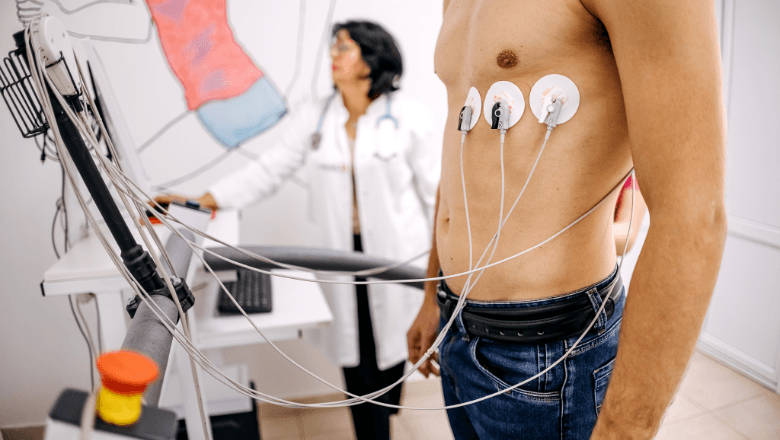
A cardiac stress test in Dubai, also known as a treadmill test Dubai procedure, measures how your heart works during exercise. You walk on a treadmill while we monitor your exercise ECG, blood pressure, and heart rate. Because exercise makes your heart work harder, the test can reveal blood flow problems not apparent at rest.
Your cardiologist may recommend a stress test for chest pain, shortness of breath on exertion, suspected coronary artery disease, or to determine safe exercise levels. The test takes about 45 minutes total, with 10-15 minutes of actual exercise.
The cardiac stress test Dubai, also known as an exercise ECG Dubai, is one of the most reliable non-invasive tools for diagnosing coronary artery disease, exercise-induced arrhythmias, and abnormal blood pressure responses at our supervised treadmill lab. It helps your cardiologist evaluate whether your heart receives adequate oxygen during physical exertion and identifies blockages that a resting ECG would miss entirely.
At DCDC in our clinic, we use the Bruce Protocol, the gold-standard treadmill protocol endorsed by the American Heart Association. Our cardiologists interpret results in real time and correlate ECG changes, hemodynamic responses, and symptom onset to provide a comprehensive cardiac assessment.
Every cardiac stress test is directly supervised by a board-certified cardiologist. Results are discussed with you immediately after the test. No waiting.
Reveals Hidden Issues
Detects blood flow problems not visible at rest
Cardiologist Supervised
Expert directly monitors you throughout
Immediate Results
Discussion and recommendations right after the test
Cardiac Stress Test in Dubai: Exercise Heart Evaluation
See how your heart performs under physical stress
A cardiac stress test in Dubai, also known as a treadmill test Dubai procedure, measures how your heart works during exercise. You walk on a treadmill while we monitor your exercise ECG, blood pressure, and heart rate. Because exercise makes your heart work harder, the test can reveal blood flow problems not apparent at rest.
Your cardiologist may recommend a stress test for chest pain, shortness of breath on exertion, suspected coronary artery disease, or to determine safe exercise levels. The test takes about 45 minutes total, with 10-15 minutes of actual exercise.
The cardiac stress test Dubai, also known as an exercise ECG Dubai, is one of the most reliable non-invasive tools for diagnosing coronary artery disease, exercise-induced arrhythmias, and abnormal blood pressure responses at our supervised treadmill lab. It helps your cardiologist evaluate whether your heart receives adequate oxygen during physical exertion and identifies blockages that a resting ECG would miss entirely.
At DCDC in our clinic, we use the Bruce Protocol, the gold-standard treadmill protocol endorsed by the American Heart Association. Our cardiologists interpret results in real time and correlate ECG changes, hemodynamic responses, and symptom onset to provide a comprehensive cardiac assessment.
Every cardiac stress test is directly supervised by a board-certified cardiologist. Results are discussed with you immediately after the test. No waiting.

Dr. Shahoo Mazhari
Explore Our Services
Comprehensive stress test services at DCDC Dubai Healthcare City.

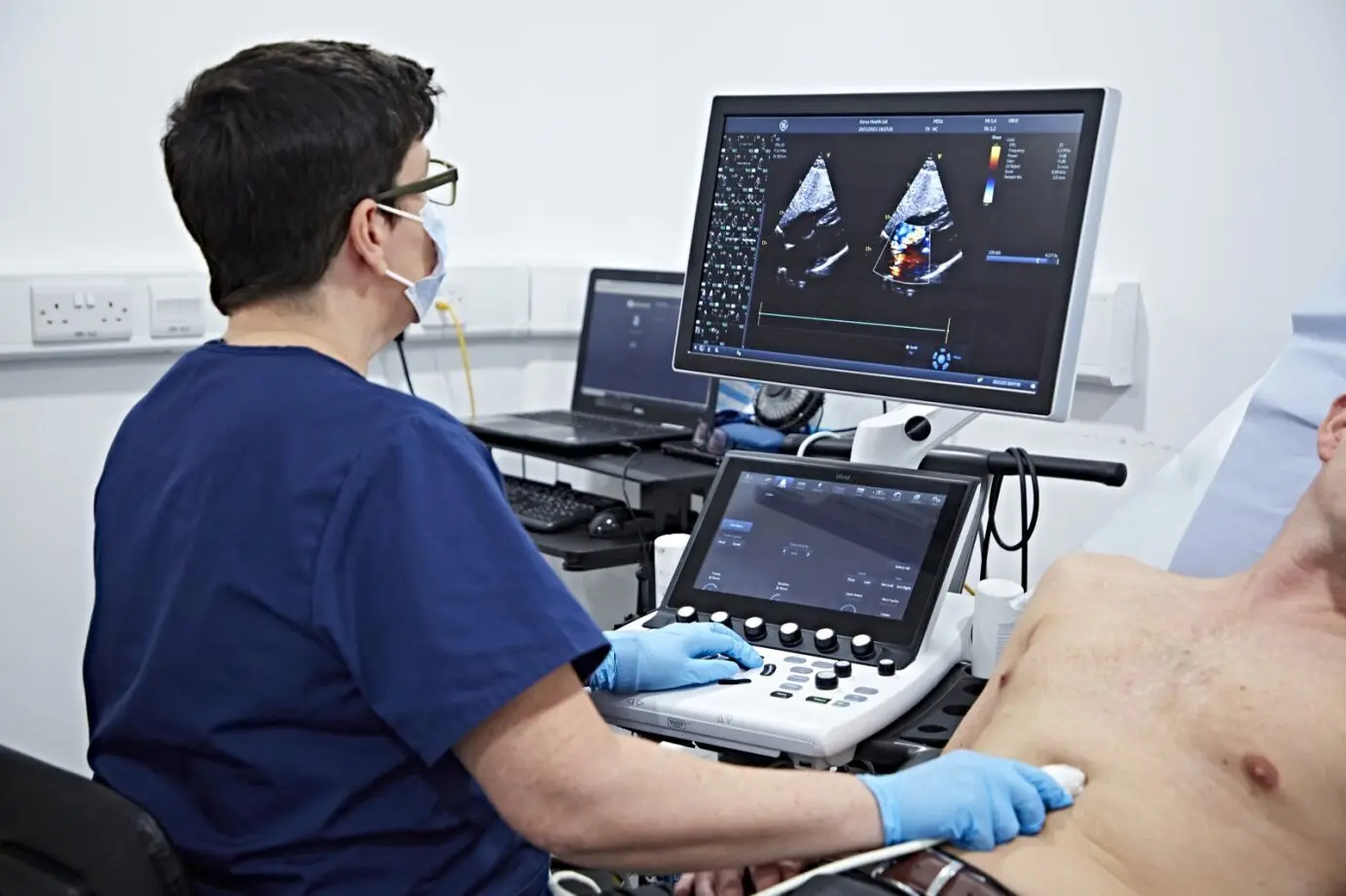
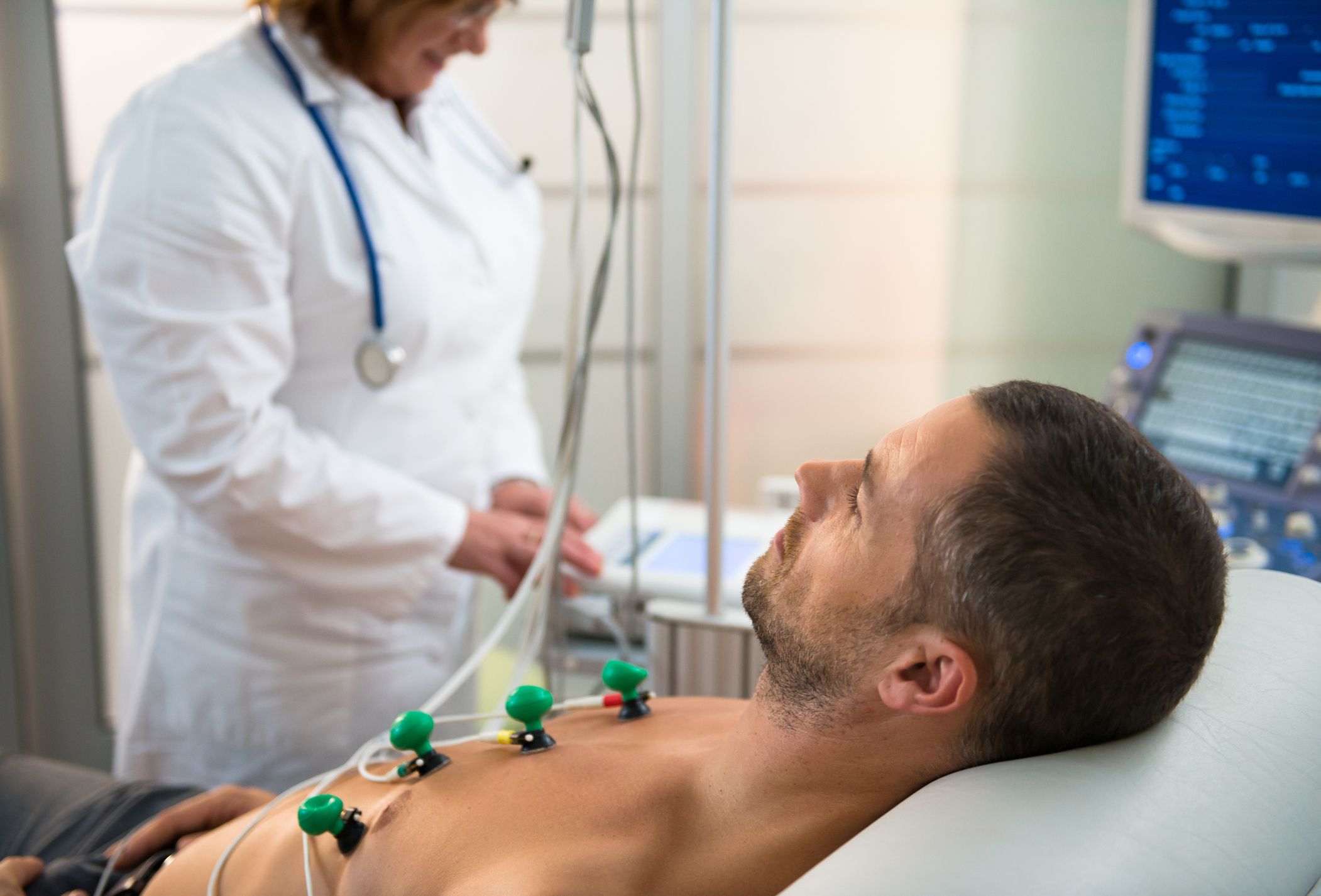
All services performed by DHA-licensed specialists
Who Should Get Stress Test?
A stress test is recommended when your cardiologist needs to see how your heart performs under exercise. detecting problems that may not appear at rest.
Chest pain or angina symptoms needing evaluation
Shortness of breath on exertion
Exercise-induced palpitations or arrhythmias
Assessing treatment effectiveness after cardiac intervention
Determining safe exercise limits for fitness programs
Pre-operative cardiac clearance before surgery
Why Choose DCDC for Your Stress Test?
MOHAP-licensed facility with cardiologist-supervised stress testing, immediate results, and same-day appointments.
MOHAP Licensed
Accredited medical center in our facility. License NIMY7VY5-240925.
Cardiologist Supervised
Board-certified cardiologist monitors every stress test for safety and accuracy.
Same-Day Appointments
Available for urgent cardiac concerns. Book early. Slots fill fast.
Insurance Support
Direct billing with 20+ insurers. We handle pre-authorization for you.
Convenient Location
Building 64, Block A in our center. Free parking on-site.
Patient Experience
4.8/5 Google rating. Safe, supervised testing with immediate results discussion.
Your Comfortable Visit
A simple, step-by-step Stress scan process designed for comfort, speed, and accuracy.
Stress Test Pricing
Stress pricing in Dubai varies by service type and insurance coverage for various test types.
- Pricing varies by scan type and whether contrast is required
- Insurance coverage accepted with referral and verification
- Transparent self-pay rates available with instant quote on request
Insurance verification in minutes • No hidden fees • Fast response on WhatsApp
Patient Guide
What to Expect During Your Stress Test
A supervised exercise test lasting about 45 minutes total with immediate results.
Insurance & Location
Insurance Partners
- •20+ insurance providers in Dubai including Daman, AXA, ADNIC, and others
- •Pre-authorization support and direct billing (where applicable)
- •Coverage verification before your appointment at our Dubai Healthcare City clinic
- •Transparent pricing with no hidden fees for stress test services








Visit Us in Dubai Healthcare City
Doctors Clinic Diagnostic Center
Building 64, Block A, Al Razi Medical Complex, Dubai Healthcare City, Dubai, UAE
Near Oud Metha Road · Easy access from Bur Dubai, Downtown Dubai, Business Bay · Free dedicated parking available
Working Hours
Mon-Thu, Sat: 8AM - 10:30PM | Sun: 8:30AM - 10:30PM | Fri: 9AM - 10PM
How Insurance Works at DCDC
Check Coverage
Verify your plan covers Stress Test
Get a Referral
Some insurers require a GP referral — we can guide you
Pre-Authorization
We handle pre-auth directly with your insurer
Direct Billing
No upfront payment — we bill your insurer directly
Co-Pay Only
You only pay any applicable co-pay at the clinic
Check Coverage
Verify your plan covers Stress Test
Get a Referral
Some insurers require a GP referral — we can guide you
Pre-Authorization
We handle pre-auth directly with your insurer
Direct Billing
No upfront payment — we bill your insurer directly
Co-Pay Only
You only pay any applicable co-pay at the clinic
Your Specialist
Dr. Shahoo Mazhari
Consultant Cardiologist
MD, Consultant Cardiologist
Persian · English · Kurdish
Patient Guide
Understanding Cardiac Stress Testing: A Complete Guide
A cardiac stress test, also known as a treadmill test or exercise ECG, is a cornerstone diagnostic tool in cardiology. It evaluates how your heart responds to physical exertion by monitoring your electrocardiogram (ECG), blood pressure, and heart rate while you walk on a treadmill. The test follows the Bruce Protocol, a standardized method that gradually increases the treadmill speed and incline every three minutes. This progressive challenge forces your heart to work harder, revealing blood flow problems that may be entirely invisible when you are at rest.
The primary purpose of a stress test is to detect coronary artery disease, a condition where plaque builds up inside the arteries that supply blood to the heart muscle. When these arteries are significantly narrowed, the heart may not receive enough oxygen-rich blood during exercise, producing characteristic ECG changes, chest discomfort, or abnormal blood pressure responses. Stress testing is also valuable for evaluating exercise-induced arrhythmias, assessing functional capacity after a heart attack or cardiac surgery, and determining safe exercise levels for patients beginning a fitness program.
During the test, small electrode patches are placed on your chest to continuously record your heart's electrical activity. A blood pressure cuff is placed on your arm and readings are taken at each stage. The cardiologist directly supervises the test from start to finish, watching for ST-segment depression on the ECG, new chest pain, significant blood pressure drops, or dangerous arrhythmias. The test is stopped when you reach your target heart rate, develop significant symptoms, or show abnormal findings that warrant further evaluation.
Stress test results are interpreted in context with your symptoms, risk factors, and medical history. A normal result is reassuring and suggests adequate blood flow to the heart during exercise. An abnormal result does not necessarily mean you have a serious heart condition but indicates the need for further investigation, which may include a stress echocardiogram, CT coronary angiogram, or invasive coronary angiography. Your cardiologist at our stress test DCDC clinic will explain your results immediately and outline the recommended next steps before you leave.
Conditions Evaluated by Stress Testing
Coronary Artery Disease
Detects reduced blood flow from blocked or narrowed coronary arteries during exercise
Exercise-Induced Arrhythmias
Identifies irregular heartbeats that only occur during physical exertion
Angina Pectoris
Evaluates chest pain patterns and determines if they are cardiac in origin
Heart Valve Disease
Assesses how valve abnormalities affect heart function under stress
Hypertensive Response
Detects abnormal blood pressure increases during exercise that indicate cardiovascular risk
Post-Heart Attack Assessment
Evaluates cardiac function and exercise tolerance after myocardial infarction
Related Articles
Heart Health Prevention in Dubai
Learn about proactive strategies to protect your cardiovascular health and reduce heart attack risk.
Cardiology Services in Dubai
Comprehensive guide to cardiology services available at DCDC in our clinic.
CT Angiogram Cost in Dubai
Understanding CT coronary angiography as a follow-up diagnostic tool after stress testing.
Calcium Score Test Meaning
How coronary calcium scoring complements stress testing for cardiovascular risk assessment.
Related Services
Explore other diagnostic and consultation services available at our Dubai Healthcare City clinic.
Frequently Asked Questions
Common questions about Stress Test in Dubai.
No. You walk on the treadmill at progressively increasing speeds and incline. The goal is reaching approximately 85% of your predicted maximum heart rate, not testing your running ability. Most patients reach this target while walking briskly. Your cardiologist monitors you throughout and stops the test when the target is achieved or if any concerns arise. The exercise portion typically lasts 10 to 15 minutes depending on your fitness level.
Wear comfortable gym clothes such as a loose-fitting t-shirt and athletic shorts or pants, along with sturdy running shoes. Avoid wearing a dress, sandals, or restrictive clothing. You will need to have electrodes placed on your chest, so a two-piece outfit is best. Avoid heavy meals for at least two hours before the test, and do not consume caffeine on the day of your appointment as it can interfere with results.
Yes, cardiac stress tests are very safe when supervised by a cardiologist. At DCDC, a board-certified cardiologist is present throughout the entire test with emergency equipment on standby. Serious complications are extremely rare, occurring in fewer than 1 in 10,000 tests. The test is stopped immediately if you experience significant symptoms, ECG changes, or an abnormal blood pressure response. Your safety is the top priority at every stage.
The total appointment takes approximately 45 minutes. This includes about 10 minutes for preparation and electrode placement, 10 to 15 minutes of actual exercise on the treadmill, a recovery monitoring period of 5 to 10 minutes, and an immediate results discussion with your cardiologist. You can return to normal activities and drive yourself home after the test is complete.
Some medications, particularly beta blockers such as atenolol or metoprolol, may need to be stopped 24 to 48 hours before the test because they limit your heart rate response and can produce inaccurate results. However, never stop any medication without specific instruction from your cardiologist. Blood pressure medications, diabetes medications, and other prescriptions should generally be continued unless told otherwise.
Most insurance plans in Dubai require a GP or specialist referral for a cardiac stress test. If you have Daman, AXA, Bupa, or another major insurer, contact us and we can verify your coverage and help coordinate the referral process. Self-pay patients can book directly without a referral. We offer transparent pricing and same-day appointments when available.
A positive stress test means there were ECG changes, symptoms, or blood pressure abnormalities that suggest reduced blood flow to parts of the heart muscle during exercise. This may indicate coronary artery disease or blocked arteries. Your cardiologist will explain exactly what was found and may recommend further testing such as a stress echocardiogram, CT angiogram, or coronary angiography to confirm the diagnosis and guide treatment.
A standard stress test monitors your ECG during exercise to detect electrical changes suggesting reduced blood flow. A stress echocardiogram adds ultrasound imaging of your heart before and immediately after exercise, allowing the cardiologist to see how your heart walls move under stress. The stress echo is more sensitive and specific for detecting coronary artery disease and is often recommended when initial results are borderline or more detailed assessment is needed.
Key Facts
Medical Review & Oversight
All services are provided under the supervision of licensed medical professionals in our MOHAP-accredited facility.