Key Takeaways
- Shoulder impingement occurs when the rotator cuff tendons and bursa are pinched in the subacromial space during arm elevation, causing pain between about 60 and 120 degrees
- It affects swimmers, tennis and padel players, overhead workers and desk workers with rounded posture
- Diagnosis is mainly clinical (Neer, Hawkins-Kennedy and empty can tests), supported by X-ray, ultrasound and MRI
- Most patients recover without surgery, typically in 6 to 12 weeks with guided physiotherapy and activity change
- Corticosteroid or PRP injections help when progress plateaus, and arthroscopic decompression is reserved for persistent cases, with recovery of 3 to 6 months
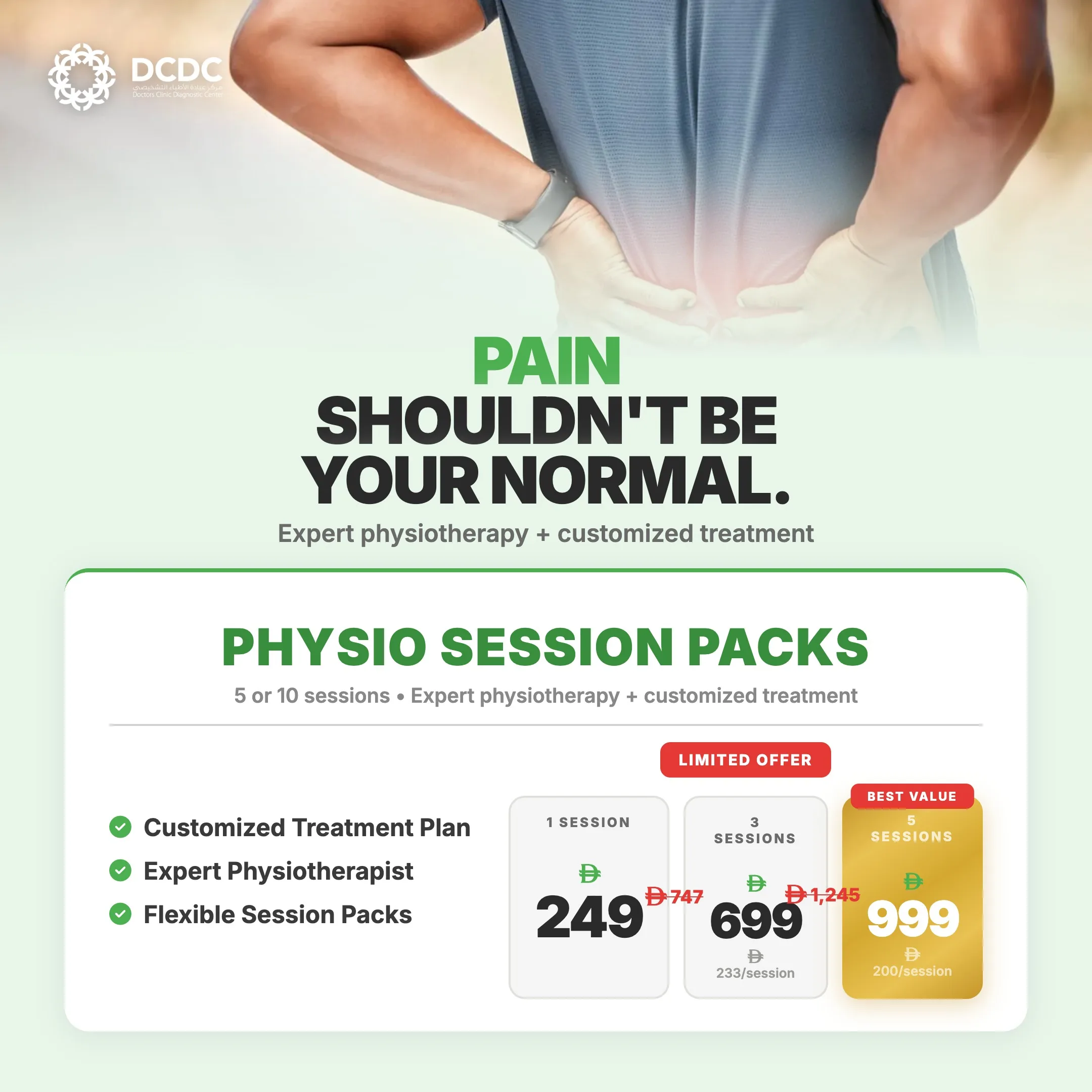
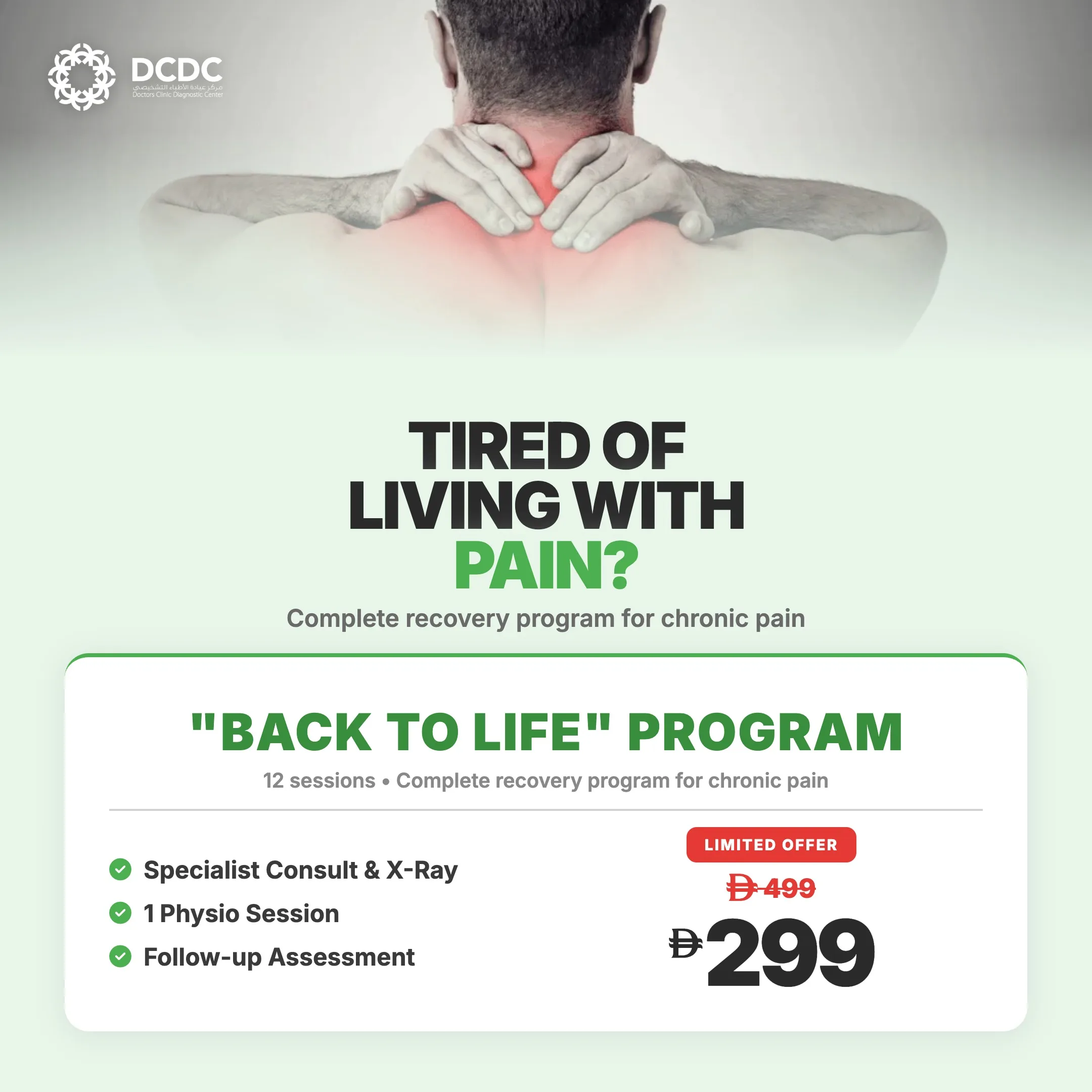
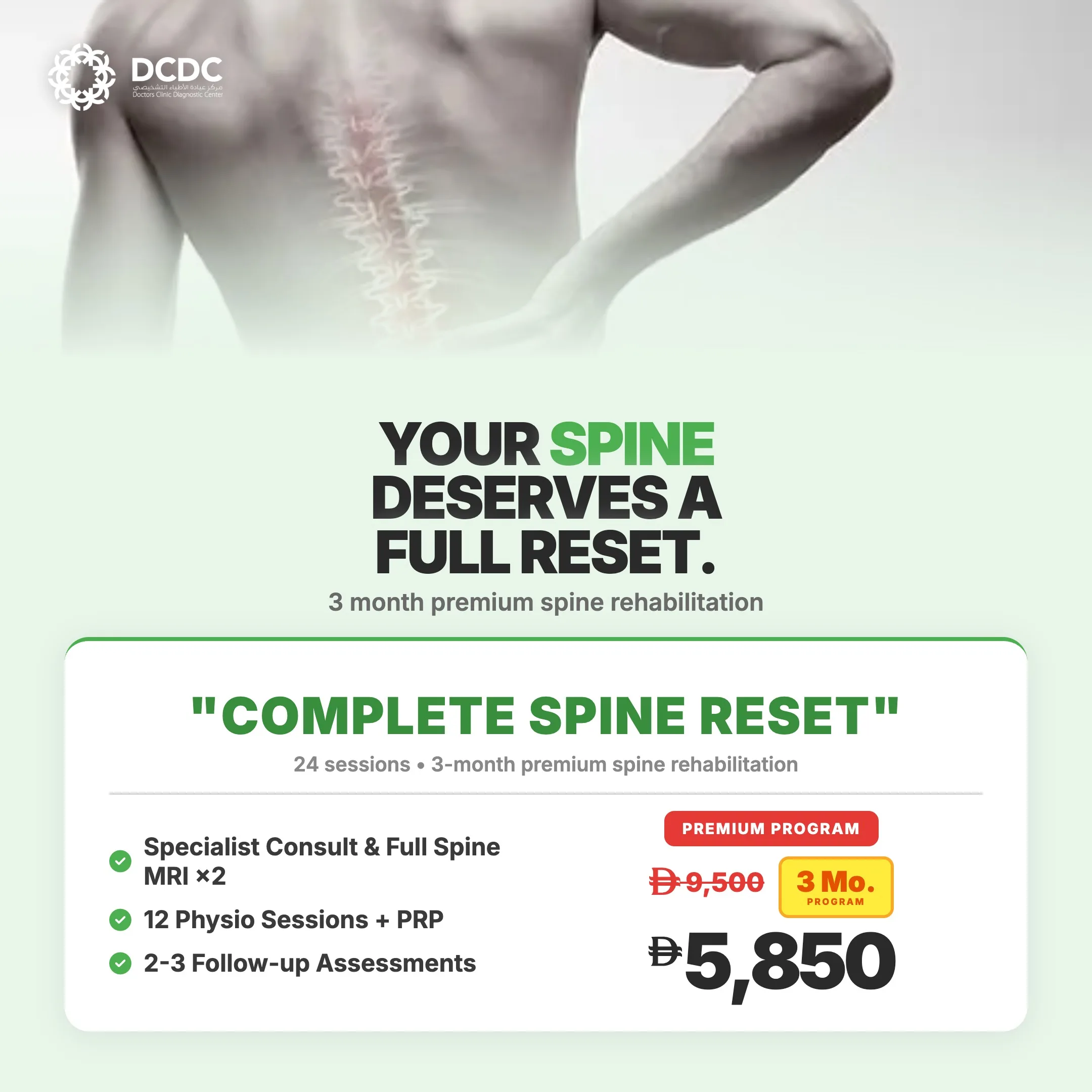
- DCDC offers consultations from AED 299, on-site X-ray, ultrasound and 1.5T MRI, and physiotherapy from AED 250 per session
Shoulder impingement treatment starts with an accurate diagnosis, and for most people it works best when begun early, before irritated tendons become torn ones. If lifting your arm sends a sharp twinge through the front of your shoulder or keeps you awake at night, an orthopedic assessment at DCDC can identify the cause and set out a clear plan, often within a single visit at Dubai Healthcare City.
Shoulder impingement is among the most common causes of shoulder pain in adults and is thought to account for up to half of all shoulder complaints seen in clinics. It affects swimmers, tennis and padel players, gym users and manual workers who repeat overhead movements, but also office workers whose desk posture quietly narrows the space around the rotator cuff. In Dubai, where outdoor sport is popular and many professionals sit for long hours, we see it frequently. This guide explains what is happening inside the joint, how it is diagnosed, which exercises and treatments work, and what to expect at DCDC.
What Is Shoulder Impingement Syndrome?
Shoulder impingement syndrome, also called subacromial impingement syndrome, occurs when the soft tissues in the narrow space beneath the top of your shoulder blade are repeatedly pinched during arm movement. To understand why this happens, it helps to picture the anatomy. The shoulder is a shallow ball-and-socket joint held in place by the four rotator cuff muscles (supraspinatus, infraspinatus, teres minor and subscapularis). Their tendons form a cuff around the head of the humerus and keep it centred in the socket as you lift and rotate your arm.
Above the rotator cuff sits the acromion, a bony projection at the top of the scapula (shoulder blade). The gap between the acromion and the humeral head is called the subacromial space, and it is only about 8 to 10 millimetres wide in a healthy adult. Within that small tunnel pass the supraspinatus tendon, part of the biceps tendon, and the subacromial bursa, a thin fluid-filled sac that works as a cushion and lets the tendons glide smoothly under the bone.
When the space narrows, because the tendon swells, the bursa thickens, the acromion has a bony spur, or the shoulder blade moves poorly, the tendon and bursa get compressed with every overhead movement. Over time this causes irritation, inflammation and pain. If the pinching continues for months, the tendon fibres can fray and eventually tear, which is why early shoulder impingement treatment matters. Impingement is best understood as a spectrum that runs from simple bursal irritation, through rotator cuff tendinopathy, to partial and full thickness tears.
Clinicians sometimes describe two broad mechanisms. Extrinsic impingement is compression from outside the tendon, caused by the shape of the acromion, a spur, or poor scapular control. Intrinsic problems begin within the tendon itself, through overload, weakness or age-related degeneration, and then reduce the space available. In real patients the two often overlap, which is why a thorough assessment of strength, posture and movement is just as important as imaging.
Causes and Risk Factors
Shoulder impingement rarely has one single cause. Most patients we see at DCDC have a combination of overload, poor movement mechanics and, in some cases, structural factors. For a wider look at how impingement fits among other problems, see our guide to the common causes of shoulder pain.
Repetitive Overhead Activities
Any activity that repeatedly takes the arm above shoulder height can irritate the subacromial space. Swimmers (the classic freestyle and butterfly athlete), tennis and padel players performing serves and smashes, volleyball and cricket players, and CrossFit or gym enthusiasts doing overhead presses are all at higher risk. So are painters, electricians, air-conditioning technicians, mechanics and warehouse workers who lift or work above their heads for hours. Dubai's year-round outdoor sport culture means many recreational athletes train through the early signs of pain without realising that the load is accumulating.
Poor Posture (Desk Workers in Dubai)
Posture is one of the most underestimated contributors. Long hours at a desk, on a laptop or on a phone encourage a rounded upper back and a forward head position. This tilts the shoulder blade forward and downward, which reduces the subacromial space even when you are simply lifting your arm to reach for a shelf. With many Dubai professionals spending 8 to 10 hours daily in air-conditioned offices, plus long commutes, this pattern is extremely common. Patients with no sporting history often fall into this group, and their symptoms typically begin as a vague ache at the top of the shoulder by the end of the workday.
Rotator Cuff Weakness and Muscle Imbalance
The rotator cuff and the muscles that control the shoulder blade (serratus anterior, lower and middle trapezius) keep the humeral head centred and the scapula moving in rhythm with the arm. When these muscles are weak or fatigued, the humeral head rides upward and the larger muscles, such as the deltoid and pectorals, dominate. The result is excess pinching under the acromion. Imbalance is common in people who train chest and front shoulder muscles heavily while neglecting the back and rotator cuff. It also appears after a period of inactivity followed by a sudden return to sport.
Bone Spurs (Acromial Spur)
Some people have a naturally curved or hooked acromion, and others develop a bone spur (osteophyte) on the underside of the acromion or at the acromioclavicular joint as years of stress accumulate. These spurs reduce the available space and can rub on the tendon like a rasp. Importantly, a spur on an X-ray does not automatically mean it is the cause of your pain. Many people have spurs without symptoms, which is why diagnosis must combine examination findings with imaging rather than relying on a picture alone.
Age-Related Changes
Tendons gradually lose blood supply and elasticity with age, and the bursa can thicken. Impingement symptoms are most common between the ages of 40 and 60, although athletes and manual workers can develop them far earlier. Degenerative change in the rotator cuff is very common in people over 50, and many of these tendon changes are painless. When pain does develop, it is usually triggered by a change in activity level, a minor strain, or a flare of bursal inflammation on top of an already vulnerable tendon.
Shoulder Impingement Symptoms to Watch For
Shoulder impingement symptoms usually develop gradually rather than after a single injury. Recognising the pattern early allows treatment to be simpler and recovery to be faster. The most typical features are:
- Pain at the front and outer shoulder that may spread down the side of the upper arm, usually stopping above the elbow
- A painful arc: pain when lifting the arm between roughly 60 and 120 degrees, easing once the arm is fully overhead or lowered
- Night pain, particularly when lying on the affected side, which often disturbs sleep
- Pain with specific tasks such as reaching into a back seat, fastening a bra, combing hair, or putting on a jacket
- Weakness or fatigue when lifting the arm, often because pain inhibits muscle activation
- Stiffness or a catching sensation during overhead movement, sometimes with mild clicking
The pain tends to follow a progressive pattern. In the early stage, it appears only after overhead activity and settles with rest. In the middle stage, the pain starts to occur during the activity itself and begins to disturb sleep. In the late stage, pain is present with minimal movement, weakness becomes obvious, and a rotator cuff tear may have developed. Seeing a doctor in the early or middle stage gives you the best chance of a full recovery without surgery.
Seek prompt medical attention if you experience sudden severe weakness after a fall or lifting injury, an inability to raise the arm, visible deformity, fever with a hot swollen joint, or pain accompanied by chest pressure, shortness of breath or sweating. These are not typical of impingement and need urgent evaluation.
How Shoulder Impingement Is Diagnosed
Impingement syndrome diagnosis is primarily clinical. A careful history and examination by an experienced orthopedic surgeon will usually identify the problem, and imaging is then used to confirm the diagnosis, rule out other conditions and plan treatment.
Physical Examination Tests
Your doctor will assess posture, scapular movement, range of motion and strength, then perform a set of provocative tests. The main ones are:
- Neer test: the examiner passively raises your arm forward with the shoulder blade stabilised. Pain at the end range suggests that the greater tuberosity is jamming against the acromion.
- Hawkins-Kennedy test: the arm and elbow are held at 90 degrees and the shoulder is rotated inward. Pain indicates compression of the supraspinatus tendon against the coracoacromial ligament.
- Empty can (Jobe) test: you raise both arms to 90 degrees with thumbs pointing down while the examiner presses downward. Pain or weakness points to supraspinatus tendon involvement.
- Painful arc test and resisted external rotation, which help distinguish tendon irritation from tears and from joint stiffness.
No single test is perfect, so clinicians interpret a cluster of findings together. Your neck is also examined, because cervical spine problems can refer pain into the shoulder and mimic impingement.
X-Ray
An X-ray is usually the first imaging step. It does not show tendons, but it reveals the shape of the acromion, bone spurs, arthritis of the acromioclavicular joint, calcium deposits in the tendon and the position of the humeral head. At DCDC, X-ray is available on site, so it can be performed during the same visit.
MRI Scan
MRI is the best test for assessing the soft tissues. It shows bursal inflammation, tendinopathy, partial or full rotator cuff tears and labral injury. It is usually reserved for patients whose symptoms do not improve with a few weeks of treatment, who have significant weakness, or in whom a tear is suspected. For a deeper explanation of what the scan shows, read our guide to shoulder MRI in Dubai. At DCDC, scans are performed on a Siemens 1.5T wide-bore MRI with a 70 cm opening, which is more comfortable for claustrophobic patients, and joint studies are reported by subspecialty musculoskeletal radiologists.
Ultrasound
Musculoskeletal ultrasound offers real-time, dynamic imaging of the rotator cuff and bursa. It can show the tendon catching under the acromion as you lift your arm, confirm bursal thickening, detect many partial and full thickness tears, and guide injections accurately. It is quick, painless and involves no radiation.
Shoulder Impingement vs Similar Conditions
Several shoulder problems overlap in their symptoms, and the correct diagnosis determines the correct treatment. If you suspect a tear, our article on rotator cuff tear symptoms explains the differences in more detail. Similarly, if your shoulder has become stiff rather than just painful, read about frozen shoulder and physiotherapy treatment. The table below summarises how these conditions typically compare.
| Feature | Shoulder Impingement | Rotator Cuff Tear | Frozen Shoulder | Calcific Tendinitis |
|---|---|---|---|---|
| Typical pain | Front and outer shoulder, painful arc 60-120 degrees | Deep ache, worse at night and with lifting | Diffuse, severe, then stiff | Sudden, very intense pain |
| Active movement | Limited by pain, but passive motion is full | Weak or unable to lift arm, especially with large tears | Limited | Limited by severe pain |
| Passive movement | Usually full | Usually full | Markedly restricted in all directions | Often painful but may be full |
| Weakness | Mild, pain-related | Marked, may be true weakness | Mostly due to stiffness | Pain-related |
| Typical age | 30-60, athletes and desk workers | Over 50, or after trauma | 40-60, higher in diabetes | 30-60, more common in women |
| Key imaging finding | Spur, bursitis, tendinopathy | Tendon gap on MRI or ultrasound | Thickened capsule | Calcium deposit on X-ray |
| First-line treatment | Physiotherapy and activity change | Physiotherapy, PRP or repair depending on size | Physiotherapy, injection, mobilisation | Physiotherapy, shockwave, needling |
Differences between shoulder impingement and similar shoulder conditions. A clinical examination and imaging are needed to confirm which applies to you.
It is also possible to have more than one condition at once. For example, long-standing impingement can lead to a rotator cuff tear, and a painful shoulder that is protected for weeks can stiffen into a frozen shoulder. This overlap is another reason why a proper assessment is worth doing early.
Shoulder Impingement Treatment Options
Most people with shoulder impingement improve without surgery. At DCDC, we follow a conservative-first approach, beginning with the simplest effective measures and escalating only if progress stalls. A large body of research, including randomised trials comparing structured exercise with surgery, shows that exercise-based care gives results comparable to decompression surgery for most patients.
Rest and Activity Modification
The aim is relative rest, not complete rest. Avoid or reduce movements that provoke pain, particularly repeated overhead work, heavy overhead lifting and sleeping on the affected side. Keep the shoulder moving within a comfortable range, because prolonged immobilisation causes stiffness and weakness. Athletes may adjust training volume, stroke technique, serve frequency or gym exercises such as behind-the-neck presses and upright rows. Ice packs for 10 to 15 minutes can help relieve pain after activity.
Physical Therapy
Physiotherapy is the cornerstone of shoulder impingement treatment. A tailored programme restores scapular control, strengthens the rotator cuff, improves posture and gradually returns you to full activity. Typical components include pendulum swings and gentle mobility work in the early phase, wall slides and scapular setting, external rotation strengthening with a resistance band, and scapular stabilisation exercises such as rows and serratus activation. Manual therapy, taping and posture correction are added where useful. Most patients attend one or two sessions per week for six to twelve weeks and continue a home programme between visits.
Anti-Inflammatory Medications
Over-the-counter or prescribed non-steroidal anti-inflammatory drugs (NSAIDs) can reduce pain and inflammation in the first couple of weeks and make it easier to start exercises. They should be used for short periods and taken with food, and they are not suitable for everyone, particularly people with stomach ulcers, kidney disease or certain heart conditions. Medication treats symptoms but does not correct the underlying mechanics, so it should accompany rather than replace rehabilitation.
Corticosteroid Injections
A corticosteroid injection into the subacromial bursa can deliver strong, targeted anti-inflammatory action. It is often used when pain is severe, is disturbing sleep, or prevents you from taking part in physiotherapy. The relief is typically felt within days and may last several weeks to a few months, giving a window in which exercises can be done more effectively. Because repeated steroid injections may weaken tendons, doctors limit the number, and ultrasound guidance helps place the medication accurately.
PRP Therapy for Regeneration
Platelet-rich plasma (PRP) uses a concentrated preparation of your own blood platelets, rich in growth factors, to support tendon healing. It is an option for chronic rotator cuff tendinopathy and some partial tears when exercise and other conservative measures have plateaued. Evidence is still evolving and results vary between patients, so we discuss realistic expectations first. At DCDC, PRP is available from AED 1,500 per joint injection and is usually followed by a structured rehabilitation programme.
When Surgery Is Needed
Surgery is considered when a well-delivered conservative programme of around three to six months has failed, when a significant rotator cuff tear is present, or when a large bone spur is clearly responsible for the problem. The most common procedure is arthroscopic subacromial decompression, a keyhole operation in which the surgeon removes inflamed bursa and shaves the underside of the acromion to create more room for the tendon. If a rotator cuff tear is found, it can be repaired in the same procedure. Recovery involves a short period in a sling, followed by progressive physiotherapy. Further reading is available in our article on shoulder surgery recovery and exercises.
Shoulder Impingement Exercises: Rehabilitation Programme
The following shoulder impingement exercises are commonly used in the early and middle phases of rehabilitation. They should be performed within a pain-free or mildly uncomfortable range, and ideally after your physiotherapist has checked your technique. Stop if you feel sharp pain or symptoms worsen for more than a few hours afterward.
- Pendulum swings: Lean forward with your good hand on a table and let the affected arm hang loosely. Gently swing it in small circles and forward-and-back for 30 to 60 seconds, using body motion rather than muscle effort. Repeat 2 to 3 times daily to relieve pain and ease the joint.
- Wall slides: Stand facing a wall with your forearms resting against it, elbows at shoulder height. Slowly slide your arms upward while keeping your shoulder blades gliding down and back, then lower. Do 2 sets of 10 repetitions. This trains scapular upward rotation and overhead control.
- Band external rotation: Tie a light resistance band at elbow height. With your elbow tucked against your side and bent to 90 degrees, rotate your forearm outward slowly, pause, and return over three seconds. Do 3 sets of 10 to 12 repetitions to strengthen the infraspinatus and teres minor.
- Scapular retraction (band rows): Hold a band anchored in front of you at chest height. Pull your elbows back and squeeze your shoulder blades together without shrugging, hold for two seconds and release. Do 3 sets of 12 to improve posture and mid-back strength.
- Prone Y and T raises: Lie face down with your arms out in a Y shape and then a T shape. Lift the arms a few centimetres with thumbs pointing upward, hold briefly and lower. Do 2 sets of 8 to 10 repetitions to target the lower and middle trapezius, which help keep the subacromial space open.
Progress is gradual. Most programmes begin with pain relief and mobility, then build strength with light resistance, and finally return you to overhead and sport-specific tasks. Our sports rehabilitation programmes help swimmers, racket-sport players and gym users rebuild safely.
What to Expect at DCDC
A visit to Doctors Clinic Diagnostic Center (DCDC) is designed to take you from pain to a clear plan quickly, often within a single appointment.
Step 1: Arrival in Dubai Healthcare City
DCDC is in Building 64, Block A, Al Razi Medical Complex, Dubai Healthcare City, with free parking. We are open Saturday to Thursday from 8 AM to 10 PM and Friday from 9 AM to 9 PM, and same-day appointments are frequently available.
Step 2: Consultation with an Orthopedic Surgeon
You will see Dr. Mersad Moosavi, an orthopedic surgeon with more than 14 years of experience. A consultation starts from AED 299. He will take a detailed history covering your work, sport, sleep and previous treatments.
Step 3: Physical Examination with Impingement Tests
The examination includes posture, range of motion, strength testing and the Neer, Hawkins-Kennedy and empty can tests, plus a neck screen to exclude referred pain.
Step 4: On-Site X-Ray in the Same Visit
If indicated, an X-ray is taken on site so that bone spurs, acromion shape and calcification can be reviewed with you immediately.
Step 5: MRI if Needed
When a tear or other pathology is suspected, we arrange a shoulder MRI on our Siemens 1.5T wide-bore scanner. Subspecialty musculoskeletal radiologists report the study, so subtle tendon and bursal changes are described precisely. Ultrasound is also available on site.
Step 6: Guided Physiotherapy Programme
Your treatment plan typically begins with a guided physiotherapy programme, from AED 250 per session, with a home exercise plan you can follow between visits.
Step 7: PRP Injection Option
If progress plateaus after a proper trial of conservative care, PRP injection (from AED 1,500 per joint injection) can be discussed. Surgery is reserved for the minority who do not respond.
Recovery Timeline
Shoulder impingement recovery time depends on severity and consistency with exercise. With conservative treatment, most patients improve over 6 to 12 weeks, though chronic cases may take longer. After arthroscopic surgery, expect 3 to 6 months for a return to full activity, with desk work often possible within 2 to 4 weeks and overhead sport at the later end of the range. DCDC works with 20+ insurance partners and offers direct billing, so you can often start without paperwork delays.
Shoulder Pain With Overhead Movement?
Do not wait for impingement to become a rotator cuff tear. Book an assessment at Doctors Clinic Diagnostic Center in Dubai Healthcare City. On-site X-ray, ultrasound and MRI, a conservative-first plan, and direct billing with 20+ insurers.
Book an Orthopedic Consultation
Prevention Tips
Many cases of impingement are preventable, and the same habits also help prevent recurrence after treatment.
Posture and Desk Ergonomics
Set your monitor so the top of the screen is at eye level, keep your elbows at about 90 degrees with forearms supported, and use a chair with good back support. Keep your keyboard and mouse close so you are not reaching forward all day. Stand up and move every 30 to 45 minutes, and perform a few shoulder blade squeezes and chest-opening stretches.
Warm-Up Before Sport and Gym
Spend five to ten minutes preparing the shoulders before swimming, racket sports or overhead lifting. Use arm circles, band pull-aparts and light external rotation work. Increase training load gradually, and avoid sudden jumps in volume.
Strengthen the Rotator Cuff and Scapular Muscles
Two to three short sessions per week of band external rotation, rows and prone raises build a more resilient shoulder. Balance pressing exercises with at least as much pulling work.
Technique and Sleep Position
Ask a coach to review your swimming stroke, serve or lifting technique. If you sleep on your side, lie on the unaffected side and hug a pillow to support the top arm.
Book Your Shoulder Assessment at DCDC
Get a clear diagnosis and treatment plan for shoulder impingement. Book an orthopedic assessment at Doctors Clinic Diagnostic Center in Dubai Healthcare City, with consultations from AED 299, on-site imaging, and a 4.8/5 Google rating from 1,000+ reviews. WhatsApp us to book now.
Shoulder Impingement Treatment: Frequently Asked Questions
Below are the questions patients most often ask us about shoulder impingement.
Related Services at DCDC
Expert care and advanced diagnostics at Dubai Healthcare City
Orthopedic Consultation
Expert diagnosis for shoulder, joint and musculoskeletal conditions
Book AppointmentSports Rehabilitation
Specialized recovery programs for sports and overhead injuries
Book AppointmentShoulder MRI
Detailed MRI imaging of rotator cuff, labrum and shoulder structures
Book AppointmentFrequently Asked Questions
Final Thoughts
Shoulder impingement is common, painful and highly treatable. The key is recognising it early, understanding why your shoulder is being compressed, and following a rehabilitation programme consistently. Most people regain comfortable overhead movement without an operation, and those who do need surgery generally have excellent results after proper rehabilitation.
If you are struggling with shoulder pain, the team at Doctors Clinic Diagnostic Center in Dubai Healthcare City, led by Dr. Mersad Moosavi, offers examination, on-site imaging, physiotherapy and PRP in one place. Book a visit or message us on WhatsApp to get started.
Sources & References
This article references the following sources:
- PubMed - Subacromial impingement syndrome: diagnosis and management
- PubMed - Physical examination tests for shoulder impingement: systematic review
- PubMed - Exercise therapy for subacromial impingement syndrome
- PubMed - Arthroscopic subacromial decompression versus exercise or placebo surgery
- PubMed - Platelet-rich plasma for rotator cuff tendinopathy
This information is educational and does not replace individual medical advice. See our editorial policy for more information.

Written by
Dr. Mersad Moosavi
Orthopedic Surgery
MD, Orthopedic Surgery
Dr. Mersad Moosavi is an Orthopedic Surgeon at Doctors Clinic Diagnostic Center (DCDC) in Dubai Healthcare City.
Related Articles
Shoulder Pain Dubai: 7 Causes & When to Worry
Rotator Cuff Tear Symptoms Dubai
Frozen Shoulder: Physiotherapy Treatment Dubai
Shoulder MRI Dubai: Rotator Cuff & Sports Injuries
Shoulder Surgery Recovery: Exercises & Timeline
More in Orthopedics
Whiplash Injury Treatment Dubai: Guide (2026)
Read More
Osteoarthritis vs Rheumatoid Arthritis Dubai (2026)
Read More
Sciatica Causes & Symptoms in Dubai (2026)
Read MoreGym Injuries Dubai: Prevention & Recovery (2026)
Read More
Chronic Pain Management Dubai: Guide (2026)
Read More
Achilles Tendonitis Treatment in Dubai (2026)
Read More© 2026 Doctors Clinic Diagnostic Center (DCDC), Dubai Healthcare City. Originally published at https://doctorsclinicdubai.ae/blog/shoulder-impingement-treatment-dubai. All rights reserved. Unauthorized reproduction is prohibited.