Key Takeaways
- PRP treatment uses your own blood platelets to support hair regrowth, with clinical studies showing 75% patient satisfaction and significant hair count increases for androgenetic alopecia
- PRP hair treatment in Dubai costs AED 800-1,200 per session, with packages of 3 sessions from AED 2,000-3,000 and packages of 6 from AED 3,500-5,000
- Results follow a predictable timeline: reduced shedding at month 1, new fine hairs at month 3, visible thickening at month 6, and maximum results at month 12
- PRP works best for early to moderate androgenetic alopecia (genetic hair loss) where follicles are weakened but still alive — it cannot regrow hair on completely bald areas
- Maintenance sessions every 4-6 months are required to sustain results — without maintenance, hair thinning gradually resumes
- PRP has minimal downtime (return to activities same day), no surgical scars, and minimal side effects compared to hair transplant surgery
PRP hair treatment (Platelet-Rich Plasma therapy) is the leading non-surgical solution for hair loss in Dubai. By injecting concentrated growth factors from your own blood directly into the scalp, PRP strengthens weakened hair follicles, improves blood supply, and stimulates dormant follicles to re-enter the growth phase. At DCDC Dubai Healthcare City, PRP hair treatment is performed after comprehensive scalp assessment with same-day appointments available.
This comprehensive guide covers everything you need to know about PRP for hair loss in Dubai in 2026: how the procedure works at a cellular level, exact pricing for single sessions and packages, a detailed month-by-month results timeline, who is and is NOT a good candidate, how PRP compares to exosomes, minoxidil, finasteride, and hair transplant, the complete step-by-step procedure, pain levels, downtime, maintenance schedules, and what to expect at your first session.
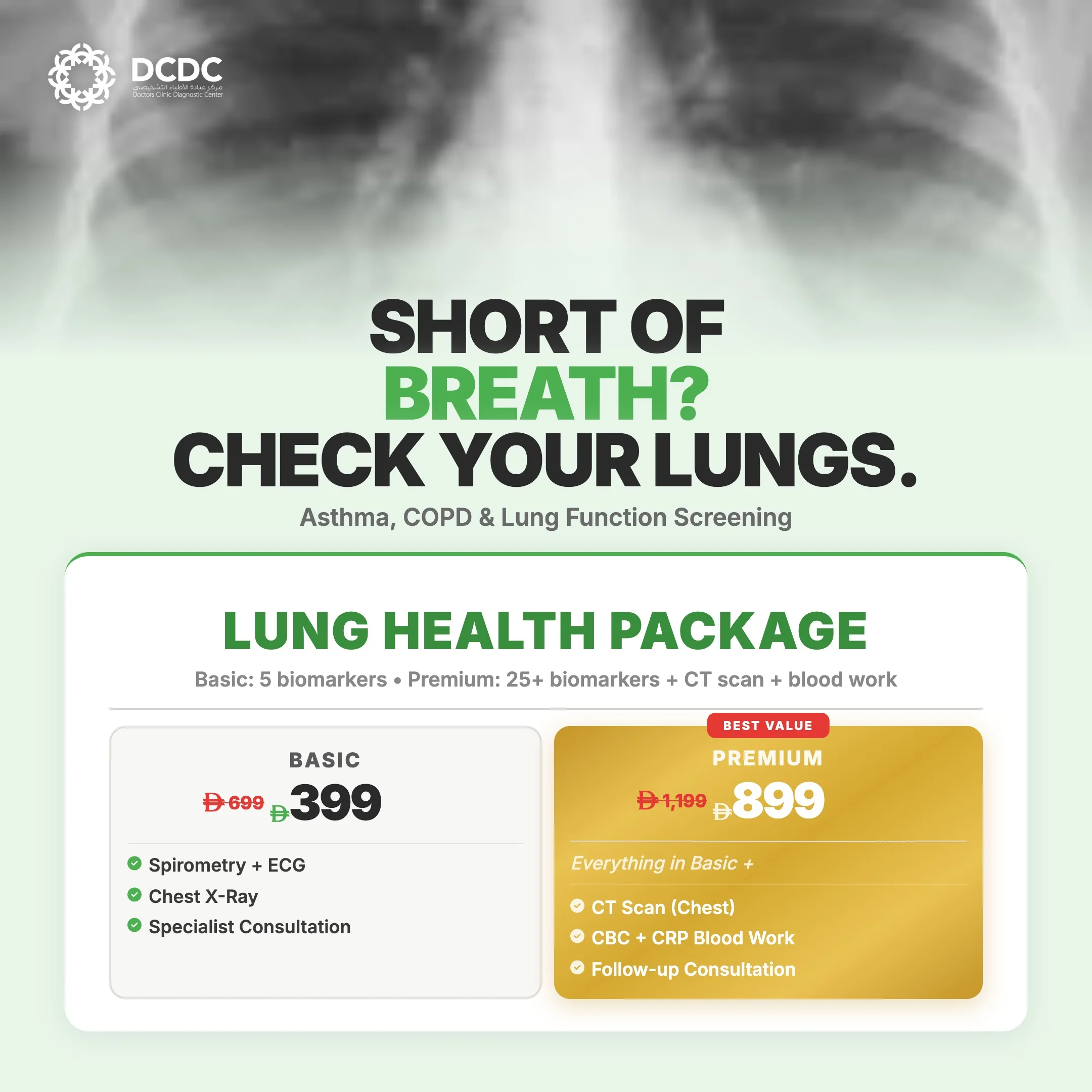
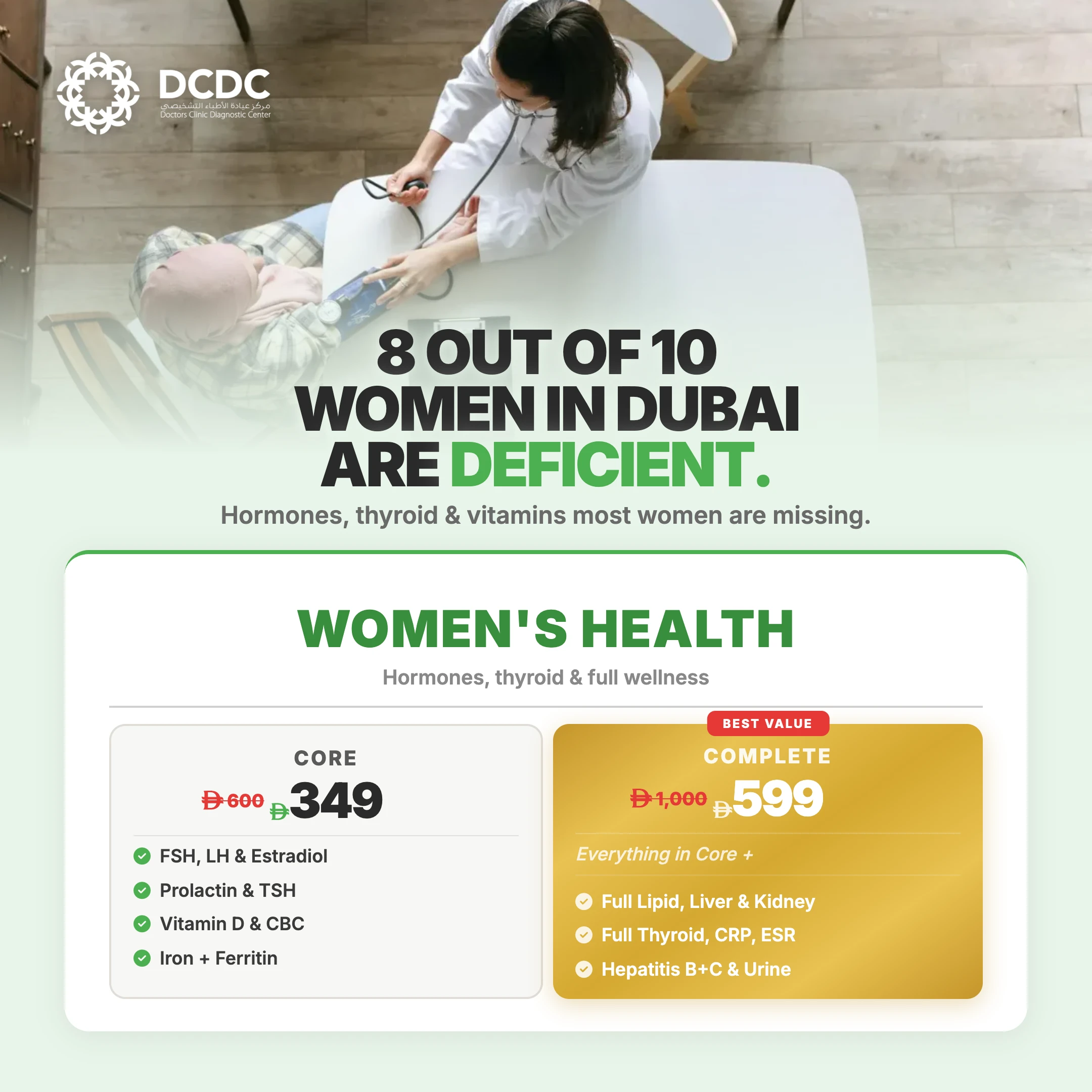
Health Screening Packages
Save with our bundled screening packages — specialist consultation included
What Is PRP Treatment and How Does It Work for Hair Loss?
PRP stands for Platelet-Rich Plasma — a concentrated portion of your own blood that contains 3-5 times the normal concentration of platelets. Platelets are blood cells best known for clotting, but they also contain hundreds of growth factors and bioactive proteins that are essential for tissue repair, cell regeneration, and healing.
When PRP is injected into the scalp at areas of thinning hair, these growth factors act directly on hair follicles to stimulate regeneration. The mechanism works at the cellular level through several pathways simultaneously:
- PDGF (Platelet-Derived Growth Factor): Stimulates cell replication and promotes hair follicle growth by activating stem cells in the hair bulge region
- VEGF (Vascular Endothelial Growth Factor): Promotes formation of new blood vessels (angiogenesis) around hair follicles, improving nutrient and oxygen delivery to the follicle
- EGF (Epidermal Growth Factor): Supports cell growth, differentiation, and proliferation — helps transition follicles from the resting phase (telogen) back to the growth phase (anagen)
- TGF-beta (Transforming Growth Factor): Regulates hair follicle cycling and stimulates the dermal papilla cells that control hair growth
- FGF (Fibroblast Growth Factor): Promotes wound healing and supports the structural integrity of the hair follicle
- IGF-1 (Insulin-like Growth Factor): Promotes cell growth and protects cells from programmed cell death (apoptosis)
The net effect of these growth factors is threefold: they prolong the anagen (growth) phase of the hair cycle so each hair grows for longer before shedding, they increase the diameter of individual hair shafts making existing hair appear thicker, and they can reactivate dormant follicles that have entered an extended resting phase. This is why PRP produces visible improvement in both hair count and hair thickness when used at the right stage of hair loss.
Clinical Evidence: Does PRP Actually Work for Hair Loss?
PRP for hair loss is supported by a growing body of clinical evidence, though results vary based on hair loss type, stage, and individual response. Here is what the research shows.
- 2019 systematic review (Dermatologic Surgery): Analysed 11 studies totalling 262 patients — found approximately 75% patient satisfaction rates with PRP therapy for androgenetic alopecia, with statistically significant increases in hair density
- 2020 meta-analysis (Journal of Cosmetic Dermatology): Demonstrated statistically significant increases in both hair count (average 33.6 hairs/cm² increase) and hair thickness following PRP treatment compared to placebo
- 2021 randomised controlled trial: PRP group showed 29% increase in hair density at 6 months versus 2% in the placebo group, with improvements sustained at 12-month follow-up with maintenance sessions
- American Academy of Dermatology position: Classifies PRP as a "promising" treatment for androgenetic alopecia, noting that while large-scale randomised trials are still needed, existing evidence supports its use as part of a multimodal hair loss treatment approach
The key takeaway from the evidence: PRP is not a miracle cure, but it is a clinically validated treatment that produces measurable improvements in hair density and thickness for the right candidates — particularly those with early to moderate androgenetic alopecia where follicles are weakened but still alive.
PRP Hair Treatment Cost in Dubai: Sessions & Packages
PRP treatment cost in Dubai varies based on the preparation method, platelet concentration, practitioner expertise, and whether you purchase individual sessions or multi-session packages. Below is a comprehensive pricing breakdown.
| PRP Treatment Option | Price Range (AED) | Per-Session Cost | Best For |
|---|---|---|---|
| Single Standard PRP Session | 800–1,200 | 800–1,200 | First-time patients wanting to try PRP before committing to a package |
| Package of 3 Sessions | 2,000–3,000 | 667–1,000 | Standard initial treatment course — most common starting point |
| Package of 6 Sessions | 3,500–5,000 | 583–833 | Comprehensive treatment with best per-session value |
| Advanced PRP (High Concentration) | 1,500–2,500 per session | 1,500–2,500 | Patients who want maximum platelet concentration for enhanced results |
| PRP + Mesotherapy Combination | 1,200–2,000 per session | 1,200–2,000 | Enhanced nutrient delivery alongside PRP growth factors |
| Maintenance Session (after initial course) | 800–1,200 | 800–1,200 | Every 4-6 months to sustain results |
PRP hair treatment pricing in Dubai. Prices at DCDC Dubai Healthcare City as of July 2026.
At DCDC, PRP treatment includes comprehensive scalp assessment, high-concentration PRP preparation using a double-spin centrifuge protocol, topical numbing, the injection procedure, and post-treatment monitoring — all included in the session price with no hidden fees for consultation, numbing cream, or follow-up. The package approach (3 or 6 sessions) ensures consistent treatment and provides meaningful per-session savings.
Annual Cost of PRP Maintenance
After completing your initial 3-session course, maintenance sessions are required every 4-6 months to sustain results. This means 2-3 maintenance sessions per year at AED 800-1,200 each, bringing the annual maintenance cost to approximately AED 1,600-3,600. Compare this to the ongoing annual cost of daily minoxidil (AED 600-1,200/year) or finasteride (AED 800-1,500/year) — PRP maintenance is in a similar range but without daily medication requirements.
Month-by-Month PRP Results Timeline
PRP is not an overnight solution. Hair growth follows natural cycles (each cycle lasts 2-6 years), and PRP works by influencing these cycles at the cellular level. Understanding the realistic timeline prevents premature disappointment and helps you assess whether PRP is working for you.
| Timeline | What Happens | What You Will Notice | Clinical Markers |
|---|---|---|---|
| Week 1-2 | Growth factors activate stem cells in follicle bulge, angiogenesis begins | Mild scalp redness resolves, possible initial increase in shedding (normal — old hairs making way for new growth) | Increased blood flow to scalp measurable by Doppler |
| Month 1 | Dormant follicles begin transitioning from telogen (resting) to anagen (growth) phase | Reduced daily hair shedding — less hair in the shower drain, on your pillow, in your brush | Decreased telogen hair count on pull test |
| Month 2-3 | New hair shafts begin emerging from reactivated follicles, existing hairs thickening | Fine baby hairs (vellus hairs) appearing along the hairline and in thinning areas, improved scalp coverage | Increased hair count per cm² on trichoscopy |
| Month 4-6 | Vellus hairs maturing into terminal (thick) hairs, hair diameter increasing | Visible thickening — hair looks fuller and denser, reduced scalp visibility through thinning areas | Measurable increase in hair shaft diameter and density |
| Month 6-9 | Hair growth continues to improve, results becoming consistently visible | Significant improvement in hair volume, texture improvement, reduced breakage | Clinical photography shows clear before/after difference |
| Month 9-12 | Maximum results achieved for the initial treatment course | Peak hair density, strongest hair quality, most visible improvement | Hair count increase of 20-40% in responding patients |
| 12+ months | Results plateau — maintenance sessions required to sustain gains | Without maintenance, gradual return toward pre-treatment state over 6-12 months | Maintenance sessions every 4-6 months preserve gains |
Month-by-month PRP hair treatment results timeline. Individual results vary based on hair loss stage, age, and treatment adherence.
It is critically important to understand that the initial "shedding phase" in weeks 1-3 is normal and actually indicates that PRP is working. Old, weak hairs are being shed to make room for new, stronger growth. Many patients panic at this stage and discontinue treatment prematurely — this is a mistake. The reduced shedding and new growth that follows at months 1-3 confirms the treatment is effective.
Who Is a Good Candidate for PRP Hair Treatment?
PRP works best when hair follicles are weakened but still alive. A proper scalp evaluation — including clinical examination and possibly trichoscopy (magnified scalp analysis) — is always necessary before starting treatment. Understanding candidacy criteria helps you assess whether PRP is likely to work for your specific situation.
Ideal Candidates (Best Response)
- Early-stage androgenetic alopecia (Norwood 2-4 for men, Ludwig 1-2 for women): Thinning has begun but follicles are still active — this is the sweet spot for PRP
- Diffuse thinning (not patchy baldness): Even distribution of weakened follicles responds better to PRP's growth factor stimulation
- Recent onset of increased shedding: When hair loss has started within the past 1-5 years, more follicles are likely to be in a recoverable state
- Post-hair transplant patients: PRP improves graft survival rates and stimulates surrounding native hair — many transplant surgeons recommend PRP as a complement
- Women with hormonal thinning: Postpartum hair loss, perimenopausal thinning, and PCOS-related hair loss often respond well to PRP
Who Is NOT a Good Candidate for PRP
PRP has real limitations. Honesty about who will not benefit is essential for ethical practice and patient trust.
- Complete baldness (Norwood 6-7): Where follicles are permanently destroyed, PRP cannot create new follicles. Hair transplant is the only option for completely bald areas.
- Scarring alopecia: Conditions like lichen planopilaris or frontal fibrosing alopecia permanently destroy follicles — PRP cannot reverse scar tissue
- Active autoimmune hair loss (alopecia areata in active flare): PRP growth factors may theoretically worsen autoimmune activity. Treatment should focus on managing the autoimmune condition first.
- Hair loss from nutritional deficiency: If hair loss is caused by iron deficiency, vitamin D deficiency, thyroid dysfunction, or other treatable conditions, fixing the underlying cause should be the priority. PRP can be added later as a complementary treatment.
- Blood disorders or platelet dysfunction: Thrombocytopenia, platelet dysfunction syndromes, or active blood cancers are contraindications
- Active scalp infection: Any infection must be treated before PRP can be performed
- Unrealistic expectations: Patients expecting full hair restoration from PRP alone will be disappointed. PRP improves density by 20-40% in responding patients — it does not reverse complete baldness.
Before starting PRP, checking for underlying causes of hair loss is essential. A comprehensive blood panel including iron studies (ferritin, serum iron, TIBC), vitamin D, vitamin B12, thyroid function (TSH, free T4), and hormones (testosterone, DHEA-S, prolactin) can identify treatable causes that should be addressed first or alongside PRP.
PRP Hair Treatment Procedure: Step by Step
The PRP procedure is performed in a clinic setting and takes approximately 45-60 minutes from start to finish. No hospital admission, no general anaesthesia, and no stitches are required.
Step 1: Blood Draw (5 minutes)
A small amount of blood (typically 20-60 mL, similar to a routine blood test) is drawn from a vein in your arm. This is the same process as a standard lab blood draw — a quick needle prick that most patients describe as barely noticeable.
Step 2: Centrifuge Processing (15 minutes)
Your blood sample is placed in a specialised centrifuge that spins at high speed to separate the blood components by density. The result is three layers: red blood cells at the bottom, platelet-poor plasma at the top, and a concentrated band of platelet-rich plasma (PRP) in the middle. This PRP layer — containing 3-5 times the normal concentration of platelets — is carefully extracted for injection. At DCDC, we use a double-spin protocol to achieve maximum platelet concentration.
Step 3: Scalp Numbing (10 minutes)
A topical numbing cream (lidocaine-based) is applied to the treatment areas of the scalp and left for 10-15 minutes to take full effect. Some practitioners also use nerve blocks at the forehead and temples for more complete numbing. This step is what makes the difference between a comfortable procedure and an unpleasant one.
Step 4: PRP Injection (15-20 minutes)
Using a fine-gauge needle (30G or 32G — the same size used for Botox), the concentrated PRP is injected into the scalp at approximately 1 cm intervals across all thinning areas. Injections are placed at a depth of 1-2 mm — directly into the dermis where hair follicle roots reside. The entire scalp injection process takes 15-20 minutes. Most patients describe the sensation as mild pressure or a brief pinch at each injection site.
Step 5: Post-Treatment (5 minutes)
After injection, the scalp may appear slightly red with small raised bumps at injection sites — this is normal and resolves within 1-4 hours. No bandaging is needed. You receive aftercare instructions and can leave the clinic immediately. There is no recovery room stay.
Pain Level, Side Effects & Downtime
One of PRP's biggest advantages over surgical hair restoration is its minimal downtime and side effect profile.
Pain Level
On a scale of 1-10, most patients rate PRP scalp injections at 2-4 with topical numbing cream. The forehead and temple areas tend to be more sensitive than the crown. Without numbing, patients rate it 5-7 — which is why proper numbing is essential. At DCDC, we allow full numbing cream absorption time (10-15 minutes minimum) before beginning injections.
Common Side Effects (Mild and Temporary)
- Scalp redness: Resolves within 1-4 hours
- Mild swelling: Especially at the forehead — resolves within 24-48 hours
- Injection site tenderness: Mild soreness lasting 24-48 hours
- Temporary increased shedding: In weeks 1-3 — this is normal and indicates treatment is working
- Pinpoint bruising: Small bruises at injection sites that resolve within 3-5 days
Downtime
PRP has virtually no downtime. Most patients return to work, social activities, and normal routine the same day. Restrictions for the first 24-48 hours include: avoid washing hair for 12-24 hours, avoid intense exercise or heavy sweating for 24 hours, avoid swimming pools or saunas for 48 hours, avoid hair colouring or chemical treatments for 72 hours, and avoid direct sun exposure to the scalp for 48 hours.
PRP vs Other Hair Loss Treatments: Comprehensive Comparison
PRP is one of several evidence-based hair loss treatments available in Dubai. Each option has different strengths, limitations, costs, and commitment levels. The table below provides an honest comparison to help you choose the right approach — or combination of approaches — for your situation.
| Treatment | How It Works | Effectiveness | Cost (AED/Year) | Commitment | Side Effects | Best For |
|---|---|---|---|---|---|---|
| PRP Treatment | Growth factors stimulate follicles | Moderate-high for early loss (60-75% satisfaction) | 3,000-6,000 (initial) then 1,600-3,600 (maintenance) | 3 initial sessions + every 4-6 months | Minimal — scalp redness, tenderness | Early-moderate thinning, patients wanting non-surgical option |
| Exosome Therapy | Cell-derived vesicles with growth factors (newer technology) | Emerging evidence — potentially stronger than PRP | 5,000-15,000 (initial course) | 2-4 sessions + maintenance every 6-12 months | Similar to PRP — minimal | Patients who have not responded well to PRP, more advanced thinning |
| Minoxidil (Rogaine) | Vasodilator — increases blood flow to follicles | Low-moderate (30-40% see significant regrowth) | 600-1,200 | Daily topical application — MUST continue indefinitely | Scalp irritation, unwanted facial hair, initial shedding | Budget-conscious, early thinning, combination with PRP |
| Finasteride (Propecia) | Blocks DHT hormone that shrinks follicles | Moderate-high (86% maintain hair, 65% see regrowth) | 800-1,500 | Daily oral pill — MUST continue indefinitely | Sexual side effects in 2-4% of men (rare), not for women of childbearing age | Men with genetic hair loss, combination with PRP |
| Low-Level Laser Therapy (LLLT) | Photobiomodulation stimulates cell metabolism | Low-moderate (some evidence, weaker than PRP) | 2,000-4,000 (device) or 3,000-6,000 (in-clinic) | Multiple sessions weekly (home devices: daily use) | Minimal — scalp warmth | Mild thinning, home treatment supplement |
| Hair Transplant (FUE/FUT) | Surgically relocates permanent hair to bald areas | High for advanced baldness (90%+ graft survival) | 15,000-40,000 (one-time procedure) | One procedure + PRP maintenance recommended | Scarring, infection risk, 7-14 days downtime | Advanced baldness (Norwood 4-7), complete bald patches |
Hair loss treatment comparison. Costs based on Dubai market pricing as of July 2026. Effectiveness ratings based on published clinical studies.
In many cases, the most effective approach is a combination strategy. The three most evidence-supported combinations are: PRP + minoxidil (PRP stimulates follicles while minoxidil maintains increased blood flow daily), PRP + finasteride for men (PRP stimulates growth while finasteride blocks the hormone causing loss), and PRP + post-transplant (PRP improves graft survival and stimulates surrounding native hair). Combining treatments often produces better outcomes than any single approach alone.
PRP Hair Treatment Maintenance Schedule
PRP is not a one-and-done treatment. Like exercise for fitness, the benefits require ongoing maintenance. Here is the recommended treatment schedule for optimal results.
Phase 1: Initial Treatment Course (Months 1-4)
- 3 sessions spaced 4-6 weeks apart
- This concentrated initial phase delivers the highest dose of growth factors when follicles need the most stimulation
- Cost: AED 2,000-3,000 (package of 3)
Phase 2: Assessment (Month 6)
- Clinical photography comparison with baseline
- Trichoscopy assessment of hair density and follicle health
- Decision point: continue, adjust frequency, or add complementary treatments
Phase 3: Maintenance (Ongoing)
- 1 session every 4-6 months — the standard maintenance frequency for most patients
- Some patients with aggressive hair loss may benefit from every 3-4 months initially
- Patients with stable results may extend to every 6-12 months
- Annual maintenance cost: AED 1,600-3,600 (2-3 sessions per year)
Your doctor may adjust this schedule based on your individual response, hair density trends, and the rate of ongoing hair loss. A comprehensive health checkup before starting treatment helps rule out medical causes of hair loss such as thyroid disorders, iron deficiency, or hormonal imbalances that should be treated alongside PRP.
What to Expect at DCDC: Your PRP Hair Treatment Experience
Here is exactly what happens when you come to DCDC for PRP hair treatment, from your initial consultation to your ongoing maintenance sessions.
- Initial consultation (30 minutes): Comprehensive scalp assessment, medical history review, trichoscopy if indicated, review of blood work (iron, thyroid, vitamins, hormones), baseline clinical photography. Your doctor determines whether PRP is appropriate for your specific hair loss pattern and stage.
- Treatment planning: If PRP is recommended, you receive a personalised treatment plan with session frequency, expected timeline, cost breakdown, and any complementary treatments (blood work, vitamin supplementation, topical therapies).
- PRP session (45-60 minutes): Blood draw, centrifuge processing, topical numbing, PRP injection. You can bring headphones and listen to music or a podcast during the procedure.
- Post-session: Aftercare instructions provided. You can drive yourself home and return to normal activities immediately.
- Follow-up: Progress assessment at month 3 and month 6 with clinical photography comparison.
According to Dr. Mersad Moosavi, Consultant Orthopedic Surgeon with 14+ years of experience in regenerative medicine at DCDC, "PRP is the same biological technology we use to heal tendons, ligaments, and joints — the growth factors that repair tissue work equally effectively on hair follicles. The key to success is proper patient selection, adequate platelet concentration, and a consistent treatment protocol. I always start with a thorough assessment to ensure PRP is the right approach before recommending treatment."
DCDC maintains a 4.8/5 Google rating from over 1,000 verified patient reviews and a 98% patient satisfaction rate. Our MOHAP-licensed facility in Dubai Healthcare City provides PRP treatment with transparent pricing, no hidden fees, and same-day availability. We accept direct billing with 20+ insurance providers including Daman, AXA, and Bupa.
PRP for Hair Loss in Women: Special Considerations
Female pattern hair loss (FPHL) differs from male pattern baldness in several important ways, and PRP treatment protocols may need to be adjusted accordingly.
- Pattern difference: Women typically experience diffuse thinning across the top of the scalp rather than the receding hairline and crown baldness seen in men. This diffuse pattern often responds well to PRP because follicles are still present throughout the thinning area.
- Hormonal triggers: Postpartum hair loss, perimenopausal changes, PCOS, thyroid disorders, and iron deficiency are common causes or contributors to female hair loss. Addressing these underlying factors alongside PRP improves outcomes. For hormonal management, see our guide on hair loss treatment options in Dubai.
- No finasteride option: Finasteride is not approved for women of childbearing age due to teratogenic risk. This makes PRP even more valuable for women, as it offers a non-hormonal, non-pharmacological treatment option.
- Response rates: Women often respond well to PRP, with some studies suggesting response rates comparable to or slightly higher than men for diffuse thinning patterns.
- Pregnancy and breastfeeding: PRP should be avoided during pregnancy and breastfeeding as a precautionary measure, though the treatment uses your own blood and has no systemic effects.
Common Myths About PRP Hair Treatment
Misinformation about PRP leads to unrealistic expectations and unnecessary scepticism. Here are the facts.
- Myth: PRP regrows hair on completely bald areas. Fact: PRP strengthens and reactivates existing weakened follicles. It cannot create new follicles where none exist. For complete baldness, hair transplant is needed.
- Myth: One session is enough. Fact: PRP requires a minimum of 3 initial sessions plus ongoing maintenance every 4-6 months. A single session may reduce shedding but will not produce visible thickness improvement.
- Myth: Results are permanent. Fact: PRP results require maintenance. Without ongoing sessions, hair gradually returns toward pre-treatment state over 6-12 months as the genetic cause of hair loss continues.
- Myth: PRP is painful. Fact: With proper topical numbing, most patients rate the discomfort at 2-4 out of 10. The blood draw and the waiting for numbing cream to work are often the most uncomfortable parts.
- Myth: Cheap PRP is the same as expensive PRP. Fact: Platelet concentration matters significantly. Clinics advertising PRP under AED 500 often use lower platelet concentrations or single-spin preparation methods that produce weaker PRP. The quality of preparation directly affects results.
- Myth: PRP replaces hair transplant. Fact: PRP and hair transplant serve different purposes. PRP strengthens existing thinning hair. Transplant adds permanent hair to bald areas. Many patients benefit from both.
Book Your PRP Hair Treatment Consultation at DCDC
At DCDC Dubai Healthcare City, PRP hair treatment starts from AED 800 per session with comprehensive scalp assessment, high-concentration preparation, and transparent pricing. Same-day appointments available.
Walk-ins welcome. Call, WhatsApp, or book online.
Related Services at DCDC
Expert care and advanced diagnostics at Dubai Healthcare City
Frequently Asked Questions
Final Thoughts
PRP hair treatment has established itself as the leading non-surgical option for men and women dealing with early to moderate hair loss in Dubai. It is not a miracle cure, and it is not for everyone — but for the right candidates (early androgenetic alopecia with active follicles), it delivers measurable improvements in hair density, thickness, and overall scalp health with minimal risk and virtually no downtime. The key is starting early, committing to the full initial course, and maintaining results with regular sessions.
Choosing the right clinic matters as much as the treatment itself. Proper scalp assessment, high-quality PRP preparation with adequate platelet concentration, and an honest conversation about realistic expectations are essential. At DCDC Dubai Healthcare City, PRP hair treatment is performed with comprehensive evaluation, transparent pricing from AED 800 per session, and the expertise of specialists with extensive experience in regenerative medicine. If you are noticing thinning hair or increased shedding, getting professional advice early gives you the widest range of effective treatment options.
Sources & References
This article was reviewed by our medical team and references the following sources:
- Dermatologic Surgery - Systematic Review of PRP for Androgenetic Alopecia (2019)
- Journal of Cosmetic Dermatology - PRP Meta-Analysis for Hair Loss (2020)
- American Academy of Dermatology - Hair Loss Treatment Guidelines
- Cleveland Clinic - PRP (Platelet-Rich Plasma) Treatment
- NIH/PMC - Platelet-Rich Plasma for Androgenic Alopecia: A Review
- International Society of Hair Restoration Surgery - PRP Standards
- Mayo Clinic - PRP Therapy Overview
Medical content on this site is reviewed by DHA-licensed physicians. See our editorial policy for more information.
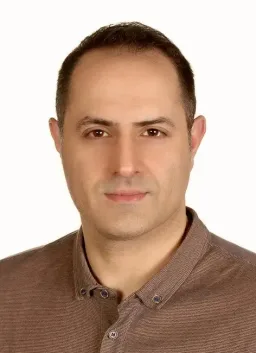
Written by
Dr. Mersad Moosavi
Consultant Orthopedic Surgeon
MD, Orthopedic Surgery
Dr. Mersad Moosavi is a Consultant Orthopedic Surgeon specializing in regenerative medicine including PRP therapy for hair loss and musculoskeletal conditions at DCDC Dubai Healthcare City.
Related Articles
Hair Loss Treatment Dubai: Complete Guide (2026)
PRP Injection for Joint Pain Dubai (2026)
Sports Injury Recovery Dubai: PRP & Rehab (2026)
PRP vs Cortisone Injection Dubai (2026)
PRP Injection for Knee Pain Dubai (2026)
More in Dermatology

Skin Tag Removal Cost Dubai: From AED 300 (2026)
Read MoreSkin Rash Causes in Dubai: When to See a Doctor (2026)
Read MoreAlopecia Areata Treatment Dubai: Guide (2026)
Read MoreEczema vs Psoriasis Dubai: Key Differences (2026)
Read MoreRosacea Treatment Dubai: Causes & Care (2026)
Read MoreSkin Allergy Treatment Dubai: Hives Guide (2026)
Read More© 2026 Doctors Clinic Diagnostic Center (DCDC), Dubai Healthcare City. Originally published at https://doctorsclinicdubai.ae/blog/prp-treatment-hair-loss-dubai. All rights reserved. Unauthorized reproduction is prohibited.