Key Takeaways
- Drink enough to pass at least 2.5 litres of urine daily (about 3 litres of fluid), and more during Dubai summers or heavy exercise
- Do not cut calcium: 1,000-1,200 mg a day from food, eaten with meals, binds oxalate and lowers calcium oxalate stone risk
- Keep sodium below about 2,300 mg a day, because salt increases calcium in urine
- Limit very high oxalate foods such as spinach, rhubarb, nuts, tahini and strong tea, and pair them with calcium rather than eliminating them
- High-protein gym diets and supplements raise stone risk; aim for moderate protein from fish, poultry and plant sources
- Lemon, lime and orange provide citrate, a natural stone inhibitor, but they support prevention and do not dissolve existing stones
- Diet should match your stone type: calcium oxalate, uric acid and calcium phosphate stones each have different triggers
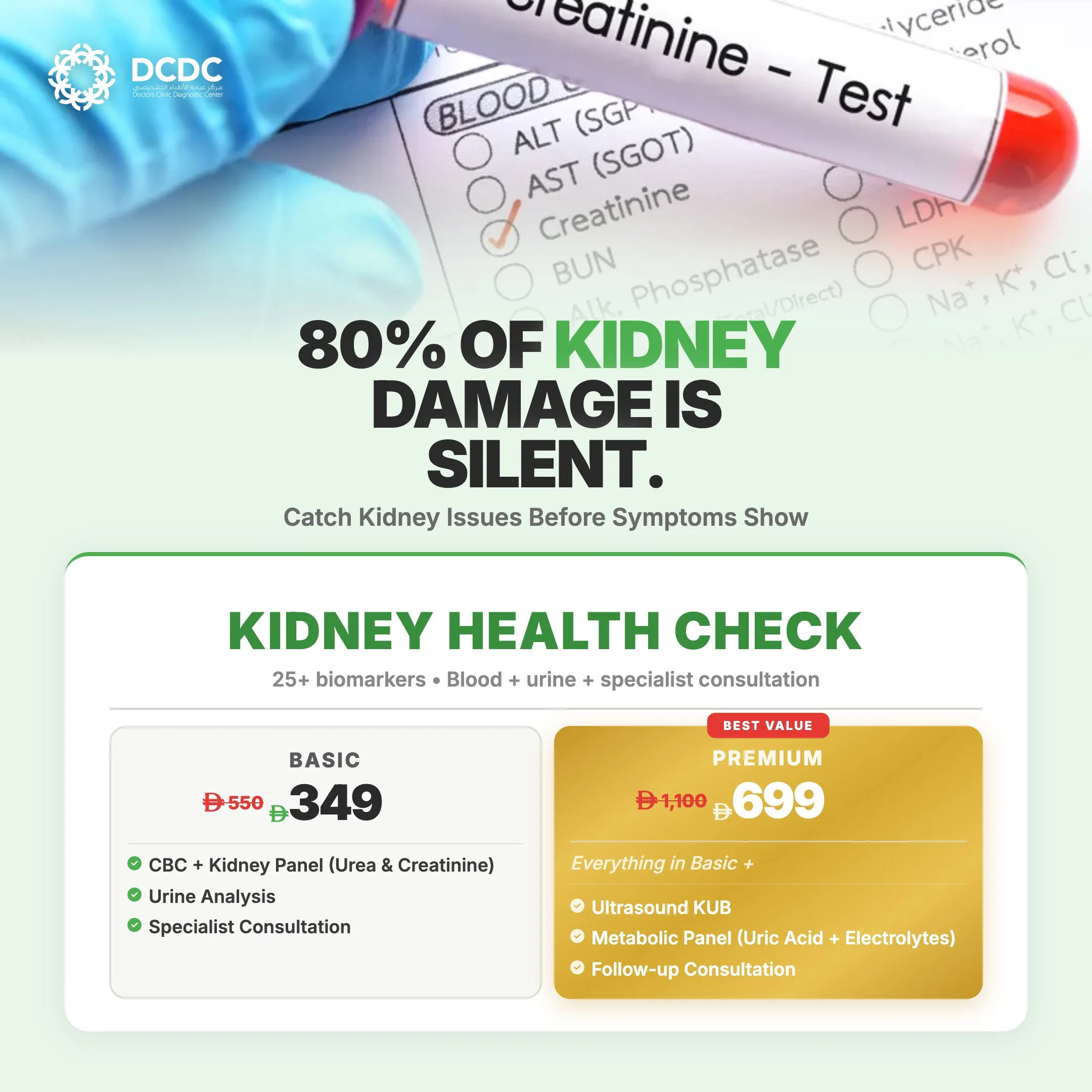
- At DCDC, a kidney function panel costs AED 149 with same-day results for routine tests, and renal ultrasound detects stones without radiation
Kidney stones are common in Dubai, where heat, air conditioning and high-protein diets quietly push urine toward crystal formation, yet most stones are preventable with the right habits. The core of a kidney stone prevention diet is simple: drink enough to pass at least 2.5 litres of urine a day, keep dietary calcium normal, cut salt, moderate animal protein and add citrus. If you already have a stone or are worried about recurrence, our kidney stone care service at DCDC in Dubai Healthcare City can identify your stone type and risk factors. This guide explains each stone type, which foods to limit or keep, how Dubai's climate changes the rules, and which tests give you a personalised plan.

Why Diet Matters for Kidney Stone Prevention
Kidney stones form when minerals and salts in urine become too concentrated and crystallise. Diet does not cause every stone, but it controls most of the levers that decide whether crystals form: how much urine you make, how much calcium, oxalate, uric acid and sodium that urine carries, and how much citrate (a natural stone inhibitor) it contains. The Mayo Clinic, NHS, Cleveland Clinic and American Urological Association (AUA) all identify fluid intake and diet as the foundation of prevention, particularly because stones tend to come back: roughly half of people who pass one stone will form another within about five to ten years if nothing changes.
The encouraging news is that prevention is largely within your control. A landmark randomised trial in the New England Journal of Medicine (Borghi et al., 2002) found that men with recurrent calcium stones who followed a normal-calcium, low-salt, moderate-animal-protein diet had a significantly lower five-year recurrence than men told to follow a traditional low-calcium diet. In other words, the old advice to simply cut out dairy was wrong, and a balanced approach works better.
If you have already had a stone, read our guides to kidney stone symptoms and kidney stone treatment options in Dubai. This article is about the other half of the story: stopping the next one.
Types of Kidney Stones and Their Dietary Triggers
The right diet depends on the type of stone. Because treatment of the wrong problem wastes effort, the first step after any stone is to analyse the stone itself (if you caught it) and to run blood and urine tests. The five main types are calcium oxalate, calcium phosphate, uric acid, struvite and cystine.
Calcium oxalate stones (about 70-80% of stones)
These are the most common. They form when calcium and oxalate bind in concentrated urine. Triggers include low fluid intake, high sodium, high animal protein, very high oxalate intake, low dietary calcium (which lets more oxalate be absorbed from the gut), and high-dose vitamin C supplements, because the body converts excess vitamin C to oxalate.
Calcium phosphate stones
These form in less acidic (more alkaline) urine and are linked to high urinary calcium, certain medical conditions such as hyperparathyroidism and renal tubular acidosis, and some medicines. Diet advice overlaps with calcium oxalate stones, but over-using alkali supplements or potassium citrate without monitoring can worsen them, so these stones need specialist supervision.
Uric acid stones (about 5-10%)
Uric acid stones form in persistently acidic urine and are associated with high purine intake (red meat, organ meats, some seafood), obesity, type 2 diabetes, metabolic syndrome and gout. Dehydration and high-protein eating raise the risk further.
Struvite and cystine stones
Struvite stones are caused by urinary tract infections with urea-splitting bacteria and are driven by infection rather than diet. See kidney stones vs UTI for how the two overlap. Cystine stones are rare and genetic; they need very high fluid intake and specialist care.
| Stone Type | Typical Urine Environment | Main Dietary Triggers | Key Prevention Focus |
|---|---|---|---|
| Calcium oxalate | Concentrated urine, high oxalate or calcium, low citrate | Low fluids, high sodium, excess animal protein, very high oxalate foods, vitamin C megadoses, low dietary calcium | Fluids 2.5L+ urine output, normal dietary calcium with meals, less salt, pair oxalate foods with calcium |
| Calcium phosphate | Alkaline urine, high calcium | Excess sodium, high animal protein, excess alkali supplements | Lower sodium, moderate protein, medical check for parathyroid or acidosis |
| Uric acid | Persistently acidic urine (pH below 5.5) | Red meat, organ meats, shellfish, sugary drinks, alcohol, dehydration | Cut purines, more plant foods and citrus, weight control, fluids |
| Struvite | Alkaline urine with infection | Not diet-driven; recurrent urinary infection | Treat infection promptly, complete antibiotic courses, specialist follow-up |
| Cystine | Genetic cystine leak | Salt and animal protein worsen excretion | Very high fluids, low sodium, specialist care |
Kidney stone types and their dietary triggers
Not Sure Which Stone Type You Form?
Blood tests and imaging at DCDC help your doctor work out which prevention plan fits you. Kidney function panel from AED 149 with same-day results for routine tests.
Call +971 54 219 5008 or WhatsApp us
Hydration: The Single Most Effective Prevention Step
Every major guideline starts with fluids. The AUA recommends that people with stones aim for a urine volume of at least 2.5 litres per day, which usually means drinking about 3 litres of fluid, more if you sweat heavily. A practical check is urine colour: it should be pale straw or nearly clear. Dark yellow urine means the minerals in it are concentrated enough to crystallise.
How to hit your fluid target
- Start the day with 500 ml of water before coffee or tea.
- Carry a 1-litre bottle and finish it twice before 6 pm, adding a third in the evening.
- Drink a glass with every meal and with each medication.
- Set a phone reminder every two hours if you work at a desk.
- Water is the best choice. Unsweetened tea, coffee in moderation, and diluted lemon water all count toward fluids.
- Avoid sugary soft drinks and energy drinks. Fructose-sweetened and cola drinks have been linked in cohort studies to higher stone risk.
Spread intake across the day, including a glass before bed. If you wake at night, drink a little water, because urine is most concentrated overnight. People with heart failure, advanced kidney disease or fluid restrictions must not raise their intake without medical advice; the kidney diet foods to avoid guide explains why fluids are managed differently in chronic kidney disease.
Oxalate-Rich Foods: What to Limit and What You Do Not Need to Fear
Oxalate is a natural compound in many plant foods. In the gut it binds with calcium and is excreted in stool; oxalate that is not bound gets absorbed and ends up in the urine. For people who form calcium oxalate stones, reducing very high oxalate foods helps, but evidence does not support blanket exclusion of all plant foods, which are otherwise good for you.
Highest-oxalate foods to limit
- Spinach, Swiss chard and beetroot (cooked spinach can contain several hundred mg oxalate per cup)
- Rhubarb and star fruit
- Almonds, cashews, peanuts and other nuts, and nut butters
- Tahini and sesame seeds, common in Dubai through hummus, baba ghanoush and halva
- Soy products such as soy milk and tofu in large amounts
- Wheat bran, bran cereals and buckwheat
- Dark chocolate and cocoa powder in large quantities
- Strong black tea, particularly several cups a day
- Sweet potatoes in large portions
Practical tips
Do not remove these foods completely unless a 24-hour urine test shows high oxalate excretion. Instead, eat smaller portions and always pair them with a calcium source at the same meal, for example hummus with yoghurt or spinach with feta, so oxalate binds in the gut. Boiling vegetables and discarding the water also lowers soluble oxalate. If you are unsure whether you need a strict low-oxalate plan, ask your doctor before cutting healthy foods.
Calcium: Eat It, Do Not Avoid It
Many patients cut dairy after a stone, which is counterproductive. Dietary calcium consumed with meals binds oxalate in the intestine and reduces how much reaches the kidney. Guidelines generally suggest 1,000 to 1,200 mg of calcium a day from food. That is roughly three servings of dairy or fortified alternatives: a glass of milk (about 300 mg), a pot of yoghurt (about 300 mg), 30 g of cheese (about 200 mg) or labneh.
Calcium supplements are different. In large cohort studies, supplemental calcium taken between meals was linked to higher stone risk, whereas dietary calcium was protective. If your doctor recommends a supplement, take it with meals and do not exceed the prescribed dose. Vitamin D should also be kept within normal range; high-dose vitamin D can increase urinary calcium, so check your level rather than guess.
Sodium Reduction: Salt Pulls Calcium Into Urine
The more sodium you eat, the more calcium your kidneys excrete. High salt intake is one of the strongest dietary drivers of calcium stones. The NHS advises adults to keep to no more than 6 g of salt (2,400 mg sodium) a day, and many stone specialists aim lower, around 2,000 to 2,300 mg of sodium. Most people in Dubai exceed this without realising, because salt hides in restaurant and takeaway meals.
Common sodium sources in Dubai
- Shawarma, grills with spice rubs, and fast-food burgers
- Pickles, olives, labneh with added salt, halloumi and feta
- Instant noodles, stock cubes, soy sauce and seasoning mixes
- Canned soups, canned fish, processed meats and sausages
- Savoury snacks, bread and ready-made sauces
Cook at home when possible, season with lemon, garlic, sumac, za'atar (check the salt), cumin and fresh herbs, rinse canned foods, and read labels: more than 1.5 g of salt per 100 g is high. Choose the low-salt option in restaurants, and ask for sauces on the side.
Protein Moderation: Be Careful With High-Protein Diets
Excess animal protein raises urinary calcium, uric acid and oxalate while lowering urinary citrate and making urine more acidic. This is a particular concern in Dubai, where gym culture, protein shakes, bodybuilding supplements and high-protein or keto diets are extremely popular. A man eating 250 g of chicken, three eggs and two protein shakes a day may be consuming far more protein than his body needs, and most of the extra must be cleared by the kidneys.
A sensible target for most adults is about 0.8 to 1.0 g of protein per kg of body weight per day (around 55 to 80 g for most people), up to 1.2-1.6 g/kg for serious athletes under supervision, always with plenty of fluid. Aim for plant sources such as lentils, chickpeas and beans, along with fish and poultry, and limit red meat, organ meats and processed meats to a few times a week. Creatine and high-dose vitamin C supplements deserve a conversation with your doctor if you have a stone history. For kidney health in general see kidney health prevention tips.
Citrus and Citrate: Natural Stone Inhibitors
Citrate binds calcium in urine and stops crystals from growing, so low urinary citrate is an important and treatable risk factor. Lemons, limes, oranges and grapefruit are rich in citrate. The AUA guideline notes that citrus juices can raise urinary citrate, and patients with low citrate may be prescribed potassium citrate when diet is not enough.
- Squeeze half a lemon or lime into water, two to three times a day (about 4 oz of lemon juice diluted across a day is a commonly studied amount).
- Eat whole oranges, which also provide fibre, rather than only drinking sweetened juice.
- Use fresh lemon on salads and grilled fish in place of salt.
- Avoid sweetened lemonade, which adds sugar and little benefit.
Fruits and vegetables also make urine less acidic and increase citrate. The DASH-style pattern, rich in fruit, vegetables, low-fat dairy and whole grains, was associated with lower stone risk in large cohort studies. Note that people with chronic kidney disease may need to watch potassium intake from fruit, so personalise this advice with a doctor.
Dubai-Specific Risk Factors: Heat, Air Conditioning and Lifestyle
The Gulf is sometimes called part of the global kidney stone belt, a band of hot regions with high stone prevalence. Several local factors stack the odds.
Heat and dehydration
Summer temperatures above 40 degrees Celsius and high humidity cause heavy sweat loss. Outdoor workers, runners, cyclists and anyone walking between car parks and malls lose litres of fluid without noticing. Urine becomes dark and concentrated, which is exactly when stones form. In summer, add 500 ml to 1 litre to your usual target and replace electrolytes with food or oral rehydration if you exercise hard.
Air conditioning hides thirst
Spending most of the day in air-conditioned offices, malls and cars means you do not feel sweaty or thirsty, so many people drink far too little. Use a marked bottle or app, and do not rely on thirst.
Hard water and desalinated water
Dubai tap water is largely desalinated and is safe to drink, though mineral content varies, and some bottled waters and areas with hard water have higher calcium levels. Evidence that normal drinking water mineral content causes stones is weak; drinking more water of any type matters far more than choosing a brand. Avoid water softeners that add large amounts of sodium to drinking water.
Fitness culture and diet trends
Protein powders, fad diets, high doses of vitamin C and creatine, rapid weight loss and fasting can all alter urine chemistry. During Ramadan, aim to drink 2.5 to 3 litres between iftar and suhoor and avoid salty pickles, fried snacks and salted nuts at iftar. Dates are fine in moderation for most people with calcium stones.
Travel and sedentary work
Long flights, long drives and desk-bound work reduce fluid intake and movement. Keep water within reach and stand up and walk each hour.
Lifestyle Habits That Lower Recurrence
- Maintain a healthy weight. Obesity and weight gain raise stone risk, but avoid crash diets, which increase uric acid and urinary stone-forming chemistry.
- Exercise regularly, but hydrate before, during and after training.
- Limit alcohol, especially beer, which can raise uric acid.
- Control blood pressure, blood sugar and gout, which share risk pathways with stones.
- Review medicines and supplements with your doctor, including calcium, vitamin C, vitamin D, topiramate and some diuretics.
- Treat urinary infections early and finish the antibiotic course.
- Attend follow-up scans and blood tests, because small stones can grow silently.
Testing for Stone Risk: What Your Doctor May Check
Personalised prevention beats generic advice. After a first stone, most specialists recommend a metabolic evaluation, especially if you have a family history, multiple stones or a single kidney. Typical steps include:
- Blood tests: kidney function (creatinine, eGFR), calcium, uric acid, phosphate, bicarbonate and sometimes parathyroid hormone. See our kidney function test guide for what each result means.
- Urinalysis and urine culture to look for blood, crystals, pH and infection.
- 24-hour urine collection to measure volume, calcium, oxalate, citrate, uric acid and sodium, considered the gold standard for tailoring diet and medication.
- Imaging: renal ultrasound, or low-dose CT when needed, to find stones and check for blockage.
- Stone analysis if you pass a stone: strain urine and bring it to your appointment.
A stone that has already caused symptoms or infection needs prompt care. Severe flank pain with fever, vomiting or inability to pass urine is an emergency; go to the nearest emergency department.
A Sample One-Day Kidney Stone Prevention Menu
| Meal | Example | Why It Helps |
|---|---|---|
| On waking | 500 ml water with lemon | Starts hydration, adds citrate |
| Breakfast | Plain yoghurt or labneh, fruit, whole grain toast, scrambled eggs | Calcium with meal, moderate protein |
| Mid-morning | Orange or apple, water | Citrate and fluids |
| Lunch | Grilled fish or chicken, rice, salad with lemon, small hummus portion with yoghurt | Moderate protein, oxalate paired with calcium, low salt |
| Afternoon | Unsweetened tea, small handful of nuts, water | Limits oxalate load, fluids |
| Dinner | Lentil soup, vegetable stew, milk-based dessert or cheese portion | Plant protein, dietary calcium |
| Evening | Glass of water before bed | Reduces overnight concentration |
Example daily plan for calcium oxalate stone prevention (adjust to your stone type)
Treat this as a template, not a prescription. Uric acid stone formers should reduce red meat and favour plant proteins, and people with kidney disease, diabetes or other conditions need a version adjusted by their doctor or dietitian.
What to Expect at DCDC
Doctors Clinic Diagnostic Center (DCDC) is located in Dubai Healthcare City (DHCC), about 10 minutes from Downtown Dubai, with free parking on site. We are open Saturday to Thursday 8 AM to 10 PM and Friday 9 AM to 9 PM, and we hold a 4.8/5 rating on Google. Our kidney stone care and prevention service is built around finding why you formed a stone, not just treating it.
- Consultation: your doctor reviews your history, diet, fluid habits, medicines and family history. See nephrologist cost in Dubai for consultation pricing.
- Kidney function blood tests: our kidney function panel is AED 149, and a uric acid test is AED 149. Routine tests usually have same-day results.
- Renal ultrasound: a non-invasive scan to detect stones, hydronephrosis and structural problems without radiation. See renal ultrasound.
- Nephrologist consultation: if tests show recurrent stones, metabolic abnormalities or reduced kidney function, you can see a nephrologist for a personalised prevention plan.
- Home collection: prefer not to travel? Home blood collection can be added for AED 199 per visit.
Book a kidney function panel and a renal ultrasound together to get a clear baseline, then repeat as your doctor advises. Insurance coverage varies by plan, so ask our team to confirm before your visit.
Book Your Kidney Stone Prevention Check at DCDC
Kidney function panel from AED 149, renal ultrasound and nephrologist consultation in Dubai Healthcare City, with free parking and extended hours (Sat-Thu 8AM-10PM, Fri 9AM-9PM).
Call +971 54 219 5008 or WhatsApp us
Related Services at DCDC
Expert care and advanced diagnostics at Dubai Healthcare City
Frequently Asked Questions
Final Thoughts
Preventing kidney stones is mostly about consistency: steady hydration, a balanced plate with calcium at meals, less salt, moderate protein and a daily dose of citrus. In Dubai, where heat, air conditioning and fitness trends all work against you, building these habits early is the most effective way to protect your kidneys from a repeat stone.
If you have had a stone, or you want a baseline before problems start, DCDC in Dubai Healthcare City offers kidney function testing from AED 149, renal ultrasound and nephrologist consultation in one place. This article is educational and does not replace personal medical advice.
Sources & References
This article references the following sources:
- NHS -- Kidney Stones: Prevention
- Mayo Clinic -- Kidney Stones: Symptoms and Causes
- Cleveland Clinic -- Kidney Stones
- American Urological Association -- Medical Management of Kidney Stones Guideline
- Borghi L et al. -- Comparison of Two Diets for the Prevention of Recurrent Stones in Idiopathic Hypercalciuria, N Engl J Med 2002 (PubMed)
- Dietary advice targeting urinary parameters in calcium oxalate stone formers (PubMed Central)
- American Academy of Family Physicians -- Preventing Kidney Stones with Diet and Nutrition
- National Kidney Foundation -- Kidney Stone Diet Plan and Prevention
This information is educational and does not replace individual medical advice. See our editorial policy for more information.

Written by
Dr. Hadeel Elnur
General Practitioner
MD, General Practice
Dr. Hadeel Elnur is a General Practitioner at Doctors Clinic Diagnostic Center (DCDC) in Dubai Healthcare City.
Related Articles
Kidney Stones Treatment Dubai

Kidney Stone Symptoms Dubai
Kidney Diet: Foods to Avoid in Dubai
Kidney Function Test Guide Dubai
Kidney Stones vs UTI Dubai
More in Nephrology

Urinary Incontinence Dubai: Causes & Care (2026)
Read MoreKidney Cyst Dubai: Types & When to Worry (2026)
Read MoreKidney Stones vs UTI Dubai: Key Differences (2026)
Read More
Diabetic Nephropathy Dubai: Prevention Guide (2026)
Read MoreKidney Stone Symptoms Dubai: Warning Signs (2026)
Read More
When to See a Nephrologist Dubai: Key Signs (2026)
Read More© 2026 Doctors Clinic Diagnostic Center (DCDC), Dubai Healthcare City. Originally published at https://doctorsclinicdubai.ae/blog/kidney-stone-prevention-diet-dubai. All rights reserved. Unauthorized reproduction is prohibited.