Key Takeaways
- Roughly 30-40% of people with diabetes eventually develop some degree of diabetic kidney disease, making it the leading cause of kidney failure worldwide
- The UAE has one of the highest diabetes rates globally -- IDF data puts adult prevalence at approximately 20.7%, well above the global average -- which makes annual kidney screening a public health priority in Dubai
- Diabetic nephropathy is silent in its early stages; the only way to catch it early is through a urine albumin-to-creatinine ratio (UACR) test and a kidney function blood test, not by waiting for symptoms
- Tight blood sugar control (HbA1c below 7%), blood pressure management, and medications such as ACE inhibitors, ARBs, and SGLT2 inhibitors can slow or halt progression when started early
- Dubai's extreme summer heat and dehydration risk, along with Ramadan fasting, both require specific precautions for diabetic patients to protect kidney function
- DCDC offers a kidney function test from AED 149 and a diabetes screening panel from AED 399, with same-day on-site lab results and direct billing across 20+ insurance providers
- Annual screening is recommended for everyone with type 2 diabetes from the time of diagnosis, and for type 1 diabetes patients starting five years after diagnosis
Diabetic nephropathy -- kidney damage caused by long-term diabetes -- develops silently in roughly a third of all people living with diabetes, often for years before any symptom appears. In Dubai, where diabetes prevalence is among the highest in the world, this makes proactive kidney screening one of the most important things a diabetic patient can do for their long-term health. This guide walks through how diabetic kidney disease develops, how to catch it early, and the practical steps that genuinely slow its progression, alongside what to expect from the nephrology services at DCDC in Dubai Healthcare City.
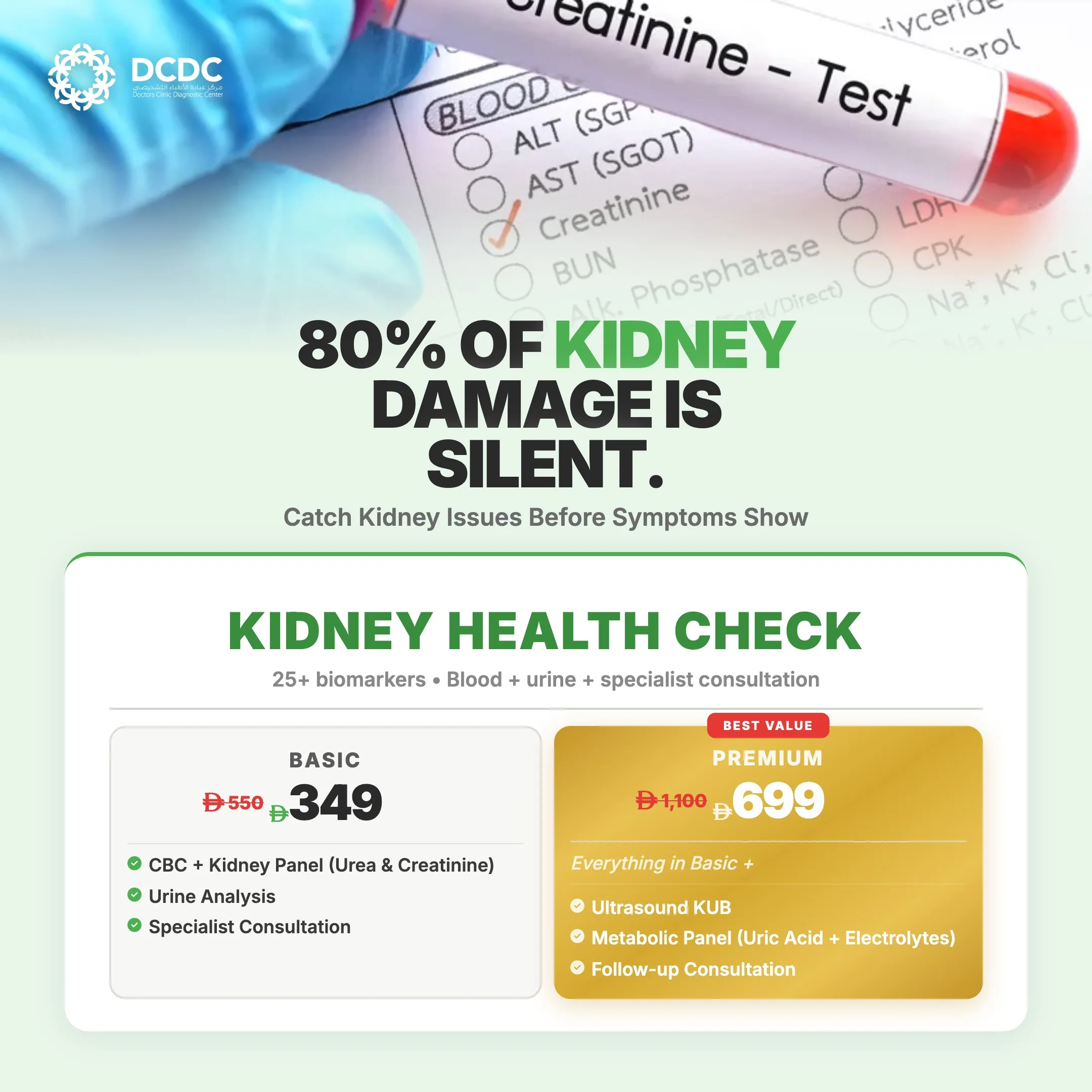


What Is Diabetic Nephropathy and Why It Matters in Dubai
Diabetic nephropathy, also called diabetic kidney disease, is progressive damage to the kidneys' filtering units caused by years of elevated blood glucose. It is the single most common cause of chronic kidney disease and kidney failure worldwide, and it typically takes 10 to 15 years of poorly controlled diabetes to reach an advanced stage -- though the timeline can be shorter in people with additional risk factors such as high blood pressure, obesity, or a genetic predisposition.
The scale of the problem is significant. Approximately 30-40% of people with diabetes develop some degree of kidney disease during their lifetime, according to data reflected by the National Kidney Foundation. In Dubai and across the UAE, where the International Diabetes Federation estimates adult diabetes prevalence at around 20.7% -- nearly double the global average -- diabetic nephropathy represents one of the most consequential, yet preventable, long-term complications facing the local population.
What makes diabetic nephropathy particularly important to understand is that it is largely preventable and, if caught early, its progression can often be slowed dramatically or even halted. Unlike many other diabetes complications, kidney damage in its earliest stage produces no symptoms whatsoever -- it can only be detected through specific blood and urine tests. This is precisely why prevention-focused screening, rather than waiting for symptoms, forms the foundation of good diabetic kidney care in Dubai.
How Diabetes Damages the Kidneys: The Science Explained
Each kidney contains roughly one million tiny filtering units called nephrons, each built around a cluster of microscopic blood vessels known as a glomerulus. These glomeruli filter waste products out of the blood while retaining essential proteins and cells. Persistently high blood glucose damages the walls of these delicate blood vessels over time, causing them to become thickened, scarred, and abnormally leaky.
As the glomeruli become leaky, protein -- particularly a protein called albumin -- begins to pass into the urine when it normally would not. This early leakage, called microalbuminuria, is the first detectable sign of diabetic kidney damage and can appear years before any decline in overall kidney filtering capacity. Over time, if blood sugar and blood pressure remain poorly controlled, more glomeruli become scarred and non-functional, and the kidneys' overall filtering capacity -- measured as the estimated glomerular filtration rate, or eGFR -- begins to decline.
High blood pressure compounds this damage significantly. Diabetes and hypertension frequently occur together, and elevated pressure inside the delicate glomerular blood vessels accelerates scarring. This is why blood pressure control is considered just as critical as blood sugar control in preventing diabetic nephropathy -- the two risk factors interact and amplify one another's damage to the kidney's filtering structures.
The Stages of Diabetic Nephropathy
Diabetic kidney disease progresses through recognizable stages, tracked using two key measurements: the urine albumin-to-creatinine ratio (UACR), which detects protein leakage, and eGFR, which measures overall filtering capacity. Understanding where you fall on this spectrum helps determine the urgency and intensity of treatment.
| Stage | UACR (mg/g) | eGFR Range | What It Means |
|---|---|---|---|
| Normal / Stage 1 | Below 30 | 90 or above | No detectable kidney damage; annual screening recommended for all diabetics |
| Microalbuminuria | 30-300 | Often still 60-89 or higher | Earliest detectable sign of kidney damage; window for the most effective intervention |
| Macroalbuminuria | Above 300 | Typically 30-59 (declining) | Significant protein leakage; nephrology-guided management usually recommended |
| Advanced Diabetic Nephropathy | Often very high | 15-29 | Severely reduced kidney function; preparation for advanced renal care needed |
| Kidney Failure | Variable | Below 15 | Dialysis or transplant evaluation required |
Diabetic nephropathy progression tracked by UACR and eGFR. Based on KDIGO and ADA staging criteria.
The critical takeaway from this staging system is that the microalbuminuria stage is where prevention efforts have the greatest impact. Studies consistently show that intervention at this stage -- through tighter glucose control, blood pressure management, and specific kidney-protective medications -- can meaningfully slow or in some cases reverse the trajectory, whereas intervention at the macroalbuminuria stage or later can usually only slow, not reverse, further decline. For a deeper look at how these principles fit into overall glucose control, see our guide on diabetes management in Dubai.
Warning Signs and Symptoms of Diabetic Kidney Disease
Because diabetic nephropathy is silent in its early and most treatable stages, waiting for symptoms before seeking testing means missing the window when intervention works best. Nonetheless, recognizing symptoms of more advanced disease can prompt urgent evaluation.
- Foamy or bubbly urine: Often the first visible clue of protein leakage, though many patients never notice it
- Swelling in the ankles, feet, or around the eyes: Fluid retention as kidney function declines
- Rising blood pressure that is harder to control: Often an early sign that kidney filtering has been affected
- Persistent fatigue: Related to declining kidney function and the anemia that often accompanies it
- Increased nighttime urination (nocturia): A subtle but common early indicator
- Loss of appetite or a metallic taste: Typically appears only once kidney function has declined significantly
- Worsening of diabetic eye disease (retinopathy): The two conditions frequently progress together because they share the same underlying vascular damage
Who Is at Highest Risk in Dubai and the UAE
Certain factors substantially raise the likelihood of developing diabetic nephropathy, and several of these are especially relevant to the population living in Dubai. Understanding your personal risk profile helps determine how proactive your screening schedule should be.
- Duration of diabetes: Risk rises steadily the longer someone has lived with diabetes, particularly beyond 10 years
- HbA1c consistently above 7-8%: Poor long-term glucose control is the single strongest predictor of kidney damage
- Coexisting high blood pressure: Very common in the region and dramatically accelerates kidney vessel damage when combined with diabetes
- Obesity and sedentary lifestyle: Both increase kidney workload and are highly prevalent in the Gulf region
- Family history of kidney disease or diabetes: Genetic predisposition plays a meaningful role, particularly within South Asian and Middle Eastern populations
- Smoking: Accelerates vascular damage throughout the body, including the kidneys
- South Asian, Middle Eastern, and Emirati ethnicity: Population studies consistently show elevated diabetic kidney disease risk in these groups, a demographic that makes up a large share of Dubai's residents
Screening Guidelines: When and How Often to Test
Screening recommendations from the American Diabetes Association are specific and evidence-based. For people with type 2 diabetes, screening with both a UACR test and an eGFR blood test should begin at the time of diagnosis, since type 2 diabetes often goes undetected for years before diagnosis, meaning kidney damage may already be underway. For people with type 1 diabetes, screening should begin five years after diagnosis, reflecting the more predictable onset pattern of type 1 disease.
If both tests are normal -- eGFR of 60 or above and UACR below 30 mg/g -- annual repeat screening is recommended. If either test shows abnormality, your physician will typically recommend more frequent monitoring, ranging from every three to six months depending on severity, along with adjustments to your treatment plan. Given how high diabetes prevalence is in Dubai, and the fact that many residents live with undiagnosed prediabetes or diabetes for years, annual screening is one of the single highest-value preventive health actions a diabetic patient in the UAE can take.
Screening should not wait for a nephrology referral. In fact, current KDIGO guidance explicitly states that CKD prevention and early screening should occur primarily in primary care and endocrinology settings -- meaning your general practitioner or diabetes physician is well positioned to order these tests and interpret initial results, referring to nephrology only when findings warrant specialist management. This aligns closely with how care is structured at DCDC, where our detailed guide on chronic kidney disease stages explains how staging and referral decisions are made.
What to Expect at DCDC: Your Diabetic Kidney Screening Visit
At Doctors Clinic Diagnostic Center in Building 64, Block A, Al Razi Medical Complex, Dubai Healthcare City, a diabetic kidney screening visit is designed to be efficient and thorough, completed in a single visit wherever possible. With free dedicated parking and an average wait time of just 15 minutes, the process is built around minimizing disruption to your day.
Arrival and Consultation
Your visit begins with a consultation, typically with a general practitioner such as Dr. Hadeel Elnur, who reviews your diabetes history, current medications, blood pressure readings, and any symptoms. This conversation establishes your personal risk profile and determines exactly which tests are needed.
Blood Draw and Urine Sample
You will then proceed to our on-site laboratory for a blood draw to check creatinine and calculate eGFR, along with an HbA1c check to assess your three-month average blood sugar control. A urine sample is collected for the urine albumin-to-creatinine ratio (UACR) test, the single most sensitive marker for detecting early diabetic kidney damage. Because DCDC operates as a one-stop diagnostic center -- with imaging, laboratory, and specialist consultation under one roof -- there is no need to travel to a separate facility for any part of this process.
Same-Day Results and Consultation
Our on-site laboratory with same-day results for routine blood and urine tests means most patients receive their kidney function, HbA1c, and UACR results within hours, not days. Your physician then reviews the results with you in a follow-up consultation, explaining exactly where you stand and what, if anything, needs to change in your management plan.
Personalized Care Plan
Based on your results, you leave with a clear, personalized care plan -- whether that means simple annual monitoring, a medication adjustment, dietary guidance, or referral into a staged nephrology-led CKD pathway. If specialist input is needed, DCDC's coordinated model means your GP arranges this seamlessly rather than leaving you to navigate referrals on your own.
Book Your Diabetic Kidney Screening at DCDC
Early detection is the single most powerful tool against diabetic kidney disease. Our nephrology-coordinated CKD service works alongside our diabetes clinic to catch kidney changes early, with on-site labs and same-day results. We accept 20+ insurance providers with direct billing, including Daman, AXA, Bupa, MetLife, and Cigna.
Located in Dubai Healthcare City. Free parking. Same-day appointments available -- call or WhatsApp to book.
Step-by-Step Prevention Strategies That Work
Preventing diabetic nephropathy, or slowing it once early changes appear, rests on a handful of evidence-based actions. None of these are complicated, but consistency matters far more than intensity -- steady, sustained control over years produces the protective effect.
1. Achieve and Maintain Tight Blood Sugar Control
Keeping HbA1c below 7% is the single most impactful action a diabetic patient can take to protect kidney function, according to long-term outcome data referenced by the American Diabetes Association. This does not mean chasing perfection at the cost of frequent low blood sugar episodes -- it means working with your physician to find a sustainable target based on your age, other health conditions, and hypoglycemia risk.
2. Control Blood Pressure Aggressively
A blood pressure target below 130/80 mmHg is generally recommended for diabetic patients. ACE inhibitors and ARBs are typically the first-choice medications because, beyond simply lowering blood pressure, they specifically reduce pressure inside the kidney's filtering vessels and directly lower protein leakage -- a dual protective effect unique to this medication class.
3. Ask About SGLT2 Inhibitors and Newer Kidney-Protective Medications
SGLT2 inhibitors, originally developed as diabetes medications, have been shown in major clinical trials to meaningfully slow kidney function decline and reduce protein leakage, independent of their blood sugar-lowering effect. Current KDIGO guidance also recognizes GLP-1 receptor agonists and, in specific cases, finerenone as having kidney-protective benefits. Ask your physician whether these medications are appropriate for your individual situation.
4. Avoid Nephrotoxic Medications
Regular use of NSAIDs such as ibuprofen and diclofenac can accelerate kidney damage, particularly in diabetic patients whose kidneys are already under vascular strain. Use paracetamol for routine pain relief instead, and always disclose your diabetes and kidney screening history before taking new medications or contrast dye for imaging studies.
5. Adopt a Kidney-Conscious Diet
Reducing sodium intake to under 2,000 mg daily supports both blood pressure and kidney health. Moderating protein intake becomes more important once microalbuminuria or reduced eGFR is detected. Limiting processed foods, which are often high in both sodium and hidden phosphorus additives, is a simple, high-impact habit.
6. Stay Physically Active and Manage Weight
Regular exercise -- aiming for roughly 150 minutes of moderate activity per week -- improves both blood sugar and blood pressure control simultaneously, compounding its protective effect on the kidneys. Weight loss, even modest amounts, measurably improves glycemic control in overweight diabetic patients.
7. Quit Smoking
Smoking accelerates vascular damage throughout the body and is an independent risk factor for faster progression of diabetic kidney disease. Quitting is one of the highest-impact changes available to any diabetic smoker.
"The patients I see who do best over the long run are the ones who treat their annual kidney and diabetes screening as non-negotiable, not optional. Diabetic kidney disease has no symptoms in its earliest and most treatable stage -- by the time someone notices swelling or fatigue, we have usually lost the easiest window to intervene. A simple blood and urine test once a year changes that entirely." — Dr. Hadeel Elnur, General Practitioner, DCDC Dubai Healthcare City
Treatment Options by Stage
Treatment intensity for diabetic nephropathy scales with disease stage, moving from prevention-focused measures in early disease to more intensive, specialist-coordinated management as kidney function declines.
- Normal / Stage 1 (no albuminuria): Annual screening, HbA1c target below 7%, blood pressure control, lifestyle measures -- no medication changes typically needed beyond standard diabetes care
- Microalbuminuria: Initiation of an ACE inhibitor or ARB regardless of blood pressure level, tighter glucose targets, consideration of an SGLT2 inhibitor, screening every 3-6 months
- Macroalbuminuria: Intensified ACE inhibitor/ARB dosing, SGLT2 inhibitor or GLP-1 receptor agonist as appropriate, dietary protein moderation, nephrology co-management, monitoring every 3 months
- Advanced diabetic nephropathy: Nephrologist-led staged CKD care, anemia and bone health monitoring, careful medication dosing for reduced kidney function, cardiovascular risk reduction, monitoring every 1-3 months
- Kidney failure: Dialysis or kidney transplant evaluation, intensive multi-specialty coordination
Regular HbA1c testing underpins every stage of this treatment ladder, since it is the primary metric used to judge whether glucose control is adequately protecting kidney function over time. Our companion resource on HbA1c testing in Dubai explains target ranges and testing frequency in more detail.
Ramadan Fasting and Diabetic Kidney Health in Dubai
For the large Muslim population in Dubai living with diabetes, Ramadan fasting introduces specific considerations for kidney health that deserve advance planning rather than last-minute decisions. Extended fasting hours during the long, hot Dubai summer months, when Ramadan sometimes falls, raise the risk of dehydration -- a state that reduces blood flow to the kidneys and can cause acute strain on top of existing chronic diabetic kidney changes.
Patients with existing microalbuminuria, reduced eGFR, or poorly controlled blood pressure should have a pre-Ramadan consultation to review medication timing, since some diabetes and blood pressure medications require dose or timing adjustments around the fasting schedule. Adequate fluid intake during non-fasting hours, avoiding excessive salt at suhoor, and prompt reporting of dizziness, reduced urination, or unusual fatigue during the fasting month are all practical safeguards. Patients with advanced diabetic nephropathy or a history of acute kidney injury may be advised by their physician that fasting is not medically safe for them that year -- a decision that should always be made individually with your care team, not assumed.
Heat, Dehydration and Kidney Risk in Dubai's Climate
Beyond Ramadan specifically, Dubai's climate presents a year-round consideration for anyone with diabetic kidney concerns. Summer temperatures regularly exceed 40 degrees Celsius, and even routine daily activity -- commuting, exercising outdoors, or simply spending time outside during peak hours -- can lead to meaningful fluid loss through sweat. Dehydration reduces blood flow to the kidneys and can precipitate an acute kidney injury on top of existing chronic diabetic damage, sometimes causing a temporary or, in vulnerable patients, lasting decline in kidney function.
Diabetic patients in Dubai, particularly those with any degree of established kidney involvement, should prioritize consistent hydration throughout the day, limit prolonged outdoor exposure during peak heat hours, and be alert to signs of dehydration such as dark urine, dizziness, or reduced urine output. Certain diabetes medications, including SGLT2 inhibitors, increase urination and fluid loss, which makes hydration awareness even more important for patients taking them during hot weather -- a topic worth discussing directly with your physician when starting or continuing this medication class in Dubai's climate.
Screening and Monitoring Pricing at DCDC Dubai (2026)
DCDC accepts direct billing with 20+ insurance providers, including Daman, AXA, Bupa, MetLife, and Cigna, meaning most insured patients pay minimal or no out-of-pocket cost for diabetic kidney screening. Below are our self-pay reference prices.
| Test / Service | Price (AED) | What It Checks |
|---|---|---|
| Kidney Function Test (Creatinine, eGFR) | From AED 149 | Core measure of kidney filtering capacity -- the foundation of diabetic kidney screening |
| Diabetes Screening Panel | From AED 399 | Fasting glucose, HbA1c, and related markers to establish baseline diabetes control |
| HbA1c Test (on-site) | AED 149 | Three-month average blood sugar, the key driver of long-term kidney risk |
| Urine Albumin-to-Creatinine Ratio (UACR) | AED 80-150 | Earliest detectable marker of diabetic kidney damage (microalbuminuria) |
| Comprehensive Diabetic Kidney Panel | AED 450-700 | Kidney function, UACR, HbA1c, and lipid profile combined in a single visit |
| General Practitioner Consultation | From AED 300 | Risk assessment, results review, and personalized prevention or treatment plan |
Diabetic kidney screening pricing at DCDC Dubai Healthcare City. Prices are approximate self-pay reference rates; direct billing available for 20+ insurance providers.
When to Escalate Care for Diabetic Kidney Concerns
Most diabetic patients with normal or early-stage kidney screening results can be safely monitored by their general practitioner or diabetes physician, with escalation to specialist-coordinated CKD care reserved for specific findings that indicate higher risk or more advanced disease.
- UACR persistently above 300 mg/g (macroalbuminuria) despite ACE inhibitor or ARB treatment
- eGFR below 45, or an eGFR that has dropped by more than 5 points per year on repeat testing
- Blood pressure that remains difficult to control despite three or more medications
- Unexplained anemia, electrolyte abnormalities, or bone health markers alongside declining kidney function
- Blood visible in the urine, which may indicate a cause beyond diabetes alone
- Rapid, unexplained decline in kidney markers between routine annual screenings
At DCDC, Dr. Hadeel Elnur serves as the first point of contact for diabetic patients, coordinating multi-specialty workups and referring into a staged, nephrologist-led CKD pathway whenever screening results warrant it. This structure means patients receive thorough annual monitoring by default, with a clear, efficient path to specialist-level care the moment it is genuinely needed -- rather than either extreme of under-monitoring or unnecessary over-referral.
Protect Your Kidneys with Annual Diabetic Screening
Diabetic nephropathy is preventable in most cases when caught early. DCDC's CKD and diabetes care team offers same-day kidney function and UACR testing with results in hours, backed by a 4.8/5 Google rating from 1,000+ verified reviews and 98% patient satisfaction.
Building 64, Block A, Al Razi Medical Complex, Dubai Healthcare City. MOHAP-licensed. Book your screening today.
Related Services at DCDC
Expert care and advanced diagnostics at Dubai Healthcare City
Frequently Asked Questions
Final Thoughts
Diabetic nephropathy affects a substantial share of people living with diabetes, but it is not an inevitable outcome. The evidence is clear that tight blood sugar control, blood pressure management, kidney-protective medications, and -- above all -- consistent annual screening can prevent or significantly slow kidney damage in the vast majority of cases. Given how prevalent diabetes is across Dubai and the wider UAE, treating annual kidney screening as a routine, non-negotiable part of diabetes care is one of the most impactful health decisions a diabetic patient can make.
At DCDC in Dubai Healthcare City, we combine on-site same-day laboratory testing, a coordinated diabetes and CKD care pathway, and a physician-led approach that catches kidney changes at their earliest, most treatable stage. Whether you are due for your annual screening or are managing an existing diagnosis, our team is ready to help you protect your long-term kidney health. Don't wait for symptoms -- schedule your diabetic kidney screening today.
Sources & References
This article was reviewed by our medical team and references the following sources:
- KDIGO 2024 Clinical Practice Guideline for the Evaluation and Management of Chronic Kidney Disease
- American Diabetes Association - Standards of Care in Diabetes: Chronic Kidney Disease and Risk Management
- National Kidney Foundation - Diabetes and Kidney Disease (Stages 1-4)
- International Diabetes Federation - United Arab Emirates Country Profile
- KDIGO - Diabetes and CKD Clinical Practice Guideline
- World Health Organization - Diabetes Fact Sheet
- NHS - Diabetes and the Kidneys
Medical content on this site is reviewed by DHA-licensed physicians. See our editorial policy for more information.

Written by
Dr. Hadeel Elnur
General Practitioner
MD, General Practice
Dr. Hadeel Elnur is a General Practitioner at Doctors Clinic Diagnostic Center (DCDC) in Dubai Healthcare City.
Related Articles
Diabetes Management Dubai: Complete Guide
CKD Dubai: Stages, Symptoms & Treatment
HbA1c Test Dubai: Levels, Cost & Guide

Kidney Function Test Dubai: KFT Guide

Kidney Health Dubai: Prevention & Warning Signs
More in Nephrology

Urinary Incontinence Dubai: Causes & Care (2026)
Read More
Kidney Cyst Dubai: Types & When to Worry (2026)
Read MoreKidney Stones vs UTI Dubai: Key Differences (2026)
Read MoreKidney Stone Symptoms Dubai: Warning Signs (2026)
Read MoreWhen to See a Nephrologist Dubai: Key Signs (2026)
Read MoreBlood in Urine Dubai: Causes & Diagnosis (2026)
Read More© 2026 Doctors Clinic Diagnostic Center (DCDC), Dubai Healthcare City. Originally published at https://doctorsclinicdubai.ae/blog/diabetic-nephropathy-prevention-dubai. All rights reserved. Unauthorized reproduction is prohibited.