Key Takeaways
- ESR (erythrocyte sedimentation rate) measures how fast red blood cells settle in a tube over one hour — faster settling indicates inflammation
- Normal ESR increases with age: men under 50 should be below 15 mm/hr; women under 50 below 20 mm/hr
- ESR test price in Dubai starts from AED 99 at DCDC in Dubai Healthcare City with results within 1-2 hours
- High ESR can indicate infections, autoimmune diseases (rheumatoid arthritis, lupus), or even hidden malignancy
- ESR and CRP are complementary: CRP detects acute inflammation; ESR is better for chronic and autoimmune conditions
- The ESR test requires no fasting and no special preparation — walk-ins are welcome at DCDC
The ESR blood test (erythrocyte sedimentation rate) is one of the most widely ordered inflammation markers in clinical medicine. If your doctor has requested an ESR — sometimes called a "sed rate" — it usually means they are investigating whether inflammation is present in your body. This guide explains exactly what the ESR measures, what elevated results mean, how ESR compares to CRP, the conditions it helps detect, and what you can expect to pay for this test in Dubai.
At Doctors Clinic Diagnostic Center (DCDC) in Dubai Healthcare City, ESR testing starts from AED 99 with results typically available within 1 to 2 hours. With a 4.8/5 Google rating from over 1,000 verified reviews and direct billing with 20+ insurance providers, DCDC provides accessible, reliable inflammation testing as a walk-in service.
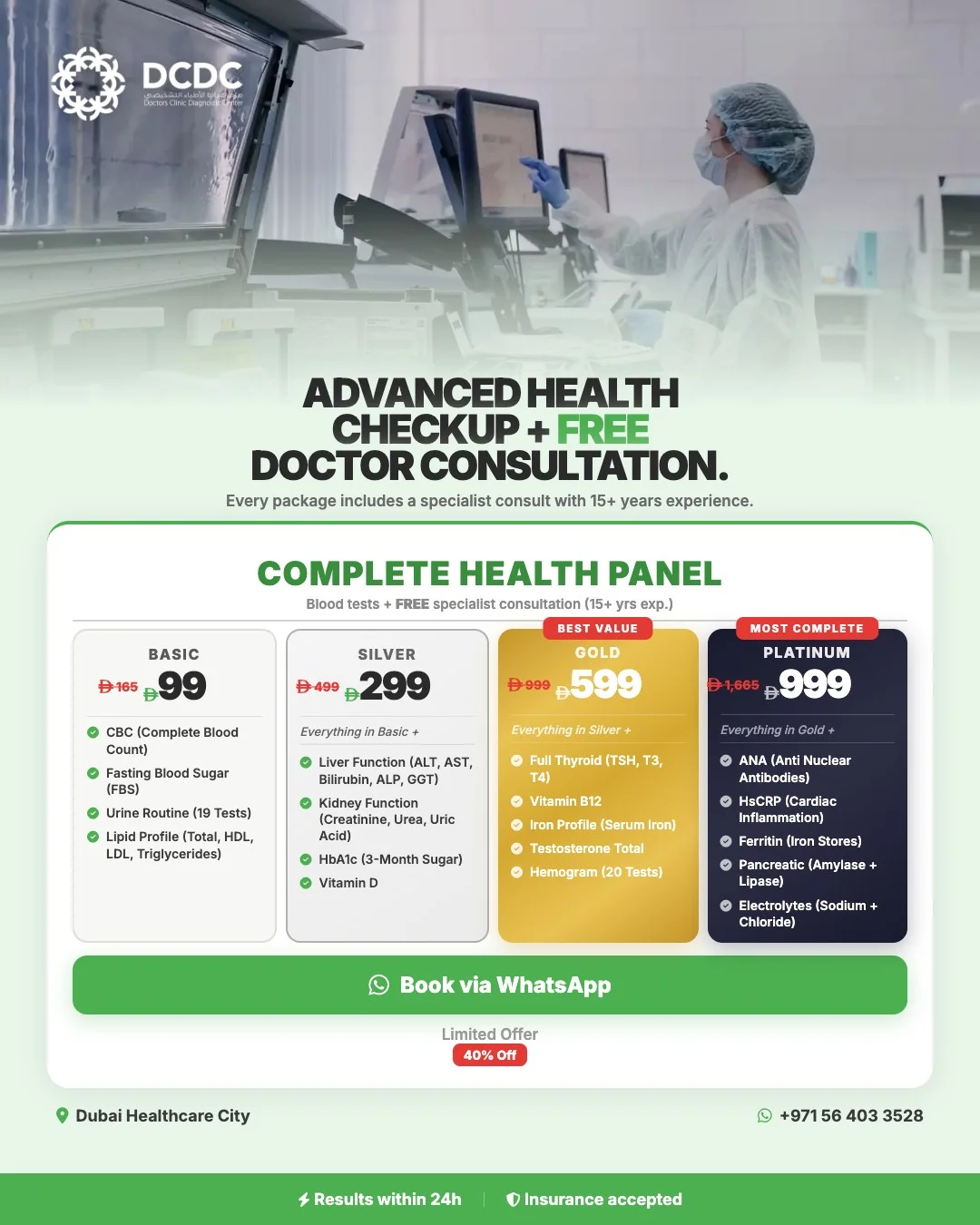
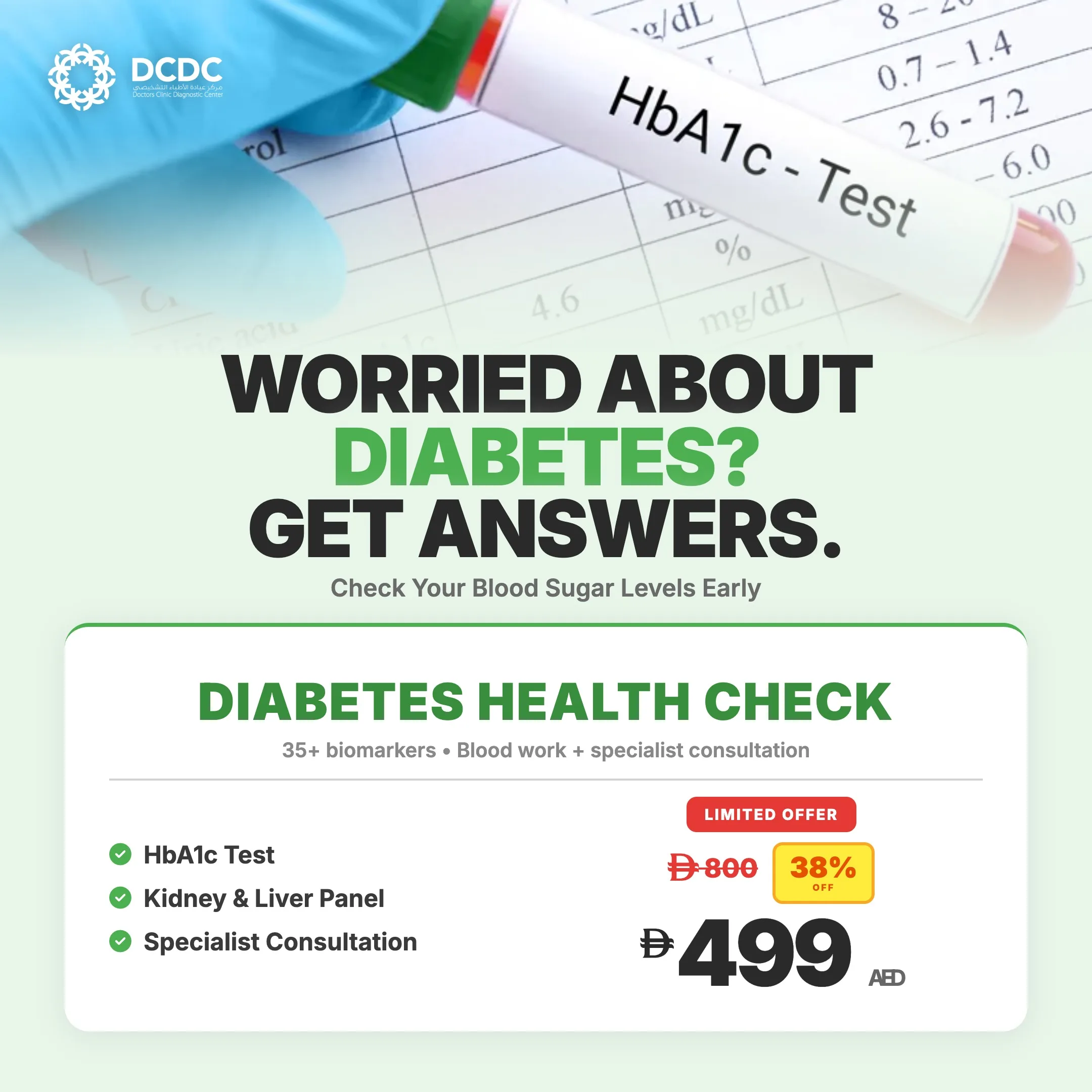
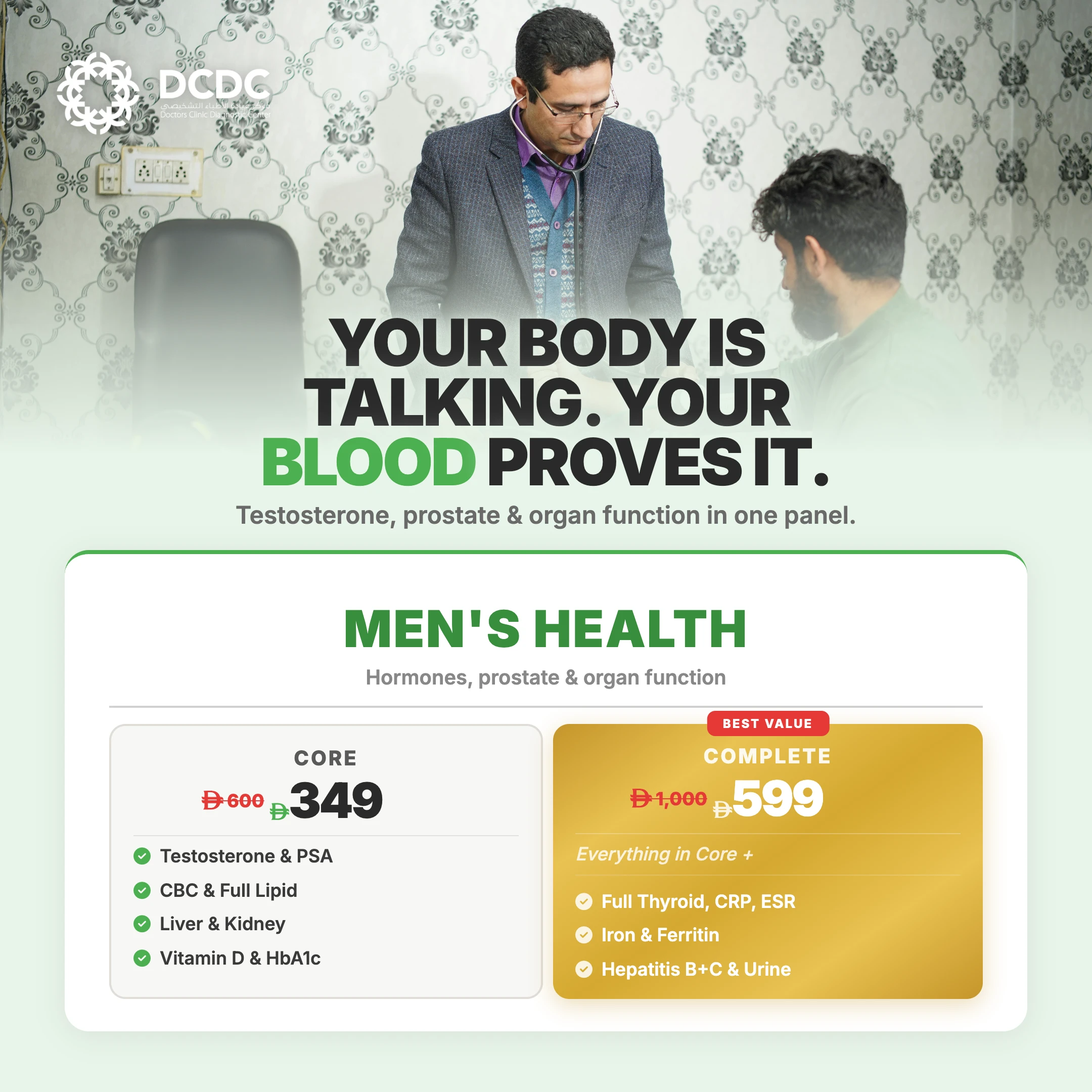
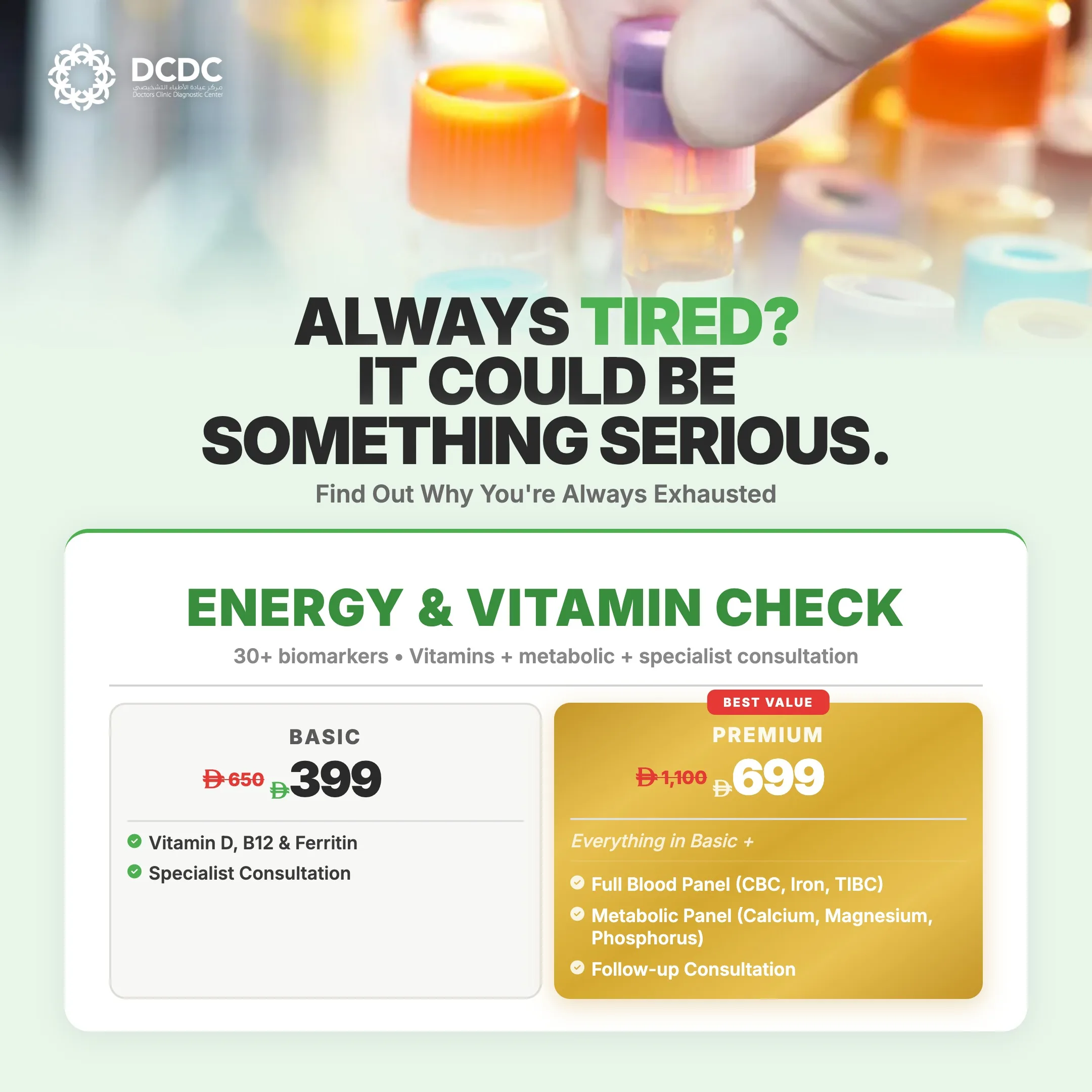
Health Screening Packages
Save with our bundled screening packages — specialist consultation included
What Is the ESR Blood Test and How Does It Work?
The erythrocyte sedimentation rate — universally abbreviated as ESR — measures how quickly your red blood cells (erythrocytes) fall to the bottom of a standardised vertical tube over exactly one hour. The result is reported in millimetres per hour (mm/hr). Under normal conditions, red blood cells carry a negative charge on their surface that causes them to repel each other and settle slowly. When inflammation is present anywhere in the body, the liver produces increased amounts of acute-phase proteins — particularly fibrinogen and immunoglobulins — that neutralize this charge, allowing red cells to clump together into formations called rouleaux. These heavier clumps settle faster, producing a higher ESR reading.
First described in the early 20th century, the ESR remains one of the simplest and most cost-effective laboratory tests available. Despite being over 100 years old, it continues to provide clinical value that newer tests cannot fully replace, particularly in monitoring chronic inflammatory and autoimmune conditions. The test requires just one tube of blood and no special patient preparation.
The Westergren Method
Most modern laboratories, including DCDC, use the Westergren method (or its automated equivalent), which is the internationally standardised technique recommended by the International Council for Standardization in Haematology (ICSH). A blood sample is mixed with anticoagulant, placed in a 200 mm tube, and left undisturbed for 60 minutes. The distance the red cells have fallen (in mm) is the ESR value.
ESR Normal Ranges by Age and Gender
ESR values naturally increase with age and are slightly higher in women than men. The most widely used formula for calculating the upper limit of normal ESR was proposed by Miller and can be applied at any age.
| Group | Normal ESR (mm/hr) | Moderately Elevated | Markedly Elevated |
|---|---|---|---|
| Men under 50 | 0–15 | 16–40 | Above 40 |
| Men over 50 | 0–20 | 21–50 | Above 50 |
| Women under 50 | 0–20 | 21–40 | Above 40 |
| Women over 50 | 0–30 | 31–60 | Above 60 |
| Children | 0–10 | 11–20 | Above 20 |
| Newborns | 0–2 | 3–5 | Above 5 |
ESR normal ranges by age and gender — a practical clinical guide
A commonly used rule of thumb: the upper limit of normal ESR for men is age divided by 2, and for women it is (age + 10) divided by 2. For example, a 60-year-old man has an upper normal limit of 30 mm/hr, and a 60-year-old woman has an upper normal limit of 35 mm/hr.
According to Dr. Hadeel Elnur, General Practitioner at DCDC, "An ESR result must always be interpreted in the context of the patient's symptoms and other test results. A mildly elevated ESR in an otherwise healthy person with no symptoms may simply reflect age, obesity, or recent physical stress. But the same elevation in someone with joint pain and morning stiffness could indicate early rheumatoid arthritis. The ESR is a compass, not a map — it points you in the right direction, but further investigation reveals the destination."
What Does a High ESR Mean?
An elevated ESR tells your doctor that inflammation is present somewhere in your body, but it does not specify the location or cause. Think of the ESR as a smoke alarm — it alerts you to a problem, but you still need to investigate to find the source. The degree of elevation helps narrow the differential diagnosis.
Mild Elevation (20–40 mm/hr)
- Normal aging (especially in patients over 60)
- Obesity and metabolic syndrome
- Mild viral infections or post-infectious recovery
- Pregnancy (ESR naturally rises in the second and third trimesters)
- Mild anemia
- Oral contraceptive use
Moderate Elevation (40–100 mm/hr)
- Active rheumatoid arthritis
- Systemic lupus erythematosus (SLE)
- Active bacterial infections (e.g., pneumonia, UTI, osteomyelitis)
- Inflammatory bowel disease (Crohn's, ulcerative colitis)
- Chronic kidney disease
- Malignancy (certain cancers elevate ESR)
Marked Elevation (Above 100 mm/hr)
An ESR above 100 mm/hr is clinically significant and has a limited differential diagnosis. Studies show that the most common causes include severe infection (abscess, endocarditis, tuberculosis), multiple myeloma and other plasma cell disorders, giant cell arteritis (temporal arteritis), metastatic malignancy, and severe autoimmune flares. An ESR above 100 almost always requires urgent further investigation.
ESR vs CRP: Which Inflammation Test Do You Need?
ESR and CRP (C-reactive protein) are both inflammation markers, but they behave differently and are best used for different clinical situations. Understanding their differences helps explain why your doctor may order one, the other, or both.
| Feature | ESR | CRP |
|---|---|---|
| Speed of response | Rises over 24–48 hours | Rises within 6–8 hours |
| Return to normal | Weeks (slow decline) | Days (falls quickly) |
| Best for | Chronic inflammation, autoimmune monitoring | Acute infections, post-surgical monitoring |
| Affected by age/gender? | Yes — increases with age and female sex | No — same range for all ages |
| Affected by anemia? | Yes — anemia falsely elevates ESR | No |
| Giant cell arteritis | Essential diagnostic criterion (ESR > 50) | Supportive but not diagnostic alone |
| Rheumatoid arthritis | Used in disease activity scores (DAS28) | Also used, correlates with joint destruction |
| Infection monitoring | Slower response, less useful acutely | Rapid response, ideal for tracking treatment |
| Price at DCDC | From AED 99 | From AED 149 |
ESR vs CRP comparison — complementary inflammation markers with different clinical strengths
In practice, many Dubai physicians order both ESR and CRP together when investigating inflammation. CRP tells you what is happening right now (acute phase), while ESR reflects what has been happening over weeks (chronic phase). This combination provides a more complete picture than either test alone. For a detailed comparison, see our guide on CRP vs ESR test.
Our CRP test guide covers the faster-moving inflammation marker in detail, including normal ranges and hs-CRP for heart risk.
Conditions Detected and Monitored by ESR
While the ESR is non-specific, certain conditions have characteristic ESR patterns that make this test particularly valuable for diagnosis and monitoring.
Autoimmune and Inflammatory Diseases
- Rheumatoid arthritis (RA) — ESR is incorporated into the DAS28 disease activity score. Falling ESR indicates treatment response.
- Giant cell arteritis (temporal arteritis) — ESR above 50 mm/hr is a major diagnostic criterion; this condition can cause irreversible blindness if untreated.
- Polymyalgia rheumatica (PMR) — characteristically high ESR (often above 40-50 mm/hr) alongside bilateral shoulder and hip stiffness in patients over 50.
- Systemic lupus erythematosus (SLE) — ESR rises with disease flares while CRP often remains normal, making ESR more useful than CRP for SLE monitoring.
- Inflammatory bowel disease — ESR helps track disease activity in Crohn's disease and ulcerative colitis.
Infections
- Tuberculosis — often presents with very high ESR, especially in extrapulmonary forms
- Osteomyelitis — bone infection producing sustained ESR elevation; used to monitor treatment duration
- Endocarditis — heart valve infection with persistently elevated ESR
- Deep abscesses — hidden collections of infection that may not be clinically obvious
Malignancy
Persistently elevated ESR in the absence of infection or autoimmune disease should raise suspicion for malignancy. Multiple myeloma, lymphoma, and metastatic cancers are the most common malignancies associated with high ESR. In multiple myeloma specifically, the ESR can exceed 100 mm/hr due to massive immunoglobulin production.
ESR Test Price in Dubai: Complete Pricing Guide
The ESR is one of the most affordable blood tests available in Dubai. At DCDC in Dubai Healthcare City, ESR testing starts from AED 99.
| Test / Panel | DCDC Price | Market Range |
|---|---|---|
| ESR test (standalone) | From AED 99 | AED 50–150 |
| ESR + CRP | From AED 120 | AED 120–300 |
| ESR + CBC | From AED 120 | AED 120–280 |
| ESR + CRP + CBC (inflammation panel) | From AED 180 | AED 180–400 |
| Autoimmune panel (ESR + CRP + ANA + RF) | From AED 350 | AED 350–800 |
| Health checkup (ESR included) | From AED 249 | AED 400–1,200 |
ESR test pricing comparison in Dubai — 2026
DCDC offers direct billing with 20+ insurance providers including Daman, AXA, Bupa, MetLife, and Cigna. With a physician referral, most insurance plans cover ESR testing fully. For broader pricing information, see our cheapest blood test Dubai guide.
Book Your ESR Test at DCDC
Walk into DCDC in Dubai Healthcare City for an ESR blood test. Results in 1-2 hours, no fasting needed, direct insurance billing.
Call +971 54 219 5008 or WhatsApp us
What to Expect at DCDC for Your ESR Test
The ESR is one of the simplest blood tests to undergo. Here is the step-by-step experience at DCDC.
- No preparation needed — no fasting, no dietary restrictions, no medication changes required. You can eat, drink, and take your regular medications before the test.
- Arrival — DCDC is located in Building 64, Block A, Al Razi Medical Complex, Dubai Healthcare City. Free dedicated parking on site. Open Saturday to Thursday 8 AM to 10 PM, Friday 9 AM to 9 PM.
- Registration — bring your Emirates ID and insurance card. Insurance verification and direct billing takes under 5 minutes with 20+ providers.
- Blood draw — a single tube of blood is collected from a vein in your arm by an experienced phlebotomist. The draw takes 5 to 10 minutes.
- Processing — the sample is placed in a Westergren tube or automated sedimentation analyzer. The test itself takes exactly 60 minutes (the red cells must settle for a full hour).
- Results — ESR results are typically available within 1 to 2 hours of collection. Results are uploaded to your patient portal and sent to your referring doctor.
- Follow-up — if your ESR is elevated, DCDC's on-site physicians can order additional tests (CRP, CBC, autoimmune panel) and arrange specialist consultation the same day.
DCDC's MOHAP-licensed laboratory processes all samples on site, ensuring specimen integrity and fast turnaround. The average wait time at DCDC is just 15 minutes, and walk-ins are welcome throughout operating hours.
Limitations of the ESR Test
While the ESR is a valuable screening tool, it has important limitations that both patients and doctors must understand.
- Non-specific — a high ESR tells you inflammation exists but cannot identify the source. Further tests are always needed.
- Slow response — ESR takes 24-48 hours to rise after inflammation begins and weeks to normalise after resolution. It cannot detect acute changes in real time.
- False elevations — anemia, obesity, pregnancy, female sex, and advanced age all raise ESR independently of inflammation.
- False low results — polycythemia (high red cell count), sickle cell disease, extreme leukocytosis, and congestive heart failure can suppress ESR even when inflammation is present.
- Sample handling — the test must be performed within 4 hours of blood collection for accurate results; delays falsely lower the reading.
- Not useful alone — ESR should always be interpreted alongside clinical symptoms, CRP, CBC, and other relevant investigations.
Despite these limitations, the ESR remains irreplaceable for monitoring certain conditions. In particular, no other test has been validated as a diagnostic criterion for giant cell arteritis or as a component of the DAS28 disease activity score for rheumatoid arthritis.
When to Get an ESR Blood Test
Your doctor may order an ESR in several clinical scenarios. Understanding when this test is most useful helps you appreciate why it was requested.
Symptoms That Warrant ESR Testing
- Unexplained joint pain, stiffness, or swelling — especially morning stiffness lasting over 30 minutes
- New-onset headache in patients over 50, particularly with jaw pain or visual changes (suspect giant cell arteritis)
- Persistent fever without an obvious source (fever of unknown origin)
- Unexplained weight loss accompanied by fatigue
- Muscle pain and weakness in shoulders and hips (suspect polymyalgia rheumatica)
- Persistent fatigue that does not improve with rest
- Night sweats without clear cause
Monitoring Known Conditions
For patients already diagnosed with rheumatoid arthritis, lupus, polymyalgia rheumatica, or inflammatory bowel disease, serial ESR measurements help track disease activity and treatment response. A declining ESR suggests the treatment is working; a rising ESR may indicate a flare. For autoimmune testing details, see our guide on autoimmune panel testing in Dubai.
ESR Combined With Other Blood Tests
The ESR is rarely ordered in isolation. Here are the most common test combinations and what each panel is designed to investigate.
| Panel | Tests Included | Clinical Purpose |
|---|---|---|
| Basic inflammation | ESR + CRP | Distinguish acute vs chronic inflammation |
| Infection workup | ESR + CRP + CBC + blood culture | Identify and characterise infection |
| Autoimmune screening | ESR + CRP + ANA + RF + anti-CCP | Screen for rheumatoid arthritis and lupus |
| Disease activity | ESR + CRP + joint assessment (DAS28) | Monitor RA treatment response |
| Comprehensive screen | ESR + CBC + CRP + metabolic panel | Broad workup for unexplained symptoms |
Common ESR combination panels and their clinical applications
How to Read Your ESR Results
When you receive your ESR result, here is a practical framework for understanding what the number means.
- Step 1: Check the number — your ESR is reported as a single value in mm/hr. Compare it to the reference range for your age and gender from the table above.
- Step 2: Consider the clinical context — a mildly elevated ESR (20-30 mm/hr) in someone with no symptoms may not be clinically significant. The same value in someone with joint pain requires investigation.
- Step 3: Look at CRP if available — if both ESR and CRP are elevated, active inflammation is very likely. If ESR is high but CRP is normal, consider non-inflammatory causes (anemia, pregnancy, age).
- Step 4: Check the CBC — anemia (low hemoglobin) falsely raises ESR. If you are anemic, your true inflammatory ESR may be lower than the reported value.
- Step 5: Compare to previous results — a single ESR value is less informative than a trend. Rising ESR over time suggests worsening inflammation; falling ESR indicates improvement.
- Step 6: Discuss with your doctor — the ESR is a screening tool, not a diagnostic test. Your doctor will correlate it with your symptoms, examination findings, and other investigations.
ESR in Special Populations
Pregnancy
ESR naturally rises during pregnancy, particularly in the second and third trimesters, due to increased fibrinogen levels and physiological anemia. Values of 30-40 mm/hr can be normal in late pregnancy, making the ESR less reliable for detecting inflammation during this period. CRP is preferred for monitoring pregnant patients with suspected infections.
Elderly Patients
ESR increases with age due to higher fibrinogen levels and reduced albumin. In patients over 70, an ESR of 20-30 mm/hr may be age-appropriate. However, markedly elevated ESR (above 50 mm/hr) in elderly patients should always trigger investigation for giant cell arteritis, polymyalgia rheumatica, multiple myeloma, or occult malignancy.
Patients With Chronic Conditions
Chronic kidney disease, diabetes, and heart failure can all influence ESR independently of inflammation, complicating interpretation. In these patients, CRP may provide a cleaner signal. Serial ESR measurements tracking trends over time are more useful than single values.
Check Your Inflammation Levels Today
Book an ESR test or inflammation panel at DCDC in Dubai Healthcare City. Walk-ins welcome, results within hours, direct insurance billing.
WhatsApp +971 50 970 3884 to book
Related Services at DCDC
Expert care and advanced diagnostics at Dubai Healthcare City
Frequently Asked Questions
Final Thoughts
The ESR blood test remains one of the most useful and affordable inflammation screening tools in medicine, over a century after its introduction. While it cannot pinpoint the exact cause of inflammation, its ability to detect chronic inflammatory processes, monitor autoimmune disease activity, and serve as a diagnostic criterion for conditions like giant cell arteritis makes it indispensable in clinical practice. Understanding what your ESR result means — and how it differs from CRP — helps you have more informed conversations with your doctor.
At DCDC in Dubai Healthcare City, ESR testing starts from AED 99 with results typically within 1 to 2 hours. No fasting is needed, walk-ins are welcome, and direct insurance billing is available with 20+ providers. If you are experiencing unexplained joint pain, persistent fatigue, or fever of unknown origin, an ESR test is often the first step toward diagnosis. Call +971 54 219 5008 or WhatsApp us to schedule your test today.
Sources & References
This article was reviewed by our medical team and references the following sources:
- Mayo Clinic - Sed Rate (Erythrocyte Sedimentation Rate)
- Cleveland Clinic - Erythrocyte Sedimentation Rate (ESR)
- NHS - Blood Tests: ESR
- American College of Rheumatology - Giant Cell Arteritis Guidelines
- British Medical Journal - ESR or CRP? A Comparison of Their Clinical Utility
- MedlinePlus - ESR Test
Medical content on this site is reviewed by DHA-licensed physicians. See our editorial policy for more information.

Written by
Dr. Hadeel Elnur
General Practitioner
MD, General Practice
Dr. Hadeel Elnur is a General Practitioner at Doctors Clinic Diagnostic Center (DCDC) in Dubai Healthcare City.
Related Articles
CRP Test Dubai: Normal Range, High CRP Meaning & Price
CRP vs ESR Test: Which Inflammation Marker Do You Need? (2026)
Blood Test Dubai: Types, Cost & Fasting Guide (2026)
Autoimmune Panel Test Dubai: ANA & Guide (2026)

Anemia Treatment Dubai: Types & Causes (2026)
Lab Test Preparation Dubai: Fasting Guide (2026)
More in Laboratory
ANA Test Dubai: Positive Result, Titre & Pattern Explained
Read MoreAutoimmune Panel Test Dubai: ANA & Guide (2026)
Read MoreBlood Test at Home in Dubai: Home Collection Service & Walk-In Alternative (2026)
Read MoreCBC Test Results Explained: Normal Ranges by Age & Sex
Read MoreCheapest Blood Test Dubai: Price Comparison Guide (2026)
Read MoreCRP Test Dubai: Normal Range, High CRP Meaning & Price
Read More© 2026 Doctors Clinic Diagnostic Center (DCDC), Dubai Healthcare City. Originally published at https://doctorsclinicdubai.ae/blog/esr-blood-test-dubai-guide. All rights reserved. Unauthorized reproduction is prohibited.