Key Takeaways
- Croup is a viral infection that swells the voice box and windpipe, causing a barking cough, hoarse voice and stridor (noisy breathing in). It most often affects children aged 6 months to 3 years and is usually worse at night
- Most cases (about 85 percent) are mild and can be managed at home with calm comfort, fluids and a single dose of oral dexamethasone prescribed by a doctor. Fewer than 5 percent of children need hospital admission
- Go to the emergency room or call 998 for stridor at rest, chest retractions, blue lips, drooling, inability to swallow, or extreme drowsiness. These are red flags for severe croup or for conditions such as epiglottitis
- Most children recover in 3 to 7 days, with symptoms peaking on nights 2 and 3. Antibiotics do not help viral croup
- DCDC offers same-day pediatric assessment in Dubai Healthcare City, with oxygen saturation checks, Westley severity scoring and follow-up within 24 to 48 hours. Consultations start from AED 249
It is 2 AM and your toddler wakes up with a harsh, barking cough that sounds like a seal, and every breath in makes a high-pitched squeak. Your heart races. Is this serious? Should you rush to the emergency room, or can it wait until morning? This is croup, one of the most common and most frightening childhood respiratory illnesses, and the good news is that most cases are mild and recover within a week. This guide explains croup symptoms in children, how doctors grade severity, how croup differs from more dangerous conditions, what you can do at home, and which warning signs mean you should go to hospital immediately. Our pediatric acute care team at Doctors Clinic Diagnostic Center in Dubai Healthcare City sees children with croup and other respiratory illnesses, often on the same day.
Whether your child is 8 months old with a new cough or a 4-year-old with a hoarse voice and noisy breathing, this article from Dr. Yusra Alshaikh, a pediatrician at DCDC, will help you understand what is happening in your child's airway, recognise red flags, and take the right next step with confidence.
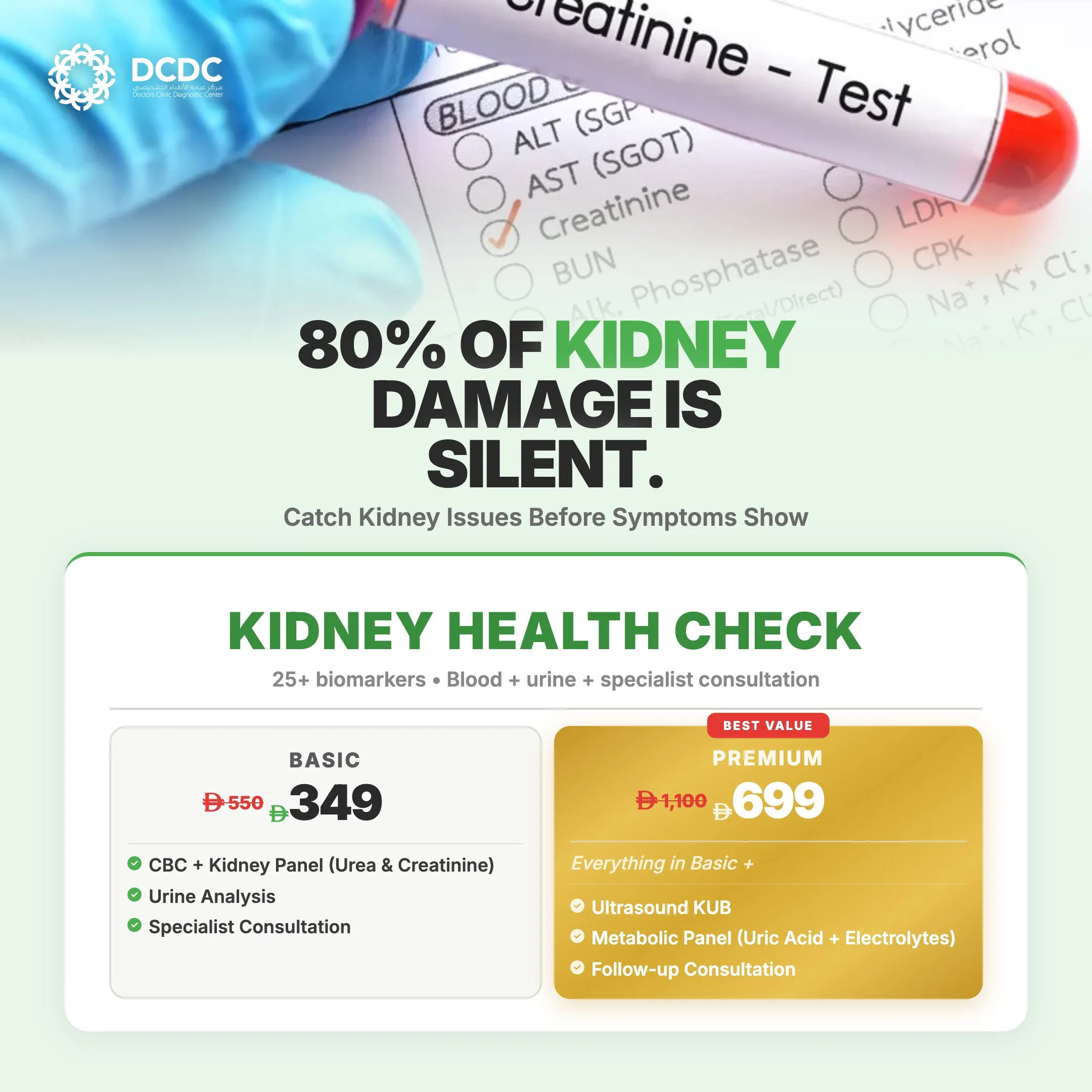
Health Screening Packages
Save with our bundled screening packages — specialist consultation included





What Is Croup?
Croup is a viral infection of the upper airway that causes swelling around the voice box (larynx) and the windpipe (trachea). Doctors call the full condition laryngotracheobronchitis because the inflammation can reach down to the large airways (bronchi) in some children. The swelling matters because a young child's airway is small. In the subglottic area, just below the vocal cords, the airway is the narrowest part of a toddler's breathing passage, and even a millimetre of swelling there can reduce airflow dramatically. That narrowing produces the signature sounds of croup: a harsh, barking cough and a noisy, high-pitched breath called stridor.
Croup is almost always caused by a virus. The most common culprit is parainfluenza virus types 1 and 2, which account for the majority of cases. Other viruses that can cause croup include parainfluenza type 3, respiratory syncytial virus (RSV), influenza A and B, adenovirus, human metapneumovirus, rhinovirus, and SARS-CoV-2. Because these are ordinary respiratory viruses, a child with croup usually starts with an everyday cold: a runny nose, mild cough and perhaps a low-grade fever. One to three days later, the infection settles in the larynx and the cough changes character.
Croup spreads the same way colds do: through droplets from coughing and sneezing, and through contact with contaminated hands and surfaces. A child is most contagious during the first three days of illness, usually while the fever is present. The virus itself is not dangerous to most families, but the way it narrows a child's airway is what makes croup frightening, particularly at night.
Who Gets Croup?
Croup mainly affects young children. The peak age is 6 months to 3 years, with most cases in toddlers around 18 to 24 months. It can occur up to about 6 years of age, and it is uncommon in older children and adults, whose wider airways tolerate the same swelling without producing stridor. Boys are affected slightly more often than girls. Roughly 3 percent of children develop croup at some point, and a small number have repeated episodes.
In temperate countries croup clusters in autumn and early winter, when parainfluenza viruses circulate. In the UAE the pattern is less strict. Respiratory viruses spread through the cooler months from October to March, but children also gather indoors in air-conditioned nurseries, schools and malls through the hot summer, so viral croup can be seen throughout the year. As we move into late October 2026, many Dubai families are seeing the start of the respiratory season.
- Age 6 months to 3 years: The most common window, because the airway is narrowest and the immune system is meeting these viruses for the first time
- Boys: Slightly higher rates than girls
- Previous croup: A child who has had croup once is more likely to get it again with later colds, often because of a naturally narrow airway
- Nursery or daycare attendance: More exposure to the viruses that cause croup
- Premature birth or a history of airway narrowing: Can raise the chance of more severe episodes
Croup Symptoms in Children: What Parents Notice
Recognising croup symptoms in children early lets you act calmly and choose the right level of care. Croup usually begins like a cold and then changes over a day or two. The classic signs are:
- Barking cough: A harsh, seal-like or dog-like bark. Once you hear it you rarely forget it. It is the most recognisable feature of croup
- Stridor: A high-pitched, squeaky or crowing sound when the child breathes in. Mild stridor may only be heard when the child cries or is upset. Stridor present while the child is calm or asleep is a more serious sign
- Hoarse voice or cry: The swelling affects the vocal cords, so the child sounds husky
- Low-grade fever: Usually 37.5 to 38.5 degrees Celsius. A high fever above 39 degrees Celsius with a very unwell child should make you think of a bacterial cause
- Runny nose and mild sore throat: The cold-like symptoms that come first
- Worse at night: Symptoms typically peak between midnight and early morning, and often settle somewhat in daylight
- Fast or laboured breathing: In more significant croup, you may see the skin pulling in below the ribs, above the collarbones or between the ribs (chest retractions)
Why is croup worse at night? Several things come together. Body cortisol, a natural anti-inflammatory hormone, is lowest in the small hours. Lying flat can allow secretions and swelling to settle around the airway, and a child who wakes frightened and cries will breathe harder, which makes stridor louder. This is why many parents rush to the clinic or emergency department at 2 AM with a child who then seems better by morning. Better in the morning does not mean the illness is over, and symptoms often return the following night.
Croup symptoms are easy to confuse with a common cold or other causes of coughing. A cold does not produce a barking cough or stridor. If your child has a cough that has lasted for weeks rather than days, our guide to chronic cough causes and when to worry explains a different set of possibilities.
Croup Severity: The Westley Score
Doctors grade the severity of croup to decide who can go home and who needs treatment in a hospital. The most widely used tool is the Westley croup score. It adds up points for five findings: level of consciousness, cyanosis (blue colour), stridor, air entry on listening to the chest, and chest retractions. Your pediatrician applies this score at the bedside. It is not a home test, but understanding it helps you appreciate what we look for.
| Finding | 0 points | 1 point | 2 points | 3+ points |
|---|---|---|---|---|
| Stridor | None | When agitated | At rest | - |
| Chest retractions | None | Mild | Moderate | Severe (3 points) |
| Air entry (listening to the lungs) | Normal | Decreased | Markedly decreased | - |
| Cyanosis (blue lips or skin) | None | - | - | With agitation (4) or at rest (5) |
| Level of consciousness | Normal, alert | - | - | Disoriented or drowsy (5) |
| Severity | Total score | What it usually means | Typical approach |
|---|---|---|---|
| Mild | 0 to 2 | Barking cough and hoarse voice, with no stridor at rest and no or minimal retractions. The child is playful, drinking and sleeping | Single dose of oral dexamethasone and home care with clear return advice. Most children (about 85 percent) fall in this group |
| Moderate | 3 to 5 | Stridor at rest, mild to moderate retractions, child is distressed but still alert | Dexamethasone, nebulized epinephrine if needed, and observation. May need transfer for monitoring |
| Severe | 6 to 11 | Marked stridor at rest, significant retractions, reduced air entry, restlessness or tiredness | Emergency treatment: nebulized epinephrine, steroids, oxygen if needed, and hospital admission |
| Impending respiratory failure | 12 or more | Exhaustion, drowsiness, blue colour, very poor air entry | Medical emergency. Call 998 immediately |
Fewer than 5 percent of children with croup need hospital admission, and fewer than 1 percent need to be treated in intensive care. Severe croup is uncommon, but being able to recognise it is what keeps children safe.
Croup vs Other Causes of a Barking Cough
A barking cough with noisy breathing is classic for croup, but a few less common conditions can look similar and are more dangerous. Epiglottitis, an inflammation of the flap that covers the windpipe, used to be common before the Hib vaccine. A foreign body stuck in the airway can cause sudden stridor in a toddler who was previously well. Bacterial tracheitis is a bacterial infection of the windpipe that can follow viral croup. Your pediatrician will check for the features below to tell them apart.
| Feature | Viral croup | Epiglottitis | Bacterial tracheitis | Foreign body in airway |
|---|---|---|---|---|
| Onset | Gradual over 1 to 3 days after a cold | Rapid, over hours | Often a croup-like illness that suddenly worsens | Sudden, often during eating or play |
| Cough | Barking, seal-like | Little or no cough | Barking or productive cough, may be wet | Sudden choking or cough, may be absent later |
| Fever | Low-grade | High (above 39 C), child looks toxic | High, child looks very unwell | Usually none |
| Voice | Hoarse | Muffled, 'hot potato' voice | Hoarse | Variable |
| Drooling and difficulty swallowing | Rare | Very common; child sits leaning forward | Not typical | Possible |
| Response to steroids or epinephrine | Good | None | Poor or short-lived | None |
| Urgency | Home or clinic for mild; hospital if moderate to severe | Emergency, call 998 | Emergency, hospital treatment with antibiotics | Emergency, airway removal |
Epiglottitis is now rare in children who have completed the Hib vaccine series, which is part of the UAE childhood schedule. Our child vaccination service keeps your child's DHA-approved schedule on track. The key message: a child who looks very sick, is drooling, leans forward, cannot swallow, or has a high fever with stridor needs emergency care, not a wait-and-see approach.
When to Go to the Emergency Room vs When to See a Pediatrician
This is the question most parents ask at 3 AM. As a general rule, a child with a barking cough who is breathing comfortably and drinking can be seen by a pediatrician within the day. A child struggling to breathe needs the emergency department now.
Go to the emergency room or call 998 immediately if your child has:
- Stridor at rest: Noisy breathing when calm, quiet or asleep, not only when crying
- Chest retractions: The skin sucking in between or under the ribs or at the base of the neck with each breath
- Blue, grey or very pale lips or face
- Drooling or inability to swallow: Particularly if the child sits upright and leans forward, which can signal epiglottitis
- Extreme drowsiness, floppiness or confusion, or a child who is very agitated and cannot be comforted
- Struggling to breathe, very fast breathing, or pauses in breathing
- No improvement after treatment or symptoms that return quickly after epinephrine
- Sudden choking after eating or putting something in the mouth
See a pediatrician the same day if your child has:
- A new barking cough and hoarse voice, with stridor only when crying or upset
- Low-grade fever, but the child is alert, playing and drinking
- Symptoms lasting more than three days, or getting worse each night
- Age under 6 months with any croup-like cough
- Any parental worry. You know your child best
At DCDC in Dubai Healthcare City, we frequently have same-day appointments available, and our pediatric team can assess breathing, check oxygen levels and start treatment right away. If we find signs that need hospital care, we arrange safe, rapid transfer. For other concerns that can mimic or accompany croup, such as fever in children, see our guide on when to worry about child fever.
Spasmodic Croup vs Viral Croup
Not all croup is the same. Doctors distinguish viral croup (the classic form) from spasmodic croup, which behaves differently. Spasmodic croup is thought to involve an allergic or reflux-related airway sensitivity rather than a true viral infection of the larynx, although the line between the two is not always clear.
| Feature | Viral croup | Spasmodic croup |
|---|---|---|
| Preceding illness | Cold symptoms for 1 to 3 days | Usually mild or none; child goes to bed well |
| Onset | Gradual | Sudden, typically in the middle of the night |
| Fever | Low-grade, common | Usually absent |
| Duration of each episode | 3 to 7 days overall | Hours; often much better by morning |
| Recurrence | Less frequent | Common; may return on following nights or with later colds |
| Typical age | 6 months to 3 years | 1 to 3 years, often those with allergies or reflux |
| Treatment | Steroids, epinephrine if moderate to severe | Cool or humid air, comfort; steroids sometimes used |
Children who have repeated spasmodic episodes should be checked for allergies, asthma and reflux. Recurrent croup (more than two or three episodes) also deserves a look at the airway itself, because a structural narrowing called subglottic stenosis can occasionally be the reason.
Home Management for Mild Croup
Most children with mild croup recover at home with supportive care. The aim is to keep your child calm, comfortable and hydrated. Crying and struggling make the swelling feel worse, so your calm presence is the first treatment.
- Stay calm and comfort your child: Hold your child upright on your lap and offer a cuddle, a favourite toy or a quiet story. Distress increases breathing effort and worsens stridor
- Keep your child upright: Sitting or propped on your shoulder is easier than lying flat. For sleep, stay in the room and have your child sleep near you
- Cool or humid air: Cool night air for a few minutes or sitting in a steamy bathroom may help some children feel better. The evidence that humidified air shortens croup is weak, and hot steam carries a scald risk, so never use hot steam inhalation or boiling water near a child
- Fluids: Offer small, frequent sips of water, milk or oral rehydration solution. Breastfeed or bottle feed as usual. Drinking helps keep secretions thin. If your child is drinking poorly, read our guide to signs of dehydration in children and call your doctor
- Fever and pain relief: Paracetamol or ibuprofen at the correct dose for your child's weight can ease discomfort. Follow the label and your pediatrician's advice. Never give aspirin to children
- Avoid cough suppressants and decongestants: These do not help croup and are not recommended in young children
- Keep the room comfortable: A moderate temperature, no smoke or incense, and no strong fragrances
- Monitor through the night: Check your child's breathing every so often. Learn the warning signs listed above
Home care is suitable only when your child is breathing comfortably, drinking, alert and has no stridor at rest. If you are unsure, a pediatric assessment is quick and gives clear reassurance.
Medical Treatment for Croup
Medical treatment reduces airway swelling and is highly effective. The two core medicines are corticosteroids and nebulized epinephrine, and both are well supported by clinical guidelines.
Oral dexamethasone
A single dose of oral dexamethasone is the cornerstone of croup treatment for mild, moderate and severe cases. Doses used in practice range from 0.15 to 0.6 mg per kilogram, and the lower dose of 0.15 mg/kg is as effective as higher doses for most children. The steroid starts working within about two to six hours and its effect lasts for 24 to 72 hours, covering the usual peak of the illness. Studies show that steroids reduce return visits, shorten hospital stays and lower the chance of needing admission. Some children are given prednisolone or a nebulized steroid when swallowing a liquid is difficult. A single dose is considered very safe, with no long-term side effects expected.
Nebulized epinephrine
For moderate to severe croup with stridor at rest, nebulized epinephrine (adrenaline) is given through a mask. It constricts the blood vessels in the swollen airway lining and reduces swelling within 10 to 30 minutes. The effect is short, lasting about two hours, so a child who receives epinephrine needs to be observed afterwards, usually for a minimum of two to four hours, to make sure symptoms do not come back as it wears off. Epinephrine does not shorten the illness; it buys time while the steroid takes effect.
Oxygen and hospital care
Oxygen is given if saturation is low. Children whose breathing does not settle after epinephrine and steroids, who need repeated epinephrine doses, who have persistent stridor at rest, or who cannot drink are admitted for monitoring. Very rarely, a child needs intensive care, heliox (a helium-oxygen mixture) or a breathing tube. Antibiotics are not used for viral croup. They are reserved for bacterial complications such as bacterial tracheitis.
| Treatment | Used for | How it works | What to know |
|---|---|---|---|
| Oral dexamethasone (single dose) | All severities | Reduces airway swelling over several hours | Effect lasts 1 to 3 days; very safe as a single dose |
| Nebulized epinephrine | Moderate to severe (stridor at rest) | Rapid narrowing of swollen blood vessels in airway lining | Works in 10 to 30 minutes, wears off in about 2 hours; needs observation |
| Oxygen | Low oxygen saturation | Supports breathing while swelling settles | Given in hospital or clinic setting |
| Hospital admission | Severe, or no improvement after treatment | Close monitoring and repeat treatment | Needed in fewer than 5 percent of cases |
| Antibiotics | Not for viral croup | Only if bacterial infection is suspected | Not helpful for the usual viral cause |
What to Expect at DCDC
If your child develops a barking cough, we aim to make the visit simple and reassuring. Here is what the patient journey looks like at Doctors Clinic Diagnostic Center:
- Step 1: Call or WhatsApp for a same-day slot. Contact us on WhatsApp at 971509703884 or call +971 54 219 5008. Tell us your child's age and that they have a barking cough or noisy breathing. We frequently have same-day appointments available, and if your child is struggling to breathe we will tell you to go straight to the emergency department
- Step 2: Arrival and welcome. We are in Building 64, Block A, Al Razi Medical Complex, Dubai Healthcare City, with free parking. Our team keeps a calm environment so your child stays settled, since crying makes stridor worse
- Step 3: Pediatrician assessment. Dr. Yusra Alshaikh and our pediatric team take a focused history (how it started, fever, feeding, any choking event, vaccination status) and examine your child's breathing, listening for stridor and checking for chest retractions and air entry. We do this while keeping your child on your lap whenever possible
- Step 4: Oxygen saturation check. A painless clip on the finger or toe measures oxygen levels in seconds. We also check heart rate, breathing rate and temperature, and we apply the Westley score to grade severity
- Step 5: Treatment plan. For mild croup, this is usually a single dose of oral dexamethasone, a plan for fever and fluids, and clear written return advice. If the croup is moderate or severe, or we are worried about another diagnosis such as epiglottitis or a foreign body, we arrange urgent transfer to a hospital emergency department and stay with your child until the handover
- Step 6: Follow-up within 24 to 48 hours. We check in by phone or in clinic to confirm your child is improving, drinking well and sleeping, and to answer questions. Children who are not improving by day three are reviewed in person
General pediatric consultations at DCDC start from AED 249, and we have direct billing with more than 20 insurance partners, which makes it easy to get timely care. Our clinic is open Saturday to Thursday from 8 AM to 10 PM and Friday from 9 AM to 9 PM, and we are rated 4.8 out of 5 from more than 1,000 verified Google reviews.
Barking Cough or Noisy Breathing?
At Doctors Clinic Diagnostic Center in Dubai Healthcare City, Dr. Yusra Alshaikh and our pediatric team offer same-day assessment for croup and other childhood respiratory illnesses, including oxygen saturation checks, severity scoring and a clear treatment plan. We work with 20+ insurance partners with direct billing and offer free parking.
Pediatric consultations from AED 249. WhatsApp 971509703884 or call +971 54 219 5008.
Recovery Timeline: What to Expect Day by Day
Most children with croup get better in 3 to 7 days. The illness follows a predictable pattern, and knowing it helps you stay calm during the rough nights.
| Day | What usually happens | What to do |
|---|---|---|
| Days 1 to 2 | Cold symptoms, then barking cough and stridor develop, often worse at night | Seek assessment if there is any stridor at rest. Treat fever, keep fluids up, comfort your child |
| Days 2 to 3 | Symptoms peak, especially at night. Steroid taken on day 1 or 2 begins to bring relief | Stay with your child at night; watch for red flags |
| Days 3 to 5 | Barking cough eases, stridor settles, voice still hoarse | Return to normal food and fluids; gentle activity |
| Days 5 to 7 | Cough and hoarseness fade; a lingering cold-type cough is normal | Child can usually return to nursery or school once fever-free and breathing comfortably |
| After 7 days | A cough lasting more than 2 weeks or recurring stridor is not typical | Book a review; consider other causes of cough |
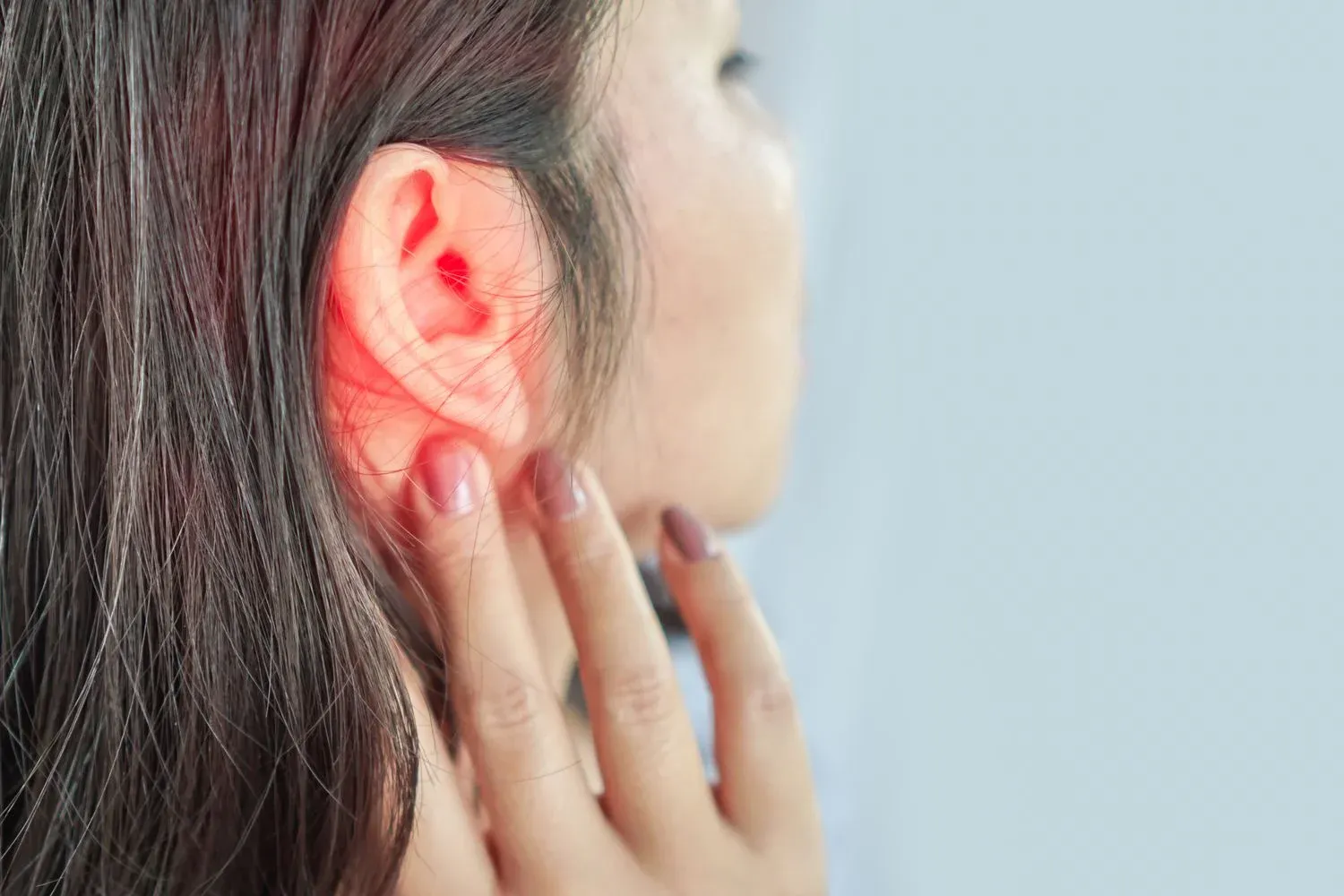
A hoarse voice can last up to a week or two. If your child had fever, wait until it has settled for 24 hours before returning to nursery or school, and help prevent spread by washing hands and covering coughs. Call your doctor if your child is not improving by day 3 to 4, has recurrent fever after a good spell, or develops ear pain, which may point to a secondary infection. Our guide to child ear infection signs explains what to look for.
Preventing Croup in Dubai
There is no vaccine against the viruses that usually cause croup, but you can lower your child's chance of catching them. Prevention for croup is the same as for any respiratory virus.
- Hand hygiene: Wash your hands and your child's hands with soap and water for at least 20 seconds, especially before meals and after nursery or play areas. Teach children to cough into their elbow
- Avoid sick contacts: Keep children with fever or heavy colds away from babies and toddlers where possible, and keep your own child home when unwell
- Mind Dubai's indoor environments: Air-conditioned malls, soft-play centres, nurseries and cars concentrate respiratory viruses in enclosed spaces with recirculated air. Dry, cold AC air can also irritate airways. Set home AC to a moderate temperature (around 23 to 25 degrees Celsius), keep filters clean and avoid direct airflow on sleeping children. Our article on AC-related colds in Dubai has more tips
- Stay up to date with vaccinations: The Hib, pneumococcal, DTP (diphtheria, once a cause of true croup) and measles vaccines protect against serious causes of airway infections, and annual flu vaccination reduces influenza-related croup. Book through our child vaccination service or check your child's progress at a well-baby checkup
- No smoke exposure: Avoid cigarette smoke, shisha and heavy incense around children, as they irritate airways
- Breastfeeding where possible: Provides protective antibodies in the early months
Even with good prevention, toddlers catch many viruses, and croup is a common childhood illness rather than a sign you did something wrong.
Related Services at DCDC
Expert care and advanced diagnostics at Dubai Healthcare City
Frequently Asked Questions
Final Thoughts
Croup is frightening to hear but is usually a self-limited viral illness that responds well to treatment. The barking cough, hoarse voice and stridor reflect swelling in a small airway, and a single dose of dexamethasone, along with calm comfort and fluids, is enough for most children. The skill for parents lies in knowing the difference between a child who is noisy but comfortable and a child who is working hard to breathe.
Trust your instincts. If your child has stridor at rest, retractions, blue lips, drooling or is too tired to cry, go to the nearest emergency department or call 998. If your child has a barking cough but is playful, drinking and breathing comfortably, a same-day pediatric visit can confirm the diagnosis, start treatment and give you a clear plan for the nights ahead. To book, message us on WhatsApp at 971509703884 or call +971 54 219 5008. We are open Saturday to Thursday 8 AM to 10 PM and Friday 9 AM to 9 PM at Building 64, Block A, Al Razi Medical Complex, Dubai Healthcare City.
This article is for general education and does not replace medical advice. If you are worried about your child's breathing, seek medical care immediately.
Sources & References
This article references the following sources:
- American Academy of Pediatrics (HealthyChildren.org) - Croup: Symptoms and Treatment
- NHS - Croup: Symptoms, Treatment and When to Get Help
- Centers for Disease Control and Prevention (CDC) - Human Parainfluenza Viruses (HPIVs)
- World Health Organization - Pocket Book of Hospital Care for Children (Croup)
- UpToDate - Croup: Clinical Features, Evaluation, and Diagnosis
- Bjornson C, et al. Nebulized Epinephrine for Croup in Children (Cochrane Review)
- Gates A, et al. Glucocorticoids for Croup in Children (Cochrane Review)
- Smith DK, et al. Croup: Diagnosis and Management. American Family Physician
- Westley CR, et al. Nebulized Racemic Epinephrine by IPPB for the Treatment of Croup (original croup score)
This information is educational and does not replace individual medical advice. See our editorial policy for more information.

Written by
Dr. Yusra Alshaikh
Pediatrician
MBBS, Arab Board of Pediatrics, Emirati Board of Pediatrics
Dr. Yusra Alshaikh is a Pediatrician at Doctors Clinic Diagnostic Center (DCDC) in Dubai Healthcare City.
Related Articles

Child Fever: When to Worry & What to Do

Chronic Cough Dubai: Causes & When to Worry
Child Ear Infection Signs Dubai: Care Guide
Child Dehydration Dubai: Signs & Prevention
More in Pediatrics

Night Nurse for Newborns in Dubai: Prep Guide (2026)
Read More
Baby Teething Symptoms & Safe Relief in Dubai (2026)
Read MorePediatrician Home Visit Dubai: Full Guide (2026)
Read More
Signs of Hearing Loss in Children Dubai (2026)
Read MoreHand Foot Mouth Disease Dubai: Parent Guide (2026)
Read MoreChild Bedwetting Dubai: Causes & Help (2026)
Read More© 2026 Doctors Clinic Diagnostic Center (DCDC), Dubai Healthcare City. Originally published at https://doctorsclinicdubai.ae/blog/croup-symptoms-children-dubai. All rights reserved. Unauthorized reproduction is prohibited.