Key Takeaways
- Fever of 38°C (100.4°F) or higher needs attention. Infants under 3 months with any fever need immediate care
- Treat the child, not the number: a happy child at 39°C is less concerning than a lethargic child at 38.5°C
- Paracetamol and ibuprofen are both safe for children over 3 months when dosed correctly by weight
- Warning signs for ER: difficulty breathing, stiff neck, unresponsive, rash that doesn't fade, or severe dehydration
- Most childhood fevers are viral and resolve in 3-5 days. Lasting longer warrants a doctor visit
- Avoid cold baths and alcohol rubs because they can worsen the situation
It's 2 AM and your child's forehead is burning. You reach for the thermometer and see 39.2°C. Your heart races. Do you rush to the emergency room? Give medicine? Wait until morning? This moment is familiar to almost every parent in Dubai, and it's almost always terrifying. Let me help you make sense of childhood fever so you can respond calmly and correctly. Our General Consultation service at DCDC offers same-day appointments in Dubai Healthcare City.
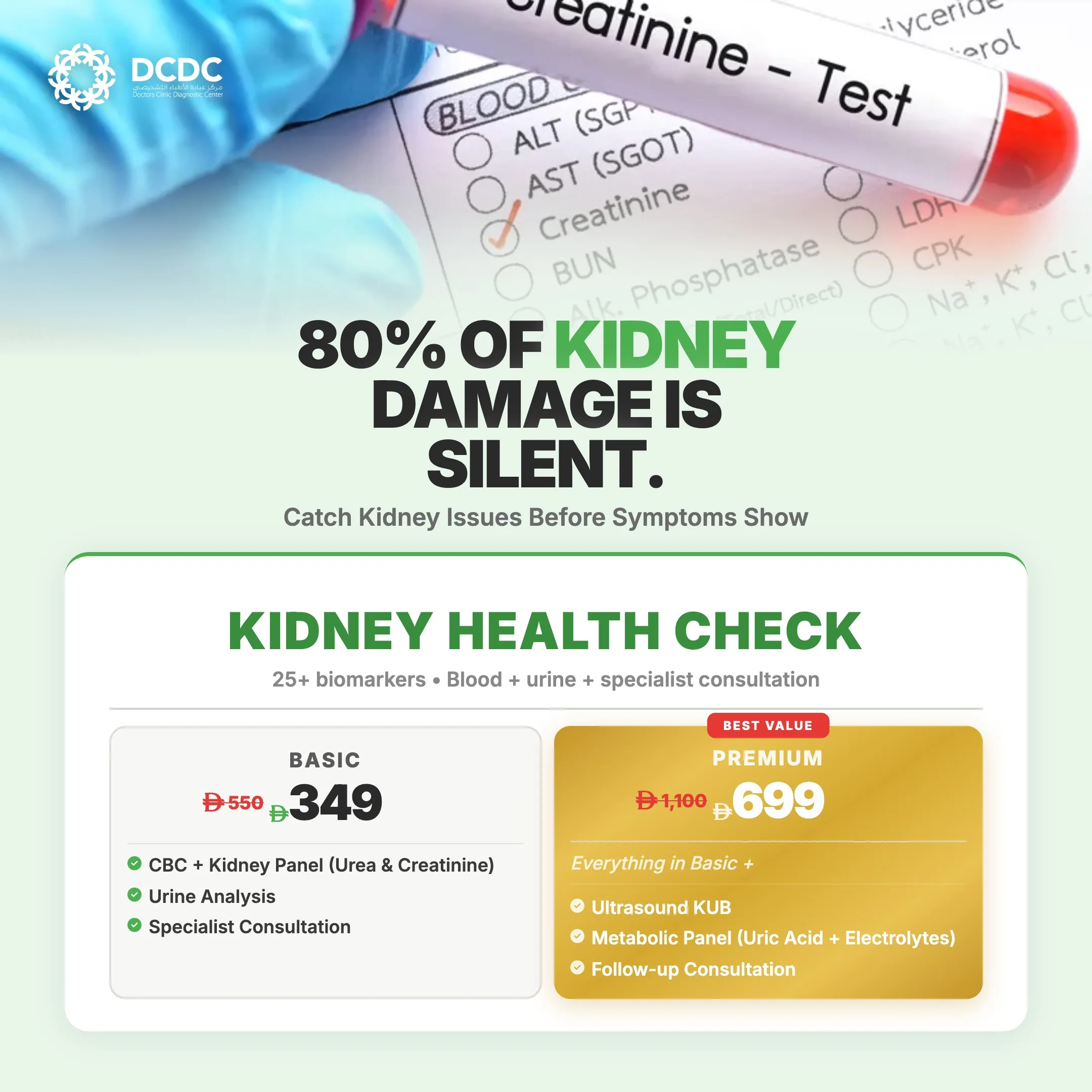
Health Screening Packages
Save with our bundled screening packages — specialist consultation included





Understanding Fever: Your Child's Natural Defense
First, some reassurance: fever itself is not a disease. It's your child's immune system fighting an infection. When viruses or bacteria invade, the body raises its temperature because many germs struggle to survive in warmer conditions. This means fever is actually a sign that your child's immune system is working. For more on children's health, see our guide on Pediatric Imaging Safety.
That said, fever can signal serious illness, especially in young infants. The key is understanding when fever is just the body doing its job and when it's a warning sign.
How to Take Your Child's Temperature Accurately
Getting an accurate reading matters, especially for young children. Here's what works at different ages:
For Infants (Under 3 Months)
- Rectal thermometer: Most accurate for babies (normal: up to 38°C)
- Technique: Lubricate the tip, insert 1-2 cm, hold in place for time indicated
- Important: Any fever of 38°C or above in this age group needs immediate medical evaluation
For Children (3 Months to 3 Years)
- Ear thermometer: Quick and convenient, good accuracy if used correctly
- Forehead scanner: Convenient but may be less accurate
- Armpit (axillary): Add 0.5°C to the reading for approximate core temperature
For Older Children (3+ Years)
- Oral thermometer: Under the tongue, mouth closed, wait for beep
- Tip: Don't take oral temperature right after drinking hot or cold liquids
Temperature Reference Guide
| Temperature Range | Classification |
|---|---|
| 36.5°C - 37.5°C (97.7°F - 99.5°F) | Normal |
| 37.5°C - 38°C (99.5°F - 100.4°F) | Low-grade fever |
| 38°C - 39°C (100.4°F - 102.2°F) | Fever |
| Above 39°C (102.2°F) | High fever |
Red Flags: When to Get Help Immediately
Some situations need urgent medical attention. Don't wait. Seek help immediately if your child:
Emergency Warning Signs
- Age under 3 months with any fever of 38°C or above
- Difficulty breathing: Rapid breathing, ribs showing, nostrils flaring
- Unusual drowsiness: Hard to wake, unusually sleepy, not responsive
- Stiff neck: Can't touch chin to chest, especially with fever and headache
- Rash that doesn't fade: Press a glass against the rash. If it doesn't fade, seek emergency care
- Severe dehydration: No tears, very dry mouth, no wet diapers for 6+ hours
- Seizure: Especially if lasting more than 5 minutes or first-time seizure
- Severe pain: Inconsolable crying, refuses to move a limb
- Fever above 40°C (104°F) that doesn't respond to medication
When a Clinic Visit Is Appropriate
Not every fever needs the emergency room, but some situations warrant a doctor's evaluation. Our paediatrics team at DCDC can assess your child and provide appropriate treatment during regular clinic hours:
- Fever lasting more than 3-5 days — your doctor may order blood tests to identify the cause
- Fever that goes away and then returns
- Ear pain (possible ear infection)
- Sore throat severe enough to affect swallowing
- Burning during urination (possible UTI) — a urine test and blood work may be needed
- Child appears unwell even when fever is reduced with medication
- You're worried, even if you can't explain exactly why
Fever Medications: What Works and What Doesn't
Two fever medications are safe and effective for children: paracetamol (Panadol, Tylenol) and ibuprofen (Brufen, Advil). Here's what you need to know:
Paracetamol (Acetaminophen)
- Safe from: Birth (but consult doctor for infants under 3 months)
- Dosing: 10-15 mg/kg every 4-6 hours (maximum 4 doses in 24 hours)
- Available as: Syrup (Calpol, Panadol), suppositories, tablets for older children
- Best for: Mild to moderate fever, pain relief
Ibuprofen
- Safe from: 3 months (or 5 kg body weight)
- Dosing: 5-10 mg/kg every 6-8 hours (maximum 3 doses in 24 hours)
- Available as: Syrup (Brufen, Nurofen), tablets for older children
- Best for: Higher fevers, inflammation, when paracetamol alone isn't enough
- Note: Give with food to reduce stomach upset; avoid if child is vomiting or dehydrated
What NOT to Give Children
- Aspirin: Never give to children under 16 due to risk of Reye's syndrome
- Adult medications: Different concentrations can cause overdose
- Multiple combination products: Risk of accidentally doubling paracetamol
Home Care: Making Your Child Comfortable
Beyond medication, here's how to help your feverish child feel better: For ongoing health monitoring, our annual health checkup guide covers age-appropriate screening for children too.
Hydration Is Key
- Offer small, frequent sips of water, diluted juice, or oral rehydration solution
- For breastfed babies, continue nursing frequently
- Don't force large amounts; small sips every 15-20 minutes work better
- Ice pops (like Pedialyte freezer pops) can be appealing to reluctant drinkers
Clothing and Environment
- Dress in light, breathable clothing because overdressing traps heat
- Keep room temperature comfortable, not cold
- Use a light blanket if child is shivering
- Lukewarm (not cold) sponge baths can provide comfort
Rest and Monitoring
- Let your child rest, but don't force bed rest if they want to play quietly
- Check temperature every 4-6 hours when awake
- Monitor for warning signs, especially when fever is highest
- Keep a log of temperatures, medication times, and how your child looks — share this log with your pediatrician at your visit
Febrile Seizures: What Parents Need to Know
Febrile seizures are convulsions triggered by fever, typically occurring in children between 6 months and 5 years. They look terrifying but are usually harmless. If your child experiences a febrile seizure, your pediatrician should evaluate them afterward.
What Happens
- Body stiffens, then shakes or jerks
- Eyes may roll back
- Child may turn blue briefly
- Loss of consciousness
- Usually lasts 1-2 minutes (rarely up to 5)
What to Do
- Stay calm (easier said than done, but your child needs you focused)
- Place child on their side on a safe surface
- Don't put anything in their mouth
- Don't restrain movements
- Time the seizure
- Call emergency services if it lasts more than 5 minutes
- After the seizure, child may be sleepy, which is normal
ER vs. Clinic: Making the Right Choice in Dubai
In Dubai, you have several options when your child is sick. Knowing where to go saves time and ensures appropriate care. Our internal medicine team can also evaluate persistent fevers:
Go to the Emergency Room If:
- Any red flag symptoms listed above
- Infant under 3 months with fever
- Child is lethargic or unusually difficult to wake
- You believe there's a life-threatening emergency
- It's late at night and symptoms are worsening rapidly
A Clinic Visit Is Appropriate For:
- Fever lasting more than 3 days without improvement
- Specific symptoms like ear pain, sore throat, or rash (without red flags) — an X-ray may be recommended if a chest infection is suspected
- Child is uncomfortable but not in immediate danger
- You need a prescription (antibiotics are only available by prescription in the UAE). A doctor may also request blood tests to confirm whether the infection is bacterial
- You want reassurance or a professional assessment
Home Care Is Usually Fine When:
- Child is over 3 months with mild to moderate fever
- They're drinking fluids and urinating normally
- They're playful or alert when fever is reduced
- No concerning symptoms beyond fever and mild cold symptoms. If your child gets sick frequently, consider a vitamin test to check for deficiencies that weaken immunity
- Fever has been present less than 3 days
School and Nursery Guidelines in Dubai
Most schools and nurseries in Dubai require children to be:
- Fever-free for 24 hours without medication before returning
- Free of vomiting and diarrhea for 24-48 hours
- On antibiotics for at least 24 hours if prescribed for bacterial infection
This isn't just policy; it protects other children and teachers. A child who still needs fever medication to function is still contagious and not ready to return. If your child has recurring fevers, consider scheduling a comprehensive health checkup to rule out underlying conditions.
Need to See a Pediatrician?
At Doctors Clinic Diagnostic Center in Dubai Healthcare City, we offer same-day pediatric appointments for sick children. Our experienced physicians provide thorough evaluations, clear explanations, and evidence-based treatment plans to help your child recover quickly.
Related Services at DCDC
Expert care and advanced diagnostics at Dubai Healthcare City
Frequently Asked Questions
Final Thoughts
Childhood fever is one of the most common reasons parents seek medical care, and understanding how to respond makes all the difference. Remember that fever itself is not dangerous; it's your child's body fighting infection. Focus on how your child looks and acts rather than obsessing over the exact temperature number.
When in doubt, trust your parental instincts. If something feels wrong, seek medical attention. Our paediatric care team and general medicine consultation services are here to help Dubai families navigate childhood illnesses with confidence and expert care at Doctors Clinic Diagnostic Center.
Sources & References
This article was reviewed by our medical team and references the following sources:
- Dubai Health Authority - Pediatric Healthcare Guidelines
- UAE Ministry of Health - Child Health Standards
- Emirates Pediatric Society - Clinical Guidelines
- American Academy of Pediatrics - Fever Management
- NHS UK - Fever in Children
Medical content on this site is reviewed by DHA-licensed physicians. See our editorial policy for more information.

Written by
Dr. Hadeel Elnur
General Practitioner
MD, General Practice
Dr. Hadeel Elnur is a General Practitioner with extensive experience in pediatric care and family medicine. She provides compassionate, evidence-based care for children and families at DCDC Dubai Healthcare City.
Related Articles
Pediatric Imaging Safety: A Parent's Guide

Travel Vaccines for Children: What Parents Need to Know

Vitamin D for Kids in Dubai: Why Deficiency Is Common
More in Pediatrics

Night Nurse for Newborns in Dubai: Prep Guide (2026)
Read More
Baby Teething Symptoms & Safe Relief in Dubai (2026)
Read MorePediatrician Home Visit Dubai: Full Guide (2026)
Read More
Signs of Hearing Loss in Children Dubai (2026)
Read MoreHand Foot Mouth Disease Dubai: Parent Guide (2026)
Read MoreChild Bedwetting Dubai: Causes & Help (2026)
Read More© 2026 Doctors Clinic Diagnostic Center (DCDC), Dubai Healthcare City. Originally published at https://doctorsclinicdubai.ae/blog/child-fever-management. All rights reserved. Unauthorized reproduction is prohibited.