Key Takeaways
- At least 34 million children under 15 worldwide have disabling hearing loss, yet over 60% of childhood hearing loss is preventable with timely screening and intervention, according to the World Health Organization.
- The UAE mandates newborn hearing screening through MoHAP's Hearing Early Screening Program, but a passed newborn screen does not mean a child's hearing is cleared for life. Hearing loss can develop or worsen at any age.
- The JCIH 1-3-6 guideline recommends screening by 1 month, diagnostic evaluation by 3 months, and intervention by 6 months. Children who receive intervention before 6 months have significantly better language outcomes than those identified later.
- Hearing tests are painless, age-appropriate, and non-invasive. Newborns sleep through OAE and AABR; toddlers play a head-turning game (VRA); older children raise a hand or drop a block when they hear a tone.
- Speech delay is one of the most common signs of undetected hearing loss. Any child being referred for speech therapy should have their hearing tested first, not after months of therapy have passed.
- Glue ear (otitis media with effusion) affects up to 80% of children by age 4 and is the leading cause of temporary hearing loss in the under-fives. It often resolves on its own, but persistent cases may need grommets.
- A child hearing assessment at DCDC starts from AED 299, with same-day results and on-site paediatrician, ENT, and audiometry all available in one visit.
- With the 2026-2027 school year starting in September, August is the ideal time for a hearing check. Undetected hearing loss is a hidden cause of classroom inattention, and 25-35% of children with even one-sided hearing loss risk failing at least one grade.
As Dubai families prepare for the 2026-2027 school year, hearing is one health check that frequently slips off the back-to-school list. Unlike a vision problem that might reveal itself when a child squints at a whiteboard, signs of hearing loss in children are often subtle and easily mistaken for inattention, stubbornness, or a speech quirk. Globally, around 34 million children under 15 live with disabling hearing loss, and the World Health Organization estimates that over 60% of these cases are preventable. In the UAE, newborn hearing screening is mandated, but a passed screen at birth does not guarantee normal hearing years later. This guide covers the warning signs of hearing loss at every age, how each type of child hearing test works, what the UAE screening landscape looks like, and what to expect when you bring your child for a hearing assessment at DCDC in Dubai Healthcare City.
Whether your newborn has just been screened in the hospital, your toddler is slow to start talking, or your school-age child's teacher has flagged poor attention in class, this guide gives you the evidence-based information you need. It was reviewed by Dr. Yusra Alshaikh, a Paediatrician at DCDC, who emphasises that a child who passed their newborn hearing screen is not cleared for life and that hearing should always be checked before, not after, a speech therapy referral.
Health Screening Packages
Save with our bundled screening packages — specialist consultation included





Signs of Hearing Loss in Children: Red Flags by Age
Hearing loss in children can be present from birth (congenital) or develop later (acquired). It can affect one ear or both, and it can range from mild to profound. Because young children cannot tell you they are not hearing well, parents and caregivers need to know what to watch for at each developmental stage. The table below summarises the key red flags. If your child shows any of these signs, a hearing test is warranted.
| Age | Red flags that warrant a hearing test |
|---|---|
| 0-3 months | Does not startle or blink at loud sounds; does not calm to a parent's voice; does not make cooing or vowel-like sounds by 2-3 months |
| 4-8 months | Does not turn toward sounds or voices; stops babbling or never begins canonical babbling (e.g. ba-ba, da-da) by 6 months; does not react to changes in tone of voice |
| 9-12 months | Does not respond to own name; does not point to familiar objects when named; no single words like mama or dada by 12 months; does not imitate simple sounds |
| 1-2 years | Vocabulary fewer than 10 words by 18 months; does not follow simple instructions without gestures; frequently says huh or what; seems to hear some sounds but not others |
| 3-5 years (pre-school) | Speech difficult for strangers to understand; cannot follow two-step directions; turns TV volume unusually high; does not respond when called from another room; speech delay compared to peers |
| School age and adolescent | Declining school performance or inattention; frequently asks teachers and classmates to repeat; speaks unusually loudly; avoids group conversations; complains of ringing or buzzing in ears; withdraws socially; uses earphones at very high volume |
Developmental red flags for hearing loss by age group (adapted from JCIH and AAP guidelines)
Some of these signs overlap with other conditions. A child who does not respond to their name may be showing signs of autism spectrum disorder or signs of developmental delay in children. A hearing test is a quick, non-invasive way to rule out or confirm a hearing component, and it should always be one of the first investigations, not an afterthought.
How Common Is Hearing Loss in Children?
Hearing loss is more common in children than most parents realise. The World Health Organization reports that over 1.5 billion people worldwide live with some degree of hearing loss, and 430 million of them require rehabilitation services. Among children specifically, around 90 million aged 5-19 live with hearing loss globally. In the United States, the CDC reports a prevalence of 1.7 per 1,000 children screened, with more than 98% of newborns now undergoing hearing screening before hospital discharge.
In the UAE, newborn hearing screening is mandated through MoHAP's Hearing Early Screening Program. A study published in the journal covering Sharjah's newborn hearing screening programme reported an incidence of 4.94 per 1,000 newborns (PMC8257347), higher than reported US and European averages. Contributing factors include a higher rate of consanguineous marriages, which increases the prevalence of genetic causes of hearing loss, and the region's relatively young population.
These numbers matter because undetected hearing loss has serious consequences. Research consistently shows that 25-35% of children with unilateral (one-sided) hearing loss risk failing at least one grade in school. Bilateral hearing loss, if not identified and managed early, can lead to significant delays in speech, language, social development, and academic achievement.
When Should a Child Have a Hearing Test?
The Joint Committee on Infant Hearing (JCIH) established the internationally recognised 1-3-6 model: every infant should be screened by 1 month of age, receive a diagnostic audiological evaluation by 3 months if the screen is not passed, and begin intervention by 6 months if hearing loss is confirmed. Children who receive intervention before 6 months of age have significantly better language outcomes compared with those identified later.
Beyond the newborn period, hearing should be checked at the following points:
- At birth: Newborn hearing screening (OAE or AABR) before hospital discharge. This is mandatory in the UAE under MoHAP guidelines. For more on what happens in those first days, see our guide to newborn screening tests in the UAE.
- At every well-child visit: Informal hearing assessment should be part of routine paediatric check-ups, with particular attention during the 9-month, 18-month, and 24-month visits.
- Before school entry (age 4-5): A formal hearing screening is recommended before the start of FS1 or KG1. Many schools require documented hearing and vision screening as part of the enrollment health file.
- During school years: The American Academy of Pediatrics recommends hearing screening at ages 4, 5, 6, 8, and 10, and once during adolescence. DHA and MOHAP school health programmes include periodic hearing checks, but these are not always comprehensive and should not replace a clinical assessment if concerns exist.
- Whenever concern arises: Any parent, teacher, or caregiver concern about hearing, speech, language, or attention should prompt a hearing test regardless of age or when the last one was done.
- After risk events: A hearing test should be performed after meningitis, measles, mumps, repeated ear infections, head injury, exposure to ototoxic medications, or any NICU stay longer than 5 days.
How Is a Child Hearing Test Done? Tests by Age
One of the most common questions parents ask is how a hearing test works on a baby or toddler who cannot say whether they hear a sound. The answer is that audiologists use different test methods depending on the child's age and developmental stage. All of them are painless, non-invasive, and do not require sedation.
| Test | Age range | How it works | Duration | Child's participation |
|---|---|---|---|---|
| Otoacoustic Emissions (OAE) | Birth onwards | A soft tip placed in the ear canal plays clicking sounds. A healthy inner ear (cochlea) produces a faint echo in response, which the device records. No echo suggests possible cochlear dysfunction. | 5-10 minutes | None required. Best done while the baby is sleeping or feeding quietly. |
| Automated Auditory Brainstem Response (AABR) | Birth onwards | Small sensors placed on the baby's forehead and behind the ears record electrical activity in the brainstem in response to soft clicking sounds played through earphones. It tests the auditory nerve pathway from the ear to the brain. | 15-60 minutes | None required. The baby needs to be asleep or very still. Natural sleep is preferred. |
| Visual Reinforcement Audiometry (VRA) | Approximately 5-6 months to 24-30 months | The child sits on a parent's lap in a sound booth. Sounds are played from speakers at different angles. When the child turns toward the correct speaker, a lit animated toy is revealed as a reward, conditioning the child to keep responding. | 20-30 minutes | Head turn only. It is presented as a game. |
| Conditioned Play Audiometry (CPA) | Approximately 2 to 5 years | The child wears headphones and is taught to perform a play action, such as dropping a block into a bucket or placing a peg on a board, each time they hear a sound. The audiologist varies the frequency and volume to map the child's hearing thresholds. | 20-30 minutes | Active participation through play. Most children enjoy it. |
| Pure Tone Audiometry (PTA) | 5 years and older | The child wears headphones and raises a hand or presses a button each time they hear a tone. The audiologist tests a range of frequencies in each ear. Results are plotted on an audiogram. | Approximately 20 minutes | Active participation. Requires the ability to follow instructions reliably. |
| Tympanometry | Approximately 7 months and older | A small probe is placed at the opening of the ear canal. It changes air pressure slightly and measures how the eardrum moves in response. This tests middle ear function, not hearing directly, and is essential for detecting glue ear. | 1-2 minutes per ear | None required. The child simply sits still. |
Child hearing tests by age: method, duration, and what is required from the child
At DCDC, the audiologist selects the appropriate combination of tests based on your child's age and the clinical question. For example, a toddler referred for speech delay would typically receive VRA plus tympanometry, while a school-age child with attention concerns would undergo pure tone audiometry plus tympanometry. Results are available the same day and explained in plain language.
Newborn Hearing Screening Explained: What UAE Parents Need to Know
In the UAE, newborn hearing screening is not optional. MoHAP's Hearing Early Screening Program requires that every baby born in a UAE hospital undergo hearing screening before discharge. Most hospitals use OAE as the first-line test, with AABR used as a confirmatory test or for babies with risk factors such as a NICU stay.
The screening is typically performed within the first 48 hours of life, often while the baby sleeps. It takes only a few minutes and produces one of two results: pass or refer. A pass result means the baby's hearing is likely normal at that point. A refer result does not mean the baby is deaf. It means the test needs to be repeated, usually within two to four weeks, because fluid in the ear canal, a noisy environment, or the baby moving can all cause a false refer. If the repeat screen also returns a refer, the baby is referred for a full diagnostic AABR, which should be completed by 3 months of age under the JCIH guidelines.
The critical point that Dr. Yusra Alshaikh emphasises to parents is that a passed newborn screen does not clear a child's hearing for life. Hearing loss can develop after birth due to infections (particularly meningitis, measles, and cytomegalovirus), medications, head trauma, noise exposure, or genetic conditions that are progressive. This is why ongoing monitoring and parental awareness of age-specific red flags are essential, not just a single screening at birth.
Speech Delay and Hearing: The Connection Every Parent Should Understand
Speech and language develop primarily through hearing. A child who does not hear clearly cannot reproduce sounds accurately, build vocabulary at the expected pace, or follow the conversational patterns that form the foundation of social communication. This means that hearing loss is one of the most common — and most treatable — causes of speech delay.
Dr. Yusra Alshaikh's clinical approach at DCDC reflects this directly: she checks hearing before referring a child for speech therapy, not after months of therapy have produced limited progress. This matters because a child with undetected hearing loss will not benefit fully from speech therapy until the hearing issue is identified and addressed. Months of well-intentioned therapy can pass with frustrating results when a simple hearing test could have redirected the treatment plan.
The evidence is clear on the value of early identification. Research shows that children who receive hearing intervention before 3-6 months of age develop language skills significantly closer to their hearing peers compared with children identified after 6 months. Every month of delay narrows the window in which a child's brain can most efficiently learn spoken language.
If your child's speech is delayed relative to their age, or if a nursery teacher has flagged that your child seems to tune out during group activities, a hearing test should be the first investigation. For a broader overview of developmental milestones and when delays need attention, see our guide to signs of developmental delay in children.
Glue Ear and Hearing Loss in Children
Glue ear, known medically as otitis media with effusion (OME), is the single most common cause of hearing loss in young children. It occurs when thick, sticky fluid accumulates behind the eardrum without an active infection. This fluid dampens sound transmission through the middle ear, causing a conductive hearing loss that is usually mild to moderate but can significantly affect a young child's speech and language development if it persists.
The prevalence is striking: OME affects 10-30% of children aged 1-3 at any given time, and the cumulative incidence reaches approximately 80% by age 4. In other words, most children will have at least one episode of glue ear during their early years. Many parents do not realise their child has it because there is no pain, no fever, and no visible signs. The child simply does not hear as well as they should, which may show up as turning the TV volume higher, not responding when called, or seeming inattentive.
Glue ear is closely related to recurrent ear infections in children. It often develops after an acute ear infection resolves, when the fluid behind the eardrum fails to drain. The interplay of air conditioning, humidity changes, and frequent upper respiratory infections means that many young children cycle between acute ear infections and persistent effusions.
How Glue Ear Is Diagnosed and Managed
Tympanometry is the key diagnostic test for glue ear. It takes less than two minutes per ear and produces a graph (tympanogram) that shows whether the eardrum is moving normally. A flat tympanogram (Type B) strongly suggests fluid behind the eardrum. Combined with an age-appropriate hearing test, this tells the clinician both whether fluid is present and whether it is affecting the child's hearing.
- Watch and wait (first 3 months): Most glue ear resolves on its own within three months. During this period, parents should speak clearly and face-to-face, reduce background noise, and ensure the child is seated near the teacher in nursery or school.
- Medical review at 3 months: If symptoms and flat tympanometry persist at 3 months, the child should be referred to an ENT specialist for assessment.
- Grommets (ventilation tubes): For persistent glue ear with documented hearing loss, grommets may be recommended. These tiny tubes are inserted into the eardrum under a brief general anaesthetic to ventilate the middle ear and restore hearing. A Cochrane review found that grommets improve hearing outcomes at 6 months compared with watchful waiting, though the benefit narrows by 12-18 months as many children improve naturally.
- Hearing aids: In some cases where surgery is not suitable or preferred, a bone-conduction hearing aid may be used as a temporary measure while awaiting resolution.
Hearing Screening for School-Age Children
The start of each academic year brings a surge in health screening requests, and hearing is one of the checks that parents most commonly overlook. Schools increasingly request documented evidence that a child has passed hearing and vision screening as part of their enrollment health file, and with the 2026-2027 school year beginning in September, August is the practical window to complete this.
For school-age children, pure tone audiometry is the standard test. It takes approximately 20 minutes, is completely painless, and produces an audiogram that clearly shows whether the child's hearing is within normal limits at each frequency. At DCDC, this can be combined with a child vision screening by age and a full back-to-school checkup in a single visit.
Hearing loss in school-age children is frequently missed because the child has learned to compensate: they lip-read without realising it, sit at the front of the class, or rely on visual cues from classmates. Teachers may describe the child as a daydreamer or report difficulty following instructions in noisy environments. These are not behavioural problems; they are classic signs of mild to moderate hearing loss. Research shows that 25-35% of children with unilateral hearing loss risk academic failure, defined as failing at least one grade.
The risk to adolescent hearing deserves separate attention. A study published in BMJ Global Health estimated that 1.35 billion young people are at risk of hearing damage from unsafe listening practices, including prolonged use of earphones at high volume and exposure to loud recreational noise. If your teenager complains of ringing in the ears (tinnitus) or seems to have difficulty hearing in noisy settings, a hearing test is appropriate.
Back-to-School Hearing Check at DCDC
Book a child hearing assessment before the September term starts. Paediatrician consultation, age-appropriate hearing test, and tympanometry completed in one visit at our DHCC clinic. Same-day results and school health documentation provided.
Hearing assessment from AED 299. School Health Check from AED 200. Call, WhatsApp, or book online.
Types and Degrees of Hearing Loss in Children
Understanding the type and degree of hearing loss helps parents make sense of test results and treatment options. Hearing loss is classified by where the problem occurs and by how much hearing is affected.
Types of Hearing Loss
- Conductive hearing loss: Sound cannot pass efficiently through the outer or middle ear. Common causes in children include glue ear, ear wax build-up, eardrum perforation, and ossicular chain abnormalities. This type is often temporary and treatable.
- Sensorineural hearing loss: The inner ear (cochlea) or auditory nerve is damaged. Causes include genetic conditions, infections during pregnancy (CMV, rubella), meningitis, and ototoxic medications. This type is usually permanent and managed with hearing aids or cochlear implants.
- Mixed hearing loss: A combination of conductive and sensorineural components. For example, a child with a genetic sensorineural loss who also develops glue ear.
- Auditory neuropathy spectrum disorder (ANSD): Sound enters the inner ear normally, but the signal is not transmitted reliably to the brain. This can cause fluctuating hearing that is difficult to predict and manage.
Degrees of Hearing Loss
| Degree | Hearing threshold (dB HL) | What the child may miss |
|---|---|---|
| Normal | 0-20 dB | Nothing. Full range of speech and environmental sounds heard. |
| Mild | 21-40 dB | Soft speech, whispered words, distant conversations. May struggle in noisy classrooms. |
| Moderate | 41-55 dB | Most conversational speech unless speaker is close and facing the child. Significant classroom impact. |
| Moderately severe | 56-70 dB | Normal conversational speech. Relies heavily on visual cues. Hearing aids typically recommended. |
| Severe | 71-90 dB | All but loud speech close to the ear. Hearing aids or cochlear implant evaluation needed. |
| Profound | 91+ dB | Cannot hear speech. Cochlear implant candidacy evaluation and sign language support typically discussed. |
Degrees of hearing loss in children (adapted from ASHA classification)
Causes of Hearing Loss in Children
Hearing loss in children falls into two broad timing categories — congenital (present at birth) and acquired (developing after birth). The WHO estimates that over 60% of childhood hearing loss is due to preventable causes, making awareness and early action critically important.
Congenital Causes
- Genetic factors: Approximately 50-60% of congenital hearing loss has a genetic basis. This includes both syndromic forms (associated with other medical features, such as Waardenburg, Usher, or Pendred syndromes) and non-syndromic forms where hearing loss is the only finding. Consanguinity, which is more common in the Gulf region, increases the prevalence of autosomal recessive hearing loss.
- Prenatal infections: TORCH infections — toxoplasmosis, rubella, cytomegalovirus (CMV), and herpes simplex — can cause sensorineural hearing loss. CMV is the leading non-genetic cause of congenital hearing loss and can cause progressive loss that worsens over the first years of life.
- Birth complications: Prematurity, low birth weight, hyperbilirubinemia (severe jaundice), and birth asphyxia are all associated with increased risk. Babies who spend more than 5 days in the NICU are considered high-risk for hearing loss.
- Structural abnormalities: Malformations of the outer ear, ear canal, or middle ear structures can cause conductive or mixed hearing loss.
Acquired Causes
- Middle ear infections and glue ear: Recurrent acute otitis media and persistent otitis media with effusion are the most common acquired causes of hearing loss in children under 5. The hearing loss is usually conductive and temporary, but prolonged or recurrent episodes during critical language-learning years can affect development.
- Meningitis: Bacterial meningitis can damage the cochlea and auditory nerve, causing severe to profound sensorineural hearing loss. Hearing should always be tested after a meningitis episode.
- Ototoxic medications: Certain antibiotics (aminoglycosides), chemotherapy agents (cisplatin), and loop diuretics can damage hearing. Children receiving these medications should have hearing monitored.
- Noise exposure: Prolonged exposure to loud noise, including through earphones, can cause permanent noise-induced hearing loss. The BMJ Global Health study estimating 1.35 billion young people at risk from unsafe listening highlights this as a growing global concern.
- Head trauma: Temporal bone fractures and concussions can cause conductive, sensorineural, or mixed hearing loss.
- Infectious diseases: Measles, mumps, and rubella (in unvaccinated children) can cause sensorineural hearing loss. This underscores the importance of keeping vaccinations up to date.
Child Hearing Test: What to Expect at DCDC
Knowing what happens during a hearing assessment helps both parents and children arrive prepared. Here is the step-by-step patient journey at DCDC.
- Step 1 — Check-in and registration: You arrive at DCDC, Block A, DHCC. Average wait time is approximately 15 minutes. Multilingual reception staff can assist in Arabic, English, Hindi, Urdu, and other languages.
- Step 2 — History with the paediatrician: The consulting paediatrician takes a detailed history covering your child's birth history, developmental milestones, speech and language development, ear infection history, family history of hearing loss, noise exposure, and your specific concerns.
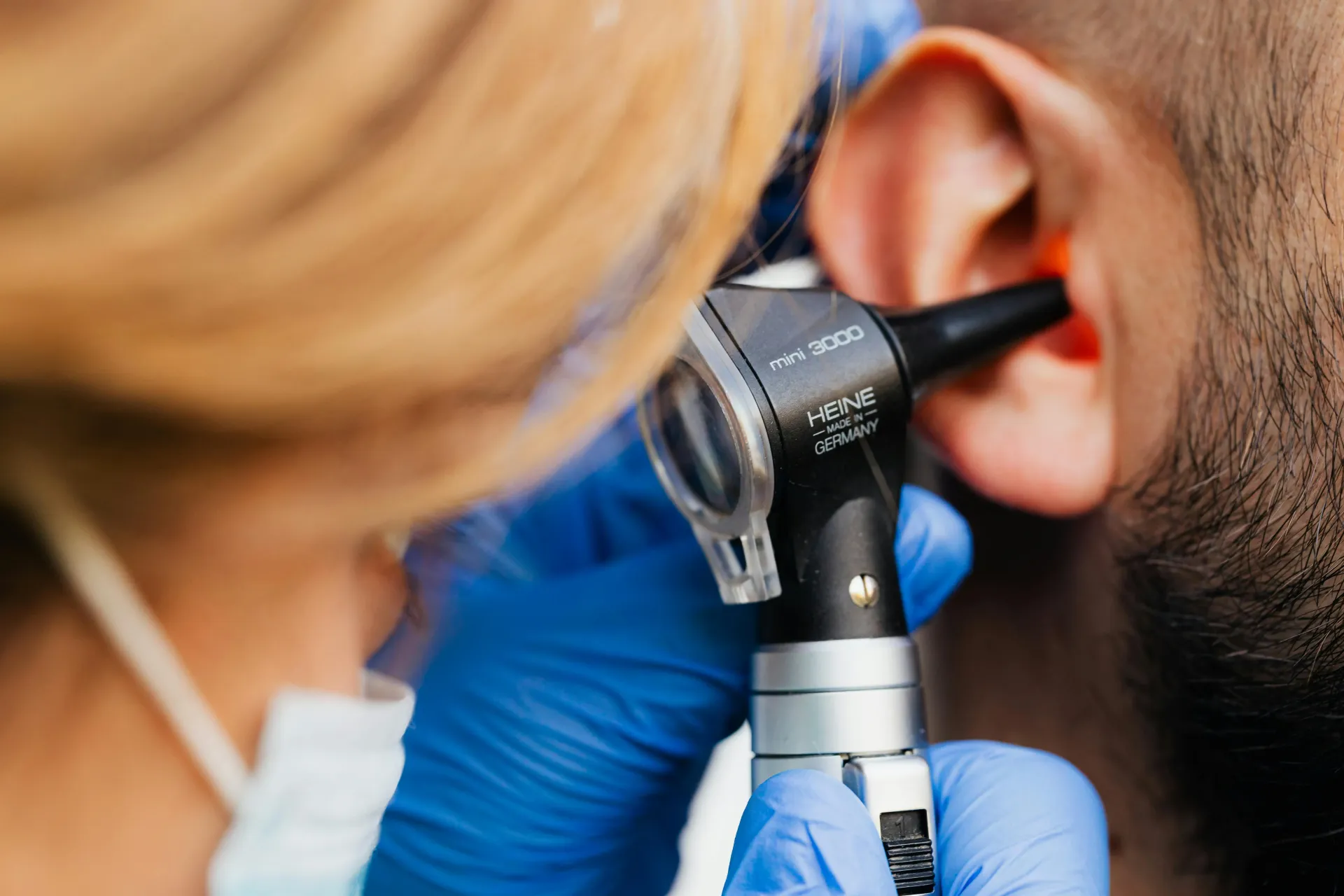
- Step 3 — Otoscopy: The doctor examines both ears with an otoscope to check for wax, fluid, infection, eardrum integrity, and any structural abnormalities. If wax is blocking the ear canal, it may need to be removed before testing.
- Step 4 — Tympanometry: A small probe is placed at the ear canal opening to measure eardrum movement. This takes 1-2 minutes per ear and tells the clinician whether the middle ear is functioning normally or whether fluid (glue ear) may be present.
- Step 5 — Age-appropriate hearing test: Based on your child's age and cooperation level, the audiologist performs the appropriate test (OAE, AABR, VRA, play audiometry, or pure tone audiometry) in an acoustically controlled suite. For babies, natural sleep during the test gives the best results. For toddlers and young children, the test is presented as a game.
- Step 6 — Results and explanation: Results are available the same day. The audiologist and paediatrician explain the findings in plain language, showing you the audiogram or tympanogram and what it means for your child. If the results are normal, you receive reassurance and guidance on when to retest. If a hearing loss is identified, the team discusses the type, degree, likely cause, and next steps, which may include ENT referral, further investigation, hearing aids, or follow-up testing.
- Step 7 — Referral if needed: DCDC offers on-site ENT consultation, so if a referral is needed, it can often be arranged the same day or within a few days. There is no need to travel to a separate facility for a second opinion or specialist assessment. Laboratory testing, if required, is also available in the same building.
The entire process, from check-in to results, is typically completed within a single visit. For school-age children, the clinic can issue school health documentation confirming the hearing screening result. DCDC is MOHAP-licensed, holds a 4.8 out of 5 rating from over 1,000 patient reviews, and reports 98% patient satisfaction. Free parking and extended hours are available.
Hearing Assessment Cost and Insurance
The cost of a child hearing test varies depending on the type of assessment, the clinic, and whether the test is standalone or part of a broader check-up. Below is a summary of DCDC pricing and the wider market range.
| Service | DCDC price | Market range | What is included |
|---|---|---|---|
| Hearing Assessment (audiometry + tympanometry) | From AED 299 | AED 250-600 | Age-appropriate hearing test, tympanometry, audiogram, same-day results and explanation |
| School Health Check | From AED 200 | AED 150-400 | Vision screening, hearing screening, basic physical examination, school health documentation |
| Well-Baby/Child Check-Up | From AED 250 | AED 200-500 | Growth and developmental milestone assessment, hearing and vision check, vaccination review |
| ENT Consultation (if referral needed) | From AED 300 | AED 300-500 | Specialist evaluation, otoscopy, assessment for grommets or further investigation |
Child hearing test and related service costs (2026 pricing)
DCDC offers direct billing with over 20 insurance partners. If your insurance covers outpatient paediatric or ENT consultations, the hearing assessment may be partially or fully covered. Contact the clinic to verify your specific plan's coverage before your visit.
What Happens After a Hearing Loss Diagnosis?
A confirmed hearing loss diagnosis can feel overwhelming for parents, but the earlier it is identified, the better the outcomes. The JCIH guideline recommending intervention by 6 months of age exists precisely because the brain's ability to develop spoken language depends on auditory input during a critical period in early childhood.
- Mild to moderate conductive loss (e.g. glue ear): Often managed with watchful waiting, medical treatment of underlying causes, or grommets if persistent. Hearing typically returns to normal once the underlying condition resolves.
- Mild to moderate sensorineural loss: Hearing aids are usually recommended. Modern paediatric hearing aids are small, durable, and available in child-friendly colours. Preferential classroom seating and FM systems in school can also help.
- Severe to profound sensorineural loss: Cochlear implant evaluation is typically discussed. The earlier the implantation (ideally before 12-18 months for congenital loss), the better the spoken language outcomes.
- Unilateral hearing loss (one ear): Previously considered benign, unilateral hearing loss is now recognised as academically significant. Options include a CROS hearing aid, preferential seating, and classroom accommodations.
- All degrees: Early intervention services, including speech-language therapy, auditory-verbal therapy, and family counselling, are critical components of management. The child's hearing should be monitored regularly, as some types of hearing loss are progressive.
How to Protect Your Child's Hearing
Given that the WHO estimates over 60% of childhood hearing loss is preventable, proactive steps make a meaningful difference. The following evidence-based strategies are relevant to families.
- Complete the vaccination schedule: Measles, mumps, rubella, and meningococcal vaccines prevent infections that can cause permanent hearing loss. Keep your child's vaccinations up to date.
- Treat ear infections promptly: While not all ear infections need antibiotics, untreated or undertreated chronic ear infections can lead to complications including hearing loss. See a doctor for persistent symptoms.
- Manage earphone volume: The 60/60 rule is a practical guideline: no more than 60% volume for no more than 60 minutes at a time. Noise-limiting headphones designed for children cap output at 85 dB.
- Protect ears in noisy environments: Ear protection at fireworks displays (National Day, New Year), motor racing events, and loud indoor play areas is appropriate for children of all ages.
- Do not insert objects into the ear canal: Cotton buds push wax deeper and can damage the eardrum. Ears are self-cleaning. If wax is a concern, have it assessed professionally.
- Monitor for delayed-onset or progressive hearing loss: A passed newborn screen does not rule out future hearing loss. Stay aware of the red flags listed earlier in this guide and act on any concerns promptly.
- Ensure maternal health during pregnancy: Avoiding ototoxic medications, managing infections, and adequate folic acid intake during pregnancy all contribute to reducing the risk of congenital hearing loss.
Dr. Yusra Alshaikh's Perspective on Child Hearing
Dr. Yusra Alshaikh, Paediatrician at DCDC, sees hearing-related concerns regularly in her practice. Her clinical approach reflects two key principles that she shares with parents.
First, a child who passed their newborn hearing screen is not cleared for life. She explains that parents often assume the hospital screening at birth was a one-time definitive test, when in reality it is a snapshot of hearing at that moment. Hearing loss can develop at any age due to infections, genetic progression, noise exposure, or other factors. This is why she includes informal hearing checks at every well-child visit and recommends formal testing whenever a parent or teacher raises a concern.
Second, she consistently checks hearing before referring for speech therapy. In her experience, speech delays are sometimes investigated for months — occupational therapy, developmental assessments, speech pathology — before anyone thinks to test the child's hearing. She has seen cases where a straightforward hearing test revealed the underlying cause, and appropriate intervention, whether medical treatment for glue ear or hearing aids for sensorineural loss, led to rapid speech improvement without the need for extended therapy.
Her advice to parents: if your child is not speaking as expected for their age, if a nursery teacher says your child does not listen, or if you find yourself repeating things more than you think is normal, book a hearing test. It is quick, painless, non-invasive, and it either gives you reassurance or gives you information that can change your child's developmental trajectory.
Concerned About Your Child's Hearing or Speech?
At Doctors Clinic Diagnostic Center (DCDC), Dr. Yusra Alshaikh and our audiology team offer comprehensive child hearing assessments with same-day results. From newborn screening follow-up to school-age hearing checks, our one-stop approach means paediatrician, ENT, audiometry, and lab testing are all available under one roof.
Hearing assessment from AED 299. Well-Child Check-Up from AED 250. Book online, call, or WhatsApp.
Frequently Asked Questions About Child Hearing Tests
Below are the questions parents most commonly ask about hearing tests for children.
Related Services at DCDC
Expert care and advanced diagnostics at Dubai Healthcare City
Hearing Assessment
Complete audiometry for children and adults with audiogram explained same day. From AED 299.
Book AppointmentSchool Health Check
School entry medicals including vision and hearing screening. From AED 200.
Book AppointmentWell-Baby & Child Check-Up
Growth and developmental milestone screening from birth through adolescence. From AED 250.
Book AppointmentFrequently Asked Questions
Final Thoughts
Hearing is the foundation on which spoken language, social connection, and academic learning are built. The evidence is unambiguous: early identification and early intervention produce better outcomes, and the window in which the developing brain can most efficiently learn from auditory input does not stay open indefinitely. The good news is that the tools to detect hearing loss are available at every age, from the first day of life onwards, and they are painless, quick, and conclusive.
If your child has not had a hearing check recently, if speech or language is not developing as expected, if a teacher has flagged inattention or poor listening, or if you simply want to complete a thorough back-to-school health check before the September term, a hearing assessment at DCDC in Dubai Healthcare City gives you a clear, same-day answer. Our paediatricians, ENT specialists, and audiology team work under one roof, so whether the result is reassuring or requires further action, the next step is already in place.
Sources & References
This article was reviewed by our medical team and references the following sources:
- World Health Organization (WHO) — Deafness and Hearing Loss Fact Sheet
- Centers for Disease Control and Prevention (CDC) — Data About Hearing Loss in Children
- American Speech-Language-Hearing Association (ASHA) — Degree of Hearing Loss
- NHS — Hearing Tests for Children
- NHS — Glue Ear
- PubMed — Hearing Loss Screening in UAE
- PMC — Sharjah Newborn Hearing Screening Programme
- Cochrane — Grommets (Ventilation Tubes) for Otitis Media with Effusion in Children
Medical content on this site is reviewed by DHA-licensed physicians. See our editorial policy for more information.

Written by
Dr. Yusra Alshaikh
Pediatrics
MBBS, Arab Board of Pediatrics, Emirati Board of Pediatrics
Dr. Yusra Alshaikh is a DHA-licensed paediatrician at DCDC. She provides comprehensive well-child assessments, developmental screening, and acute paediatric care, with a clinical emphasis on identifying hearing and developmental concerns early and coordinating multidisciplinary intervention when needed.
Related Articles
Child Ear Infection: Signs & Care Guide
Back-to-School Checkup: Full Guide

Child Developmental Delay: Signs to Watch
Child Vision Screening: Age Guide
Newborn Screening Tests in the UAE
Child Vaccination Schedule: UAE Guide
More in Pediatrics
Baby Teething Symptoms & Safe Relief in Dubai (2026)
Read MorePediatrician Home Visit Dubai: Full Guide (2026)
Read MoreHand Foot Mouth Disease Dubai: Parent Guide (2026)
Read MoreChild Bedwetting Dubai: Causes & Help (2026)
Read More
Enlarged Adenoids in Children Dubai (2026)
Read MoreChild Vision Screening Dubai: Age Guide (2026)
Read More© 2026 Doctors Clinic Diagnostic Center (DCDC), Dubai Healthcare City. Originally published at https://doctorsclinicdubai.ae/blog/child-hearing-test-dubai. All rights reserved. Unauthorized reproduction is prohibited.