Key Takeaways
- Baby teething symptoms typically start between 4 and 7 months of age, with the two lower front teeth (central incisors) usually erupting first
- Classic signs include drooling, swollen or tender gums, gum-rubbing, wanting to chew on everything, mild irritability, and disrupted sleep
- Symptoms usually cluster in an 8-day window around each tooth: about 4 days before it breaks through the gum and 3 days after
- Teething does not cause high fever, diarrhea, vomiting, or persistent cough. These need medical evaluation, not teething remedies
- Safe relief includes firm gum massage and chilled (not frozen) teething rings. Avoid benzocaine gels, amber necklaces, and teething tablets containing belladonna, which the FDA has warned against
- All 20 primary teeth usually finish erupting by around 33 months, though every baby's timeline is different
- Schedule your baby's first dental visit by their first birthday, or within 6 months of the first tooth appearing, per the American Academy of Pediatric Dentistry
- Dubai's heat and constant air conditioning can add to a teething baby's fluid loss from extra drooling, so offer fluids more often during flare-ups
Baby teething symptoms usually begin between 4 and 7 months of age, when the first tooth starts pushing through tender gums, and for many parents in Dubai the hardest part is telling normal teething discomfort apart from something that actually needs medical attention. Drooling, swollen gums, a sudden urge to chew on everything within reach, and a few restless nights are all part of this very normal developmental stage. What teething does not typically cause is a high fever, diarrhea, or vomiting, and knowing where that line sits matters for your baby's health and your own peace of mind. This guide covers the full tooth-by-tooth timeline, the symptoms that are genuinely teething-related, remedies that are actually safe, products to avoid, and when it's time to bring your baby in for pediatric care at DCDC in Dubai Healthcare City.
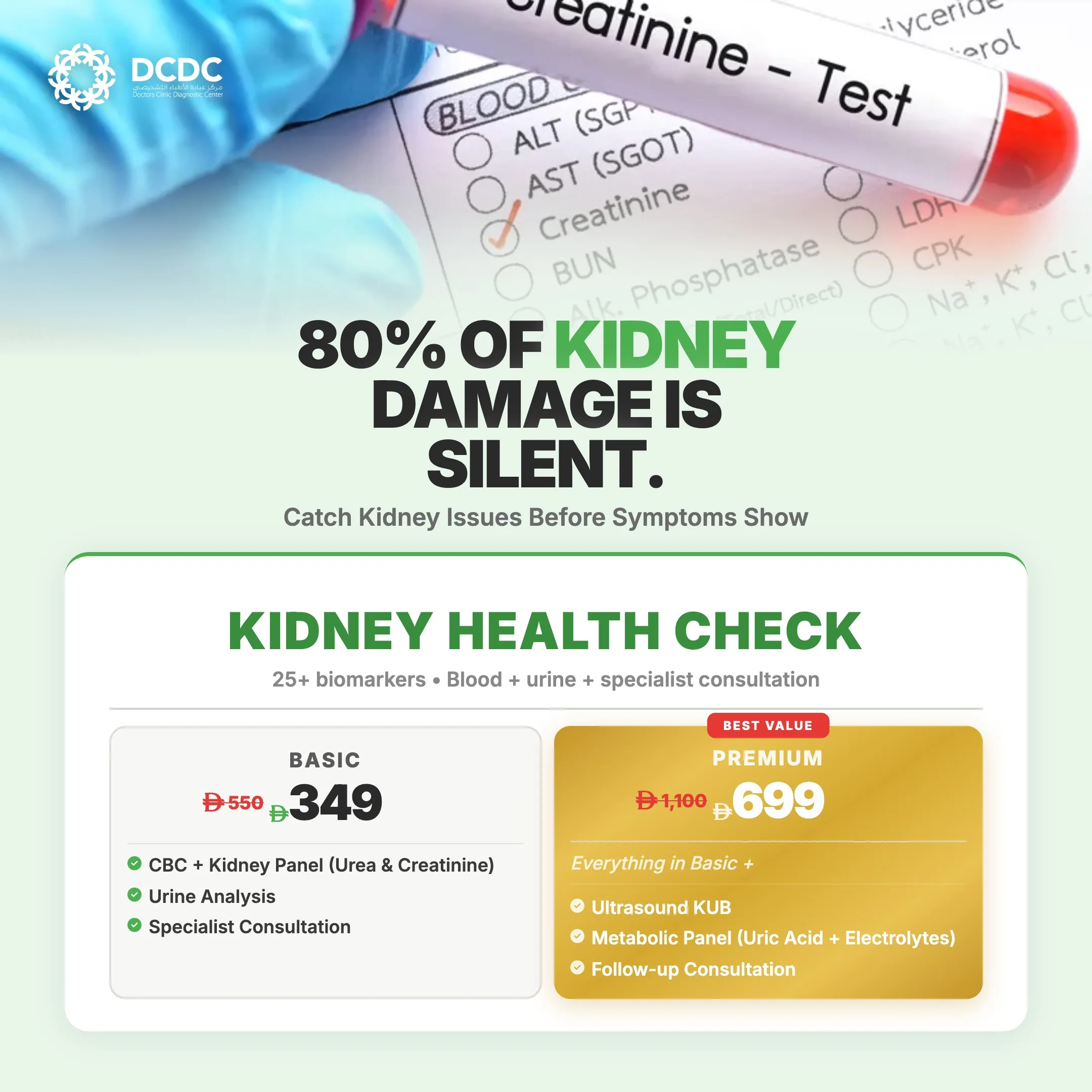
Health Screening Packages
Save with our bundled screening packages — specialist consultation included





Understanding Baby Teething: What's Actually Happening
Your baby is actually born with a full set of 20 primary (baby) teeth already formed beneath the gums. Over the first three years of life, these teeth gradually push their way up and through the gum tissue, one or several at a time. That process, tooth eruption, is what we call teething, and it can cause real, if usually mild, discomfort as the tooth's edge works its way through soft tissue.
Every baby's timeline looks a little different. Some infants are born with a visible tooth bud (a rare condition called a natal tooth), while others don't cut their first tooth until well after their first birthday. Both are within the range of normal. What tends to be more consistent is the order in which teeth appear, even if the exact timing varies from baby to baby.
Baby Teeth Eruption Timeline: When Each Tooth Comes In
While every child develops at their own pace, pediatric dental guidelines describe a general order and approximate age range for each of the 20 primary teeth. Use this chart as a reference, not a strict schedule; a difference of a few months in either direction is completely normal.
| Tooth | Typical Eruption Age |
|---|---|
| Lower central incisors (bottom front two) | 6-10 months |
| Upper central incisors (top front two) | 8-12 months |
| Upper lateral incisors | 9-13 months |
| Lower lateral incisors | 10-16 months |
| First molars (upper and lower) | 13-19 months |
| Canine teeth (cuspids) | 16-23 months |
| Second molars (upper and lower) | 23-33 months |
All 20 primary teeth are typically in place by around 33 months of age. Molars tend to cause the most noticeable discomfort because of their broader surface area.
Common Signs and Symptoms of Teething
Not every baby shows obvious signs, but most experience at least a few of these symptoms in the days surrounding a new tooth's arrival:
- Excessive drooling: Saliva production increases, which can lead to a wet chin, damp clothing, and sometimes a mild rash around the mouth
- Swollen or tender gums: The gum tissue over the emerging tooth often looks red or slightly puffy
- Chewing and biting: Babies instinctively gnaw on fingers, toys, or anything within reach to counter-pressure the gum
- Irritability or fussiness: Usually mild and intermittent, most noticeable in the evening
- Ear-rubbing or cheek-rubbing: Gum and jaw discomfort can radiate along shared nerve pathways toward the ear
- Slightly warm gums or a mild rise in temperature: Not a true fever (see the next section)
- Disrupted sleep: Gum discomfort can wake a baby who normally sleeps through the night
- Reduced interest in solids: Some babies temporarily prefer softer foods or nurse more for comfort
The Teething Window: How Long Do Symptoms Last?
A widely cited study published in the journal Pediatrics found that teething-related symptoms were significantly more common only in a narrow window around each tooth: about 4 days before it broke through the gum, the day it emerged, and roughly 3 days afterward. Outside that roughly 8-day window, most fussiness or discomfort is more likely to have another cause.
Teething vs. Illness: How to Tell the Difference
This is the question that keeps most parents up at night, and it's an important one. Research from the American Academy of Pediatrics is consistent on this point: teething does not cause high fever, diarrhea, vomiting, persistent coughing, or widespread rash. A teething baby may run a very slightly elevated temperature, but a true fever, generally defined as 38°C (100.4°F) or higher, points to something else, most often a common childhood viral illness that simply happens to coincide with a teething flare-up (teething is nearly constant from 4 months to 3 years, so overlap with other illnesses is common).
If your baby has a genuine fever, watery stools, vomiting, a runny nose with thick discharge, or seems unusually lethargic, treat it as a possible infection rather than teething and have your baby evaluated. Our guide on child fever management walks through exactly how to take an accurate temperature, what counts as a true fever at each age, and the warning signs that need urgent care.
Quick Comparison
- Likely teething: drooling, gum swelling around a specific spot, chewing behavior, mild fussiness, slightly warm (not hot) forehead
- Likely illness, not teething: fever of 38°C or higher, diarrhea, vomiting, thick nasal discharge, persistent cough, widespread rash, lethargy or poor feeding
Safe Teething Remedies That Work
The good news is that most teething discomfort responds well to simple, low-risk comfort measures. Pediatric guidelines consistently point to the same few approaches:
Gum Massage
With a clean finger or a damp piece of gauze, gently rub your baby's gums in a circular motion. Firm, steady counter-pressure is often more soothing than anything a product can offer, and it costs nothing.
Chilled (Not Frozen) Teething Rings
Solid rubber or silicone teething rings that have been chilled in the refrigerator (never the freezer) provide safe, gentle pressure and a cooling sensation. Frozen teethers can become hard enough to bruise or damage soft gum tissue, so refrigerator-cold is the safer choice.
Cold Washcloths
Wet a clean washcloth, wring it out, and chill it in the refrigerator for 20-30 minutes. Let your baby chew on the corner under supervision. It doubles as gentle gum massage and a cool compress in one.
Age-Appropriate Cold Foods
For babies who have already started solids (typically from 6 months), chilled purees, yogurt, or a mesh feeder filled with cold fruit can offer relief alongside nutrition. Always supervise closely and avoid anything that poses a choking risk.
Pain Relief Medication
If discomfort is significant and non-drug measures aren't enough, weight-based infant paracetamol can be appropriate for babies over 2 months, and ibuprofen for babies over 6 months, but always confirm dosing with your pediatrician first rather than estimating by age alone.
Teething Products and Remedies to Avoid
Not every product marketed for teething is safe, and a few carry real, documented risks. It's worth knowing exactly what to leave on the shelf.
- Benzocaine gels (e.g., topical numbing gels): The FDA has repeatedly warned that benzocaine, found in many over-the-counter teething gels, is linked to a rare but potentially fatal blood condition called methemoglobinemia in young children. It should not be used in children under 2 years
- Amber teething necklaces and bracelets: The FDA and AAP have both warned against these. There is no scientific evidence they relieve pain, and they carry documented choking and strangulation risks, including reported infant deaths
- Homeopathic teething tablets/gels containing belladonna: The FDA has warned that some products were found to contain inconsistent, potentially unsafe amounts of belladonna, a toxic substance
- Frozen (rock-hard) teethers: Too hard to be safe against delicate gum tissue; refrigerator-chilled is sufficient
- Aspirin rubbed on the gums: Never applied topically or given to infants; it is associated with Reye's syndrome, a rare but serious illness
- Hard plastic or small-part teethers: Always choose one-piece, BPA-free designs too large to be a choking hazard
Not Sure If It's Teething?
If your baby has a genuine fever, is unusually unsettled, or you simply want a professional opinion, DCDC's pediatric team offers same-day appointments in Dubai Healthcare City to check your baby's gums, rule out infection, and give you a clear plan.
Extended hours, 7 days a week, make it easier to get seen when you need to.
When to See a Pediatrician: Red Flags
Most teething is manageable at home, but certain signs warrant a pediatric visit rather than home remedies:
- A true fever of 38°C (100.4°F) or higher, especially in a baby under 3 months
- Diarrhea, vomiting, or refusal to take fluids
- A widespread rash, not just localized drool rash around the mouth and chin
- Pulling or tugging repeatedly at one ear, which can indicate an ear infection rather than referred teething discomfort
- Inconsolable crying that doesn't respond to comfort measures
- Signs of dehydration: fewer wet diapers, no tears when crying, a sunken soft spot
- Bleeding, pus, or an unusually swollen area around an emerging tooth
If you're generally unsure whether your baby's symptoms fit the teething pattern, it's also a good moment to book a routine well-baby checkup, where growth, development, and any concerns can be reviewed together in one visit.
Teething and Sleep: Helping Your Baby Rest at Night
Even mild gum discomfort can be enough to wake a baby who normally sleeps well, and nighttime often feels worse simply because there are fewer distractions. A few strategies tend to help:
- Front-load comfort before bed: A gum massage or chilled washcloth session shortly before the bedtime routine can take the edge off before lying down
- Keep the routine consistent: A predictable bath, feed, and wind-down sequence helps signal safety even on an uncomfortable night
- Avoid new sleep habits you'll need to undo later: It's tempting to introduce feeding-to-sleep or extended rocking during a rough patch, but try to keep changes temporary and minimal
- Use weight-appropriate pain relief sparingly, if needed: For a particularly disrupted night, a pediatrician-approved dose before bed can help both of you get real rest
- Remember it's temporary: Each tooth's discomfort typically resolves within the 8-day window described above
Dental Care for Teething Babies: The First Dental Visit
Teething is also the right time to start thinking about oral hygiene. As soon as the first tooth appears, begin brushing it twice daily with a soft, baby-sized toothbrush and a rice-grain smear of fluoride toothpaste (for children under 3). Wipe gums with a soft, damp cloth even before the first tooth erupts, to build the habit early.
The American Academy of Pediatric Dentistry recommends scheduling your child's first dental visit by their first birthday, or within 6 months of the first tooth coming in, whichever comes first. Early visits are quick, low-pressure, and focused on prevention rather than treatment. For more on setting your child up for lifelong dental health, see our guide to kids' dental care in Dubai.
Nutrition During Teething: What to Feed (and Avoid)
Sore gums can temporarily change a baby's appetite and preferences. A few practical adjustments can help maintain nutrition while gums are tender:
- Offer softer textures temporarily: mashed fruit, yogurt, oatmeal, or purees rather than crunchy finger foods
- Chilled foods (not frozen) can be soothing: cold yogurt, chilled cucumber sticks for older babies, or a mesh feeder with cold fruit
- Keep offering breastmilk or formula as usual; some babies nurse more often for comfort during a flare-up, which is normal
- Avoid very acidic foods (citrus, tomato) during flare-ups, as they can sting sensitive gums
- Don't force solids if appetite dips for a few days; it typically bounces back once the tooth breaks through
- Offer extra sips of water between feeds if your baby is over 6 months, especially during warmer months
Teething in Dubai's Climate: Heat, Hydration, and Air Conditioning
Teething babies already lose more fluid than usual through increased drooling. Combine that with Dubai's heat outdoors and constantly running air conditioning indoors, and dehydration risk can creep up faster than parents expect, particularly for babies who are also feeding a little less due to gum discomfort.
- Offer breastmilk, formula, or (for babies over 6 months) water more frequently during hot weather or a teething flare-up
- Keep a humidifier or a bowl of water in bedrooms with heavy air conditioning use, since dry, conditioned air can further dry out an already drool-prone mouth and nose
- Watch for fewer wet diapers, dry lips, or unusual fussiness after time outdoors, all early signs of dehydration that deserve extra fluids and, if they persist, a pediatric check
- Avoid leaving a chilled teether or cold washcloth out in a hot car or stroller; heat degrades both hygiene and comfort quickly in Dubai's climate
What to Expect at DCDC for Teething Concerns
When you bring your baby in for teething-related concerns at Doctors Clinic Diagnostic Center (DCDC) in Dubai Healthcare City, the visit is straightforward and reassuring. Your pediatrician will examine your baby's gums to confirm what's coming through, check the ears, throat, and general wellbeing to rule out infection, and talk you through exactly which symptoms are normal teething and which, if any, need further attention. If a dental concern comes up, our kids' dentistry team, part of a wider group of 6+ dental specialists on-site, can often see your child the same day.
"Most of what parents worry about with teething turns out to be completely normal," says Dr. Yusra Alshaikh, a Pediatrician at DCDC who holds dual board certification from the Arab Board of Pediatrics and the Emirati Board of Pediatrics. "My job is to help parents tell the difference confidently: what's a normal, temporary part of a tooth coming through, and what's actually a sign of something else, like an ear infection or a viral illness, that just happens to overlap with a teething flare-up. When in doubt, a five-minute exam gives most families real peace of mind."
DCDC is MOHAP licensed (License No. NIMY7VY5-240925), holds a 4.8/5 Google rating from over 1,000 verified reviews, and reports a 98% patient satisfaction rate. The clinic is open Saturday to Thursday from 8 AM to 10 PM and Friday from 9 AM to 9 PM, which matters when a teething flare-up hits after hours. Average wait time is around 15 minutes, free dedicated on-site parking is available at Building 64, Block A, Al Razi Medical Complex, and the team is multilingual (Arabic, English, Farsi, Urdu, and Hindi), so language is rarely a barrier for families across Dubai. DCDC works directly with 20+ insurance partners, including Daman, AXA, Bupa, MetLife, and Cigna, and general health checkup packages start from AED 249 for families who want a broader review alongside a teething concern.
Book a Pediatric Appointment at DCDC
Whether you need reassurance about teething symptoms, a broader check-up, or a same-day dental referral for your child, DCDC's pediatric team in Dubai Healthcare City is here to help.
Direct billing with 20+ insurers, multilingual staff, and free on-site parking.
Related Services at DCDC
Expert care and advanced diagnostics at Dubai Healthcare City
Frequently Asked Questions
Final Thoughts
Baby teething symptoms are one of the most universal, and most misunderstood, milestones of the first few years. Drooling, gum swelling, and a bit of fussiness around each tooth are completely normal and usually respond well to simple, safe comfort measures like gum massage and chilled teething rings. What's not normal is a true fever, diarrhea, vomiting, or a baby who seems genuinely unwell, and it's worth trusting that instinct rather than waiting it out.
If you're ever unsure whether what you're seeing is teething or something that needs a closer look, DCDC's pediatric team in Dubai Healthcare City is available with extended hours, same-day appointments, and a same-day kids' dentistry referral if needed. Our paediatric care team is here to help you tell the difference with confidence, so you can spend less time worrying and more time enjoying this stage.
Sources & References
This article was reviewed by our medical team and references the following sources:
- American Academy of Pediatrics - Symptoms Associated With Infant Teething: A Prospective Study
- NHS - Teething: Signs and Symptoms
- U.S. FDA - Safety Warning on Benzocaine Teething Products
- Mayo Clinic - Teething: Symptoms and Causes
- American Academy of Pediatric Dentistry - Age One Dental Visit
- UAE Ministry of Health and Prevention (MOHAP)
Medical content on this site is reviewed by DHA-licensed physicians. See our editorial policy for more information.

Written by
Dr. Yusra Alshaikh
Pediatrician
MBBS, Arab Board of Pediatrics, Emirati Board of Pediatrics
Dr. Yusra Alshaikh is a Pediatrician at Doctors Clinic Diagnostic Center (DCDC) in Dubai Healthcare City.
Related Articles

Child Fever: When to Worry & What to Do

Kids' Dental Care in Dubai: A Parent's Guide

Well Baby Checkup Dubai: Ages & Cost
Child Health Checkup Dubai: What to Expect
Newborn Screening Tests in Dubai: A Complete Guide
More in Pediatrics
Pediatrician Home Visit Dubai: Full Guide (2026)
Read More
Signs of Hearing Loss in Children Dubai (2026)
Read MoreHand Foot Mouth Disease Dubai: Parent Guide (2026)
Read MoreChild Bedwetting Dubai: Causes & Help (2026)
Read More
Enlarged Adenoids in Children Dubai (2026)
Read MoreChild Vision Screening Dubai: Age Guide (2026)
Read More© 2026 Doctors Clinic Diagnostic Center (DCDC), Dubai Healthcare City. Originally published at https://doctorsclinicdubai.ae/blog/baby-teething-symptoms-relief-dubai. All rights reserved. Unauthorized reproduction is prohibited.