Key Takeaways
- Bone fractures heal through four biological stages: inflammation (days 1 to 7), soft callus (weeks 1 to 3), hard callus (weeks 3 to 12) and remodelling (months to years). Understanding each stage helps you know what to expect at every follow-up appointment.
- Healing times vary widely by bone: finger and toe fractures may heal in 3 to 5 weeks, wrist fractures in 6 to 8 weeks, tibia fractures in 12 to 16 weeks and femur or hip fractures in 3 to 6 months. Children heal 30 to 50 percent faster than adults.
- Smoking roughly doubles the risk of non-union. Diabetes, poor nutrition (low calcium, vitamin D or protein), heavy alcohol use, long-term corticosteroids and older age also slow bone repair.
- Warning signs that a fracture is not healing properly include increasing pain after initial improvement, persistent swelling or redness, no X-ray progress after 6 to 8 weeks and numbness or tingling below the fracture site.
- At DCDC in Dubai Healthcare City, an orthopedic consultation costs from AED 299 with on-site digital X-ray, MRI and physiotherapy available for single-visit fracture assessment and rehabilitation planning.
A broken bone is one of the most common orthopaedic injuries worldwide, affecting roughly 178 million people each year according to the Global Burden of Disease study. Whether it happened during a weekend football match, a fall at home or a road traffic accident, the question patients ask most often is how long it will take to heal. The honest answer depends on which bone broke, how badly it broke and your overall health. This guide walks through every stage of fracture healing, gives realistic timelines for the most frequently fractured bones, explains what speeds recovery up or slows it down and outlines when to see a specialist. If you are recovering from a fracture in Dubai, an orthopedic consultation at DCDC includes on-site imaging and a clear recovery plan in a single visit.
Bones are living tissue with a remarkable ability to repair themselves, but that repair follows a predictable biological sequence. Knowing the stages helps you understand why your doctor orders follow-up X-rays at specific intervals, why weight-bearing is restricted at first and then gradually encouraged, and why some fractures heal in weeks while others take months. Below, we break down the science of bone healing in plain language, then apply it to the fractures people in Dubai most commonly experience.


The Four Stages of Bone Fracture Healing
Every fracture, from a hairline stress crack in a metatarsal to a displaced femur shaft, heals through the same four overlapping stages. The timeline of each stage varies with fracture severity, bone type and patient health, but the biological sequence is constant.
Stage 1 — Inflammatory Phase (Days 0 to 7)
Within hours of a fracture, blood vessels at the break site rupture and form a haematoma, a localised blood clot that fills the fracture gap. This is not wasted bleeding; the haematoma acts as a scaffold and releases chemical signals that recruit immune cells and stem cells. Macrophages and neutrophils clear dead bone fragments and debris while inflammatory molecules trigger blood vessel growth into the area. Swelling, warmth and pain peak at about 48 hours and then gradually subside. During this phase, immobilisation is essential: movement at the fracture site disrupts the fragile haematoma and can delay healing before it even starts.
Stage 2 — Soft Callus Formation (Weeks 1 to 3)
As the acute inflammation fades, specialised cells called chondrocytes begin building a bridge of fibrocartilage across the fracture gap. This soft callus is flexible and cannot bear load, but it stabilises the fracture ends and reduces painful movement. On an X-ray, the soft callus appears as a hazy cloud around the fracture line. Your doctor looks for this cloudiness at the first follow-up visit as evidence that healing is progressing. Patients often notice that pain at the fracture site decreases noticeably during this phase, though the area may still be tender to direct pressure.
Stage 3 — Hard Callus Formation (Weeks 3 to 12)
This is the phase where bone actually replaces cartilage. Through a process called endochondral ossification, osteoblasts (bone-building cells) deposit woven bone on the cartilage scaffold, converting the soft callus into a rigid hard callus. The hard callus is strong enough to resist normal daily loads, which is why casts are typically removed during this stage and gentle weight-bearing is encouraged. On X-ray, the fracture line starts to blur as new bone bridges the gap. The hard callus is often larger than the original bone, forming a visible bump that gradually remodels over time.
Stage 4 — Bone Remodelling (Months 3 to 24+)
The final stage is the longest. Osteoclasts (bone-resorbing cells) remove excess callus while osteoblasts lay down organised lamellar bone along the lines of mechanical stress, a principle known as Wolff's law. The bone gradually returns to its original shape and density. In children, remodelling is so effective that minor angulation at the fracture site often corrects itself completely. In adults, a small bump may remain permanently. Full remodelling can take one to two years, though the bone is functionally healed and able to handle normal activities well before remodelling is complete.
How Long Does a Fracture Take to Heal? Timelines by Bone
The following table gives realistic adult healing times for common fractures. These are averages for uncomplicated, well-aligned fractures in healthy adults. Complicated fractures (open, displaced, comminuted) take longer. Children typically heal 30 to 50 percent faster.
| Bone / Fracture Site | Typical Healing Time (Adults) | Common Treatment |
|---|---|---|
| Finger or toe (phalanx) | 3–5 weeks | Buddy-taping or splint |
| Wrist (distal radius) | 6–8 weeks | Cast or splint; surgery if displaced |
| Collarbone (clavicle) | 6–12 weeks | Sling; surgery if significantly displaced |
| Forearm (radius and ulna) | 8–12 weeks | Surgery (plate and screws) in most adults |
| Upper arm (humerus) | 8–12 weeks | Sling or hanging cast; surgery if displaced |
| Rib | 6–8 weeks | Pain management; no cast needed |
| Ankle (malleolus) | 6–12 weeks | Cast or boot; surgery if unstable |
| Metatarsal (foot) | 6–8 weeks | Stiff-soled shoe or boot |
| Tibia (shin) | 12–16 weeks | Cast or intramedullary nail |
| Femur (thigh) | 12–24 weeks | Surgery (intramedullary nail) almost always |
| Hip (proximal femur) | 12–24 weeks | Surgery (pinning, screws or replacement) |
| Pelvis (stable) | 8–12 weeks | Rest and pain management |
| Stress fracture | 6–8 weeks | Rest, graduated return to activity |
| Vertebral compression | 8–12 weeks | Bracing and pain management |
Typical bone fracture healing times in healthy adults — individual timelines vary
The wrist (distal radius) fracture is the single most common fracture in adults, often caused by falling onto an outstretched hand. Ankle and hip fractures are particularly common in older adults with reduced bone density. If you have sustained any of these fractures and are unsure whether healing is on track, a follow-up orthopedic consultation with an X-ray can confirm progress.
Factors That Affect Fracture Healing Time
Two people with the same fracture in the same bone can have very different recovery timelines. The difference usually comes down to modifiable and non-modifiable risk factors. Understanding these helps you take control of the factors you can change.
Smoking and Bone Healing
Nicotine constricts blood vessels and reduces oxygen delivery to the fracture site, directly impairing every stage of healing. Studies consistently show that smokers have roughly double the risk of non-union compared with non-smokers. A 2014 meta-analysis in the International Journal of Surgery found that smoking significantly increased time to union across multiple fracture types. Even passive smoke exposure may slow healing. Quitting or reducing smoking before and during recovery is one of the single most impactful things a patient can do to improve their outcome.
Diabetes and Fracture Recovery
Diabetes impairs bone healing through multiple mechanisms: reduced microcirculation to the fracture site, decreased osteoblast activity and a higher risk of post-surgical infection. Patients with poorly controlled blood sugar (HbA1c above 8 percent) face the longest delays. Good glycaemic control during recovery does not eliminate the increased risk but significantly reduces it. If you have diabetes and a fracture, close monitoring by both your orthopedic surgeon and your diabetes care team is important.
Age and Healing Speed
Children's bones heal remarkably quickly because of their rich blood supply and active growth plates. A child's wrist fracture may heal in three to four weeks, whereas the same fracture in a 70-year-old may take eight to ten weeks. Older adults also have reduced bone density, less active bone turnover and a higher likelihood of comorbidities such as diabetes and vascular disease that further slow repair. However, age alone does not mean poor healing; many older adults heal well when other risk factors are managed.
Nutrition for Bone Healing
Building new bone requires raw materials. Calcium and vitamin D are the most well-known, but protein is equally critical because it forms the collagen matrix on which minerals are deposited. Vitamin C supports collagen synthesis and zinc supports cell division at the fracture site. Deficiencies in any of these nutrients delay healing. The American Academy of Orthopaedic Surgeons (AAOS) recommends that fracture patients consume 1,000 to 1,200 milligrams of calcium daily, maintain adequate vitamin D levels (often requiring supplementation in the Gulf region where indoor lifestyles limit sun exposure despite the climate) and eat 1.0 to 1.5 grams of protein per kilogram of body weight per day. If you are unsure about your nutritional status, a calcium and vitamin D blood test can identify deficiencies that are worth correcting during recovery.
Medications That May Slow Healing
Long-term corticosteroids reduce bone density and impair new bone formation. There is also ongoing debate about non-steroidal anti-inflammatory drugs (NSAIDs) such as ibuprofen and diclofenac: some animal studies suggest they may inhibit the inflammatory phase of healing, though human evidence is less clear. Most orthopaedic surgeons advise short-term NSAID use for pain control but recommend switching to paracetamol (acetaminophen) as soon as pain allows, especially in the first two weeks. Always discuss your medications with your treating doctor.
Types of Fractures and Their Recovery
Not all fractures are equal. The fracture pattern influences treatment, healing time and the risk of complications.
Stress Fractures
Stress fractures are tiny, incomplete cracks that develop from repetitive loading rather than a single impact. They are common in runners, military recruits and people who suddenly increase their activity level. The metatarsals (feet) and tibia (shin) are the most frequently affected bones. Recovery typically takes six to eight weeks of reduced activity with a graduated return to sport. Standard X-rays may miss early stress fractures; an MRI is often needed to confirm the diagnosis and rule out more serious pathology.
Open (Compound) Fractures
An open fracture means the broken bone has pierced the skin, creating a direct pathway for bacteria to reach the fracture site. Open fractures are orthopaedic emergencies requiring surgical cleaning (debridement), antibiotics and stabilisation, usually within hours. Healing times are substantially longer than closed fractures of the same bone: a closed tibia fracture may heal in 12 to 16 weeks, but a grade III open tibia fracture can take 6 to 12 months. Infection is the primary concern throughout recovery.
Greenstick Fractures (Children)
In children, bones are more flexible and may bend and crack on one side without breaking completely, like a green branch. These greenstick fractures heal quickly, often in three to four weeks with a cast. Children's periosteum (the outer bone covering) is thicker and more biologically active, which drives faster callus formation and more effective remodelling.
Compression Fractures (Spine)
Vertebral compression fractures occur when a vertebral body collapses, most commonly in older adults with osteoporosis. They may happen with minimal trauma such as lifting a heavy bag or even coughing. Recovery takes 8 to 12 weeks with bracing, pain management and physiotherapy. Patients with osteoporotic compression fractures should be assessed for bone density and started on appropriate treatment to reduce the risk of further fractures.
Signs Your Fracture Is Healing — and When to Worry
Most fractures heal without complications, but knowing the difference between normal recovery and warning signs saves time and prevents serious problems.
Encouraging Signs of Healing
- Decreasing pain: Pain at the fracture site should steadily decrease over the first few weeks. By the hard callus phase, rest pain should be minimal.
- Reduced swelling: Swelling peaks in the first week and should gradually resolve. Persistent swelling after four to six weeks may need investigation.
- Callus visible on X-ray: Your doctor looks for callus formation at follow-up X-rays, usually at two to four weeks and again at six to eight weeks.
- Ability to bear weight: For lower-limb fractures, gradual tolerance of weight through the injured leg is a positive sign.
- Improved range of motion: Stiffness in adjacent joints (knee, ankle, wrist) should improve as pain decreases and physiotherapy progresses.
Warning Signs That Need Urgent Attention
- Increasing pain after initial improvement: Pain that worsens after the first week rather than improving may indicate infection, hardware failure or compartment syndrome.
- New redness, warmth or fever: These are signs of possible infection, especially after surgical fixation. Seek medical attention the same day.
- Numbness or tingling below the fracture: Suggests nerve compression or vascular compromise. Report immediately.
- No X-ray progress after 6 to 8 weeks: If follow-up X-rays show no callus formation, your surgeon may investigate for delayed union.
- Visible deformity or instability: If the limb looks different or feels unstable, the fracture may have shifted and needs reassessment.
- Inability to move fingers or toes: After a forearm or lower-leg fracture, inability to move the digits may indicate compartment syndrome, a surgical emergency.
Delayed Union and Non-Union Fractures
A delayed union means the fracture is taking longer than expected to heal but is still showing some progress. A non-union means healing has stalled completely, usually defined as no radiographic progress for at least six months. Non-unions occur in approximately 5 to 10 percent of all fractures and are more common in the tibia, scaphoid (wrist) and fifth metatarsal (base of the little toe).
Risk factors for non-union include smoking, diabetes, infection, inadequate blood supply to the bone fragment, poor fracture fixation and certain medications. Treatment options include bone grafting (using bone from the patient's pelvis or a donor), bone morphogenetic proteins to stimulate healing, pulsed electromagnetic field therapy and revision surgery with more rigid fixation. If your fracture has not shown expected progress at your follow-up appointments, your orthopedic surgeon will discuss the appropriate next step.
How to Speed Up Bone Fracture Recovery
While you cannot rush biology, you can create the best conditions for your body to heal efficiently.
- Stop smoking: Even reducing the number of cigarettes helps. Complete cessation gives the best results.
- Eat enough protein: 1.0 to 1.5 grams per kilogram of body weight daily. Include dairy, eggs, lean meat, fish or legumes at every meal.
- Ensure adequate calcium and vitamin D: 1,000 to 1,200 mg calcium and at least 800 IU vitamin D daily. Have your vitamin D level checked if you have not recently.
- Control blood sugar: If you have diabetes, tight glycaemic control during recovery directly improves healing.
- Follow weight-bearing instructions: Too much weight too early can displace the fracture. Too little weight for too long weakens the bone. Follow your surgeon's graduated plan.
- Start physiotherapy when cleared: Physiotherapy maintains muscle strength, prevents joint stiffness and promotes blood flow to the healing bone. At DCDC, post-surgical rehabilitation programmes are available on-site from AED 250 per session.
- Attend follow-up appointments: X-ray follow-ups at 2, 6 and 12 weeks are typical. Do not skip them, even if you feel better.
- Limit alcohol: Heavy alcohol use reduces osteoblast activity and increases fall risk during recovery.
What to Expect at DCDC for Fracture Care
If you have recently fractured a bone or are concerned that a previous fracture is not healing properly, here is what a fracture assessment at Doctors Clinic Diagnostic Center in Dubai Healthcare City looks like.
Arrival and Check-In
DCDC is located in Building 64, Block A of the Al Razi Medical Complex in DHCC with free dedicated parking. Same-day orthopedic appointments are frequently available. If you have insurance, the reception team verifies your coverage and handles pre-authorisation while you wait. Average wait time is approximately 15 minutes.
Orthopedic Consultation
Your orthopedic surgeon reviews the mechanism of injury, your medical history and any previous imaging. A hands-on examination assesses alignment, stability, range of motion and neurovascular status (blood flow and nerve function below the fracture). If the fracture is new, the surgeon determines whether it needs casting, splinting or surgical fixation. If you are following up on an existing fracture, the focus is on healing progress and the next step in your rehabilitation.
On-Site Imaging
DCDC has digital X-ray on-site with immediate results, so your surgeon reviews the images during the same consultation. If a standard X-ray does not show the full picture, for example in suspected stress fractures, scaphoid fractures or occult fractures that are not visible on initial X-ray, an MRI can be arranged the same day using the clinic's Siemens 1.5T scanner. Having all major imaging under one roof eliminates the delays that come with referral to an external imaging centre.
Treatment Plan and Rehabilitation
You leave the consultation with a clear written treatment plan that includes the expected healing timeline for your specific fracture, a weight-bearing schedule, follow-up X-ray dates and a physiotherapy referral if appropriate. DCDC's on-site physiotherapy team coordinates with your surgeon for a rehabilitation programme that begins as soon as it is safe, typically within the first one to two weeks for upper-limb fractures and after cast removal for most lower-limb fractures.
Concerned About a Fracture That Is Not Healing?
Book an orthopedic consultation at DCDC for on-site X-ray, specialist assessment and a clear recovery plan. Consultations from AED 299 with direct insurance billing from 20+ providers.
Call +971 54 219 5008 or WhatsApp +971 50 970 3884
Physiotherapy After a Bone Fracture
Physiotherapy is not optional after most fractures. Immobilisation in a cast or splint protects the fracture but causes muscle atrophy, joint stiffness and reduced proprioception (your body's sense of limb position). A structured physiotherapy programme reverses these effects and restores function safely.
A typical post-fracture physiotherapy programme begins with gentle range-of-motion exercises for the joints above and below the fracture, even while the cast is still on. Once the cast is removed, the programme progresses through strengthening, balance and eventually sport or work-specific activities. For a wrist fracture, this might take four to six weeks of physiotherapy. For a tibial fracture, three to six months of rehabilitation is common. If you have had a sports injury, your physiotherapist tailors the programme to your sport's specific demands.
Fracture Care Cost in Dubai (2026)
The cost of fracture care in Dubai depends on the fracture type, whether surgery is needed and the imaging required. Below are typical costs at DCDC and across the Dubai market.
| Service | DCDC Price | Dubai Market Range |
|---|---|---|
| Orthopedic consultation | From AED 299 | AED 360–1,100 |
| Digital X-ray | On-site (included or minimal fee) | AED 100–600 |
| MRI (if needed for occult fracture) | From AED 900 | AED 900–3,000+ |
| Physiotherapy session | From AED 250 | AED 250–600 |
| CT scan (complex fractures) | From AED 600 | AED 600–2,000 |
Fracture care costs at DCDC vs typical Dubai market (2026)
DCDC accepts direct billing from 20+ insurance partners including Daman, AXA, Bupa, MetLife and Cigna. A GP referral is typically required for insured specialist visits. Self-pay patients receive transparent pricing with no hidden charges. The clinic's one-stop approach, where consultation, imaging and physiotherapy referral happen in a single visit, reduces both cost and time compared with clinics that refer patients to external imaging centres.
Frequently Asked Questions About Fracture Healing
Related Services at DCDC
Expert care and advanced diagnostics at Dubai Healthcare City
Frequently Asked Questions
Final Thoughts
Bone fractures follow a predictable biological healing sequence, but the timeline depends on which bone is broken, how severely it is broken and the patient's overall health. Understanding the four stages of healing, knowing realistic timelines for your specific fracture and managing modifiable risk factors such as smoking, nutrition and blood sugar control gives you the best chance of a smooth recovery.
If you are recovering from a fracture in Dubai and want to confirm that healing is on track, or if you are experiencing warning signs such as increasing pain, persistent swelling or no improvement after several weeks, an orthopedic consultation at DCDC in Dubai Healthcare City provides on-site X-ray, specialist assessment and a clear plan, all in a single visit. Consultations start from AED 299 with direct insurance billing available. Call +971 54 219 5008 or WhatsApp +971 50 970 3884 to book.
Sources & References
This article references the following sources:
- NHS — Broken Bone (Fracture) Overview
- OrthoInfo (AAOS) — Fractures: Broken Bones
- Cleveland Clinic — Bone Fractures
- NIH PMC — Biology of Fracture Healing
- Mayo Clinic — Bone Fractures Guide
This information is educational and does not replace individual medical advice. See our editorial policy for more information.

Written by
DCDC Editorial Team
Healthcare Content
Medical Editorial Board
The DCDC Editorial Team produces evidence-based health content reviewed for clinical accuracy. Our team works with specialist physicians at Doctors Clinic Diagnostic Center in Dubai Healthcare City.
Related Articles
Bone Fracture Treatment Dubai: Full Guide (2026)
Sports Injury Recovery Dubai: PRP & Rehab (2026)
Osteoporosis Screening Dubai: DEXA & Care (2026)

Best Orthopedic Surgeon in Dubai at DCDC (2026)
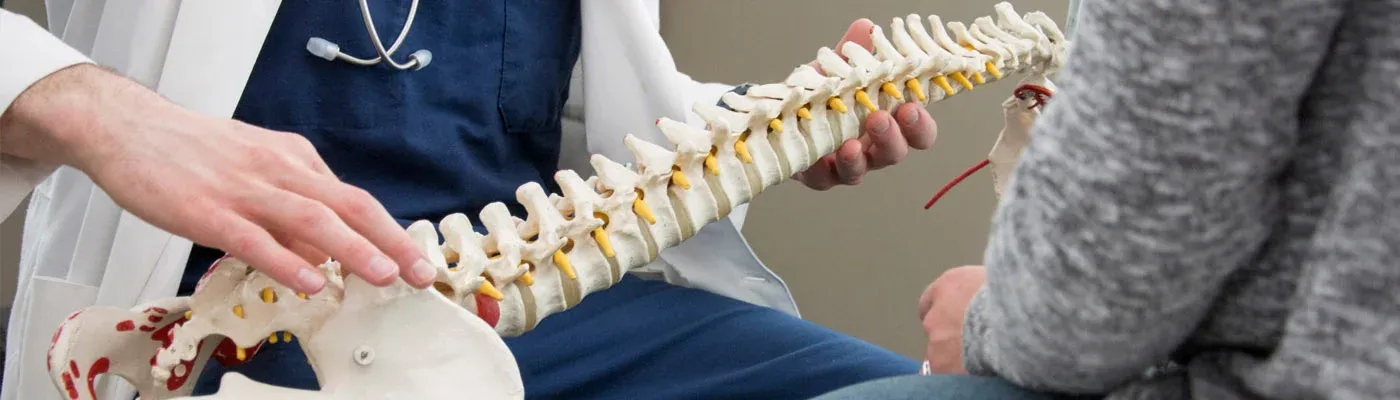
Herniated Disc Recovery: Week-by-Week Timeline (2026)
More in Orthopedics
Bursitis Treatment Dubai: Causes & Relief (2026)
Read More
Whiplash Injury Treatment Dubai: Guide (2026)
Read More
Osteoarthritis vs Rheumatoid Arthritis Dubai (2026)
Read MoreShoulder Impingement Treatment Dubai (2026)
Read More
Sciatica Causes & Symptoms in Dubai (2026)
Read MoreGym Injuries Dubai: Prevention & Recovery (2026)
Read More© 2026 Doctors Clinic Diagnostic Center (DCDC), Dubai Healthcare City. Originally published at https://doctorsclinicdubai.ae/blog/bone-fracture-healing-recovery-timeline. All rights reserved. Unauthorized reproduction is prohibited.