Key Takeaways
- An orthopedic consultation for flat feet at DCDC starts from AED 250, and most patients are managed without surgery
- Custom orthotics cost AED 500-2,000 per pair in Dubai, off-the-shelf insoles AED 100-500, and physiotherapy starts from AED 250 per session
- Flexible flat feet are common and often painless; rigid or painful flat feet need a proper assessment
- Weight-bearing X-ray is the standard test; MRI is only needed for suspected tendon or ligament damage
- Surgery (AED 15,000-40,000) is rare and reserved for failed conservative care
- Most children outgrow flexible flat feet; treatment is for symptomatic cases
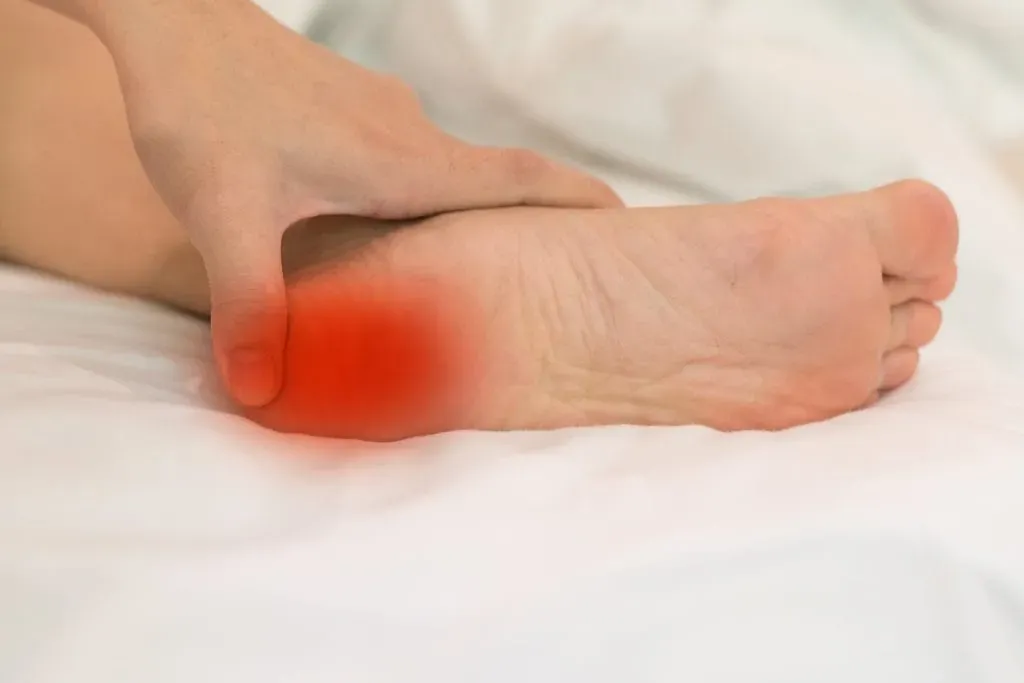
Flat feet, known medically as pes planus, affect an estimated one in five adults and a large share of young children, and most people with them never need more than good shoes. When the arch collapses and starts to cause heel, arch, ankle or knee pain, though, the question becomes what treatment costs. In Dubai, an orthopedic consultation at DCDC starts from AED 250, and most people with flat feet are managed without surgery for a total outlay of a few hundred to a couple of thousand dirhams.
This guide leads with the numbers: a Dubai price table covering assessment, imaging, insoles, custom orthotics, physiotherapy and surgery. It then explains the two main types of flat feet, how the condition is diagnosed, how each treatment option compares, how children differ from adults, what to expect at DCDC and how insurance fits in. It is written by an orthopedic surgeon so that you can decide what you actually need before you spend money.

Flat Feet Treatment Cost in Dubai — Quick Overview
Cost depends mainly on how complex the problem is. A painless flexible flat foot may need only a consultation and a good pair of shoes, while a painful, stiff or progressive deformity may need imaging, custom orthotics and a supervised rehabilitation course. The table below shows what DCDC charges for the services most patients use, alongside typical ranges across Dubai clinics.
| Treatment / Service | Cost Range | Notes |
|---|---|---|
| Orthopedic consultation at DCDC | From AED 250 | Foot examination, gait and arch assessment, and a written treatment plan |
| Weight-bearing foot X-ray | On-site digital X-ray; price confirmed at booking | Standing views show arch height and alignment; same-day report |
| MRI of foot or ankle (complex cases only) | From AED 900 | Only when tendon or ligament damage is suspected |
| Off-the-shelf insoles | AED 100-500 | Pharmacy or sports-store arch supports; suitable for mild, flexible cases |
| Custom orthotics (per pair) | AED 500-2,000 (Dubai market) | Made from a scan or mould of your foot; usually includes fitting |
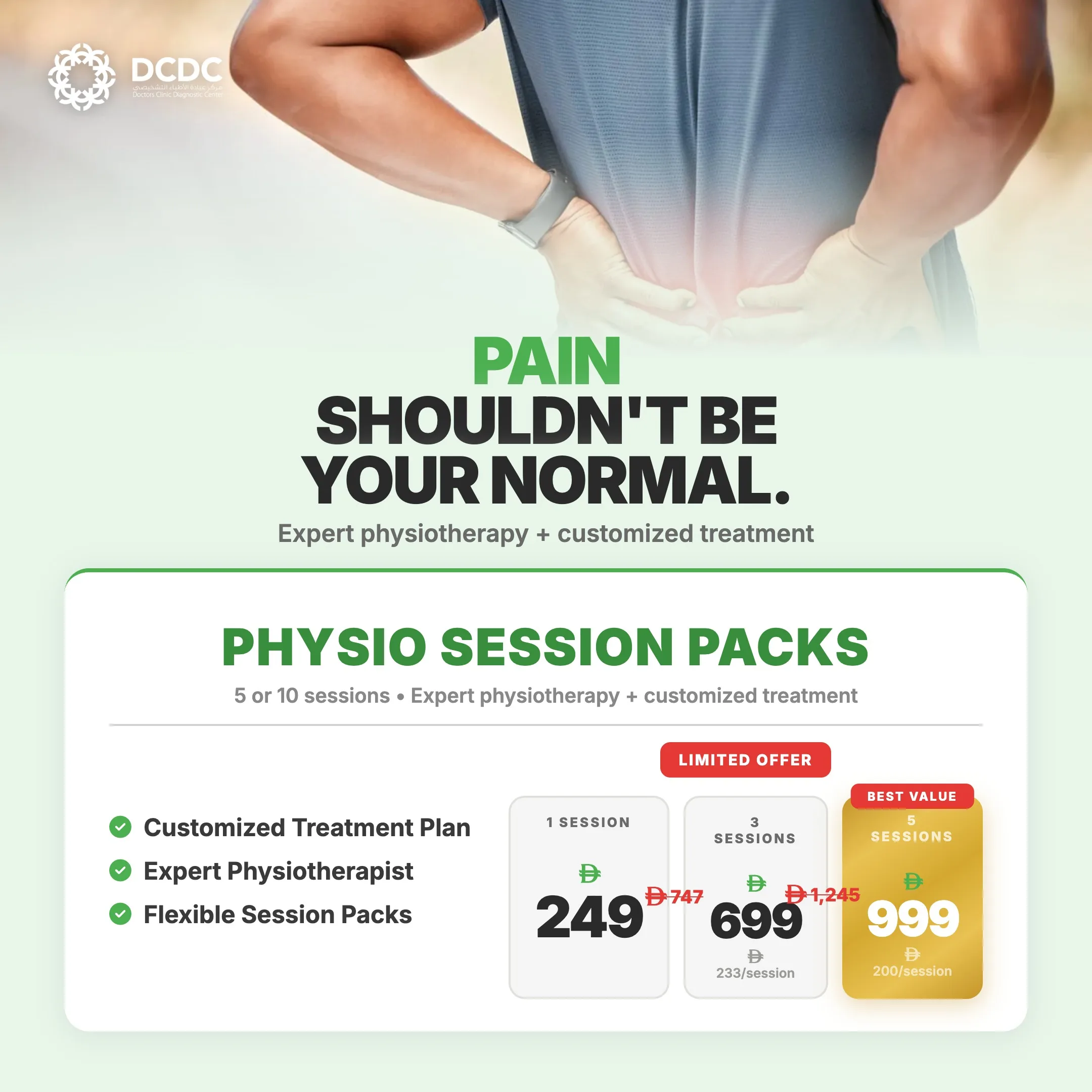
| Physiotherapy session at DCDC | From AED 250 | Dubai market range is AED 250-600 per session; courses typically run 6-12 sessions |
| Surgery (rare) | AED 15,000-40,000 (Dubai market) | Reserved for painful, rigid or progressive deformity after conservative care fails |
Estimated flat feet treatment costs in Dubai (2026). Prices are indicative and confirmed at your visit.
Treatment totals vary widely. A typical conservative pathway, a consultation, an X-ray, one pair of custom orthotics and a short physiotherapy course, usually lands between AED 2,000 and AED 6,000 in total. Surgery is a far larger commitment and is only discussed after months of structured non-surgical care. For a wider view of orthopedic fees, see our guide to orthopedic consultation cost in Dubai.
What Are Flat Feet?
A normal foot has an arch along the inner side that lifts the midfoot off the ground when you stand. In flat feet the arch is lowered or absent, so most or all of the sole touches the floor and the heel often tilts outward. Doctors group flat feet into two broad types, and the difference matters because it drives both treatment and cost.
Flexible Flat Feet
Flexible flat feet are by far the most common type. The arch is visible when you sit or stand on tiptoe but flattens when you put weight through the foot. Most flexible flat feet are painless, run in families and cause no problems for life. When they do hurt, it is usually from fatigue of the muscles and ligaments that work harder to support the arch, particularly after long days on your feet, running or standing on hard Dubai mall floors. This type responds well to exercises, supportive footwear and, where needed, orthotics.
Rigid Flat Feet
In rigid flat feet the arch stays flat whether you stand, sit or rise onto your toes, and the foot feels stiff. This pattern can come from a congenital bone connection (tarsal coalition), arthritis, past injury or long-standing tendon failure. Rigid flat feet are more likely to be painful and more likely to need imaging and specialist input. Adults can also develop an acquired flat foot when the posterior tibial tendon, the main dynamic support of the arch, weakens or tears. This usually affects one foot, develops gradually in middle age and tends to progress without treatment.
Signs You Need Treatment
Having flat feet is not an illness. Treatment is worthwhile when the shape of your foot starts causing symptoms or functional limits. Consider an assessment if you notice any of the following.
- Persistent arch or heel pain: aching along the inside of the foot or under the heel that returns after walking or standing, often overlapping with plantar fasciitis (see our plantar fasciitis treatment guide)
- Swelling along the inner ankle: a sign the posterior tibial tendon may be inflamed or overloaded
- Ankle that rolls inward: the heel tilts outward and the ankle looks collapsed when viewed from behind
- Recurring sprains or instability: flat feet can contribute to repeated twisting injuries, as covered in our ankle sprain guide
- Knee, hip or lower back pain: a collapsing arch changes how force travels up the leg, which can add to problems described in our knee pain causes article
- Fatigue and shoe wear: tired feet by midday or shoes worn down on the inner edge
- Change over time: an arch that was once normal and has become flatter, or a foot that has become painful or stiff
- A child who avoids activity: complaints of sore legs, frequent tripping or reluctance to join in sport
If pain is sharp, sudden or follows an injury, or if your foot has changed shape quickly, do not wait. Early review of tendon problems is much easier and cheaper to treat than late-stage deformity.
How Flat Feet Are Diagnosed
A proper flat feet diagnosis combines hands-on examination with targeted imaging. Most people do not need advanced scans, which keeps costs down.
Physical Examination
The orthopedic surgeon looks at your feet standing, sitting and walking. Key checks include whether the arch rebuilds when you rise onto your toes (flexible versus rigid), how far the heel tilts outward when viewed from behind, whether you can perform a single-leg heel raise (a test of posterior tibial tendon strength), calf tightness, joint movement and any tender spots. Your shoes are also reviewed, because wear patterns reveal how you load the foot. This part of the visit is covered by the consultation fee, which starts from AED 250 at DCDC.
X-Ray and Imaging
Weight-bearing X-rays, taken while you stand, are the standard imaging for suspected structural flat feet. They allow measurement of arch height and the alignment of the heel, midfoot and forefoot, and they can reveal arthritis or a bone coalition. A 2023 narrative review of adult acquired flatfoot imaging describes weight-bearing radiographs as the gold standard for diagnosis. MRI is not routinely needed; it is reserved for suspected tendon tears or spring ligament injury, while ultrasound can assess the tendon in real time. DCDC has digital X-ray and MRI on site, so these steps can happen in the same building, often on the same day.
Treatment Options Compared
Evidence for flat feet treatment is honest but modest. A 2021 systematic review of foot orthoses in adults found that the quality of studies was low, which is why a good clinician selects treatment according to your symptoms, not the shape of your arch alone. The table compares the main options.
| Option | Typical Cost in Dubai | Best For | Limits |
|---|---|---|---|
| Supportive footwear and off-the-shelf insoles | AED 100-500 | Mild, flexible flat feet with occasional fatigue | Generic fit; may not control heel tilt |
| Custom orthotics | AED 500-2,000 per pair | Painful flexible flat feet, heel or arch pain, early tendon strain | Needs replacement every 1-3 years; works best combined with exercises |
| Physiotherapy and exercises | From AED 250 per session (market AED 250-600) | Weak foot and calf muscles, tendon overload, gait faults | Needs commitment to a home programme |
| Footwear changes and activity pacing | Cost of shoes | All patients | Effect depends on consistency |
| Surgery | AED 15,000-40,000 | Rigid, severely painful or progressive deformity after failed conservative care | Longer recovery; rare |
Flat feet treatment options compared (indicative Dubai prices)
Custom Orthotics
Custom orthotics are shaped to your foot from a scan or mould. They support the arch, hold the heel closer to neutral and spread pressure more evenly. In Dubai, custom orthotics cost AED 500-2,000 per pair, depending on materials, whether the lab is local or overseas, and the number of review visits. Off-the-shelf insoles cost AED 100-500 and are a reasonable first step for mild cases. Be aware that research is mixed. A 2021 systematic review concluded that evidence for orthoses in adult flatfoot is limited and called for better trials, but orthotics remain a widely used, low-risk way to ease pain while strength is rebuilt. If you search for custom orthotics Dubai cost online, expect a quote that includes assessment, scanning and fitting; ask what is included before paying.
Physiotherapy and Exercises
Pes planus exercises target the muscles that hold the arch up and the calf that pulls on it. Physiotherapy sessions at DCDC start from AED 250, and a typical course runs six to twelve sessions with a home routine in between. Common exercises include:
- Short foot exercise: drawing the ball of the foot toward the heel without curling the toes, to wake up the small arch muscles
- Towel scrunches and marble pickups: toe flexor strengthening
- Heel raises: double-leg progressing to single-leg, to train the posterior tibial tendon and calf
- Calf stretching: tight calves increase pressure on a flattened arch
- Single-leg balance: improves control through the foot and ankle
- Gait retraining: adjusting how the foot lands and rolls during walking or running
Exercise rarely creates a high arch, but it can reduce pain and improve function, which is the real goal. For related guidance on heel pain rehabilitation, see our article on plantar fasciitis physiotherapy.
Footwear Modifications
Shoes are the cheapest part of flat feet pain relief. Look for a firm heel counter, a midsole that resists twisting, a gentle arch contour and room for an orthotic. Avoid flat, flimsy sandals and worn-out trainers for long walks or workouts. Rotate shoes, replace running shoes after roughly 600-800 km and try to limit barefoot time on hard tile or marble floors if it brings on pain. Weight management also helps, because extra load flattens the arch further.
Surgery (When Conservative Care Fails)
Surgery is uncommon and is considered only when pain persists despite several months of orthotics, bracing, physiotherapy and footwear changes, or when a deformity is clearly progressing. Procedures range from tendon reconstruction and heel bone realignment (osteotomy) to joint fusion for stiff, arthritic feet. Prices in Dubai generally fall between AED 15,000 and AED 40,000 depending on the procedure, hospital, implants and length of stay. Recovery involves weeks off weight-bearing followed by months of rehabilitation. The consultation will go through risks, alternatives and the likely benefit for your foot.
Flat Feet in Children vs Adults
Nearly all babies and toddlers look flat-footed because their arches have not yet formed and their feet are padded with fat. Most arches develop naturally between ages 3 and 10, and many children with flexible flat feet never have symptoms. Flat feet in children in Dubai are therefore usually watched rather than treated.
| Feature | Children | Adults |
|---|---|---|
| Typical type | Flexible, often outgrown | Flexible persisting, or acquired from tendon failure |
| Main concern | Pain, fatigue, or a rigid foot | Pain, progressive collapse, arthritis |
| First-line care | Observation, supportive shoes, activity and exercise | Orthotics, physiotherapy, footwear |
| Orthoses | Considered for painful cases | Common; evidence limited |
| Imaging | Only if stiff or painful | Weight-bearing X-ray; MRI selectively |
| Surgery | Very rare | Rare, for failed conservative care |
Parents should seek an assessment if a child complains of foot or leg pain, walks awkwardly, has a stiff foot that does not form an arch on tiptoe, or has a very flat foot on one side only. A 2023 review of children's foot orthoses found benefit in several trials but noted a high risk of bias, so treatment is generally reserved for symptomatic children. Gentle activities such as barefoot play on soft surfaces, climbing and swimming are encouraged.
Book an Orthopedic Consultation for Flat Feet at DCDC
Rated 4.8/5 from 1,000+ Google reviews. Orthopedic assessment from AED 250 with on-site X-ray, MRI and physiotherapy in Dubai Healthcare City. Book an orthopedic consultation or message us on WhatsApp.
Direct billing with 20+ insurance partners
What to Expect at DCDC
DCDC is a one-stop diagnostic center in Building 64, Block A, Al Razi Medical Complex, Dubai Healthcare City. Imaging, laboratory services and specialists work under one roof, so you do not need to travel between facilities. Here is how a typical flat feet visit runs.
- Consultation with Dr. Mersad Moosavi: an orthopedic surgeon with 14+ years of experience, trained at Tehran University of Medical Sciences, who reviews your history, examines your feet standing and walking and discusses goals
- Same-visit imaging if needed: weight-bearing digital X-ray on site; MRI from AED 900 only when tendon or ligament damage is suspected
- A clear plan with costs: you leave knowing which treatments are recommended, in what order and what each will cost
- On-site physiotherapy: sessions from AED 250 with exercises and gait correction
- Orthotic guidance: advice on whether you need off-the-shelf insoles or custom orthotics and how to obtain them
- Convenience: extended opening hours and free parking
Dr. Moosavi also has 20+ international publications and takes a conservative-first approach, recommending surgery only when it will clearly help. Patients rate DCDC 4.8/5 across more than 1,000 Google reviews.
Does Insurance Cover Flat Feet Treatment?
Coverage varies by plan. Most Dubai policies cover the orthopedic consultation, diagnostic X-rays and often MRI when there is a clinical indication. Physiotherapy is commonly covered up to a set number of sessions, usually with a referral and pre-approval. Orthotics are the least predictable item: some plans contribute partially, while many treat them as an exclusion. Surgery typically needs pre-authorisation and is assessed on medical necessity. DCDC has direct billing with 20+ insurance partners, so the team can check your benefits before you commit. Bring your insurance card and Emirates ID, and ask about co-payments and session limits.
Related Services at DCDC
Expert care and advanced diagnostics at Dubai Healthcare City
Frequently Asked Questions
Treat the Symptoms, Not Just the Arch
Flat feet are common, and for most people the cost of dealing with them is modest. The key is matching treatment to symptoms: painless flexible feet need little more than good shoes, while pain, swelling or a changing arch deserves a proper assessment. Starting with a consultation from AED 250 lets you avoid unnecessary orthotics or scans and gives you a clear sequence of steps.
Conservative care, made up of the right footwear, targeted exercises, physiotherapy and, where justified, custom orthotics, resolves symptoms for the large majority of patients. Surgery stays a last resort. If foot pain is limiting your day, book an orthopedic consultation at DCDC and get a plan with costs spelled out before you begin.
Sources & References
This article references the following sources:
- PubMed — Foot orthoses for adults with flatfoot: a systematic review (2021)
- PubMed — Molina-García et al., Efficacy of foot orthoses in paediatric flexible flatfoot: systematic review (Children, 2023)
- PubMed — Adult Acquired Flatfoot Deformity: A Narrative Review about Imaging Findings (Diagnostics, 2023)
- PubMed — Systematic review on the use of foot orthosis in symptomatic pes planus
This information is educational and does not replace individual medical advice. See our editorial policy for more information.

Written by
Dr. Mersad Moosavi
Orthopedic Surgery
MD, Orthopedic Surgery
Dr. Mersad Moosavi is an Orthopedic Surgeon at Doctors Clinic Diagnostic Center (DCDC) in Dubai Healthcare City, with 14+ years of experience and 20+ international publications on spine surgery. Trained at Tehran University of Medical Sciences, he takes a conservative-first approach to foot, joint and spine conditions.
Related Articles

Plantar Fasciitis Treatment
Joint Pain Treatment
Knee Pain Causes
Ankle Sprain Treatment
Orthopedic Consultation Cost
More in Orthopedics
Morning Joint Stiffness: Causes & Help in Dubai (2026)
Read MoreBone Fracture Recovery Timeline Dubai (2026)
Read MoreBursitis Treatment Dubai: Causes & Relief (2026)
Read More
Whiplash Injury Treatment Dubai: Guide (2026)
Read MoreOsteoarthritis vs Rheumatoid Arthritis Dubai (2026)
Read MoreShoulder Impingement Treatment Dubai (2026)
Read More© 2026 Doctors Clinic Diagnostic Center (DCDC), Dubai Healthcare City. Originally published at https://doctorsclinicdubai.ae/blog/flat-feet-treatment-cost-dubai. All rights reserved. Unauthorized reproduction is prohibited.