Key Takeaways
- A CT angiogram (CTA) in Dubai costs from AED 600–2,500, while a catheter-based (invasive) angiogram costs AED 8,000–20,000+ depending on the facility and whether intervention (stenting) is performed
- CT angiography is a non-invasive, 15-minute scan that uses contrast dye and multi-slice CT to create detailed 3D images of blood vessels — no catheter insertion or hospital admission required
- Catheter angiography is the gold standard for diagnosing and treating coronary artery disease, allowing doctors to see blockages in real time and place stents during the same procedure
- DCDC offers CT angiogram (coronary CTA, cerebral CTA, pulmonary CTA) on-site using a multi-slice CT scanner with subspecialist radiologist interpretation and results within 18–24 hours
- You may need an angiogram if you have chest pain, abnormal stress test results, known coronary artery disease, stroke symptoms, peripheral vascular disease, or a family history of heart disease
- Most insurance plans in Dubai cover diagnostic angiography when ordered by a cardiologist or physician — DCDC handles pre-authorisation with 20+ insurance partners
An angiogram is a diagnostic imaging test that visualises blood vessels to detect blockages, narrowing, aneurysms, or other vascular abnormalities. In Dubai, angiography is available in two main forms: CT angiography (CTA), a non-invasive scan, and catheter angiography, an invasive procedure performed in a hospital catheterisation laboratory. Whether your cardiologist has recommended a coronary angiogram for chest pain, or you need a cerebral or pulmonary angiogram, understanding the types, costs, and preparation is essential. At DCDC's diagnostic radiology department in Dubai Healthcare City, we perform CT angiography on-site with subspecialty radiologist interpretation.
This guide covers everything you need to know about angiograms in Dubai in 2026: the difference between CT and catheter angiography, what each type costs, who needs one, how to prepare, what the results mean, and where to get it done. Reviewed by Dr. Shahoo Mazhari, Cardiologist at DCDC Dubai Healthcare City.
What Is an Angiogram and How Does It Work?
An angiogram (also called angiography) is an imaging test that produces detailed pictures of blood vessels — arteries and veins — throughout the body. The test uses a contrast dye (typically iodine-based) to make blood vessels visible on imaging. Without contrast, blood vessels appear similar to surrounding soft tissue on standard scans. With contrast, they light up clearly, revealing blockages, narrowing (stenosis), bulging (aneurysms), malformations, and blood flow patterns.
Angiography can examine virtually any vascular territory in the body. The most common types are coronary angiography (heart arteries), cerebral angiography (brain arteries), pulmonary angiography (lung arteries), peripheral angiography (leg and arm arteries), and renal angiography (kidney arteries). The type recommended depends on your symptoms and the clinical question your doctor needs answered.
CT Angiogram vs Catheter Angiogram: Key Differences
The two primary angiography methods available in Dubai serve different clinical purposes. Understanding the differences helps you know what to expect and which option is appropriate for your situation.
| Feature | CT Angiogram (CTA) | Catheter Angiogram (Invasive) |
|---|---|---|
| How it works | CT scanner + IV contrast dye | Catheter threaded through artery + X-ray fluoroscopy |
| Invasiveness | Non-invasive (IV line only) | Invasive (arterial catheter, usually via wrist or groin) |
| Scan time | 10–15 minutes | 30–90 minutes |
| Setting | Outpatient radiology centre (e.g., DCDC) | Hospital catheterisation lab |
| Sedation | None required | Local anaesthesia + light sedation |
| Cost in Dubai | AED 600–2,500 | AED 8,000–20,000+ |
| Recovery | Immediate — drive home same day | 4–6 hours bed rest; overnight stay may be needed |
| Can treat blockages? | No — diagnostic only | Yes — stenting or balloon angioplasty during same procedure |
| Best for | Screening, ruling out disease, low-to-intermediate risk | Confirmed disease requiring intervention, high-risk patients |
CTA is the preferred first-line test for most patients. Catheter angiography is reserved for cases requiring intervention or when CTA results are inconclusive.
According to Dr. Shahoo Mazhari, Cardiologist at DCDC Dubai Healthcare City, "CT angiography has transformed how we evaluate chest pain and suspected coronary artery disease. For the majority of patients with low-to-intermediate risk, a CT coronary angiogram provides the diagnostic clarity we need without the risks and costs of an invasive catheter procedure. I reserve catheter angiography for patients who clearly need intervention or when the CT results warrant further investigation."
Angiogram Cost in Dubai: 2026 Price Guide
Angiography costs in Dubai vary significantly between CT angiography and catheter-based procedures, and between outpatient diagnostic centres and hospital catheterisation labs. The following table provides current pricing for all major angiogram types available in Dubai.
| Procedure | DCDC Price (AED) | Dubai Market Range (AED) | Setting |
|---|---|---|---|
| CT Coronary Angiogram (CTA) | From AED 600 | AED 1,000–2,500 | Outpatient radiology |
| CT Cerebral Angiogram | From AED 600 | AED 800–2,000 | Outpatient radiology |
| CT Pulmonary Angiogram (CTPA) | From AED 600 | AED 800–2,000 | Outpatient radiology |
| CT Peripheral Angiogram | From AED 600 | AED 1,000–2,500 | Outpatient radiology |
| Coronary CT Calcium Score | From AED 400 | AED 500–1,500 | Outpatient radiology |
| Catheter Coronary Angiogram (diagnostic) | N/A (hospital) | AED 8,000–15,000 | Hospital cath lab |
| Catheter Angiogram + Stenting (PCI) | N/A (hospital) | AED 25,000–80,000+ | Hospital cath lab |
DCDC offers CT angiography on-site at competitive pricing. Catheter angiography requires a hospital setting and is not performed at DCDC.
DCDC's CT angiogram pricing starts from AED 600 — significantly below the market average of AED 1,000–2,500. This includes the CT scan, IV contrast administration, and subspecialty radiologist interpretation with a detailed report delivered within 18–24 hours (same-day for urgent cases). For patients who already have a cardiac risk profile, read our guide on CT angiogram costs in Dubai for a more detailed pricing breakdown.
Types of Angiogram by Body Region
Angiography can target different vascular territories depending on the clinical question. Here are the most commonly performed types in Dubai.
Coronary Angiogram (Heart)
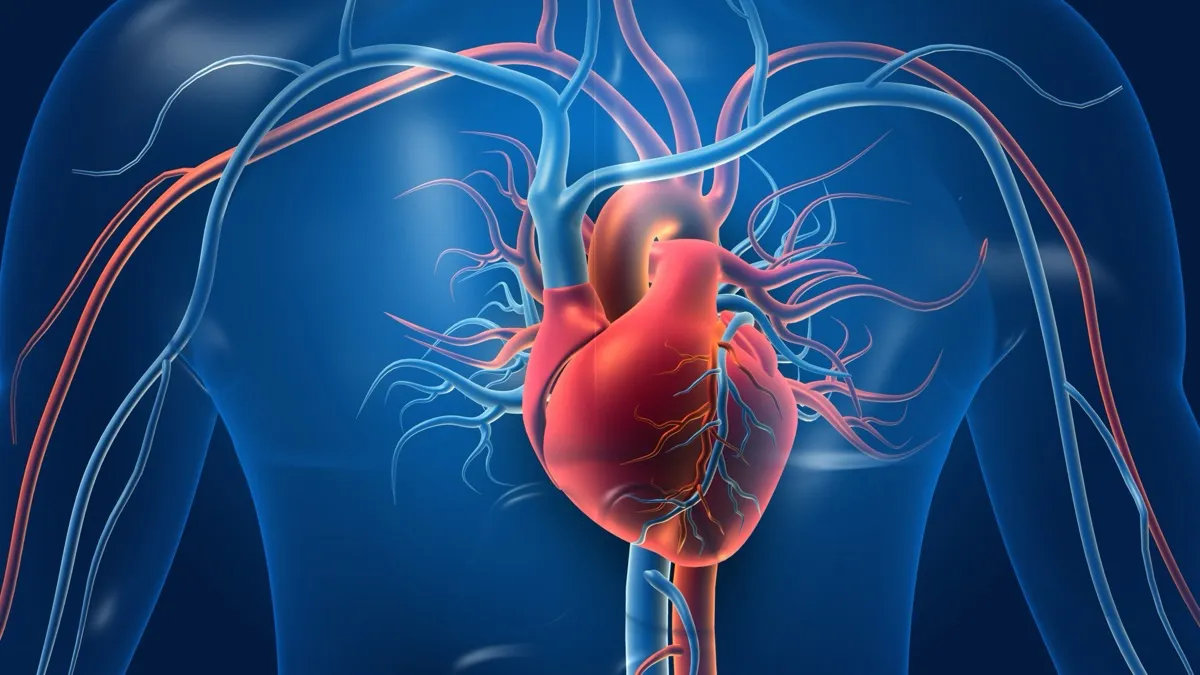
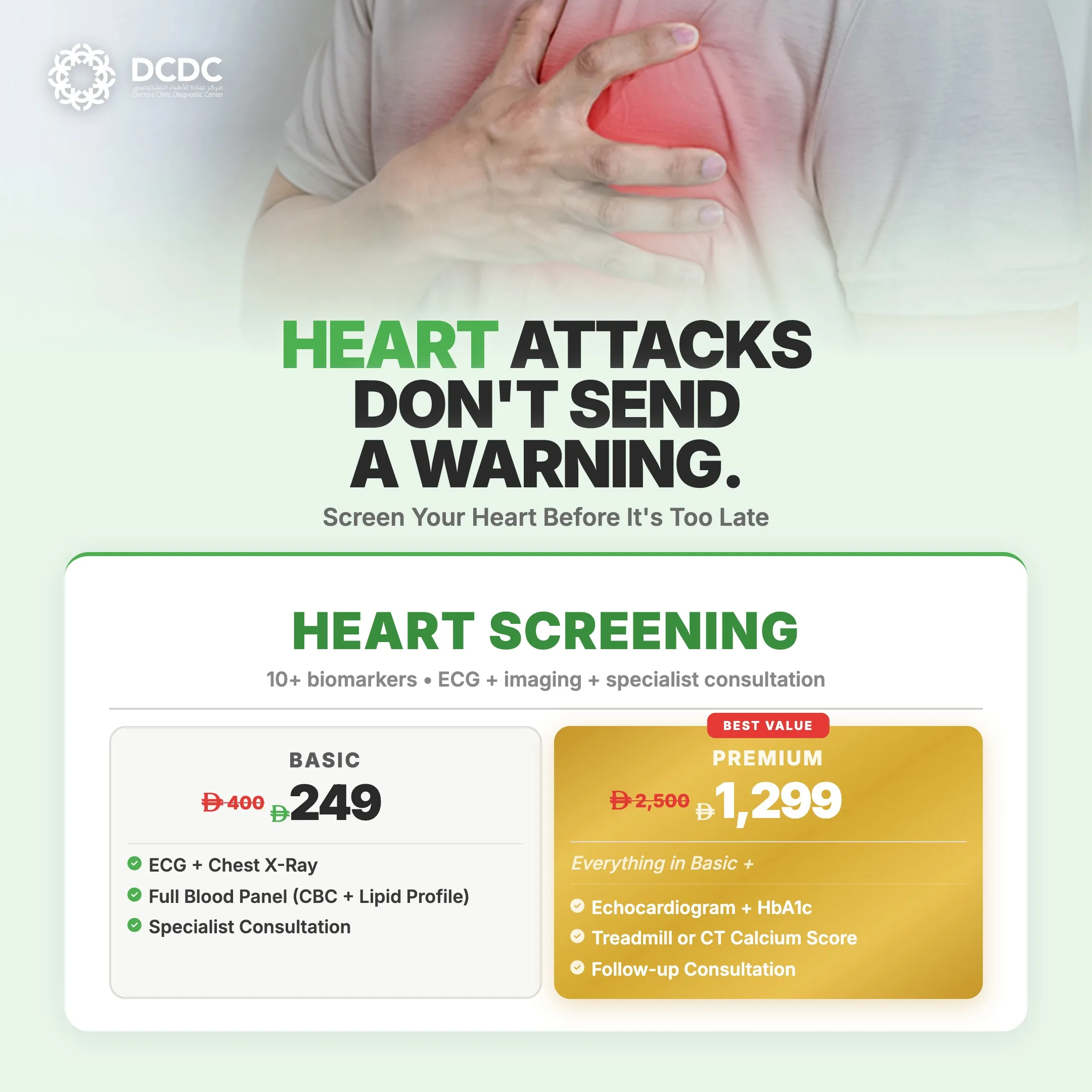
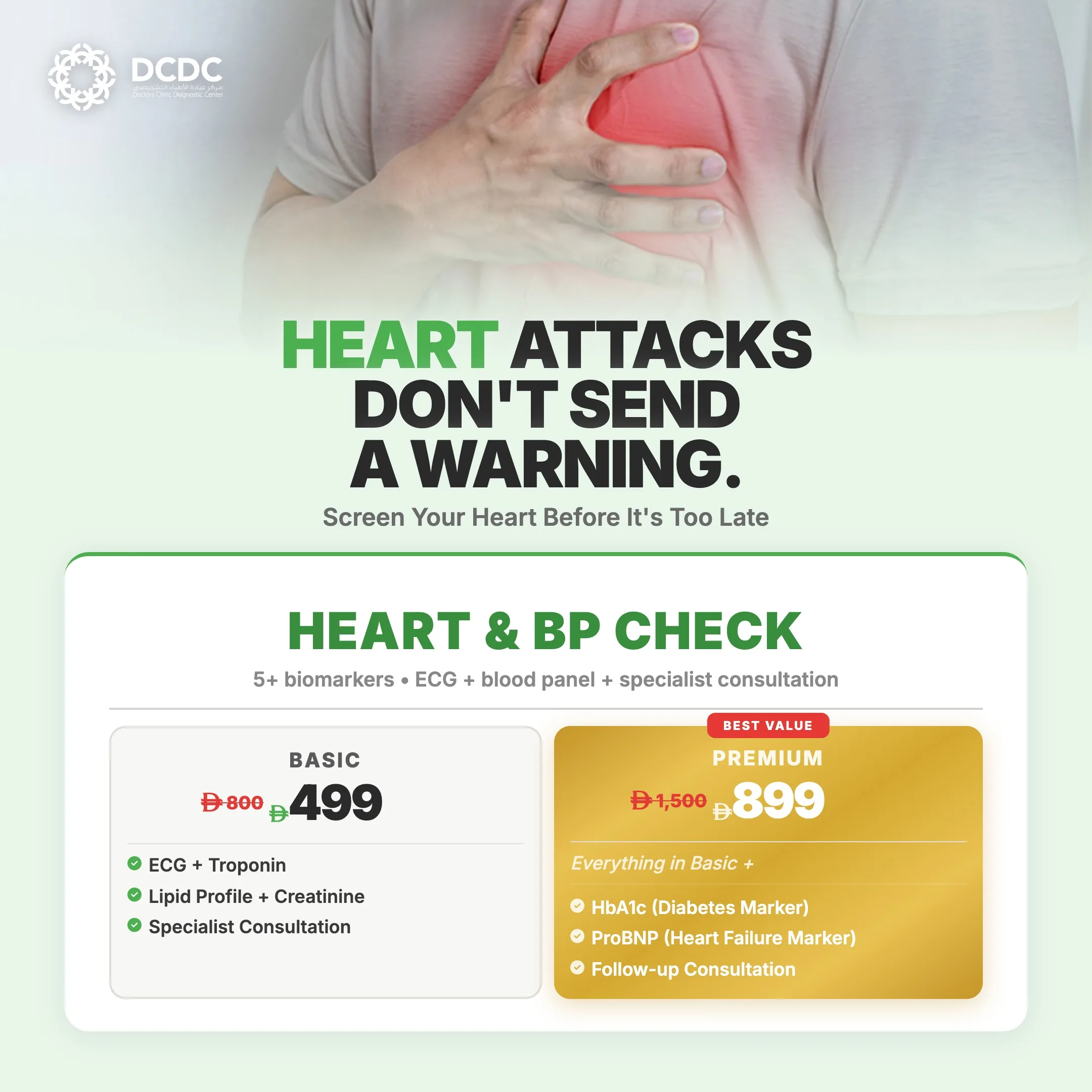
A coronary angiogram visualises the coronary arteries — the blood vessels that supply the heart muscle. It detects blockages, narrowing, and plaque buildup (atherosclerosis) that can cause chest pain (angina) or lead to a heart attack. CT coronary angiography is the first-line non-invasive option, while catheter coronary angiography is performed when intervention (stenting) is likely needed. For a comprehensive overview of cardiac diagnostics, see our cardiologist guide for Dubai.
Cerebral Angiogram (Brain)
A cerebral angiogram visualises the blood vessels supplying the brain, including the carotid and vertebral arteries and their intracranial branches. It is used to detect aneurysms, arteriovenous malformations (AVMs), carotid stenosis, and vasculitis. CT cerebral angiography is the standard screening tool, while catheter cerebral angiography is reserved for complex cases requiring detailed assessment or treatment.
Pulmonary Angiogram (Lungs)
A CT pulmonary angiogram (CTPA) is the gold standard for diagnosing pulmonary embolism (PE) — a blood clot in the lung arteries. It is a rapid, non-invasive scan that can be completed in minutes and is available 24/7 at most Dubai hospitals. CTPA is ordered urgently when a patient presents with sudden shortness of breath, chest pain, rapid heart rate, or unexplained hypoxia.
Peripheral Angiogram (Legs and Arms)
A peripheral angiogram examines blood vessels in the limbs, most commonly the leg arteries. It is used to diagnose peripheral artery disease (PAD) — a condition where atherosclerosis narrows the arteries supplying the legs, causing pain with walking (claudication), non-healing wounds, or critical limb ischaemia. CT peripheral angiography maps the entire arterial tree from the aorta to the feet.
Who Needs an Angiogram?
Your doctor may recommend an angiogram based on your symptoms, risk factors, and results from other cardiac or vascular tests. The following situations commonly lead to angiography referral.
- Chest pain (angina): New-onset chest pain, especially with exertion, or worsening chest pain in a patient with known heart disease. An abnormal stress test result often triggers angiography.
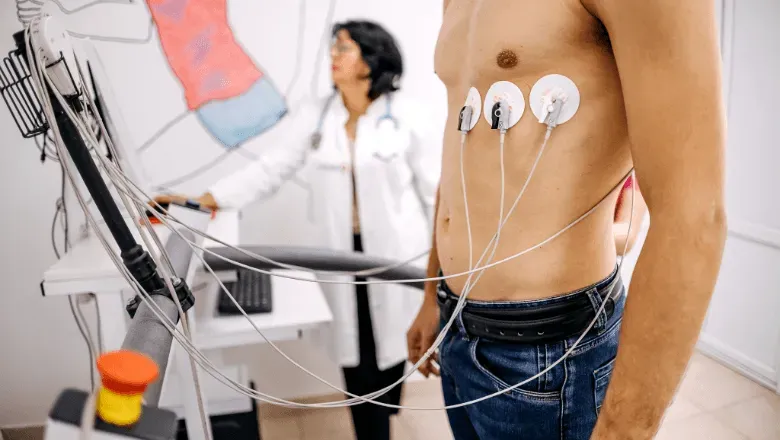
- Abnormal stress test: If a treadmill stress test or stress echocardiogram shows changes suggesting reduced blood flow to the heart muscle. For more on stress testing, see our stress test guide for Dubai.
- After a heart attack: To identify the blocked artery and assess the extent of coronary artery disease.
- Heart failure evaluation: To determine whether coronary artery disease is contributing to heart muscle weakness.
- Stroke or TIA: Cerebral angiography evaluates the carotid arteries and brain vessels for stenosis or aneurysms that may have caused or could cause a stroke.
- Suspected pulmonary embolism: Acute shortness of breath with risk factors for blood clots (recent surgery, immobilisation, long flights).
- Leg pain with walking: Intermittent claudication suggesting peripheral artery disease.
- Known high coronary calcium score: A high calcium score on a cardiac screening may prompt CT coronary angiography to assess the degree of blockage.
Need a CT Angiogram?
Book a CT angiogram at DCDC Dubai Healthcare City from AED 600. Multi-slice CT scanner, subspecialty radiologist interpretation, results within 18–24 hours.
Same-day appointments available. Direct billing with 20+ insurers. Call or WhatsApp.
How to Prepare for an Angiogram
Preparation depends on whether you are having a CT angiogram or a catheter angiogram. CT angiography requires minimal preparation, while catheter angiography involves more extensive pre-procedure steps.
Preparing for CT Angiogram at DCDC
- Fasting: Avoid eating for 4 hours before the scan. Water is allowed.
- Kidney function: A recent creatinine blood test may be required to confirm safe kidney function before contrast dye administration.
- Allergy history: Inform your doctor if you have a history of allergic reactions to contrast dye or iodine. Pre-medication with antihistamines and steroids may be given.
- Medications: Bring a list of current medications. Metformin may need to be paused for 48 hours after contrast. Beta-blockers may be given before a coronary CTA to slow the heart rate for optimal image quality. For detailed preparation, read our CT angiogram preparation guide.
- Clothing: Wear comfortable clothing. You will change into a gown for the scan.
Understanding Your Angiogram Results
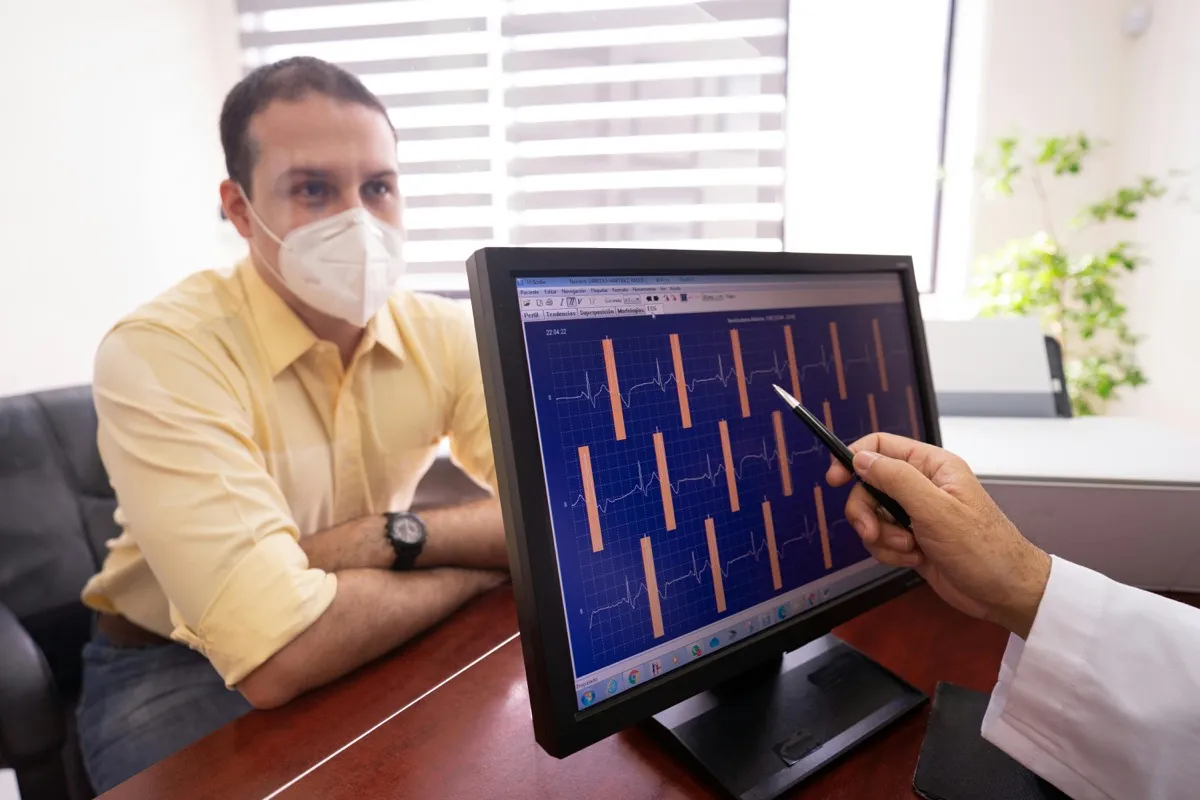
CT angiogram results are interpreted by a subspecialty radiologist at DCDC and delivered within 18–24 hours (same-day for urgent cases). The report describes the anatomy of your blood vessels, any narrowing or blockages, and the overall condition of the vascular territory examined.
For coronary CTA specifically, results are typically reported using a stenosis grading system: no stenosis (normal), minimal (less than 25%), mild (25–49%), moderate (50–69%), severe (70–99%), and total occlusion (100%). A finding of moderate or severe stenosis typically prompts referral to a cardiologist for further evaluation, which may include functional testing or catheter angiography.
A normal CT coronary angiogram in a patient with chest pain effectively rules out significant coronary artery disease and has a negative predictive value exceeding 99%. This means that if your CTA is normal, the chance of having a significant coronary blockage is less than 1% — making it an extremely reliable screening tool.
What to Expect at DCDC for Your CT Angiogram
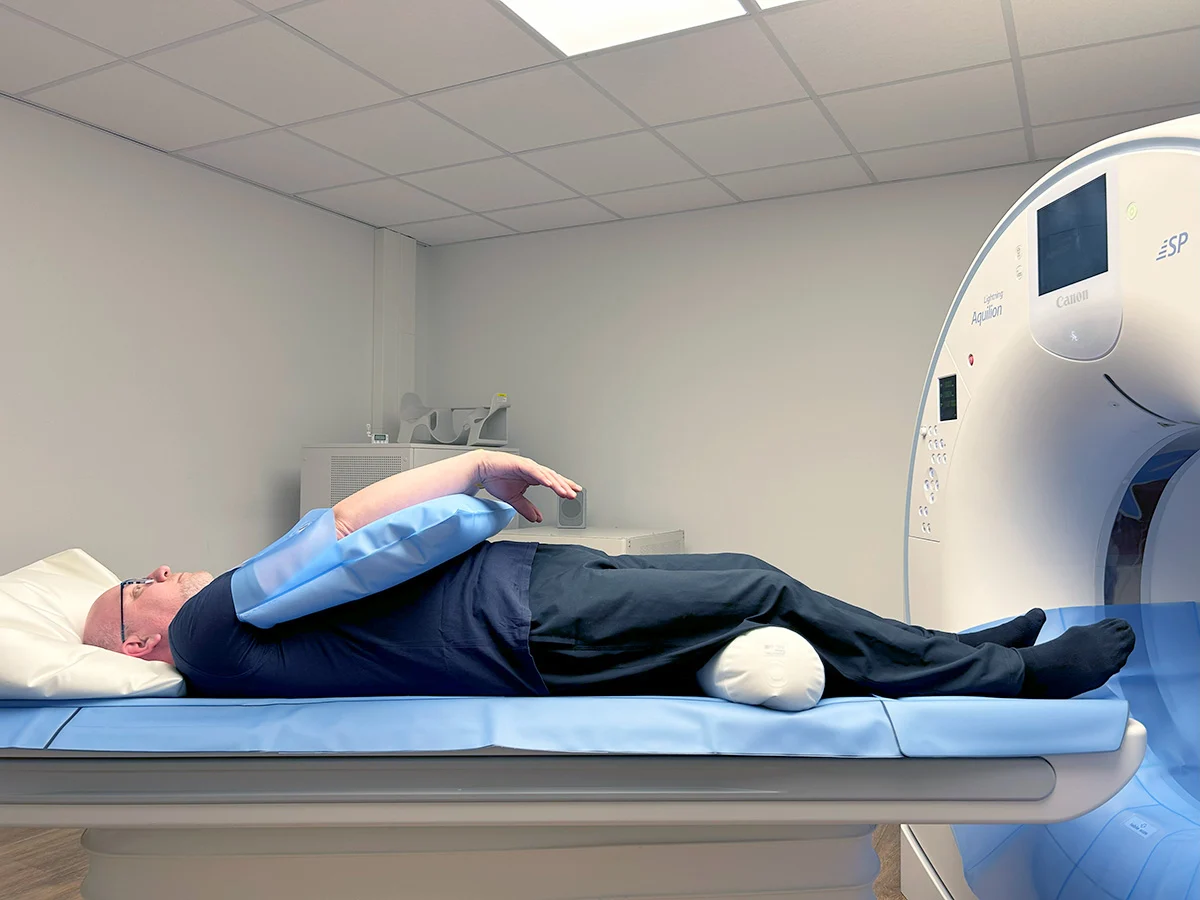
Getting a CT angiogram at DCDC Dubai Healthcare City is designed to be efficient and comfortable. DCDC's multi-slice CT scanner performs high-resolution vascular imaging with minimal radiation exposure.
- Step 1 — Arrival: Check in at reception with your Emirates ID, insurance card, and referral letter. Free parking is available on site.
- Step 2 — Pre-scan assessment: A technologist reviews your medical history, allergies, and kidney function. An IV line is placed for contrast dye administration.
- Step 3 — The scan: You lie on the CT table and the contrast dye is injected through your IV. The scan itself takes approximately 10–15 minutes. You may feel a warm flushing sensation when the contrast is injected — this is normal and passes within seconds.
- Step 4 — Post-scan: The IV is removed. Drink plenty of water for 24 hours to help your kidneys flush the contrast dye. You can drive and return to normal activities immediately.
- Step 5 — Results: A subspecialty radiologist interprets the images and generates a detailed report with 3D reconstructions within 18–24 hours. Results are delivered digitally.
With a 4.8/5 Google rating from over 1,000 reviews and an average wait time of 15 minutes, DCDC provides a streamlined CT angiography experience from check-in to results — at pricing that starts from AED 600, well below the Dubai market average.
Coronary Calcium Score: A Complementary Test
A coronary CT calcium score is a simpler, faster, and less expensive CT scan that measures the amount of calcified plaque in your coronary arteries. It does not require contrast dye and takes less than 5 minutes. The calcium score provides a number that correlates with your overall coronary artery disease burden: a score of 0 indicates no detectable calcified plaque, 1–100 is mild, 101–400 is moderate, and above 400 is severe. DCDC offers coronary calcium scoring from AED 400 as a standalone screening test.
A calcium score is particularly useful for patients at intermediate cardiovascular risk — those with some risk factors (age, family history, cholesterol) but no symptoms. If the calcium score is 0, the 10-year risk of a heart event is very low. If elevated, it provides motivation for aggressive risk factor management and may prompt a follow-up CT coronary angiogram with contrast to assess the degree of any blockages.
Frequently Asked Questions About Angiograms in Dubai
Below are answers to the most commonly asked questions about angiogram procedures, costs, and preparation in Dubai.
Related Services at DCDC
Expert care and advanced diagnostics at Dubai Healthcare City
Frequently Asked Questions
Final Thoughts
Angiography is a critical diagnostic tool for evaluating blood vessel health throughout the body. Whether you need a coronary angiogram for chest pain, a cerebral angiogram after a stroke, or a pulmonary angiogram for suspected blood clots, the type and urgency of the procedure depend on your specific clinical situation. CT angiography has made vascular assessment faster, safer, and more accessible — providing detailed 3D vessel imaging without the risks and costs of catheter-based procedures.
At DCDC Dubai Healthcare City, our multi-slice CT scanner performs coronary, cerebral, pulmonary, and peripheral CT angiography with subspecialty radiologist interpretation — all from AED 600. With same-day appointments, results within 18–24 hours, and direct billing with 20+ insurers, DCDC makes vascular diagnostics efficient and affordable. If your doctor has recommended an angiogram or you have risk factors that warrant screening, contact us to book your appointment.
Sources & References
This article was reviewed by our medical team and references the following sources:
- American Heart Association — Cardiac Catheterization and Angiography
- Mayo Clinic — CT Coronary Angiogram
- NHS — Coronary Angiography
- Cleveland Clinic — Angiography: Types, Procedure & Risks
- European Society of Cardiology — Chronic Coronary Syndromes Guidelines
Medical content on this site is reviewed by DHA-licensed physicians. See our editorial policy for more information.

Written by
Dr. Shahoo Mazhari
Cardiologist
MD, Cardiology
Dr. Shahoo Mazhari is a Cardiologist at Doctors Clinic Diagnostic Center (DCDC) in Dubai Healthcare City.
Related Articles
CT Angiogram Cost Dubai: Complete Guide (2026)
Cardiologist Dubai: Complete Guide (2026)
Stress Test Dubai: Cost & Guide (2026)
How to Prepare for a CT Angiogram (2026)
Heart Disease Symptoms Dubai: Warning Signs (2026)
More in Cardiology

Holter Monitor Prep Dubai: What to Expect (2026)
Read More
When to See a Cardiologist Dubai (2026)
Read More
Echo Test Preparation Dubai: What to Expect (2026)
Read MoreHeart Attack vs Panic Attack Dubai: Signs (2026)
Read MoreHeart Failure Warning Signs Dubai (2026)
Read MoreStress Test Cost Dubai: AED 800–5,000 (2026)
Read More© 2026 Doctors Clinic Diagnostic Center (DCDC), Dubai Healthcare City. Originally published at https://doctorsclinicdubai.ae/blog/angiogram-dubai-guide. All rights reserved. Unauthorized reproduction is prohibited.