النقاط الرئيسية
- الألم الشديد في الخاصرة الممتد إلى المنطقة الأربية هو العرض الرئيسي لحصى الكلى، ويوصف كثيراً بأنه من أشد الآلام، ويأتي عادةً على شكل موجات (المغص الكلوي)
- يواجه سكان دبي خطراً أعلى بكثير للإصابة بحصى الكلى بسبب الحرارة الصيفية الشديدة التي تتجاوز 45 درجة مئوية مما يُسبب جفافاً مزمناً وبولاً مركّزاً
- الدم في البول (البيلة الدموية) والألم عند التبول والغثيان والقيء أعراض شائعة لحصى الكلى تستلزم تقييماً طبياً سريعاً
- الحمى مع ألم حصى الكلى حالة طارئة طبية — الحصوة المنسدة المصابة بعدوى قد تهدد الحياة خلال ساعات وتستلزم علاجاً فورياً
- يُصاب نحو 10% من سكان الإمارات بحصى الكلى مع ارتفاع بنسبة 40% في الحالات خلال أشهر الصيف مقارنة بالمواسم الأبرد
- الحصوات الصغيرة دون 5 ملم تخرج من تلقاء نفسها في 80-90% من الحالات، لكن الحصوات فوق 10 ملم نادراً ما تخرج دون تدخل كتفتيت الحصوات بالموجات التصادمية أو تنظير الحالب
- التصوير المقطعي بدون تباين هو الأداة التشخيصية المعيار الذهبي لحصى الكلى بحساسية 97%، وتقدم DCDC تصويراً مقطعياً منخفض الجرعة في اليوم ذاته في مدينة دبي الطبية
- دون اتخاذ تدابير وقائية، سيُصاب نحو 50% من المرضى بحصوة كلوية أخرى خلال 5-10 سنوات، مما يجعل التعرف المبكر على الأعراض والمتابعة أمراً ضرورياً
يضرب ألم حصى الكلى فجأةً وقد يكون شلّالاً مُعيقاً تماماً. إن كنتَ تعاني من ألم حاد في الخاصرة، أو دم في البول، أو صعوبة في التبول، فقد تكون أمام حصوة كلوية — وهي حالة تؤثر على نحو 10% من سكان الإمارات وترتفع بنسبة 40% خلال أشهر صيف دبي اللاهبة. التعرف المبكر على علامات التحذير أمرٌ بالغ الأهمية: يساعدك على الحصول على العلاج المناسب أسرع، ويمنع مضاعفات خطيرة كعدوى الكلى أو تلفها الدائم. في مركز أطباء العيادات للتشخيص (DCDC) في مدينة دبي الطبية، تُقدّم خدمة تشخيص وعلاج حصى الكلى لدينا تصويراً في اليوم ذاته بالتصوير المقطعي منخفض الجرعة والموجات الفوق صوتية في الموقع، وفحوصات مختبرية على الفور، وتقييماً سريرياً متخصصاً — حتى لا تضطر أبداً إلى الانتظار لمعرفة سبب ألمك.
يرشدك هذا الدليل الشامل عبر كل أعراض حصى الكلى التي تحتاج معرفتها، من أولى العلامات الخفية إلى الإنذارات الحمراء التي تستوجب رعاية الطوارئ. ستتعلم أيضاً كيف تُشخَّص حصى الكلى، وما الذي تتوقعه عند موعدك، ولماذا مناخ دبي يجعلك أكثر عرضة للخطر. سواء أكانت هذه أولى الحصوات المشتبه بها أم لديك تاريخ من التكرار، سيساعدك هذا الدليل على اتخاذ الإجراء الصحيح في الوقت المناسب.
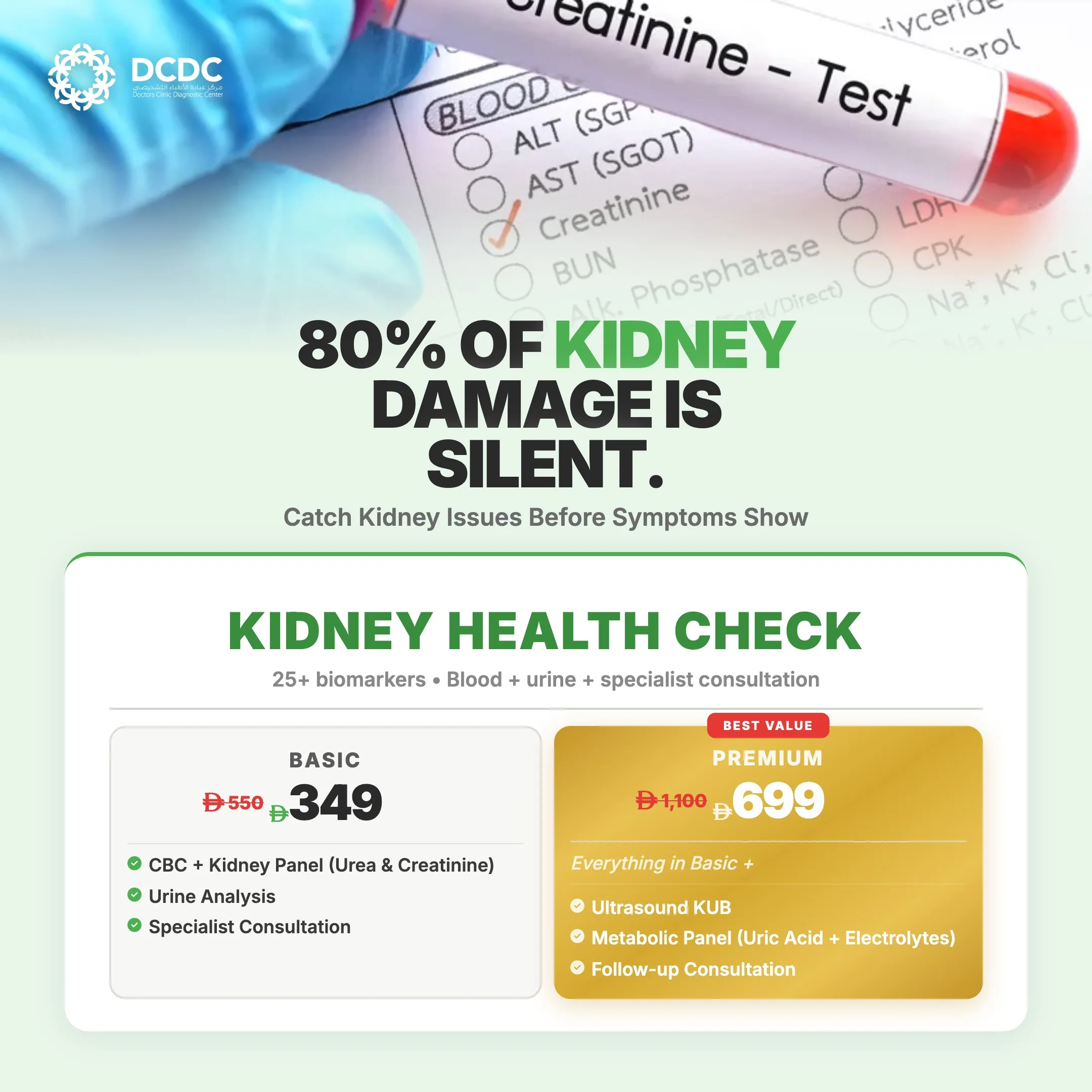


ما هي حصى الكلى؟
حصى الكلى (تُعرف طبياً بالتحصي الكلوي أو الحصيات الكلوية) رواسبُ صلبة من المعادن والأملاح تتبلور داخل الكلى حين يصبح البول مركّزاً بشكل مفرط. قد تكون بحجم حبة الرمل أو كرة الغولف، غير أن معظم الحصوات ذات الأهمية السريرية تتراوح بين 2 و10 ملليمترات. وبينما قد تمكث الحصوة الصغيرة في الكلى لأشهر دون أعراض، تبدأ المشكلة حين تنتقل إلى الحالب — الأنبوب الضيق الرابط بين الكلية والمثانة.
تتشكل حصى الكلى حين تتجاوز تركيزات المواد المُكوِّنة للبلورات في البول — كالكالسيوم والأكسالات وحمض البوليك والسيستين — قدرة البول على تخفيفها، فضلاً عن نقص المثبطات الطبيعية كالسيترات التي تمنع عادةً تكتل البلورات. الأنواع الأربعة الرئيسية هي: أكسالات الكالسيوم (70-80%)، وفوسفات الكالسيوم (10-15%)، وحمض البوليك (5-10%)، والأنواع الأندر كالستروفايت والسيستين. معرفة نوع حصوتك ضرورية للوقاية الفعّالة.
لماذا تشيع حصى الكلى أكثر في دبي؟
يُعدّ مناخ دبي المتطرف من أبرز عوامل الخطر البيئية لتكوين حصى الكلى على مستوى العالم. خلال أشهر الصيف من مايو حتى أكتوبر، تتجاوز درجات الحرارة بانتظام 45 درجة مئوية، مما يتسبب في فقدان الجسم لكميات كبيرة من السوائل عبر التعرق. حين لا يُعوَّض هذا الفقد بشكل كافٍ، يصبح البول مركّزاً مهيئاً لتبلور المعادن داخل الكلى.
يُضاف إلى المناخ عوامل نمط الحياة الشائعة بين سكان دبي كالنظام الغذائي الغني بالصوديوم، والإفراط في تناول البروتينات، والمشروبات السكرية، وأنماط الحياة الخاملة داخل الأماكن المكيّفة. يتعرض العمال في الخارج بشكل خاص لخطر مرتفع بسبب التعرض المطوّل للحرارة وصعوبة الحفاظ على الترطيب الكافي خلال يوم العمل.
قائمة فحص شاملة لأعراض حصى الكلى
تتوقف أعراض حصى الكلى على حجم الحصوة وموقعها وما إذا كانت تُسبب انسداداً أو عدوى. بعض الحصوات تظل صامتة تماماً، بينما تُسبب أخرى ألماً مفاجئاً شديداً. تغطي القائمة التالية الطيف الكامل للأعراض من أولى العلامات حتى الحالات الحادة.
الأعراض الرئيسية لحصى الكلى
- ألم شديد في الخاصرة (المغص الكلوي): ألم مفاجئ وحاد في جانب واحد من الظهر أو البطن، عادةً بين الأضلاع السفلية والورك. يأتي الألم على شكل موجات تستمر من 20 إلى 60 دقيقة
- ألم منتشر يتغير موقعه: مع انتقال الحصوة عبر الحالب، ينتقل الألم من الظهر إلى أسفل البطن أو المنطقة الأربية أو الفخذ الداخلي في الجانب المصاب. قد يصل الألم
- دم في البول (بيلة دموية): يظهر البول بلون وردي أو أحمر أو بني في حوالي 85% من حالات حصوات الكلى. تخدش الحصوة البطانة الرقيقة للمسالك البولية أثناء
- ألم أو حرقة أثناء التبول (عسر التبول): إحساس حاد ولاذع عند التبول، يكون أكثر وضوحاً عندما تصل الحصوة إلى الموضع الذي يلتقي فيه الحالب بالمثانة
- إلحاح بولي وتكرار التبول: شعور مستمر بالحاجة إلى التبول، مع إخراج كميات صغيرة فقط في الغالب. يحدث ذلك لأن الحصوة تهيّج جدار المثانة أو الجزء السفلي
- غثيان وقيء: تُحفّز شدة ألم المغص الكلوي استجابة انعكاسية عبر المسارات العصبية المشتركة بين الكلى والجهاز الهضمي. قد يكون الغثيان شديداً
- عدم القدرة على إيجاد وضعية مريحة: على عكس آلام البطن الناتجة عن أسباب أخرى كثيرة، يسبب ألم حصوات الكلى قلقاً شديداً وتململاً. غالباً ما يتحرك المرضى ذهاباً وإياباً ويغيّرون أوضاعهم باستمرار،
- بول عكر أو ذو رائحة كريهة: قد يشير البول العكر إلى وجود صديد (بيلة قيحية)، مما يدل على وجود التهاب في المسالك البولية مصاحب للحصوة
علامات تحذير مبكرة وخفية
لا تُعلن كل حصوة كلوية عن نفسها بألم درامي. يُعاني بعض المرضى من أعراض أخف يسهل إغفالها قبل نوبة المغص الكلوي الكاملة. التعرف المبكر على هذه العلامات قد يقود إلى تشخيص أسرع وعلاج أقل تدخلاً.
- ألم خفيف ومبهم في أسفل الظهر: انزعاج مستمر وخفيف في جانب واحد قد يُخلط بينه وبين شد عضلي أو وضعية جلوس خاطئة
- انزعاج خفيف أثناء التبول: إحساس خفيف بالحرقة أو ضغط بسيط يظهر ويختفي دون نمط واضح
- تغيرات طفيفة في لون البول: بول يبدو أغمق قليلاً أو بلون وردي باهت، خاصةً في الصباح الباكر عندما يكون أكثر تركيزاً
- انزعاج متقطع في البطن: نوبات قصيرة من التقلصات أو الانتفاخ في أسفل البطن تزول من تلقاء نفسها
- زيادة العطش وانخفاض كمية البول: قد يرسل جسمك إشارات تدل على الجفاف، الذي يُسهم في تكوّن الحصوات ويرافقها في الوقت ذاته
مقارنة شدة الأعراض: خفيفة ومتوسطة وشديدة
يساعدك فهم درجة شدة أعراضك على تحديد ما إذا كنت ستراقب الحالة في المنزل، أو ستحجز موعداً، أو ستتجه إلى قسم الطوارئ. يقارن الجدول التالي مستويات أعراض حصى الكلى عبر ثلاث درجات.
| فئة الأعراض | خفيفة (المراقبة / حجز موعد) | متوسطة (رؤية الطبيب خلال 24 ساعة) | شديدة (رعاية طارئة مطلوبة) |
|---|---|---|---|
| Pain Level | ألم خفيف في الظهر أو الجانب، يمكن السيطرة عليه بمسكنات الألم المتاحة دون وصفة طبية | ألم حاد متقطع، صعوبة في ممارسة الأنشطة اليومية، يتطلب مسكنات ألم أقوى | ألم مبرح لا يُحتمل؛ قيء ناتج عن شدة الألم؛ عدم القدرة على الجلوس أو الوقوف أو الاستلقاء بشكل مريح |
| تغيرات البول | بول أغمق قليلاً، انزعاج خفيف عرضي أثناء التبول | بول وردي أو أحمر فاتح مرئي، حاجة متكررة للتبول مع كميات صغيرة | بول أحمر داكن أو بني، جلطات دموية كبيرة، أو عدم القدرة الكاملة على التبول |
| أعراض جهازية | لا توجد أعراض أو غثيان خفيف | غثيان متوسط، قيء عرضي، إرهاق خفيف | قيء مستمر، حمى أعلى من 38 درجة مئوية، قشعريرة، تشوش ذهني، أو تسارع في ضربات القلب |
| Duration | تظهر الأعراض وتختفي، وتستمر لدقائق | نوبات ألم تستمر 30 دقيقة أو أكثر، وتتكرر عدة مرات في اليوم | ألم شديد مستمر يدوم لساعات دون أي تحسّن |
| الإجراء الموصى به | زيادة تناول السوائل، وحجز موعد مع طبيب عام خلال أيام قليلة | تواصل مع عيادتك للحصول على موعد في نفس اليوم أو اليوم التالي؛ قد يكون التصوير الطبي ضرورياً | توجّه إلى قسم الطوارئ فوراً أو اتصل بالإسعاف |
دليل مستوى خطورة أعراض حصوات الكلى — استخدمه للمساعدة في تحديد مدى إلحاحية وضعك
متى تزور الطبيب: الإشارات الحمراء وحالات الطوارئ
رغم أن كثيراً من حصى الكلى تمر بشكل طبيعي مع الترطيب الكافي وإدارة الألم، تشير بعض الأعراض إلى مضاعفات خطرة قد تتطلب رعاية طبية فورية. التأخر في هذه الحالات قد يؤدي إلى تلف دائم في الكلى أو عدوى مهددة للحياة.
اتجه فوراً إلى قسم الطوارئ إذا كان لديك
- حمّى مصحوبة بألم في الخاصرة: ارتفاع درجة الحرارة فوق 38 درجة مئوية مع ألم حصوات الكلى يُعدّ حالة طبية طارئة. يشير هذا المزيج إلى انسداد كلوي مصحوب بعدوى (انسداد
- عدم القدرة الكاملة على التبوّل: إذا لم تتمكن من إخراج أي بول على الإطلاق، فقد تكون الحصوة تسبب انسداداً ثنائياً كاملاً أو انسداداً في كلية وحيدة، مما يُعرّضك لخطر الفشل الكلوي الحاد
- قيء لا يمكن السيطرة عليه: يمنعك القيء المستمر من الحفاظ على ترطيب الجسم وتناول الأدوية الفموية، مما يُحدث حلقة مفرغة خطيرة تُفاقم الجفاف والمضاعفات المرتبطة بالحصوات
- ألم لا يُحتمل لا يستجيب للأدوية: الألم الذي لا يتحسّن مع مضادات الالتهاب غير الستيرويدية المتاحة دون وصفة أو مسكنات الألم الموصوفة قد يشير إلى حصوة كبيرة تسبب انسداداً كاملاً
- علامات عدوى الكلى: القشعريرة والارتعاش والتشوّش وتسارع ضربات القلب أو الشعور بالإغماء إلى جانب أعراض بولية تشير إلى عدوى جهازية تتطلب تدخلاً طارئاً
- كلية واحدة أو مرض كلوي معروف: إذا كانت لديك كلية واحدة فقط تعمل أو تم تشخيصك بـاحجز موعداً في نفس اليوم أو اليوم التالي إذا كان لديك
- ألم معتدل في الخاصرة أو البطن يمكن تحمّله لكنه متكرر
- دم مرئي في البول دون حمّى
- ألم أثناء التبوّل مستمر لأكثر من 24 ساعة
- تاريخ سابق من حصوات الكلى مع أعراض مشابهة لنوبة سابقة
- ألم استجاب للأدوية في البداية لكنه يعاود الظهور
التقييم الذاتي: هل قد تكون أعراضك من حصى الكلى؟
إن لم تكن متأكداً مما إذا كانت أعراضك تشير إلى حصى الكلى، فقد تساعدك أسئلة التقييم الذاتي التالية في تقييم حالتك. أجب بصدق؛ وإذا أجبت بنعم على ثلاثة أسئلة أو أكثر، ننصحك بشدة بجدولة تقييم طبي.
- هل تعاني من ألم مفاجئ وحاد في الظهر أو الجانب أو أسفل البطن يأتي ويذهب على شكل موجات؟
- هل تغيّر لون بولك ليبدو وردياً أو أحمر أو بنياً أو عكراً؟
- هل تشعر بحرقة أو وخز عند التبوّل؟
- هل تتبوّل بشكل أكثر تكراراً من المعتاد، لكن بكميات صغيرة فقط؟
- هل تعاني من غثيان أو قيء مصاحب للألم؟
- هل الألم شديد لدرجة أنك لا تستطيع الجلوس بثبات أو إيجاد وضعية مريحة؟
- هل أُصبت بحصوة في الكلى من قبل؟ (خطر التكرار يبلغ تقريباً 50% خلال 5-10 سنوات)
- هل تشرب أقل من 2 لتر من الماء يومياً، أو هل تقضي فترات طويلة في حرارة دبي؟
- هل لديك تاريخ عائلي من حصوات الكلى؟
- هل أصبت مؤخراً بعدوى في المسالك البولية أو تغييرات في نظامك الغذائي (زيادة البروتين أو الصوديوم أو الأطعمة الغنية بالأوكسالات)؟
هذا التقييم الذاتي لأغراض إعلامية فقط ولا يحل محل التقييم الطبي المتخصص. إذا كنت تعاني من ألم شديد أو أي من الإشارات الحمراء للطوارئ المذكورة أعلاه، فاطلب الرعاية الفورية.
كيف تتطور أعراض حصى الكلى: جدول زمني
يساعدك فهم كيفية تطور أعراض حصى الكلى وتحولها مع الوقت على استيعاب ما يحدث داخل جسمك ومتى تُصعّد الرعاية. لا يسير كل مريض وفق هذا الجدول الزمني تماماً، لكن النمط العام ثابت في معظم الحالات.
المرحلة الأولى: تشكّل الحصوة (أسابيع إلى أشهر — غالباً صامتة)
تتطور حصى الكلى تدريجياً مع تبلور المعادن في البول المركّز. خلال هذه المرحلة لا تشعر عادةً بأي أعراض. تنمو الحصوة ببطء داخل الجهاز التجميعي للكلية. قد يلاحظ بعض المرضى أحياناً إزعاجاً خفيفاً في الظهر أو بولاً داكناً قليلاً، لكن معظم الحصوات في هذه المرحلة تُكتشف عرضاً خلال تصوير لحالات أخرى.
المرحلة الثانية: انتقال الحصوة إلى الحالب (دقائق إلى ساعات — بداية الألم الحاد)
حين تنفصل الحصوة عن الكلية وتدخل الحالب الضيق، تبدأ الأعراض فجأة. هذه هي المرحلة التي يصفها معظم المرضى بالأسوأ: ألم مفاجئ شديد في الخاصرة قد يمتد إلى أسفل البطن والمنطقة الأربية. الألم مميّز بطبيعته التشنجية الموجية مع تقلص الحالب محاولاً دفع الحصوة. كثيراً ما يصاحب الألمَ الغثيانُ والقيء، وقد يظهر دم في البول.
المرحلة الثالثة: الحصوة في منتصف الحالب (ساعات إلى أيام)
مع تحرك الحصوة في الجزء الأوسط من الحالب، قد ينتقل الألم من الخاصرة نحو أسفل البطن. قد تتفاوت شدة الألم — بعض الفترات تبدو محتملة، يعقبها موجات حادة مفاجئة حين تتحرك الحصوة مجدداً. يُساعد الترطيب والأدوية (مثل حاصرات ألفا كتامسولوسين) في تسهيل المرور خلال هذه المرحلة.
المرحلة الرابعة: اقتراب الحصوة من المثانة (أيام إلى أسابيع)
حين تصل الحصوة إلى الجزء السفلي من الحالب قرب المثانة، كثيراً ما تتحول الأعراض إلى إلحاح بولي وتكرر وألم عند التبول. قد يتراجع ألم الخاصرة مع نزول الحصوة. يُعدّ الوصل الحالبي المثاني (حيث يلتقي الحالب بالمثانة) من أضيق النقاط وموضعاً شائعاً لتوقف الحصوات مؤقتاً.
المرحلة الخامسة: خروج الحصوة (الارتياح)
بمجرد انتقال الحصوة من الحالب إلى المثانة، يحدث عادةً ارتياح درامي من الألم. خروج الحصوة من المثانة عبر الإحليل أثناء التبول أقل إيلاماً في العادة. قد تشعر بوخز خفيف أو إزعاج بسيط ثم تخرج الحصوة. الحصوات دون 5 ملم تكمل هذه الرحلة عادةً خلال 1-2 أسبوع، أما التي بين 5-7 ملم فقد تستغرق 2-4 أسابيع. الحصوات الأكبر من 10 ملم نادراً ما تخرج من تلقاء نفسها وتستلزم عادةً تدخلاً إجراءوياً.
هل تعاني من أعراض حصوات الكلى؟
لا تنتظر حتى يصبح الألم لا يُحتمل. في DCDC بمدينة دبي الطبية، نوفر مواعيد في نفس اليوم مع تصوير مقطعي منخفض الجرعة وتصوير بالموجات فوق الصوتية للكلى وفحوصات مخبرية لتشخيص سريع لحصوات الكلى
احجز موعدك اليوم. نرحب بالزيارات بدون موعد من السبت إلى الخميس 8 صباحاً - 10 مساءً، الجمعة 9 صباحاً - 9 مساءً. نقبل معظم شركات التأمين الكبرى مع الفوترة المباشرة.
كيف تُشخَّص حصى الكلى
التشخيص الدقيق أساس الإدارة الفعّالة لحصى الكلى. يحتاج طبيبك إلى تأكيد وجود الحصوة وتحديد حجمها وموقعها، والتحقق من الانسداد، وتقييم وظيفة الكلى. تُستخدم عدة أدوات تشخيصية، غالباً مجتمعةً، لبناء صورة سريرية شاملة. للمقارنة التفصيلية بين طريقتَي التصوير الرئيسيتين، اطلع على دليلنا حول الموجات الفوق صوتية للكلى مقابل التصوير المقطعي.
التصوير المقطعي بدون تباين (المعيار الذهبي)
يُعدّ التصوير المقطعي المحوسب للكلى والحالبين والمثانة (CT KUB) بدون تباين المعيار الذهبي لتصوير حصى الكلى. تبلغ حساسيته نحو 97% ويستطيع الكشف عن حصوات من أي تركيب تقريباً بما فيها حصوات حمض البوليك غير المرئية في الأشعة السينية العادية. يكشف التصوير المقطعي أيضاً عن حجم الحصوة وموقعها الدقيق وعددها وأي مضاعفات ثانوية كاستسقاء الكلية. في DCDC نستخدم بروتوكول تصوير مقطعي متعدد الشرائح منخفض الجرعة.
الموجات الفوق صوتية للكلى
الموجات الفوق صوتية خيار تصوير خالٍ من الإشعاع مفيد بشكل خاص للحوامل والأطفال والمرضى الذين يحتاجون متابعة متكررة. تكشف الحصوات في الكلى بشكل موثوق وتُحدد استسقاء الكلية، لكنها أقل حساسية من التصوير المقطعي للحصوات الصغيرة في الحالب. تُستخدم غالباً كأداة فحص أولية أو للمتابعة بعد التشخيص الأولي بالتصوير المقطعي. تُقدم DCDC خدمة الموجات الفوق صوتية في الموقع مع نتائج في نفس الزيارة.
الفحوصات المختبرية
تُكمّل فحوصات الدم وتحليل البول دراسات التصوير. تفحص صورة الدم الكاملة وبروتين سي التفاعلي علامات العدوى، بينما يقيّم الكرياتينين ونيتروجين اليوريا في الدم وظيفة الكلى. يكشف تحليل البول عن الدم وخلايا الدم البيضاء والبكتيريا والبلورات. للمرضى المتكررين، يُحدد جمع البول على مدى 24 ساعة الاضطرابات الكيميائية الحيوية المحددة.
تكاليف تشخيص حصى الكلى في دبي
يساعدك فهم تكلفة تشخيص حصى الكلى على التخطيط المسبق، لا سيما إن كنت تدفع من حسابك الخاص. يوضح الجدول التالي التكاليف التشخيصية النموذجية في DCDC في مدينة دبي الطبية. تغطي معظم الإجراءات التأمينُ، وتعمل DCDC مع 20 شريكاً تأمينياً أو أكثر بما فيهم ضمان وAXA وBupa وMetLife وCigna للفوترة المباشرة.
الفحص التشخيصي التكلفة التقديرية في DCDC ما يكتشفه وقت الاستلام التصوير المقطعي المحوسب (KUB، بدون صبغة) من 600 درهم حجم الحصوة وموقعها وعددها والانسداد وموه الكلية؛ حساسية 97% في نفس اليوم (النتائج خلال 1-2 ساعة) تصوير الكلى بالموجات فوق الصوتية من 300 درهم حصوات الكلى، موه الكلية، حجم الكلى؛ بدون إشعاع في نفس اليوم (نتائج فورية) استشارة أمراض الكلى AED 400-700 تقييم سريري، تقييم الأعراض، تخطيط العلاج، إرشادات الوقاية مواعيد في نفس اليوم متاحة في أغلب الأحيان تحليل البول From AED 149 الدم، مؤشرات العدوى، البلورات، درجة الحموضة، الكثافة النوعية في نفس اليوم (النتائج خلال 1-2 ساعة) تحليل الدم الشامل (الكرياتينين، BUN، CBC، CRP) من 150 درهم وظائف الكلى، مؤشرات العدوى، الشوارد الكهربائية في نفس اليوم (النتائج خلال 2-4 ساعات) جمع البول على مدار 24 ساعة (تقييم أيضي) AED 300-600 مستويات الكالسيوم والأوكسالات والسيترات وحمض اليوريك للوقاية من تكرار الحصوات النتائج خلال 3-5 أيام عمل التكاليف التقديرية لتشخيص حصوات الكلى في DCDC بمدينة دبي الطبية. جميع الأسعار تقريبية وقد تختلف بناءً على المؤشر السريري. تسري التغطية التأمينية على معظم الفحوصات.
ملاحظة: هذه تكاليف تقديرية لعام 2026. يعتمد التسعير النهائي على حالتك السريرية المحددة. تواصل مع DCDC للحصول على تقدير تكلفة شخصي. إذا كان لديك تأمين، سيتحقق فريق الفوترة لدينا من تغطيتك ويزودك بمعلومات التكلفة قبل زيارتك.
أعراض حصى الكلى مقابل حالات أخرى
تتشابه عدة حالات مع أعراض حصى الكلى مما يجعل التشخيص الدقيق ضرورياً. يمكن للمقارنات التالية أن تساعدك في التمييز بين حصى الكلى والأسباب الأخرى للألم المماثل، وإن كان التشخيص القاطع يستلزم طبيباً متخصصاً مع التصوير المناسب.
حصى الكلى مقابل عدوى المسالك البولية
يُسبب كلٌّ من حصى الكلى وعدوى المسالك البولية ألماً عند التبول وإلحاحاً بولياً وأحياناً دماً في البول. غير أن ألم حصى الكلى شديد وتشنجي موجي يتمركز في الخاصرة أو الظهر، بينما ألم عدوى المسالك البولية إحساس حرقي مستمر يتركز في أسفل الحوض. تُسبب عدوى المسالك البولية عادةً حمى دون ألم شديد في الخاصرة، بينما تُسبب حصى الكلى ألماً شديداً في الخاصرة قد يكون مصحوباً بحمى أو بدونها. والجدير بالذكر أن الحالتين قد تتزامنان.
حصى الكلى مقابل شد عضلي
يمكن أن يُسبب الشد العضلي في أسفل الظهر ألماً أحادي الجانب يشبه سطحياً ألم حصى الكلى. غير أن الألم العضلي يشتد مع حركات معينة، وهو مؤلم عند اللمس، ولا يُسبب أعراضاً بولية. أما ألم حصى الكلى فلا يتأثر بوضعية الجسم وكثيراً ما يصاحبه غثيان أو بيلة دموية أو تغيرات بولية.
حصى الكلى مقابل التهاب الزائدة الدودية
يمكن أن تُسبب حصوة كلوية في الجانب الأيمن ألماً يشبه التهاب الزائدة الدودية. الفارق الرئيسي أن ألم التهاب الزائدة يبدأ عادةً حول السرة وينتقل إلى أسفل البطن الأيمن، ويشتد تدريجياً ويزداد مع الحركة. بينما يتذبذب ألم حصى الكلى في شدته، وكثيراً ما يمتد إلى المنطقة الأربية، ويصاحبه أعراض بولية. التصوير المقطعي يميّز بين الحالتين بشكل موثوق.
ما الذي تتوقعه في DCDC: تقييم حصى الكلى لديك
إن كنت تشك في وجود حصوة كلوية، فمعرفة ما تتوقعه عند موعدك تُخفف القلق وتساعدك على الاستعداد. في DCDC بمدينة دبي الطبية (مبنى 64، مجمع الرازي الطبي، القطعة أ)، تسير عملية التقييم بكفاءة وشمولية مع حصول معظم المرضى على تشخيص كامل في زيارة واحدة.
الخطوة الأولى: تسجيل الوصول والفرز (10-15 دقيقة)
عند وصولك، يُسجّلك موظفو الاستقبال متعددو اللغات ويجمعون تفاصيل تأمينك للتحقق من الفوترة المباشرة. إذا كنت تعاني ألماً حاداً، تُعطيك عملية الفرز لدينا الأولوية للتقييم الفوري. متوسط وقت الانتظار في DCDC نحو 15 دقيقة. يتوفر موقف سيارات مجاني في المبنى.
الخطوة الثانية: التقييم السريري (15-20 دقيقة)
سيأخذ طبيبك تاريخاً مفصلاً لأعراضك شاملاً موقع الألم وبدايته وشدته وأي تغيرات بولية. سيسأل عن تاريخك الطبي والعائلي والعادات الغذائية ومعدل شرب السوائل وأي أدوية أو مكملات. يشمل الفحص البدني الموجّه التحقق من إيلام الخاصرة وفحص البطن وقياس العلامات الحيوية بما فيها درجة الحرارة لاستبعاد العدوى.
الخطوة الثالثة: التصوير التشخيصي (20-30 دقيقة)
بناءً على النتائج السريرية، سيطلب طبيبك التصوير المناسب — عادةً التصوير المقطعي بدون تباين (CT KUB) للتقييم الأكثر دقة، أو الموجات الفوق صوتية إن لم يكن التصوير المقطعي مناسباً لحالتك. كلا الخيارين متاحان في DCDC مما يُغني عن زيارة مركز تصوير منفصل. يستخدم بروتوكول التصوير المقطعي منخفض الجرعة تقنية إعادة بناء متقدمة لتوفير صور بجودة تشخيصية مع تعرض أقل للإشعاع.
الخطوة الرابعة: الفحص المختبري (متزامن مع التصوير)
أثناء انتظار التصوير أو نتائجه، ستُقدم عينة بول، وإن لزم الأمر عينة دم. تُعالَج في مختبرنا في الموقع. يفحص تحليل البول وجود الدم والعدوى وتركيب البلورات، بينما تُقيّم فحوصات الدم وظيفة الكلى والمؤشرات الالتهابية. النتائج متاحة عادةً خلال 1-2 ساعة.
الخطوة الخامسة: التشخيص وخطة العلاج (15-20 دقيقة)
بمجرد توفر جميع النتائج، سيراجعها طبيبك معك ويشرح التشخيص بوضوح. إن تأكد وجود حصوة، تعتمد خطة العلاج على حجمها وموقعها. الحصوات الصغيرة (أقل من 5 ملم) تُعالَج عادةً بشكل محافظ بالترطيب والأدوية، وستحصل على وصفة لمسكنات الألم وحاصر ألفا إن كان مناسباً. الحصوات التي تتطلب تدخلاً تُحال إلى شبكة المسالك البولية لإجراءات مثل تفتيت الحصوات بالموجات التصادمية (ESWL) أو تنظير الحالب.
الدكتورة هديل النور حول التعرف المبكر على أعراض حصى الكلى
"في تجربتي السريرية في DCDC، أرى عدداً كبيراً من المرضى الذين يتجاهلون الأعراض المبكرة لحصى الكلى، لا سيما خلال أشهر الصيف في دبي. يعزون ألم الظهر الخفيف إلى إجهاد العضلات، أو يلاحظون بولاً أغمق قليلاً ويفترضون أنه مجرد جفاف. وبينما يكون الجفاف في أحيان كثيرة هو السبب فعلاً، فإن هذا الجفاف بالذات قد يكون يُشكّل حصوة. نصيحتي لسكان دبي بسيطة: إذا عانيت من أي ألم غير مفسَّر في الظهر أو الخاصرة من جانب واحد — حتى الخفيف منه — مصحوباً بأي أعراض بولية، اطلب التقييم الطبي."
— الدكتورة هديل النور، طب عام، مركز أطباء العيادات للتشخيص، مدينة دبي الطبية
نظرة عامة على علاج حصى الكلى حسب حجم الحصوة
يعتمد العلاج أساساً على حجم الحصوة وما إذا كانت تُسبب انسداداً أو عدوى. فهم خيارات العلاج يساعدك على معرفة ما تتوقعه بعد التشخيص. للاطلاع على شرح مفصل لكل خيار علاجي، انظر دليل علاج حصى الكلى الشامل لدبي.
حجم الحصوة معدل الخروج العلاج المعتاد الجدول الزمني Under 5 mm 80-90% تخرج طبيعياً العلاج التحفظي: زيادة السوائل (3+ لترات يومياً)، مضادات الالتهاب غير الستيرويدية لتسكين الألم، حاصرات ألفا (تامسولوسين) لإرخاء الحالب 1-2 weeks 5-10 mm معدل خروج أقل (20-50%) علاج طرد الحصوة الدوائي مع متابعة أدق؛ قد يتطلب تفتيت الحصوات بالموجات الصادمة (ESWL) أو تنظير الحالب في حال عدم خروج الحصوة 2-4 أسابيع (إعادة التقييم في حال عدم التحسن) Over 10 mm نادراً ما تخرج بشكل طبيعي عادةً ما يتطلب تدخلاً إجرائياً: ESWL (تفتيت الحصوات بالموجات الصدمية)، أو تنظير الحالب بالليزر، أو PCNL للحصوات الكبيرة جداً يُجدول الإجراء خلال 1-2 أسبوع من التشخيص أي حجم مصحوب بعدوى لا ينطبق -- حالة طوارئ تخفيف الضغط بشكل عاجل (دعامة الحالب أو فغر الكلية)، مضادات حيوية وريدية، إزالة الحصوة بعد السيطرة على العدوى تدخل طارئ خلال ساعات نهج علاج حصوات الكلى بناءً على حجم الحصوة والمضاعفات
عوامل الخطر التي تزيد من احتمالية الإصابة بحصى الكلى
معرفة عوامل الخطر لديك تساعدك على اتخاذ إجراءات وقائية قبل تشكّل الحصوة. كثير من هذه العوامل قابلة للتعديل بتغييرات نمط الحياة والعلاج الطبي.
- الجفاف المزمن: يُعد عامل الخطر الأهم القابل للتعديل. يؤدي عدم شرب كميات كافية من السوائل، خاصةً في مناخ دبي، إلى تركّز البول وتبلور المعادن
- إصابة سابقة بحصوات الكلى: بدون اتخاذ تدابير وقائية، يُصاب حوالي 50% من المرضى بحصوة أخرى خلال 5-10 سنوات
- التاريخ العائلي: وجود قريب من الدرجة الأولى مصاب بحصوات الكلى يُضاعف خطر إصابتك تقريباً. بعض أنواع الحصوات (السيستين) تكون وراثية بشكل مباشر
- النظام الغذائي عالي الصوديوم: تزيد الكميات المفرطة من الصوديوم من إفراز الكالسيوم في البول. غالباً ما يحتوي النظام الغذائي النموذجي في الإمارات على نسبة صوديوم أعلى من الموصى بها
- الإفراط في تناول البروتين الحيواني: تزيد اللحوم الحمراء والدواجن والمأكولات البحرية من إنتاج حمض اليوريك وتقلل من السيترات في البول، مما يُعزز تكوّن حصوات حمض اليوريك والكالسيوم
- السمنة ومتلازمة الأيض: يرتبط ارتفاع مؤشر كتلة الجسم بزيادة خطر الإصابة بالحصوات، خاصةً حصوات حمض اليوريك. يُخفض مرض السكري ومقاومة الأنسولين درجة حموضة البول، مما يُهيئ لتكوّن حمض اليوريك
- حالات طبية معينة: يزيد كل من النقرس وفرط نشاط الغدد جارات الدرقية والحماض الأنبوبي الكلوي وداء الأمعاء الالتهابي والتهابات المسالك البولية المزمنة من خطر تكوّن الحصوات بشكل كبير. تعرّف على المزيد حول
- الأدوية والمكملات الغذائية: يمكن أن تُعزز الجرعات العالية من فيتامين C ومكملات الكالسيوم (عند عدم تناولها مع الوجبات) وبعض مدرات البول وبعض أدوية HIV تكوّن الحصوات
- نمط الحياة الخامل: يزيد عدم الحركة لفترات طويلة من إفراز الكالسيوم من العظام إلى مجرى الدم والبول
الوقاية: تقليل خطر الإصابة بحصى الكلى في دبي
الوقاية أريح بكثير وأوفر تكلفة من علاج حصوة متشكّلة. بالنسبة لسكان دبي، الترطيب حجر الأساس في الوقاية، لكن النهج الشامل يعالج العوامل الغذائية والطبية والمتعلقة بنمط الحياة أيضاً.
- اشرب 2.5-3.5 لتر من الماء يومياً: زِد الكمية إلى 3.5-4.5 لتر خلال أشهر الصيف في دبي (مايو-أكتوبر). احرص على إنتاج ما لا يقل عن 2 لتر من البول الأصفر الفاتح يومياً
- أضف الحمضيات إلى مائك: يزيد عصير الليمون الطازج من السيترات في البول، وهي مثبط طبيعي لتكوّن الحصوات
- قلّل تناول الصوديوم: حافظ على استهلاك يومي من الصوديوم أقل من 2,300 ملغ. اقرأ ملصقات الأغذية وقلّل من تناول الأطعمة المصنّعة والوجبات في المطاعم
- اعتدل في تناول البروتين الحيواني: قلّل استهلاك اللحوم الحمراء والدواجن والمأكولات البحرية إلى 170 غراماً (حوالي 6 أونصات) يومياً
- حافظ على كمية كافية من الكالسيوم الغذائي: على عكس المتوقع، يُقلل الكالسيوم الغذائي (من الطعام وليس المكملات) من خطر تكوّن الحصوات عن طريق الارتباط بالأوكسالات في الأمعاء. احرص على تناول 1,000-1,200 ملغ يومياً من
- احصل على تقييم أيضي إذا أُصبت بحصوة سابقاً: يُحدد تحليل البول على مدار 24 ساعة عوامل الخطر البيوكيميائية الخاصة بك ويتيح وقاية موجّهة يمكن أن تُقلل من تكرار الإصابة
- راقب صحة كليتيك: يساعد إجراء فحص وظائف الكلى بشكل منتظم في الكشف المبكر عن التغيرات في
احمِ كليتيك في مناخ دبي
سواء كنتم تعانون من أعراض حالياً أو ترغبون في الوقاية من حصى الكلى بشكل استباقي، يوفر فريق أمراض الكلى في DCDC رعاية شاملة. نقدم تشخيص الحصى من خلال التصوير المقطعي المحوسب والموجات فوق الصوتية في الموقع،
مرخّص من MOHAP. تقييم 4.8/5 من أكثر من 1,000+ مراجعة موثّقة من المرضى. نسبة رضا المرضى 98%. يقع في المبنى 64، البلوك A، مجمع الرازي الطبي، مدينة دبي الطبية.
متى ترى أخصائي أمراض الكلى في دبي
بينما يستطيع طبيب الرعاية الأولية إدارة كثير من حالات حصى الكلى غير المعقدة لأول مرة، تستوجب حالات بعينها تدخل أخصائي أمراض الكلى. ينبغي النظر في رؤية أخصائي إذا عانيت من حصوتين أو أكثر، أو كانت لديك حصوات في كلتا الكليتين، أو كشف تحليل الحصوة عن تركيب غير معتاد، أو كانت لديك حالات كامنة تؤثر على وظيفة الكلى، أو فشلت استراتيجيات الوقاية القياسية.
خدمات ذات صلة في DCDC
رعاية متخصصة وتشخيص متقدم في مدينة دبي الطبية
الأسئلة الشائعة
يوصف ألم حصى الكلى (المغص الكلوي) على نطاق واسع بأنه من أشد الآلام التي يمكن أن يعانيها الإنسان. يتجلى عادةً بألم مفاجئ شديد في أحد جانبَي الظهر أو الخاصرة، بين الأضلاع السفلية والورك. يأتي الألم على شكل موجات تستمر 20-60 دقيقة مع تشنج الحالب حول الحصوة. مع تحرك الحصوة، قد يمتد الألم إلى أسفل البطن أو المنطقة الأربية أو باطن الفخذ. كثير من المرضى لا يستطيعون الجلوس والشعور بالقلق والتوتر خلال النوبات. كثيراً ما يصاحب الألمَ غثيانٌ وقيء ودم في البول.نعم. كثير من حصى الكلى، لا سيما الصغيرة التي تبقى في الكلية دون انسداد، لا تُسبب أعراضاً على الإطلاق. تُعرف هذه بالحصوات الصامتة أو عديمة الأعراض، وغالباً تُكتشف عرضاً خلال تصوير لحالات غير مرتبطة. تشير الدراسات إلى أن ما يصل إلى 8% من حصى الكلى العرضية ستُسبب في نهاية المطاف أعراضاً. غير أن الحصوة ما إن تنتقل إلى الحالب وتبدأ في إحداث انسداد، تصبح الأعراض واضحة بشكل لا لبس فيه.تعتمد مدة الخروج على حجم الحصوة وموقعها. الحصوات الأصغر من 4 ملم تخرج عادةً خلال 1-2 أسبوع. الحصوات بين 4 و6 ملم قد تستغرق 2-4 أسابيع. الحصوات الأكبر من 6 ملم قد تستغرق وقتاً أطول بكثير أو لا تخرج دون تدخل طبي. يمكن لحاصرات ألفا كتامسولوسين زيادة معدل خروج الحصوة بنحو 30% بإرخاء الحالب. إذا لم تخرج الحصوة خلال 4-6 أسابيع أو أسببت أعراضاً شديدة مستمرة، يُوصى عادةً بالتدخل الإجرائي.نعم، بشكل ملحوظ. تُظهر الدراسات والتقارير السريرية باستمرار ارتفاعاً بنسبة 30-40% في حالات حصى الكلى خلال أشهر صيف دبي (مايو حتى أكتوبر) حين تتجاوز درجات الحرارة بانتظام 45 درجة مئوية. تتسبب الحرارة الشديدة في فقدان السوائل عبر التعرق مما يؤدي إلى تركّز البول وتشجيع تبلور المعادن. يؤكد هذا النمط الموسمي أهمية الترطيب الوفير — 3.5-4.5 لترات يومياً خلال الصيف — لسكان دبي.اطلب الرعاية الطارئة فوراً إذا كان لديك حمى أو قشعريرة مع ألم حصوة كلوية (قد تشير إلى حصوة منسدة مصابة بعدوى قد تهدد الحياة)، أو إذا كنت غير قادر على التبول تماماً، أو كان الألم شديداً لدرجة أنك لا تستطيع تناول السوائل أو الأدوية بسبب القيء، أو كانت لديك كلية واحدة وتشك في وجود حصوة، أو إذا عانيت من ارتباك أو تسارع في ضربات القلب أو دوار. الحصوة الكلوية المنسدة والمصابة بعدوى حالة طوارئ جراحية قد تتطور إلى تسمم الدم.في DCDC بمدينة دبي الطبية، يبدأ التصوير المقطعي للكلى والحالبين والمثانة (CT KUB) بدون تباين من 600 درهم إماراتي. هذا هو الاختبار التشخيصي المعيار الذهبي بحساسية 97% للكشف عن حصى الكلى. الموجات الفوق صوتية للكلى، الخالية من الإشعاع والمناسبة للفحص الأولي، تبدأ من 300 درهم إماراتي. تغطي معظم خطط التأمين الكبرى التصوير ذا الدواعي الطبية، وتقدم DCDC فوترة مباشرة مع أكثر من 20 شريكاً تأمينياً.الجفاف المزمن هو عامل الخطر الوحيد الأكثر قابلية للتعديل لتكوين حصى الكلى، ونعم، يمكن لعدم شرب كميات كافية من السوائل وحده أن يُسبب حصوات عند بعض الأشخاص. حين لا تشرب ما يكفي من الماء، يصبح بولك مركّزاً بمعادن كالكالسيوم والأكسالات وحمض البوليك التي تتبلور وتُشكّل حصوات. في حرارة دبي الشديدة، يمكن أن تكون خسائر السوائل عبر التعرق كبيرة، مما يجعل الترطيب الكافي أمراً بالغ الأهمية.يمكن أن يتشابه ألم حصى الكلى وألم الظهر العضلي في البداية، لكن ثمة فوارق جوهرية. ألم حصى الكلى مفاجئ الظهور، تشنجي الطابع (يأتي بموجات شديدة)، ولا يتأثر بوضعية الجسم أو الحركة. كثيراً ما يمتد من الخاصرة إلى أسفل البطن أو المنطقة الأربية ويصاحبه أعراض بولية كالدم في البول أو الحرقة أو زيادة التكرار. أما ألم الظهر العضلي فيتطور عادةً تدريجياً، يشتد مع حركات معينة، ولا يصاحبه أعراض بولية.الدم في البول (البيلة الدموية) موجود في نحو 85% من حالات حصى الكلى، لكن ليس في جميعها. بعض المرضى لديهم بيلة دموية مجهرية لا يكشفها إلا تحليل البول المختبري وليس العين المجردة. في نحو 10-15% من الحالات المؤكدة لحصى الكلى، لا يُعثر على دم في البول أصلاً. لذا فإن غياب الدم المرئي لا يستبعد حصى الكلى. إذا كانت لديك أعراض مميزة أخرى كألم شديد في الخاصرة أو تغيرات بولية أو غثيان، ينبغي إجراء التقييم الطبي.أكثر استراتيجيات الوقاية فعالية هي الترطيب الوفير: اشرب 2.5-3.5 لترات يومياً (تزداد إلى 3.5-4.5 لترات خلال صيف دبي). أضف عصير الليمون الطازج للحصول على السيترات الطبيعية. قلّل الصوديوم إلى أقل من 2300 ملغ يومياً، وخفّف تناول البروتين الحيواني، وحافظ على مستوى كافٍ من الكالسيوم الغذائي من المصادر الطبيعية. تجنب المكملات المفرطة من فيتامين C. إذا سبق أن أصبت بحصوة، يمكن لتقييم استقلاب البول على 24 ساعة في DCDC تحديد عوامل الخطر المحددة لديك.خلاصة القول
حصى الكلى من أشد الحالات إيلاماً التي قد تتعرض لها، ويضعك المناخ المتطرف في دبي في خطر مرتفع. البشرى الطيبة أن التعرف المبكر على الأعراض — سواء أكانت موجة الألم الحادة الشديدة في الخاصرة أم العلامات الأكثر خفاءً كألم الظهر الخفيف وتغيرات لون البول الطفيفة — يمكن أن يحدث الفارق بين نوبة قابلة للإدارة وحالة طبية طارئة. معظم حصى الكلى الصغيرة تخرج من تلقاء نفسها مع الترطيب الكافي والأدوية، لكن التشخيص الفوري ضروري.
إذا كنت تعاني من أي من الأعراض الموصوفة في هذا الدليل، لا تنتظر حتى يصبح الألم لا يُحتمل أو تظهر المضاعفات. في DCDC بمدينة دبي الطبية، يوفر فريقنا تقييماً لحصى الكلى في اليوم ذاته مع تصوير مقطعي وموجات فوق صوتية وفحوصات مختبرية في الموقع، فتحصل على التشخيص وخطة العلاج في زيارة واحدة. وإذا كنت قد عانيت من حصوات كلوية من قبل، يمكن لتقييم الاستقلاب تحديد عوامل الخطر الخاصة بك وتقليل فرص التكرار بشكل ملحوظ.
 عرض الملف الشخصي
كتبه
Dr. Hadeel Elnur
طبيب عام
دكتوراه في الطب، الممارسة العامة
الدكتورة هديل النور طبيبة عامة في مركز أطباء العيادات للتشخيص (DCDC) في مدينة دبي الطبية.
مقالات ذات صلة
 Internal Medicine
علاج حصى الكلى في دبي: دليل شامل
اقرأ المزيد Nephrology
نصائح للوقاية والحفاظ على صحة الكلى
اقرأ المزيد Diagnostic Imaging
الموجات فوق الصوتية مقابل التصوير المقطعي للكلى في دبي
اقرأ المزيدNephrologyمتى يجب زيارة طبيب أمراض الكلى في دبي
اقرأ المزيد General Health
أعراض الجفاف وعلاجه في دبي
اقرأ المزيدالمزيد في Nephrology

Urinary Incontinence Dubai: Causes & Care (2026)
اقرأ المزيدKidney Cyst Dubai: Types & When to Worry (2026)
اقرأ المزيدKidney Stones vs UTI Dubai: Key Differences (2026)
اقرأ المزيد
Diabetic Nephropathy Dubai: Prevention Guide (2026)
اقرأ المزيدWhen to See a Nephrologist Dubai: Key Signs (2026)
اقرأ المزيد
Blood in Urine Dubai: Causes & Diagnosis (2026)
اقرأ المزيد© 2026 Doctors Clinic Diagnostic Center (DCDC), Dubai Healthcare City. Originally published at https://doctorsclinicdubai.ae/blog/kidney-stone-symptoms-dubai. All rights reserved. Unauthorized reproduction is prohibited.