نکات کلیدی
- Schedule your mammogram one week after your period starts (days 7 to 14 of your cycle), when breast tissue is least tender, to minimize discomfort during compression
- Do not apply deodorant, antiperspirant, lotions, perfume, or body powder to your chest or underarms on the day of your appointment, as metallic particles in these products can interfere with image quality and create false-positive findings
- A standard 2D digital mammogram costs from AED 250 and a 3D tomosynthesis mammogram costs from AED 500 at DCDC in Dubai Healthcare City, with most insurance plans covering annual screening for women aged 40 and above
- The entire mammogram procedure takes 15 to 20 minutes, with each breast compression lasting only 10 to 15 seconds per image — most women describe the experience as brief discomfort rather than pain
- DCDC provides an all-female imaging team, a private dedicated women's imaging suite, and radiologist-interpreted results within 18 to 24 hours, with same-day reports available for urgent cases
- Bring your Emirates ID, insurance card, and any previous mammogram images from other facilities to your appointment so the radiologist can compare current and prior images for the most accurate interpretation
Preparing for a mammogram in Dubai does not need to be stressful. Whether this is your first mammogram or an annual screening you have been putting off, knowing exactly what to do before, during, and after the procedure removes uncertainty and helps you arrive at your appointment feeling calm and confident. A mammogram is one of the fastest, most effective diagnostic tools available for detecting breast cancer at an early stage, and the preparation is straightforward: a few simple steps the day before and the morning of your appointment are all it takes to ensure the clearest possible images and the most comfortable experience.
This comprehensive preparation guide covers everything you need to know before your mammogram appointment in Dubai in 2026, including a detailed preparation checklist, what to wear and what to avoid, a step-by-step walkthrough of the mammogram procedure, tips for managing discomfort, 2D vs 3D mammogram options with pricing, what to expect after your mammogram, and what the experience looks like at Doctors Clinic Diagnostic Center (DCDC) in Dubai Healthcare City.
Health Screening Packages
Save with our bundled screening packages — specialist consultation included






Mammogram Preparation Checklist: Before Your Appointment
Proper preparation for your mammogram ensures the clearest possible images and the most comfortable experience. The following checklist covers everything you need to do in the days and hours before your appointment. Each step is simple but important, and following this checklist means your radiographer can focus entirely on obtaining high-quality images without delays or the need to repeat any steps.
- 1. Schedule during the right time in your cycle: Book your mammogram for approximately one week after your period starts (days 7 to 14 of your menstrual cycle). Breast tissue is least tender and least swollen during this phase, which reduces discomfort during compression and improves image quality. For post-menopausal women, any time is suitable
- 2. Do not apply products to your chest or underarms: On the day of your mammogram, avoid applying deodorant, antiperspirant, body lotion, perfume, body powder, or any cream to your chest, breasts, or underarm area. These products contain metallic particles such as aluminium and zinc that appear as white spots on mammogram images, potentially obscuring actual findings or mimicking calcifications
- 3. Wear a two-piece outfit: Choose a top and bottom rather than a dress or jumpsuit. You will only need to remove your upper clothing for the procedure, so a two-piece outfit allows you to keep your lower half dressed and feel more comfortable throughout the appointment
- 4. Bring previous mammogram images: If you have had mammograms at another facility, bring your prior images on a CD or request that they be sent digitally to DCDC before your appointment. Comparing current images with previous ones allows the radiologist to identify new or changing findings more accurately
- 5. Bring your Emirates ID and insurance card: Have your Emirates ID ready for registration and your insurance card for coverage verification and direct billing. If you are self-pay, no insurance documentation is needed
- 6. Reduce caffeine if you have sensitive breasts: If you tend to experience breast tenderness, consider reducing or eliminating caffeine intake for one to two days before your appointment. Caffeine can increase breast sensitivity in some women, making compression more uncomfortable
- 7. Inform the staff of relevant medical history: Tell your radiographer and the booking team if you have breast implants, have had recent breast surgery, are currently breastfeeding, or have any breast symptoms such as a lump, pain, or discharge. This information ensures the correct technique is used and that your mammogram is classified appropriately as screening or diagnostic
- 8. Remove jewellery before arriving: Leave necklaces, chest piercings, and chains at home or remove them before entering the imaging room. Metal jewellery must be removed for the scan, and leaving it at home reduces the risk of losing personal items
Following these preparation steps takes minimal effort but makes a meaningful difference in both your comfort and the diagnostic quality of your mammogram. If you are unsure about any step, the DCDC booking team is available by phone or WhatsApp to answer questions before your appointment.
When to Schedule Your Mammogram in Dubai
The timing of your mammogram appointment can significantly influence your comfort level during the procedure. For women who are still menstruating, the optimal window is days 7 to 14 of the menstrual cycle, which corresponds to approximately one week after your period starts. During this phase, oestrogen and progesterone levels are relatively low, meaning breast tissue is at its least swollen and least tender. Scheduling during the second half of the cycle, when progesterone levels peak and breasts become fuller and more sensitive, can make compression noticeably more uncomfortable.
For post-menopausal women, hormonal fluctuations are no longer a factor, and a mammogram can be scheduled at any time that is convenient. The same applies to women taking continuous hormone replacement therapy (HRT) whose breast tenderness has stabilized.
Living in Dubai also introduces a practical consideration: during the summer months (June through September), when outdoor temperatures regularly exceed 40 degrees Celsius, booking an early morning or late evening appointment can help you avoid arriving at the clinic feeling flushed and overheated, which some women find adds to discomfort. DCDC's extended operating hours make this easy: the clinic is open Saturday through Thursday from 8 AM to 10 PM and Friday from 9 AM to 9 PM, providing ample flexibility to choose a time that suits your schedule and comfort.
Same-day mammogram appointments are often available at DCDC, particularly on weekday mornings and evenings. If you are experiencing breast symptoms that concern you, there is no need to wait — call or WhatsApp to check availability and you may be seen the same day.
What to Wear and What to Avoid on Mammogram Day
What you wear and apply to your body on the day of your mammogram directly affects the quality of your images and your comfort during the procedure. A small amount of preparation in the morning can prevent the need for image retakes and ensure the most accurate results.
What to Wear
- Two-piece outfit: Wear a separate top and bottom. You will need to undress from the waist up and change into a gown, so a two-piece outfit means you keep your skirt, trousers, or lower half clothing on throughout the appointment
- Comfortable bra: Wear a comfortable, supportive bra for the journey to the clinic. You will remove it before the procedure, so an underwire bra that is difficult to take on and off is less convenient than a sports bra or soft-cup bra
- Minimal accessories: Avoid necklaces, body chains, and dangling earrings. These must be removed before imaging and are easy to misplace in a clinical setting
What to Avoid Applying
- Deodorant and antiperspirant: Most deodorants and antiperspirants contain aluminium-based compounds that appear as bright white specks on mammogram images. These can be mistaken for microcalcifications, which are one of the earliest signs of breast cancer, leading to unnecessary callbacks and additional imaging
- Body lotion and moisturiser: Lotions can make the skin slippery, making it harder for the radiographer to position the breast correctly on the compression plate. Some lotions also contain metallic particles that interfere with imaging
- Perfume and body spray: Fragrance products applied to the chest area can contain particles that appear on images and may also trigger sensitivities in other patients in the imaging suite
- Body powder and talc: Powder particles settle on the skin surface and appear as scattered white spots on mammogram images, potentially obscuring genuine findings
If you accidentally apply any of these products before your appointment, inform your radiographer. In most cases, the product can be removed with a wipe provided by the clinic, though this is not always as thorough as simply avoiding application in the first place. For a full breakdown of pricing for different mammogram types, see our guide to mammogram cost in Dubai, which compares 2D, 3D, and screening package prices across facilities.
What Happens During a Mammogram: Step-by-Step
Understanding exactly what happens during a mammogram removes the fear of the unknown, which is often the biggest source of anxiety for first-time patients. The procedure is straightforward, standardized, and performed by trained radiographers who do this many times every day. Here is what to expect from the moment you arrive.
Step 1: Check In and Change
After checking in at reception and completing any necessary registration or insurance verification, you will be shown to a private changing area where you will remove your top clothing and bra and put on a hospital gown that opens at the front. Your belongings are stored securely in a locker or cubicle.
Step 2: Positioning at the Machine
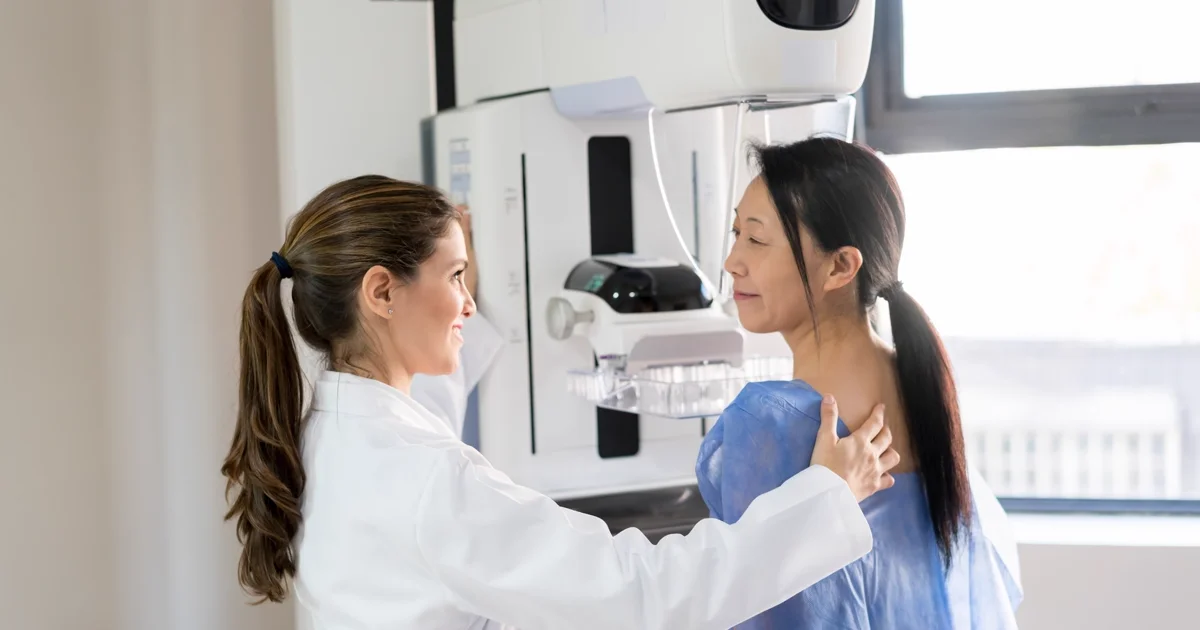
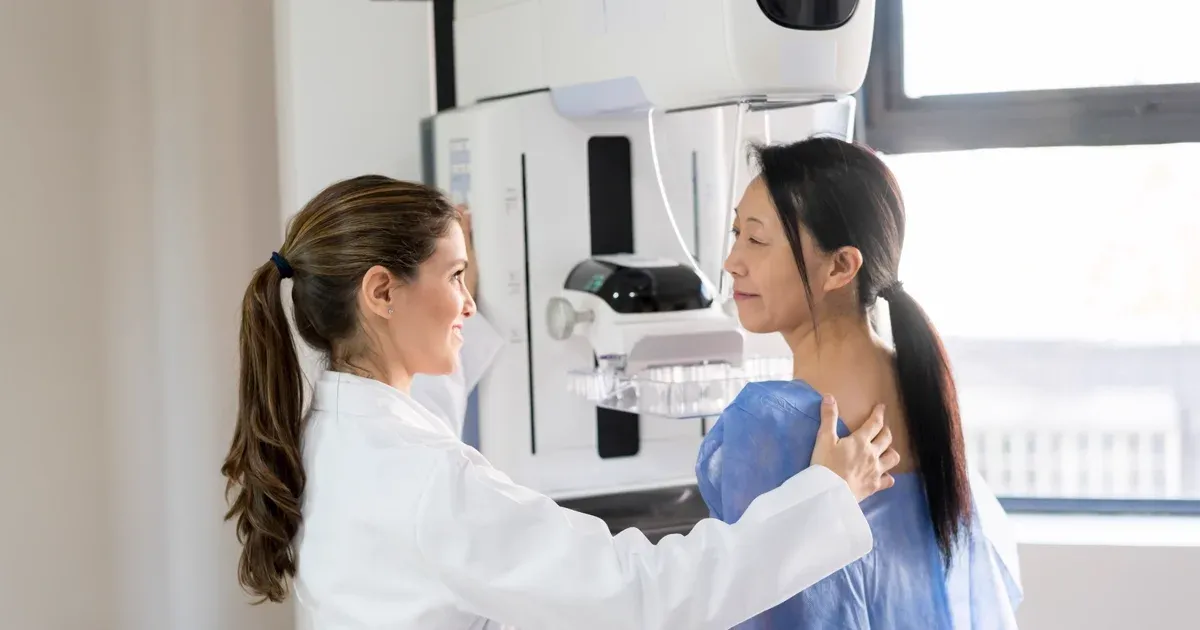
You will stand in front of the mammography unit, which consists of a flat compression plate and an X-ray detector. The radiographer will guide you into the correct position, adjusting your height and angle so that the maximum amount of breast tissue is captured in the image. She will position one breast at a time on the lower plate.
Step 3: Compression
A clear plastic paddle lowers onto the breast to compress it between the two plates. Compression is essential: it spreads the breast tissue so that overlapping structures do not hide potential abnormalities, and it reduces the radiation dose required to produce a clear image. The compression lasts approximately 10 to 15 seconds per image. During this time, you will be asked to hold still and hold your breath briefly while the X-ray is taken.
Step 4: Two Standard Views Per Breast
Each breast is imaged in two standard views: the craniocaudal (CC) view, taken from above, and the mediolateral oblique (MLO) view, taken from an angled side position. These two views provide the radiologist with a comprehensive assessment of the breast tissue from different angles. In total, four images are captured during a standard bilateral screening mammogram.
Step 5: Quality Check
After all images are taken, the radiographer reviews them on a screen to confirm that the positioning is correct, the image quality is adequate, and all breast tissue has been captured. If any image is unclear or if a portion of the breast was not fully included, a retake may be necessary. This is routine and does not indicate a problem.
Step 6: Change Back and Depart
Once the radiographer confirms that all images are satisfactory, you return to the changing area, get dressed, and are free to leave. The total time from entering the imaging room to leaving is typically 15 to 20 minutes. There is no recovery period, no restrictions on activity, and you can drive, eat, and resume your normal routine immediately.
Step 7: Confirmation of Image Clarity
Before you leave the department, the radiographer confirms that all images are of diagnostic quality. At DCDC, all mammograms are performed by female radiographers in a private women's imaging suite, ensuring a comfortable and respectful experience from start to finish. If additional views are needed, the radiographer will explain why and complete them during the same visit, so you do not need to return for a separate appointment.
2D vs 3D Mammogram: Understanding Your Options
When booking your mammogram, you may be offered a choice between a standard 2D digital mammogram and a 3D tomosynthesis mammogram. Understanding the differences helps you make an informed decision in consultation with your physician. The table below compares the two technologies across the factors that matter most to patients.
| Feature | 2D Digital Mammogram | 3D Tomosynthesis |
|---|---|---|
| Technology | Standard digital X-ray producing flat images | Multiple thin-slice images reconstructed into 3D layers |
| Detection Rate | Standard detection accuracy | 20–40% better cancer detection, especially for dense breasts |
| False Positives | Standard callback rate | Reduced by up to 40% compared to 2D alone |
| Best For | Routine screening for average-risk women | Dense breast tissue, high-risk women, prior false positives |
| Duration | 15 minutes | 15–20 minutes |
| Cost at DCDC | From AED 250 | From AED 500 |
Comparison of 2D digital mammogram and 3D tomosynthesis at DCDC Dubai Healthcare City (2026).
For most women with average breast density and no additional risk factors, a standard 2D digital mammogram provides reliable and effective screening. However, women with dense breast tissue, a family history of breast cancer, a personal history of breast biopsies, or previous false-positive mammogram results may benefit significantly from 3D tomosynthesis. Dense breast tissue is particularly common among women of Middle Eastern, South Asian, and East Asian descent, which represents a substantial proportion of Dubai's population.
Your radiologist or referring physician can advise on which type is most appropriate for your individual risk profile. At DCDC, both 2D and 3D mammography are available on the same equipment, so switching between the two requires no additional appointment or preparation.
Ready to Book Your Mammogram?
Ready to Book Your Mammogram?
DCDC offers digital mammography from AED 250 with female radiographers, a private women's imaging suite, and results within 24 hours. Same-day appointments available.
Call +971 56 403 3528 or WhatsApp to book
Does a Mammogram Hurt? Managing Discomfort
The question of whether a mammogram hurts is one of the most common concerns women have before their first appointment, and it deserves an honest answer. A mammogram involves compression of the breast tissue, and most women experience a sensation of pressure or tightness that ranges from mildly uncomfortable to briefly unpleasant. For the majority of women, however, the discomfort is brief, lasting only 10 to 15 seconds per image, and is not severe enough to be described as painful. Studies published in the journal Radiology consistently show that the anticipation of discomfort is typically worse than the actual experience.
Compression is not optional — it is a medically necessary part of the procedure. Compressing the breast tissue accomplishes three important goals: it spreads the tissue so that overlapping structures do not hide abnormalities, it holds the breast still to prevent motion blur, and it allows the use of a lower radiation dose because the X-ray beam passes through less tissue. Without adequate compression, the resulting images would be of insufficient quality for accurate diagnosis.
Tips for Minimizing Discomfort
- Schedule during the optimal part of your cycle: Book your mammogram for days 7 to 14 of your menstrual cycle, when breast tissue is least tender
- Take a mild pain reliever beforehand: Taking ibuprofen or paracetamol approximately 30 minutes before your appointment can reduce breast tenderness during compression
- Communicate with your radiographer: Let her know if you are feeling significant discomfort. Experienced radiographers can adjust their technique slightly while still obtaining diagnostic-quality images
- Breathe deeply and relax your shoulders: Tensing your chest muscles increases the sensation of pressure. Consciously relaxing your upper body and taking slow, deep breaths during compression helps
- Reduce caffeine before your appointment: Caffeine can increase breast sensitivity in some women, so reducing intake for one to two days before may help
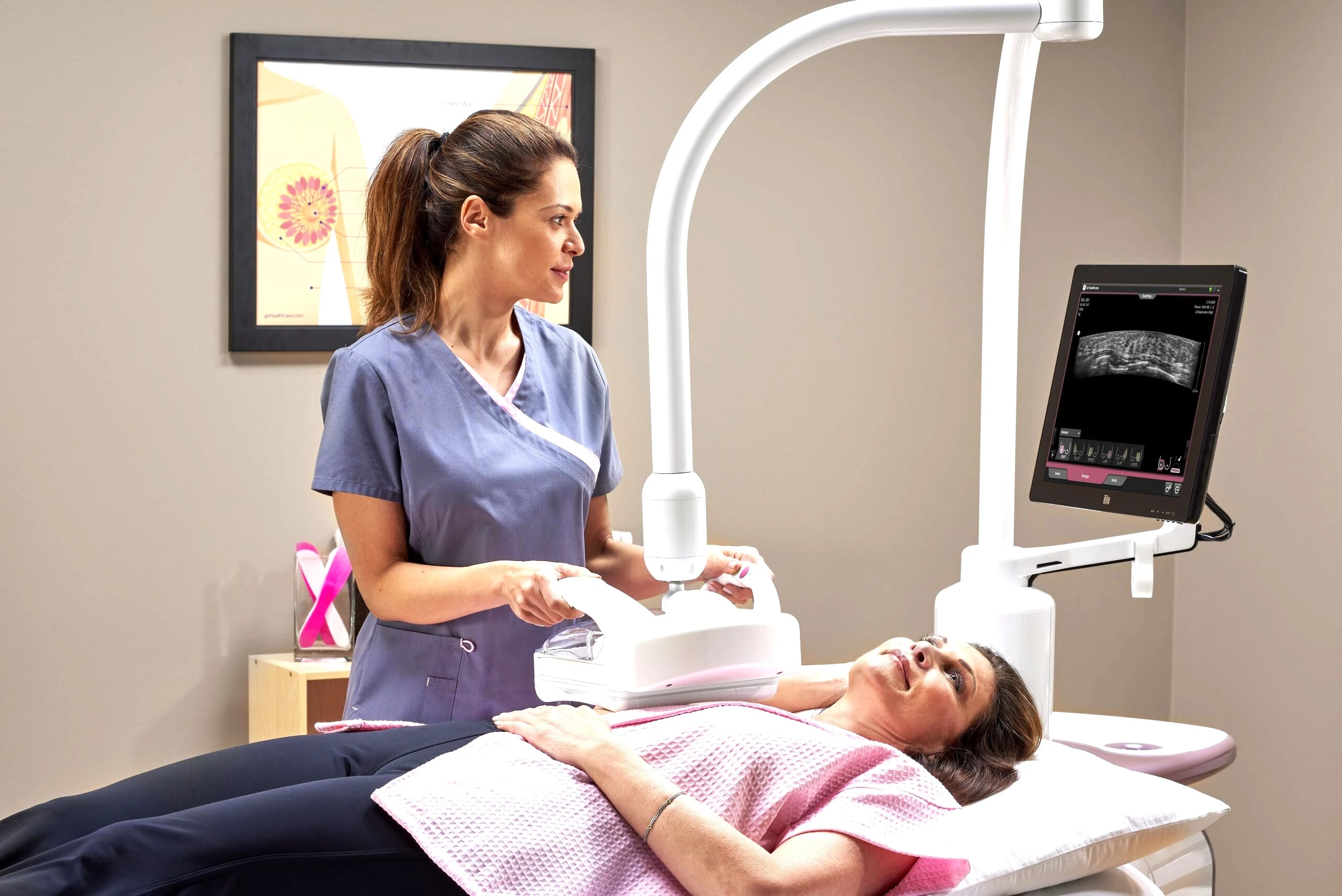
At DCDC, all mammograms are performed by trained female radiographers who are experienced in gentle breast positioning and who prioritize patient comfort throughout the procedure. If you are particularly anxious about discomfort, let the team know when you book — they are accustomed to working with first-time patients and women who have had previous difficult experiences. For women who want to explore complementary breast imaging options, our guide to mammogram vs breast ultrasound compares the strengths and limitations of each modality.
What to Expect After Your Mammogram
After your mammogram is complete, the images are reviewed and interpreted by a consultant radiologist with expertise in breast imaging. At DCDC, results are typically available within 18 to 24 hours of your appointment. For cases flagged as urgent by the referring physician or the radiographer, same-day reporting is available. Results are accessible through the patient portal in digital format, and a printed report can be collected from reception or sent directly to your referring physician.
Understanding BI-RADS Scores
Your mammogram report will include a BI-RADS (Breast Imaging Reporting and Data System) score from 0 to 6, which is the standardized system radiologists use worldwide to classify mammogram findings. Understanding this score helps you interpret your results accurately and know what follow-up, if any, is recommended.
- BI-RADS 0: Incomplete — additional imaging is needed (usually an ultrasound or additional mammogram views) before a final assessment can be made. This does not mean cancer has been found
- BI-RADS 1: Negative — no abnormalities detected. Continue routine screening at the recommended interval
- BI-RADS 2: Benign findings — non-cancerous findings such as cysts, calcified fibroadenomas, or lymph nodes are present but are definitively benign. Continue routine screening
- BI-RADS 3: Probably benign — a finding has a less than 2% chance of being cancer. Short-interval follow-up mammogram (usually in six months) is recommended to confirm stability
- BI-RADS 4: Suspicious — a finding warrants biopsy. The probability of cancer ranges from 2% to 95% depending on the sub-category (4A, 4B, or 4C)
- BI-RADS 5: Highly suggestive of malignancy — the finding has a greater than 95% probability of being cancer. Biopsy and appropriate clinical action are required
- BI-RADS 6: Known biopsy-proven cancer — used for patients with a confirmed cancer diagnosis undergoing imaging for treatment planning or monitoring response to therapy
If Your Results Are Abnormal
Receiving a callback for additional imaging after a mammogram is more common than many women realize and does not mean you have cancer. Approximately 10 to 12 percent of screening mammograms result in a callback, and the vast majority of these are resolved with additional images or an ultrasound that confirms a benign finding. At DCDC, the radiology team contacts patients promptly if additional imaging is needed, and follow-up appointments are prioritized to minimize the waiting period and associated anxiety.
If a finding does require biopsy, DCDC can arrange the necessary next steps quickly, including ultrasound-guided biopsy performed on-site by experienced interventional radiologists. The goal is always to move from finding to diagnosis as efficiently as possible, because waiting is often the most difficult part of the process for patients.
What to Expect at DCDC for Your Mammogram
Doctors Clinic Diagnostic Center (DCDC) is located in Building 64, Block A, Al Razi Medical Complex, Dubai Healthcare City, one of the most accessible medical zones in the emirate. The center is designed to provide a streamlined, comfortable breast screening experience that respects the cultural sensitivities and personal preferences of women living in Dubai.
Your Visit from Arrival to Results
- Parking: Free dedicated parking is available on-site, eliminating the need to search for paid parking in the surrounding area
- Check-in and wait time: Average wait time from arrival to procedure is approximately 15 minutes. Registration and insurance verification are handled at the front desk
- Private women's imaging area: DCDC has a dedicated private imaging suite for women's breast imaging, separate from the general radiology department, ensuring privacy and comfort throughout your visit
- All-female imaging team: All mammograms at DCDC are performed by female radiographers and technologists, ensuring that patients are cared for exclusively by women throughout the imaging process
- Procedure duration: The mammogram itself takes 15 to 20 minutes. Combined with check-in and changing, most patients are in and out within 30 to 45 minutes total
- Results: Radiologist-interpreted reports are available within 18 to 24 hours, with same-day reporting for urgent cases. Results are accessible digitally through the patient portal
- Insurance: DCDC offers direct billing with over 20 insurance providers, including Daman, Oman Insurance, AXA, MetLife, and ADNIC. The front desk verifies your coverage and handles pre-authorization before your procedure
DCDC's commitment to patient experience is reflected in its 4.8 out of 5 Google rating from over 1,000 verified patient reviews and a 98% patient satisfaction rate. For women who are nervous about their first mammogram or who have had uncomfortable experiences elsewhere, the center's focus on gentle handling, clear communication, and a private, respectful environment makes a significant difference. To understand when breast screening should begin based on your age and risk factors, our guide on when to start mammograms by age provides detailed recommendations from major medical organizations.
Mammogram Cost in Dubai: Insurance and Self-Pay
Understanding the cost of a mammogram before your appointment removes a common barrier to scheduling. The following table provides transparent pricing for mammogram services at DCDC alongside the typical market range across Dubai in 2026.
| Mammogram Type | DCDC Price (AED) | Market Range (AED) |
|---|---|---|
| 2D Digital Mammogram | From AED 250 | AED 250–500 |
| 3D Tomosynthesis | From AED 500 | AED 500–900 |
| Screening Package | From AED 350 | AED 350–700 |
| Diagnostic Mammogram | From AED 400 | AED 400–800 |
Mammogram pricing at DCDC and across Dubai (2026). Prices are for self-pay patients; insured patients may pay zero or reduced copay.
Most major health insurance plans in the UAE, including Daman, Oman Insurance, AXA, MetLife, and ADNIC, cover annual screening mammograms for women aged 40 and above as a preventive health benefit. Many insured women pay zero out-of-pocket cost for a routine screening mammogram at a network facility. For women under 40 with elevated risk factors such as a first-degree relative with breast cancer, coverage is often available with a physician referral for a diagnostic mammogram.
DCDC handles all insurance pre-authorization on your behalf. When you arrive, the front desk team verifies your coverage and confirms your copay amount (if any) before your mammogram begins. For self-pay patients, pricing is transparent with no hidden charges, and payment can be made by cash, credit card, or debit card.
Who Should Get a Mammogram: Age and Risk Guidelines
Mammogram screening recommendations vary by age, risk level, and the guidelines followed by your physician. The table below summarizes the current consensus from major medical organizations, which are widely adopted by physicians practicing in Dubai and across the UAE.
| Age Group | Recommendation | Frequency |
|---|---|---|
| Under 30 | Only if high-risk or symptomatic | As directed by physician |
| 30–39 | Clinical breast exam; consider baseline mammogram if family history | Annual clinical breast exam |
| 40–49 | Annual mammogram recommended | Every 12 months |
| 50–74 | Annual mammogram — gold standard screening age | Every 12 months |
| 75+ | Continue if in good health | Discuss with physician |
Mammogram screening guidelines by age group, based on recommendations from the American Cancer Society, American College of Radiology, and Dubai Health Authority.
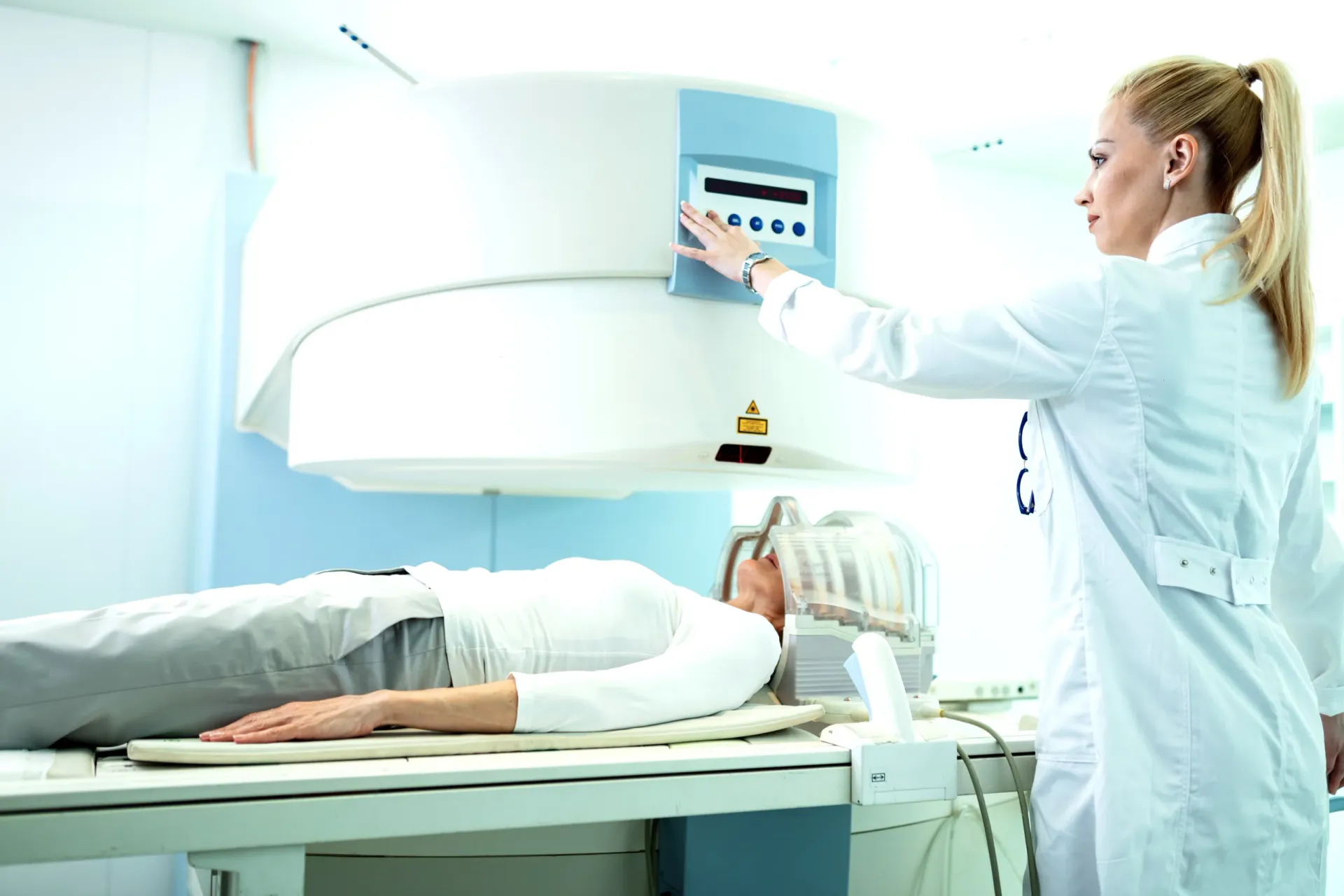
Several factors place women at higher-than-average risk for breast cancer and may warrant earlier or more frequent screening. These include carrying a BRCA1 or BRCA2 gene mutation, having a first-degree relative (mother, sister, or daughter) diagnosed with breast cancer, a personal history of chest radiation therapy before age 30, and certain benign breast conditions such as atypical ductal hyperplasia. Women with one or more of these risk factors should discuss a personalized screening plan with their physician, which may include starting annual mammograms before age 40 and adding supplemental imaging with breast ultrasound or breast MRI.
Dr. Osama Elzamzami's Perspective on Breast Imaging
According to Dr. Osama Elzamzami, the most important factor in mammogram accuracy is subspecialty interpretation. "A mammogram is only as good as the radiologist reading it. At DCDC, every breast image is reviewed by radiologists with specific expertise in breast imaging, which means subtle findings that a generalist might overlook — early microcalcifications, architectural distortions, asymmetric densities — are identified and acted upon. This subspecialty approach is what distinguishes screening from true early detection."
Dr. Elzamzami also emphasizes the importance of preparation in achieving the best possible images. "When a patient arrives well prepared — no products on the skin, wearing appropriate clothing, having communicated relevant medical history — the radiographer can focus entirely on technique and positioning. This translates directly into higher-quality images, which in turn means more accurate diagnosis. Preparation is not just about patient comfort; it is about diagnostic quality."
With a Fellowship from the Royal College of Radiologists (FRCR) and extensive experience in diagnostic radiology, Dr. Elzamzami oversees all breast imaging protocols at DCDC, ensuring that every mammogram meets international standards for image quality and reporting. His team's approach combines advanced digital mammography technology with the clinical judgment that comes from reading thousands of breast images each year.
Book Your Mammogram at DCDC Today
Book Your Mammogram at DCDC Today
Digital mammography from AED 250 with female radiographers, private women's suite, and subspecialty radiologist interpretation. Most insurance accepted with direct billing.
Call +971 56 403 3528 or WhatsApp to book
خدمات مرتبط در DCDC
مراقبت تخصصی و تشخیص پیشرفته در شهر بهداشت دبی
Frequently Asked Questions
Final Thoughts
Preparing for a mammogram is straightforward, and the few simple steps outlined in this guide — scheduling at the right time in your cycle, avoiding products on your chest, wearing a two-piece outfit, and bringing the right documents — can make the difference between a smooth, comfortable appointment and an unnecessarily stressful one. The mammogram itself takes less than 20 minutes, and the brief compression, while unfamiliar, is tolerable for the vast majority of women. The peace of mind that comes from knowing your breast health status is worth far more than the minor inconvenience of the procedure. If you have been putting off your mammogram because of uncertainty about what to expect, this guide has given you everything you need to walk into your appointment feeling prepared and confident.
At Doctors Clinic Diagnostic Center (DCDC) in Dubai Healthcare City, women receive expert mammography from AED 250 with an all-female imaging team, a private women's imaging suite, subspecialty radiologist interpretation, and results within 18 to 24 hours. Whether you are booking your first mammogram or continuing your annual screening, the DCDC team is here to make the experience as comfortable and efficient as possible. To book your mammogram, verify your insurance coverage, or ask any remaining questions, contact the team by phone at +971 56 403 3528, by WhatsApp, or through the online booking form.
منابع و مراجع
این مقاله توسط تیم پزشکی ما بررسی شده و به منابع زیر ارجاع میدهد:
- American Cancer Society - Mammogram Guidelines and Recommendations
- World Health Organization - Breast Cancer Early Detection and Screening
- Mayo Clinic - How to Prepare for a Mammogram
- NHS - Breast Screening (Mammogram)
- Cleveland Clinic - What to Expect During a Mammogram
محتوای پزشکی این سایت توسط پزشکان دارای مجوز DHA بررسی میشود. مشاهده سیاست تحریریه برای اطلاعات بیشتر.

نوشته شده توسط
Dr. Osama Elzamzami
Diagnostic Radiologist
MD, FRCR
Dr. Osama Elzamzami is a Diagnostic Radiologist at Doctors Clinic Diagnostic Center (DCDC) in Dubai Healthcare City.
Related Articles
Mammogram Cost Dubai: AED 250–900
When to Start Mammograms: Age & Schedule Guide
Mammogram vs Breast Ultrasound Dubai
10 Early Signs of Breast Cancer to Watch For
Breast MRI Dubai: When You Need It
More in Women's Health

CA-125 Test Dubai: Ovarian Cancer Marker (2026)
بیشتر بخوانیدMammogram vs Breast Ultrasound Dubai (2026)
بیشتر بخوانید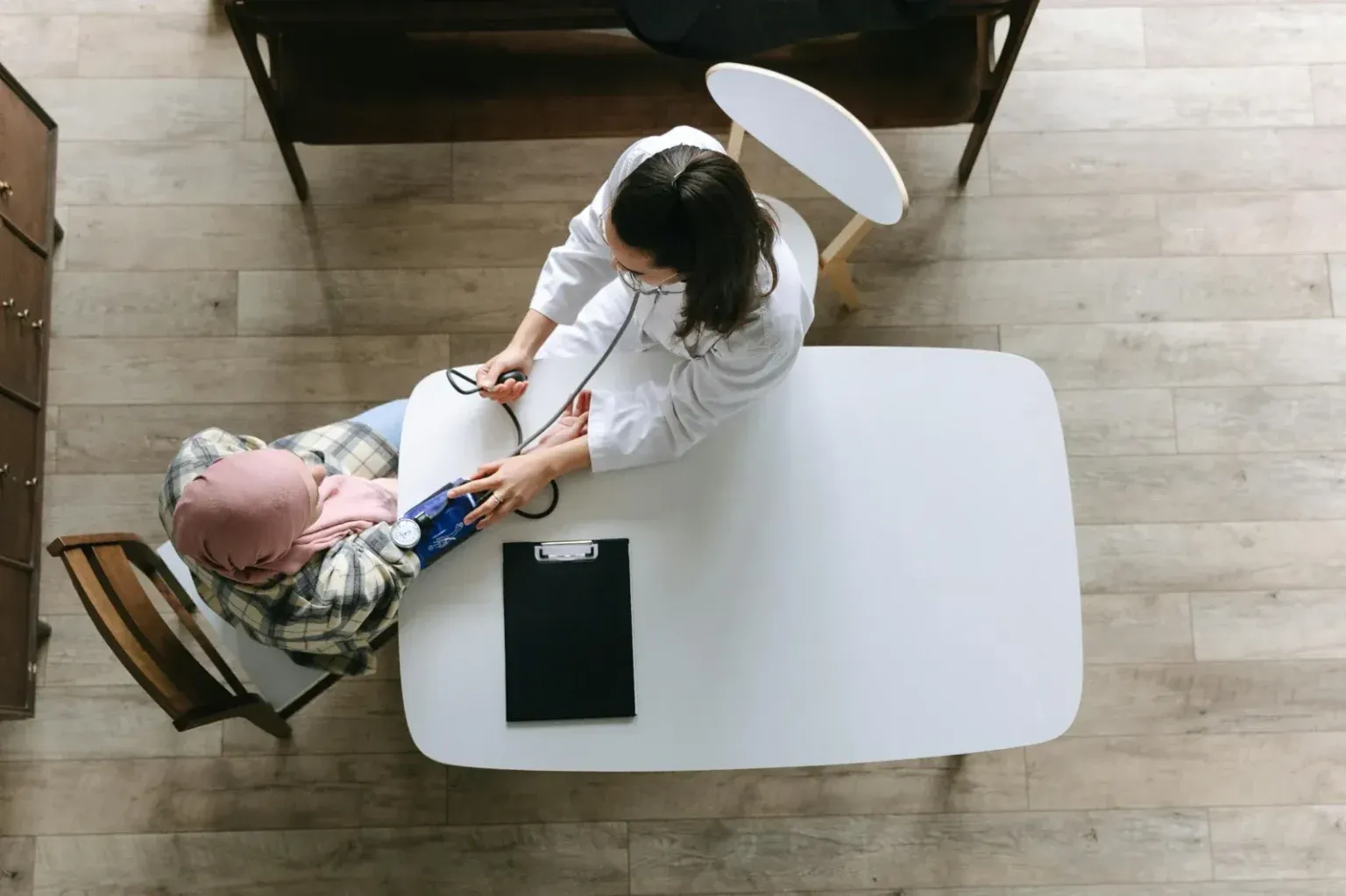
Endometriosis Dubai: Symptoms & Diagnosis (2026)
بیشتر بخوانید
Maternity Package Cost Dubai: From AED 1,500 (2026)
بیشتر بخوانیدGynecologist Cost Dubai: From AED 500 (2026)
بیشتر بخوانیدPerimenopause Symptoms Dubai: Signs & Care (2026)
بیشتر بخوانید© 2026 Doctors Clinic Diagnostic Center (DCDC), Dubai Healthcare City. Originally published at https://doctorsclinicdubai.ae/blog/mammogram-preparation-dubai. All rights reserved. Unauthorized reproduction is prohibited.