Wichtigste Erkenntnisse
- Regular well-child visits are the most effective way to catch developmental delays, nutritional deficiencies, and chronic conditions early — when treatment works best
- The DHA recommends checkups at birth, 1 week, 1 month, 2 months, 4 months, 6 months, 9 months, 12 months, 15 months, 18 months, 24 months, and annually from age 3 to 18
- Each well-child visit includes a physical exam, growth measurements, developmental screening, and age-appropriate vaccinations per the DHA schedule
- DCDC offers pediatric health checkup packages from AED 249 and specialist consultations from AED 300 — with on-site blood tests, X-rays, and ultrasound under one roof
- Children in Dubai are required to have a school entrance medical examination — DCDC provides these with same-day completion when capacity allows
- Over 20 insurance partners offer direct billing at DCDC, including Daman, AXA, Bupa, MetLife, and Cigna, so many families pay nothing out of pocket for routine checkups
The World Health Organization estimates that routine well-child visits prevent up to 70% of childhood health complications through early detection alone. If you are raising a child in Dubai, scheduling regular child health checkups is one of the most impactful things you can do for their long-term wellbeing. Our paediatric services at Doctors Clinic Diagnostic Center (DCDC) in Dubai Healthcare City cover everything from newborn assessments and growth monitoring to vaccinations, developmental screening, and school entrance medicals — all in a single child-friendly clinic.
Whether your child is a newborn, a toddler hitting milestones, or a teenager preparing for university, this guide explains exactly what happens at each age-appropriate checkup, what you should bring, and what the visit will cost. Dr. Hadeel Elnur, a general practitioner at DCDC who serves as the first point of contact for pediatric patients and coordinates multi-specialty workups, reviewed this guide to ensure it reflects current clinical practice and DHA recommendations.
Health Screening Packages
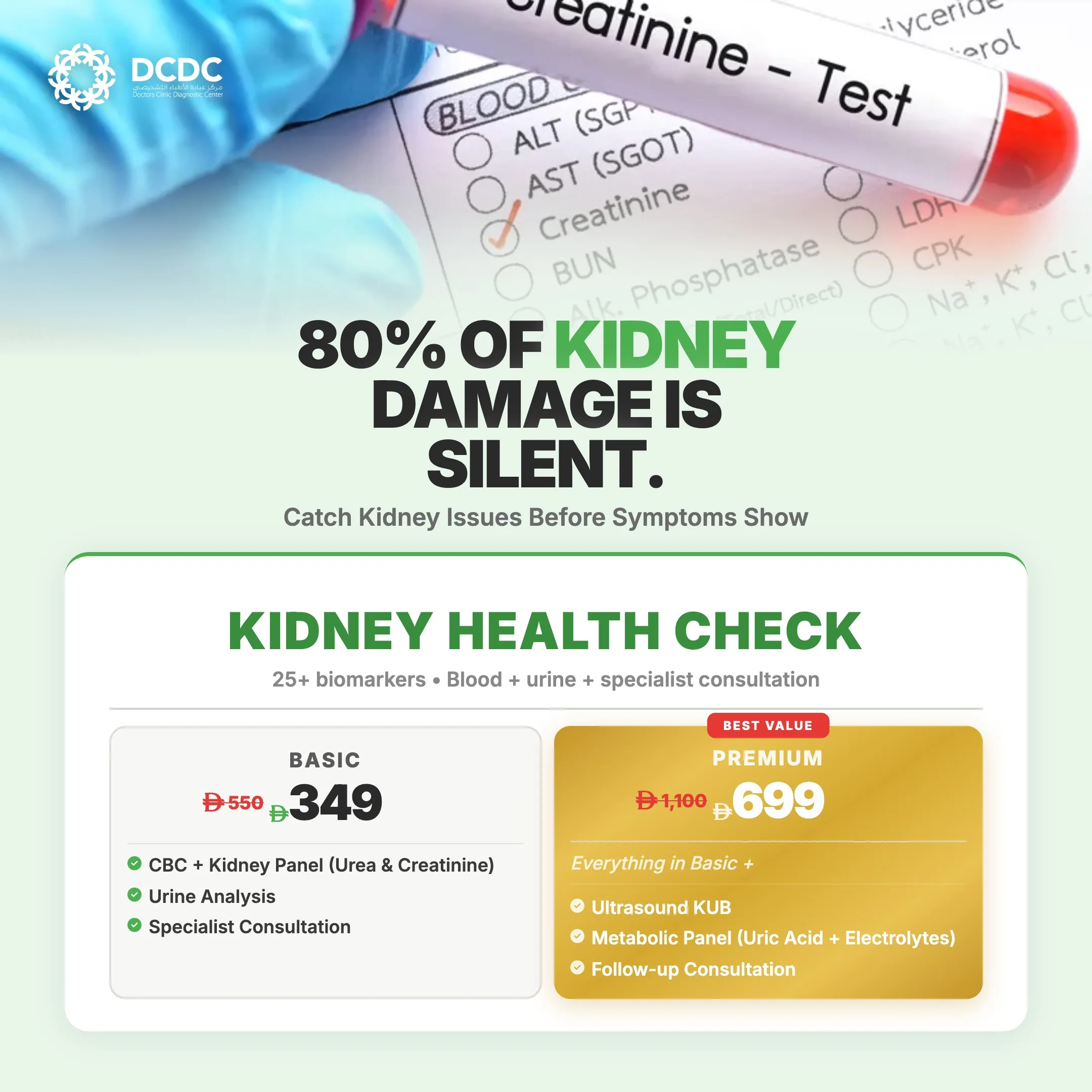
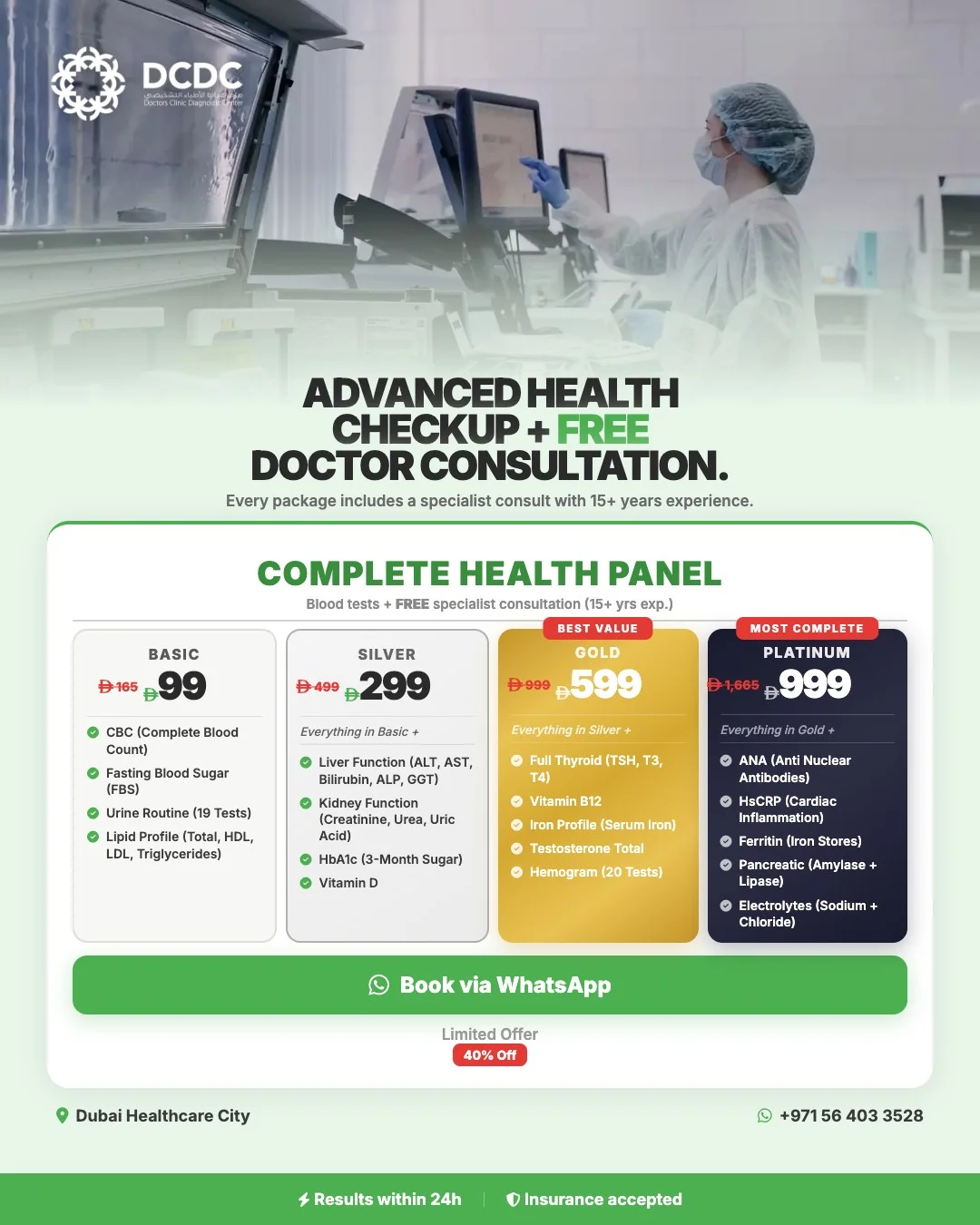
Save with our bundled screening packages — specialist consultation included




Why Regular Child Health Checkups Matter in Dubai
A child health checkup is far more than measuring height and weight. Well-child visits are structured clinical encounters designed to identify problems before symptoms appear. Iron deficiency, vitamin D insufficiency, vision impairment, hearing loss, speech delay, and growth abnormalities are all conditions that respond dramatically better to early intervention — and all of them are routinely caught during well-child visits that parents might otherwise skip when their child appears healthy.
In Dubai, the DHA publishes guidelines recommending specific health screening intervals from birth through adolescence. These guidelines align closely with recommendations from the American Academy of Pediatrics (AAP) and the World Health Organization. The checkup schedule is designed around critical windows of development: periods when a child's brain, vision, hearing, and motor skills are developing rapidly and any delays become detectable — and treatable.
Dubai's unique environment also creates specific health considerations. The extreme heat limits outdoor play for much of the year, contributing to widespread vitamin D deficiency even in a sun-rich country. The international population means children arrive with different vaccination histories. The high academic expectations in Dubai schools mean developmental or learning issues identified early can be supported before they affect academic performance. Regular checkups address all of these factors systematically rather than reactively.
Child Health Checkup Schedule by Age
The following table outlines the recommended well-child visit schedule from birth through 18 years, along with the key assessments performed at each stage. This schedule follows DHA guidelines and reflects what you can expect at DCDC.
| Age | Key Assessments | Vaccinations Due |
|---|---|---|
| Newborn (birth - 1 week) | Birth weight, head circumference, hip exam, jaundice screen, hearing test, congenital heart screening, reflexes | BCG, Hepatitis B (1st dose) |
| 1 month | Weight gain review, feeding assessment, umbilical cord check, parental wellbeing screen | None typically due |
| 2 months | Growth measurements, head control, visual tracking, social smile, hip check | Hexavalent (1st), PCV13 (1st), Rotavirus (1st) |
| 4 months | Growth, rolling over assessment, reaching/grasping, vocalization, sleep patterns | Hexavalent (2nd), PCV13 (2nd), Rotavirus (2nd) |
| 6 months | Sitting support, babbling, introduction to solids guidance, iron status review, teeth check | Hexavalent (3rd), PCV13 (3rd), Rotavirus (3rd if applicable) |
| 9 months | Crawling, pincer grasp, stranger awareness, weight/length percentiles, hemoglobin screen | Measles (1st dose, if applicable) |
| 12 months | Walking assessment, first words, social interaction, nutrition review, dental check | MMR (1st), Varicella (1st), Hepatitis A (1st), PCV13 booster |
| 15 months | Vocabulary (3-6 words), walking stability, pointing, following simple instructions | Catch-up doses if needed |
| 18 months | Running, 10-20 words, stacking blocks, tantrums (normal development), autism screening (M-CHAT) | Pentavalent booster, Hepatitis A (2nd), MMR (2nd), Varicella (2nd) |
| 2 years | Sentences (2-3 words), jumping, social play, toilet training readiness, BMI tracking begins | Annual flu vaccine recommended |
| 3-5 years (annual) | Vision screening, speech clarity, pre-school readiness, behavior assessment, blood pressure from age 3 | DTaP-IPV booster (4-6 years) |
| 6-11 years (annual) | School performance review, growth velocity, posture/scoliosis screen, mental health check, puberty signs | OPV (Grade 1) |
| 12-18 years (annual) | Puberty staging, mental health screening, sports fitness, nutritional counseling, risk behavior discussion | Tdap booster, HPV vaccine (Grade 6), Meningococcal ACWY (Grade 11) |
Source: DHA and AAP recommended well-child visit schedule. Exact timing may vary based on individual health needs. Your doctor will adjust the plan based on your child's specific development.
What Happens During a Well-Child Visit
Parents, especially first-time parents, often feel unsure about what a pediatric checkup actually involves. Here is a step-by-step walkthrough of what happens during a typical well-child visit at DCDC, so you know exactly what to expect.
- Registration and history update (5 minutes): Our reception team confirms your insurance details, updates your child's file, and asks about any new concerns since the last visit. If this is your first visit, bring your child's previous medical records and vaccination booklet.
- Vital signs and measurements (5 minutes): A nurse measures your child's weight, height (or length for infants), head circumference (up to age 2), temperature, and blood pressure (from age 3). These are plotted on standardized growth charts.
- Doctor consultation and physical exam (15-20 minutes): The doctor performs a head-to-toe examination — checking eyes, ears, throat, heart, lungs, abdomen, skin, joints, and reflexes. For infants, hip stability and fontanelle are assessed. For older children, posture and scoliosis screening are included.
- Developmental screening (5-10 minutes): The doctor evaluates your child's motor skills, language, social behavior, and cognitive development against age-appropriate milestones. Standardized tools like the ASQ (Ages and Stages Questionnaire) or M-CHAT (for autism screening at 18 months) may be used.
- Nutritional and lifestyle counseling (5 minutes): Discussion of diet, sleep patterns, screen time, physical activity, and sun exposure. In Dubai, vitamin D supplementation and hydration are commonly addressed.
- Vaccinations (5 minutes): Any vaccines due per the DHA schedule are administered. The nurse explains each vaccine, potential side effects, and what to watch for at home.
- Blood tests or diagnostics if indicated (10-15 minutes): If the doctor identifies concerns, on-site blood work (hemoglobin, iron, vitamin D, thyroid), X-rays, or ultrasound can be completed during the same visit — no separate appointments or external referrals needed.
- Summary and next steps (5 minutes): The doctor summarizes findings, provides a growth chart update, schedules the next checkup, and answers any remaining questions.
A routine well-child visit typically takes 30-45 minutes from start to finish. If additional diagnostics are needed, plan for up to 60 minutes. Our child vaccination schedule guide provides the complete DHA immunization timeline so you can see exactly which vaccines your child needs at each visit.
Vaccinations and Immunization Schedule in Dubai
Vaccinations are a core component of every well-child visit. The DHA mandates a comprehensive immunization schedule starting at birth that protects against 14 serious diseases, including tuberculosis, hepatitis B, diphtheria, tetanus, pertussis, polio, measles, mumps, rubella, chickenpox, and hepatitis A. Missing vaccines can delay school enrollment, and gaps in coverage leave your child vulnerable during their most susceptible years.
DCDC offers the complete DHA-recommended vaccination program. All vaccines are stored according to cold-chain protocols, and our staff administers them with age-appropriate comfort techniques — distraction for toddlers, calm explanations for older children. For families who have relocated to Dubai from countries with different vaccination schedules, we provide catch-up plans that align your child's immunization history with DHA requirements.
The combination vaccines used in Dubai (such as the hexavalent 6-in-1 vaccine) significantly reduce the number of injections your child needs. By age 18 months, your child will have received protection against all the major childhood diseases in approximately 10-12 clinic visits. Mild reactions like a sore injection site, low-grade fever, or fussiness for a day or two are normal and not a reason to delay the next dose.
Growth and Development Milestones to Watch
One of the most valuable aspects of regular well-child visits is systematic milestone tracking. Development is not linear — children develop at different rates, and wide variation is normal. However, consistently missing milestones or sudden regression can signal conditions that benefit enormously from early intervention. Here are the key milestones doctors assess at each stage.
Birth to 6 months: Lifting the head during tummy time, tracking objects with the eyes, responding to sounds, social smiling (by 2 months), reaching for objects, rolling over (by 4-6 months), and babbling with consonant sounds. Weight gain is closely monitored — most infants double their birth weight by 5 months.
6 to 12 months: Sitting independently, crawling, pulling to stand, pincer grasp (picking up small objects with thumb and finger), responding to their name, waving goodbye, and saying first words like 'mama' or 'baba.' Stranger anxiety and separation anxiety are normal developmental signs in this period, not behavioral problems.
1 to 3 years: Walking independently (by 12-15 months), running (by 18 months), combining two words ('more milk'), following two-step instructions, parallel play with other children, beginning to show empathy, and early imaginative play. The M-CHAT autism screening at the 18-month visit is particularly important — early detection of autism spectrum conditions allows for behavioral interventions during the critical window of brain plasticity.
3 to 5 years: Riding a tricycle, drawing basic shapes, speaking in full sentences, engaging in cooperative play, understanding the concept of 'mine' and 'yours,' dressing independently, and beginning to recognize letters and numbers. Vision screening becomes important at this stage as amblyopia (lazy eye) is treatable if caught before age 7 but much harder to correct after.
6 to 12 years: Reading and writing progression, organized sports participation, developing friendships, understanding rules and consequences, and increasing independence. Growth velocity typically slows during this phase before the pubertal growth spurt. Scoliosis screening becomes relevant, especially during rapid growth phases.
13 to 18 years: Puberty progression (Tanner staging), identity development, academic performance patterns, mental health (anxiety, depression screening), body image, and risk behavior awareness. Adolescent checkups include confidential conversations about wellbeing that allow teens to discuss concerns they may not raise in front of parents.
Preparing Your Child for a Doctor Visit
A little preparation makes a big difference in how smoothly the appointment goes. Children who know what to expect are significantly less anxious, which in turn makes the examination more thorough and accurate. Here are practical strategies by age group.
- Infants (0-12 months): Bring a comfort item (blanket, pacifier, favourite toy). Feed your baby 30-60 minutes before the appointment so they are content but not actively feeding during the exam. Dress them in easy-to-remove clothing. Bring the vaccination booklet and any notes about feeding, sleep, or milestones you have observed.
- Toddlers (1-3 years): Use simple, honest language: 'We are going to see the doctor who will check your tummy and your ears.' Avoid promises like 'It will not hurt' if vaccinations are due — instead say 'You might feel a small pinch, but it will be very quick.' Bring a snack and a favourite toy for distraction.
- Pre-schoolers (3-5 years): Play 'doctor' at home with a toy stethoscope. Let them practice opening their mouth wide and taking deep breaths. Explain each step of the visit in age-appropriate terms. Give them a small responsibility, like carrying their own water bottle.
- School-age (6-12 years): Involve them in the conversation. Ask them beforehand if they have any questions for the doctor. Encourage them to describe their own symptoms. This builds health literacy and self-advocacy skills that serve them throughout life.
- Teenagers (13-18 years): Respect their growing autonomy. Allow them private time with the doctor (even 5 minutes). Let them fill out their own intake forms. Discuss beforehand that the doctor may ask about mental health, which is routine and nothing to be worried about.
For a detailed breakdown of pediatric consultation costs to help you budget, our pediatrician cost guide covers everything from routine visits to specialist referrals at DCDC and across Dubai.
Common Health Concerns at Each Age
Different ages bring different health challenges. Knowing what to expect helps parents distinguish between normal childhood issues and conditions that warrant a doctor visit. The following table summarizes the most common health concerns at each stage.
| Age Group | Common Health Concerns | When to See a Doctor |
|---|---|---|
| Newborn (0-1 month) | Jaundice, feeding difficulties, colic, diaper rash, umbilical cord issues | Yellow skin spreading to legs, poor feeding for 24+ hours, temperature above 38C, persistent vomiting |
| Infant (1-12 months) | Teething pain, ear infections, reflux, eczema, upper respiratory infections, sleep regression | Fever above 38C under 3 months (medical emergency), not feeding for 8+ hours, lethargy, rash with fever |
| Toddler (1-3 years) | Frequent colds (6-8 per year is normal), diarrhea, constipation, hand-foot-mouth disease, tantrums | High fever lasting more than 3 days, refusal to drink fluids, wheezing, speech not progressing |
| Pre-school (3-5 years) | Allergies, asthma onset, vision problems, speech articulation issues, separation anxiety at school start | Squinting or sitting close to TV, stuttering lasting more than 6 months, chronic ear fluid, behavior changes |
| School-age (6-12 years) | Sports injuries, headaches, abdominal pain (stress-related), obesity, ADHD symptoms, skin infections | Persistent headaches, unexplained weight loss or gain, declining school performance, persistent pain |
| Adolescent (13-18 years) | Acne, menstrual irregularities, sports injuries, anxiety, depression, eating disorders, sleep issues | Withdrawal from activities, dramatic mood changes, self-harm signs, delayed puberty, chronic fatigue |
This table provides general guidance. Always consult a doctor if you are concerned about your child's health, even if the symptom is not listed above.
Child Health Checkup Cost in Dubai
Understanding the cost of pediatric care helps families plan ahead. At DCDC, we have structured our pricing to make regular checkups accessible, and we work with over 20 insurance partners to minimize out-of-pocket expenses. The following table provides a breakdown of typical costs.
| Service | Price Range | What's Included |
|---|---|---|
| Child Health Checkup Package | From AED 249 | Physical exam, growth measurements, developmental screening, doctor consultation |
| Pediatrician / GP Consultation | From AED 300 | Comprehensive assessment, diagnosis, treatment plan, prescriptions if needed |
| Vaccination Visit | From AED 300 + vaccine cost | Doctor assessment, vaccine administration, post-vaccine monitoring, schedule update |
| Blood Tests (CBC, Iron, Vitamin D panel) | AED 150-500 | On-site collection, same-day or next-day results, doctor interpretation |
| School Entrance Medical | From AED 350 | Physical exam, vision and hearing screen, vaccination record review, medical report |
| Comprehensive Pediatric Wellness Package | AED 500-900 | Full physical, blood work, growth assessment, developmental screening, nutritional review |
Prices are indicative and may vary. Insurance copays may apply. Contact DCDC for current pricing and insurance coverage verification.
Most comprehensive health insurance plans in Dubai cover well-child visits, routine vaccinations, and developmental screening as part of preventive care. DCDC offers direct billing with Daman, AXA, Bupa, MetLife, Cigna, and 15+ additional providers, which means you typically only pay your copay amount at the time of the visit. Our reception team verifies your coverage before the appointment and can advise on any costs that may not be covered.
For uninsured families, our health checkup packages from AED 249 offer significant value compared to paying for each component individually. These packages bundle the consultation, measurements, and basic screening into a single affordable visit.
What to Expect at DCDC for Your Child's Checkup
At Doctors Clinic Diagnostic Center in Dubai Healthcare City, we have designed the pediatric checkup experience to be thorough, efficient, and as stress-free as possible for both children and parents. Here is what the patient journey looks like from the moment you arrive.
Arrival and parking: DCDC is located in Building 64, Block A, Al Razi Medical Complex in DHCC, with free dedicated parking. The building is accessible by car and metro (Healthcare City station). Most families find that parking and getting to our clinic takes under 5 minutes.
Check-in: Our front desk team handles registration and insurance verification. For returning patients, the process takes under 2 minutes. New patients should allow 5-10 minutes for paperwork. We keep waiting areas comfortable, and our average wait time is approximately 15 minutes.
The consultation: Dr. Hadeel Elnur and our clinical team take a calm, gentle approach with children of all ages. Infants are examined on a padded table with a parent holding them. Toddlers who resist sitting still are assessed in a parent's lap. Teenagers are offered privacy. Every child is treated as an individual, not a checklist.
On-site diagnostics — no multiple clinic visits: This is one of the most significant advantages of DCDC. If your child needs blood tests (iron, vitamin D, CBC, thyroid), an X-ray (for a suspected fracture or chest infection), or an ultrasound (abdominal concerns, hip screening for infants), everything is done in the same building during the same visit. You do not need to drive to a separate lab, wait for results, and then return for a follow-up. Results for basic blood tests are typically available the same day.
After the visit: You receive a clear summary of findings, an updated growth chart, any prescriptions, and a scheduled date for the next checkup. If your child was referred for additional tests, results are communicated promptly, and a follow-up plan is created. Our team is available by phone for any questions that arise after you leave.
According to Dr. Hadeel Elnur: "Parents often underestimate the value of routine well-child visits when their child seems perfectly healthy. As a general practitioner at DCDC, I've caught early signs of iron deficiency, vitamin D insufficiency, and developmental delays during routine checkups — conditions that respond much better to early intervention. I always tell parents: prevention is far easier than treatment. At DCDC, I serve as the first point of contact, and if anything requires specialist input, I coordinate the workup with our multi-specialty team so parents do not have to navigate referrals on their own."
If your child develops a fever between scheduled checkups and you are unsure whether to visit the clinic, our child fever management guide explains temperature thresholds by age, when to treat at home, and the warning signs that mean you should bring them in immediately.
Book Your Child's Health Checkup at DCDC
Doctors Clinic Diagnostic Center in Dubai Healthcare City offers comprehensive pediatric checkups for newborns through 18 years. On-site blood tests, X-rays, and ultrasound — everything under one roof. Rated 4.8/5 from 1,000+ verified reviews with 98% patient satisfaction. Book online or message us on WhatsApp — same-day appointments frequently available.
MOHAP Licensed (License No. NIMY7VY5-240925). 20+ insurance partners with direct billing. Free dedicated parking. Open Sat-Thu 8 AM - 10:30 PM, Fri 9 AM - 10 PM.
School Medical Exams and Health Clearance in Dubai
Every school in Dubai requires a medical fitness certificate before enrollment or at the start of each academic year. The school entrance medical — sometimes called a school health clearance — is a standardized examination that verifies your child is fit to attend school and has up-to-date vaccinations. At DCDC, we provide comprehensive school medical exams that meet the requirements of all Dubai schools, both government and private.
The school medical typically includes a physical examination (height, weight, BMI, vision, hearing, dental check, postural screening), review and verification of the vaccination record against DHA requirements, and a signed medical report on the school's official form. If any vaccinations are missing, we can administer them during the same visit and update the record immediately.
For families with children entering school for the first time, we recommend scheduling the school medical at least 4-6 weeks before the enrollment deadline. This allows time for any catch-up vaccinations that require multiple doses with interval spacing. If your child has a chronic condition (asthma, diabetes, allergies), the school medical is also the time to prepare an individualized health plan that the school nurse can follow.
Sports clearance certificates for school athletic programs are also available at DCDC. These include a cardiovascular assessment, musculoskeletal screening, and exercise tolerance evaluation to ensure your child can safely participate in competitive or recreational sports.
When to See a Pediatrician Between Checkups
Regular checkups follow a schedule, but children do not get sick on schedule. Knowing when to seek care between routine visits can prevent minor issues from escalating and ease parental anxiety about symptoms that are actually normal. Here are the situations that warrant a visit outside the regular checkup schedule.
- Fever in infants under 3 months: Any temperature of 38C or above in a baby under 3 months is a medical urgency. Do not wait — bring them in or go to the emergency department immediately. Their immune systems cannot fight infections the way older children can.
- Fever lasting more than 3 days: In older children, a fever that persists beyond 72 hours despite appropriate management, or one that returns after apparently resolving, should be evaluated to rule out bacterial infections or other underlying causes.
- Refusal to eat or drink for 8+ hours: In infants, this is particularly concerning. Dehydration can develop rapidly in young children, especially in Dubai's hot climate. Signs include dry mouth, fewer wet diapers, sunken eyes, and lethargy.
- Breathing difficulties: Rapid breathing, wheezing, chest retractions (skin pulling in between ribs), or nostrils flaring during breathing are all signs of respiratory distress that require prompt assessment.
- Rash with fever: While many childhood rashes are harmless viral rashes, a rash accompanied by high fever, especially one that does not blanch (fade) when you press a glass against it, needs immediate evaluation to rule out meningitis.
- Behavioral or developmental regression: A child who was speaking in sentences and suddenly stops, or who was toilet trained and begins having daily accidents, may be experiencing stress, illness, or a neurological issue that warrants investigation.
- Persistent vomiting or diarrhea: More than 24 hours of vomiting in a young child, or bloody diarrhea at any age, requires medical attention to assess hydration status and identify the cause.
- Unexplained weight loss or poor growth: If your child is losing weight without an obvious reason, or if you notice that their clothes are fitting more loosely, a checkup can identify underlying causes ranging from dietary insufficiency to chronic conditions.
At DCDC, same-day appointments are frequently available, and sick visits are prioritized. If your child is unwell, call the clinic or message us on WhatsApp — our team will advise whether the situation requires an immediate visit, can wait until the next available slot, or can be managed at home with guidance.
Schedule Your Child's Next Checkup Today
Do not wait for a health concern to arise. Preventive checkups catch problems early when they are easiest to treat. DCDC offers pediatric health checkup packages from AED 249, with on-site diagnostics and direct insurance billing. Book online or send us a WhatsApp message: "Hi, I would like to book a child health checkup at DCDC."
Building 64, Block A, Al Razi Medical Complex, Dubai Healthcare City. Open Sat-Thu 8 AM - 10:30 PM, Fri 9 AM - 10 PM. Free parking available.
Verwandte Leistungen im DCDC
Fachkundige Betreuung und moderne Diagnostik in Dubai Healthcare City
Häufig gestellte Fragen
Abschließende Gedanken
Regular child health checkups are the foundation of pediatric preventive care. They allow doctors to track your child's growth trajectory, catch developmental delays during the window when intervention is most effective, keep vaccinations on schedule, and address nutritional deficiencies common in Dubai's climate before they cause lasting problems. Every checkup your child attends is an investment in their long-term health, academic potential, and quality of life.
At Doctors Clinic Diagnostic Center in Dubai Healthcare City, we have made pediatric checkups as convenient as possible: on-site blood tests, X-ray, and ultrasound so you never need to visit multiple clinics; same-day appointments when capacity allows; direct billing with 20+ insurance providers; free parking; and extended hours six days a week. With health checkup packages from AED 249 and a team rated 4.8/5 from over 1,000 patient reviews, there is no reason to delay your child's next checkup. Book online, call us, or send a WhatsApp message to schedule your child's visit today.
Quellen und Referenzen
Dieser Artikel wurde von unserem medizinischen Team überprüft und bezieht sich auf folgende Quellen:
- American Academy of Pediatrics — Recommendations for Preventive Pediatric Health Care (Bright Futures Periodicity Schedule)
- World Health Organization — Child Growth Standards
- Dubai Health Authority — Child and Adolescent Health Services
- Centers for Disease Control and Prevention — Developmental Milestones
- NHS — Your Child's Health Reviews
- UAE Ministry of Health and Prevention — National Immunization Program
Medizinische Inhalte auf dieser Website werden von DHA-lizenzierten Ärzten überprüft. Siehe unsere redaktionelle Richtlinien für weitere Informationen.

Verfasst von
Dr. Hadeel Elnur
General Practitioner
MD, General Practice
Dr. Hadeel Elnur is a General Practitioner at Doctors Clinic Diagnostic Center (DCDC) in Dubai Healthcare City.
Verwandte Artikel
Child Vaccination Schedule Dubai: Full Guide (2026)

Pediatrician Cost Dubai: From AED 300 (2026)

Child Fever: When to Worry & What to Do (2026)

Pediatric Imaging: Is It Safe for Children? (2026)

Vitamin D Deficiency Dubai: Signs & Treatment (2026)
Mehr in General Health
AC Sickness Dubai: Summer Cold Symptoms (2026)
Weiterlesen
Allergy Specialist Dubai: Tests & Guide (2026)
WeiterlesenAllergy Testing Dubai: IgE Blood Panels & Cost (2026)
Weiterlesen
Blood Test Dubai: Types, Cost & Fasting Guide (2026)
Weiterlesen
Cancer Screening Dubai: Tests & Cost by Age (2026)
Weiterlesen
Cortisol Test Dubai: Levels & Cost Guide (2026)
Weiterlesen© 2026 Doctors Clinic Diagnostic Center (DCDC), Dubai Healthcare City. Originally published at https://doctorsclinicdubai.ae/blog/child-health-checkup-dubai. All rights reserved. Unauthorized reproduction is prohibited.