
Key Takeaways
- Postpartum depression signs — persistent sadness, anxiety, guilt, or loss of interest that lasts beyond two weeks after delivery — are different from the short-lived "baby blues" that affect up to 80% of new mothers.
- Postpartum depression affects an estimated 10-20% of mothers globally in the first year after birth, with studies from the UAE reporting rates as high as 12-33%.
- Baby blues typically peak around day 5 and resolve within 10-14 days on their own; postpartum depression can begin any time in the first year and often needs professional treatment to improve.
- Common warning signs include hopelessness, difficulty bonding with your baby, intrusive worry, changes in appetite or sleep unrelated to newborn care, and thoughts of harming yourself or your baby.
- Postpartum depression is a recognized medical condition — not a personal failure or a sign of weak faith or weak character — and it responds well to therapy, medication, or a combination of both.
- Dubai's expat population, cultural stigma around mental health, and the isolation of long indoor summers can make postpartum depression harder to recognize and easier to hide — screening and open conversation matter.
- DCDC offers confidential postpartum care at DCDC with same-week appointments, multilingual clinicians, and direct billing with 20+ insurers.
- If you or someone you know has thoughts of self-harm or harming the baby, this is a medical emergency — call the UAE's 800-HOPE (800-4673) helpline or go to the nearest emergency room immediately.
Recognizing postpartum depression signs early can make the difference between weeks of unnecessary suffering and a fast return to feeling like yourself. Up to 1 in 5 new mothers experience postpartum depression in the first year after childbirth, yet many never receive a diagnosis because their symptoms are dismissed as normal new-parent exhaustion or "just the baby blues." At Doctors Clinic Diagnostic Center, our postpartum care at DCDC team helps new mothers in Dubai tell the difference between a passing adjustment period and a treatable mood disorder — with the compassionate, confidential support every mother deserves.
This guide walks through the specific symptoms of postpartum depression, how they differ from ordinary baby blues, the risk factors that make some mothers more vulnerable, and clear thresholds for when to seek professional help. We also cover the particular challenges facing mothers in Dubai — from cultural stigma to the isolation that can come with living far from extended family — and what compassionate, judgment-free care looks like at DCDC.
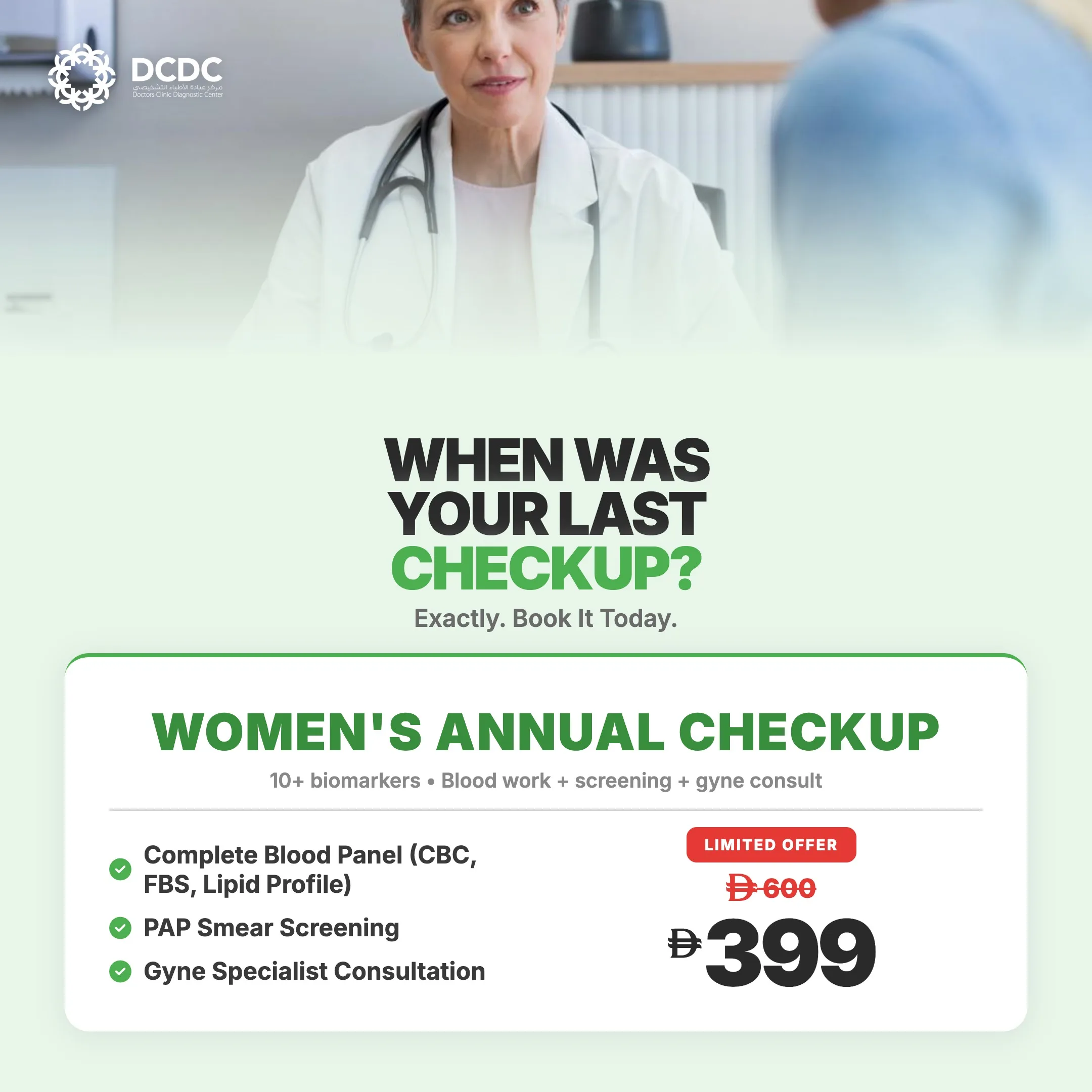
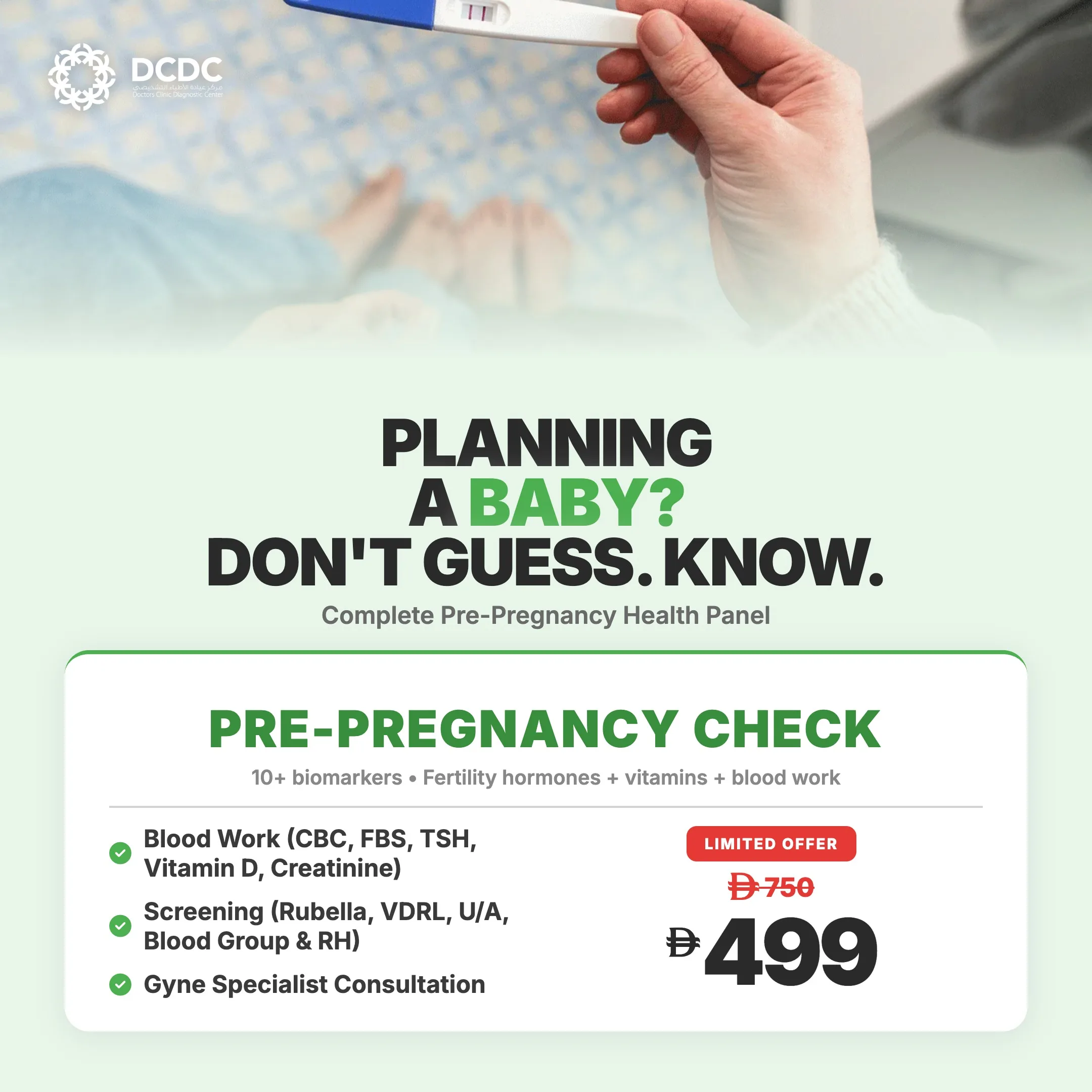
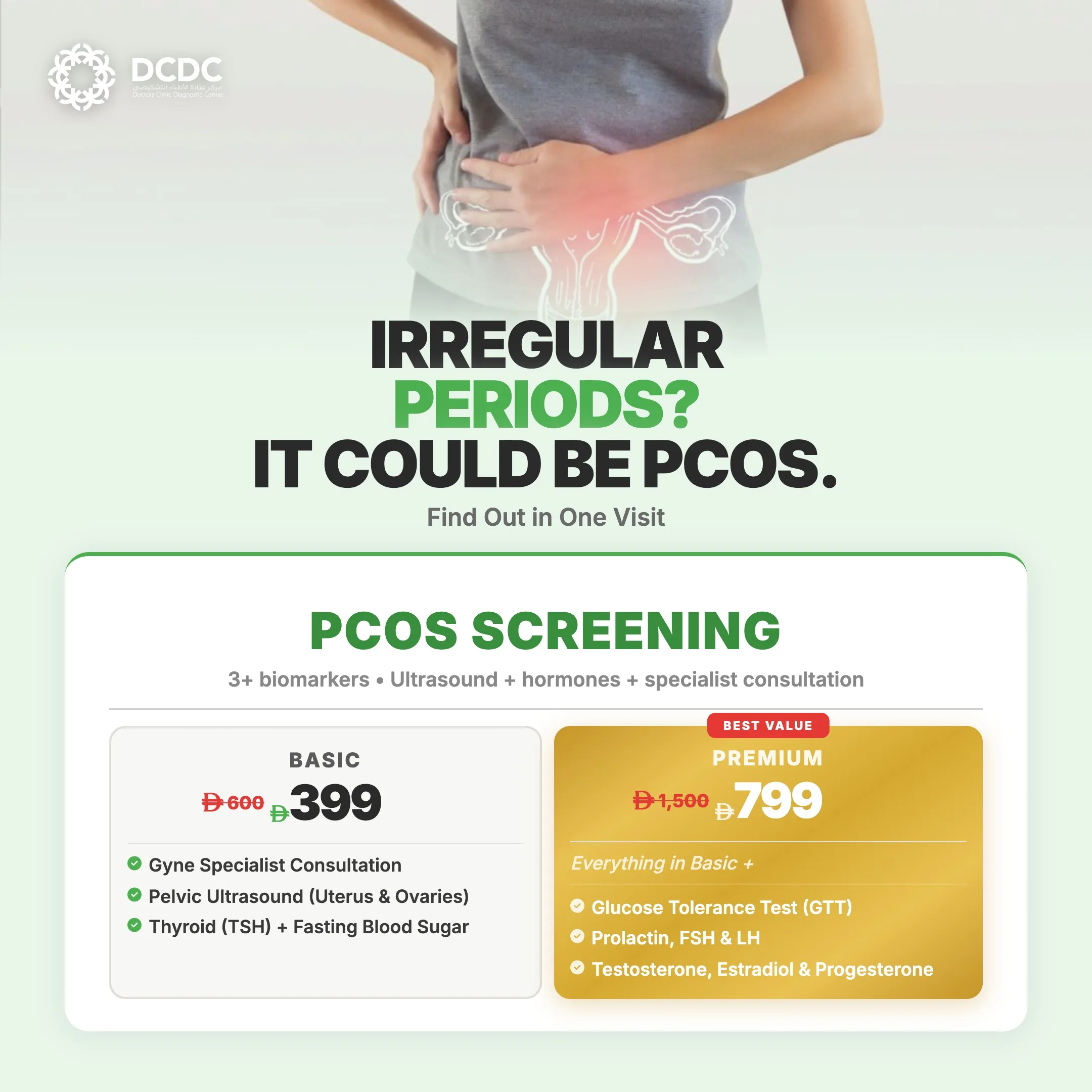
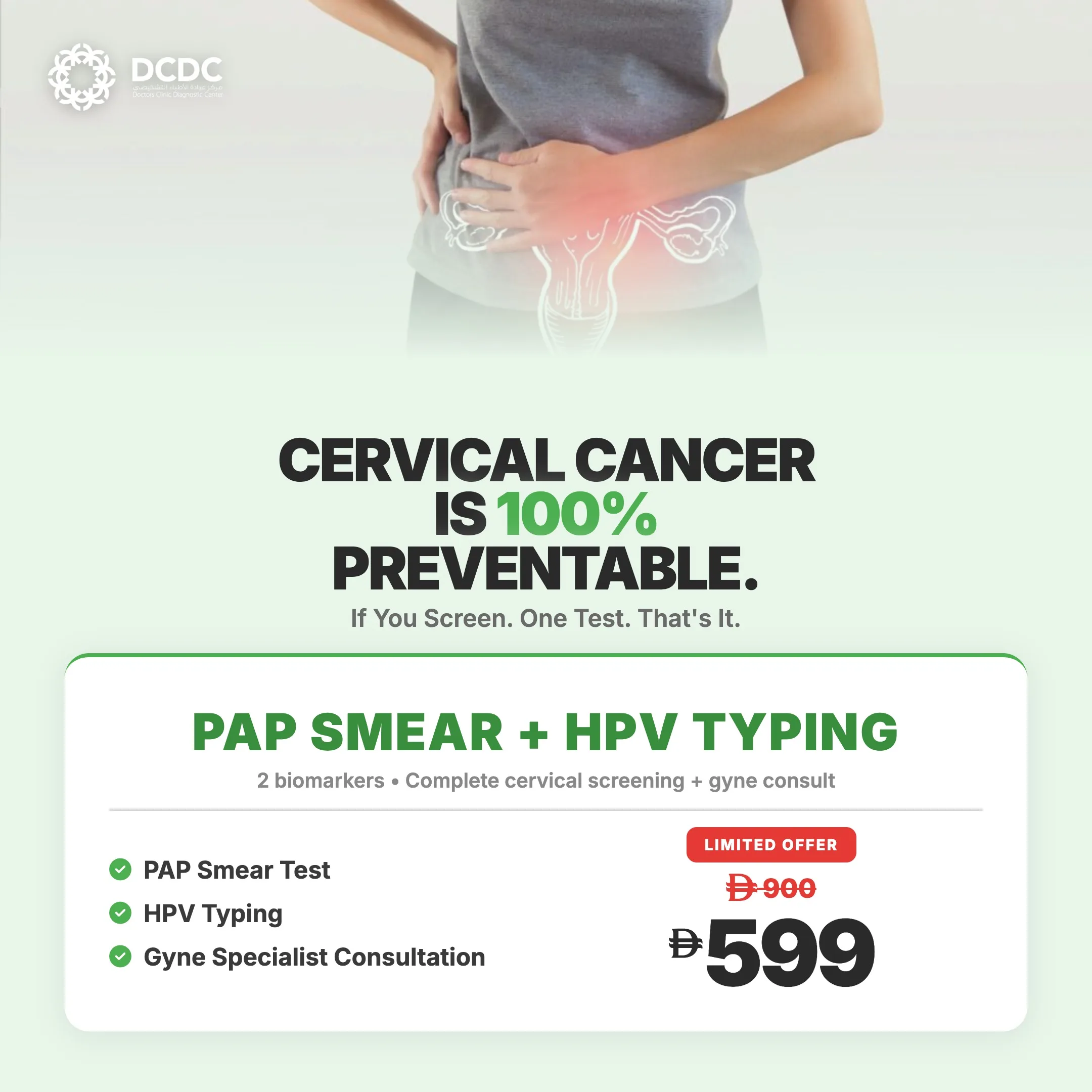
Health Screening Packages
Save with our bundled screening packages — specialist consultation included


Understanding Postpartum Depression: More Than Just "Baby Blues"
Postpartum depression (PPD) is a mood disorder that can develop any time in the first year after giving birth, though it most commonly begins within the first 4-6 weeks postpartum. It is caused by a combination of the dramatic hormonal shift that follows delivery — estrogen and progesterone levels drop sharply within 24-48 hours of birth — alongside sleep deprivation, the physical demands of recovery, and the psychological adjustment to a new identity as a parent.
It is important to understand that postpartum depression is a recognized medical condition, not a character flaw, a lack of love for your baby, or a failure of willpower. According to the World Health Organization and the American College of Obstetricians and Gynecologists (ACOG), depression and anxiety are among the most common complications of pregnancy and childbirth, and both organizations recommend that every mother be screened for mood symptoms at least once during the perinatal period.
Common Signs and Symptoms of Postpartum Depression
Postpartum depression symptoms can appear gradually or arrive suddenly, and they vary in intensity from mild to severe. Unlike ordinary new-parent tiredness, these symptoms are persistent, interfere with daily functioning, and do not improve with rest or reassurance. Common signs include:
- Persistent sadness or emptiness that lasts most of the day, nearly every day, for two weeks or longer.
- Loss of interest or pleasure in activities you used to enjoy, including time with your baby.
- Excessive guilt or feelings of worthlessness, often centered on being "a bad mother."
- Difficulty bonding with your baby, or feeling emotionally numb or detached during feeding and caregiving.
- Severe mood swings, irritability, or anger that feels out of proportion or out of character.
- Sleep problems unrelated to the baby's schedule — unable to sleep even when the baby is sleeping, or sleeping far more than usual.
- Changes in appetite — eating significantly more or less than usual.
- Overwhelming fatigue or loss of energy that goes beyond normal newborn-related exhaustion.
- Difficulty concentrating, remembering details, or making decisions.
- Intense anxiety or panic attacks, including racing, intrusive worries about the baby's safety or health.
- Withdrawing from family and friends, or avoiding social contact you would normally welcome.
- Recurrent thoughts of death, self-harm, or harming the baby — this always requires immediate medical attention.
Not every mother with postpartum depression experiences every symptom, and severity varies widely. Some women describe a constant low-grade heaviness; others describe sudden waves of panic or rage that feel completely unlike them. What all of these presentations share is that the symptoms persist beyond two weeks and begin to interfere with caring for yourself, your baby, or your daily life.
Postpartum depression symptoms can also overlap with the ordinary physical recovery from childbirth, which is why many mothers dismiss early warning signs as simply being tired or sore. Our guide on postnatal recovery and physiotherapy after delivery explains what typical physical recovery looks like in the weeks after birth, which can help you tell the difference between expected fatigue and a mood change that needs attention.
Baby Blues vs Postpartum Depression: What's the Difference?
Nearly 80% of new mothers experience some form of the "baby blues" in the days after delivery — a short-lived wave of tearfulness, mood swings, and mild anxiety driven by the sudden hormonal shift and the shock of new parenthood. Baby blues typically start 2-3 days after birth, peak around day 5, and resolve on their own within about two weeks. Postpartum depression is different: it lasts longer, feels more intense, and interferes with your ability to function or care for your baby.
| Feature | Baby Blues | Postpartum Depression |
|---|---|---|
| Onset | 2-3 days after delivery | Any time in the first year, most often 4-6 weeks postpartum |
| Duration | Resolves within about 10-14 days | Persists for weeks to months without treatment |
| Typical symptoms | Tearfulness, mood swings, mild anxiety, irritability | Persistent sadness, hopelessness, severe anxiety, guilt, detachment |
| Impact on daily function | You can still care for yourself and your baby | Daily tasks and caregiving become difficult or overwhelming |
| Thoughts of self-harm | Absent | May be present — always requires urgent evaluation |
| Needs treatment? | Usually resolves on its own with rest and support | Typically improves fastest with therapy, medication, or both |
If symptoms last longer than two weeks, feel more severe than "the blues," or interfere with your ability to function, it is time to speak with a doctor.
Postpartum Anxiety and Other Perinatal Mood Disorders
Depression is not the only mood disorder that can affect new mothers. Postpartum anxiety is at least as common and often overlaps with depressive symptoms. It can show up as constant, racing worry about the baby's health or safety, physical symptoms like a pounding heart or shortness of breath, an inability to sit still or relax, and intrusive "what if" thoughts that feel impossible to switch off.
- Postpartum anxiety: excessive, hard-to-control worry, restlessness, and physical tension that goes beyond typical new-parent nerves.
- Postpartum panic disorder: sudden episodes of intense fear with physical symptoms such as chest tightness, dizziness, or a racing heart.
- Postpartum obsessive-compulsive symptoms: unwanted, intrusive thoughts (often about accidental harm to the baby) paired with repetitive checking or avoidance behaviors.
- Postpartum psychosis (rare but serious): confusion, hallucinations, delusional thinking, or paranoia that begins suddenly, usually within the first two weeks after birth — this is a medical emergency requiring immediate treatment.
If your anxiety feels constant, physically exhausting, or is accompanied by intrusive thoughts you cannot shake, it deserves the same clinical attention as depressive symptoms. Anxiety and depression frequently occur together in the postpartum period, and effective treatment usually addresses both.
Risk Factors That Increase Your Chances of Postpartum Depression
Postpartum depression can affect any new mother, regardless of how much she wanted or planned for her pregnancy. That said, research has identified several factors that increase risk, which can help you and your doctor stay alert to early warning signs:
- A personal or family history of depression, anxiety, or other mood disorders, including depression during a previous pregnancy.
- Depressive symptoms during this pregnancy — antenatal depression is one of the strongest predictors of postpartum depression.
- Lack of practical or emotional support from a partner, family, or community — a common challenge for expat mothers living far from their usual support network.
- Pregnancy or delivery complications, including a difficult birth, premature delivery, or gestational diabetes.
- A baby with health problems or extra care needs, including time spent in the NICU.
- Significant life stress around the time of birth, such as relocation, financial strain, or relationship conflict.
- Sleep deprivation, which both contributes to and worsens depressive symptoms.
- Breastfeeding difficulties or unmet expectations around feeding.
- A history of trauma or abuse.
In Dubai specifically, many mothers are managing new parenthood without the built-in support of nearby parents, sisters, or lifelong friends — a structural risk factor that is often overlooked. Arranging practical help at home can meaningfully reduce this burden; our guide to mother and baby home care in Dubai covers what postnatal home support looks like and how it can protect both your physical recovery and your mental health.
Self-Assessment: Questions to Ask Yourself
Doctors often use a validated 10-question tool called the Edinburgh Postnatal Depression Scale (EPDS) to screen for postpartum depression — it takes about five minutes and can be used any time in the first year after birth. While a formal EPDS score should always be interpreted by a clinician, asking yourself the following honest questions can help you decide whether it is time to reach out for professional support:
- In the past two weeks, have I been able to laugh and see the funny side of things, or has that felt impossible?
- Have I been able to look forward to things with any enjoyment, or does everything feel flat?
- Have I blamed myself unnecessarily when things went wrong?
- Have I felt anxious or worried for no clear reason?
- Have I felt scared or panicky for no obvious reason?
- Have things been piling up on top of me in a way I can't cope with?
- Have I been so unhappy that I've had trouble sleeping, even when I have the chance to rest?
- Have I felt sad or miserable most of the time?
- Have I been so unhappy that I have cried?
- Has the thought of harming myself occurred to me?
If you answered yes to several of these questions — and especially if you answered yes to the last one — please do not wait to see if things improve on their own. Reach out to a doctor, a trusted family member, or a crisis line today.
When to See a Doctor: An Urgency Guide
Not every difficult day after childbirth requires an urgent appointment, but certain patterns and symptoms should prompt you to seek help sooner rather than later. Use this guide to help gauge how quickly to act:
See a doctor within the next few days if:
- Sadness, anxiety, or irritability has lasted longer than two weeks.
- You are having trouble bonding with your baby or feel emotionally numb.
- You are struggling to complete basic daily tasks, such as eating, showering, or caring for the baby.
- You are relying heavily on your partner or family to manage newborn care because you feel unable to.
- Worry or intrusive thoughts feel constant and hard to control.
Seek same-day medical care if:
- You feel completely overwhelmed, hopeless, or unable to see a way forward.
- You are experiencing panic attacks or physical symptoms of severe anxiety.
- You notice sudden confusion, unusual beliefs, or you are seeing or hearing things others do not (possible postpartum psychosis).
This is a medical emergency — call for help immediately if:
- You have thoughts of harming yourself.
- You have thoughts of harming your baby.
- You feel you cannot keep yourself or your baby safe.
In a mental health emergency, call the UAE's free, confidential 800-HOPE (800-4673) helpline, available in Arabic and English, or go to the nearest emergency room. You do not have to manage this alone, and asking for help is a sign of strength, not failure.
Postpartum Depression in Dubai: Cultural Stigma and the Expat Experience
Postpartum depression is more common in the UAE than many people realize. Regional studies estimate that anywhere from 12% to 33% of new mothers in the UAE experience postpartum depression, with a pooled estimate across the Middle East of around 27% — notably higher than the 10-20% typically reported worldwide.
Two factors make Dubai's context unique. First, cultural stigma remains a significant barrier: research on Arab mothers in the UAE has found that many do not recognize postpartum depression as a medical or psychological condition at all, sometimes attributing symptoms to spiritual causes rather than a treatable illness — which delays care and can leave mothers feeling isolated and misunderstood.
Second, more than 80% of Dubai's population is made up of expatriates, many of whom are raising a newborn without nearby parents, siblings, or lifelong friends to lean on. Add Dubai's long, extremely hot summer months — which can mean weeks of limited outdoor activity and reduced social contact — and the isolation that fuels postpartum depression can intensify. Recognizing these pressures is the first step toward addressing them, and it is exactly why confidential, judgment-free, multilingual care matters so much here.
Treatment Options for Postpartum Depression
The good news is that postpartum depression is highly treatable, and most mothers see meaningful improvement with the right support. Treatment is individualized based on symptom severity, personal preference, and whether you are breastfeeding.
- Talk therapy (psychotherapy): Cognitive behavioral therapy (CBT) and interpersonal therapy (IPT) are both well-studied, effective treatments for postpartum depression, either alone for mild-to-moderate symptoms or alongside medication for more severe cases.
- Medication: Antidepressants, particularly SSRIs, are effective for postpartum depression and several are considered compatible with breastfeeding — your doctor will help you weigh the options based on your individual situation.
- Support groups: Connecting with other mothers experiencing similar struggles can reduce isolation and normalize what you are going through.
- Practical support at home: Help with newborn care, household tasks, and sleep can meaningfully reduce symptom severity, particularly for mothers without nearby family.
- Partner and family involvement: Treatment tends to work best when partners and close family are informed, supportive, and actively share caregiving responsibilities.
- Follow-up monitoring: Regular check-ins with your OB-GYN or a mental health professional help track progress and adjust treatment as needed.
According to Dr. Parisa Dini, 'One of the most important things I want new mothers in Dubai to know is that postpartum depression is common, it is treatable, and asking for help does not make you a bad mother. My approach focuses on preventive women's health at every stage — from pregnancy through menopause — and that includes checking in honestly about mood and emotional wellbeing at every postpartum visit, not just physical recovery.'
Not Sure If What You're Feeling Is Normal?
Book a confidential postpartum consultation at DCDC. Our women's health packages start from AED 299, with same-week appointments available.
Direct billing with 20+ insurance partners. Multilingual care in Arabic, English, Farsi, Urdu, and Hindi.
What to Expect at DCDC for Postpartum Mental Health Support
At Doctors Clinic Diagnostic Center in Dubai Healthcare City, postpartum mental health support is built into our broader postpartum care pathway — not treated as a separate, harder-to-access service. Here is what a visit typically looks like:
- Step 1 — Easy booking: Schedule online, by phone, or via WhatsApp. With extended hours (Saturday-Thursday 8 AM-10 PM, Friday 9 AM-9 PM) and an average wait time of just 15 minutes, you can be seen without a long wait or disrupting your baby's schedule.
- Step 2 — A private, judgment-free conversation: Dr. Parisa Dini and our women's health team ask about your mood, sleep, appetite, bonding with your baby, and support at home — in a confidential setting where you are encouraged to answer honestly.
- Step 3 — Screening: Where appropriate, a validated screening questionnaire (such as the EPDS) helps quantify symptom severity and guide next steps.
- Step 4 — A personalized plan: Depending on your symptoms, this may include a referral for talk therapy, a discussion of medication options compatible with breastfeeding, practical guidance for your family, or simply a scheduled follow-up to monitor how you're doing.
- Step 5 — Ongoing follow-up: Postpartum mood symptoms are monitored across your recovery, not just at a single six-week check, because postpartum depression can emerge at any point in the first year.
DCDC maintains a 4.8/5 Google rating from over 1,000 verified patient reviews and a 98% patient satisfaction rate. As a MOHAP-licensed facility (License No. NIMY7VY5-240925) at Building 64, Block A, Al Razi Medical Complex in Dubai Healthcare City, we combine clinical rigor with genuine compassion — with free on-site parking and a multilingual team fluent in Arabic, English, Farsi, Urdu, and Hindi, so language is never a barrier to getting support.
Continuity of care matters for postpartum mental health — the OB-GYN who cared for you during pregnancy is often best placed to notice changes in your mood after delivery. If you are still choosing where to receive prenatal and postpartum care, our guide to finding a pregnancy doctor in Dubai explains what to look for in a provider who will support you through the entire journey, not just delivery.
How Partners and Family Can Help
Postpartum depression affects the whole family, and partners and close family members play a crucial role in recovery. Supporting a new mother effectively often means more than good intentions — it means specific, practical action:
- Take the symptoms seriously. Avoid phrases like "just get some sleep" or "you'll snap out of it" — postpartum depression is a medical condition, not a mood that can be willed away.
- Share nighttime and caregiving duties wherever possible, so the new mother gets protected blocks of uninterrupted sleep.
- Encourage — and help arrange — professional support rather than waiting for her to ask, since guilt and exhaustion often make it hard to reach out.
- Watch for warning signs of worsening symptoms, especially any mention of hopelessness or thoughts of self-harm, and treat these as urgent.
- Reduce isolation by helping her stay connected to friends, family, or other new mothers, particularly important in Dubai where extended family may not be nearby.
- Take care of your own mental health too — partners can experience postpartum depression as well, and a supported partner is better able to support a new mother.
Good postpartum mental health support builds on the foundation of comprehensive care throughout pregnancy. Staying on top of routine care during pregnancy — including recommended vaccines during pregnancy in Dubai — helps set both mother and baby up for a healthier start, and keeps you connected to a care team that knows your history well before delivery.
Prevention: Building a Support Plan Before Your Baby Arrives
While postpartum depression cannot always be prevented, planning ahead can reduce risk and shorten the time to treatment if symptoms do appear:
- Discuss your mental health history with your OB-GYN during pregnancy, especially if you have had depression or anxiety before.
- Arrange practical help for the first few weeks after delivery — whether that's family visiting, a postpartum doula, or professional home care support.
- Talk with your partner about caregiving roles before the baby arrives, so expectations around nighttime duties and rest are clear.
- Identify a few trusted people you can be completely honest with about how you're really feeling.
- Know the warning signs in advance — and know who you will call if you notice them.
- Schedule a postpartum check-in that specifically addresses mood, not only physical recovery.
Cost of Postpartum Mental Health Support in Dubai
Cost concerns should never stand between a new mother and the support she needs. DCDC offers transparent, accessible pricing with direct insurance billing across 20+ providers, including Daman, AXA, Bupa, MetLife, and Cigna.
| Service | DCDC Price | Dubai Average |
|---|---|---|
| Women's health consultation | From AED 299 | AED 350-800 |
| Postpartum follow-up visit | From AED 299 | AED 300-700 |
| Women's health packages | AED 299-1,499 | AED 400-2,000 |
| Referral to mental health specialist | Coordinated on-site | Varies by provider |
Prices are indicative and may vary based on insurance coverage and specific services required. Direct billing available with 20+ insurance partners.
Our patient services team verifies your insurance coverage before your appointment so there are no surprises. For self-pay patients, our women's health packages provide a transparent, bundled way to access consultation and follow-up care.
You Don't Have to Manage This Alone
Schedule a confidential postpartum wellbeing check at DCDC. Same-week appointments, on-site care, and a team that speaks your language.
Building 64, Block A, Al Razi Medical Complex, Dubai Healthcare City. Call or WhatsApp to book.
Related Services at DCDC
Expert care and advanced diagnostics at Dubai Healthcare City
Frequently Asked Questions
Final Thoughts
Postpartum depression is common, treatable, and nothing to be ashamed of. The signs are real, physical, and medical — not a reflection of how much you love your baby or how capable a mother you are. The single most important step is recognizing that ordinary new-parent tiredness looks and feels different from postpartum depression, and giving yourself permission to ask for help the moment something feels persistently wrong.
At Doctors Clinic Diagnostic Center in Dubai Healthcare City, Dr. Parisa Dini and our women's health team are here to listen without judgment, screen thoroughly, and build a treatment plan around your needs — whether that means therapy, medication, practical support at home, or simply a caring conversation to help you feel less alone. With same-week appointments, multilingual care, and women's health packages from AED 299, getting support has never been more accessible. If any of the signs in this guide sound familiar, please reach out today.
Sources & References
This article was reviewed by our medical team and references the following sources:
- World Health Organization — Maternal Mental Health
- American College of Obstetricians and Gynecologists (ACOG) — Postpartum Depression
- NHS — Postnatal Depression Overview
- Mayo Clinic — Postpartum Depression: Symptoms and Causes
- Cleveland Clinic — Baby Blues vs. Postpartum Depression
- Prevalence of Postpartum Depression among Mothers in the Emirates of Abu Dhabi (PMC)
- Perceived mental health experiences and needs of postpartum mothers in the UAE — a focus group study
Medical content on this site is reviewed by DHA-licensed physicians. See our editorial policy for more information.

Written by
Dr. Parisa Dini
OB-GYN
MD, OB-GYN
Dr. Parisa Dini is an OB-GYN at Doctors Clinic Diagnostic Center (DCDC) in Dubai Healthcare City.
Related Articles
Postnatal Recovery: Physiotherapy After Delivery (2026)

Mother & Baby Home Care Dubai: Guide (2026)

Pregnancy Doctor Dubai: Prenatal Care (2026)
Vaccines During Pregnancy Dubai: Safety Guide (2026)
More in Women's Health

BRCA Test: Who Should Consider Genetic Counselling?
Read More
Breast Cancer Awareness Month: October 2026 Dubai
Read More
Dense Breast Tissue: What Your Mammogram Report Means
Read More
Emsella After Childbirth Dubai: Postpartum Guide (2026)
Read More
How Emsella Works: Pelvic Floor Chair Guide Dubai (2026)
Read MorePelvic Floor Physiotherapy Dubai: Who Needs It (2026)
Read More© 2026 Doctors Clinic Diagnostic Center (DCDC), Dubai Healthcare City. Originally published at https://doctorsclinicdubai.ae/blog/postpartum-depression-signs-dubai. All rights reserved. Unauthorized reproduction is prohibited.