Key Takeaways
- Closed-bore MRI (1.5T–3T) produces the sharpest, most detailed images and remains the clinical standard for complex diagnostic work.
- True open MRI removes the enclosed tunnel entirely, making it the most comfortable option for severely claustrophobic patients, though image quality is generally lower than closed-bore systems.
- Wide-bore MRI — a 70 cm opening at DCDC versus the 55–60 cm standard — combines full 1.5T image quality with a noticeably roomier, shorter tunnel, reducing anxiety without sacrificing diagnostic detail.
- Independent surveys estimate that roughly 2–14% of patients cannot complete a standard closed-bore scan without an alternative approach, and up to a third report some anxiety during the exam.
- DCDC offers both a Siemens 1.5T wide-bore MRI and a true open MRI, so patients are never forced to trade comfort for accuracy.
- Pricing at DCDC starts from AED 699 for open MRI and AED 900 for a standard single-region MRI, with results delivered in 18–24 hours through a secure patient portal.
- Every scan — regardless of scanner type — is read by a subspecialty radiologist at DCDC: neuroradiologists for brain studies, musculoskeletal (MSK) radiologists for joint and spine imaging.
If your doctor has referred you for an MRI scan services at DCDC, one of the first questions you may face is which type of machine to choose. Not every MRI scanner is built the same way. Closed-bore systems offer the highest image resolution but require lying inside a narrow tunnel. Open MRI removes the tunnel altogether, prioritizing comfort for anxious or larger-bodied patients. And wide-bore MRI sits in between, delivering closed-bore image quality through a noticeably roomier opening. This guide breaks down exactly how these three designs differ so you can discuss the right option with your referring doctor and radiologist.
We compare bore size, magnetic field strength, image quality, scan time, noise, and cost side by side, then walk through which option makes sense for specific conditions, body types, and anxiety levels. We also explain what the MRI experience actually looks like at DCDC in Dubai Healthcare City, including our Siemens 1.5T wide-bore scanner and our true open MRI option, so you know exactly what to expect before you arrive.


Understanding MRI Scanner Types
An MRI (magnetic resonance imaging) scanner uses a strong magnet, radio waves, and a computer to build detailed images of soft tissue, organs, joints, and the brain — without radiation. What varies between machines is the shape of the magnet housing and the strength of the magnetic field, and both factors change the patient experience and the image quality you get back.
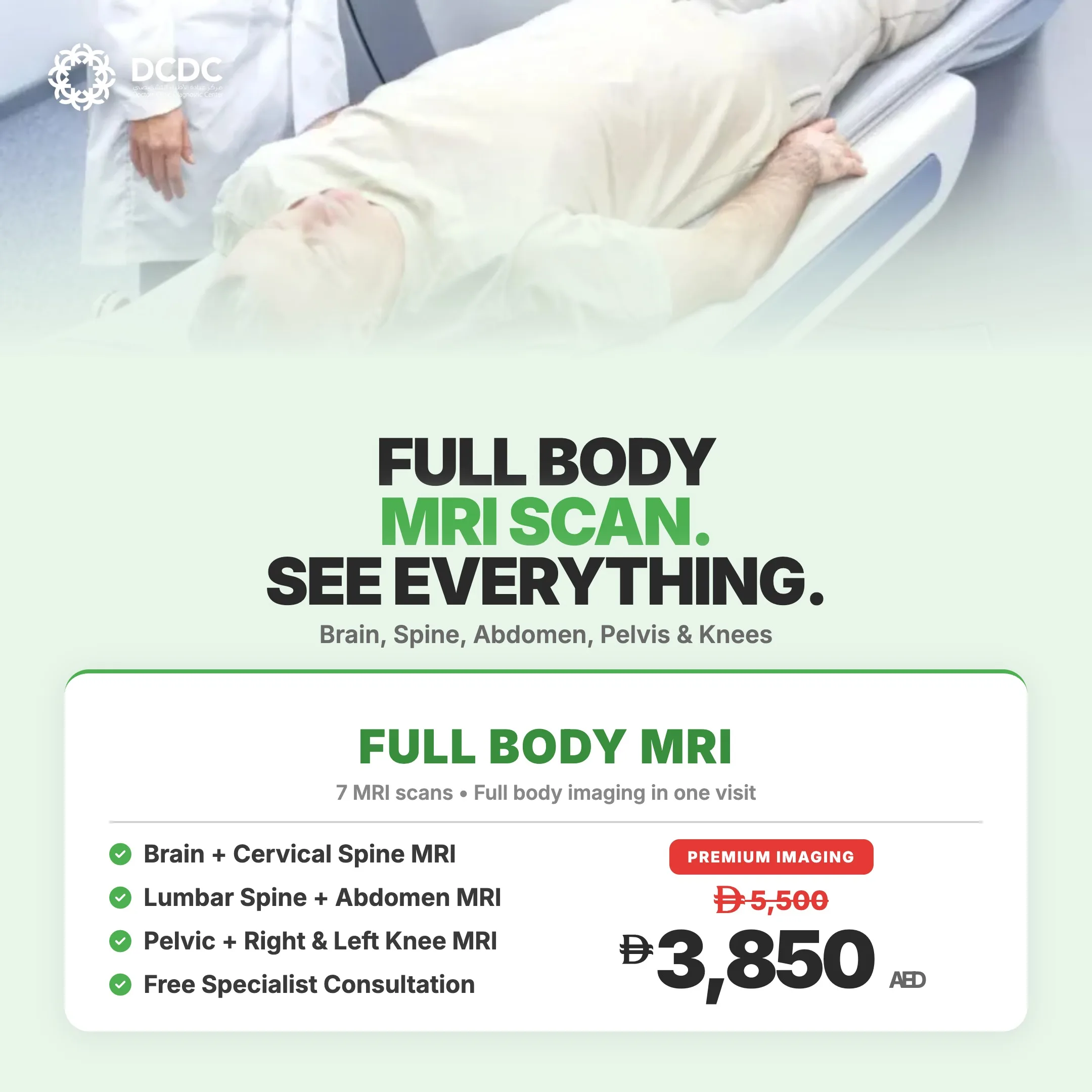
There are three broad categories in everyday use: closed-bore (traditional) MRI, which fully encloses the patient inside a cylindrical tunnel; true open MRI, which removes the tunnel and positions magnets above and below the patient with the sides left open; and wide-bore MRI, a closed-bore design with a substantially larger opening (often 70 cm instead of the standard 55–60 cm) that keeps full image quality while easing the feeling of confinement.
Understanding these differences matters because the "best" scanner is not the same for every patient or every clinical question. A detailed brain tumor workup and a routine knee scan for a claustrophobic patient may call for two very different machines.
Open vs Closed MRI: Complete Comparison Table
Here is how the three main scanner types stack up across the factors that matter most to patients.
| Feature | Closed (Traditional) MRI | Open MRI | Wide-Bore MRI |
|---|---|---|---|
| Design | Fully enclosed cylindrical tunnel | Open on the sides — no enclosed tunnel | Enclosed but with a much wider, shorter tunnel |
| Bore size | 55–60 cm | No tunnel (magnets above/below patient) | 70 cm at DCDC vs. the 55–60 cm standard |
| Magnetic field | 1.5T – 3T | 0.2T – 1.2T | 1.5T |
| Image quality | Highest available resolution | Lower resolution — adequate for many routine studies | High — equivalent to a standard closed-bore 1.5T scan |
| Scan time | 20–45 minutes | 30–60 minutes | 20–45 minutes |
| Claustrophobia risk | Most common trigger point | Minimal to none | Significantly reduced vs. standard closed-bore |
| Body size accommodation | Up to roughly 120–150 kg | More flexible, often 200 kg+ | Up to roughly 200 kg |
| Noise level | Loud (85–110 dB knocking/buzzing) | Moderate | Moderate to loud — same magnet, more surrounding space |
| Best for | Detailed diagnostics, complex or subtle findings | Severely anxious patients, children, larger patients | Most patients — comfort without an image quality trade-off |
Wide-bore MRI is generally the first recommendation for anxious patients because it keeps 1.5T image quality intact.
Image Quality: How Do They Compare?
Image quality in MRI is driven mainly by magnetic field strength, measured in Tesla (T). A stronger field captures more signal from hydrogen atoms in the body, which translates into sharper, more detailed images. Standard closed-bore scanners run at 1.5T or 3T, while true open MRI systems typically operate between 0.2T and 1.2T to allow the open magnet design.
In practical terms, this means closed-bore and wide-bore 1.5T scanners resolve smaller structures — subtle disc bulges, small cartilage tears, early-stage lesions — more reliably than lower-field open systems. Open MRI is generally considered good enough for many routine musculoskeletal and spine studies, but for high-detail work such as small brain lesions, breast imaging, or detailed cartilage assessment, radiologists usually prefer a higher-field closed-bore or wide-bore scan.
This is exactly why wide-bore MRI has become popular: it keeps the full 1.5T field strength and therefore the same diagnostic image quality as a standard closed-bore scan, while widening the opening from the standard 55–60 cm to 70 cm at DCDC. You are not choosing between comfort and accuracy — you get both.
For a deeper look at how MRI pricing and scan types break down in Dubai, see our complete guide to MRI scans in Dubai.
Claustrophobia and Patient Comfort
Claustrophobia is the single biggest reason patients dread MRI. Published estimates vary, but research suggests roughly 2% to 14% of patients cannot complete a standard closed-bore scan without some form of intervention, and close to a third report some degree of anxiety during the exam. Triggers include the narrow tunnel, the loud knocking noise, and the feeling of being unable to move for 20 to 45 minutes.
True open MRI addresses this directly by removing the tunnel altogether. Because the sides are open, patients can see out of the machine and often have a family member sit nearby throughout the scan. For patients with severe anxiety, panic disorder, or extreme claustrophobia, a true open MRI is frequently the only way to complete the scan without sedation.
Wide-bore MRI takes a middle path. The wider opening — 70 cm at DCDC compared with a standard 55–60 cm bore — means less of the body is enclosed at any one time, more headroom, and a shorter overall tunnel length, all of which meaningfully reduce the feeling of confinement for most anxious patients while keeping them inside a standard high-field magnet.
- Ask for a wide-bore or open MRI in advance so the appointment is scheduled on the right machine
- Bring headphones or ask staff for music during the scan to help pass the time
- Request a mock trial or feet-first positioning if facing the tunnel opening increases anxiety
- Ask about mild oral sedation for severe cases — this should be arranged with your doctor beforehand
- Practice slow breathing techniques before and during the scan
Wide-Bore MRI: The Best of Both Worlds
Wide-bore MRI is often the most practical answer for the majority of patients who want closed-bore image quality without the tight, claustrophobic feeling of a standard tunnel. At DCDC, our Siemens 1.5T wide-bore MRI has a 70 cm opening — noticeably larger than the 55–60 cm standard used at many facilities — while operating at the same 1.5T field strength used for detailed diagnostic imaging.
The practical benefits show up immediately: more shoulder and elbow room inside the tunnel, a shorter physical bore length so the head or feet are less likely to sit deep inside the machine, and a higher weight and girth capacity that accommodates a wider range of body types comfortably.
According to Dr. Osama Elzamzami, "At DCDC, we often recommend our wide-bore MRI as the first option for claustrophobic patients because it combines the superior image quality of a 1.5T system with a significantly more comfortable scanning experience. For patients who still feel anxious, our true open MRI provides complete visibility during the scan."
Which MRI Type Is Best for Your Condition?
The right scanner depends on both the clinical question and the patient. Some studies genuinely need the highest available field strength; others are equally accurate on any well-maintained 1.5T or open system.
| Your situation | Recommended MRI type | Why |
|---|---|---|
| Suspected small brain lesion or tumor | Closed-bore 1.5T or 3T | Highest resolution needed to detect subtle abnormalities |
| Routine knee, shoulder, or spine MRI | Wide-bore 1.5T | Full diagnostic image quality with a more comfortable opening |
| Severe claustrophobia or panic disorder | Open MRI | No enclosed tunnel; family can stay in the room |
| Body weight or girth exceeds closed-bore limits | Open MRI or wide-bore MRI | Wide-bore and open systems accommodate a larger range of body sizes |
| Young child needing MRI | Open MRI (or wide-bore with support) | Parent can remain close by, often reducing the need for sedation |
| Joint replacement or spinal hardware in scan area | Wide-bore or standard 1.5T | 1.5T produces less metal artifact than higher-field 3T systems |
| Detailed cartilage or ligament assessment | Closed-bore 1.5T or 3T | Higher field strength resolves fine soft-tissue detail more reliably |
Your referring doctor and the radiologist reviewing your case will confirm the most appropriate scanner for your specific study.
If anxiety is your main concern rather than the scan itself, our full MRI claustrophobia guide covers coping techniques, sedation options, and what to expect step by step.
MRI for Children, Elderly, and Plus-Size Patients
Special populations often benefit most from open or wide-bore MRI. Children can find the noise and confinement of a standard tunnel frightening, and a parent standing beside an open MRI — or close to a wide-bore opening — can markedly reduce the need for sedation, which itself carries additional risks and recovery time for young patients.
Elderly patients with mobility limitations, back pain, or difficulty lying flat for extended periods often tolerate the shorter, wider tunnel of a wide-bore scanner far better than a standard closed-bore system. For patients who cannot lie still for long, shorter scan protocols can also be planned in advance.
Plus-size patients face a genuine mechanical limitation with standard closed-bore machines, which typically have weight limits around 120–150 kg and bore diameters that some patients simply cannot fit through comfortably. Open MRI systems, and to a lesser extent wide-bore systems, are built with higher weight capacities — often 200 kg or more — and more generous internal space, making an accurate scan possible where it otherwise might not be.
MRI Cost Comparison in Dubai
Pricing depends on the body region scanned, whether contrast is required, and the scanner type. Below is a general comparison of DCDC pricing against the wider Dubai market.
| MRI type | DCDC price | Dubai market range |
|---|---|---|
| Standard MRI (single region) | From AED 900 | AED 1,200 – 3,000 |
| Open MRI | From AED 699 | AED 900 – 2,500 |
| Full body MRI | From AED 3,850 | AED 5,000 – 10,000 |
| MRI with contrast | From AED 1,200 | AED 1,500 – 4,000 |
Prices vary by body region, contrast requirements, and insurance coverage. Confirm your exact quote when booking.
Insurance approval is generally based on medical necessity rather than which scanner is used, so the choice between open, wide-bore, or standard closed-bore MRI usually comes down to comfort and the clinical question rather than cost alone. Always confirm coverage details with your insurer before your appointment.
What to Expect at DCDC: Your MRI Experience
From the moment you arrive at DCDC in Dubai Healthcare City, the process is designed to reduce uncertainty and anxiety, whichever scanner you are booked on.
- Free parking is available on-site, and the center is open until 10 PM for flexible scheduling
- You will change into a gown if needed and complete a short safety screening questionnaire
- A technologist explains the scan, positioning, and roughly how long it will take before you go in
- Headphones with music are provided to help mask the knocking sound of the magnet
- On our 70 cm wide-bore MRI, most patients notice meaningfully more space than a standard 55–60 cm tunnel
- For a true open MRI, a family member can typically stay in the room with you throughout the scan
- Results are available within 18–24 hours, with same-day turnaround for urgent cases
- You can access your images and full report digitally through the DCDC patient portal
If you would like a step-by-step walkthrough of what happens before, during, and after your appointment, read our guide on MRI preparation in Dubai.
MRI Options at DCDC
Whether you need the sharpest possible detail or the most comfortable scanning experience, DCDC offers both a Siemens 1.5T wide-bore MRI and a true open MRI. Explore our MRI scan services and open MRI option to find the right fit.
How DCDC's Subspecialty Radiologists Make a Difference
The scanner is only half the story. Image interpretation is just as important as image acquisition, and this is where subspecialty expertise matters. At DCDC, brain and spine MRIs are read by neuroradiologists, while joint, ligament, and cartilage studies are reviewed by musculoskeletal (MSK) radiologists — the same subspecialty structure used at major academic imaging centers.
This matters regardless of which scanner you use. A well-performed wide-bore or open MRI interpreted by an experienced subspecialty radiologist consistently outperforms a technically higher-field scan reviewed by a general radiologist without focused training in that body region. DCDC is MOHAP-licensed, holds a 4.8/5 Google rating, and reports 98% patient satisfaction across its imaging services.
For a broader look at how different scan types compare across field strengths, see our related article on 1.5T vs 3T vs open MRI, and for common misconceptions about MRI safety, see our MRI myths vs facts guide.
Preparing for Your MRI Scan
Preparation is largely the same regardless of scanner type. Most patients do not need to fast unless contrast is being used or the study involves the abdomen. You should remove all metal objects, including jewelry, watches, and hairpins, and inform staff about any implants, pacemakers, or previous surgeries before your appointment.
- Wear comfortable clothing without metal zippers, buttons, or underwire where possible
- Bring a list of current medications and any relevant previous imaging or reports
- Arrive 15–20 minutes early to complete the safety screening questionnaire
- Tell the technologist in advance if you have any degree of claustrophobia so the right scanner can be arranged
- Ask about contrast (gadolinium) beforehand if your doctor has requested an enhanced study
If you know in advance that confinement is a concern, mention this when booking so your appointment can be scheduled on the wide-bore or open MRI rather than discovering the issue on the day of the scan.
Book Your MRI at DCDC Dubai Healthcare City
At Doctors Clinic Diagnostic Center, our team helps you choose between wide-bore and true open MRI based on your comfort level and clinical needs. Located in Dubai Healthcare City with free parking and evening hours until 10 PM.
Related Services at DCDC
Expert care and advanced diagnostics at Dubai Healthcare City
Frequently Asked Questions
Final Thoughts
Choosing between open, wide-bore, and closed MRI does not need to be complicated. For most patients and most clinical questions, a wide-bore 1.5T scanner offers the best combination of image quality and comfort. When anxiety or body size make even a wide-bore scanner difficult, a true open MRI allows the study to be completed successfully where it otherwise might not be.
The most important factor in getting an accurate result is not the machine alone but the combination of the right scanner for your situation, careful positioning and protocol selection by the technologist, and expert interpretation by a subspecialty radiologist.
For MRI imaging that balances comfort and diagnostic accuracy in Dubai, Doctors Clinic Diagnostic Center in Dubai Healthcare City offers both wide-bore and true open MRI options, interpreted by subspecialty radiologists, with results available within 18–24 hours.
Sources & References
This article was reviewed by our medical team and references the following sources:
- American College of Radiology - MRI Accreditation and Practice Parameters
- Radiological Society of North America (RSNA) - MRI Overview
- NHS - MRI Scan: What Happens
- Mayo Clinic - MRI Overview
- PubMed - Failed MRI Examinations Due to Claustrophobia
- PMC - Patient Preferences for MRI Scanner Design: A Survey of Claustrophobic Patients
Medical content on this site is reviewed by DHA-licensed physicians. See our editorial policy for more information.

Written by
Dr. Osama Elzamzami
Diagnostic Radiologist
MD, FRCR
Dr. Osama Elzamzami is a Diagnostic Radiologist at Doctors Clinic Diagnostic Center (DCDC) in Dubai Healthcare City, providing subspecialty interpretation for complex imaging cases.
Related Articles
MRI Cost Dubai: AED 900–15,000 by Type
MRI Claustrophobia Guide: Tips & Options
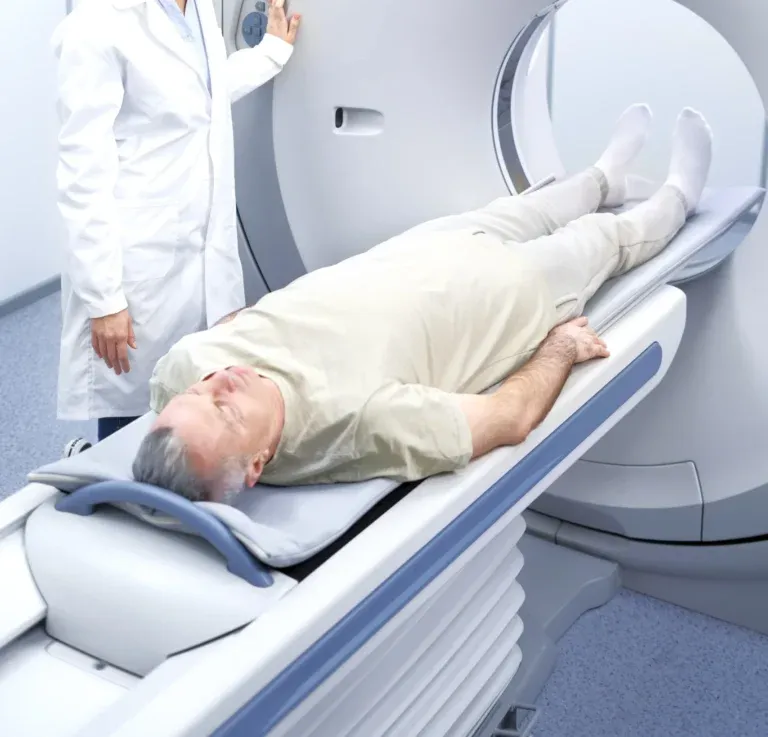
MRI Preparation Dubai: What to Expect
MRI Safety: 10 Myths vs Facts
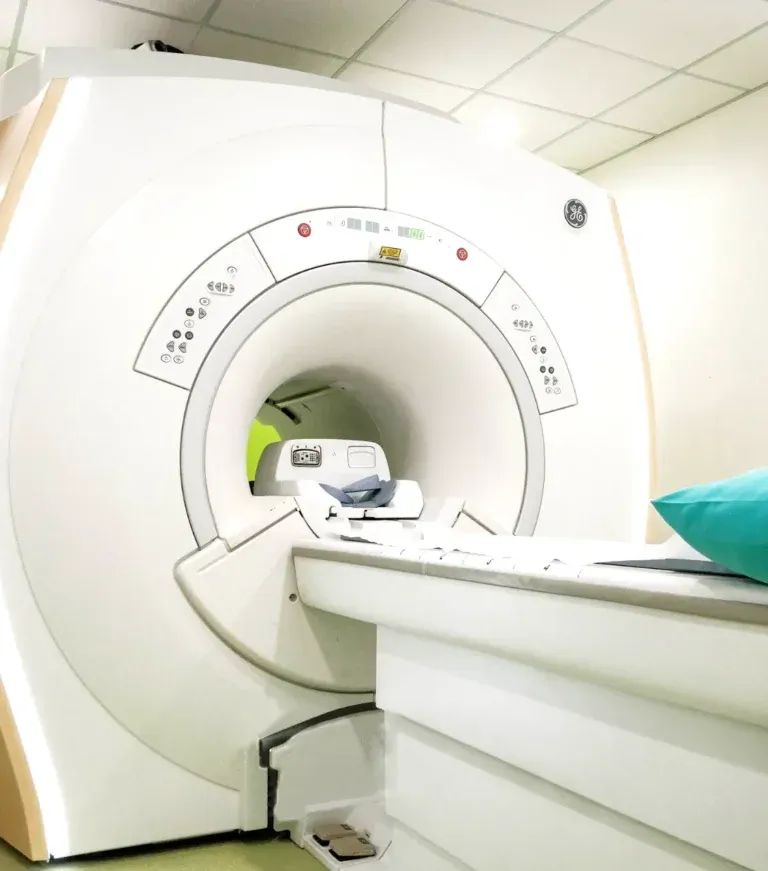
MRI Types Compared: Which Scan Do You Need?
More in Diagnostic Imaging

Chest X-Ray Cost Dubai: From AED 150 (2026)
Read More
CT Scan Cost Dubai: Prices & Types (2026)
Read More![Ultrasound Cost Dubai: AED 300-800 by Type [2026 Prices]](/wp-media/blog/ultrasound-scan-guide.webp)
Ultrasound Cost Dubai: AED 300-800 by Type [2026 Prices]
Read More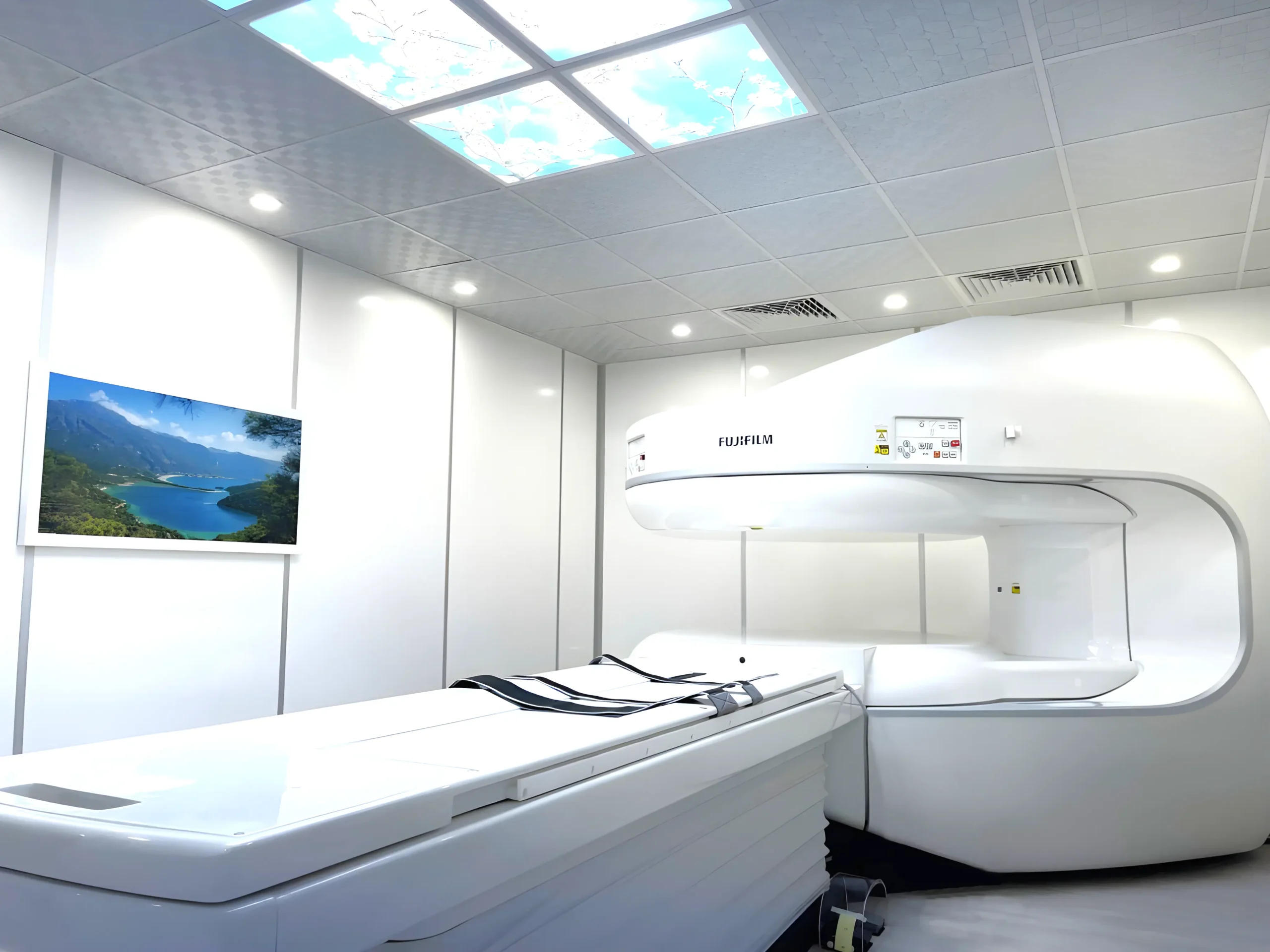
CT Scan vs Ultrasound Dubai: Which Test? (2026)
Read More
X-Ray Cost Dubai: Prices by Body Part (2026)
Read More
DEXA Scan Cost Dubai: From AED 399 (2026)
Read More© 2026 Doctors Clinic Diagnostic Center (DCDC), Dubai Healthcare City. Originally published at https://doctorsclinicdubai.ae/blog/open-mri-vs-closed-mri-dubai. All rights reserved. Unauthorized reproduction is prohibited.