Key Takeaways
- HRCT (High-Resolution CT) uses ultra-thin slices (1-2mm) to image lung tissue in exceptional detail, far beyond what standard CT provides
- Primary indications include interstitial lung disease (ILD), COPD assessment, bronchiectasis, post-COVID lung fibrosis, and unexplained shortness of breath
- HRCT can detect early-stage lung conditions that are invisible on chest X-rays and standard CT scans
- The scan takes 10-15 minutes, requires no contrast injection in most cases, and is painless
- Radiation dose is comparable to or lower than a standard chest CT due to the thin-slice, targeted acquisition technique
An HRCT scan (High-Resolution Computed Tomography) is a specialized type of CT scan that produces exceptionally detailed images of the lungs and chest structures. By using ultra-thin image slices of just 1-2 millimeters (compared to 5-10mm in standard CT), HRCT reveals the fine internal architecture of the lungs, including the airways, blood vessels, and delicate tissue between the air sacs. This level of detail makes HRCT the imaging gold standard for diagnosing and monitoring lung conditions that affect the lung tissue itself.
If you have been experiencing unexplained shortness of breath, persistent cough, or have an abnormal chest X-ray, your doctor may recommend an HRCT scan. It is also increasingly used for evaluating lung damage after COVID-19 infection. This guide explains what HRCT is, how it differs from a regular CT scan, what conditions it detects, how to prepare, and what to expect regarding cost in Dubai.



What Is an HRCT Scan and How Does It Differ From Standard CT?
Both HRCT and standard CT use X-ray technology to create cross-sectional images of the body. The critical difference lies in the slice thickness and reconstruction algorithm. Standard chest CT typically acquires slices at 5-10mm thickness, which is sufficient for detecting tumors, large fluid collections, and major structural abnormalities. HRCT uses slices of 1-2mm (sometimes even 0.5mm), combined with a sharp reconstruction algorithm that maximizes spatial resolution.
This thin-slice approach reveals the secondary pulmonary lobule, the functional unit of the lung, and the fine interstitial structures within it. Conditions that affect the lung at this microscopic level, such as interstitial lung diseases, early fibrosis, and subtle airway abnormalities, are only visible with HRCT-level detail.
| Feature | Standard Chest CT | HRCT Chest |
|---|---|---|
| Slice thickness | 5-10 mm | 1-2 mm (sometimes 0.5 mm) |
| Spatial resolution | Standard | Very high - resolves fine lung structures |
| Primary use | Tumors, lymph nodes, pleural disease, aorta | Interstitial lung disease, airways, lung parenchyma |
| Contrast injection | Often used | Rarely needed |
| Radiation dose | Moderate (3-7 mSv) | Low to moderate (1-3 mSv with modern protocols) |
| Scan time | 5-10 minutes | 10-15 minutes |
| Prone images | Not standard | Often included to distinguish gravity-dependent opacity from true disease |
| Expiratory images | Not standard | Often included to detect air trapping |
HRCT provides significantly higher spatial resolution for lung tissue detail at comparable or lower radiation doses.
Conditions Diagnosed With HRCT
HRCT is the definitive imaging tool for a wide range of lung and chest conditions. Many of these conditions cannot be reliably diagnosed with standard CT or chest X-ray.
Interstitial Lung Diseases (ILD)
ILD is a group of over 200 disorders affecting the lung interstitium (the tissue between the air sacs). The most common include idiopathic pulmonary fibrosis (IPF), sarcoidosis, hypersensitivity pneumonitis, and connective tissue disease-related ILD. HRCT patterns are so characteristic for many ILDs that a confident diagnosis can often be made from imaging alone, without the need for lung biopsy. The pattern and distribution of abnormalities (ground-glass opacity, reticulation, honeycombing, traction bronchiectasis) provide specific diagnostic information.
COPD Assessment
HRCT detects emphysema (destruction of air sacs) with much greater sensitivity than chest X-ray or standard CT. It quantifies the extent and distribution of emphysema, identifies coexisting bronchial wall thickening, and detects air trapping on expiratory images. This information helps pulmonologists determine COPD severity and select appropriate treatments, including whether a patient might benefit from lung volume reduction surgery or bronchoscopic interventions.
Bronchiectasis
Bronchiectasis is irreversible dilation of the airways, often caused by chronic infection, immune deficiency, or conditions like cystic fibrosis. HRCT is the gold standard for diagnosing bronchiectasis because it clearly shows airway dilation, bronchial wall thickening, and the "signet ring sign" (dilated bronchus larger than its adjacent blood vessel). The distribution pattern on HRCT often suggests the underlying cause.
Post-COVID Lung Assessment
Since the COVID-19 pandemic, HRCT has become essential for evaluating lung damage in patients with persistent respiratory symptoms after infection. Post-COVID fibrosis, organizing pneumonia, and residual ground-glass opacities are all well-visualized on HRCT. For patients experiencing ongoing shortness of breath or reduced exercise tolerance months after COVID infection, HRCT provides objective evidence of whether structural lung damage is present and helps guide rehabilitation decisions.
Other Conditions
- Asbestosis and occupational lung diseases: HRCT detects pleural plaques and early parenchymal fibrosis from occupational exposure
- Drug-induced lung toxicity: Certain medications (amiodarone, methotrexate, bleomycin) can cause lung damage visible on HRCT before symptoms develop
- Pulmonary alveolar proteinosis: The "crazy paving" pattern on HRCT is highly characteristic
- Lymphangioleiomyomatosis (LAM): Thin-walled cysts scattered throughout the lungs are diagnostic on HRCT
- Fungal infections: The "halo sign" and other HRCT patterns help diagnose invasive fungal infections in immunocompromised patients
When Does Your Doctor Order an HRCT?
HRCT is not a routine screening test. It is ordered when specific clinical scenarios suggest that detailed lung imaging will change diagnosis or management: For related information, see our guide on CT Scan Cost Dubai: Prices & Types.
- Unexplained shortness of breath that does not respond to initial treatment
- Persistent dry cough lasting more than 8 weeks without clear cause
- Abnormal findings on chest X-ray that need further characterization
- Known or suspected interstitial lung disease requiring pattern classification
- Monitoring progression of known lung fibrosis or ILD
- Post-COVID persistent respiratory symptoms beyond 3 months
- Suspected bronchiectasis based on recurrent infections or productive cough
- Evaluation of occupational lung disease exposure
- Pre-surgical assessment for lung transplantation or volume reduction surgery
- Abnormal pulmonary function tests suggesting restrictive or obstructive disease
If a standard chest X-ray shows suspicious findings but lacks the resolution to make a definitive diagnosis, HRCT is the logical next step. It provides the detail that chest X-ray simply cannot achieve.
HRCT Scan Preparation
Preparation for an HRCT scan is straightforward:
- Clothing: Wear comfortable clothing without metal fasteners near the chest. You may be asked to change into a hospital gown.
- No fasting required: You can eat and drink normally before the scan unless contrast is being used (which is uncommon for HRCT).
- Breathing instructions: You will practice holding your breath for 10-15 seconds during the scan. The technologist will guide you through this.
- Medications: Take all your regular medications as prescribed. Bring your inhaler if you use one, as you may need it before or after the scan.
- Pregnancy: Inform the staff if you are or might be pregnant. HRCT involves radiation and is generally avoided during pregnancy unless absolutely necessary.
- Previous imaging: Bring any previous chest X-rays, CT scans, or HRCT scans for comparison. Prior images help the radiologist identify changes over time.
Radiation Dose and Safety
A common concern about HRCT is radiation exposure. Modern HRCT protocols have been optimized to minimize dose while maintaining image quality. A typical HRCT scan delivers approximately 1-3 mSv of radiation, which is comparable to or lower than a standard chest CT (3-7 mSv). To put this in perspective:
- Chest X-ray: approximately 0.02 mSv
- HRCT chest: approximately 1-3 mSv
- Standard chest CT: approximately 3-7 mSv
- Annual background radiation: approximately 2-3 mSv
- CT abdomen: approximately 8-10 mSv
For diagnostic purposes, the radiation dose from HRCT is considered low risk. The clinical value of detecting serious lung conditions early far outweighs the minimal radiation risk. However, HRCT should not be performed without a valid medical indication, and alternatives like lung ultrasound may be considered when appropriate.
HRCT Scan Cost in Dubai
The cost of an HRCT scan in Dubai varies by facility and whether a pulmonologist consultation is included. You may also find our CBCT Scan: 3D Dental Imaging Guide Dubai helpful.
| Service | Cost Range (AED) | What's Included |
|---|---|---|
| HRCT chest scan | 800 - 1,500 | High-resolution lung imaging with radiologist report |
| HRCT with pulmonologist consultation | 1,200 - 2,500 | Scan plus specialist review and treatment planning |
| HRCT with pulmonary function tests | 1,500 - 3,000 | Comprehensive lung assessment combining imaging and function |
| Follow-up HRCT scan | 700 - 1,200 | Repeat scan with comparison to previous imaging |
HRCT is typically covered by insurance when ordered by a physician for specific medical indications.
Most health insurance plans in Dubai cover HRCT when it is medically indicated and ordered by a referring physician. Prior authorization may be required depending on your insurance provider.
"HRCT has transformed how we diagnose and monitor lung disease. Conditions that once required surgical lung biopsy for diagnosis can now often be classified by HRCT patterns alone. For patients with post-COVID lung symptoms, HRCT provides the objective evidence needed to guide rehabilitation and reassure patients about the extent of any residual damage," explains Dr. Osama Elzamzami.
Advanced Lung Imaging at DCDC
Our CT scan services include HRCT with ultra-thin slice protocols for detailed lung assessment. Same-day reporting by experienced radiologists.
Expert Chest Imaging at DCDC Dubai Healthcare City
At Doctors Clinic Diagnostic Center, our advanced CT scanner performs HRCT with optimized low-dose protocols. Located in Dubai Healthcare City with fast reporting and specialist referral pathways.
Related Services at DCDC
Expert care and advanced diagnostics at Dubai Healthcare City
Frequently Asked Questions
Final Thoughts
HRCT scanning is an indispensable tool for diagnosing and monitoring a wide range of lung conditions that standard imaging cannot adequately visualize. From interstitial lung disease and bronchiectasis to post-COVID fibrosis and occupational lung disorders, HRCT provides the detailed information that pulmonologists need to make accurate diagnoses and plan effective treatment.
If you are experiencing unexplained respiratory symptoms, have an abnormal chest X-ray, or need monitoring of a known lung condition, HRCT may be the key to getting answers. The scan is quick, painless, and delivers clinically critical information that can significantly change your treatment pathway.
For advanced HRCT imaging in Dubai, Doctors Clinic Diagnostic Center in Dubai Healthcare City offers state-of-the-art CT scanning with experienced radiologists and same-day reporting.
Sources & References
This article was reviewed by our medical team and references the following sources:
- American Thoracic Society - HRCT Guideline for ILD
- British Thoracic Society - HRCT Standards
- Radiological Society of North America - Chest CT Protocols
- European Respiratory Journal - HRCT Patterns in ILD
- Fleischner Society - HRCT Terminology
Medical content on this site is reviewed by DHA-licensed physicians. See our editorial policy for more information.

Written by
Dr. Osama Elzamzami
Consultant Radiologist
MD, Radiology
Dr. Osama Elzamzami is a Consultant Radiologist specializing in diagnostic imaging including CT, MRI, DEXA, and ultrasound at DCDC Dubai Healthcare City.
Related Articles
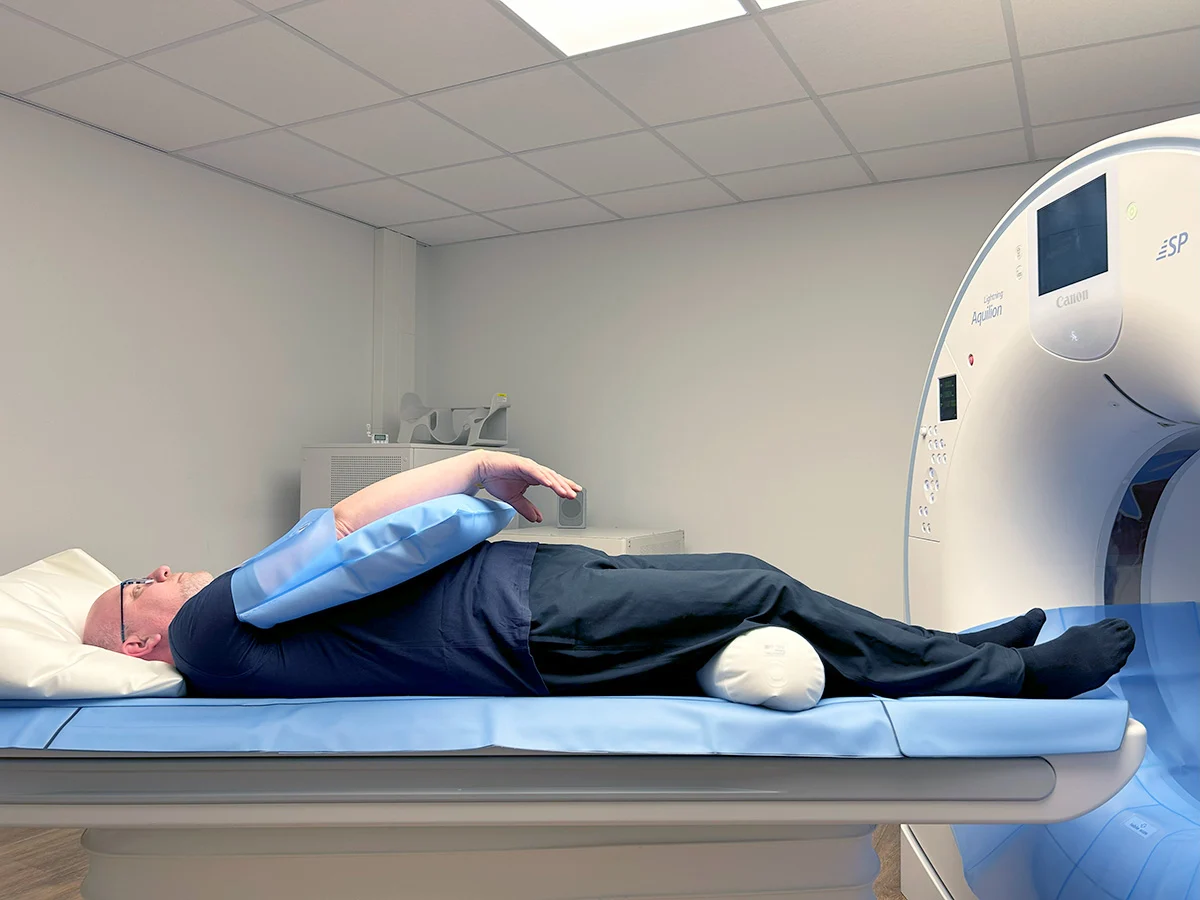
CT Scan Cost Dubai: Complete Guide
CT Scan vs MRI: Which Do You Need?

Chest X-Ray Cost Dubai
CT Scan Preparation Guide
More in Diagnostic Imaging
CT Scan vs Ultrasound Dubai: Which Test? (2026)
Read More
Open vs Closed MRI Dubai: Key Differences (2026)
Read More
X-Ray Cost Dubai: Prices by Body Part (2026)
Read More
DEXA Scan Cost Dubai: From AED 399 (2026)
Read MoreCT Scan Cost Dubai: Prices & Types (2026)
Read More
DEXA Scan Dubai: Cost, T-Score & Who Needs It (2026)
Read More© 2026 Doctors Clinic Diagnostic Center (DCDC), Dubai Healthcare City. Originally published at https://doctorsclinicdubai.ae/blog/hrct-scan-guide. All rights reserved. Unauthorized reproduction is prohibited.