Ключевые выводы
- Gestational diabetes screening with the oral glucose tolerance test (OGTT) costs from AED 200-400 at DCDC Dubai Healthcare City, with same-day results from the on-site laboratory
- All pregnant women should be screened for gestational diabetes between 24-28 weeks of pregnancy, regardless of risk factors -- the UAE has higher GDM prevalence than the global average
- Untreated gestational diabetes increases the risk of macrosomia (large baby), birth injuries, neonatal hypoglycaemia, and preeclampsia -- early detection prevents these complications
- DCDC offers comprehensive antenatal packages from AED 1,500-4,000 that include gestational diabetes screening, routine blood work, and ultrasound monitoring
- Women diagnosed with gestational diabetes receive a structured management plan at DCDC: dietary counselling, blood sugar self-monitoring, and medication if needed -- most cases are controlled with diet alone
- Insurance covers gestational diabetes screening when ordered by an obstetrician -- DCDC partners with 20+ insurers including Daman, AXA, Bupa, MetLife, and Cigna with direct billing
If you are pregnant and searching for gestational diabetes screening in Dubai, the oral glucose tolerance test (OGTT) starts from AED 200-400 at DCDC in Dubai Healthcare City. Gestational diabetes mellitus (GDM) affects an estimated 12-25% of pregnancies in the UAE -- significantly higher than the global average of 14% -- making universal screening at 24-28 weeks essential for every expectant mother. This guide covers everything you need to know: what the test involves, how much it costs, when to be screened, and what happens if you are diagnosed.
Gestational diabetes develops when your body cannot produce enough insulin to meet the increased demands of pregnancy. Unlike type 1 or type 2 diabetes, GDM typically appears in the second or third trimester and often resolves after delivery -- but it carries significant risks for both mother and baby if left undetected. At DCDC, our MOHAP-licensed obstetricians screen every pregnant patient for GDM using the internationally standardised OGTT, with results available the same day from our on-site laboratory. Whether you are a first-time mother or have had gestational diabetes in a previous pregnancy, this guide explains every step of the screening and management process.
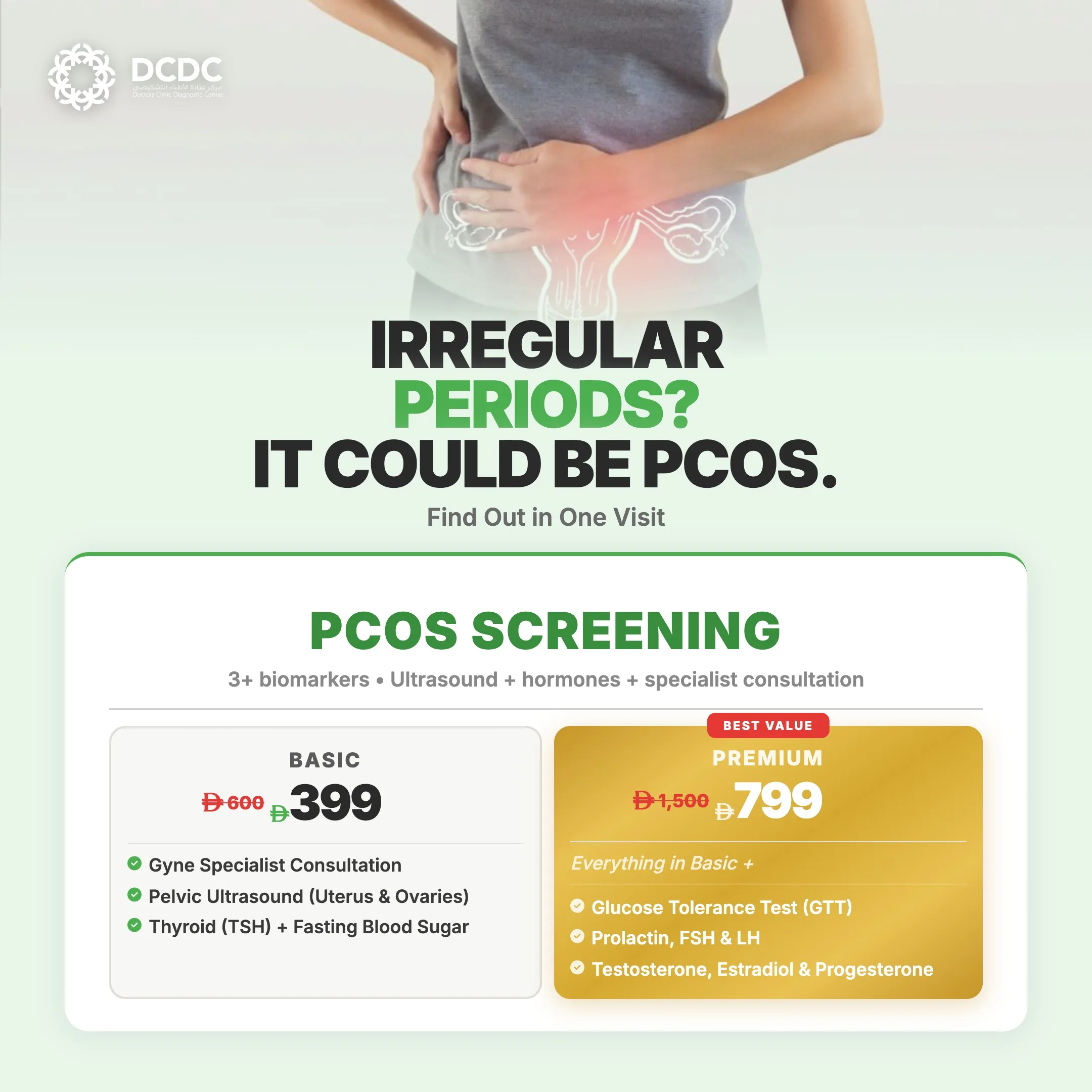
Health Screening Packages
Save with our bundled screening packages — specialist consultation included





What Is Gestational Diabetes?
Gestational diabetes mellitus (GDM) is a form of diabetes that develops during pregnancy in women who did not have diabetes before conceiving. It occurs when the hormones produced by the placenta -- particularly human placental lactogen, cortisol, and progesterone -- interfere with insulin's ability to move glucose from the bloodstream into cells. This is called insulin resistance, and while all pregnancies cause some degree of insulin resistance, women who develop GDM cannot compensate by producing enough additional insulin.
GDM typically develops between 24 and 28 weeks of pregnancy, when placental hormone production peaks. The condition is usually asymptomatic -- most women feel completely normal and would not know they have GDM without a screening test. This is precisely why routine screening is so important: the absence of symptoms does not mean the absence of risk. Elevated blood glucose during pregnancy crosses the placenta and reaches the baby, stimulating the fetal pancreas to produce excess insulin, which drives excessive growth and fat deposition.
According to the World Health Organization, gestational diabetes affects approximately 14% of pregnancies globally, but prevalence in the Middle East and South Asia is considerably higher. Studies conducted in the UAE and neighbouring Gulf states report GDM rates of 12-25%, driven by a combination of genetic predisposition, higher rates of obesity, older maternal age, and the prevalence of polycystic ovary syndrome (PCOS) in the region. This makes Dubai a particularly important setting for vigilant screening.
Why Is Gestational Diabetes Screening Important?
Screening for gestational diabetes is not optional -- it is a core component of safe antenatal care endorsed by every major obstetric authority, including the American College of Obstetricians and Gynecologists (ACOG), the World Health Organization (WHO), and the International Association of Diabetes and Pregnancy Study Groups (IADPSG). The reason is straightforward: GDM is almost always silent, and the consequences of missing it affect both mother and baby.
For the baby, uncontrolled maternal glucose leads to macrosomia (birth weight above 4 kg), which increases the likelihood of shoulder dystocia during vaginal delivery, birth injuries, and the need for emergency caesarean section. Newborns of mothers with untreated GDM are also at higher risk of neonatal hypoglycaemia (dangerously low blood sugar after birth), jaundice, respiratory distress syndrome, and admission to the neonatal intensive care unit (NICU). Long-term studies show these children face a higher lifetime risk of obesity and type 2 diabetes.
For the mother, gestational diabetes increases the risk of preeclampsia (a dangerous pregnancy complication involving high blood pressure and organ damage), polyhydramnios (excess amniotic fluid), preterm labour, and caesarean delivery. Beyond pregnancy, women who have had GDM carry a 50% lifetime risk of developing type 2 diabetes within 5-10 years after delivery, according to data from the American Diabetes Association. Early detection during pregnancy creates an opportunity to manage glucose levels, reduce immediate risks, and establish a post-delivery monitoring plan.
- Macrosomia prevention: Screening and treatment reduce the rate of large-for-gestational-age babies by 50%, according to the landmark HAPO study
- Reduced caesarean risk: Women with managed GDM have caesarean rates comparable to non-diabetic pregnancies
- Preeclampsia reduction: Proper glucose control lowers preeclampsia risk by approximately 30%
- Neonatal safety: Treated GDM significantly reduces NICU admissions for neonatal hypoglycaemia and respiratory distress
- Long-term maternal health: Early diagnosis creates a pathway for post-delivery diabetes screening and prevention
Risk Factors for Gestational Diabetes in Dubai
While all pregnant women should be screened for GDM, certain risk factors make the condition more likely. Understanding your personal risk profile helps you and your obstetrician decide whether early screening (before 24 weeks) is warranted. In Dubai's diverse population, many women carry multiple overlapping risk factors, which partly explains the region's higher GDM prevalence.
- Previous gestational diabetes: If you had GDM in a prior pregnancy, the recurrence rate is 30-70% in subsequent pregnancies. Early screening at 12-16 weeks is recommended
- BMI above 30: Obesity is the single strongest modifiable risk factor for GDM. Pre-pregnancy weight management significantly reduces risk
- Age over 35: Maternal age above 35 years doubles the risk of GDM compared to women under 25. Dubai's expatriate population includes many women having their first pregnancy after 35
- Family history of type 2 diabetes: A first-degree relative (parent or sibling) with type 2 diabetes increases GDM risk by 2-3 times
- PCOS (Polycystic Ovary Syndrome): Women with PCOS have underlying insulin resistance that predisposes them to GDM. Dr. Parisa Dini at DCDC specialises in managing PCOS-related pregnancies
- Ethnicity: South Asian, Middle Eastern, African, and Hispanic women have genetically higher rates of insulin resistance and GDM
- Previous macrosomic baby: A prior baby weighing above 4 kg suggests possible undiagnosed GDM in the previous pregnancy
- Glycosuria: Glucose detected in routine urine tests during pregnancy warrants earlier blood glucose testing
If you are planning a pregnancy or are in your first trimester, understanding your risk factors early allows your obstetrician to adjust your antenatal schedule. For a complete overview of all the scans and tests you will need during pregnancy, see our guide on your pregnancy scan schedule in Dubai.
How Much Does Gestational Diabetes Screening Cost in Dubai?
The cost of gestational diabetes screening in Dubai depends on the specific tests ordered and whether they are performed as standalone tests or as part of a comprehensive antenatal package. Below is a complete breakdown of GDM-related test pricing at DCDC Dubai Healthcare City. All prices reflect self-pay rates -- insured patients with an obstetrician's referral typically pay only their co-pay (10-20%).
| Test / Service | Price Range (AED) | Fasting Required | Results Timeline |
|---|---|---|---|
| OGTT (75g Oral Glucose Tolerance Test) | From AED 200-400 | Yes (8-10 hours) | Same day |
| HbA1c (Glycated Haemoglobin) | From AED 100-200 | No | Same day |
| Fasting Blood Glucose | From AED 50-100 | Yes (8-12 hours) | Same day |
| OB-GYN Consultation | From AED 300-500 | No | N/A |
| Glucose Monitoring Supplies | From AED 150-300 | No | N/A |
| Comprehensive Antenatal Package (incl. GDM screening) | From AED 1,500-4,000 | Varies by test | Ongoing |
Prices are approximate self-pay rates at DCDC Dubai Healthcare City (July 2026). Insured patients pay co-pay only. Contact DCDC for current pricing.
For most pregnant women, the comprehensive antenatal package from AED 1,500-4,000 offers the best value because it bundles the OGTT with all routine blood work, ultrasound scans, and obstetrician consultations across the entire pregnancy. This eliminates the need to pay for each test individually and ensures nothing is missed. The package tier depends on how many ultrasound scans, blood tests, and consultations are included -- your obstetrician will recommend the appropriate level based on your risk profile.
If you are paying out of pocket for the OGTT alone, the test costs from AED 200-400 at DCDC. This includes the glucose solution, the baseline fasting blood draw, and the one-hour and two-hour post-glucose blood draws. Results are processed the same day in DCDC's on-site laboratory, so your obstetrician can review them at your next appointment without waiting for an external lab report.
The Oral Glucose Tolerance Test (OGTT) Explained
The 75-gram oral glucose tolerance test (OGTT) is the internationally recommended standard for diagnosing gestational diabetes. It is endorsed by the WHO, IADPSG, and ACOG, and is the test used at DCDC for all GDM screening. Understanding how the test works, what it measures, and how to prepare helps reduce anxiety and ensures accurate results.
How to Prepare for the OGTT
- Fast for 8-10 hours: No food or caloric drinks after midnight the night before. Water is allowed and encouraged to stay hydrated
- Eat normally for 3 days before: Do not restrict carbohydrates in the days leading up to the test -- this can falsely lower your results
- Schedule a morning appointment: The test takes approximately 2-2.5 hours, and fasting overnight makes morning appointments most practical
- Bring entertainment: You will need to remain at the clinic for the full duration of the test between blood draws
- Inform your obstetrician of medications: Some medications, particularly corticosteroids, can affect glucose levels and may need to be paused
What Happens During the Test
The OGTT involves three blood draws over approximately two hours. First, a fasting blood sample is taken to establish your baseline glucose level. You then drink a standardised solution containing 75 grams of glucose -- a very sweet liquid that must be consumed within 5 minutes. Blood samples are drawn again at the one-hour and two-hour marks after finishing the drink. Each sample measures how effectively your body is processing the glucose load.
OGTT Diagnostic Thresholds for Gestational Diabetes (IADPSG Criteria)
| Timing | Diagnostic Threshold | What It Means |
|---|---|---|
| Fasting | 5.1 mmol/L (92 mg/dL) or higher | Elevated baseline glucose before glucose load |
| 1 hour post-glucose | 10.0 mmol/L (180 mg/dL) or higher | Impaired glucose clearance at peak |
| 2 hours post-glucose | 8.5 mmol/L (153 mg/dL) or higher | Sustained elevated glucose -- insulin response insufficient |
GDM is diagnosed if ONE or more of these thresholds is met or exceeded (IADPSG/WHO criteria). These are the thresholds used at DCDC.
An important point: gestational diabetes is diagnosed if any single value meets or exceeds the threshold -- you do not need to fail all three. This is a deliberate clinical decision based on the HAPO (Hyperglycemia and Adverse Pregnancy Outcomes) study, which demonstrated that even mildly elevated glucose at any one time point is associated with increased adverse outcomes.
When Should You Be Screened for Gestational Diabetes?
The standard recommendation from ACOG, WHO, and the IADPSG is universal screening of all pregnant women between 24 and 28 weeks of gestation. This window is chosen because placental hormone levels are high enough to unmask GDM, but there is still sufficient time to implement management strategies before the third trimester, when fetal growth accelerates most rapidly.
However, women with significant risk factors should be screened earlier, ideally at the first antenatal visit or during the first trimester (8-12 weeks). Early screening is particularly important for women with a history of GDM in a previous pregnancy, pre-existing obesity (BMI above 30), PCOS, or a strong family history of type 2 diabetes. If the early screening result is normal, the OGTT should still be repeated at 24-28 weeks because GDM can develop later in pregnancy as placental hormone levels continue to rise.
- Standard screening (all women): 24-28 weeks gestation using the 75g OGTT
- Early screening (high-risk women): First antenatal visit or 8-16 weeks, with repeat OGTT at 24-28 weeks if negative
- Post-delivery screening: 6-12 weeks after delivery to confirm resolution of GDM, then every 1-3 years for life
At DCDC, Dr. Parisa Dini assesses every pregnant patient's GDM risk at the first booking visit and creates a personalised screening timeline. For a comprehensive understanding of how diabetes screening fits into your overall health management, review our guide on diabetes management in Dubai.
Managing Gestational Diabetes: Diet, Monitoring & Treatment
A diagnosis of gestational diabetes can feel overwhelming, but the condition is highly manageable with the right support. The majority of women with GDM -- approximately 70-85% -- achieve adequate glucose control through dietary changes and physical activity alone, without needing medication. At DCDC, every GDM patient receives a structured management plan tailored to their glucose levels, lifestyle, and pregnancy stage.
Dietary Management
Dietary counselling is the foundation of GDM management. The goal is not to restrict calories but to distribute carbohydrate intake evenly across meals and snacks to prevent blood sugar spikes. Key dietary principles include eating three moderate meals and two to three snacks daily, choosing complex carbohydrates over simple sugars, pairing carbohydrates with protein and healthy fats to slow glucose absorption, and limiting fruit juice, white rice, white bread, and sugary foods. At DCDC, your obstetrician can coordinate with a nutritionist to create a meal plan that accounts for cultural food preferences, which is particularly important in Dubai's multicultural environment.
Blood Glucose Self-Monitoring
Women diagnosed with GDM are taught to monitor their blood glucose at home using a glucometer. Typical monitoring involves checking fasting glucose each morning and one-hour post-meal readings after each main meal -- resulting in four checks per day. Target values are a fasting glucose below 5.3 mmol/L (95 mg/dL) and one-hour post-meal glucose below 7.8 mmol/L (140 mg/dL). DCDC provides glucose monitoring supplies from AED 150-300 and teaches patients how to use the device, record their readings, and interpret results.
Medication When Needed
If dietary changes and exercise do not achieve target glucose levels within 1-2 weeks, medication is introduced. Insulin is the gold-standard treatment for GDM because it does not cross the placenta and has the longest safety record during pregnancy. Metformin is used as an alternative in some cases, though its use in pregnancy remains an active area of research. At DCDC, Dr. Parisa Dini closely monitors insulin-dependent GDM patients with more frequent clinic visits to adjust dosing as the pregnancy progresses and insulin resistance typically increases in the third trimester.
Physical Activity
Moderate physical activity -- such as 30 minutes of brisk walking after meals -- significantly improves glucose uptake and can reduce the need for insulin. Exercise is safe in most pregnancies and is actively recommended as part of GDM management. Your obstetrician will advise on any activity restrictions based on your individual pregnancy.
What to Expect at DCDC for Gestational Diabetes Screening
DCDC in Dubai Healthcare City (Building 64, Block A, Al Razi Medical Complex) provides a streamlined patient journey for gestational diabetes screening. Here is exactly what happens from arrival to results, so you know what to expect on the day of your test.
- Step 1 -- Booking: Schedule your OGTT appointment through WhatsApp, phone, or online. Morning slots between 8AM and 9AM are recommended so fasting is as comfortable as possible. Free parking is available on site
- Step 2 -- Arrival and registration: Arrive at DCDC after your overnight fast (8-10 hours, water permitted). The reception team will confirm your insurance details for direct billing and register you with the laboratory
- Step 3 -- Fasting blood draw: A phlebotomist draws the first blood sample to establish your baseline fasting glucose. This takes approximately 2-3 minutes
- Step 4 -- Glucose drink: You are given a 75-gram glucose solution to drink within 5 minutes. The solution is sweet and lemon-flavoured. Some women find it helps to drink it cold
- Step 5 -- Waiting period: You remain at the clinic for two hours. You are welcome to sit in the waiting area, read, or use your phone. You must not eat, drink anything other than water, or leave the clinic during this time
- Step 6 -- Second blood draw (1 hour): Exactly one hour after finishing the glucose drink, a second blood sample is drawn
- Step 7 -- Third blood draw (2 hours): Exactly two hours after finishing the glucose drink, the final blood sample is drawn
- Step 8 -- Results and next steps: All three glucose readings are processed in DCDC's on-site laboratory with same-day results. Your obstetrician reviews the results and contacts you, typically within a few hours, to discuss next steps. If GDM is diagnosed, a follow-up appointment is arranged promptly
The entire process takes approximately 2.5 hours from arrival to your final blood draw. DCDC's on-site laboratory means there is no wait for external lab results, and your obstetrician has immediate access to your readings. Female obstetricians are available for patients who prefer a female doctor, and the clinic maintains a 4.8/5 Google rating from over 1,000 verified reviews with a 98% patient satisfaction rate.
Book Your Gestational Diabetes Screening at DCDC
MOHAP-licensed obstetricians, on-site laboratory with same-day OGTT results, and direct billing with 20+ insurance providers. Schedule your screening today.
DCDC Dubai Healthcare City -- Building 64, Al Razi Medical Complex. Sat-Thu 8AM-10PM, Fri 9AM-9PM.
Complications of Untreated Gestational Diabetes
Understanding the specific complications of unmanaged GDM reinforces why screening is non-negotiable. The risks are well-documented across large clinical trials and are directly proportional to the degree of hyperglycaemia -- meaning even mildly elevated glucose carries measurable risk, and well-controlled glucose levels bring outcomes close to those of non-diabetic pregnancies.
Risks to the Baby
- Macrosomia (birth weight > 4 kg): Excess maternal glucose crosses the placenta, causing the fetal pancreas to overproduce insulin, which acts as a growth hormone. Macrosomic babies face higher risk of shoulder dystocia, brachial plexus injury, and emergency caesarean section
- Neonatal hypoglycaemia: After delivery, the baby's overactive pancreas continues to produce excess insulin despite the sudden loss of maternal glucose supply, causing blood sugar to drop dangerously low in the first hours of life
- Respiratory distress syndrome: High insulin levels can delay fetal lung maturation, increasing the risk of breathing difficulties at birth, particularly if delivery occurs before 39 weeks
- Jaundice: Higher rates of neonatal jaundice requiring phototherapy are observed in babies of mothers with uncontrolled GDM
- Long-term metabolic risk: Children born to mothers with GDM have a higher lifetime risk of obesity, impaired glucose tolerance, and type 2 diabetes -- a cycle that can be interrupted by adequate maternal glucose control during pregnancy
Risks to the Mother
- Preeclampsia: GDM doubles the risk of preeclampsia, a serious condition involving high blood pressure and potential organ damage that can require early delivery
- Polyhydramnios: Excess amniotic fluid occurs more frequently in GDM pregnancies and can cause preterm labour, placental abruption, and umbilical cord complications
- Caesarean delivery: The rate of caesarean section is significantly higher in unmanaged GDM, primarily due to macrosomia and failed induction of labour
- Future type 2 diabetes: Women who have had GDM carry a 50% lifetime risk of developing type 2 diabetes, making post-delivery screening and lifestyle modification critical for long-term health
These complications are largely preventable with timely screening and appropriate management. For a broader understanding of how blood sugar monitoring supports long-term health, read our HbA1c test guide for Dubai.
Post-Delivery: Diabetes Screening After Pregnancy
Gestational diabetes typically resolves within days of delivery as placental hormone levels drop and insulin sensitivity returns to normal. However, having had GDM marks you as being at substantially elevated risk for developing type 2 diabetes later in life. The American Diabetes Association recommends that all women who had gestational diabetes undergo a 75g OGTT at 6-12 weeks postpartum to confirm that glucose levels have normalised.
If the postpartum OGTT is normal, ongoing screening with fasting glucose or HbA1c should be performed every 1-3 years for life. This is not alarmist -- it is evidence-based prevention. Studies show that up to 50% of women with a history of GDM will develop type 2 diabetes within 10 years, but lifestyle interventions (maintaining a healthy weight, regular physical activity, and balanced nutrition) can reduce this risk by up to 58%, according to the landmark Diabetes Prevention Program trial.
- 6-12 weeks postpartum: 75g OGTT to confirm GDM resolution
- Every 1-3 years: Fasting glucose or HbA1c screening (more frequently if prediabetes is detected)
- Before next pregnancy: Pre-conception glucose screening to detect any interval development of type 2 diabetes
- Breastfeeding: Encouraged, as it improves maternal insulin sensitivity and has been associated with lower rates of type 2 diabetes in women with prior GDM
At DCDC, post-delivery follow-up is integrated into your care pathway. Your obstetrician schedules your postpartum OGTT before you leave the hospital and ensures your results are reviewed in conjunction with your postnatal check-up. If prediabetes or type 2 diabetes is detected, you are immediately connected with DCDC's internal medicine and nutritionist teams for ongoing management.
Insurance Coverage for Gestational Diabetes Screening in Dubai
Gestational diabetes screening is classified as essential antenatal care under the Dubai Health Authority's (DHA) basic benefits plan, which means it is covered by all compliant health insurance policies issued in Dubai. When your obstetrician orders the OGTT as part of routine pregnancy care, your insurer covers the test -- you pay only the applicable co-pay or co-insurance amount, typically 10-20% of the total cost.
DCDC offers direct billing with over 20 insurance providers, including Daman, AXA, Bupa, MetLife, Cigna, Oman Insurance, Allianz, Zurich, and many others. Direct billing means you do not need to pay upfront and submit claims for reimbursement -- DCDC handles the billing directly with your insurer. For patients without insurance or with policies that exclude maternity cover, DCDC offers competitive self-pay pricing and the option to bundle GDM screening into a comprehensive antenatal package for better value.
- Insured patients: OGTT is covered as essential antenatal care. Co-pay typically AED 20-80 depending on your plan. Present your insurance card at registration
- Self-pay patients: OGTT from AED 200-400. Antenatal packages from AED 1,500-4,000 offer bundled value for all pregnancy tests and consultations
- Maternity exclusions: Some basic insurance plans exclude maternity cover. Check your policy wording or ask DCDC's insurance team to verify your coverage before your appointment
According to Dr. Parisa Dini, "In Dubai, where the prevalence of gestational diabetes is higher than the global average due to lifestyle and genetic factors, universal screening at 24-28 weeks is essential -- not optional. I screen all my pregnant patients, not just those with obvious risk factors, because gestational diabetes can develop without symptoms. Early detection allows us to implement dietary changes and monitoring before complications affect the baby's growth."
Get Screened for Gestational Diabetes Today
Book your OGTT at DCDC Dubai Healthcare City. Female obstetricians, on-site same-day results, and direct insurance billing with 20+ providers.
WhatsApp or call to schedule. Extended hours: Sat-Thu 8AM-10PM, Fri 9AM-9PM. Free parking available.
Связанные услуги в DCDC
Квалифицированная помощь и современная диагностика в Dubai Healthcare City
Frequently Asked Questions
Final Thoughts
Gestational diabetes is one of the most common complications of pregnancy, and in Dubai, the prevalence is higher than the global average. The good news is that GDM is entirely screenable, highly manageable, and -- when detected and treated -- carries outcomes that are comparable to non-diabetic pregnancies. The oral glucose tolerance test at 24-28 weeks is a straightforward, evidence-based screening that takes less than three hours and can fundamentally change the trajectory of your pregnancy.
At DCDC in Dubai Healthcare City, gestational diabetes screening is seamlessly integrated into comprehensive antenatal care. From the initial OGTT with same-day results to structured dietary counselling, blood glucose monitoring, and specialist management for insulin-dependent cases, every step is handled within one MOHAP-licensed facility. With direct insurance billing, female obstetricians, and a 4.8/5 patient satisfaction rating, DCDC provides the clinical expertise and patient-centred environment that expectant mothers in Dubai deserve.
If you are currently pregnant or planning a pregnancy, discuss your GDM risk factors with your obstetrician early. If you are between 24 and 28 weeks, now is the time to schedule your OGTT. And if you have already been diagnosed with gestational diabetes, know that with proper management, the vast majority of women deliver healthy babies at term. Early screening is the single most effective step you can take.
Источники и ссылки
Эта статья проверена нашей медицинской командой и ссылается на следующие источники:
- World Health Organization (WHO) -- Diabetes Fact Sheet
- American College of Obstetricians and Gynecologists (ACOG) -- Gestational Diabetes FAQ
- NHS -- Gestational Diabetes
- Mayo Clinic -- Gestational Diabetes: Symptoms & Causes
- American Diabetes Association (ADA) -- Standards of Care in Diabetes (2024)
Медицинский контент на этом сайте проверяется врачами, лицензированными DHA. См. нашу редакционную политику для получения дополнительной информации.

Автор
Dr. Parisa Dini
Obstetrician & Gynecologist
MD, OB-GYN
Dr. Parisa Dini is an Obstetrician and Gynecologist at Doctors Clinic Diagnostic Center (DCDC) in Dubai Healthcare City.
Related Articles

NIPT Test Dubai: Complete Guide & Cost (2026)
Anomaly Scan Pregnancy Dubai: Guide (2026)

Early Pregnancy Scan: Why It Matters (2026)

Diabetes Test Cost Dubai: Prices & Guide (2026)
More in Women's Health

Mammogram Preparation Dubai: What to Expect (2026)
Читать далее
CA-125 Test Dubai: Ovarian Cancer Marker (2026)
Читать далееMammogram vs Breast Ultrasound Dubai (2026)
Читать далее
Endometriosis Dubai: Symptoms & Diagnosis (2026)
Читать далееMaternity Package Cost Dubai: From AED 1,500 (2026)
Читать далееGynecologist Cost Dubai: From AED 500 (2026)
Читать далее© 2026 Doctors Clinic Diagnostic Center (DCDC), Dubai Healthcare City. Originally published at https://doctorsclinicdubai.ae/blog/gestational-diabetes-screening-dubai. All rights reserved. Unauthorized reproduction is prohibited.