نکات کلیدی
- Home ECG in Dubai uses portable 12-lead equipment identical to clinic machines, providing the same diagnostic accuracy from the comfort of your home
- At DCDC, home ECG starts from AED 499 and includes a DHA-licensed cardiac technician visit plus cardiologist-reviewed results within 24 hours
- Urgent abnormalities detected during a home ECG are communicated immediately by phone, ensuring no critical finding is missed
- Home ECG is ideal for elderly patients, post-cardiac-event monitoring, patients with mobility limitations, and those managing chronic heart conditions
- DCDC covers all major Dubai areas including Marina, Downtown, Jumeirah, Business Bay, Al Barsha, Mirdif, and Dubai Silicon Oasis
- Holter monitor setup and collection at home is also available from AED 800 for 24-48 hour continuous heart rhythm recording
- All home ECG results are integrated with your DCDC medical record, enabling seamless specialist follow-up if needed
An ECG at home in Dubai lets you get a full cardiac screening without leaving your house. A DHA-licensed technician arrives with a portable 12-lead electrocardiograph, records your heart's electrical activity in about ten minutes, and sends the tracing directly to a cardiologist for interpretation. At DCDC's home ECG service, results are reviewed and reported within 24 hours, and any urgent abnormality triggers an immediate phone call. This guide covers how a home ECG works, who should consider one, what the process looks like step by step, how much it costs, and how DCDC's service compares to other options in Dubai.
Whether you are recovering from a heart procedure, managing a chronic cardiac condition, or simply prefer the convenience of at-home testing, understanding what a home ECG involves helps you make an informed decision. We break down the equipment, the clinical process, pricing across Dubai, insurance considerations, and when a clinic visit is the better choice.

What Is a Home ECG and How Does It Work?
An electrocardiogram (ECG or EKG) records the electrical signals that coordinate each heartbeat. During a standard 12-lead ECG, ten electrode patches are placed on your chest, arms, and legs. These electrodes capture the heart's electrical activity from 12 different angles, producing a detailed tracing that reveals rhythm disturbances, conduction abnormalities, signs of ischemia, chamber enlargement, and the effects of cardiac medications. The entire recording takes approximately 10 seconds of data capture once the electrodes are in position.
A home ECG uses the same process and the same standard of equipment. The key difference is location: instead of visiting a hospital or clinic, a trained cardiac technician comes to your home, hotel, or office. Modern portable ECG machines are lightweight, battery-powered, and produce tracings that are clinically equivalent to those generated by stationary machines in a hospital setting. The American Heart Association confirms that a properly performed 12-lead ECG yields identical diagnostic information regardless of the setting in which it is recorded.
At DCDC, our home ECG service uses portable 12-lead ECG equipment identical to machines used in our DHCC facility. The tracings are transmitted digitally to our cardiology department, where they are reviewed by a board-certified cardiologist. This ensures that the quality of interpretation matches what you would receive during an in-clinic visit.
Who Should Get an ECG at Home?
Home ECG testing is suitable for a wide range of patients and clinical scenarios. While anyone who prefers the convenience of at-home testing can benefit, certain groups find this service particularly valuable:
- Elderly patients with limited mobility: Traveling to a clinic can be physically demanding for older adults, especially those with joint pain, balance difficulties, or fatigue. A home ECG eliminates the need for transport and clinic waiting rooms.
- Post-cardiac-event monitoring: Patients recovering from a heart attack, stent placement, or cardiac surgery often need regular ECG checks. Home testing reduces the burden of repeated clinic visits during a vulnerable recovery period.
- Chronic heart condition management: Individuals with atrial fibrillation, heart failure, or arrhythmias may need periodic ECGs to monitor their condition and medication effectiveness. Routine home testing supports ongoing management.
- Patients experiencing intermittent symptoms: If you have episodes of palpitations, chest tightness, or dizziness that come and go, having the ability to request a home ECG during or shortly after symptoms may capture abnormalities that a scheduled clinic visit might miss.
- Busy professionals and families: Dubai's demanding work schedules and traffic can make clinic visits time-consuming. A home ECG fits into your routine without requiring time off work or arranging childcare.
- Patients with anxiety about clinical settings: Some individuals experience elevated heart rates and blood pressure in clinical environments (white coat syndrome), which can affect test results. A home setting may produce more representative baseline readings.
- Pre-operative screening: Patients who need a clearance ECG before surgery but face scheduling constraints may benefit from having the test performed at home.
- Hotel guests and tourists: Visitors to Dubai who experience cardiac symptoms or need a routine heart check can access professional ECG testing at their hotel without navigating an unfamiliar healthcare system.
12-Lead ECG vs Portable Consumer Devices
It is important to distinguish between a professional 12-lead home ECG and consumer wearable ECG devices such as smartwatches and handheld monitors. While consumer devices have value for general awareness, they capture only a single lead (Lead I or a modified Lead II), which provides a limited view of the heart. A 12-lead ECG records electrical activity from 12 distinct perspectives, allowing cardiologists to identify conditions that single-lead devices cannot detect.
| Feature | 12-Lead Home ECG (DCDC) | Consumer Wearable (Smartwatch) |
|---|---|---|
| Number of leads | 12 leads (standard diagnostic) | 1 lead (modified Lead I) |
| Electrode placement | 10 electrodes, clinically standardized | Back of watch or finger contact |
| Detects arrhythmias | All types including complex arrhythmias | AF detection only (limited sensitivity) |
| Detects ischemia / MI | Yes — ST-segment analysis from multiple angles | No — insufficient lead coverage |
| Detects chamber enlargement | Yes — voltage and axis criteria | No |
| Clinical validity | Diagnostic standard, accepted by all cardiologists | Screening tool only, requires confirmation |
| Interpretation | Board-certified cardiologist | Algorithm-generated, no clinical review |
| Medical record integration | Yes — full EMR integration at DCDC | No — PDF export only |
Comparison of professional 12-lead home ECG vs consumer wearable ECG devices.
Consumer devices are useful for detecting atrial fibrillation episodes between clinical visits, but they should not replace a standard 12-lead ECG for diagnosing cardiac conditions. If your smartwatch flags an irregular rhythm, the next step is a full 12-lead ECG performed by a trained technician and interpreted by a cardiologist. For a deeper understanding of the different types of ECG tests and what each one reveals, read our comprehensive ECG test guide.
What to Expect During Your DCDC Home ECG Visit
Understanding the step-by-step process helps you feel comfortable and prepared for your home ECG appointment. Here is exactly what happens from booking to results:
Step 1: Booking and Scheduling
You can book your home ECG through DCDC's WhatsApp, phone line, or website. Our team confirms your address, preferred date and time, and any relevant medical history. Appointments are available across all major Dubai areas including Marina, Downtown, Jumeirah, Business Bay, Al Barsha, Mirdif, and Dubai Silicon Oasis. Same-day appointments may be available depending on technician availability.
Step 2: Technician Arrival and Preparation
A DHA-licensed cardiac technician arrives at your location at the scheduled time carrying a portable 12-lead ECG machine, disposable electrode patches, skin preparation supplies, and sanitization equipment. The technician verifies your identity and any relevant medical information. You will be asked to lie down on a flat surface such as a bed or sofa. If you are wearing clothing that restricts access to the chest, lower legs, and wrists, you may need to adjust or remove certain garments. The technician maintains your privacy and dignity throughout the process.
Step 3: Electrode Placement and Recording
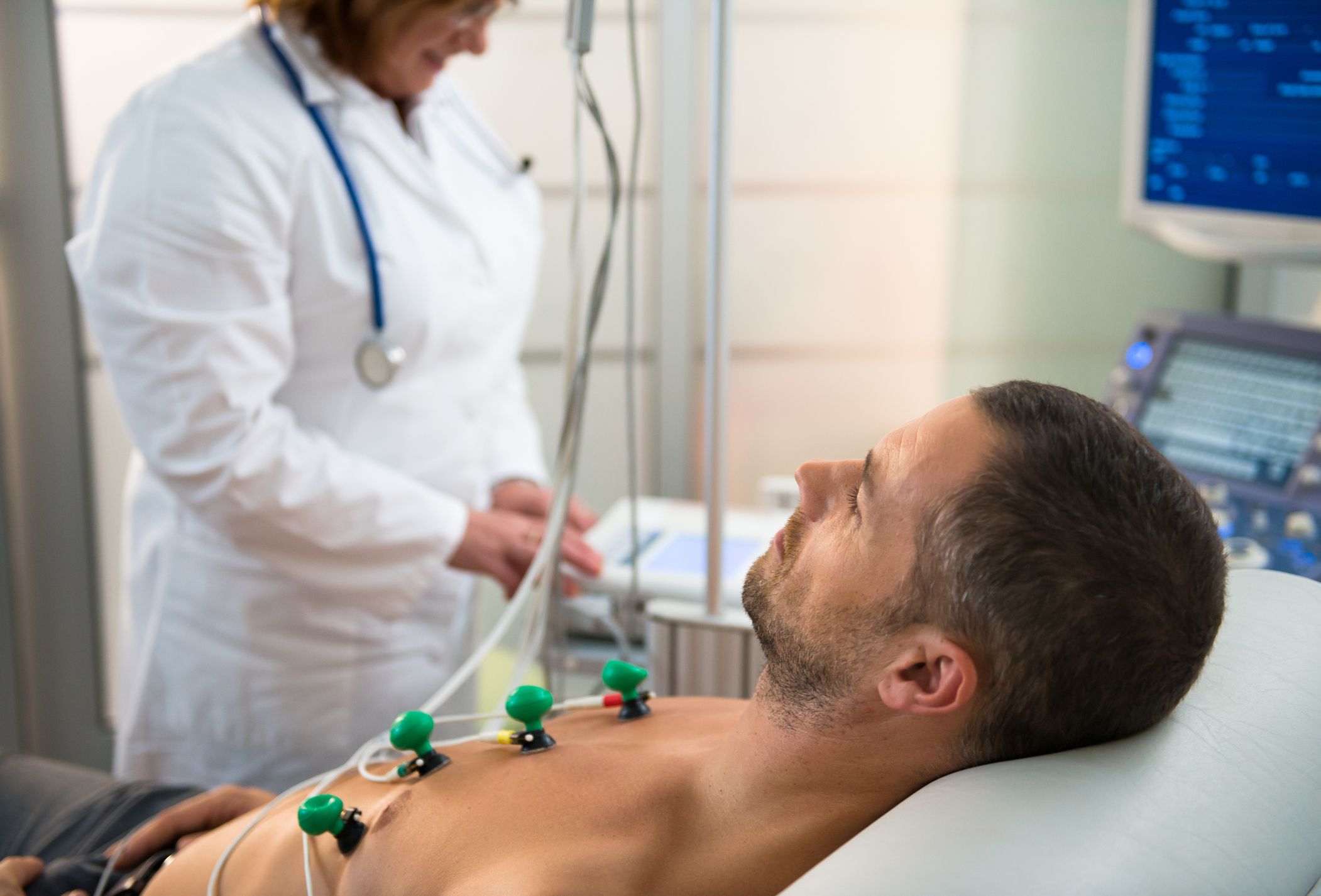
The technician cleans small areas of skin on your chest, wrists, and ankles, then places ten adhesive electrode patches in precise positions. Six electrodes are placed across the chest (precordial leads V1-V6) and four on the limbs (right arm, left arm, right leg, left leg). You are asked to lie still and breathe normally for approximately 10-15 seconds while the machine records. The process is painless. You may feel slight coolness from the adhesive gel. The entire electrode placement and recording typically takes 5-10 minutes.
Step 4: Immediate Assessment and Transmission
The technician reviews the tracing on-site to confirm adequate signal quality. If any leads show poor contact or artifact, the recording is repeated immediately. Once a clean tracing is obtained, it is transmitted digitally to the DCDC cardiology department. The technician removes the electrode patches, cleans any residual gel from your skin, and provides a brief overview of the next steps.
Step 5: Cardiologist Review and Results
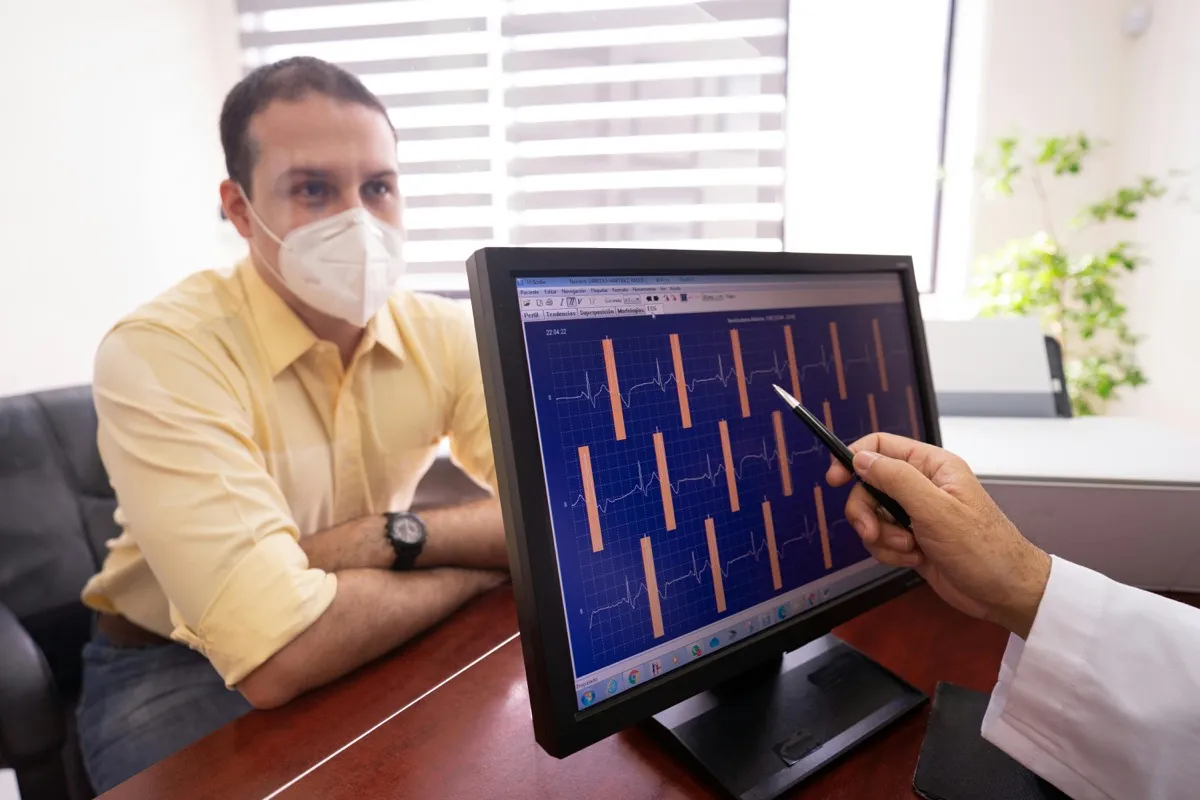
A board-certified cardiologist at DCDC reviews your ECG tracing, comparing it against your medical history and any previous recordings on file. The full report is delivered within 24 hours. If the cardiologist identifies an urgent abnormality such as an acute ST-elevation pattern, a dangerous arrhythmia, or a significant new finding, you are contacted immediately by phone with specific instructions. All results are integrated into your DCDC medical record, making them available for any future consultations or follow-up visits.
Holter Monitor at Home in Dubai
A standard ECG captures about 10 seconds of heart activity. If your doctor suspects an arrhythmia that occurs intermittently, a longer recording period may be necessary. A Holter monitor is a portable device that records your heart rhythm continuously for 24 to 48 hours as you go about your normal daily activities. This extended recording significantly increases the chance of capturing irregular rhythms that a brief ECG might miss.
DCDC offers Holter monitor setup and collection at home. A cardiac technician visits your location to fit the device, which consists of a small recorder worn on a belt or strap and several electrode patches on the chest. You wear the monitor for the prescribed period (typically 24 or 48 hours), during which you keep a diary of activities and any symptoms such as palpitations, dizziness, or chest discomfort. The technician returns to collect the device, and the continuous recording is analyzed by a cardiologist who correlates any rhythm abnormalities with your documented symptoms.
Home Holter monitoring is especially useful for elderly patients, those recovering from cardiac procedures, and anyone who finds it inconvenient to make two separate clinic trips for fitting and removal. For a complete overview of how Holter monitoring works and what conditions it detects, see our guide to Holter monitor testing.
ECG at Home Cost and Pricing in Dubai
The cost of a home ECG in Dubai varies depending on the provider, the level of interpretation included, and whether additional services such as Holter monitoring are required. At DCDC, home ECG starts from AED 499, which includes the technician visit, full 12-lead recording, and cardiologist interpretation. This pricing is competitive with other providers in Dubai while offering the advantage of results integrated into a full medical record system.
| Service | DCDC Price | Dubai Market Range |
|---|---|---|
| Standard 12-Lead ECG at Home | From AED 499 | AED 400-900 |
| Holter Monitor Setup at Home (24-48 hr) | From AED 800 | AED 700-1,500 |
| Clinic-Based ECG (Walk-In) | From AED 150 | AED 100-350 |
| Cardiology Consultation | From AED 250 | AED 400-1,000 |
Home ECG and cardiology pricing at DCDC vs. Dubai market average (2026). Prices are starting rates; final cost may vary based on insurance and clinical requirements.
The price difference between a home ECG and a clinic-based ECG reflects the cost of technician travel, portable equipment maintenance, and the convenience factor. However, when you account for the time spent traveling to a clinic, parking fees, and time away from work, the effective cost difference narrows significantly. For patients who need regular ECG monitoring, DCDC offers package options that reduce the per-test cost for multiple home visits.
Book Your Home ECG with DCDC
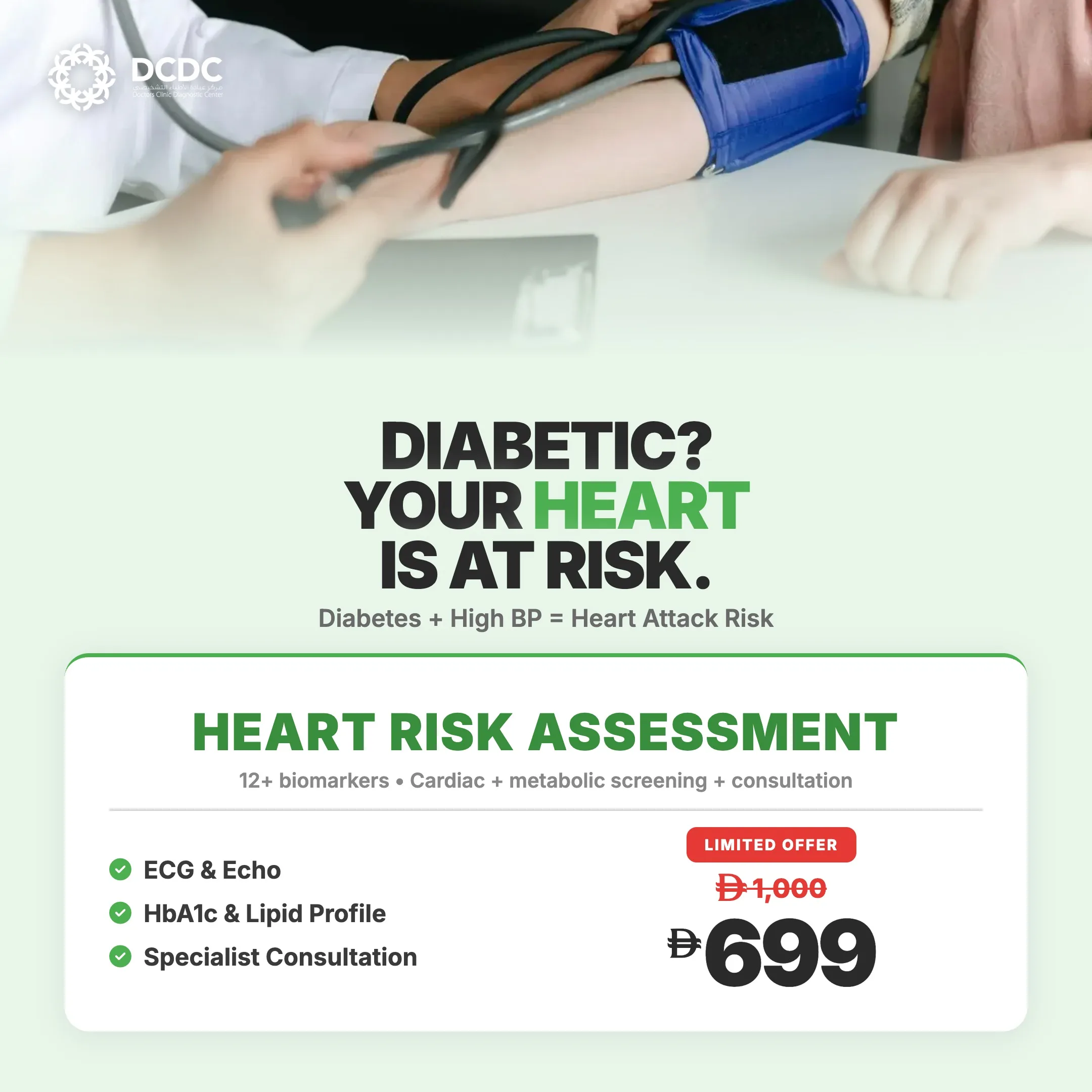
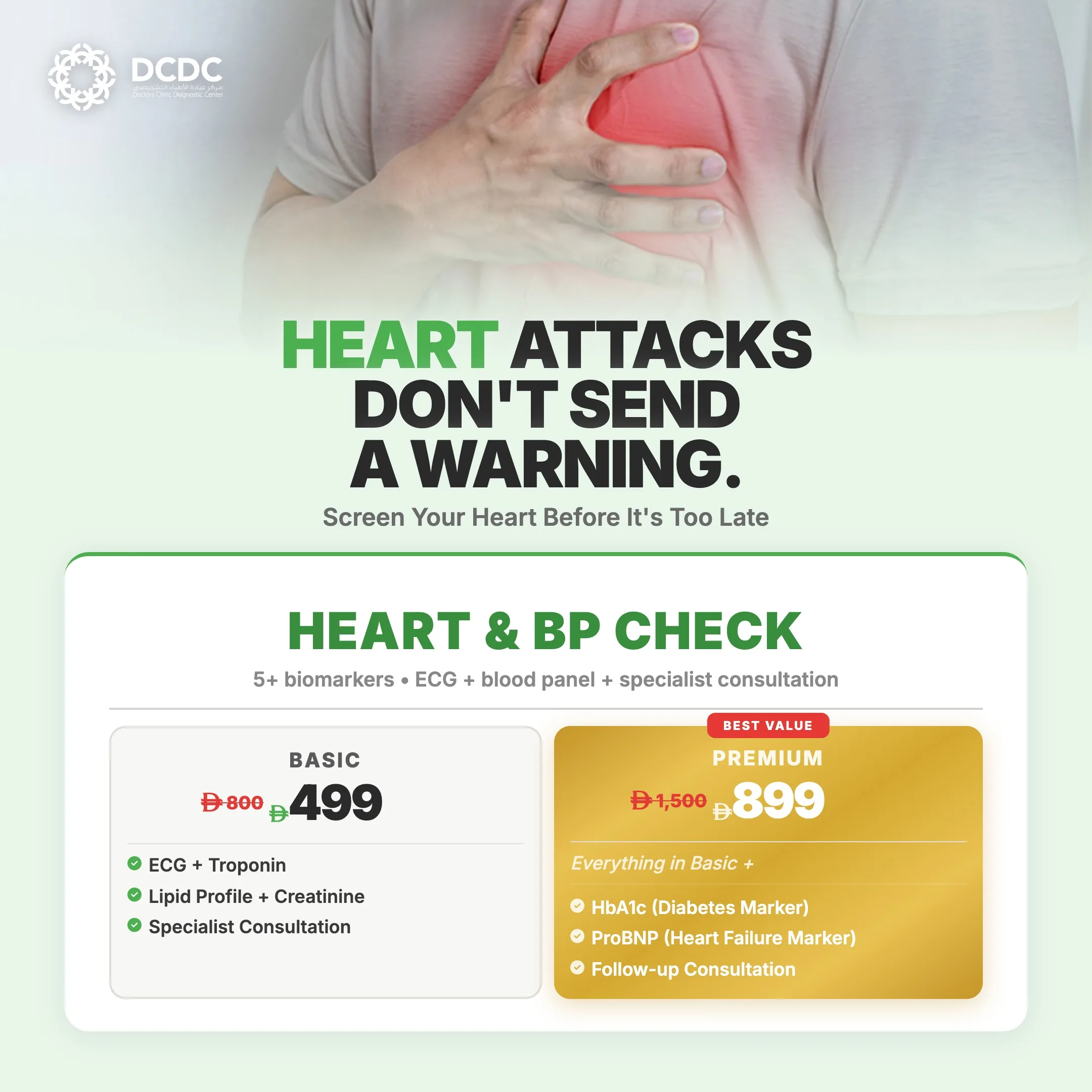
Get a professional 12-lead ECG at home from AED 499. DHA-licensed cardiac technicians, cardiologist-reviewed results within 24 hours, and coverage across all major Dubai areas. Learn more about our home ECG service or WhatsApp us to book your appointment.
Insurance Coverage for Home ECG in Dubai
Insurance coverage for home ECG services in Dubai depends on your specific plan, the medical indication, and the insurance provider. Many comprehensive health insurance policies cover ECG testing when it is medically indicated (for example, when ordered by a physician to investigate symptoms or monitor a known condition). However, the home visit component may or may not be covered separately.
DCDC works with 20+ insurance partners including Daman, AXA, Bupa, MetLife, and Cigna, offering direct billing for eligible services. Our patient services team can verify your coverage and handle pre-authorization before the home visit, so you know your out-of-pocket cost upfront. For patients without insurance coverage for the home visit component, self-pay pricing with transparent fees is available. To explore other medical services you can receive at home, see our overview of home healthcare services in Dubai.
- Daman (National Health Insurance): ECG testing generally covered when medically indicated; home visit coverage varies by plan tier
- AXA and Bupa: Most comprehensive plans cover diagnostic cardiac testing including ECG; check your plan for home service coverage
- MetLife and Cigna: Coverage typically available for medically necessary cardiac diagnostics; pre-authorization may be required for home visits
- Self-pay patients: Transparent pricing from AED 499 for a full home ECG including cardiologist interpretation
Why Choose DCDC for Home ECG in Dubai?
Several factors distinguish DCDC's home ECG service from other providers in Dubai. The most important is continuity of care. When your ECG is performed by a DCDC technician and interpreted by a DCDC cardiologist, the results become part of your complete medical record. If the cardiologist identifies a finding that requires further investigation, such as an echocardiogram, stress test, or Holter monitor, the follow-up can be arranged seamlessly without repeating your medical history or transferring records between different facilities.
- Clinical-grade equipment: Portable 12-lead ECG equipment identical to machines used in our DHCC facility, ensuring diagnostic equivalence
- DHA-licensed technicians: All cardiac technicians are licensed by the Dubai Health Authority, trained in proper electrode placement and patient interaction
- Cardiologist interpretation: Every tracing is reviewed by a board-certified cardiologist, not an algorithm or general practitioner
- Urgent notification protocol: Abnormal findings are communicated immediately by phone, not delayed until the next business day
- Integrated medical records: Results are stored in your DCDC file alongside previous ECGs, lab work, and imaging for comprehensive comparison
- Full cardiology department backup: On-site echocardiogram, treadmill stress test, 24-hour Holter monitoring, and cardiovascular risk assessment available for same-week follow-up
- Proven patient satisfaction: DCDC holds a 4.8/5 Google rating from over 1,000 verified reviews, with 98% patient satisfaction
- MOHAP licensed facility: Licensed under MOHAP (NIMY7VY5-240925), meeting the highest regulatory standards in the UAE
Dr. Shahoo Mazhari on the Value of Home Cardiac Monitoring

Cardiologist
English, Farsi, Arabic
Dr. Shahoo Mazhari is a board-certified cardiologist at DCDC in Dubai Healthcare City, specializing in cardiac rhythm disorders and preventive cardiology. With extensive experience in electrocardiographic interpretation, he leads DCDC's home cardiac monitoring program.
"Many patients delay getting an ECG because of the perceived inconvenience of a clinic visit," says Dr. Shahoo Mazhari, Cardiologist at DCDC. "But cardiac conditions like atrial fibrillation, early ischemic changes, and conduction abnormalities are time-sensitive. The sooner we identify them, the sooner we can intervene. Home ECG removes the biggest barrier to testing. I have had patients whose home ECG revealed a new arrhythmia that we were able to treat before it caused a stroke or heart failure. The equipment we use at home is the same standard we use in our clinic. There is no compromise in diagnostic quality."
Dr. Mazhari emphasizes that home ECG is not a replacement for a full cardiology consultation when one is indicated. "An ECG is one piece of the puzzle. If the tracing shows something concerning, I want to see the patient, examine them, and often order additional tests such as an echocardiogram or Holter monitor. The advantage of our home ECG service is that it feeds directly into our system. I can see the patient's history, compare against previous tracings, and arrange follow-up without any gaps in information."
When to Go to the Clinic Instead
While home ECG is appropriate for many situations, there are times when visiting a clinic or hospital is the better choice. Understanding these scenarios ensures you get the right level of care at the right time:
- Active chest pain or pressure: If you are currently experiencing chest pain, especially with shortness of breath, sweating, or radiating pain to the arm or jaw, call emergency services (998 in Dubai). Do not wait for a home ECG appointment.
- Severe shortness of breath: Acute difficulty breathing requires immediate medical evaluation, which may include blood tests, chest X-ray, and continuous monitoring that only a clinic or emergency room can provide.
- Syncope (fainting): If you have fainted or nearly fainted, you need a clinical assessment that goes beyond an ECG, including blood pressure measurements in different positions, blood work, and potentially prolonged monitoring.
- Need for additional same-day tests: If your doctor suspects you need an echocardiogram, stress test, or blood work in addition to an ECG, visiting the clinic allows all tests to be completed in a single visit.
- First-time comprehensive cardiac assessment: If you have never had a cardiac evaluation and want a thorough check, an in-clinic visit with a cardiologist allows a physical examination, ECG, and potentially same-day imaging.
- Exercise-related symptoms: Symptoms that occur during physical exertion may require a treadmill stress test, which must be performed in a clinical setting with resuscitation equipment available.
DCDC's clinic in Dubai Healthcare City (Building 64, Block A, Al Razi Medical Complex) is open Saturday through Thursday from 8 AM to 10 PM and Friday from 9 AM to 9 PM, with an average wait time of just 15 minutes. On-site services include ECG, echocardiogram, treadmill stress test, and 24-hour Holter monitoring, all with same-day cardiologist interpretation. Free parking is available on site.
Areas Covered by DCDC Home ECG Service in Dubai
DCDC's home ECG service covers all major residential and commercial areas across Dubai. Our cardiac technicians travel to your location whether you are at home, in your office, or staying at a hotel. Current coverage areas include:
- Dubai Marina and JBR: Including all Marina towers, JBR residences, and Palm Jumeirah
- Downtown Dubai and DIFC: Including Burj Khalifa area, Business Bay, and City Walk
- Jumeirah: Jumeirah 1, 2, 3, Umm Suqeim, and Al Safa
- Al Barsha and Al Quoz: Including Mall of the Emirates area and surrounding communities
- Mirdif and Al Warqa: Including Uptown Mirdif and surrounding neighborhoods
- Dubai Silicon Oasis (DSO): All residential communities within DSO
- Dubai Hills and Arabian Ranches: Including all villa and apartment communities
- Deira and Bur Dubai: Including Dubai Healthcare City, Oud Metha, and Al Garhoud
If your location is not listed above, contact our team to confirm availability. We aim to accommodate requests across the wider Dubai metropolitan area whenever possible.
Schedule Your Home ECG Today
DCDC provides home ECG service across all major areas in Dubai. Portable 12-lead ECG from AED 499, cardiologist-reviewed results within 24 hours, and direct insurance billing with 20+ providers. Doctors Clinic Diagnostic Center — Building 64, Block A, DHCC. Free parking available.
How to Prepare for a Home ECG
Preparing for a home ECG is straightforward. No fasting is required, and you do not need to stop your regular medications unless specifically instructed by your doctor. However, a few simple preparations help ensure the best quality recording:
- Avoid heavy exercise immediately before: Vigorous physical activity raises your heart rate and can affect the baseline ECG reading. Rest for at least 30 minutes before the technician arrives.
- Avoid caffeine and nicotine: Both stimulants can elevate heart rate and alter rhythm. If possible, avoid coffee, tea, energy drinks, and smoking for 2-3 hours before the test.
- Wear comfortable, loose clothing: The technician needs access to your chest, wrists, and ankles. A loose shirt that can be easily opened or removed is ideal.
- Remove metallic jewelry: Necklaces, bracelets, and ankle chains should be removed as they can interfere with electrode placement and signal quality.
- Prepare a flat surface: Ideally, you should lie on a bed, sofa, or treatment table. The surface should be wide enough for you to lie flat with your arms at your sides.
- Have your medication list ready: The technician and interpreting cardiologist need to know your current medications, especially cardiac drugs like beta-blockers, calcium channel blockers, and antiarrhythmics.
- Note any symptoms: If you have been experiencing symptoms such as palpitations, chest tightness, or dizziness, note when they occur, how long they last, and any triggers. This information helps the cardiologist contextualize the ECG findings.
خدمات مرتبط در DCDC
مراقبت تخصصی و تشخیص پیشرفته در شهر بهداشت دبی
Frequently Asked Questions
Final Thoughts
A home ECG brings hospital-grade cardiac screening to your doorstep. For patients who need regular monitoring, have mobility limitations, or simply value convenience, it removes a meaningful barrier to proactive heart health.
At DCDC, the home ECG service is designed to match the clinical standard of an in-facility test. Portable 12-lead ECG equipment identical to our clinic machines, DHA-licensed cardiac technicians, and cardiologist-reviewed results within 24 hours mean you are not trading quality for convenience.
If your ECG shows something that warrants further attention, the transition to in-clinic follow-up is seamless. Your results are already in your DCDC medical record, and our cardiology team at Doctors Clinic Diagnostic Center in Dubai Healthcare City can arrange echocardiography, stress testing, or Holter monitoring without delay.
Whether you are managing a known cardiac condition, investigating new symptoms, or seeking a routine heart health check, DCDC's home ECG service provides a reliable, professionally supervised option right across Dubai.
منابع و مراجع
این مقاله توسط تیم پزشکی ما بررسی شده و به منابع زیر ارجاع میدهد:
- American Heart Association — Electrocardiogram (ECG or EKG)
- NHS — Electrocardiogram (ECG)
- Mayo Clinic — Electrocardiogram (ECG or EKG)
- European Heart Journal — Standards for the use of digital ECG
- American College of Cardiology — ECG Interpretation and Clinical Application
محتوای پزشکی این سایت توسط پزشکان دارای مجوز DHA بررسی میشود. مشاهده سیاست تحریریه برای اطلاعات بیشتر.
نوشته شده توسط
Dr. Shahoo Mazhari
Cardiologist
MD, Cardiology
Dr. Shahoo Mazhari is a board-certified cardiologist at DCDC in Dubai Healthcare City, specializing in cardiac rhythm disorders and preventive cardiology.
Related Articles

ECG Test Dubai: Cost, Types & Results
Holter Monitor Test Dubai: Cost & Guide
Heart Palpitations Dubai: Causes & Help
Blood Test at Home Dubai: Home Collection vs Walk-In

Doctor Home Visit Dubai: Cost & Guide
More in Cardiology
Holter Monitor vs ECG Dubai: Which Test? (2026)
بیشتر بخوانید
Cardiac Rehabilitation Dubai: Recovery (2026)
بیشتر بخوانیدTroponin Test Dubai: Heart Attack Marker (2026)
بیشتر بخوانیدBest Cardiologist in Dubai: Dr. Shahoo Mazhari at DCDC (2026)
بیشتر بخوانیدCardiologist in Dubai Healthcare City: Dr. Shahoo Mazhari at DCDC (2026)
بیشتر بخوانید
Echocardiogram (Echo) Test in Dubai: Cost, Procedure & What to Expect (2026)
بیشتر بخوانید© 2026 Doctors Clinic Diagnostic Center (DCDC), Dubai Healthcare City. Originally published at https://doctorsclinicdubai.ae/blog/ecg-at-home-dubai. All rights reserved. Unauthorized reproduction is prohibited.