Wichtigste Erkenntnisse
- A standard ECG records your heart's electrical activity for 10 seconds; a Holter monitor records continuously for 24-48 hours, capturing problems that occur intermittently
- ECG is the first-line test for acute symptoms like chest pain, suspected heart attack, and routine cardiac screening; Holter monitoring is ordered when symptoms are sporadic or when a standard ECG is normal despite ongoing complaints
- A standard 12-lead ECG costs from AED 150 in-clinic at DCDC; Holter monitoring costs from AED 800 with same-day device setup and cardiologist analysis
- Both tests measure the heart's electrical activity but differ fundamentally in recording duration, with Holter detecting up to 100,000+ heartbeats compared to roughly 10-15 beats on a standard ECG
- Conditions like paroxysmal atrial fibrillation, intermittent heart block, and nocturnal arrhythmias can only be caught on Holter monitoring because they may not be present during a brief ECG
- Many patients need both tests: a standard ECG for immediate baseline assessment, followed by Holter monitoring if intermittent rhythm disturbances are suspected
If your doctor suspects a heart rhythm problem, two tests sit at the top of the diagnostic list: the standard ECG (electrocardiogram) and the Holter monitor. Both record the heart's electrical activity, but they do so over vastly different time frames, and choosing the right one can mean the difference between catching a dangerous arrhythmia and missing it entirely. At DCDC's cardiology department in Dubai Healthcare City, board-certified cardiologist Dr. Shahoo Mazhari uses both tests daily and selects each based on the clinical picture.
This guide compares the standard ECG and Holter monitor side by side: what each test measures, which conditions each detects, when one is sufficient and when you need the other, and what each costs in Dubai. Whether your doctor has recommended one of these tests or you are trying to understand the difference before your appointment, this comparison will help you ask the right questions.
What Is a Standard ECG?
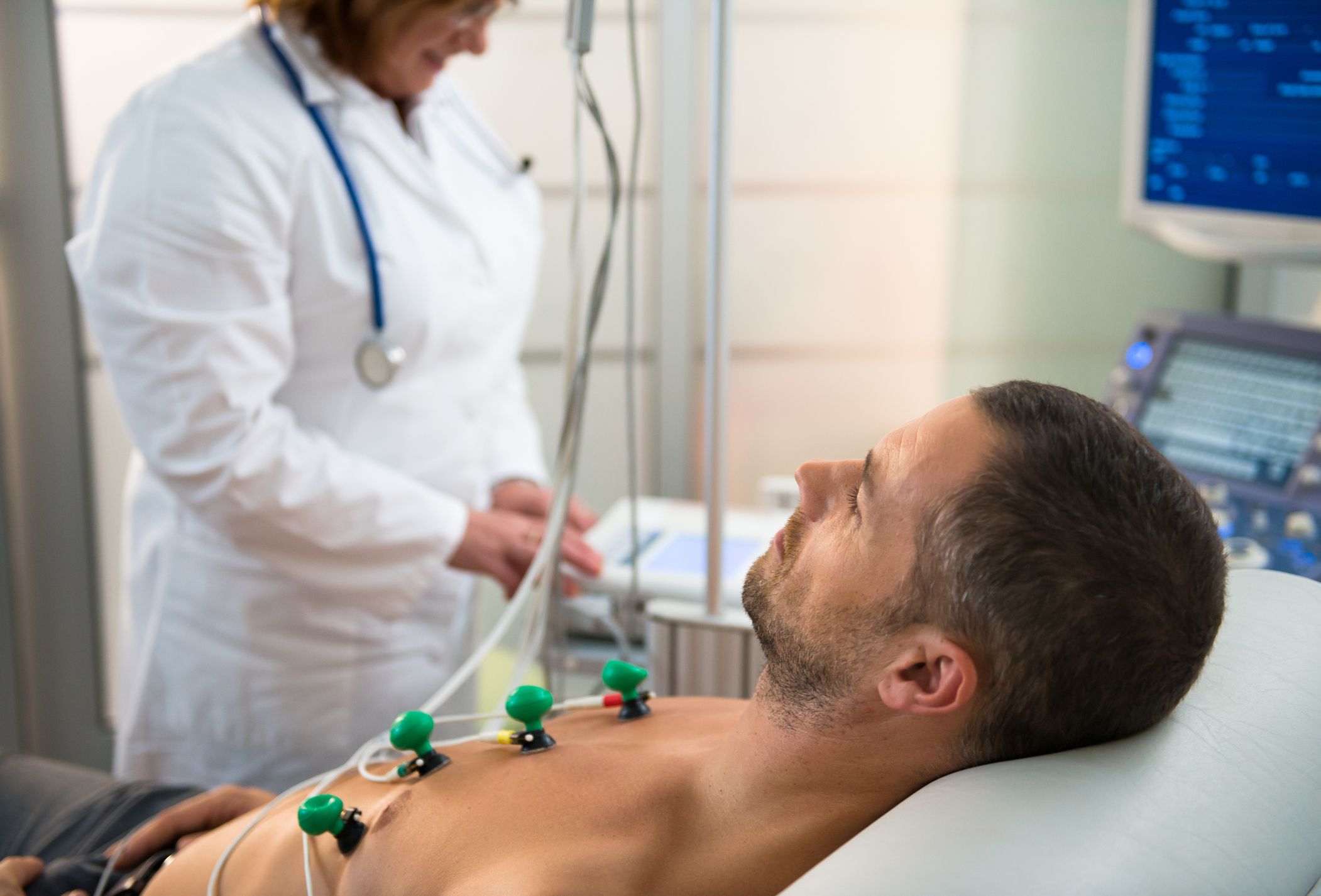
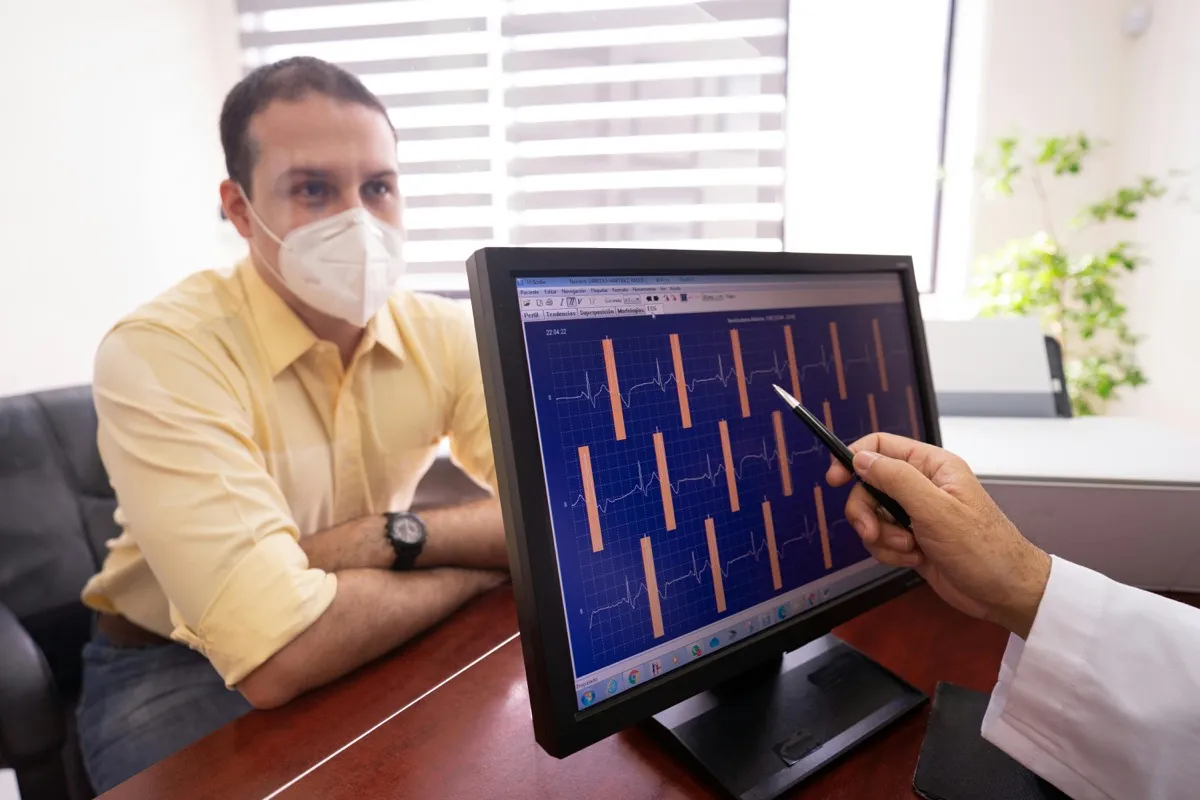
A standard 12-lead ECG (also written as EKG) is the most basic and widely used heart test in the world. Ten adhesive electrodes are placed on your chest, arms, and legs. These electrodes detect the tiny electrical impulses that travel through your heart muscle to coordinate each heartbeat. The 12-lead system captures the heart's electrical activity from 12 different angles, producing the characteristic tracings that cardiologists analyse.
The entire test takes 5-10 minutes, is completely painless, and provides results immediately. It is performed in almost every clinical setting, from hospital emergency departments to GP clinics to home visits. A standard ECG produces a snapshot: a recording of roughly 10-15 heartbeats over about 10 seconds.
That snapshot is remarkably informative. A trained reader can identify heart rate, rhythm regularity, conduction abnormalities (bundle branch blocks, heart blocks), evidence of current or prior heart attack, chamber enlargement patterns, electrolyte imbalances, and medication effects, all from a 10-second recording. For acute presentations such as chest pain, the ECG is the first test performed and often determines immediate treatment decisions.
What Is a Holter Monitor?
A Holter monitor is a portable, battery-powered device that records your heart's electrical activity continuously for 24 to 48 hours (and in some cases up to 7 days or longer). Named after biophysicist Norman Holter, who developed the technology in the 1960s, the device consists of electrodes attached to your chest connected by thin wires to a small recording unit worn on a belt or in a pouch.
During the monitoring period, you go about your normal daily activities: working, sleeping, exercising, eating. You keep a diary noting the times of any symptoms such as palpitations, dizziness, chest discomfort, or shortness of breath. When you return the device, a cardiologist analyses the entire recording, correlating any rhythm disturbances with the symptoms documented in your diary.
Over 24 hours, a Holter monitor records approximately 100,000 or more heartbeats, compared to the 10-15 captured on a standard ECG. This massively expanded recording window is the Holter's primary advantage: it captures electrical events that occur intermittently and would be missed during a brief office ECG. According to the American Heart Association, up to 50% of arrhythmias are intermittent and may not be present during a standard ECG recording.
ECG vs Holter Monitor: Side-by-Side Comparison
The fundamental difference between these two tests is recording duration. Both measure the same thing, the heart's electrical activity, but the window of observation differs by a factor of approximately 8,600 (10 seconds vs 24 hours). The following table compares every relevant aspect:
| Feature | Standard ECG | Holter Monitor |
|---|---|---|
| What it records | Heart's electrical activity | Heart's electrical activity |
| Recording duration | 10 seconds (snapshot) | 24-48 hours (continuous) |
| Number of heartbeats captured | Approximately 10-15 | 100,000+ |
| Leads / channels | 12 leads (standard) | 2-3 channels (typically) |
| Where performed | Clinic, hospital, or at home | Device set up in clinic; worn at home |
| Test time (appointment) | 5-10 minutes | 15-20 minutes for setup; return after 24-48 hours |
| Pain or discomfort | None | Minimal (electrode adhesive on skin) |
| Daily activity impact | None (test is brief) | Avoid showering and swimming; otherwise normal |
| Detects sustained arrhythmias | Yes | Yes |
| Detects intermittent arrhythmias | Only if present during recording | Yes - primary purpose |
| Detects acute heart attack | Yes - first-line test | Not used for this |
| Sleep-related rhythm changes | No (recorded while awake) | Yes - records through the night |
| Heart rate variability analysis | Limited | Detailed 24-hour analysis |
| Results available | Immediately | 24-48 hours after device return |
| Cost at DCDC Dubai | From AED 150 (in-clinic) | From AED 800 |
| Insurance coverage | Covered by most plans | Covered when medically indicated |
Both tests record the heart's electrical activity. The ECG provides an immediate snapshot; the Holter monitor captures the full 24-48 hour picture.
When a Standard ECG Is Sufficient
A standard ECG remains the appropriate first-line test in most cardiac evaluations. It is sufficient when the clinical question can be answered by a brief recording. The following scenarios typically require only a standard ECG:
- Chest pain evaluation: The ECG is the first test in acute chest pain to identify or rule out ST-segment changes indicating a heart attack. Emergency decisions depend on this immediate result
- Pre-operative cardiac clearance: Surgeons and anaesthesiologists need a baseline ECG before procedures to identify previously undiagnosed conditions. A Holter is not required for this purpose
- Routine health screening: Annual checkups and executive health panels in Dubai include a resting ECG as a screening tool for asymptomatic individuals, especially men over 40 and women over 50
- Medication monitoring: Certain medications (antiarrhythmics, some antibiotics, psychiatric drugs) can prolong the QT interval. Periodic ECGs monitor for this specific risk
- Known sustained arrhythmia: If your arrhythmia is present at the time of the appointment (e.g., persistent atrial fibrillation), the ECG will capture it and no extended monitoring is needed
- Sports fitness clearance: Athletes require a resting ECG to screen for conditions like hypertrophic cardiomyopathy or Wolff-Parkinson-White syndrome that carry sudden cardiac death risk
- Follow-up after pacemaker or ablation: A brief ECG confirms pacemaker function and rhythm status during routine device follow-up
For a detailed guide covering ECG types, preparation, and results interpretation, see our complete ECG test in Dubai resource.
When You Need a Holter Monitor Instead
A Holter monitor is ordered when the standard ECG cannot answer the clinical question, typically because the problem is intermittent. The European Society of Cardiology recommends ambulatory ECG monitoring (Holter) as a Class I indication for evaluating unexplained palpitations, syncope, and suspected intermittent arrhythmias. Common indications include:
- Palpitations with normal ECG: You feel your heart racing, skipping, or pounding, but every time an ECG is performed, it looks normal. The arrhythmia is intermittent and needs a longer recording window to be caught
- Unexplained syncope (fainting): Fainting can be caused by transient arrhythmias (brief cardiac pauses or rapid rhythms) that resolve by the time you reach the clinic. A Holter captures these events as they happen
- Suspected paroxysmal atrial fibrillation: This common arrhythmia can come and go, sometimes lasting minutes to hours. A Holter records episodes that a standard ECG misses, and the recorded pattern guides treatment decisions
- Nocturnal symptoms: Symptoms that occur only during sleep (waking with racing heart, night-time breathlessness) require monitoring through the sleep cycle. A standard ECG performed during daytime clinic hours cannot capture these events
- Assessing arrhythmia frequency and burden: Knowing how many premature ventricular complexes (PVCs) occur in 24 hours is clinically important. More than 10,000-20,000 PVCs daily can weaken the heart over time, and this count can only come from a Holter recording
- Evaluating treatment effectiveness: After starting antiarrhythmic medication or undergoing catheter ablation, a Holter documents whether the arrhythmia burden has decreased
- Silent ischemia detection: ST-segment changes during daily activities may indicate coronary artery disease episodes without chest pain
For complete details on the Holter monitoring process and what to expect, read our guide on Holter monitor testing in Dubai.
Conditions Each Test Detects Best
While both tests record the heart's electrical activity, each excels at detecting different conditions. Understanding these differences clarifies why cardiologists choose one over the other.
Conditions Best Detected by Standard ECG
- Acute myocardial infarction (heart attack): ST-elevation on ECG triggers immediate intervention. This is time-critical and requires an instant result
- Sustained arrhythmias: Persistent atrial fibrillation, atrial flutter, and sustained ventricular tachycardia are present continuously and show up on a standard ECG
- Conduction abnormalities: Bundle branch blocks, atrioventricular blocks (first degree), and Wolff-Parkinson-White patterns are stable findings visible on any ECG
- QT prolongation: Drug-induced or congenital long QT syndrome requires precise QT interval measurement, best done on a 12-lead ECG
- Chamber enlargement: ECG patterns suggesting left atrial enlargement, right ventricular hypertrophy, or left ventricular hypertrophy
- Pericarditis: Diffuse ST-elevation with PR depression creates a distinctive ECG pattern
Conditions Best Detected by Holter Monitor
- Paroxysmal atrial fibrillation: Episodes lasting minutes to hours that start and stop unpredictably require continuous monitoring
- Intermittent heart block: Second-degree and third-degree heart block that occurs sporadically, especially at night, may only appear during prolonged recording
- Premature ventricular complex (PVC) burden: The 24-hour total PVC count determines whether treatment is necessary and guides clinical decisions
- Supraventricular tachycardia (SVT): Brief episodes of SVT may last only seconds and resolve spontaneously, making them invisible on a resting ECG
- Sick sinus syndrome: Alternating fast and slow rhythms (tachy-brady syndrome) often require extended monitoring to document both phases
- Nocturnal bradycardia: Heart rate dropping dangerously low during sleep is only documented through overnight recording
- Symptom-rhythm correlation: The diary kept during Holter monitoring allows precise correlation between symptoms and recorded rhythm, which is the test's unique clinical strength
Accuracy Comparison: ECG vs Holter
Both the ECG and Holter monitor are highly accurate at what they do, but their diagnostic yield depends on what you are looking for. Accuracy is not the right question; the right question is whether the arrhythmia will be present during the recording window.
A standard ECG has a diagnostic sensitivity approaching 100% for conditions that are present at the time of recording: acute heart attacks, sustained arrhythmias, and conduction abnormalities. However, for intermittent arrhythmias, a single resting ECG detects the abnormality in only 1-5% of cases according to ACC/AHA guidelines, because the arrhythmia simply is not present during those 10 seconds.
A 24-hour Holter monitor increases the detection rate for intermittent arrhythmias to approximately 60-80%, depending on symptom frequency. For daily or near-daily symptoms, the Holter captures the rhythm disturbance in the majority of cases. For less frequent events (weekly or monthly), extended monitoring beyond 48 hours or event recorders may be needed.
The 12-lead ECG provides more detailed spatial information about the heart's electrical axis and chamber-specific changes because it records from 12 different angles. The Holter typically records only 2-3 channels, which is sufficient for rhythm analysis but provides less morphological detail. For this reason, the two tests remain complementary rather than interchangeable.
Not Sure Which Heart Test You Need?
Book a cardiology consultation at DCDC Dubai Healthcare City and our cardiologist will determine whether you need an ECG, Holter monitor, or both based on your specific symptoms. From AED 250.
Same-day appointments available. Call or WhatsApp to book.
Cost Comparison: ECG vs Holter Monitor in Dubai
Cost is a practical consideration for many patients, especially those paying out of pocket. The following table compares ECG and Holter monitor pricing at DCDC with the broader Dubai market range:
| Test | DCDC Price | Dubai Market Range | What Is Included |
|---|---|---|---|
| Standard ECG (in-clinic) | From AED 150 | AED 150-500 | 12-lead recording, immediate results, cardiologist review |
| ECG at home | From AED 499 | AED 400-800 | Home visit, 12-lead recording, cardiologist review, report |
| 24-hour Holter monitor | From AED 800 | AED 800-1,800 | Same-day device setup, 24-hour recording, cardiologist analysis, full report |
| 48-hour Holter monitor | From AED 800 | AED 1,000-2,500 | Extended recording for less frequent symptoms, full analysis |
| Cardiology consultation | From AED 250 | AED 300-800 | Clinical assessment, test ordering, results interpretation, treatment plan |
| ECG + Holter + consultation bundle | From AED 1,200 | AED 1,500-3,000 | Complete rhythm assessment with consultation and both tests |
DCDC pricing is competitive within the Dubai Healthcare City market. All prices are approximate starting rates and may vary based on insurance coverage.
Both ECG and Holter monitoring are covered by most insurance plans in Dubai when ordered by a physician for a medical indication. DCDC offers direct billing with over 20 insurance partners including Daman, AXA, Bupa, MetLife, and Cigna, which means you typically pay only your copay or deductible at the time of your visit.
What to Expect at DCDC: ECG and Holter Monitoring
DCDC (Doctors Clinic Diagnostic Center) is located in Building 64, Block A, Al Razi Medical Complex, Dubai Healthcare City. The clinic is MOHAP licensed (NIMY7VY5-240925), rated 4.8/5 from 1,000+ verified Google reviews with 98% patient satisfaction, and offers free on-site parking. Here is what to expect for each test:
Standard ECG at DCDC
- Arrival and preparation: No fasting or special preparation required. Wear a top that allows easy access to your chest. You will be taken to the ECG room, usually within 15 minutes of arrival
- The test: A technician places 10 adhesive electrodes on your chest, arms, and legs. You lie still for about 10 seconds while the machine records. The electrodes are painless and removed immediately after
- Results: The ECG tracing is available immediately. If you are seeing the cardiologist, Dr. Shahoo Mazhari reviews the recording during your consultation and explains the findings. If the ECG is part of a health checkup, results are included in your report
- Home ECG option: DCDC offers ECG at home from AED 499 for patients who cannot visit the clinic. A technician brings portable medical-grade equipment to your location and a cardiologist reviews the recording remotely
Holter Monitoring at DCDC
- Device setup appointment: You visit DCDC for the Holter monitor fitting, which takes 15-20 minutes. Electrodes are attached to your chest and connected to the portable recording device, which is clipped to your belt or placed in a pouch
- During monitoring: You wear the device for 24-48 hours while going about your normal daily activities. You keep a symptom diary noting times of palpitations, dizziness, chest discomfort, or other symptoms. Avoid showering, bathing, and swimming during the monitoring period
- Device return: You return the device to DCDC at the end of the recording period. The recording is uploaded for analysis
- Cardiologist analysis: Dr. Shahoo Mazhari, a board-certified cardiologist specialising in cardiac rhythm disorders, personally reviews the entire recording. Results are available within 24-48 hours after device return
- Follow-up: A follow-up consultation (included or separately scheduled) discusses the findings. If an arrhythmia is detected, Dr. Mazhari explains the diagnosis, its significance, and the recommended treatment plan
DCDC is open Saturday to Thursday from 8 AM to 10 PM and Friday from 9 AM to 9 PM, providing flexibility for both the initial Holter setup appointment and the device return visit.
Doctor's Perspective: How a Cardiologist Decides
"The decision between ECG and Holter is straightforward once you understand the patient's story. If someone comes in with chest pain right now, I need an ECG immediately because I need to know what the heart is doing at this moment. But if a patient tells me their heart races for a few minutes twice a week and then stops, a 10-second ECG in my office will almost certainly look normal. That is when I reach for the Holter. I am extending the recording window so that the arrhythmia has time to appear," explains Dr. Shahoo Mazhari, board-certified cardiologist at DCDC Dubai Healthcare City.
Dr. Mazhari adds: "The most common mistake I see is patients who had a normal ECG and were told their heart is fine, when in reality their intermittent arrhythmia simply was not present during those 10 seconds. If you have recurring symptoms, a normal ECG does not rule out a rhythm problem. It means we need to look longer, and that is exactly what Holter monitoring does."
Can You Need Both an ECG and a Holter Monitor?
Yes, and in clinical practice this is common. The ECG and Holter monitor are not competing tests but complementary stages in the same diagnostic pathway. A standard ECG is almost always performed first as a baseline assessment. If the ECG reveals a sustained arrhythmia, the diagnosis may be established immediately without needing a Holter. But if the ECG is normal or shows only borderline findings while the patient has ongoing symptoms, a Holter is the logical next step.
Specific scenarios where both tests are routinely ordered together include:
- Palpitations workup: ECG for baseline rhythm and structural clues, then Holter to capture the episodes as they happen during daily life
- Syncope evaluation: ECG to check for conduction disease (heart block, long QT), Holter to look for transient arrhythmias causing loss of consciousness
- Post-ablation monitoring: ECG immediately after the procedure, then Holter at 1-3 months to confirm the arrhythmia has not recurred
- Medication adjustment: ECG to check baseline intervals, Holter to assess overall arrhythmia burden before and after medication changes
- Atrial fibrillation management: ECG for rate and rhythm at each visit, periodic Holter to quantify AF burden and assess rate control over 24 hours
- Pre-pacemaker evaluation: ECG shows baseline conduction, Holter documents how frequently dangerous pauses or heart blocks occur, which helps determine if a pacemaker is warranted
For a broader view of cardiac diagnostics including echocardiography, read our ECG vs echocardiogram comparison, which explains how imaging complements electrical testing.
Which Heart Test Should You Ask For?
The answer depends on your symptoms and clinical situation. Use the following decision guide as a starting point, but always discuss with your cardiologist, who can account for your full medical history:
Ask for a Standard ECG If:
- You have acute chest pain or pressure
- You need a routine cardiac screening or health checkup
- You need pre-surgical or sports fitness clearance
- Your symptoms are present constantly (not intermittent)
- You are starting a new medication that affects heart rhythm
- You have never had any cardiac test and want a baseline
Ask for a Holter Monitor If:
- You have palpitations, skipped beats, or racing heart that comes and goes
- You have had fainting or near-fainting episodes with no clear cause
- A previous ECG was normal but your symptoms persist
- You experience symptoms mainly at night or during specific activities
- Your doctor suspects paroxysmal atrial fibrillation
- You need to quantify how many PVCs or arrhythmia episodes occur in 24 hours
- You need to check whether your heart medication is adequately controlling your rhythm
Ask About Both If:
- You have intermittent symptoms plus cardiac risk factors
- Your cardiologist is evaluating you for a pacemaker or ablation procedure
- You are being managed for atrial fibrillation and need ongoing rhythm assessment
- You had a cardiac procedure and need both immediate and extended follow-up
Book Your Heart Test at DCDC Dubai Healthcare City
Whether you need a standard ECG or Holter monitoring, DCDC provides both with board-certified cardiologist review. In-clinic ECG from AED 150 and Holter monitoring from AED 800.
Direct billing with 20+ insurance partners. Free on-site parking. Saturday-Thursday 8 AM-10 PM.
Verwandte Leistungen im DCDC
Fachkundige Betreuung und moderne Diagnostik in Dubai Healthcare City
Frequently Asked Questions
Final Thoughts
The ECG and Holter monitor are both essential tools in cardiac diagnostics, and understanding the difference between them helps you engage more effectively with your cardiologist. A standard ECG provides an immediate snapshot that is indispensable for acute symptoms and baseline screening. A Holter monitor extends the observation window to 24-48 hours, capturing the intermittent rhythm disturbances that a brief ECG inevitably misses.
Neither test replaces the other. They occupy different positions in the diagnostic pathway, and many patients benefit from both. The key question is not which test is better but which test matches your clinical situation. If your symptoms are constant or acute, start with an ECG. If they are intermittent or your ECG was normal despite ongoing complaints, a Holter monitor is the appropriate next step.
At Doctors Clinic Diagnostic Center (DCDC) in Dubai Healthcare City, both tests are available with board-certified cardiologist review, competitive pricing starting from AED 150 for ECG and AED 800 for Holter monitoring, and direct billing with over 20 insurance partners. Book a cardiology consultation to determine which test is right for your heart.
Quellen und Referenzen
Dieser Artikel wurde von unserem medizinischen Team überprüft und bezieht sich auf folgende Quellen:
- American Heart Association - Holter Monitor and Event Monitor
- American College of Cardiology - ACC/AHA Guidelines on Ambulatory ECG Monitoring
- European Society of Cardiology - Guidelines for Management of Patients with Ventricular Arrhythmias
- Mayo Clinic - Holter Monitor
- NHS - Electrocardiogram (ECG)
- British Heart Foundation - Tests for Heart Conditions
Medizinische Inhalte auf dieser Website werden von DHA-lizenzierten Ärzten überprüft. Siehe unsere redaktionelle Richtlinien für weitere Informationen.

Verfasst von
Dr. Shahoo Mazhari
Cardiology
MD, Cardiology
Dr. Shahoo Mazhari is a board-certified cardiologist at DCDC Dubai Healthcare City specialising in cardiac rhythm disorders. He provides expert ECG interpretation, Holter monitoring analysis, and comprehensive cardiovascular risk assessment.
Related Articles

ECG Test Dubai: Cost, Types & Results
Holter Monitor Test Dubai: Cost & Guide
ECG vs Echocardiogram: Differences Explained
Heart Palpitations Dubai: Causes & Help
Heart Tests Dubai: ECG, Echo & Stress Test Cost
More in Cardiology
ECG at Home Dubai: Cost & What to Expect (2026)
Weiterlesen
Cardiac Rehabilitation Dubai: Recovery (2026)
WeiterlesenTroponin Test Dubai: Heart Attack Marker (2026)
WeiterlesenBest Cardiologist in Dubai: Dr. Shahoo Mazhari at DCDC (2026)
WeiterlesenCardiologist in Dubai Healthcare City: Dr. Shahoo Mazhari at DCDC (2026)
Weiterlesen
Echocardiogram (Echo) Test in Dubai: Cost, Procedure & What to Expect (2026)
Weiterlesen© 2026 Doctors Clinic Diagnostic Center (DCDC), Dubai Healthcare City. Originally published at https://doctorsclinicdubai.ae/blog/holter-monitor-vs-ecg-dubai. All rights reserved. Unauthorized reproduction is prohibited.