Key Takeaways
- Semen analysis measures sperm count, motility (movement), morphology (shape), volume, and other parameters. It is the primary test for evaluating male fertility and is recommended as the first investigation when a couple has difficulty conceiving.
- Semen analysis in Dubai costs AED 200-400 at most laboratories. At DCDC in Dubai Healthcare City, on-site sample collection ensures rapid processing and accurate results.
- The WHO 2021 (6th edition) criteria define normal values: sperm concentration of 16 million/mL or higher, total motility of 42% or more, and normal morphology of 4% or higher.
- Preparation requires 2-5 days of sexual abstinence before the test. Shorter or longer abstinence periods can artificially alter results. Avoid alcohol, saunas, and hot baths for 72 hours before the test.
- A single abnormal result does not confirm a diagnosis. WHO guidelines recommend repeating the analysis 2-3 months later, as sperm production cycles take approximately 74 days, and temporary factors (illness, stress, medication) can affect results.
- Lifestyle factors significantly impact semen quality. Studies show that obesity, smoking, excessive alcohol, heat exposure, certain medications, and poor diet can reduce sperm count and motility by 20-50%.
Semen analysis is the cornerstone of male fertility evaluation, yet it remains one of the most misunderstood medical tests. Approximately 50% of infertility cases involve a male factor, according to the World Health Organization, making semen analysis an essential early investigation for any couple having difficulty conceiving. At DCDC in Dubai Healthcare City, our on-site laboratory provides confidential semen analysis with proper sample handling, WHO 2021 standard assessment, and same-day results for routine parameters.
This guide explains everything you need to know about semen analysis: what it measures, how to prepare, what normal results look like according to the latest WHO criteria, how much it costs in Dubai, and what steps to take if your results are abnormal.
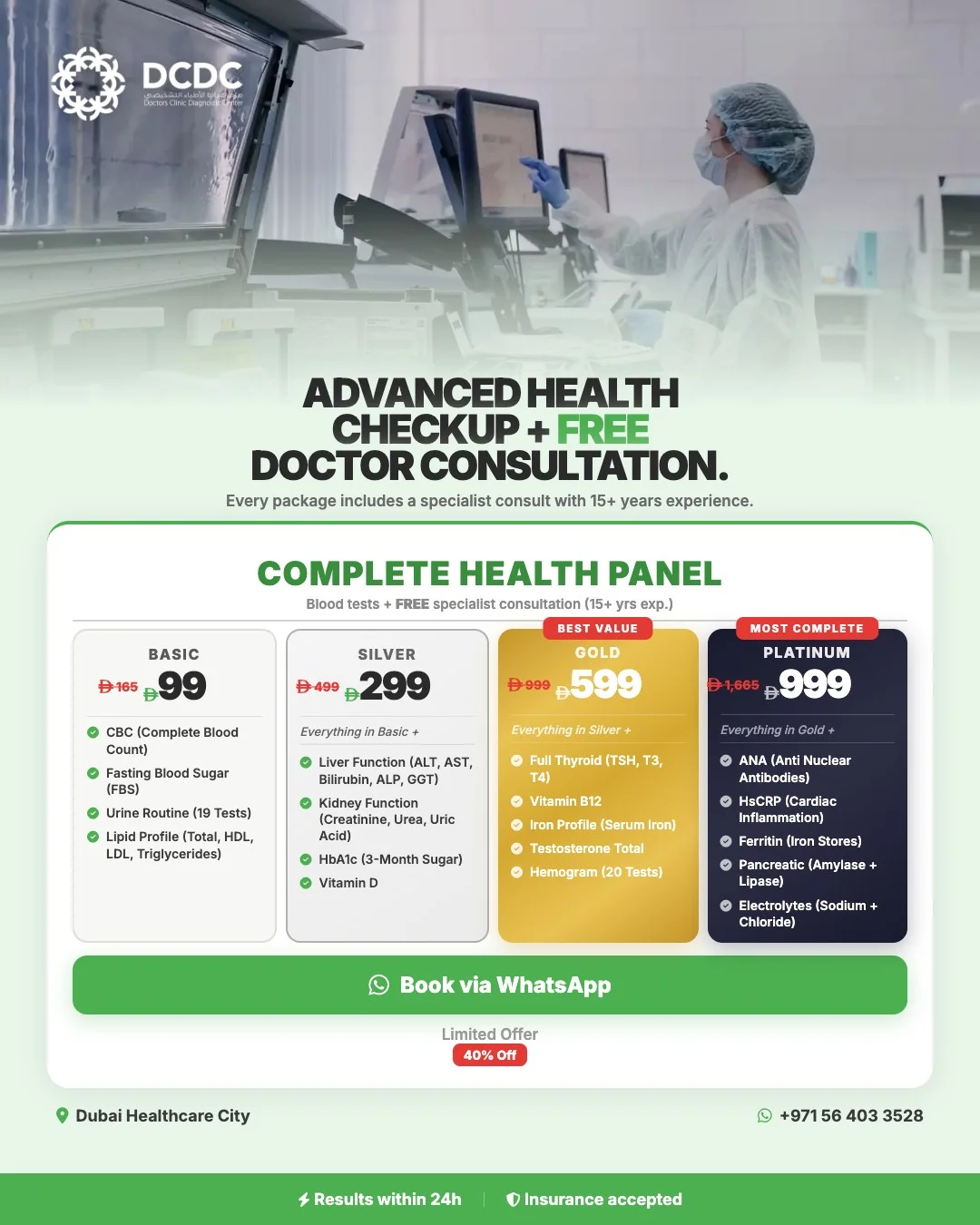
Health Screening Packages
Save with our bundled screening packages — specialist consultation included




What Does a Semen Analysis Measure?
A semen analysis (also called a seminogram or spermogram) is a laboratory test that evaluates both the semen fluid and the sperm cells within it. The test provides multiple measurements that together give a comprehensive picture of male reproductive function. Understanding each parameter helps you interpret your results accurately.
Key Parameters Measured
- Sperm concentration (count): The number of sperm per millilitre of semen. Measured in millions/mL. A count below 16 million/mL is considered below the WHO reference range.
- Total sperm count: The total number of sperm in the entire ejaculate (concentration multiplied by volume). The WHO reference is 39 million or more.
- Total motility: The percentage of sperm that are moving (any movement). The WHO reference is 42% or higher. This includes both progressive and non-progressive motility.
- Progressive motility: The percentage of sperm swimming forward in a straight line or large circles. The WHO reference is 30% or higher. This is the most important motility measurement for fertility.
- Morphology (shape): The percentage of sperm with normal shape (head, midpiece, and tail). Using strict Kruger criteria, the WHO reference is 4% or higher. Even in fertile men, most sperm have some abnormality.
- Semen volume: The total volume of the ejaculate. The WHO reference is 1.4 mL or more. Low volume may indicate retrograde ejaculation, ejaculatory duct obstruction, or incomplete collection.
- pH: Normal semen is slightly alkaline (pH 7.2 or higher). Abnormal pH may indicate infection or obstruction.
- Liquefaction time: Semen initially coagulates after ejaculation and should liquefy within 15-30 minutes. Delayed liquefaction can impair sperm movement.
- Vitality: The percentage of live sperm. The WHO reference is 54% or higher. Important when motility is low — to distinguish between dead sperm and immotile but alive sperm.
- White blood cells: Elevated levels (more than 1 million/mL) suggest infection or inflammation (leukocytospermia).
WHO 2021 Semen Analysis Normal Values
The World Health Organization published its 6th edition laboratory manual for human semen examination in 2021, updating the reference ranges that laboratories worldwide use to interpret results. These values represent the 5th percentile of fertile men — meaning 95% of men who achieved pregnancy naturally had values at or above these thresholds. Values below these ranges do not necessarily mean infertility, but they indicate reduced fertility potential that warrants further investigation.
| Parameter | WHO 2021 Reference Value | Clinical Significance |
|---|---|---|
| Semen volume | 1.4 mL or more | Low volume may indicate obstruction or incomplete collection |
| Sperm concentration | 16 million/mL or more | Below 16M = oligozoospermia |
| Total sperm count | 39 million or more | Total count matters more than concentration alone |
| Total motility | 42% or more | Below 42% = asthenozoospermia |
| Progressive motility | 30% or more | Most important motility measurement for fertility |
| Normal morphology | 4% or more (strict criteria) | Below 4% = teratozoospermia |
| Vitality | 54% or more | Percentage of live sperm cells |
| pH | 7.2 or higher | Low pH may indicate ejaculatory duct obstruction |
| White blood cells | Less than 1 million/mL | Elevated levels suggest infection |
| Liquefaction time | Within 60 minutes | Delayed liquefaction may impair motility |
WHO 2021 (6th edition) semen analysis reference values for fertile men
It is important to understand that these are reference values from the 5th percentile of fertile men, not absolute cutoffs for fertility. A man with values slightly below these ranges may still conceive naturally, while a man with normal values may have other fertility factors. Clinical interpretation should always be done by a qualified doctor who considers the full clinical picture.
How to Prepare for a Semen Analysis
Proper preparation is critical for accurate results. Incorrect preparation is the most common reason for unreliable semen analysis results. Follow these guidelines strictly to ensure your test reflects your true baseline.
Abstinence Period
The WHO recommends 2-7 days of sexual abstinence before semen analysis, with 2-5 days being the optimal range used by most fertility clinics. Abstinence shorter than 2 days may result in lower volume and concentration, while abstinence longer than 7 days can reduce motility and increase the proportion of abnormal sperm and dead cells.
Before the Test: What to Avoid
- Alcohol: Avoid alcohol for at least 72 hours before the test. Heavy alcohol consumption reduces sperm concentration and motility.
- Heat exposure: Avoid saunas, hot tubs, hot baths, and placing laptops on your lap for 72 hours before the test. Testicular temperature increases of just 1-2 degrees Celsius can impair sperm production.
- Strenuous exercise: Avoid intense physical exercise for 24-48 hours before the test, as it can temporarily affect hormone levels and sperm parameters.
- Caffeine: While moderate caffeine intake is generally acceptable, excessive consumption (more than 4 cups of coffee) may affect motility.
- Medications: Inform your doctor about all medications you are taking. Some medications (anabolic steroids, testosterone supplements, certain antidepressants, finasteride) can significantly affect sperm production.
- Illness: If you have had a fever in the past 3 months, inform your doctor. Fever can temporarily suppress sperm production for up to 74 days (one full spermatogenesis cycle).
Sample Collection Guidelines
For the most accurate results, the sample should be collected by masturbation into a sterile specimen container provided by the laboratory. The following guidelines apply.
- Wash hands and genitals thoroughly before collection to avoid contamination.
- Collect the entire ejaculate. If any portion is lost during collection, inform the laboratory as this will affect volume and count measurements.
- Do NOT use lubricants, saliva, or condoms during collection, as these can damage or kill sperm.
- If collecting at home, deliver the sample to the laboratory within 30-60 minutes, keeping it at body temperature (in an inside pocket, not in a bag).
- On-site collection at the clinic is preferred as it eliminates transport-related degradation and ensures optimal processing time.
Semen Analysis Cost in Dubai
Semen analysis costs vary across Dubai depending on the laboratory, the type of analysis (basic vs comprehensive), and whether additional tests are included.
| Service | Estimated Cost (AED) | What Is Included |
|---|---|---|
| Basic semen analysis | 200-400 | Count, motility, morphology, volume, pH |
| Comprehensive semen analysis | 400-800 | Basic + vitality, WBC, MAR test, detailed morphology |
| Sperm DNA fragmentation test | 800-1,500 | Measures DNA damage in sperm cells |
| Hormone panel (FSH, LH, testosterone) | 300-600 | Evaluates hormonal causes of low sperm count |
| Full male fertility panel | 1,000-2,500 | Semen analysis + hormones + ultrasound |
| Post-vasectomy semen analysis | 200-300 | Confirms absence of sperm after vasectomy |
Semen analysis and related fertility test costs in Dubai (2026 estimates)
At DCDC, semen analysis is performed on-site with proper temperature control and processing within the WHO-recommended timeframe. On-site collection eliminates the sample degradation that occurs during transport from home, ensuring more accurate results. Same-day results are available for basic parameters. For a comprehensive male fertility evaluation, DCDC also offers hormone panels and specialist referral as needed.
Book Your Semen Analysis at DCDC
Confidential semen analysis with on-site collection, WHO 2021 standard assessment, and same-day results at DCDC in Dubai Healthcare City. Direct insurance billing available.
Call +971 4 243 4429 or WhatsApp to book
Understanding Your Semen Analysis Results
Interpreting semen analysis results requires understanding what each abnormal finding means clinically and what it may indicate about your fertility potential. Here are the medical terms your report may contain.
Abnormal Findings and Their Meaning
| Finding | Medical Term | Possible Causes |
|---|---|---|
| Low sperm count | Oligozoospermia | Hormonal imbalance, varicocele, heat exposure, medications, genetic factors |
| No sperm in ejaculate | Azoospermia | Obstruction (obstructive) or production failure (non-obstructive) |
| Low motility | Asthenozoospermia | Varicocele, infection, antisperm antibodies, lifestyle factors |
| Abnormal morphology | Teratozoospermia | Often idiopathic; environmental toxins, heat, oxidative stress |
| Low volume | Hypospermia | Incomplete collection, retrograde ejaculation, obstruction |
| High WBC count | Leukocytospermia | Genital tract infection, prostatitis, epididymitis |
| Multiple abnormalities | Oligoasthenoteratozoospermia (OAT) | Combination of low count, motility, and morphology — most common finding |
Common abnormal semen analysis findings and their clinical significance
When to Repeat a Semen Analysis
A single semen analysis is not sufficient for diagnosis. The WHO recommends the following approach to retesting.
- Normal results: If the first test is normal and there are no other fertility concerns, a repeat test is usually not necessary.
- Abnormal results: Repeat the analysis after 2-3 months (one full spermatogenesis cycle of approximately 74 days). This allows time for any temporary factors to resolve and confirms whether the abnormality is persistent.
- Borderline results: If values are near the lower reference limits, a repeat test within 4-6 weeks can clarify whether the finding is significant.
- Significantly abnormal results: If azoospermia (no sperm) or severe oligozoospermia (less than 5 million/mL) is found, repeat testing is urgent to confirm before proceeding with further investigations.
- After lifestyle changes: If you have made significant changes (quit smoking, lost weight, stopped testosterone supplementation), retest after 3 months to assess improvement.
What to Do If Your Semen Analysis Is Abnormal
An abnormal semen analysis does not mean you cannot father a child. Many causes are treatable, and assisted reproductive technologies can help even with severely low counts. The next steps depend on the specific findings.
Recommended Next Steps
- Repeat the test: Confirm abnormal results with a second analysis after 2-3 months.
- Hormone testing: FSH, LH, testosterone, prolactin, and thyroid function tests help identify hormonal causes. At DCDC, these can be ordered and collected on the same day as your semen analysis through our hormone testing service.
- Scrotal ultrasound: To check for varicocele (enlarged veins in the scrotum, found in 15-40% of infertile men), testicular abnormalities, or obstruction.
- Genetic testing: Karyotype analysis and Y-chromosome microdeletion testing for severe oligozoospermia or azoospermia.
- Specialist referral: A urologist or reproductive medicine specialist can provide advanced evaluation and treatment options.
- Lifestyle modifications: Address modifiable factors (see section below) and retest after 3 months.
Lifestyle Factors That Affect Semen Quality
Research consistently shows that lifestyle factors significantly impact semen parameters. A 2017 meta-analysis published in Human Reproduction Update found that sperm counts in Western men declined by 50-60% between 1973 and 2011, with environmental and lifestyle factors believed to be major contributors.
Factors That Reduce Semen Quality
- Smoking: Reduces sperm count by 13-17%, motility by 10%, and increases DNA damage. Effects are dose-dependent and partially reversible after quitting.
- Obesity: BMI over 30 is associated with 25-35% lower sperm concentration compared to normal-weight men. Excess fat tissue converts testosterone to oestrogen, disrupting the hormonal axis.
- Excessive alcohol: More than 14 units per week reduces testosterone levels and impairs spermatogenesis. Binge drinking is particularly harmful.
- Heat exposure: Regular sauna use, hot baths, tight underwear, prolonged sitting, and laptop use on the lap all raise scrotal temperature. The testes need to be 2-4 degrees Celsius below core body temperature for optimal sperm production.
- Anabolic steroids/testosterone: Exogenous testosterone shuts down the body's natural production, often causing temporary azoospermia. Recovery can take 6-12 months after stopping. For more on testosterone levels, see our low testosterone guide.
- Stress: Chronic psychological stress reduces testosterone and impairs sperm quality through cortisol elevation.
- Environmental toxins: Pesticides, heavy metals, BPA (from plastics), and phthalates are endocrine disruptors that can impair sperm production.
Factors That Improve Semen Quality
- Regular moderate exercise: 150 minutes per week of moderate activity is associated with improved sperm parameters. Avoid excessive endurance training.
- Balanced diet: Mediterranean-style diets rich in fruits, vegetables, fish, nuts, and whole grains are associated with better semen quality. Antioxidant-rich foods (berries, leafy greens, nuts) may reduce oxidative sperm damage.
- Adequate sleep: 7-9 hours per night supports optimal testosterone production and sperm quality.
- Supplements (with evidence): Zinc (30mg/day), folate (400mcg/day), CoQ10 (200mg/day), and vitamin D (if deficient) have some evidence for improving sperm parameters in subfertile men. Check your vitamin D levels with our vitamin D guide.
- Loose-fitting underwear: Boxers instead of briefs may improve scrotal cooling and sperm counts.
- Weight management: Losing 5-10% of body weight in overweight men has been shown to improve sperm concentration and motility.
What to Expect at DCDC for a Semen Analysis
DCDC provides a private, comfortable environment for semen analysis with a focus on confidentiality and clinical accuracy.
- Step 1 — Booking: Call or WhatsApp to schedule your appointment. The reception team will confirm the abstinence requirements and provide preparation instructions.
- Step 2 — Arrival: DCDC is located in Building 64, Block A, Al Razi Medical Complex in Dubai Healthcare City, with free dedicated parking. Check in at reception.
- Step 3 — Collection: A private collection room is available on-site. Alternatively, if collecting at home, bring the sample within 30-60 minutes in a sterile container provided by the lab, kept at body temperature.
- Step 4 — Processing: The sample is processed immediately according to WHO 2021 guidelines. On-site collection ensures the sample is analysed within the optimal timeframe, avoiding degradation.
- Step 5 — Results: Basic parameters are available the same day. Your doctor will review the results, explain the findings, and recommend next steps if any values are outside the reference range.
According to Dr. Hadeel Elnur, "Many men feel anxious about semen analysis, but it is a straightforward, painless test that provides invaluable information. At DCDC, we prioritise privacy and ensure the process is as comfortable as possible. If results are abnormal, we can order follow-up hormone blood tests the same day and arrange specialist referral without delay, so you are not left waiting."
Semen Analysis for Post-Vasectomy Confirmation
Semen analysis is not only for fertility evaluation. Men who have undergone vasectomy need post-procedure semen analysis to confirm the procedure was successful. The American Urological Association (AUA) recommends performing a semen analysis approximately 8-16 weeks after vasectomy, or after 20-25 ejaculations. The test should show azoospermia (no sperm) or rare non-motile sperm to confirm contraceptive success. Until confirmed, alternative contraception must be used.
Ready to Book Your Semen Analysis?
DCDC offers confidential semen analysis with on-site collection in Dubai Healthcare City. WHO 2021 standard assessment, same-day results, and follow-up hormone testing available. Direct insurance billing with 20+ providers.
Call +971 4 243 4429 or WhatsApp
Advanced Semen Tests Beyond Basic Analysis
When basic semen analysis shows abnormal results, or when unexplained infertility persists despite normal basic parameters, advanced tests may be recommended.
- Sperm DNA fragmentation (SDF) test: Measures the percentage of sperm with damaged DNA. High fragmentation (above 30%) is associated with reduced natural conception rates, higher miscarriage rates, and lower IVF success. Causes include oxidative stress, infection, varicocele, and age.
- Anti-sperm antibody test (MAR test): Detects antibodies that bind to sperm and impair their ability to fertilise. Found in approximately 10% of infertile men, particularly after vasectomy reversal, genital tract infection, or trauma.
- Sperm function tests: Assess the ability of sperm to penetrate cervical mucus, bind to eggs, and undergo the acrosome reaction (enzyme release needed for fertilisation).
- Reactive oxygen species (ROS) test: Measures oxidative stress levels in semen. Elevated ROS damages sperm DNA and membranes, reducing fertility potential.
- Computer-assisted semen analysis (CASA): Uses automated video technology for precise, objective measurement of sperm motility patterns and velocity.
Related Services at DCDC
Expert care and advanced diagnostics at Dubai Healthcare City
Semen Analysis
WHO 2021 standard semen analysis with count, motility, and morphology assessment.
Book AppointmentHormone Testing
FSH, LH, testosterone, and prolactin panels for male fertility evaluation.
Book AppointmentFertility Testing
Comprehensive male and female fertility evaluation panels.
Book AppointmentFrequently Asked Questions
Final Thoughts
Semen analysis is a simple, non-invasive test that provides critical information about male fertility. Understanding the WHO 2021 reference values, proper preparation requirements, and what abnormal results mean empowers you to take appropriate next steps. Remember that a single abnormal result does not confirm a diagnosis, and many causes of poor semen quality are treatable.
At DCDC in Dubai Healthcare City, our on-site laboratory offers confidential semen analysis with same-day results, follow-up hormone testing, and specialist referral when needed. The clinic provides free parking, direct insurance billing with 20+ providers, and extended operating hours. Book your appointment by calling +971 4 243 4429 or sending a WhatsApp message.
Sources & References
This article was reviewed by our medical team and references the following sources:
- WHO - Laboratory Manual for the Examination and Processing of Human Semen, 6th Edition (2021)
- Human Reproduction Update - Temporal Trends in Sperm Count (2017)
- American Urological Association - Male Infertility Guidelines
- Mayo Clinic - Semen Analysis
- Cleveland Clinic - Semen Analysis
- NHS - Infertility Diagnosis
- Fertility and Sterility - Lifestyle Factors and Male Fertility
Medical content on this site is reviewed by DHA-licensed physicians. See our editorial policy for more information.

Written by
Dr. Hadeel Elnur
General Practitioner
MD, General Practice
Dr. Hadeel Elnur is a General Practitioner at Doctors Clinic Diagnostic Center (DCDC) in Dubai Healthcare City.
Related Articles

Semen Analysis Dubai: Fertility Test Guide (2026)
Testosterone Test Dubai: Complete Guide (2026)
Hormone Test Dubai: Complete Guide (2026)
Low Testosterone Symptoms & Treatment Dubai (2026)
Men's Health Screening Dubai (2026)
More in Fertility
© 2026 Doctors Clinic Diagnostic Center (DCDC), Dubai Healthcare City. Originally published at https://doctorsclinicdubai.ae/blog/semen-analysis-dubai-guide. All rights reserved. Unauthorized reproduction is prohibited.