

Book Your Appointment
Verified Patient Reviews of DCDC Diagnostic Center in Dubai
Verified reviews and real patient stories from Dubai Healthcare City
I'm very satisfied with this medical clinic. I had my first pregnancy screening here. It was affordable and very professional. The radiologist was welcoming, kind, and made the experience great.
Aizhan Tokmanbetova
Hurt my knee Friday night and got an MRI appointment Sunday evening (booked Sunday afternoon). Waited about 2 minutes and was done in just over 30 minutes. The team was amazing, friendly and efficient.
Kirsten Evans
Dr. Osama's team was gentle and amazing. After a bad experience elsewhere, my pelvic exam here was much more professional. Great report and very precise.
Mary





Semen Analysis in Dubai: Comprehensive Male Fertility Assessment
WHO 2021-compliant semen analysis for accurate male fertility evaluation and treatment planning
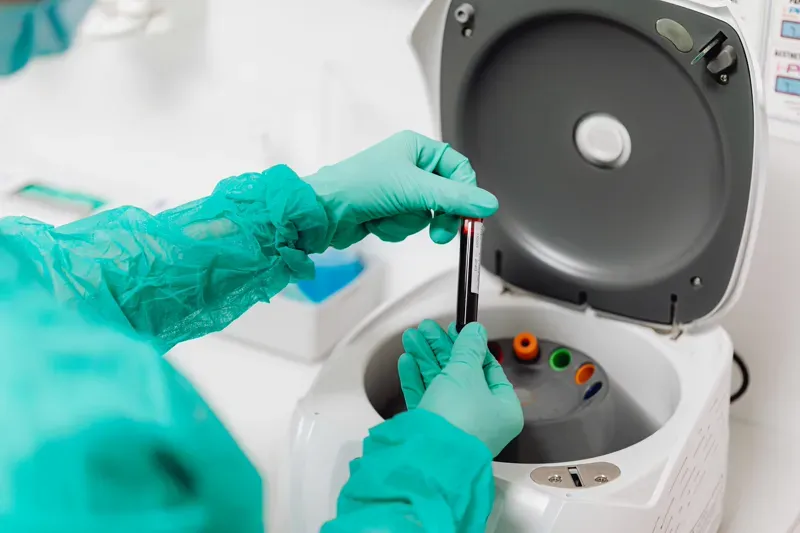
WHO 2021 Standards
Analysis performed against the most current international reference criteria
15+ Parameters
Comprehensive assessment of all clinically relevant semen characteristics
Private Collection Room
Dedicated private facilities for comfortable on-site sample provision
Andrologist Review
Clinical interpretation by specialists in male reproductive health
Semen analysis in Dubai through a comprehensive sperm test is the cornerstone of male fertility evaluation and male infertility testing and is the first essential investigation for any couple experiencing difficulty conceiving. Despite its central importance, semen analysis is frequently overlooked or delayed, with investigations instead focusing prematurely on the female partner. Yet male factor infertility accounts for approximately 40 to 50 percent of all infertility cases, either as the sole cause or as a contributing factor. At DCDC in Dubai Healthcare City, we perform semen analysis strictly according to the World Health Organization 2021 reference criteria, the current gold standard that replaced the older 2010 guidelines, ensuring your results are interpreted against the most up-to-date scientific evidence.
A comprehensive semen analysis evaluates multiple parameters from a single ejaculate sample. Sperm concentration and total sperm count measure the number of sperm cells produced per ejaculation. Progressive motility assesses the percentage of sperm actively swimming forward in a purposeful manner, which is essential for the sperm to reach and fertilise the egg. Total motility includes non-progressive motile sperm. Sperm morphology, assessed by strict Kruger criteria, evaluates the structural normality of sperm heads, midpieces, and tails, since only morphologically normal sperm can penetrate the egg. Semen volume, pH, liquefaction time, and viscosity provide information about the health of the prostate and seminal vesicles that produce the seminal fluid.
WHO 2021 reference values define the lower reference limits established from fertile men who achieved conception within 12 months. These include sperm concentration above 16 million per millilitre, total motility above 42 percent, progressive motility above 30 percent, and normal morphology above 4 percent by strict criteria. Results below these thresholds indicate oligozoospermia (low count), asthenozoospermia (poor motility), or teratozoospermia (abnormal morphology), which may each independently or in combination reduce natural fertility. Our andrologists review results alongside clinical history to determine whether further investigations such as hormonal testing, genetic analysis, or testicular ultrasound are warranted.
WHO 2021 Standards
Analysis performed against the most current international reference criteria
15+ Parameters
Comprehensive assessment of all clinically relevant semen characteristics
Private Collection Room
Dedicated private facilities for comfortable on-site sample provision
Andrologist Review
Clinical interpretation by specialists in male reproductive health
Semen Analysis in Dubai: Comprehensive Male Fertility Assessment
WHO 2021-compliant semen analysis for accurate male fertility evaluation and treatment planning
Semen analysis in Dubai through a comprehensive sperm test is the cornerstone of male fertility evaluation and male infertility testing and is the first essential investigation for any couple experiencing difficulty conceiving. Despite its central importance, semen analysis is frequently overlooked or delayed, with investigations instead focusing prematurely on the female partner. Yet male factor infertility accounts for approximately 40 to 50 percent of all infertility cases, either as the sole cause or as a contributing factor. At DCDC in Dubai Healthcare City, we perform semen analysis strictly according to the World Health Organization 2021 reference criteria, the current gold standard that replaced the older 2010 guidelines, ensuring your results are interpreted against the most up-to-date scientific evidence.
A comprehensive semen analysis evaluates multiple parameters from a single ejaculate sample. Sperm concentration and total sperm count measure the number of sperm cells produced per ejaculation. Progressive motility assesses the percentage of sperm actively swimming forward in a purposeful manner, which is essential for the sperm to reach and fertilise the egg. Total motility includes non-progressive motile sperm. Sperm morphology, assessed by strict Kruger criteria, evaluates the structural normality of sperm heads, midpieces, and tails, since only morphologically normal sperm can penetrate the egg. Semen volume, pH, liquefaction time, and viscosity provide information about the health of the prostate and seminal vesicles that produce the seminal fluid.
WHO 2021 reference values define the lower reference limits established from fertile men who achieved conception within 12 months. These include sperm concentration above 16 million per millilitre, total motility above 42 percent, progressive motility above 30 percent, and normal morphology above 4 percent by strict criteria. Results below these thresholds indicate oligozoospermia (low count), asthenozoospermia (poor motility), or teratozoospermia (abnormal morphology), which may each independently or in combination reduce natural fertility. Our andrologists review results alongside clinical history to determine whether further investigations such as hormonal testing, genetic analysis, or testicular ultrasound are warranted.

Dr. Hadi Komshi
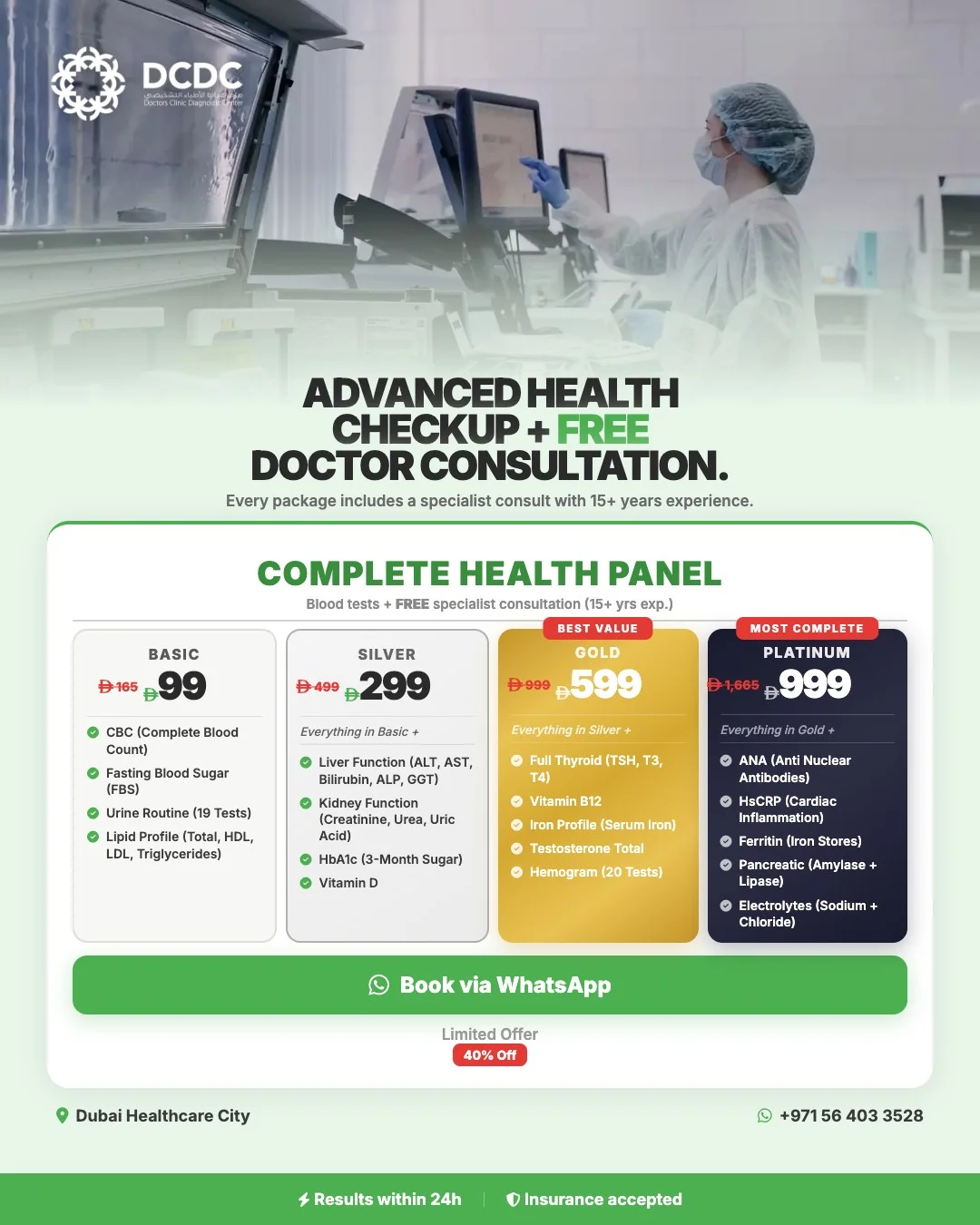
Complete Health Panel
Advanced health checkup with FREE specialist consultation. 4 tiers from basic blood work to full-body screening with 40+ biomarkers.
10–40+ tests included
What's Included
Who is this for?
Anyone wanting a comprehensive baseline health check with specialist consultation
Explore Our Services
Comprehensive semen analysis services at DCDC Dubai Healthcare City.
Basic Semen Analysis
WHO 2021 compliant sperm count, motility, morphology, volume, and pH.
Advanced Semen Analysis
Extended panel including vitality, antisperm antibodies, and DNA fragmentation index.
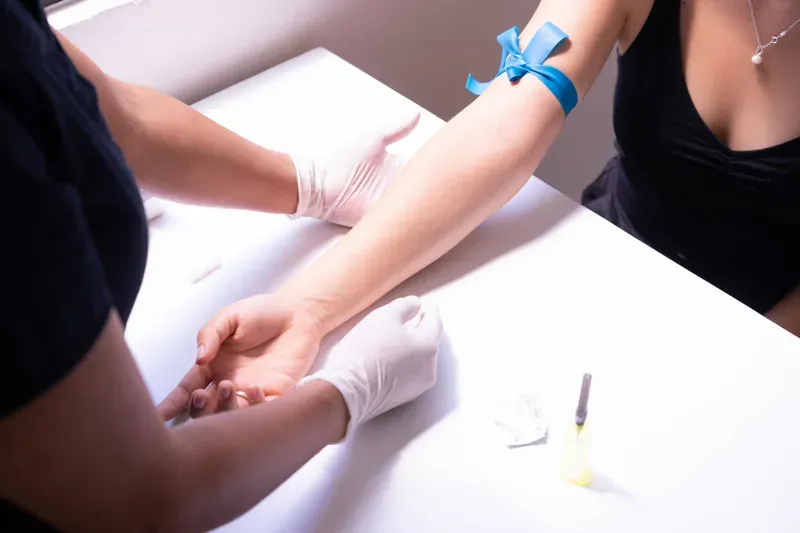
Hormone Testing
FSH, LH, testosterone, and prolactin for male hormonal fertility assessment.
Blood Tests
Comprehensive metabolic and health panels to support fertility evaluation.
All services performed by DHA-licensed specialists
Who Should Get Semen Analysis?
Semen analysis is the primary investigation for any man whose partner has not conceived after 12 months of regular unprotected intercourse, or sooner when risk factors are present. It is also used for post-vasectomy confirmation and monitoring during fertility treatment.
Couples experiencing difficulty conceiving after 12 months of regular intercourse
Couples seeking fertility assessment after 6 months when the female partner is over 35
Men with a history of undescended testicles (cryptorchidism) in childhood
History of testicular trauma, torsion, or previous testicular surgery
Varicocele diagnosed on clinical examination or ultrasound
Previous chemotherapy or radiation therapy affecting the reproductive system
Why Choose DCDC for Semen Analysis?
DCDC performs WHO 2021-compliant semen analysis with private collection facilities and specialist fertility referral pathways.
WHO 2021-Compliant Analysis
Our laboratory follows the latest WHO 2021 guidelines for semen analysis, ensuring internationally standardised assessment of sperm count, motility, and morphology.
Private Collection Facility
We provide a comfortable, private sample collection room within our DHCC clinic, ensuring specimen integrity and patient dignity throughout the process.
Results Within 24-48 Hours
Semen analysis results are typically available within 24-48 hours, with direct referral to urology or fertility specialists for abnormal findings.
Insurance Direct Billing
We accept direct billing with 20+ major insurers including Daman, AXA, MetLife, and Bupa. Appointments recommended for scheduled collection.
Your Comfortable Visit
A simple, step-by-step Semen scan process designed for comfort, speed, and accuracy.
Semen Analysis Cost in Dubai
Semen pricing in Dubai varies by service type and insurance coverage for various service types.
- Pricing varies by scan type and whether contrast is required
- Insurance coverage accepted with referral and verification
- Transparent self-pay rates available with instant quote on request
Insurance verification in minutes • No hidden fees • Fast response on WhatsApp
Patient Guide
Your Semen Analysis Experience
Private, professional, and handled with discretion at every step.
Insurance & Location
Insurance Partners
- •20+ insurance providers in Dubai including Daman, AXA, ADNIC, and others
- •Pre-authorization support and direct billing (where applicable)
- •Coverage verification before your appointment at our Dubai Healthcare City clinic
- •Transparent pricing with no hidden fees for semen analysis services








Visit Us in Dubai Healthcare City
Doctors Clinic Diagnostic Center
Building 64, Block A, Al Razi Medical Complex, Dubai Healthcare City, Dubai, UAE
Near Oud Metha Road · Easy access from Bur Dubai, Downtown Dubai, Business Bay · Free dedicated parking available
Working Hours
Mon-Thu, Sat: 8AM - 10:30PM | Sun: 8:30AM - 10:30PM | Fri: 9AM - 10PM
How Insurance Works at DCDC
Check Coverage
Verify your plan covers Semen Analysis
Get a Referral
Some insurers require a GP referral — we can guide you
Pre-Authorization
We handle pre-auth directly with your insurer
Direct Billing
No upfront payment — we bill your insurer directly
Co-Pay Only
You only pay any applicable co-pay at the clinic
Check Coverage
Verify your plan covers Semen Analysis
Get a Referral
Some insurers require a GP referral — we can guide you
Pre-Authorization
We handle pre-auth directly with your insurer
Direct Billing
No upfront payment — we bill your insurer directly
Co-Pay Only
You only pay any applicable co-pay at the clinic
Your Specialist
Dr. Hadi Komshi
Specialist Internal Medicine
MD, Specialist Internal Medicine
Persian · Arabic · English
Patient Guide
Understanding Male Fertility and Semen Parameters
Male fertility depends on the continuous production, maturation, and transport of healthy sperm cells. Spermatogenesis, the process of sperm production in the testicles, takes approximately 72 to 74 days from initial stem cell division to mature sperm capable of fertilisation. This extended cycle means that any insult to testicular function — whether from infection, heat, toxins, or hormonal imbalance — may not manifest in semen parameters for two to three months after the event. Understanding this timeline is essential when interpreting results and planning lifestyle or treatment interventions.
The WHO 2021 fifth edition manual for semen analysis represents a significant update from the previous 2010 criteria, establishing reference limits from a larger, more geographically diverse population of fertile men. The new criteria adjusted the lower reference limit for morphology from 3 percent to 4 percent and revised concentration thresholds. These reference limits represent the fifth percentile of fertile men, meaning approximately 5 percent of men who achieved conception within 12 months would fall below these thresholds. They should be interpreted as population-based thresholds rather than absolute cut-offs determining individual fertility status.
Male Fertility Conditions Assessed Through Semen Analysis
Oligozoospermia
Sperm concentration below 16 million/mL (WHO 2021), ranging from mild to severe, affecting the probability of natural conception and guiding treatment decisions from lifestyle modification to assisted reproduction.
Asthenozoospermia
Progressive motility below 30 percent or total motility below 42 percent, impairing the ability of sperm to reach and penetrate the egg, diagnosed by WHO-compliant motility assessment.
Teratozoospermia
Normal morphology below 4 percent by strict Kruger criteria, with head, midpiece, or tail defects reducing fertilisation potential, investigated further with DNA fragmentation index.
Azoospermia
Complete absence of sperm in the ejaculate, classified as obstructive or non-obstructive, each with distinct causes and treatment pathways including surgical sperm retrieval for ICSI.
Varicocele-related Infertility
Dilated testicular veins raising scrotal temperature and impacting spermatogenesis, often presenting as oligoasthenoteratozoospermia on semen analysis, potentially reversible with varicocelectomy.
Retrograde Ejaculation
Backward flow of semen into the bladder rather than anterograde ejaculation, causing absent or low-volume ejaculate, diagnosed by post-ejaculate urine analysis revealing sperm.
Related Services
Explore other diagnostic and consultation services available at our Dubai Healthcare City clinic.
Frequently Asked Questions
Common questions about Semen Analysis in Dubai.
A comprehensive semen analysis measures more than 15 parameters including sperm concentration (millions per mL), total sperm count per ejaculate, progressive motility (forward-swimming sperm), total motility, strict morphology by Kruger criteria, semen volume, pH, liquefaction time, and viscosity. Advanced panels also include sperm vitality, antisperm antibody testing, and DNA fragmentation index. All results are compared against WHO 2021 reference values from fertile men.
WHO 2021 guidelines recommend 2 to 5 days of sexual abstinence before sample collection. Abstinence shorter than 2 days may reduce sperm count and volume, while abstinence longer than 5 days may reduce motility and increase the proportion of non-progressive sperm. Consistency matters: aim for the same abstinence period if you are repeating the test for comparison purposes.
WHO 2021 established lower reference limits from fertile men who conceived within 12 months: sperm concentration above 16 million/mL, total motility above 42 percent, progressive motility above 30 percent, and morphology above 4 percent. Results below these values suggest reduced fertility potential but do not mean infertility is absolute. Many men with below-reference values achieve natural conception; conversely, normal values do not guarantee fertility as they reflect population-level thresholds rather than individual fertility guarantee.
Sperm concentration is the number of sperm cells per millilitre of semen, with the WHO 2021 lower limit at 16 million/mL. Total sperm count is concentration multiplied by semen volume, representing the total number of sperm per ejaculate, with the lower reference limit at 39 million. Total count is often more clinically meaningful because a man with lower volume but normal concentration may have an adequate total count for fertility purposes.
Yes. Standard semen analysis assesses quantity and basic movement of sperm but does not evaluate sperm DNA integrity, functional competence, or acrosome reaction capacity. Sperm DNA fragmentation index (DFI) is a more advanced test that measures DNA strand breaks within sperm, which can cause recurrent miscarriage, IVF failure, and reduced natural fertility even when standard parameters appear normal. We offer DFI testing for couples with unexplained infertility or repeated IVF failures.
Semen parameters show significant natural variation between ejaculates in the same individual. A single abnormal result should be confirmed with a repeat analysis after 4 to 6 weeks to account for the approximately 72-day sperm production cycle. If both analyses are abnormal, further investigation is warranted. If the first result is normal, a repeat is generally not necessary unless clinical suspicion remains.
Abnormal results guide a structured investigation pathway. Hormonal testing (FSH, LH, testosterone, prolactin) assesses testicular function and pituitary signalling. Testicular ultrasound identifies varicocele, obstruction, or structural abnormalities. Genetic testing (karyotype, Y chromosome microdeletion) is considered for severe oligozoospermia or azoospermia. Treatment options range from varicocele repair and hormonal therapy to assisted reproduction including intrauterine insemination (IUI), IVF, or ICSI depending on severity.
Azoospermia, the complete absence of sperm in the ejaculate, is found in approximately 1 percent of men and 10 to 15 percent of infertile men. It may be obstructive (sperm produced but blocked from reaching the ejaculate) or non-obstructive (impaired production). Obstructive azoospermia can often be treated surgically; non-obstructive azoospermia may respond to hormonal therapy in some cases, and sperm can sometimes be retrieved directly from the testis for ICSI. Our team can coordinate the full investigative and treatment pathway.
Key Facts
Medical Review & Oversight
All services are provided under the supervision of licensed medical professionals in our MOHAP-accredited facility.