Key Takeaways
- Male factor infertility accounts for 40–50% of all infertility cases, so both partners should be tested together, not just the woman.
- Couples should seek fertility testing after 12 months of trying to conceive — or after 6 months if the woman is 35 or older.
- Female fertility testing centres on AMH, FSH, LH, estradiol, progesterone, and thyroid hormones, plus imaging such as ultrasound and HSG.
- Male fertility testing centres on semen analysis per WHO 2021 criteria, evaluated with CASA (computer-assisted sperm analysis) technology.
- Semen analysis results are available in about 2 hours at DCDC, and B-HCG pregnancy hormone results within 24 hours.
- AMH ovarian reserve testing can be done on any day of the menstrual cycle, while FSH, LH, and estradiol need day 2–4 timing for accuracy.
- A full couple's fertility workup at DCDC starts from AED 350, with 20+ insurance partners offering direct billing for diagnostic testing.
Roughly 1 in 6 couples trying to conceive will face some degree of infertility, and in nearly half of those cases, a male factor is involved — yet testing is still too often aimed only at the woman. A proper fertility workup evaluates both partners in parallel, so the real cause is found faster and treatment (if needed) starts sooner. Fertility testing at DCDC in Dubai Healthcare City covers semen analysis, AMH, B-HCG, and full reproductive hormone panels from AED 350, with semen analysis results ready in about 2 hours.
This checklist walks you through exactly what a couple needs to test, in what order, what each test costs, and what happens after your results come back — so you both know what to expect before you book your first appointment.
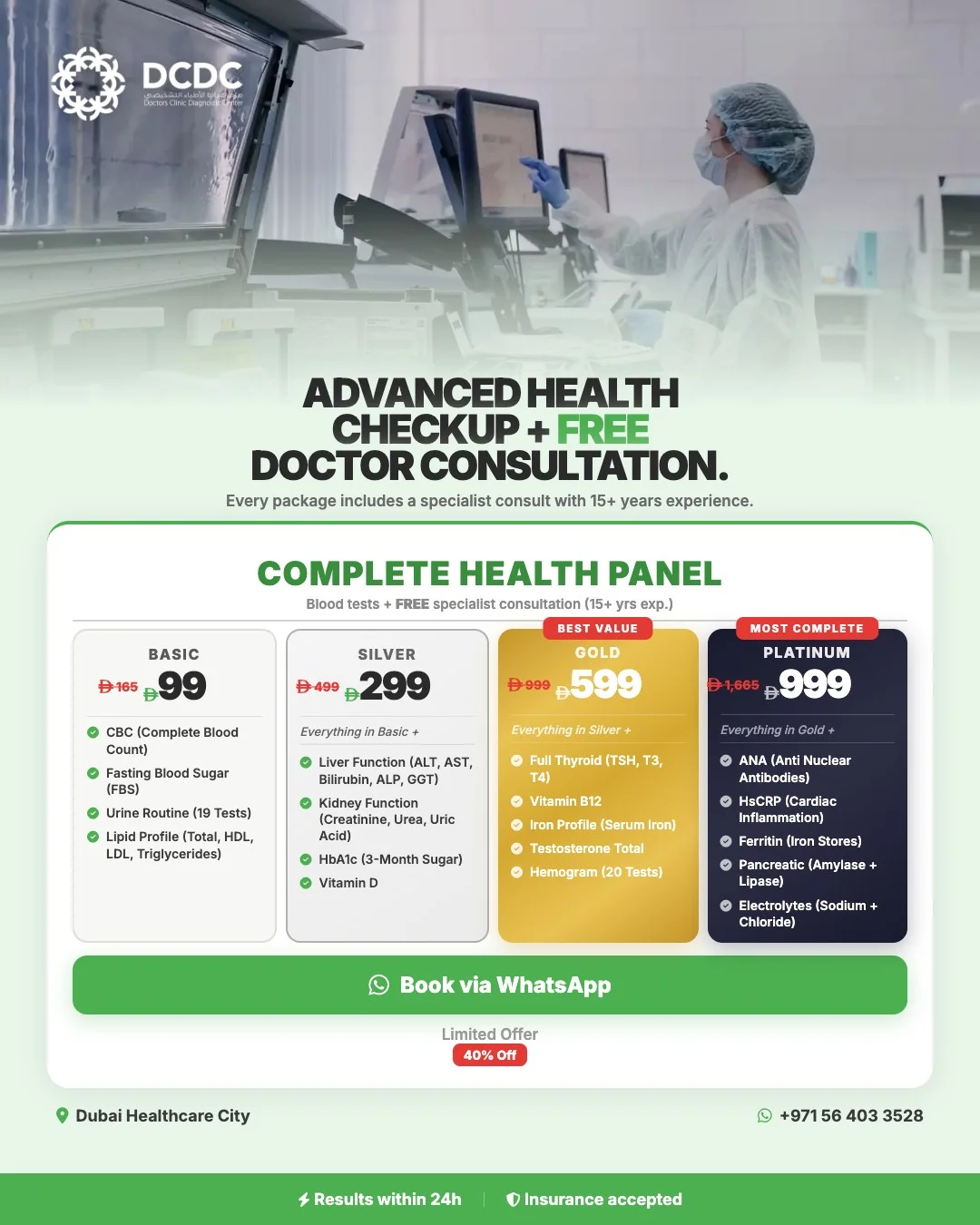
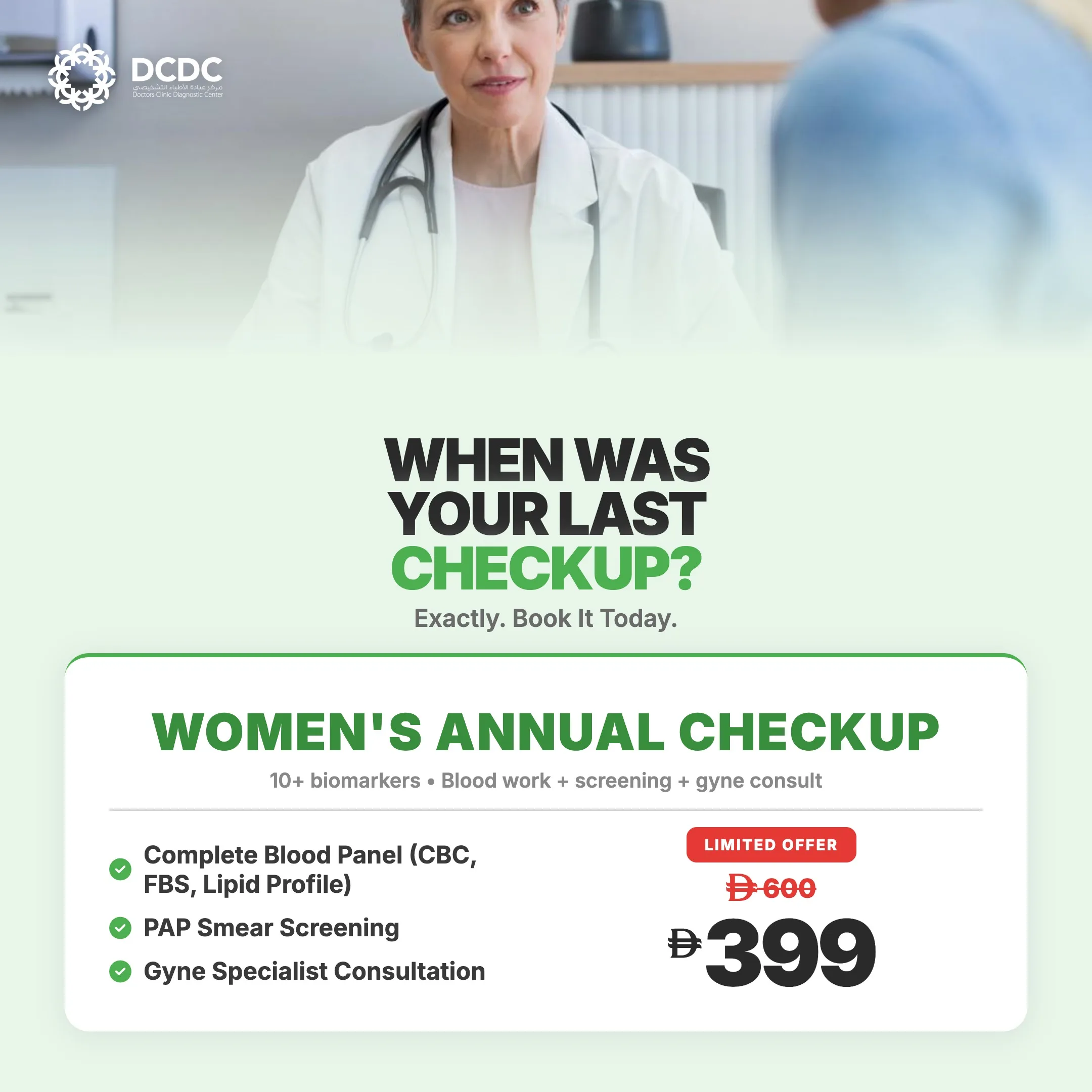
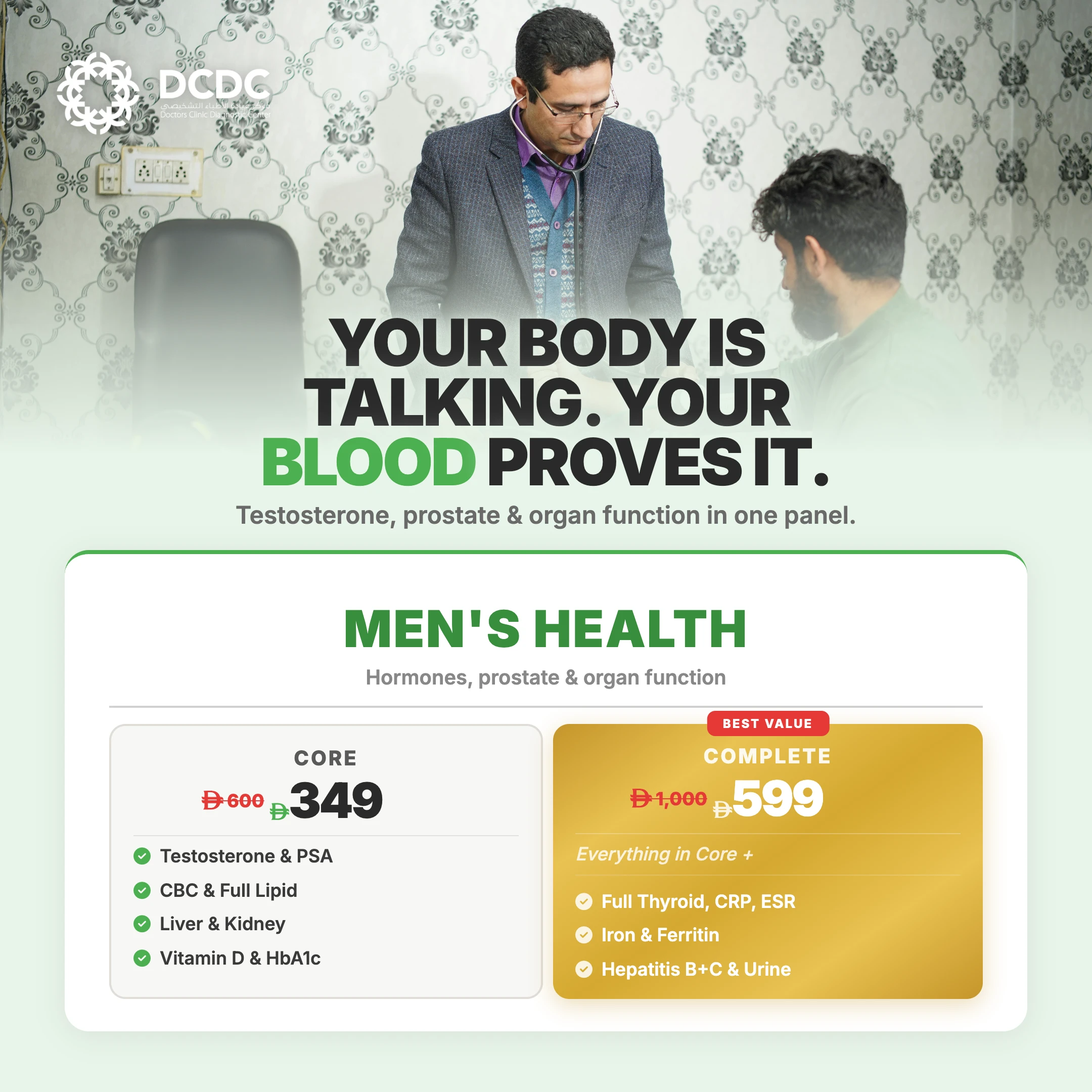
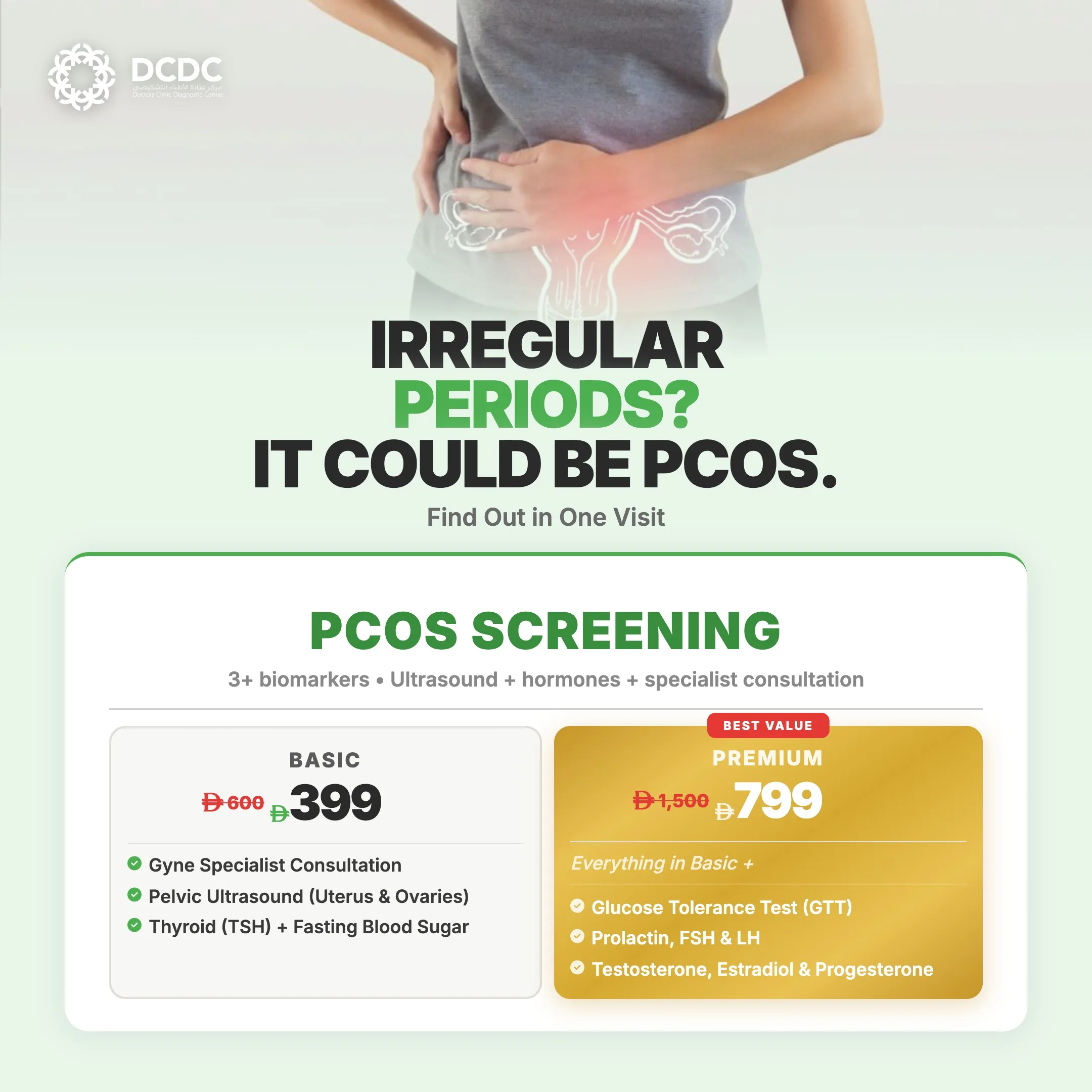
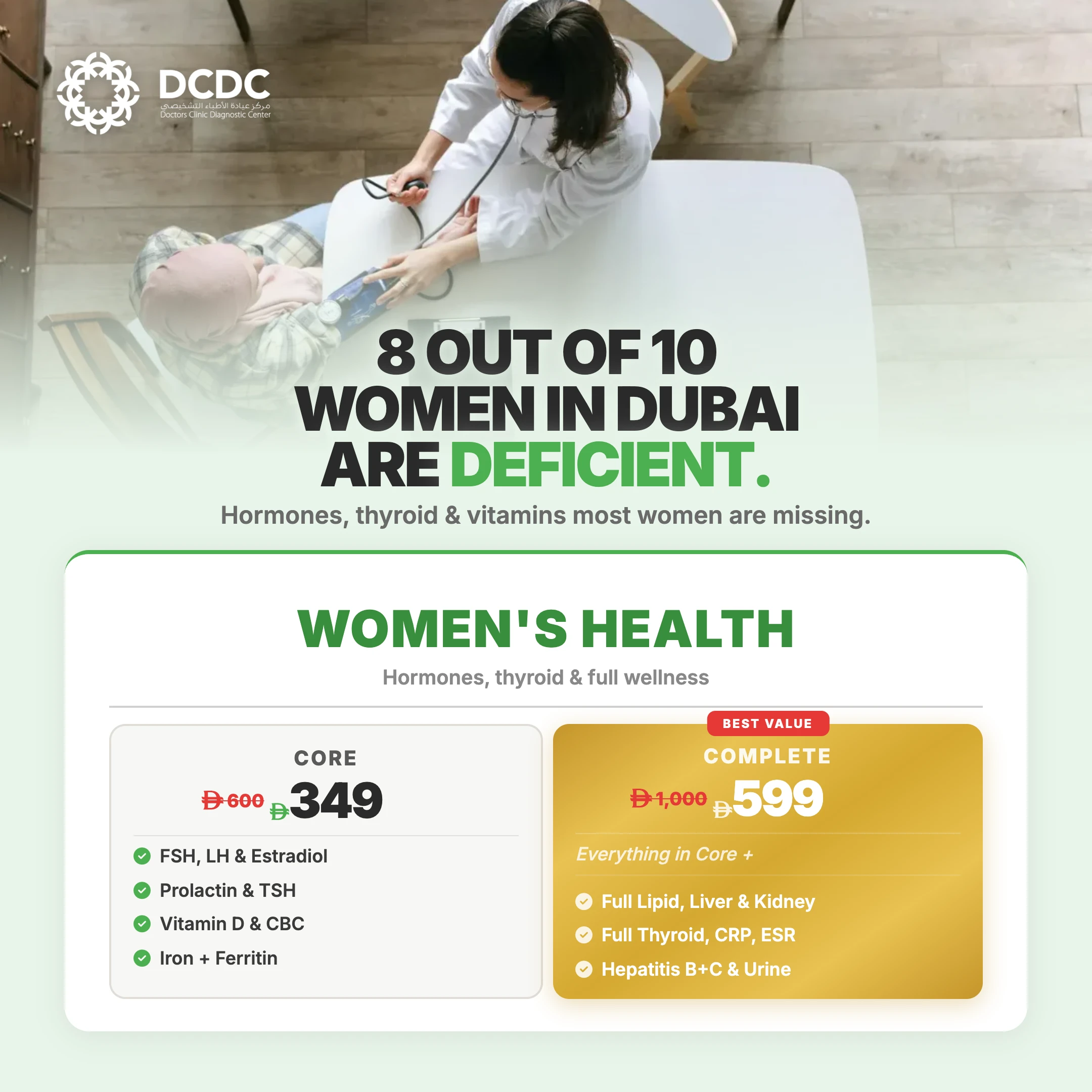
Health Screening Packages
Save with our bundled screening packages — specialist consultation included

Why Fertility Testing Should Include Both Partners
For decades, the burden of fertility investigation fell almost entirely on women — repeated blood draws, scans, and invasive procedures, while male partners were tested last, if at all. The data does not support that approach. Male factor infertility is identified as a contributing cause in approximately 40–50% of infertile couples, either alone or combined with a female factor. A semen analysis is inexpensive, non-invasive, and takes a fraction of the time of a full female workup, which is exactly why it should happen at the same time as the first female tests, not after months of female investigation have already passed.
Testing both partners together also protects the relationship from an unfair dynamic where one person carries the emotional and physical load of "figuring out what's wrong." Fertility is a shared biological process, and the evaluation should reflect that from the very first appointment.
When to Seek Fertility Testing: Timeline Guidance
The standard clinical definition of infertility is 12 months of regular, unprotected intercourse without conception for women under 35. For women 35 and older, that window shortens to 6 months, because egg quantity and quality decline more steeply after this age. These are general guidelines, not hard rules — several situations warrant earlier testing for either partner, regardless of age.
- Irregular, absent, or very heavy menstrual periods in the female partner
- Known or suspected PCOS, endometriosis, or a history of pelvic surgery or infection
- A history of undescended testicle, mumps after puberty, groin surgery, or prior fertility issues in the male partner
- Either partner is undergoing or has had cancer treatment (chemotherapy or radiation)
- A prior pregnancy loss or a previous difficulty conceiving with a different partner
- Either partner is over 35, or the couple simply wants a baseline check before actively trying
If any of these apply, there is no reason to wait out the full 12-month window — a baseline fertility panel for both partners can usually be arranged within days, and the results will either provide reassurance or point straight to the next step.
Female Fertility Tests Explained
A female fertility workup looks at three things: how many eggs remain (ovarian reserve), whether ovulation is happening regularly, and whether the reproductive anatomy — uterus and fallopian tubes — is structurally normal. No single test answers all three questions, which is why a panel is used rather than one blood draw. For detailed pricing on ovarian reserve assessment, see our AMH test cost guide.
- AMH (Anti-Müllerian Hormone): The most reliable marker of ovarian reserve — the estimated number of eggs remaining. Unlike most reproductive hormones, AMH can be tested on any day of the cycle.
- FSH and LH (Day 2–4): Follicle-stimulating and luteinising hormone, drawn early in the cycle, assess how hard the pituitary gland is working to stimulate the ovaries. Elevated FSH can suggest reduced ovarian reserve.
- Estradiol (Day 2–4): Tested alongside FSH — a high early-cycle estradiol can mask an elevated FSH and give a falsely reassuring picture on its own.
- Progesterone (Day 21): A mid-luteal progesterone level confirms whether ovulation actually occurred that cycle.
- Thyroid panel (TSH) and prolactin: Both thyroid dysfunction and elevated prolactin can disrupt ovulation and are checked as standard, correctable causes of infertility.
- Pelvic ultrasound: Evaluates the uterus, ovaries, and antral follicle count, and screens for fibroids, cysts, or polyps that could interfere with conception.
- HSG (Hysterosalpingography): An X-ray dye study that checks whether the fallopian tubes are open — essential if the hormone panel and ultrasound come back normal but conception still isn't happening.
For detailed pricing, see our AMH test cost guide.
Male Fertility Tests Explained
The male fertility workup is faster and less invasive than the female equivalent, and it should still be treated as a full, methodical evaluation rather than an afterthought. The central test is semen analysis, but a complete picture also looks at hormones and, in select cases, sperm DNA integrity.
Semen Analysis
Semen analysis at DCDC is performed per WHO 2021 criteria using CASA (computer-assisted sperm analysis) technology, which objectively measures sperm concentration, motility (how well sperm move), and morphology (shape). Because results depend heavily on collection method and timing, DCDC provides private, on-site collection rooms so the sample can be analysed within the recommended window, typically within an hour of collection. Results are usually ready in about 2 hours.
Male Hormone Panel
If the semen analysis is abnormal, or if there are symptoms like low libido or fatigue, a hormone panel — total and free testosterone, FSH, LH, and sometimes prolactin — helps determine whether the issue originates in the testes themselves or in the pituitary signals that drive sperm and testosterone production.
Sperm DNA Fragmentation Testing
For couples with recurrent miscarriage, unexplained infertility, or a normal standard semen analysis despite ongoing difficulty conceiving, a DNA fragmentation test looks at the genetic integrity of the sperm itself — a factor a routine semen analysis does not capture.
The Fertility Testing Timeline: What to Do First, Second, Third
A well-sequenced fertility workup avoids wasted time and unnecessary repeat visits. Here is the order our team generally recommends for couples starting from scratch.
- Step 1 — Initial consultation (both partners): A short history-taking visit to flag any red flags that change the testing order — irregular cycles, prior surgery, known risk factors.
- Step 2 — First-line tests (same week): Semen analysis for him; AMH plus day 2–4 FSH, LH, and estradiol for her. These can usually be arranged within the same week, often the same day for the male partner.
- Step 3 — Confirm ovulation and anatomy: Day-21 progesterone to confirm ovulation, plus pelvic ultrasound. If tubal patency is in question, HSG is scheduled for early in the follicular phase.
- Step 4 — Specialist review together: Both partners' results are reviewed jointly with a specialist, who explains the combined picture and outlines next steps — whether that's reassurance, a treatable diagnosis, or referral for further fertility care.
Book a Couple's Fertility Panel at DCDC
Semen analysis, AMH, and reproductive hormone panels from AED 350. Semen analysis results in about 2 hours; B-HCG within 24 hours.
Call +971 54 219 5008 or WhatsApp to book both appointments together
What to Expect at DCDC: The Couple's Testing Journey
Most couples want to know, practically, what a visit actually looks like. At DCDC in Dubai Healthcare City, the process is designed so both partners can be tested on the same visit whenever possible, without needing to travel between separate labs and clinics. For more on the imaging component, read our HSG test cost and insurance guide.
- You book together (call or WhatsApp) and can request same-day appointments for both partners
- A brief consultation confirms which tests are appropriate for your specific situation and cycle timing
- The male partner uses a private, on-site collection room for the semen sample — no need to collect at home and transport it
- The female partner's blood draw is scheduled to match the correct cycle day whenever hormone timing matters
- Semen analysis results are typically available in about 2 hours; most hormone panels follow within 24–48 hours
- Because gynaecology and urology are co-located in the same DHCC building, either partner can see a specialist the same day if results warrant it
Learn more about the procedure in our HSG test cost and insurance guide.
Cost of Fertility Testing in Dubai: 2026 Pricing Guide
Fertility testing costs in Dubai vary widely depending on which tests are ordered and whether imaging like HSG is required. The table below outlines DCDC pricing against the typical market range for each test, so you know roughly what a full couple's workup involves.
| Test | DCDC Price | Market Range |
|---|---|---|
| Semen Analysis | From AED 350 | AED 400–800 |
| AMH Test | From AED 350 | AED 400–900 |
| FSH/LH Panel | From AED 200 | AED 250–500 |
| HSG Test | From AED 1,500 | AED 1,800–3,500 |
| Hormone Panel | From AED 500 | AED 600–1,200 |
Fertility testing prices at DCDC vs. typical market range (2026). Prices are per test — a full couple's workup combines several of the above depending on clinical need.
A typical starting couple's workup — semen analysis for him, AMH plus an FSH/LH panel for her — starts from roughly AED 900–1,100 combined at DCDC, before insurance. HSG and extended hormone panels are added only when the initial results indicate they're needed, so most couples do not pay for every test on this list.
Insurance Coverage for Fertility Tests in Dubai
DCDC has direct billing arrangements with more than 20 insurance partners in Dubai, including Daman, AXA, Bupa, MetLife, and Cigna. Diagnostic fertility testing — semen analysis, hormone panels, AMH, and HSG — is generally covered when ordered by a physician for a documented medical reason, though coverage details, co-pays, and any pre-authorisation requirements depend on your specific plan.
It's worth noting that diagnostic testing and fertility treatment (such as IUI or IVF) are usually treated very differently by insurers — testing to find the cause is far more commonly covered than treatment to address it. Our reception team can check your plan's specific fertility testing benefit and estimate your out-of-pocket cost before you book, and self-pay patients are given transparent, upfront pricing with no hidden fees.
How Age Affects Fertility: Statistics by Age Group
Age affects fertility in both partners, but the timeline and magnitude differ significantly between women and men. Understanding where you and your partner fall on this curve helps calibrate how quickly to move from "trying naturally" to "getting tested." For men, our complete semen analysis guide covers what to expect from the male evaluation.
| Age Group | Female Fertility | Male Fertility |
|---|---|---|
| Under 30 | Peak fertility; roughly 20–25% chance of conception per cycle | Sperm quality generally stable; minimal age-related decline |
| 30–34 | Gradual decline begins; still generally favourable odds | Slight decline in motility and DNA integrity begins |
| 35–39 | Noticeable decline in egg quantity and quality; miscarriage risk rises | Continued gradual decline in semen parameters |
| 40 and above | Significant decline; natural conception chances fall sharply | Lower average sperm count and motility; higher rate of DNA fragmentation |
General fertility trends by age group. Individual results vary — testing is the only way to know your actual numbers rather than relying on age alone.
For men, our complete semen analysis guide covers what to expect.
Lifestyle Factors That Affect Fertility Test Results
Certain lifestyle factors can temporarily skew fertility test results, particularly semen parameters, which regenerate roughly every 74 days and are sensitive to recent habits. Being aware of these before testing helps ensure your results reflect your true baseline rather than a temporary dip.
- Heat exposure (men): Frequent sauna, hot tub use, or prolonged laptop-on-lap use can temporarily reduce sperm count and motility
- Smoking and vaping: Associated with reduced sperm count and motility in men, and reduced ovarian reserve and egg quality in women
- Alcohol intake: Heavy or frequent drinking affects both sperm quality and hormonal balance
- Body weight (BMI): Both very low and very high BMI can disrupt ovulation in women and reduce testosterone and sperm quality in men
- Chronic stress and poor sleep: Can disrupt the hormonal signals that drive both ovulation and sperm production
- Abstinence period before semen analysis: WHO guidance recommends 2–5 days of abstinence before testing — both shorter and longer windows can distort results
None of these factors alone typically causes infertility, but they can meaningfully shift a single test result, which is why abnormal findings are often confirmed with a repeat test before any diagnosis is made.
What Happens After Testing: Next Steps
Once both partners' results are in, the specialist reviews them together as a single picture rather than in isolation — a mild male-factor finding combined with a normal female workup points somewhere very different than two individually "borderline" results. Broadly, the path forward falls into one of three categories.
- Reassurance and timed guidance: All results are normal — the specialist may simply advise on ovulation timing and re-check after a few more cycles
- A treatable, correctable cause: Findings such as a thyroid imbalance, elevated prolactin, or a lifestyle factor are identified and addressed, often resolving the issue without further intervention
- Referral for further fertility care: Findings such as significantly reduced ovarian reserve, blocked fallopian tubes, or a low sperm count point toward assisted reproductive options, and the couple is referred accordingly with a clear explanation of why
In every case, both partners hear the same explanation, at the same time, from the same specialist — which matters as much for shared decision-making as the medical findings themselves.
Dr. Parisa Dini's Perspective: Testing as a Couple

Obstetrician & Gynaecologist
Dr. Parisa Dini is an Obstetrician and Gynaecologist at Doctors Clinic Diagnostic Center (DCDC) in Dubai Healthcare City, with a particular focus on PCOS, menopause, and preventive women's health. "The couples who get answers fastest are the ones who test together from day one," she explains. "I still see women who have been through months of hormone testing and scans before their partner has even had a semen analysis — by the time we start looking at both sides together, valuable time has been lost. I encourage every couple to book their first fertility appointments in the same week, sit through the results together, and make decisions as a team. It changes both the pace of the diagnosis and, honestly, how supported people feel through the process."
Start Your Fertility Journey Together
Book same-week fertility testing for both partners at DCDC — semen analysis, AMH, and hormone panels from AED 350, with direct billing across 20+ insurance partners.
Located in Building 64, Block A, Al Razi Medical Complex, Dubai Healthcare City. Free parking, 15-minute average wait, and multilingual staff (Arabic, English, Farsi, Urdu, Hindi).
Related Services at DCDC
Expert care and advanced diagnostics at Dubai Healthcare City
Frequently Asked Questions
Final Thoughts
Fertility testing works best as a shared process, not a sequential one. Because male factor infertility contributes to roughly half of all cases, testing both partners together from the very first visit is the fastest route to a real answer — whether that answer is reassurance, a simple fix, or a clear path toward further care.
At DCDC, couples can arrange semen analysis, AMH, and full reproductive hormone panels from AED 350, with semen analysis results ready in about 2 hours and direct billing across 20+ insurance partners. Call +971 54 219 5008 or send us a WhatsApp message to book your first appointments together.
Sources & References
This article was reviewed by our medical team and references the following sources:
- WHO - WHO Laboratory Manual for the Examination of Human Semen, 6th Edition
- ASRM - Evaluation of the Infertile Couple
- NICE Guidelines - Fertility Assessment
- Mayo Clinic - Infertility Diagnosis
- Cleveland Clinic - Fertility Tests
Medical content on this site is reviewed by DHA-licensed physicians. See our editorial policy for more information.

Written by
Dr. Parisa Dini
Obstetrician & Gynaecologist
MD, OB-GYN
Dr. Parisa Dini is an Obstetrician and Gynaecologist at Doctors Clinic Diagnostic Center (DCDC) in Dubai Healthcare City.
Related Articles

AMH Test Cost Dubai: Pricing Guide (2026)

HSG Test Cost in Dubai: Pricing & Insurance Guide (2026)
Semen Analysis Dubai: Fertility Test Guide (2026)
Hormone Test Dubai: Types, Cost & Guide (2026)

Pregnancy After HSG Test Dubai: Success Rates (2026)
More in Fertility
© 2026 Doctors Clinic Diagnostic Center (DCDC), Dubai Healthcare City. Originally published at https://doctorsclinicdubai.ae/blog/fertility-testing-couples-dubai. All rights reserved. Unauthorized reproduction is prohibited.