
Key Takeaways
- The most important pancreatic cancer warning signs are jaundice, dark urine with pale stools, upper abdominal or back pain, unexplained weight loss, loss of appetite and new-onset diabetes after age 50.
- Pancreatic cancer is hard to detect early because the pancreas lies deep in the abdomen, early symptoms are vague, and there is no routine screening test for people at average risk.
- Key risk factors include age over 55, smoking, obesity, long-standing diabetes, chronic pancreatitis, heavy alcohol use, family history and inherited mutations such as BRCA2 and PALB2.
- Diagnosis typically combines a clinical review, blood tests (CA 19-9 and liver function), ultrasound and a pancreas-protocol CT scan, with MRI, endoscopic ultrasound and biopsy for confirmation.
- At DCDC in Dubai Healthcare City, GP consultations start from AED 249, CA 19-9 is AED 149, CT scans start from AED 600, and blood results are available the same day.
November is Pancreatic Cancer Awareness Month, and it is a timely reminder that this is one of the hardest cancers to catch early. The pancreas sits deep behind the stomach, and its first symptoms are easy to dismiss as indigestion, stress or a tired back. Yet when the disease is found while still confined to the pancreas, treatment options and outcomes are far better than when it is found late. If you have persistent unexplained symptoms, abdominal imaging with a multi-slice CT scan can show the pancreas and surrounding organs in detail. At Doctors Clinic Diagnostic Center (DCDC) in Dubai Healthcare City, our team assesses abdominal symptoms with a structured pathway of consultation, blood work and imaging. This guide explains the pancreatic cancer warning signs, who is at higher risk, how the disease is diagnosed, and when it is time to see a doctor.


Understanding Pancreatic Cancer
The pancreas is a gland about 15 centimetres long, lying behind the stomach and in front of the spine, nestled in the curve of the duodenum (the first part of the small intestine). It has two main jobs. Its exocrine cells make digestive enzymes that break down fats, proteins and carbohydrates, and these enzymes travel through a network of ducts into the small intestine. Its endocrine cells, grouped in clusters called the islets of Langerhans, make hormones such as insulin and glucagon that regulate blood sugar.
Pancreatic cancer starts when cells in the pancreas grow out of control and form a tumour. The type of cell involved determines the type of cancer:
- Exocrine tumours: These account for the large majority of cases. The most common is pancreatic ductal adenocarcinoma (PDAC), which begins in the cells lining the pancreatic ducts. When people talk about pancreatic cancer in general, they usually mean this type.
- Endocrine tumours (pancreatic neuroendocrine tumours, or PNETs): These are much less common and arise from hormone-producing cells. They often grow more slowly than adenocarcinoma and may sometimes cause hormone-related symptoms, such as low blood sugar or flushing, depending on the hormone they release.
- Other and precancerous lesions: Fluid-filled cysts such as intraductal papillary mucinous neoplasms (IPMNs) are sometimes found incidentally on imaging. Some carry a risk of turning cancerous and need monitoring.
Pancreatic cancer is often found late because the pancreas is tucked deep inside the abdomen. A small tumour cannot be felt during a routine examination, and it may not cause obvious symptoms until it has grown large enough to press on nearby structures, block the bile duct, or spread to the liver, lymph nodes or lining of the abdomen. The World Cancer Research Fund estimates that there were roughly 510,000 new cases worldwide in 2022, and the disease has one of the lowest survival rates among major cancers. In the UAE, national cancer registry data show pancreatic cancer makes up a small share of new diagnoses, but it is consistently among the more lethal cancers, which is why awareness of its warning signs matters.
Warning Signs of Pancreatic Cancer
No single symptom confirms pancreatic cancer, and most people who have these symptoms do not have the disease. However, a combination of persistent signs, or one sign that does not settle, deserves medical attention. The most recognised pancreatic cancer symptoms are described below.
Jaundice: Yellowing of the Skin and Eyes
Jaundice is one of the most important early signs of pancreatic cancer, particularly for tumours in the head of the pancreas. The head sits right next to the bile duct, and even a small tumour can block it. Bile pigment (bilirubin) then backs up into the bloodstream, turning the whites of the eyes and the skin yellow. Jaundice often comes with itchy skin, because bile salts build up under the skin. Painless jaundice in an adult should always be investigated promptly, whatever the cause. Jaundice has many other causes, including gallstones, hepatitis and liver disease, but cancer must be excluded.
Dark Urine and Pale, Greasy Stools
When bile cannot reach the intestine, urine becomes dark, tea-coloured or cola-coloured, and stools turn pale, clay-coloured or float and look oily. These changes can appear before the yellowing of the skin is obvious, so they are worth noticing. Pale, greasy, foul-smelling stools (steatorrhoea) can also mean the pancreas is not delivering enough digestive enzymes to the gut.
Abdominal and Back Pain
Pain in the upper abdomen that radiates to the middle or upper back is a classic symptom, usually appearing as the tumour grows and presses on nerves near the pancreas. It may feel dull and gnawing, may be worse after eating or when lying flat, and may ease when leaning forward. Back pain that does not respond to rest, stretching or simple painkillers, and that is not related to movement, should prompt a check, especially when combined with other signs on this list.
Unexplained Weight Loss and Loss of Appetite
Losing weight without trying is a common and significant warning sign. Cancer cells use energy, the tumour may reduce appetite or cause early fullness, and a poorly working pancreas absorbs fewer nutrients. As a rule of thumb, unintentional loss of more than 5 percent of your body weight over six to twelve months needs a medical review. In a busy city like Dubai, it is easy to attribute weight loss to a hectic schedule or stress, but unexplained loss should never be ignored.
New-Onset Diabetes
Diabetes diagnosed for the first time after the age of about 50, especially in someone who is not overweight and has no family history, can occasionally be an early signal of pancreatic cancer. The tumour can interfere with insulin production, and existing diabetes that suddenly becomes much harder to control also deserves attention. Most new diabetes is, of course, ordinary type 2 diabetes, but when new diabetes arrives together with weight loss or abdominal pain, doctors will often look more closely at the pancreas.
Digestive Changes
Nausea, bloating, indigestion, a feeling of fullness after small meals, vomiting, and changes in bowel habit may occur when the tumour presses on the stomach or duodenum, or when enzyme production falls. These symptoms are very common and usually caused by harmless conditions, but if they are persistent, progressive or new in an older adult, they should be assessed.
Blood Clots and Fatigue
Pancreatic cancer increases the risk of abnormal blood clotting. A clot in a deep leg vein (deep vein thrombosis) causing a swollen, painful, warm calf, or a clot in the lung, can sometimes be the first sign of an underlying cancer. Persistent, profound tiredness that rest does not relieve is also common. Seek urgent care for sudden leg swelling, chest pain or breathlessness.
Why Pancreatic Cancer Is Hard to Detect Early
Understanding why the disease is so often found late helps explain why awareness is so important.
- Deep location: The pancreas lies behind the stomach and bowel. Unlike skin, breast or testicular cancers, a pancreatic tumour cannot be seen or felt during a physical examination until it is large.
- Vague early symptoms: Mild upper abdominal discomfort, bloating, back pain and tiredness are extremely common and overlap with conditions such as gastritis, reflux, gallstones, irritable bowel syndrome and muscle strain. Both patients and doctors may reasonably treat these first.
- No routine screening test: There is no proven population-wide screening test for pancreatic cancer, comparable to mammography for breast cancer or colonoscopy for bowel cancer. The blood marker CA 19-9 is not accurate enough to screen healthy people, and imaging every adult would expose many people to cost, radiation or invasive follow-up for very few cancers found.
- Early spread: Pancreatic cancer can spread to nearby blood vessels, lymph nodes and the liver while the primary tumour is still small, which limits the chance of curative surgery.
This is why, for most people, early detection depends on noticing symptoms, acting on them quickly, and for those at high inherited risk, entering a structured surveillance programme.
Risk Factors for Pancreatic Cancer
Understanding pancreas cancer risk factors helps you and your doctor decide how closely to watch symptoms. Having a risk factor does not mean you will develop the disease, and many people diagnosed have no obvious risk factor. Some factors can be changed and some cannot.
| Risk Factor | How It Raises Risk | Can You Change It? |
|---|---|---|
| Age over 55 to 60 | Most cases are diagnosed after age 60 to 65; risk rises steadily with age | No |
| Smoking | Roughly doubles risk compared with never-smokers; risk falls slowly after quitting | Yes |
| Obesity | Excess body fat, especially around the waist, is linked to chronic inflammation and insulin resistance | Yes |
| Diabetes (long-standing type 2) | Associated with a moderately higher risk; new-onset diabetes in older adults can also be an early sign | Partly |
| Chronic pancreatitis | Long-term inflammation damages pancreatic cells; hereditary pancreatitis carries the highest risk | Partly |
| Family history | Two or more close relatives with pancreatic cancer significantly raises risk | No |
| Inherited gene mutations (BRCA2, BRCA1, PALB2, ATM, CDKN2A, Lynch syndrome) | Faulty DNA-repair or tumour-suppressor genes increase lifetime risk | No |
| Heavy alcohol use | Mainly through chronic pancreatitis; heavy long-term drinking is the main cause | Yes |
| Diet high in processed and red meat | Linked to higher risk in some studies; evidence is less firm than for smoking | Yes |
Smoking is the strongest modifiable risk factor. Shisha (waterpipe) smoking is also widespread in the Gulf region and delivers harmful tobacco-related compounds, so it should be counted as a smoking risk too. Obesity and type 2 diabetes are common in the UAE, which makes metabolic health an important part of prevention.
About 5 to 10 percent of pancreatic cancers are thought to be linked to inherited factors. If two or more first-degree relatives (parent, sibling or child) have had pancreatic cancer, or if you carry a gene change such as BRCA2 or PALB2, ask your doctor about genetic counselling and whether a surveillance programme is appropriate.
When to See a Doctor
Book an appointment if you have any of the following that lasts more than two to three weeks without a clear explanation: upper abdominal pain, back pain that does not settle, unexplained weight loss, ongoing loss of appetite, or changes in digestion or stools. Seek care urgently, ideally the same day, if you notice yellowing of the skin or eyes, dark urine with pale stools, or sudden swelling and pain in one leg.
Doctors pay particular attention to red-flag combinations:
- New diabetes plus unexplained weight loss, especially after 50
- Painless jaundice with itching, dark urine and pale stools
- Persistent upper abdominal pain radiating to the back plus weight loss or loss of appetite
- Unexplained blood clot plus abdominal or back pain
- Any of the above in someone with a strong family history or known BRCA2 or PALB2 mutation
Remember that most of these symptoms have benign causes such as gallstones, hepatitis, pancreatitis or an ulcer. The goal of a prompt assessment is to find the cause, treat what is treatable, and rule out cancer early.
How Pancreatic Cancer Is Diagnosed
Diagnosis begins with a clinical consultation, examination and blood tests, followed by imaging. If a mass is suspected, a specialist may arrange further imaging and a tissue sample. Each test answers a different question.
| Test | What It Shows | Role in Diagnosis | Limitations |
|---|---|---|---|
| Abdominal ultrasound | Bile duct widening, gallstones, liver changes, sometimes a pancreatic mass | Quick, painless first look when jaundice or abdominal pain is present | Bowel gas can hide the pancreas; a normal result does not exclude a small tumour |
| CT scan (pancreas protocol) | Tumour size and location, involvement of blood vessels, spread to liver and lymph nodes | Main imaging test for diagnosis and staging; multiphase contrast scanning | Very small tumours can be missed; involves ionising radiation and iodinated contrast |
| MRI / MRCP | Detailed soft tissue, bile and pancreatic ducts, cysts | Problem-solving when CT is unclear; evaluates cysts and small liver lesions | Longer scan time; less widely used for routine staging |
| Endoscopic ultrasound (EUS) | Close-up images of the pancreas from inside the stomach and duodenum | Detects small tumours and allows needle biopsy | Needs sedation and a specialist endoscopist; performed at a hospital |
| Blood tests: CA 19-9 and liver function | Tumour marker level; bilirubin and liver enzymes showing bile duct blockage | Supports diagnosis and tracks treatment response | CA 19-9 can be normal in some cancers and raised in benign conditions; not a screening test |
| Biopsy | Cancer cells under the microscope | Gives the definitive diagnosis, usually via EUS-guided needle | Invasive; sometimes skipped if surgery is planned and imaging is clear |
CT Scan: The Workhorse of Pancreatic Imaging
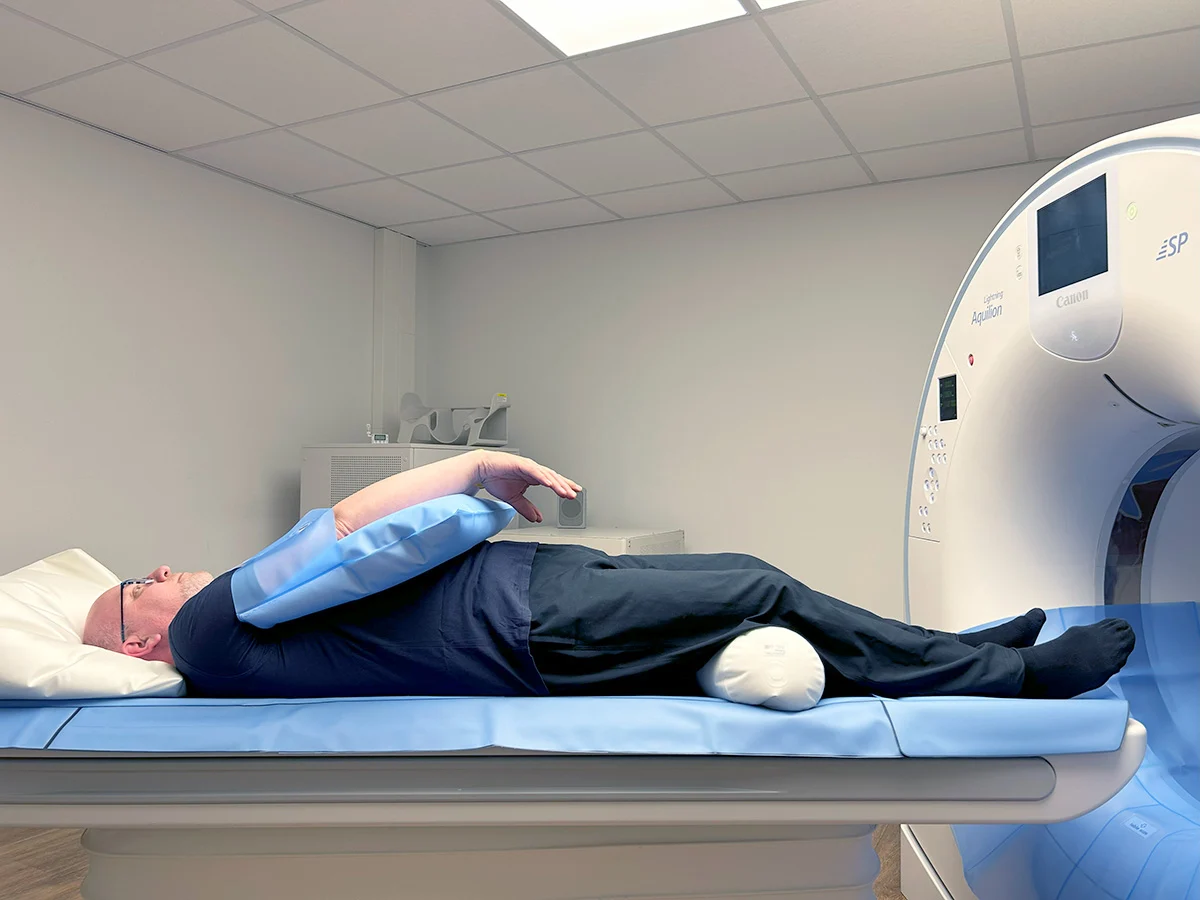
A pancreas-protocol CT uses contrast dye and images taken in several phases to highlight the tumour against the normal pancreas, and to show whether the tumour touches the main arteries and veins. This information determines whether surgery is possible. A multi-slice scanner produces fine, thin images of the pancreas in seconds.
MRI, MRCP and Endoscopic Ultrasound
MRI and MR cholangiopancreatography (MRCP) show the bile and pancreatic ducts without contrast injection into the ducts, and are valuable for cysts. Endoscopic ultrasound places a small ultrasound probe on the tip of an endoscope, giving close views of the pancreas. It is the most sensitive test for small tumours and allows a fine needle to take a biopsy. These advanced tests are usually arranged through a hospital-based gastroenterology or oncology team once initial tests suggest a problem.
Blood Tests: CA 19-9 and Liver Function
CA 19-9 is the best-known tumour marker for pancreatic cancer. It can be high in pancreatic cancer, but it can also be raised in gallstones, bile duct blockage, pancreatitis and liver disease, and a portion of people (those who do not make the Lewis antigen) never produce it at all. For that reason, doctors use it to support a diagnosis and to monitor treatment, not to screen healthy people. Liver function tests, including bilirubin, alkaline phosphatase and liver enzymes, reveal whether the bile duct is blocked.
Worried About Persistent Abdominal Symptoms?
Book an abdominal assessment at Doctors Clinic Diagnostic Center in Dubai Healthcare City. Our team can arrange blood tests, abdominal ultrasound and CT imaging in one place, with extended hours until 10 PM.
Call or WhatsApp us to book your consultation. Early assessment is the best step you can take.
What to Expect at DCDC
If you are worried about symptoms that could relate to the pancreas, DCDC offers a clear, coordinated pathway in one location in Dubai Healthcare City. The steps are tailored to your symptoms and your doctor will decide what you need.
- Step 1: GP consultation (from AED 249). A general practitioner takes your history, examines your abdomen and eyes, reviews medicines and family history, and decides which tests are appropriate.
- Step 2: Blood work with same-day results. The CA 19-9 test is AED 149 as an individual test, and the tumor markers panel is AED 199. A liver function panel is AED 249 without enzymes or AED 449 with enzymes. If you cannot come to the clinic, home blood collection is available for an additional AED 199 per visit.
- Step 3: Abdominal ultrasound. A non-invasive, radiation-free test available on-site, useful as an initial look at the liver, gallbladder, bile ducts and, when visible, the pancreas. Prices vary depending on the scan requested.
- Step 4: CT scan if needed (from AED 600). If the symptoms or results call for it, our multi-slice CT scanner provides detailed images of the pancreas and surrounding organs.
- Step 5: Expert reporting and next steps. A subspecialty radiologist reads your imaging. Results are usually ready within 18 to 24 hours, and same-day reporting is available for urgent cases. If anything suspicious is found, your doctor will explain the findings clearly and refer you promptly to the right specialist, such as a gastroenterologist, hepatobiliary surgeon or oncologist.
DCDC works with more than 20 insurance partners, so you may be able to claim some or all of the costs depending on your policy. We are located in Dubai Healthcare City with free parking and extended hours until 10 PM, so you can fit an assessment around work. Please note that the prices above are guide rates and the final cost depends on the tests your doctor recommends.
Pancreatic Cancer Survival Rates
Survival depends heavily on the stage at diagnosis. According to the American Cancer Society, the overall five-year relative survival for pancreatic cancer is low, at roughly 13 percent in the United States. When the cancer is found while still localised to the pancreas, five-year survival is considerably higher, in the region of 40 percent, whereas it falls to a low single-digit percentage when the cancer has spread to distant organs. Numbers vary by source, country and type of tumour, and they describe groups of people rather than any one person.
| Stage at Diagnosis | What It Means | Approximate 5-Year Relative Survival (US data) |
|---|---|---|
| Localised | Confined to the pancreas | About 40 to 44 percent |
| Regional | Spread to nearby tissues or lymph nodes | About 15 to 16 percent |
| Distant | Spread to distant organs such as the liver or lungs | About 3 percent |
| All stages combined | Average across all people diagnosed | About 13 percent |
These figures show why timing matters. Only a minority of patients are diagnosed at the localised stage, and surgery to remove the tumour (often combined with chemotherapy) offers the best chance of long-term survival. Newer chemotherapy regimens, better imaging, genetic testing and targeted treatments are slowly improving outcomes, and neuroendocrine tumours generally have a better outlook than adenocarcinoma. Every symptom evaluated promptly is a chance to find a problem earlier.
Reducing Your Risk
There is no guaranteed way to prevent pancreatic cancer, but healthy habits lower risk and improve general health.
- Do not smoke, and quit if you do. This includes cigarettes, shisha and vaping with nicotine. Risk falls gradually over the years after quitting.
- Maintain a healthy weight. Aim for a balanced diet rich in vegetables, fruit, whole grains and legumes, and limit processed and red meat and sugary drinks.
- Stay active. Regular exercise, around 150 minutes of moderate activity each week, helps control weight and blood sugar.
- Limit alcohol. Heavy drinking is the main cause of chronic pancreatitis, a recognised risk factor.
- Control diabetes and treat pancreatitis. Work with your doctor on blood sugar management, and follow up recurrent or chronic pancreatitis.
- Know your family history. Tell your doctor if relatives had pancreatic, breast, ovarian, prostate or bowel cancer. Genetic counselling and testing may be recommended.
Monitoring for High-Risk Individuals
International guidance generally does not recommend screening people at average risk. For high-risk groups, such as those with two or more affected first-degree relatives, or with BRCA1, BRCA2, PALB2, CDKN2A, Lynch syndrome or hereditary pancreatitis, specialist groups suggest regular surveillance with MRI/MRCP or endoscopic ultrasound, often starting around age 50 or ten years before the youngest affected relative, depending on the gene. Surveillance of this kind is best carried out in a specialist centre as part of a research-informed programme. Your GP can assess your risk and refer you appropriately.
Book Your Abdominal Screening and Consultation at DCDC
Do not wait for symptoms to worsen. Visit Doctors Clinic Diagnostic Center in Dubai Healthcare City for a GP consultation, same-day blood results, abdominal ultrasound and CT imaging read by a subspecialty radiologist. GP consultations from AED 249 and CT scans from AED 600, with free parking and extended hours until 10 PM.
Call or WhatsApp us today to book your appointment during Pancreatic Cancer Awareness Month.
Related Services at DCDC
Expert care and advanced diagnostics at Dubai Healthcare City
Frequently Asked Questions
Final Thoughts
Pancreatic cancer is difficult to detect early, but that does not make you powerless. Knowing the warning signs, such as jaundice, dark urine, pale stools, persistent abdominal or back pain, unexplained weight loss and new-onset diabetes, gives you and your doctor the best chance to act while treatment options are broadest. Most of the time, these symptoms turn out to be caused by treatable conditions, and a prompt check brings clarity either way.
This Pancreatic Cancer Awareness Month, take the symptoms seriously, know your family history, and look after the lifestyle factors you can control. If you have symptoms that worry you, our team at DCDC in Dubai Healthcare City can arrange a consultation, blood tests and abdominal imaging under one roof, with extended hours until 10 PM. Call or message us on WhatsApp to book your assessment today.
This article is for general information and does not replace personal medical advice. If you have symptoms, please consult a doctor.
Sources & References
This article references the following sources:
- National Cancer Institute: Pancreatic Cancer Treatment and Diagnosis (PDQ)
- American Cancer Society: Pancreatic Cancer Early Detection, Diagnosis and Staging
- Pancreatic Cancer Action Network: Symptoms and Risk Factors
- Mayo Clinic: Pancreatic Cancer Symptoms and Causes
- World Cancer Research Fund: Pancreatic Cancer Statistics
- PubMed: Pancreatic Cancer, a Review (Mizrahi et al., CA Cancer J Clin / Lancet)
This information is educational and does not replace individual medical advice. See our editorial policy for more information.

Written by
Dr. Hadeel Elnur
General Practitioner
MD, General Practice
Dr. Hadeel Elnur is a General Practitioner at Doctors Clinic Diagnostic Center (DCDC) in Dubai Healthcare City.
Related Articles
Cancer Screening Dubai: Tests & Cost by Age
Abdominal CT Scan: What It Detects & Preparation
Blood Tests for Cancer: Tumor Markers Explained

Abdominal Ultrasound: What It Shows & Preparation

Pancreatitis Dubai: Symptoms & Treatment
More in Cancer


© 2026 Doctors Clinic Diagnostic Center (DCDC), Dubai Healthcare City. Originally published at https://doctorsclinicdubai.ae/blog/pancreatic-cancer-warning-signs-dubai. All rights reserved. Unauthorized reproduction is prohibited.