Key Takeaways
- Early prostate cancer usually causes no symptoms, so waiting for warning signs means many cases are found late
- The main urinary warning signs are a weak stream, trouble starting, frequent night-time urination and incomplete emptying, though BPH causes these more often than cancer
- Blood in urine or semen, persistent back or hip pain and unexplained weight loss need prompt medical assessment
- Age, family history, African ancestry and BRCA2 gene changes are the strongest risk factors; screening talks start at 40 to 55 depending on risk
- A PSA test at DCDC costs AED 149 with same-day results, and a GP consultation starts from AED 249
- A raised PSA does not mean cancer: infection, BPH, cycling and recent ejaculation can all raise it
Prostate cancer is the second most common cancer in men worldwide, and about 1 in 8 men will be diagnosed in their lifetime, yet in its early stages it rarely announces itself. Knowing the warning signs, and knowing when a PSA test is the right next step, is the best way to catch it while it is still curable. This guide explains the urinary, pain-related and silent symptoms of prostate cancer, who is at higher risk, when to see a doctor, and how diagnosis works for men living in Dubai.
Written for men in Dubai and the wider UAE, this article covers the early warning signs, the symptoms that are easy to miss, risk factors, screening ages, how PSA results are interpreted and what to expect at DCDC in Dubai Healthcare City. It is educational and does not replace a medical consultation.


Understanding Prostate Cancer
The prostate is a walnut-sized gland that sits below the bladder and surrounds the urethra, the tube that carries urine out of the body. Its job is to produce much of the fluid in semen. Prostate cancer begins when cells in the gland start to grow abnormally and out of control. Most prostate cancers are adenocarcinomas that grow slowly, and many stay confined to the gland for years. A smaller share are aggressive, growing quickly and spreading to nearby lymph nodes and bones.
This split between slow and fast cancers is the central challenge of prostate care. A slow-growing tumour in a 75-year-old may never cause harm, while an aggressive one in a 52-year-old can become life-threatening within a few years. Doctors use the Gleason score (now grouped into Grade Groups 1 to 5) and imaging to tell the two apart, and that is why recognising warning signs and attending screening conversations early matters.
How common is prostate cancer?
Globally, prostate cancer is the second most common cancer in men and one of the leading causes of male cancer death, with well over a million new cases diagnosed worldwide each year according to GLOBOCAN estimates. In the United States the American Cancer Society estimates about 1 in 8 men will be diagnosed in their lifetime, but only about 1 in 44 will die from it, which shows how treatable the disease is when it is found in time.
The UAE and Dubai context
Reported rates in the Middle East are lower than in Europe and North America. A 2024 multi-country regional study reported an age-standardised incidence of about 10.5 per 100,000 person-years in the Middle East in 2020, compared with about 21.5 in Europe and North America. That gap should not be read as protection. Many countries in the region lack complete cancer registries, routine PSA screening is less established, and clinicians in the UAE report that a meaningful share of men present with later-stage disease than in countries with organised screening.
Dubai's population is also relatively young because of the large expatriate workforce, which has kept absolute case numbers modest. As residents settle long term and the population ages, UAE clinicians expect the number of prostate cancer diagnoses to rise. For the many men in Dubai who come from South Asia, Europe, Africa and the wider Arab world, risk is shaped by age, family history and ethnicity rather than by the city they live in, so knowing your own risk profile is more useful than relying on national averages.
Early Warning Signs of Prostate Cancer
The most important fact about early prostate cancer signs is that there often are none. Early tumours usually develop in the outer part of the gland, away from the urethra, so they rarely affect urination until they are larger. When symptoms do appear, they commonly overlap with benign prostate enlargement (BPH) and infection, so they are a reason to get assessed, not a diagnosis. The sections below cover the main prostate cancer symptoms to watch for.
Urinary symptoms
- Weak or interrupted stream: a flow that starts and stops, or is noticeably weaker than it used to be
- Difficulty starting urination: standing and waiting, or needing to strain to begin
- Frequent urination, especially at night: waking two or more times a night to pass urine (nocturia) is easy to dismiss as ageing
- Urgency or a feeling of incomplete emptying: needing to go suddenly, or feeling the bladder is never fully empty
- Dribbling after urination: leaking a few drops after you believe you have finished
These symptoms arise when a growing prostate presses on the urethra. They are far more often caused by BPH than by cancer, which is why our guide to enlarged prostate and BPH symptoms is a useful companion read. The two conditions can also coexist, so persistent urinary change deserves a proper check rather than guesswork.
Blood in urine or semen
Haematuria (blood in the urine) and haematospermia (blood in the semen) can be alarming. Haematospermia in younger men is usually benign and self-limiting, often following infection or inflammation. In men over 40 to 50, or when it recurs, it should be assessed. Blood in the urine at any age needs evaluation, because it can come from the prostate, bladder, kidneys or urinary tract, and cancers in any of these sites can bleed.
Pain and discomfort
- Pain or burning when urinating, more typical of infection but sometimes present with tumours
- Pain during ejaculation, which many men are reluctant to mention
- Discomfort when sitting or a persistent ache in the pelvis, lower abdomen or perineum (the area between the scrotum and anus)
Sexual dysfunction
Erectile dysfunction and reduced ejaculate volume can occur with prostate cancer, particularly when the tumour affects the nerves and tissues around the gland. However, erectile dysfunction is not a common sign of early prostate cancer and is much more often linked to diabetes, high blood pressure, cardiovascular disease, medications, stress and low testosterone. Treat it as a reason to review your overall health, including your prostate, rather than as proof of cancer.
Emergency note: a sudden inability to pass urine, severe lower abdominal pain, fever with urinary symptoms, or new weakness or numbness in the legs with loss of bladder or bowel control needs same-day emergency care.
Silent Symptoms You Might Miss
When prostate cancer grows beyond the gland, the first clues may have nothing to do with urination. These are the symptoms men and their families most often miss because they look like everyday fatigue or ageing:
- Persistent back, hip or pelvic pain: prostate cancer that spreads typically goes to bone first, especially the spine, pelvis and ribs. Deep, dull pain that does not ease with rest, or that wakes you at night, is the pattern to take seriously. It is often misattributed to gym injuries or desk work
- Unexplained weight loss: losing weight without trying, especially more than 5% of body weight over six months, is a red flag for many cancers
- Unusual fatigue: tiredness that does not improve with rest can reflect advanced disease or anaemia caused by bone marrow involvement
- Swelling in the legs or groin: tumour spread to pelvic lymph nodes can obstruct lymph drainage
- Leg weakness or numbness: in rare cases, a tumour deposit pressing on the spinal cord causes weakness, numbness and bladder or bowel changes, and this is an emergency
None of these symptoms is specific to prostate cancer. Their value is in pattern and persistence: a combination of urinary changes, new bone pain and weight loss in a man over 50 is much more concerning than any one alone. If you recognise this pattern, book a general medicine consultation promptly instead of waiting for the next routine checkup.
Risk Factors for Prostate Cancer
Understanding prostate cancer risk factors tells you when to start screening conversations, long before any warning sign appears. Some risks cannot be changed, while others can.
| Risk Factor | Effect on Risk | Can You Change It? |
|---|---|---|
| Age | Risk rises sharply after 50; about 6 in 10 cases are diagnosed in men over 65 | No |
| Family history | A father or brother with prostate cancer roughly doubles your risk, higher if diagnosed before age 65 | No |
| Ethnicity | Men of African or Afro-Caribbean descent have higher incidence and more aggressive disease | No |
| Inherited gene changes | BRCA2 (and BRCA1), Lynch syndrome and HOXB13 variants raise risk and are linked to aggressive disease | No, but testing can guide earlier screening |
| Obesity | Associated with higher-grade tumours and worse outcomes | Yes |
| Diet | High intake of red and processed meat and high-fat dairy is linked to higher risk; vegetables, tomatoes and fish are linked to lower risk | Yes |
| Physical inactivity | Sedentary men have higher risk of aggressive disease | Yes |
| Smoking | Linked to more aggressive disease and higher mortality after diagnosis | Yes |
Major prostate cancer risk factors and whether they are modifiable
If you have a first-degree relative with prostate cancer, or a family history of breast, ovarian or pancreatic cancer (which may signal a BRCA mutation), tell your doctor. Screening conversations for these men typically start at 40 to 45 rather than 50 to 55.
When to See a Doctor About Prostate Health
See a doctor promptly if you notice any urinary change that lasts more than two to three weeks, any blood in urine or semen, new persistent bone or back pain, or unexplained weight loss. For people without symptoms, the question is when to begin screening. Major guidelines differ slightly, but the common thread is an informed, individual decision.
| Group | Typical Starting Age for Discussion | Notes |
|---|---|---|
| Average risk | 50 to 55 (EAU: 50; AUA and USPSTF: 55 to 69 shared decision) | Repeat every 2 years if PSA is low; yearly if borderline |
| Family history of prostate cancer | 45 | Earlier if the relative was diagnosed before 65 |
| African or Afro-Caribbean ancestry | 45 (some guidelines 40 to 45) | Higher incidence and earlier onset |
| BRCA2 or other high-risk gene carrier | 40 | Annual PSA commonly advised |
| Men over 70 with limited life expectancy | Individualised | Harms of screening may outweigh benefits |
Prostate cancer screening discussion age by risk group
For men in Dubai who want practical guidance on the wider set of tests recommended by decade, our men's health screening guide and cancer screening guide set out what to include and when. If you are unsure whether a urologist is needed, start with a general practitioner. A GP can examine you, order the right tests and refer you to a urologist if the results justify it, which is usually the most efficient route.
How Prostate Cancer Is Diagnosed
No single test diagnoses prostate cancer. Doctors combine several steps, each of which narrows the question.
- PSA blood test: measures prostate-specific antigen, a protein made by the prostate. It is the main screening tool and is explained in the next section
- Digital rectal exam (DRE): the doctor feels the back wall of the prostate for hard areas, nodules or asymmetry. It takes under a minute, and while uncomfortable it is not painful. DRE can occasionally detect cancers in men with a normal PSA
- Multiparametric MRI: modern pathways use prostate MRI before biopsy to locate suspicious areas and grade them with the PI-RADS scale from 1 to 5. This helps avoid biopsies in men with low-risk MRI findings and targets the biopsy in those with higher-risk findings
- Prostate biopsy: small tissue samples are taken, guided by MRI or ultrasound, and examined by a pathologist who assigns the Gleason score and Grade Group. This is the only way to confirm cancer
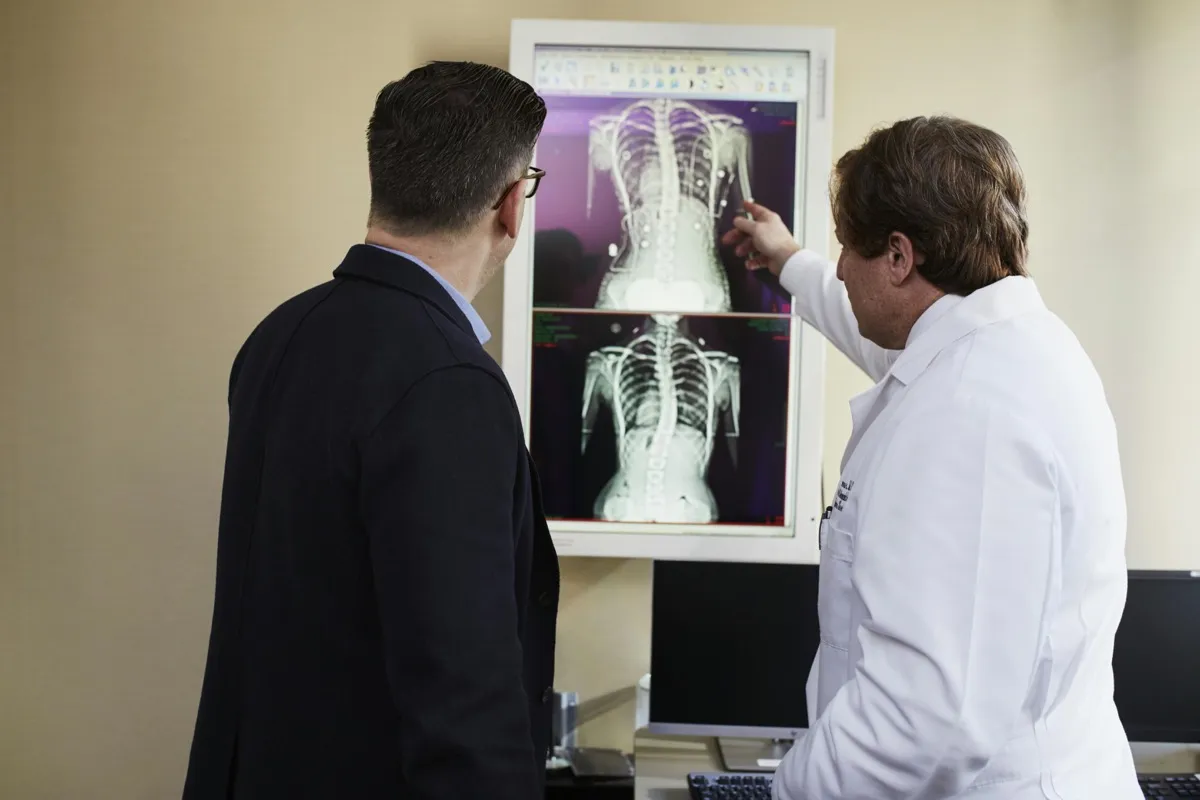
- Staging scans: for intermediate- and high-risk cancers, bone scans, CT or PSMA PET imaging check whether the cancer has spread
A biopsy is a specialist procedure arranged through urology and is never the first step. Most men who begin with a PSA test at a general clinic will never need one. Ultrasound can show prostate size and bladder emptying, and our abdominal ultrasound service helps assess pelvic structures, although it cannot diagnose or exclude prostate cancer on its own.
PSA Test: What the Numbers Mean
PSA is measured in nanograms per millilitre (ng/mL). Because both benign and cancerous prostate tissue release PSA, a result must be interpreted by a doctor in context. Many labs and guidelines use age-specific reference ranges, since PSA naturally rises as the prostate grows with age.
| Age Group | Typical Upper Limit of Normal (ng/mL) | Interpretation |
|---|---|---|
| 40 to 49 years | 2.5 | Values above this warrant follow-up and repeat testing |
| 50 to 59 years | 3.5 | Values between 3.5 and 4.0 are often monitored closely |
| 60 to 69 years | 4.5 | BPH is common, so context and prostate size matter |
| 70 to 79 years | 6.5 | Individualised decision on further testing |
Age-specific PSA reference ranges (guide only; your doctor will interpret your result)
Important points about interpretation:
- A raised PSA does not mean cancer. Roughly two out of three men with a PSA between 4 and 10 ng/mL turn out not to have prostate cancer on biopsy. BPH, prostatitis and urinary infection are common causes
- A normal PSA does not guarantee no cancer. Some cancers, particularly aggressive ones, produce little PSA
- Trends matter. A steady rise over successive tests (PSA velocity) is more informative than a single value
- Free PSA ratio can separate BPH from cancer. A ratio above 25% points toward BPH, while below 10% raises concern
- Things that can falsely raise PSA: ejaculation or vigorous cycling in the previous 24 to 48 hours, urinary infection, prostatitis, recent catheterisation or prostate procedures
If your result is above the expected range, the usual next step is to repeat the test after 6 to 8 weeks, treat any infection, and consider MRI. For a fuller explanation of preparation and interpretation, see our PSA test guide for Dubai and the tumour markers explainer.
Book a PSA Test at DCDC
A PSA blood draw takes minutes and costs AED 149 at DCDC Dubai Healthcare City. Our on-site laboratory provides same-day results, with direct billing for 20+ insurance partners.
WhatsApp us to book, or walk in Saturday to Thursday, 8 AM to 10 PM.
What to Expect at DCDC
We designed the PSA pathway at DCDC Dubai Healthcare City to be quick and private, with no complicated referral steps for routine screening.
- Step 1, walk in or book: we are open Saturday to Thursday, 8 AM to 10 PM. Free parking is available, and registration takes a few minutes
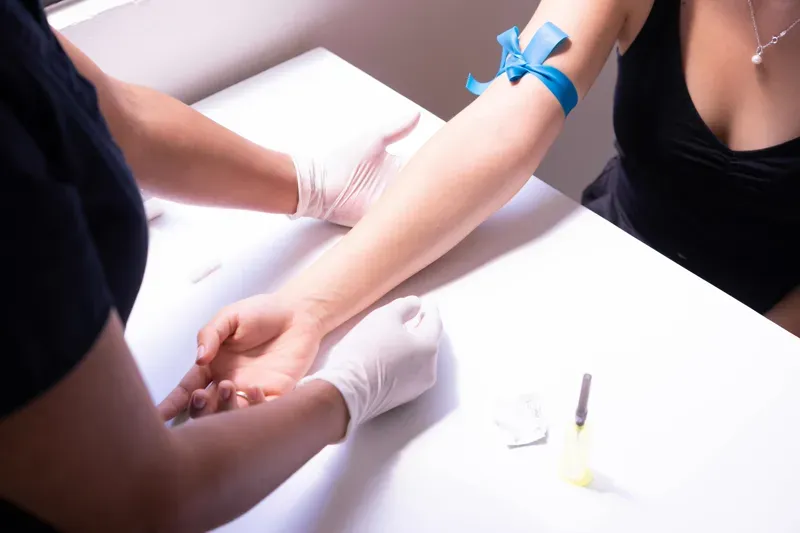
- Step 2, blood draw: a nurse takes a small blood sample from your arm. The PSA test costs AED 149, and the Total PSA panel is AED 399. Avoid ejaculation and cycling for 48 hours beforehand for the most reliable reading
- Step 3, same-day results: samples are processed in our on-site laboratory, so you do not wait days for an outside lab
- Step 4, GP consultation if needed: if your result is outside the expected range, or you have symptoms, a GP consultation starts from AED 249. The doctor reviews your result, history and risk factors, arranges repeat testing or imaging, and refers you to a urologist when appropriate
- Insurance and convenience: we offer direct billing with 20+ insurance partners. Coverage depends on your plan. If you prefer, home blood collection can be arranged for an additional AED 199 per visit
Many men combine PSA with a wider review of cholesterol, blood sugar, kidney and liver function. Our health checkup packages start from AED 249 and can be tailored by age and risk.
Reducing Your Prostate Cancer Risk
No lifestyle change can guarantee protection, and genetics and age matter more than any single habit. Still, the choices below are associated with better prostate and overall health, and they also reduce heart disease and diabetes risk.
- Eat a plant-rich, Mediterranean-style diet: tomatoes, cruciferous vegetables such as broccoli, legumes, olive oil and oily fish feature in diets linked to lower risk of aggressive disease. Regional staples such as hummus, grilled fish, salads and olive oil fit this pattern well
- Limit red and processed meat and high-fat dairy, and favour grilling lightly over charring
- Move regularly: aim for at least 150 minutes of moderate activity per week. Vigorous activity is linked to a lower risk of aggressive prostate cancer
- Maintain a healthy weight: obesity is linked to higher-grade disease and poorer outcomes
- Do not smoke: smoking, including shisha, is linked to worse prostate cancer outcomes
- Be cautious with supplements: large trials of vitamin E and selenium found no benefit and possible harm, so do not take them for prostate protection
- Screen on a schedule: regular, risk-appropriate PSA testing is the most effective way to catch a prostate cancer while it is still curable
Combine these habits with a yearly conversation with your GP about your risk, and keep a record of your PSA results so that trends can be tracked over time.
Related Services at DCDC
Expert care and advanced diagnostics at Dubai Healthcare City
Frequently Asked Questions
Final Thoughts
Prostate cancer is common, often silent in its early stages, and highly treatable when found in time. The warning signs covered here, from a weaker urinary stream and night-time trips to the bathroom to blood in the urine or semen and persistent bone pain, are not proof of cancer, but they are good reasons to get checked. Because the earliest stage frequently causes no symptoms at all, knowing your risk factors and agreeing a screening plan with your doctor is just as important as watching for symptoms.
If you are in your 40s or 50s, have a family history, or have noticed any change that lasts more than a few weeks, a PSA test is a simple first step. At DCDC in Dubai Healthcare City, the test costs AED 149, results are available the same day from our on-site laboratory, and a GP consultation from AED 249 is available to explain what the numbers mean. You can book a PSA test online, message us on WhatsApp, or simply walk in Saturday to Thursday, 8 AM to 10 PM.
Sources & References
This article references the following sources:
- American Cancer Society: Key Statistics for Prostate Cancer
- Mayo Clinic: Prostate cancer symptoms and causes
- Cleveland Clinic: Prostate Cancer
- World Health Organization: Cancer fact sheet
- PubMed: Early Detection of Prostate Cancer, AUA/SUO Guideline (2023)
- American Cancer Society: Signs and Symptoms of Prostate Cancer
This information is educational and does not replace individual medical advice. See our editorial policy for more information.

Written by
Dr. Hadeel Elnur
General Practitioner
MD, General Practice
Dr. Hadeel Elnur is a General Practitioner at Doctors Clinic Diagnostic Center (DCDC) in Dubai Healthcare City.
Related Articles
PSA Test Dubai: Prostate Screening Guide
Cancer Screening Dubai: Tests & Cost by Age
Men's Health Screening Dubai: Tests by Age

Enlarged Prostate Dubai: BPH Symptoms
Blood Tests for Cancer: Tumor Markers Explained
More in Cancer


© 2026 Doctors Clinic Diagnostic Center (DCDC), Dubai Healthcare City. Originally published at https://doctorsclinicdubai.ae/blog/prostate-cancer-warning-signs-dubai. All rights reserved. Unauthorized reproduction is prohibited.