Key Takeaways
- A GP is the right first stop for most new, mild, or unclear symptoms; a specialist focuses on one organ system or condition and is best used once a diagnosis or clear need is established.
- Most Dubai health insurance plans require a GP referral before specialist consultations are covered, so skipping this step often means paying out of pocket even if the visit is medically justified.
- Red flag symptoms such as crushing chest pain, sudden weakness on one side, severe shortness of breath, or heavy uncontrolled bleeding need emergency care immediately, not a scheduled GP or specialist appointment.
- GP consultations in Dubai typically start from AED 150, while specialist consultations range from AED 250-350 depending on the specialty, plus additional diagnostic tests if required.
- A GP who tracks your full medical history over time can spot patterns across body systems that a specialist focused on a single organ may not see in isolation.
- At DCDC, GPs and specialists across cardiology, orthopedics, gynecology, neurology, ENT, nephrology, and dentistry work under one roof, so internal referrals and on-site diagnostics often happen the same day.
- Some conditions, including many women's health concerns, skin issues, and dental problems, can reasonably go straight to the right specialist without a GP visit first.
If you are new to Dubai or simply unsure who to book with, you are not alone. One of the most common questions patients ask before a general consultation is whether they should see a general practitioner (GP) first or go directly to a specialist. Choosing wrong can waste time, cost more money, or delay the right treatment, especially when insurance referral rules are involved. This guide breaks down exactly when a GP is the right first stop, when it makes sense to go straight to a specialist, how Dubai insurance referral requirements work, and what the cost difference actually looks like.
Dubai's healthcare system gives residents excellent access to both general practitioners and specialists, but that choice itself can be confusing, particularly for expats used to different systems back home. This article walks through the practical differences between a GP and a specialist, common symptom scenarios with clear decision guidance, insurance and referral rules under Dubai Health Authority (DHA) regulations, and how a one-stop center like DCDC simplifies the entire pathway from first symptom to specialist treatment.
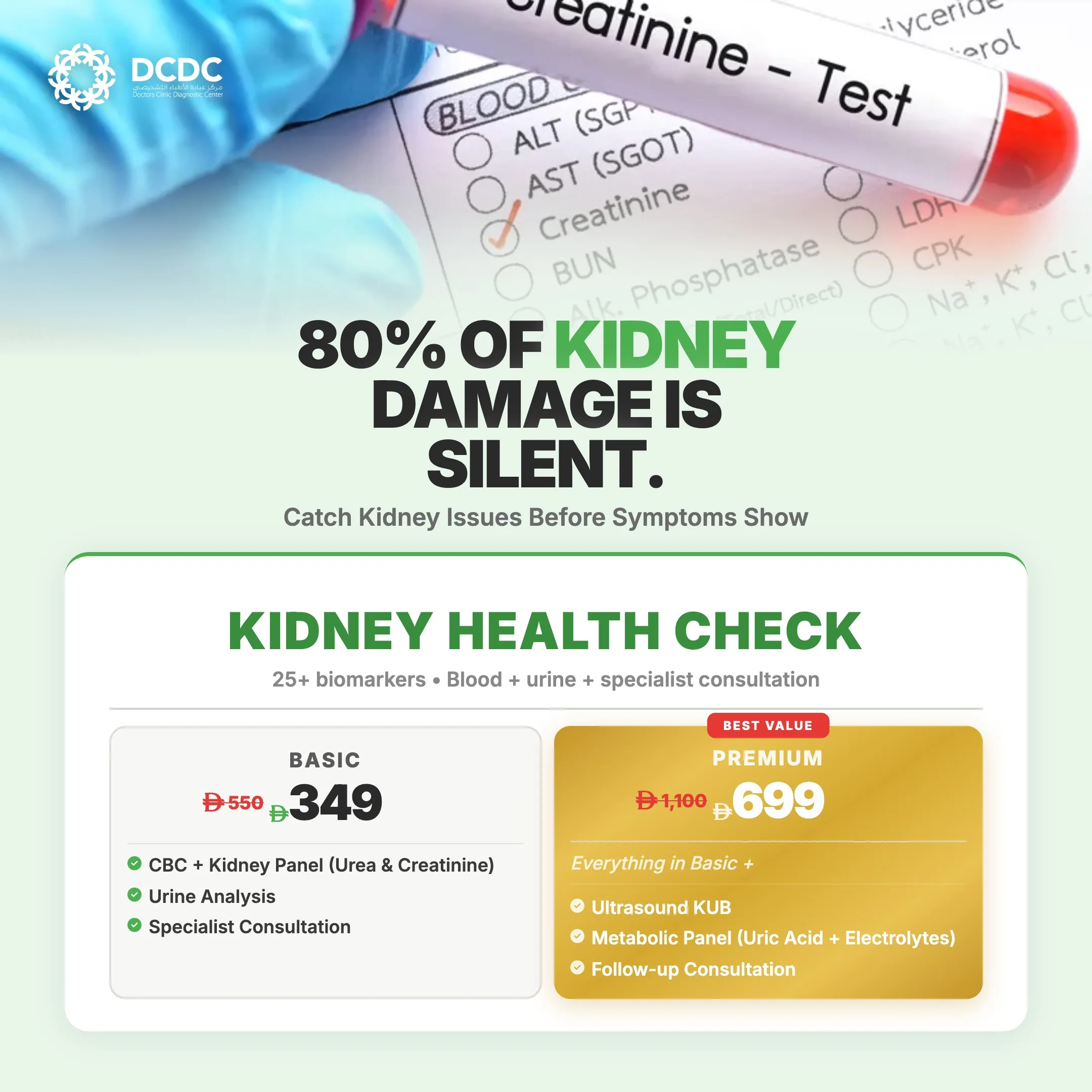
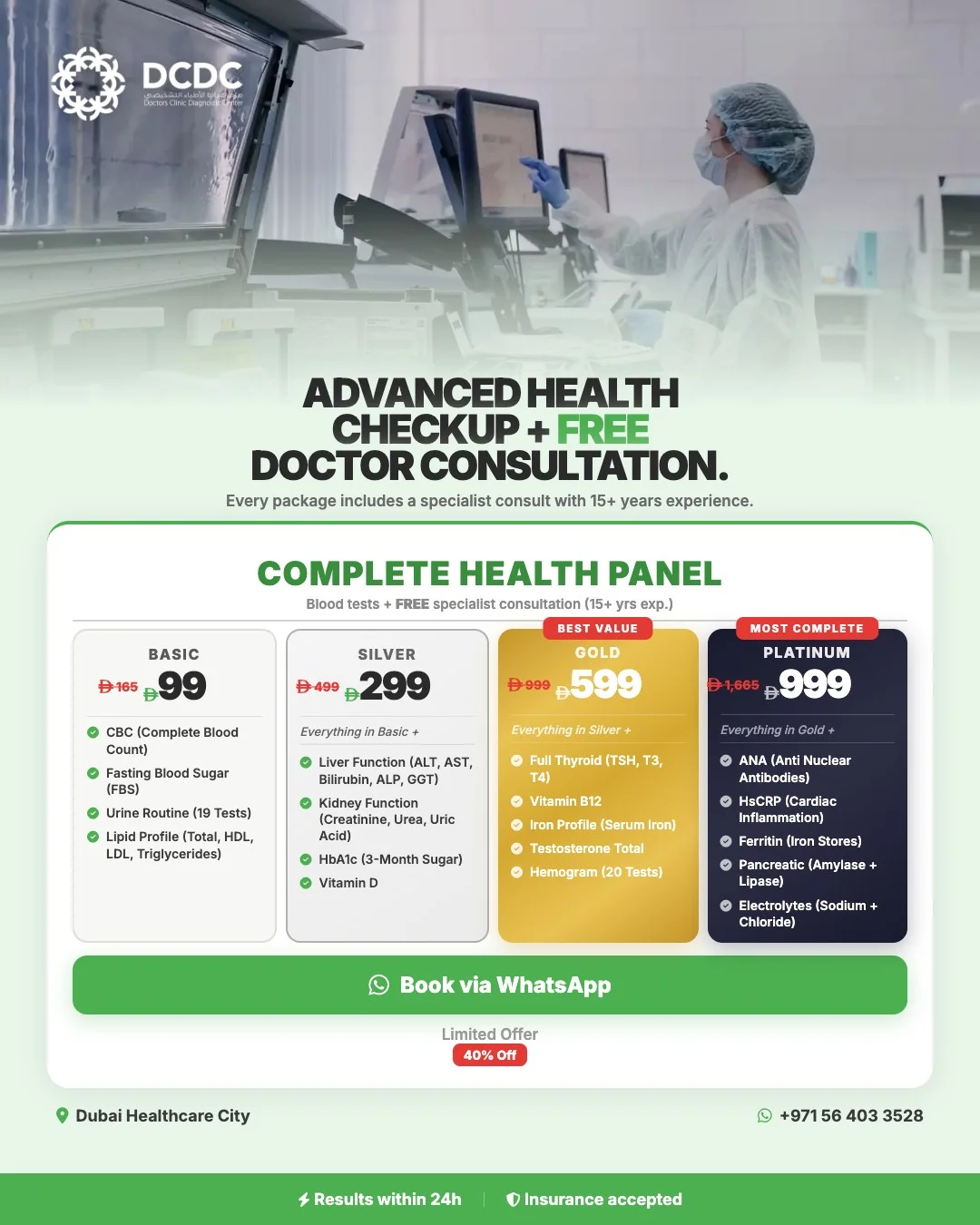
Health Screening Packages
Save with our bundled screening packages — specialist consultation included




The Common Dilemma: New to Dubai and Unsure Who to See
New residents and long-term expats alike often default to booking directly with a specialist because that is what feels intuitive: a heart concern means a cardiologist, a joint ache means an orthopedic surgeon, a skin rash means a dermatologist. In many home countries, though, the expected first step is a general practitioner who evaluates the whole picture before deciding whether specialist input is actually needed. In Dubai, both paths exist, and which one is appropriate depends on your symptoms, your insurance plan, and how urgent or complex the issue is.
The good news is that this decision does not need to be a guessing game. A small number of clear principles cover the vast majority of situations, and most of the confusion disappears once you understand the difference in scope, cost, and role between a GP and a specialist.
GP vs Specialist in Dubai: Quick Comparison
Before diving into specific scenarios, this side-by-side comparison highlights the practical differences you will notice as a patient, from consultation length to cost to what each type of doctor is actually trained to manage.
| Aspect | General Practitioner (GP) | Specialist |
|---|---|---|
| Role | First point of contact; assesses symptoms broadly, treats common conditions, coordinates care | Focused expert in one organ system, disease group, or procedure type |
| Consultation length | 20-30 minutes | 20-40 minutes, often longer for first visits with imaging review |
| Typical cost in Dubai | From AED 150 | AED 250-350, sometimes more for sub-specialties |
| Appointment availability | Same-day appointments frequently available | May require a short wait, though internal referrals within one center are faster |
| Conditions treated | Colds, flu, infections, minor injuries, chronic disease management, general checkups, initial workups | Complex, recurring, or organ-specific conditions requiring specialised diagnosis and treatment |
| Referral required by insurance | Not applicable - GP is usually the starting point | Often yes, depending on the insurance plan and network rules |
| Continuity of care | Tracks your full medical history across visits and conditions | Focuses on the specific condition or system referred for |
| Best for | New or unclear symptoms, general health concerns, chronic condition follow-up, health screening | Confirmed or suspected diagnosis needing specialised management, procedures, or ongoing organ-specific care |
In most cases, a GP consultation is the lower-cost, faster-to-book first step, while a specialist visit is reserved for conditions that need focused, in-depth expertise.
What a General Practitioner Does
A general practitioner is trained to evaluate the whole patient rather than one organ system. GPs manage everything from coughs, colds, and infections to chronic conditions such as high blood pressure, diabetes, and thyroid disorders. They order initial blood tests and imaging, interpret results in the context of your overall health, prescribe medication, and decide whether your case needs specialist input at all. A large share of health concerns, estimated by primary care bodies worldwide to be 80-90% of all outpatient visits, are fully resolved by a GP without ever needing a specialist referral.
GPs are also the doctors most likely to know your full history: previous diagnoses, medications, allergies, family history, and lifestyle factors. This context matters enormously when symptoms are vague or could point to several different underlying causes. For a full breakdown of what a typical visit costs and includes, see our guide to GP consultation cost in Dubai.
What a Specialist Does
A specialist has completed additional years of training focused on one organ system, disease category, or procedure type, such as cardiology, orthopedics, gynecology, neurology, ENT, nephrology, or dentistry. Specialists are the right choice when a condition is already diagnosed, complex, recurring, or requires equipment and expertise beyond general practice, such as an echocardiogram, arthroscopic surgery, or a detailed neurological workup.
The trade-off is scope: a specialist is trained to go deep into one area rather than broad across the whole body. This is precisely why specialists work best when a GP or another clinician has already narrowed down the likely cause, or when the presenting problem is unmistakably within a single specialist's domain, such as a suspected pregnancy complication or a broken tooth.
When to Start with a GP
Starting with a GP is the right move in the large majority of everyday health situations. Specific scenarios where a GP visit should come first include:
- New or unclear symptoms that could have several possible causes, such as fatigue, mild fever, or generalised aches
- Common infections including cold, flu, sinusitis, urinary tract infections, and minor skin infections
- Ongoing management of chronic conditions like hypertension, type 2 diabetes, thyroid disorders, and high cholesterol
- General health checkups, vaccinations, and preventive screening appropriate for your age and risk factors
- Mild to moderate back, joint, or muscle pain without red-flag features
- Symptoms that are new but not severe, such as occasional headaches, mild digestive upset, or a rash that has not been evaluated before
- Any situation where you are unsure which specialist, if any, is actually needed
When to Go Directly to a Specialist (Red Flags)
Some situations justify skipping the GP step entirely, either because the condition clearly falls within one specialist's domain or because symptoms are severe enough to require emergency-level urgency. Recognising these red flags matters.
Emergency Symptoms - Go to the ER, Not a Scheduled Appointment
- Crushing or severe chest pain, especially with sweating, shortness of breath, or pain radiating to the arm or jaw
- Sudden weakness, numbness, or drooping on one side of the face or body, slurred speech, or sudden severe headache (possible stroke)
- Severe difficulty breathing
- Heavy, uncontrolled bleeding
- Loss of consciousness or severe head injury
Conditions That Can Reasonably Skip the GP
- Routine women's health needs, such as an annual gynecological exam, pregnancy care, or a known gynecological condition, can go directly to a gynecologist
- Dental pain, broken or chipped teeth, and routine dental checkups go directly to a dentist
- A previously diagnosed chronic condition needing specialist follow-up, such as an existing cardiac condition under a cardiologist's care
- Eye problems affecting vision go directly to an ophthalmologist
- Recurring headaches with neurological features (visual disturbance, one-sided weakness, or worsening pattern) may warrant a direct neurology referral
For a broader view of what routine screening should look like regardless of which doctor you see first, our annual health checkup guide outlines age-appropriate tests. And if headaches are a recurring concern, our guide on when to see a neurologist covers the specific warning signs that justify a direct specialist visit.
Common Symptom Scenarios: A Decision Guide
Because "it depends" is not a satisfying answer when you are actually unwell, here is how the GP-vs-specialist decision plays out for the symptoms patients ask about most.
Chest Pain: GP or Cardiologist?
If chest pain is severe, sudden, crushing, or accompanied by shortness of breath, sweating, or pain spreading to the arm or jaw, go to the emergency room immediately - this is not a GP or scheduled specialist situation. For milder, intermittent, or activity-related chest discomfort without those alarming features, start with a GP, who can perform an initial ECG, assess cardiac risk factors, and refer to a cardiologist for further testing such as an echocardiogram or stress test if warranted.
Back Pain: GP or Orthopedic Specialist?
Most back pain, even when uncomfortable, is mechanical and improves with conservative management. Start with a GP, who can assess for red flags (such as numbness, weakness, or bladder/bowel changes that would need urgent orthopedic or neurological referral) and initiate first-line treatment. Persistent, worsening, or injury-related back pain that does not improve typically progresses to an orthopedic specialist for imaging and further management.
Skin Issues: GP or Dermatologist?
A GP can diagnose and treat the majority of common skin issues, including acne, eczema flare-ups, minor infections, and simple rashes. Chronic, unusual, or worsening skin conditions, or anything that looks suspicious and warrants a specialist's trained eye, should be referred to a dermatologist.
Headaches: GP or Neurologist?
Occasional tension-type headaches are well within a GP's scope. Headaches that are recurring, worsening, associated with visual changes, or accompanied by other neurological symptoms should prompt a GP-initiated referral to a neurologist for further evaluation.
Women's Health: Direct to Gynecologist Is Fine
Unlike many of the scenarios above, women's health concerns, from routine screening to pregnancy care to specific gynecological symptoms, do not require a GP detour. Booking directly with a gynecologist is appropriate and often more efficient.
Do You Need a Referral to See a Specialist in Dubai?
This is one of the most practical questions for anyone navigating Dubai's healthcare system, and the answer depends entirely on your insurance plan. Many UAE health insurance networks operate on a GP-gatekeeper model, meaning specialist consultations are only covered (or covered at a higher reimbursement rate) if you have a documented GP referral first. Some premium or open-network plans allow direct specialist access without a referral, while others require it strictly.
Under Dubai Health Authority (DHA) licensing and regulatory standards, clinics and hospitals are required to follow the specific referral pathways set out by each insurer's network agreement. Practically, this means the fastest way to know your own requirement is to check your insurance card or policy documents, or simply ask your clinic's reception team to verify your plan's referral rules before booking. Visiting a specialist without a required referral does not mean you cannot be seen - it usually just means the visit may not be covered, and you would pay out of pocket.
The GP as Your Health Coordinator
Beyond treating individual symptoms, a GP's real long-term value is coordination. When you see the same GP over time, that doctor builds a picture of your full history: past diagnoses, medications, allergies, family history, and how different symptoms may connect across body systems. This matters because specialists, by design, focus deeply on one area and may not always see the bigger picture that ties symptoms in different systems together.
According to Dr. Hadeel Elnur, General Practitioner at DCDC, "My role is often about knowing when a symptom can be managed directly and when it needs a specialist's depth of expertise. I see myself as the coordinator of a patient's overall care - someone who understands the full history well enough to point them toward the right specialist quickly, rather than having them cycle through appointments on their own. That combination of broad clinical judgment and knowing exactly when to refer is what makes primary care valuable."
This coordinating role becomes especially valuable when more than one specialist is involved. If your GP suspects a cardiac component to your symptoms, they can coordinate finding the right cardiologist within the same network, or if symptoms suggest a broader systemic issue, refer you to an internal medicine specialist for a more comprehensive workup, all while keeping your full history in view rather than starting from scratch with each new doctor.
Cost Comparison: GP vs Specialist Consultations in Dubai
Cost is a real factor in the GP-vs-specialist decision, particularly for self-pay patients or those with insurance plans that carry co-payments. The table below outlines typical consultation pricing for a GP visit compared with common specialist consultations.
| Consultation Type | Typical Cost in Dubai | Notes |
|---|---|---|
| GP / General Consultation | From AED 150 | 20-30 minute visit; covers assessment, prescription, and referral if needed |
| Specialist Consultation (general) | AED 250-350 | Varies by specialty and complexity of the first visit |
| Cardiology Consultation | AED 250-350 | Additional cost for ECG, echocardiogram, or stress test if ordered |
| Orthopedic Consultation | AED 250-350 | Imaging (X-ray, MRI) billed separately if required |
| Gynecology Consultation | AED 250-350 | Ultrasound and lab work billed separately if required |
| Neurology Consultation | AED 250-350 | Further imaging or nerve studies billed separately if required |
| ENT Consultation | AED 250-350 | Endoscopy or allergy testing billed separately if required |
Prices are indicative starting rates and can vary based on complexity, insurance coverage, and any diagnostic tests ordered during the visit.
Not Sure Whether You Need a GP or a Specialist?
Book a general consultation at DCDC and let our GP assess your symptoms first. If specialist care is needed, we can refer you internally the same day, with consultations starting from AED 150.
What to Expect at DCDC: GP and Specialists Under One Roof
DCDC is designed specifically to remove the friction from the GP-vs-specialist decision. Because both general practitioners and a full range of specialists work within the same center in Dubai Healthcare City, you do not need to research, book, and travel to a separate clinic if your GP determines a specialist is needed.
- GP consultations run 20-30 minutes and start from AED 150, giving your doctor real time to assess symptoms properly rather than rushing
- On-site labs and imaging mean many diagnostic results, including blood tests and basic imaging, are available the same day
- Seamless internal referral to cardiology, orthopedics, gynecology, neurology, ENT, nephrology, and dentistry means no need to visit multiple clinics or re-explain your history
- Same-day appointments are frequently available for both GP and specialist visits
- Free parking and a Dubai Healthcare City location roughly 10 minutes from Downtown Dubai and Business Bay make repeat visits practical
- Extended hours (Saturday-Thursday 8AM-10PM, Friday 9AM-9PM) accommodate working schedules
- DCDC is MOHAP-licensed and partners with 20+ insurance providers offering direct billing, reducing the paperwork burden around referrals
This one-stop structure is particularly useful for patients managing more than one health concern at a time, since a GP consultation, specialist referral, and diagnostic testing can often be coordinated within a single visit to the center rather than spread across separate appointments at different locations.
Meet the DCDC Specialist Team
When your GP determines that specialist input is needed, DCDC's in-house specialists mean the referral happens without leaving the building. The center's specialist team includes:
- Cardiology - Dr. Shahoo Mazhari: ECG, echocardiogram, and stress testing available on-site for heart-related concerns
- Orthopedics - Dr. Mersad Moosavi: 14+ years of experience managing joint, bone, and sports-related conditions
- Gynecology - Dr. Parisa Dini: Women's health, from routine screening to specific gynecological concerns
- Neurology - Dr. Riad Trabulsi: Evaluation of headache, vertigo, and stroke-related symptoms
- ENT - Dr. Yousra Mohamed: Allergy, sinus, and hearing-related conditions
- Nephrology: Specialist evaluation and management of kidney-related conditions
- Dental - Dr. Chadi El Masry: General and restorative dental care
This breadth of on-site specialty coverage is what allows a GP referral at DCDC to translate into an actual appointment quickly, rather than a written letter you then have to act on elsewhere. Patients with cardiac symptoms benefiting from this pathway can read more in our guide to finding the right cardiologist in Dubai.
One-Stop GP and Specialist Care at DCDC
At Doctors Clinic Diagnostic Center in Dubai Healthcare City, GPs and specialists work together under one roof with on-site labs and imaging. Book your general consultation today and get a same-day specialist referral if needed.
Related Services at DCDC
Expert care and advanced diagnostics at Dubai Healthcare City
Frequently Asked Questions
Final Thoughts
The GP-vs-specialist decision does not have to be complicated. For most new, mild, or unclear symptoms, starting with a GP gives you a broad clinical assessment, faster and lower-cost access, and a doctor who can coordinate any specialist referral your case actually needs. Reserve direct specialist visits for conditions clearly within one specialty's domain, such as routine women's health or dental care, or for previously diagnosed conditions already under specialist management.
Always check your insurance plan's referral requirements before booking, since many Dubai insurers only cover specialist consultations when a GP referral is on file. And remember that severe or sudden symptoms, particularly anything suggesting a heart attack, stroke, or major bleeding, call for emergency care, not a scheduled appointment of any kind.
For a streamlined path from first symptom to the right specialist, Doctors Clinic Diagnostic Center in Dubai Healthcare City brings GPs and specialists together under one roof, with same-day appointments, on-site diagnostics, and consultations starting from AED 150.
Sources & References
This article was reviewed by our medical team and references the following sources:
- World Health Organization - Primary Health Care
- NHS - When to See a GP
- Dubai Health Authority (DHA)
- Cleveland Clinic - Primary Care vs Specialist Care
- American Academy of Family Physicians - Role of the Family Physician
- Mayo Clinic - Choosing a Doctor
Medical content on this site is reviewed by DHA-licensed physicians. See our editorial policy for more information.

Written by
Dr. Hadeel Elnur
General Practitioner
MD, General Practice
Dr. Hadeel Elnur is a General Practitioner at Doctors Clinic Diagnostic Center (DCDC) in Dubai Healthcare City.
Related Articles

GP Consultation Cost Dubai: From AED 150 (2026)

Annual Health Checkup: Tests You Need by Age (2026)
Health Checkup Cost Dubai: AED 800-6,000 (2026)

Best Internal Medicine Doctor Dubai (2026)

When to See a Neurologist Dubai (2026)
More in General Health

Flu vs Cold Dubai: How to Tell the Difference (2026)
Read More
Sleep Study Cost Dubai: Tests & Pricing (2026)
Read More
Calcium Deficiency Signs Dubai: Guide (2026)
Read More
Brain Fog Causes Dubai: When to Worry (2026)
Read More
Blood Pressure by Age Dubai: Normal Ranges (2026)
Read More
Low Magnesium Symptoms Dubai: Testing Guide (2026)
Read More© 2026 Doctors Clinic Diagnostic Center (DCDC), Dubai Healthcare City. Originally published at https://doctorsclinicdubai.ae/blog/gp-vs-specialist-dubai-guide. All rights reserved. Unauthorized reproduction is prohibited.