Key Takeaways
- Composite bonding is a minimally invasive cosmetic dental procedure that uses tooth-coloured resin to repair chips, close gaps, reshape teeth, and improve smile aesthetics — all in a single appointment
- Cost ranges from AED 500-1,500 per tooth in Dubai depending on complexity; at DCDC, cosmetic bonding is performed by specialist cosmetic dentists
- The procedure takes 30-60 minutes per tooth with no anaesthesia needed in most cases — unlike veneers, it requires little to no removal of natural tooth structure
- Composite bonding lasts 5-7 years with proper care, after which touch-ups or replacements can maintain results indefinitely
- Bonding is ideal for minor cosmetic concerns: small chips, gaps between teeth, discolouration, uneven edges, and slightly crooked appearance
- Unlike porcelain veneers, composite bonding is reversible — your natural tooth remains largely intact beneath the bonding material
- DCDC Dubai Healthcare City offers cosmetic bonding with 6+ dental specialists, digital imaging for treatment planning, and direct insurance billing
Composite bonding is one of the most popular cosmetic dental treatments in Dubai — and for good reason. This minimally invasive procedure uses tooth-coloured composite resin to transform your smile in a single appointment, without the drilling, injections, or irreversible tooth removal required by porcelain veneers. Whether you have a chipped front tooth, gaps between your teeth, minor discolouration, or simply want a more uniform smile, composite bonding offers a fast, affordable, and conservative solution. At DCDC Dubai Healthcare City, cosmetic bonding is performed by specialist dentists with experience in aesthetic restorations, starting from AED 500 per tooth.
If you are considering improving your smile but are put off by the cost, invasiveness, or permanence of veneers, composite bonding may be the ideal alternative. This guide covers everything you need to know — what bonding involves, how it compares to veneers and crowns, the exact cost in Dubai, how long results last, who is a good candidate, aftercare tips, and what to expect at your appointment.
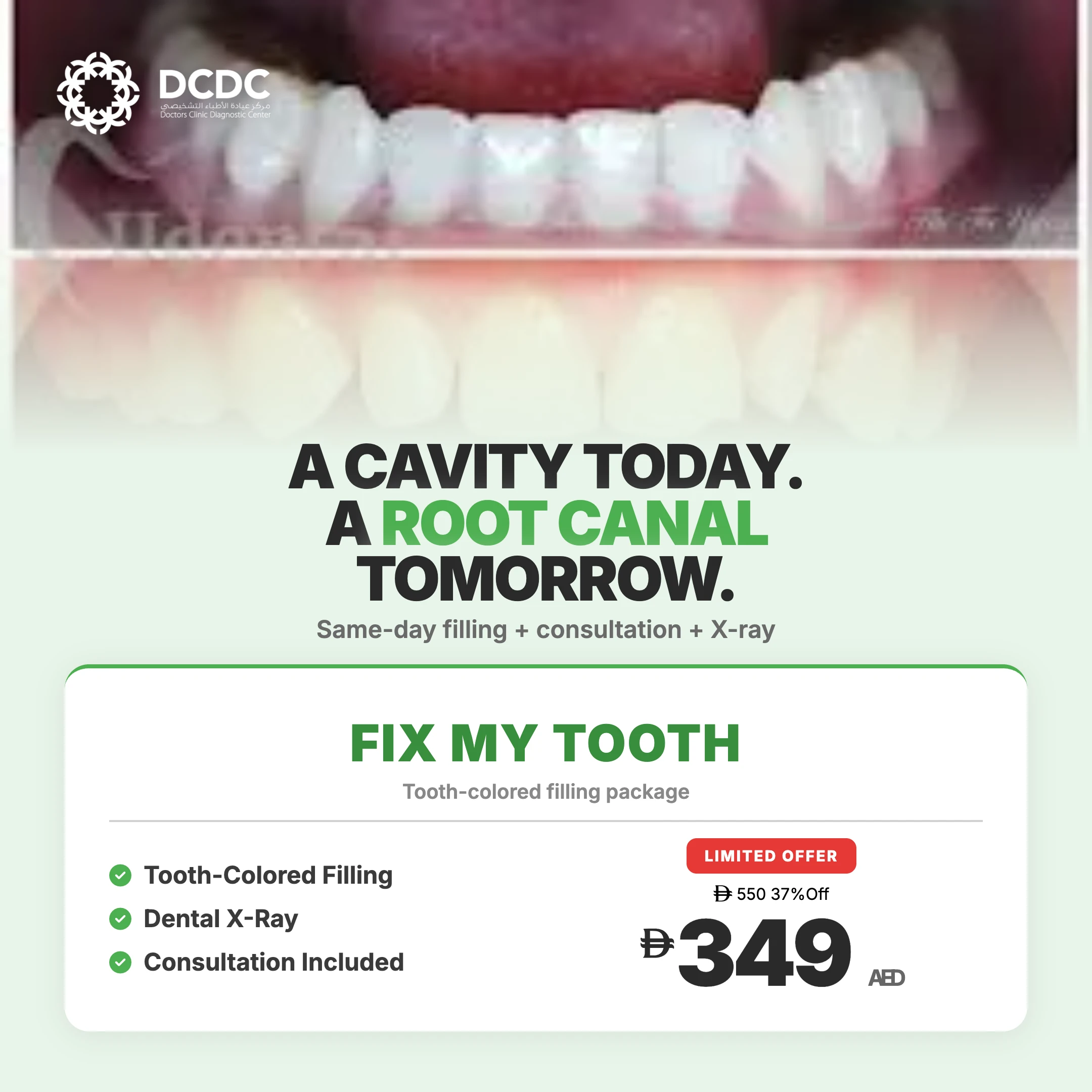

What Is Composite Bonding?
Composite bonding (also called dental bonding, tooth bonding, or cosmetic bonding) is a procedure in which a dentist applies tooth-coloured composite resin material directly onto your natural teeth, sculpting and shaping it by hand to improve their appearance. The resin is then hardened using a special UV curing light, bonded permanently to the tooth surface, and polished to a natural-looking finish that blends seamlessly with surrounding teeth.
Unlike porcelain veneers — which are fabricated in a dental laboratory and require significant enamel removal before bonding — composite bonding is an additive, chairside procedure. The dentist builds up material onto your existing tooth rather than shaving it down. This means the procedure is largely reversible, requires minimal or no tooth preparation, and can be completed in a single visit. It is sometimes called the "no-prep" or "minimal-prep" cosmetic option.
What Can Composite Bonding Fix?
Composite bonding is versatile enough to address a wide range of cosmetic dental concerns. Here are the most common reasons patients in Dubai seek bonding treatment.
- Chipped or cracked teeth: Rebuild the missing portion of tooth with resin that matches your natural shade
- Gaps between teeth (diastema): Close small to moderate gaps without orthodontics
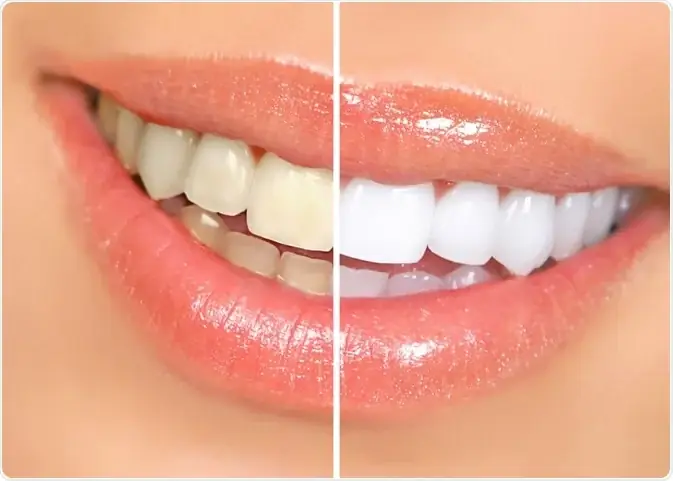
- Discoloured or stained teeth: Cover intrinsic staining that whitening cannot remove (tetracycline, fluorosis)
- Uneven tooth edges: Smooth out irregular or worn edges for a more uniform smile line
- Short or narrow teeth: Add length or width to teeth that appear undersized
- Slightly crooked appearance: Create the illusion of straighter teeth without braces (mild cases only)
- Exposed root surfaces: Cover and protect roots exposed by gum recession
- Old amalgam (silver) fillings: Replace visible metal fillings with tooth-coloured composite
- Tooth shape irregularities: Reshape peg laterals, pointed canines, or asymmetric teeth
According to Dr. Chadi El Masry, "Composite bonding is the most conservative smile improvement tool we have. For patients with minor imperfections — a small chip, a gap, or uneven edges — I can transform their smile in under an hour with no drilling and no anaesthesia. The results look completely natural because I hand-sculpt each tooth individually, layering different shades of resin to replicate the translucency and depth of natural enamel."
Composite Bonding vs Porcelain Veneers: Comparison
The most common question patients ask is how composite bonding compares to porcelain veneers. Both improve smile aesthetics, but they differ significantly in cost, invasiveness, durability, and suitability. Here is a detailed comparison to help you decide.
| Feature | Composite Bonding | Porcelain Veneers |
|---|---|---|
| Material | Tooth-coloured composite resin | Custom-made porcelain (ceramic) |
| Cost per tooth (Dubai) | AED 500–1,500 | AED 2,000–5,000 |
| Appointments needed | 1 (same-day) | 2-3 (impressions + fitting) |
| Tooth preparation | Minimal or none (additive) | 0.3-0.7mm enamel removal (irreversible) |
| Reversibility | Yes — bonding can be removed if desired | No — tooth is permanently altered |
| Procedure time | 30-60 minutes per tooth | 2+ hours total (across multiple visits) |
| Longevity | 5-7 years (touch-ups extend life) | 10-20 years |
| Stain resistance | Moderate — can stain over time | High — porcelain resists staining |
| Strength | Good for normal biting forces | Excellent — stronger than composite |
| Natural appearance | Very good (hand-sculpted, layered) | Excellent (lab-crafted with multiple layers) |
| Best for | Minor imperfections, single teeth, conservative approach | Major transformations, multiple teeth, maximum durability |
| Anaesthesia needed | Usually not | Usually yes |
Composite bonding vs porcelain veneers in Dubai (2026). Bonding is the conservative, affordable, same-day option. Veneers are the premium, long-lasting option for dramatic transformations.
In summary: choose composite bonding if you want a quick, affordable, reversible improvement for minor imperfections. Choose porcelain veneers if you want maximum durability and a dramatic smile transformation across multiple teeth. Many patients start with composite bonding to "test drive" a new smile shape before committing to permanent veneers. For a detailed comparison of veneer materials, see our guide to porcelain vs composite veneers in Dubai.
Composite Bonding Cost Dubai: Pricing Guide
The cost of composite bonding in Dubai depends on several factors including the number of teeth being treated, the complexity of each restoration, the dentist's experience, and the quality of composite resin material used.
| Treatment | Price Range (AED) | Typical Scenario |
|---|---|---|
| Single tooth bonding (minor chip) | AED 500–800 | Small chip repair or edge reshaping on one front tooth |
| Single tooth bonding (moderate) | AED 800–1,200 | Gap closure, length addition, or shape change on one tooth |
| Single tooth bonding (complex) | AED 1,200–1,500 | Extensive rebuilding, multiple shade layering, large gap closure |
| Smile makeover (4-6 teeth) | AED 3,000–7,500 | Comprehensive bonding across visible front teeth for full smile improvement |
| Smile makeover (8-10 teeth) | AED 5,000–12,000 | Complete smile transformation covering all visible teeth |
| Edge bonding (per tooth) | AED 300–600 | Smoothing irregular edges or adding minimal length |
| Bonding touch-up/repair | AED 200–500 | Repairing or refreshing existing bonding after years of wear |
Composite bonding prices in Dubai (2026). Costs vary by clinic, dentist expertise, and case complexity. Most dental insurance plans cover bonding when performed for restorative (not purely cosmetic) purposes.
At DCDC, cosmetic bonding is performed by specialist dentists experienced in layered aesthetic techniques. Because DCDC is located in Dubai Healthcare City — a dedicated medical free zone with lower overhead than premium mall-based dental clinics — patients benefit from specialist-quality treatment at competitive pricing. Direct billing with 20+ insurance providers (including Daman, AXA, Bupa, MetLife, and Cigna) covers bonding when it is classified as a restorative procedure (chip repair, cavity filling, replacing old amalgam).
The Composite Bonding Procedure: Step by Step
One of the greatest advantages of composite bonding is its simplicity. The entire procedure is completed in a single appointment, typically without anaesthesia, and involves the following steps.
Step 1: Shade Selection and Planning
Your dentist uses a shade guide to select composite resin that precisely matches your natural tooth colour. For optimal results, multiple shades may be used — a more opaque shade for the base layers and a more translucent shade for the outer surface to replicate natural enamel's light transmission. If you plan to whiten your teeth, whitening should be done before bonding so the composite can be matched to your lighter shade.
Step 2: Tooth Preparation
The tooth surface is lightly roughened (etched) with a phosphoric acid gel for 15-30 seconds to create microscopic pores that help the bonding agent adhere. This is painless and does not remove any significant tooth structure. A liquid bonding agent is then applied and cured with UV light, creating the adhesive interface between your tooth and the composite resin. In most cases, no anaesthesia or drilling is needed.
Step 3: Composite Application and Sculpting
The dentist applies composite resin in thin layers, sculpting each layer by hand using specialised instruments. Each layer is cured (hardened) with a high-intensity UV light for 20-40 seconds before the next layer is applied. This layering technique allows the dentist to build up translucency, depth, and natural colour variations that mimic real tooth structure. The sculpting process is where the artistry of bonding occurs — an experienced cosmetic dentist can create remarkably lifelike results.
Step 4: Shaping and Bite Check
Once the desired shape is achieved, the dentist checks your bite (occlusion) by having you close and move your jaw. Any high points are adjusted to ensure comfortable, natural contact between upper and lower teeth. The bonded tooth should feel identical to your natural teeth when biting and chewing.
Step 5: Polishing and Final Finish
The final step is polishing the bonded surface to a high shine using fine polishing discs and paste. Proper polishing is critical — it creates a smooth, stain-resistant surface that reflects light like natural enamel. A well-polished composite should be indistinguishable from natural tooth surface. The total procedure time is 30-60 minutes per tooth.
How Long Does Composite Bonding Last?
Composite bonding typically lasts 5-7 years before it shows signs of wear, staining, or edge chipping that warrants replacement or touch-up. With excellent care, some bondings can last 8-10 years. The longevity depends on several factors.
- Bite forces: Bonding on teeth that bear heavy biting pressure (lower front teeth biting against upper bonding) wears faster
- Habits: Nail biting, pen chewing, opening packages with teeth, and bruxism (teeth grinding) significantly reduce bonding lifespan
- Staining agents: Regular consumption of coffee, tea, red wine, turmeric, and smoking accelerates surface staining
- Oral hygiene: Plaque accumulation at bonding margins can cause discolouration and recurrent decay
- Composite quality: Premium nano-hybrid composites (used at specialist practices) last longer than basic materials
- Dentist skill: Proper layering, adaptation to tooth margins, and polishing technique affect long-term performance
When bonding eventually needs replacement, the old material is simply removed and new composite is applied — the underlying tooth remains unharmed. This is a key advantage over veneers, where replacement involves working with an already-prepared (reduced) tooth. Many patients choose to have bonding polished and topped up every 3-5 years as part of routine dental maintenance. For more details on cosmetic filling options, see our guide to dental fillings cost in Dubai.
Book a Composite Bonding Consultation
Discuss your smile goals with a specialist cosmetic dentist at DCDC Dubai Healthcare City. Same-week appointments available.
Call or WhatsApp for a consultation
Pros and Cons of Composite Bonding
Like any dental treatment, composite bonding has clear advantages and limitations. Understanding both helps you make an informed decision about whether it is the right choice for your smile goals.
Advantages of Composite Bonding
- Minimally invasive: Little to no tooth structure removed — your natural tooth stays intact
- Reversible: Unlike veneers or crowns, bonding can be removed without damaging the tooth
- Single appointment: Complete in 30-60 minutes per tooth — no temporary restorations or multiple visits
- No anaesthesia (usually): Most bonding procedures are painless without injections
- Affordable: Significantly less expensive than porcelain veneers or crowns
- Natural appearance: Skilled layering produces results that blend invisibly with natural teeth
- Easy to repair: If bonding chips, it can be patched in minutes without replacing the entire restoration
- Tooth-preserving: Ideal for young patients who want to avoid irreversible treatments early in life
Limitations of Composite Bonding
- Shorter lifespan: 5-7 years vs 10-20 years for porcelain veneers
- Stain susceptibility: Composite resin can absorb stains from coffee, tea, wine, and smoking over time
- Less durable: Not suitable for areas of heavy bite force (e.g., molar restorations in teeth grinders)
- Regular maintenance: May need polishing every 1-2 years and replacement every 5-7 years
- Not suitable for major changes: Cannot correct severe crowding, large rotations, or significant colour changes as effectively as veneers
- Technique-sensitive: Results depend heavily on the dentist's artistic skill and experience
Who Is a Good Candidate for Composite Bonding?
Composite bonding is ideal for patients who meet the following criteria.
- Minor cosmetic concerns: Small chips, narrow gaps, slight shape irregularities, or edge wear
- Conservative approach preferred: You want improvement without irreversibly altering your natural teeth
- Budget-conscious: You want significant smile improvement without the cost of porcelain veneers
- Good oral health: No active decay, gum disease, or untreated dental conditions
- Stable bite: No severe malocclusion or heavy grinding habit (or willing to wear a night guard)
- Realistic expectations: You understand bonding will need maintenance and may stain over time
- Young patients: Ideal for patients under 25 who want cosmetic improvement but whose teeth may still shift
Bonding is not ideal for: severely discoloured teeth requiring dramatic colour change, teeth with extensive decay or structural compromise (crowns are better), very heavy bite forces without a night guard, or patients seeking a permanent solution lasting 15+ years without maintenance. In these cases, your dentist may recommend porcelain veneers, crowns, or orthodontic treatment instead.
Composite Bonding Aftercare: Making Results Last
Proper aftercare significantly extends the life and appearance of your composite bonding. Follow these evidence-based guidelines to protect your investment.
- Avoid hard foods on bonded teeth: Do not bite directly into hard foods (ice, hard candy, nuts, raw carrots) with bonded front teeth — cut food into pieces instead
- Limit staining foods/drinks: Coffee, tea, red wine, turmeric, berries, and soy sauce can stain composite over time. Use a straw for coloured beverages when possible
- No smoking: Tobacco causes rapid yellowing of composite resin that is difficult to reverse
- Wear a night guard: If you grind your teeth (bruxism), a custom night guard prevents bonding from chipping or wearing during sleep
- Avoid bad habits: No nail biting, pen chewing, or using teeth to open packages
- Use non-abrasive toothpaste: Avoid whitening toothpaste with harsh abrasives that can dull the bonding surface
- Maintain oral hygiene: Brush twice daily with a soft-bristled brush, floss daily, and visit your dentist for professional cleaning every 6 months
- Professional polishing: Have your bonding professionally polished during dental checkups to maintain shine and smoothness
For patients in Dubai specifically, Dr. Chadi El Masry notes: "The high coffee and tea consumption here means I advise bonding patients to rinse with water after every coloured drink. Dubai's AC-heavy indoor environment also causes dry mouth, which accelerates staining. I recommend sugar-free gum or frequent water sipping to maintain saliva flow — this is a simple habit that significantly extends bonding lifespan."
What to Expect at DCDC: Your Bonding Appointment
At DCDC Dubai Healthcare City, composite bonding is performed by experienced cosmetic dentists using premium nano-hybrid composite materials and digital imaging for precise treatment planning. Here is what to expect from your visit.
Initial Consultation
Your first visit involves a comprehensive dental examination, digital photographs of your smile, and a discussion of your goals. Your dentist assesses whether bonding is the right option or whether an alternative (veneers, orthodontics, whitening) would serve you better. If bonding is appropriate, a treatment plan is created outlining which teeth will be treated, the expected outcome, and the cost. If teeth whitening is desired, it should be completed first — bonding is then colour-matched to your new, lighter shade.
The Bonding Appointment
DCDC is located in Building 64, Block A, Al Razi Medical Complex in Dubai Healthcare City — with free dedicated parking. Check-in takes approximately 5 minutes. The bonding procedure itself takes 30-60 minutes per tooth. No anaesthesia is needed in most cases. You can eat and drink normally immediately after the appointment — there is no downtime. Results are visible as soon as you leave the chair. With a 4.8/5 Google rating from over 1,000 verified reviews, DCDC maintains consistently high standards for cosmetic dental outcomes.
Follow-Up
A follow-up appointment is recommended 1-2 weeks after bonding to check the bite, assess bonding adaptation, and make any minor adjustments. Subsequent maintenance involves professional cleaning and polishing every 6 months as part of your regular dental checkups. For more information about maintaining optimal dental health, see our guide to dental cleaning in Dubai.
Composite Bonding vs Other Cosmetic Options
Beyond porcelain veneers, patients in Dubai often weigh composite bonding against other cosmetic dental options. Here is how bonding compares to the most common alternatives.
| Treatment | Best For | Cost (AED/tooth) | Lifespan | Tooth Removal |
|---|---|---|---|---|
| Composite bonding | Minor chips, gaps, edge work | AED 500–1,500 | 5-7 years | None/minimal |
| Porcelain veneers | Major smile makeover, colour change | AED 2,000–5,000 | 10-20 years | 0.3-0.7mm enamel |
| Dental crowns | Heavily damaged or weakened teeth | AED 1,500–4,000 | 10-15 years | Significant (all surfaces) |
| Teeth whitening | Uniform colour improvement only | AED 800–2,500 | 1-3 years | None |
| Orthodontics/Invisalign | Alignment and spacing correction | AED 8,000–20,000 | Permanent | None |
| Dental implant | Missing tooth replacement | AED 6,000–15,000 | 20+ years | N/A (replacing missing tooth) |
Comparison of cosmetic dental treatments available in Dubai (2026). Your dentist can recommend the best option based on your specific concerns, budget, and long-term goals.
Many patients choose a combination approach — for example, teeth whitening first to achieve a lighter base shade, followed by composite bonding to fix chips and reshape edges, with the option to upgrade to porcelain veneers in the future if desired. This staged approach gives the best results while preserving all options.
Transform Your Smile at DCDC
Book a cosmetic bonding consultation with our specialist dentists. Same-week appointments at DCDC Dubai Healthcare City. Direct insurance billing available.
Call +971 4 243 1113 or WhatsApp
Related Services at DCDC
Expert care and advanced diagnostics at Dubai Healthcare City
Frequently Asked Questions
Final Thoughts on Composite Bonding
Composite bonding offers a unique combination of affordability, minimal invasiveness, and immediate results that makes it one of the most popular cosmetic dental treatments in Dubai. Whether you want to repair a chip, close a gap, or create a more uniform smile, bonding achieves natural-looking improvements in a single painless appointment — without the irreversible tooth reduction required by porcelain veneers.
At DCDC Dubai Healthcare City, our team of 6+ dental specialists provides expert cosmetic bonding using premium composite materials and layered techniques that produce invisible, seamless results. With same-week appointments, direct insurance billing, free parking, and extended hours (Sat-Thu 8 AM-10 PM), improving your smile has never been more accessible. Book your consultation today.
Sources & References
This article was reviewed by our medical team and references the following sources:
- American Dental Association — Bonding (Dental Cosmetic Procedures)
- NHS — Dental Bonding (Cosmetic Dentistry)
- Cleveland Clinic — Dental Bonding: What It Is, Procedure & Care
- Mayo Clinic — Dental Bonding: Overview
- Fahl N Jr. A Polychromatic Composite Layering Approach for Solving a Complex Class IV/Direct Veneer Diastema Combination. Journal of Esthetic and Restorative Dentistry. 2006;18(3):154-164.
- Fahl N Jr, Den Frontier. The direct/indirect composite resin veneers: A case report. Practical Procedures & Aesthetic Dentistry. 2007;19(1):46-53.
Medical content on this site is reviewed by DHA-licensed physicians. See our editorial policy for more information.

Written by
Dr. Chadi El Masry
Cosmetic Dentist
DDS
Dr. Chadi El Masry is a Cosmetic Dentist at Doctors Clinic Diagnostic Center (DCDC) in Dubai Healthcare City, specializing in composite bonding, Hollywood Smile makeovers, and aesthetic restorations.
Related Articles
Porcelain vs Composite Veneers Dubai: Comparison (2026)
Dental Fillings Cost Dubai: Types & Pricing (2026)
Hollywood Smile Cost Dubai: Full Guide (2026)
Teeth Whitening Cost Dubai: Options & Pricing (2026)
Dental Veneers Cost Dubai: Complete Guide (2026)
More in Dental
Zirconia vs Porcelain Crown Dubai: Guide (2026)
Read MoreZoom Whitening Cost Dubai: From AED 699 (2026)
Read More
Mouth Ulcers Dubai: Causes & When to Worry (2026)
Read MoreDental Anxiety Dubai: Tips to Overcome Fear (2026)
Read MoreDry Mouth Dubai: Causes & Treatment (2026)
Read MoreChipped Tooth Repair Dubai: What to Do (2026)
Read More© 2026 Doctors Clinic Diagnostic Center (DCDC), Dubai Healthcare City. Originally published at https://doctorsclinicdubai.ae/blog/composite-bonding-dubai-guide. All rights reserved. Unauthorized reproduction is prohibited.