Key Takeaways
- Clear aligners and traditional braces can both straighten teeth effectively; the better choice depends on case complexity, lifestyle and budget
- Aligners are nearly invisible and removable, but need 20-22 hours of daily wear; braces are fixed and work around the clock
- Mild to moderate crowding or spacing often suits aligners, while severe crowding and significant bite problems often favour braces
- Typical treatment runs about 6-18 months with aligners and 12-30 months with braces, depending on the case
- Dubai market ranges are roughly AED 5,000-12,000 for braces and AED 8,000-18,000 for aligners; contact DCDC for a personalised quote
- A digital assessment with OPG or CBCT imaging at DCDC helps your dentist recommend the right option for your teeth
Choosing between clear aligners and fixed braces is one of the biggest decisions in adult and teen orthodontic care. Invisalign offers a discreet, removable approach, while traditional braces provide continuous, reliable force for a wide range of cases. Each has real strengths and real limits.
This guide compares the two options side by side, covering how each works, who each suits, typical timelines and market cost ranges in Dubai, and what to expect when you visit DCDC for an assessment. It ends with a simple decision guide. For related reading, see our Invisalign cost guide and ceramic braces guide.

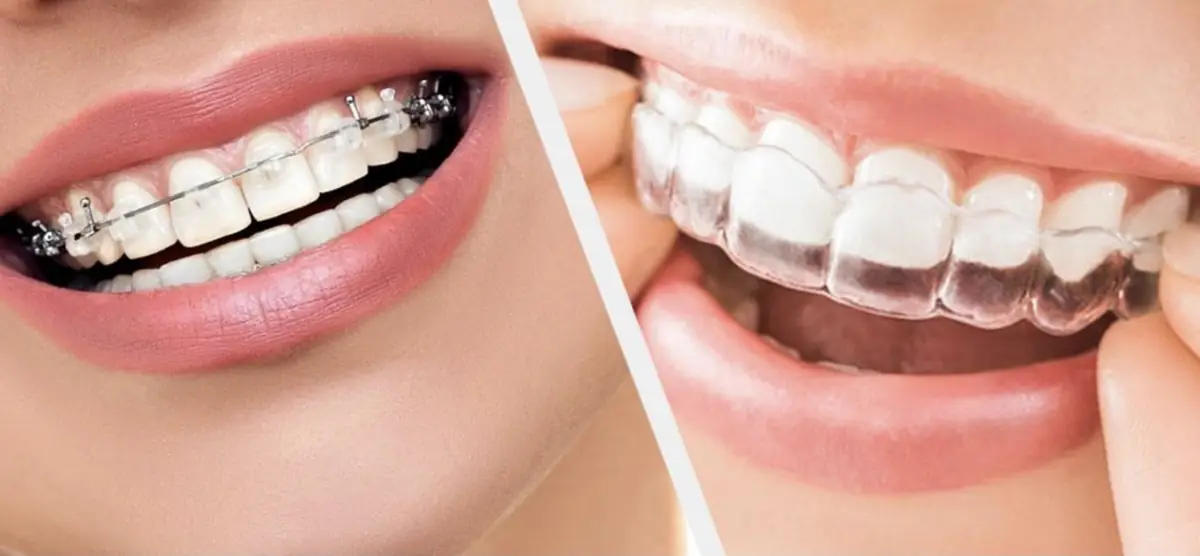
Invisalign vs Braces at a Glance
Before going into detail, here is a side-by-side view of the two most common ways to straighten teeth. Treat the figures as typical ranges rather than guarantees, because every mouth is different and only a clinical assessment can confirm what applies to you.
| Feature | Invisalign (Clear Aligners) | Traditional Braces |
|---|---|---|
| Material | Series of custom-made, removable clear plastic trays | Metal or ceramic brackets bonded to teeth, joined by an archwire |
| Visibility | Nearly invisible | Visible; ceramic options are tooth-coloured but still noticeable |
| Removability | Removable; worn 20-22 hours a day | Fixed; cannot be removed by the patient |
| Treatment time | Roughly 6-18 months for most cases | Roughly 12-30 months depending on complexity |
| Comfort | Smooth plastic; pressure with each new tray | Brackets and wires can irritate cheeks and lips; soreness after adjustments |
| Cost range (market) | Often quoted around AED 8,000-18,000 in Dubai market listings | Often quoted around AED 5,000-12,000 in Dubai market listings |
| Best for | Mild to moderate crowding or spacing, disciplined adults and teens | Complex bite problems, severe crowding, patients who prefer a fixed solution |
Cost ranges are market figures reported by Dubai dental providers and are not DCDC prices. Contact DCDC for a personalised quote after your assessment.
How Invisalign Works
Invisalign is a clear aligner system. After a digital scan of your teeth, a treatment plan is created that maps the gradual movement of each tooth from its current position to the planned final position. A series of custom-made, transparent plastic trays is then produced, and each tray is designed to move your teeth a small amount.
- Custom trays — every set is manufactured from your own scan, so it fits your teeth precisely.
- Changing trays — you typically switch to a new tray every one to two weeks, as advised by your dentist.
- Wear time — aligners work only when worn, so about 20-22 hours a day is the usual recommendation.
- Attachments — small tooth-coloured bumps may be bonded to some teeth to help the aligners grip and perform specific movements.
- Removable — you take the trays out to eat, drink anything other than water, brush and floss.
Because the trays come out, eating and cleaning are simpler than with a fixed appliance. The trade-off is responsibility: results depend on how consistently you wear them. For a deeper look at pricing and timelines, see our guide to Invisalign in Dubai: cost, timeline and results.
How Traditional Braces Work
Traditional braces use small brackets bonded to the front surface of each tooth. A thin archwire runs through the brackets and applies steady, controlled pressure. At regular adjustment visits the wire is changed or tightened, and the teeth shift gradually into position. Because the appliance is fixed in place, it works 24 hours a day without relying on patient compliance.
Metal and Ceramic Options
- Metal brackets — durable, usually the most affordable, and effective for a wide range of cases.
- Ceramic brackets — tooth-coloured or clear, less noticeable than metal, though they can cost more and the elastic ties may stain. Read our guide to ceramic braces in Dubai for a full comparison with metal.
- Elastics and auxiliaries — small rubber bands, springs or other components may be added to correct bite relationships.
Adjustment appointments are typically scheduled every 4-8 weeks. Between visits, patients need to avoid sticky or very hard foods that can damage brackets and wires, and take extra care with brushing and flossing around the hardware.
Pros and Cons of Each Option
Neither approach is universally better. The right choice depends on your tooth position, bite, lifestyle and expectations.
Invisalign Advantages and Limitations
Advantages
- Nearly invisible, which suits professionals and anyone conscious of appearance during treatment
- Removable for meals, brushing, flossing and special occasions
- Smooth plastic with no wires or brackets to irritate the cheeks
- Digital planning lets you preview the planned tooth movement before starting
- Fewer urgent appointments for broken wires or loose brackets
Limitations
- Requires strong self-discipline; forgetting to wear the trays slows or stalls progress
- May not be suitable for severe crowding, large bite discrepancies or some rotated teeth
- Trays must be removed for eating and drinking anything except water, and cleaned regularly
- Can be more expensive than metal braces in some cases
- Attachments and extra refinements may be needed for certain movements
Traditional Braces Advantages and Limitations
Advantages
- Effective for a very wide range of cases, including complex bite corrections
- Work continuously, since they cannot be taken out
- Often the more affordable option, especially with metal brackets
- No compliance risk from forgotten or lost trays
- Ceramic versions offer a more discreet look
Limitations
- More visible, particularly with metal brackets
- Food restrictions and more demanding cleaning routines
- Possible irritation or sores from brackets and wires, especially in the first weeks
- Plaque build-up around the hardware raises the risk of white spot marks if hygiene is poor
- Occasional unplanned visits for loose brackets or poking wires
Which Cases Suit Each Treatment?
Case complexity is usually the deciding factor. The table below gives a general guide only; your dentist will confirm the best option after examining your teeth, bite and X-rays.
| Case Type | Invisalign | Traditional Braces |
|---|---|---|
| Mild crowding or small gaps | Usually suitable | Suitable |
| Minor relapse after earlier treatment | Often a good fit | Suitable |
| Moderate crowding | Often suitable with careful planning | Suitable |
| Mild to moderate overbite or underbite | May be suitable | Suitable; may offer more control |
| Severe crowding or large gaps | Sometimes limited | Often preferred |
| Severely rotated or tilted teeth | Can be challenging | Often preferred |
| Significant jaw or bite discrepancy (severe malocclusion) | Usually not enough alone | Often preferred; may need additional procedures |
| Patients who struggle to wear trays consistently | Less suitable | Often preferred |
Orthodontic research suggests clear aligners handle some movements, such as rotating rounded teeth or closing large gaps, less predictably than fixed appliances. That is why a clinical examination matters more than any general rule.
Treatment Timeline Comparison
Duration varies with the starting position of your teeth, how closely you follow instructions and how your body responds. The ranges below are typical figures, not promises.
| Stage | Invisalign | Traditional Braces |
|---|---|---|
| Assessment and planning | 1-2 visits, digital scan | 1-2 visits, impressions or scan plus X-rays |
| Active treatment (mild cases) | About 6-12 months | About 12-18 months |
| Active treatment (moderate cases) | About 12-18 months | About 18-24 months |
| Active treatment (complex cases) | Case dependent; refinements often needed | About 24-30 months |
| Check-ups | About every 4-6 weeks | About every 4-8 weeks |
| Retention afterwards | Retainers, often worn nightly long term | Retainers, often worn nightly long term |
Whichever option you choose, the retention phase is essential. Without retainers, teeth can drift back toward their original positions.
Cost Comparison in Dubai
Prices differ widely between clinics because of case complexity, materials, the number of refinements and what is bundled in, such as retainers and follow-up visits. The figures below are market ranges commonly quoted by Dubai providers and published price guides, and they are included only to help you set expectations.
| Option | Typical Market Range in Dubai (AED) | What Affects the Price |
|---|---|---|
| Metal braces | About 5,000-10,000 | Case complexity, duration, retainers |
| Ceramic braces | About 6,000-12,000 | Bracket material, duration |
| Clear aligners (Invisalign) | About 8,000-18,000 | Number of aligners, refinements, attachments |
These are not DCDC prices. DCDC does not publish fixed orthodontic fees because the right plan and cost depend on your assessment, so please contact DCDC for a personalised quote. For a broader look at aligner pricing, see our Invisalign cost guide. If you are weighing a cosmetic route instead, our overview of dental veneers cost in Dubai explains how veneers differ from tooth movement.
Ask any provider what is included: scans and X-rays, refinement aligners, retainers, emergency visits and follow-up appointments. A lower headline price can become higher once extras are added.
What to Expect at DCDC
At Doctors Clinic Diagnostic Center (DCDC) in Dubai Healthcare City, an orthodontic assessment follows a clear, patient-friendly path.
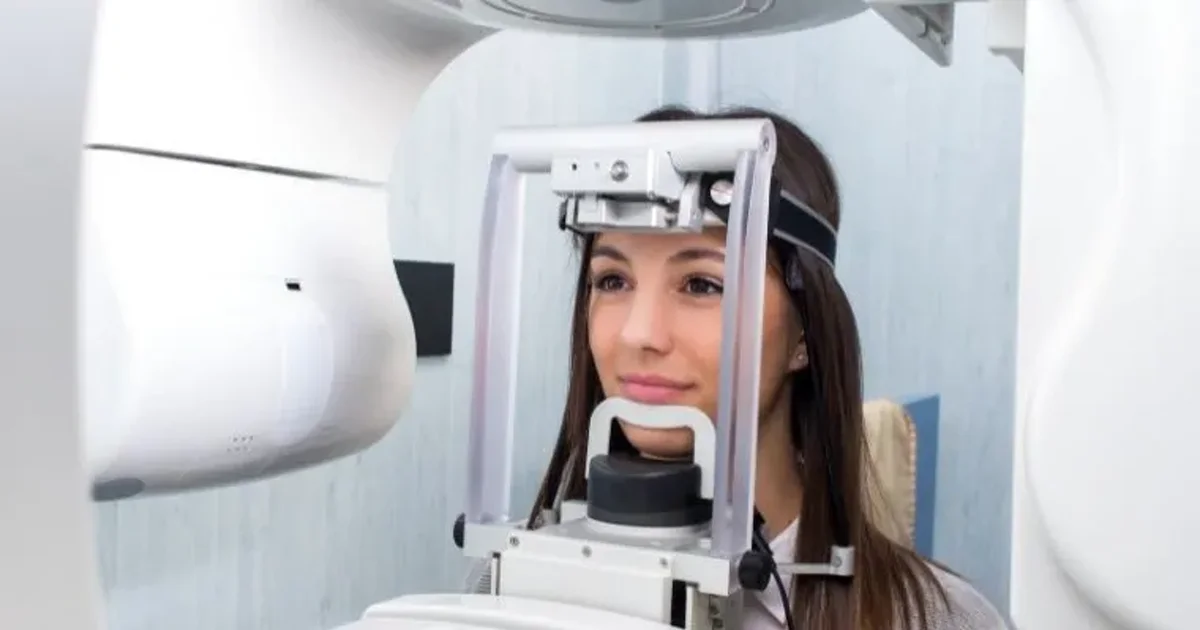
- Initial consultation with digital imaging — your dentist examines your teeth, gums and bite, and uses digital imaging including OPG (panoramic X-ray) and CBCT (3D scan) where needed to see roots, bone and jaw structure.
- Treatment plan discussion — you review whether clear aligners or traditional braces are the better recommendation for your case, with the reasons, expected duration and what is involved.
- Digital scans for Invisalign — if aligners suit you, a digital scan replaces messy impression trays.
- Regular check-ups every 4-6 weeks — progress is monitored, new trays are issued or wires adjusted, and any concerns are addressed.
- A team of 6+ dental specialists — broader dental needs such as fillings, gum care or cosmetic work can be coordinated in one place.
- Convenient access — free parking, a location in Building 64, Block A, Al Razi Medical Complex, DHCC, and extended hours (Saturday to Thursday 8 AM-10 PM, Friday 9 AM-9 PM).
- Direct insurance billing — DCDC works with 20+ insurance partners; coverage for orthodontics varies by plan, so check your policy and ask the team.
DCDC holds a 4.8/5 Google rating and a 98% patient satisfaction score. Healthy gums and teeth are the foundation of any orthodontic plan, and professional dental cleaning (from AED 200, with oral cancer screening included) helps keep teeth healthy before and during treatment.
How to Decide: A Quick Guide
Ask yourself these questions. Your answers will not replace a clinical opinion, but they will help you have a more focused conversation with your dentist.
- How complex is my case? If you have mild to moderate crowding or spacing, aligners are often worth considering. If you have a significant bite problem, expect your dentist to lean toward fixed appliances.
- Will I wear removable trays for 20-22 hours a day? If yes, aligners are realistic. If you know you will forget or lose them, fixed braces remove that risk.
- How important is appearance during treatment? If very important, aligners or ceramic brackets are the most discreet options.
- How do I feel about food restrictions? If you want to eat freely, removable aligners are easier. Fixed braces mean avoiding sticky and hard foods.
- What is my budget and timeline? Compare full quotes, including retainers and follow-up visits, and ask how long your specific plan is expected to take.
- Do I have an event or deadline? Tell your dentist. It can influence the plan, although safe tooth movement should never be rushed.
- Do I have other dental needs? Cavities, gum disease or planned cosmetic work may need to be addressed first, as in a Hollywood Smile plan.
If your answers lean toward discretion, convenience and discipline, aligners are likely a strong candidate. If they lean toward complexity, simplicity and no reliance on compliance, braces may be the better fit. A professional assessment settles the question.
Not Sure Which Option Is Right for You? Book an Assessment
Visit DCDC in Dubai Healthcare City for a consultation with digital imaging and a clear recommendation between clear aligners and traditional braces. Contact DCDC for a personalised quote.
Call 04 243 4429 or WhatsApp +971 50 970 3884 to book
Related Services at DCDC
Expert care and advanced diagnostics at Dubai Healthcare City
Frequently Asked Questions
Final Thoughts
Choosing between clear aligners and traditional braces comes down to the complexity of your case, your lifestyle and how you feel about visibility, removability and cost. Aligners offer discretion and flexibility for suitable cases, while braces remain a dependable choice for complex corrections and for patients who prefer a fixed solution. Both can deliver a healthy, well-aligned smile when planned properly and followed by consistent retainer wear.
At DCDC in Dubai Healthcare City, our team of 6+ dental specialists uses digital imaging and scans to recommend the option that fits your teeth, not a one-size-fits-all approach. With free parking, extended hours and direct insurance billing where applicable, getting started is easy. Contact DCDC on WhatsApp at +971 50 970 3884 for a personalised quote, or learn more about Invisalign at DCDC.
Sources & References
This article references the following sources:
- American Dental Association (ADA) — MouthHealthy: Braces
- American Association of Orthodontists (AAO)
- Rossini G, et al. Efficacy of clear aligners in controlling orthodontic tooth movement: a systematic review. Angle Orthodontist, 2015
- Papadimitriou A, et al. Clinical effectiveness of Invisalign orthodontic treatment: a systematic review. Progress in Orthodontics, 2018
- PubMed — Clear aligners versus fixed appliances: treatment duration research
- British Orthodontic Society — Patient Guide to Braces
This information is educational and does not replace individual medical advice. See our editorial policy for more information.

Written by
Dr. Chadi El Masry
Cosmetic & Restorative Dentistry
DDS
Dr. Chadi El Masry is a Cosmetic and Restorative Dentistry specialist at Doctors Clinic Diagnostic Center (DCDC) in Dubai Healthcare City.
Related Articles
Invisalign Dubai: Cost, Timeline & Results
Ceramic Braces Dubai: Cost & vs Metal
Dental Veneers Cost Dubai: From AED 500
Hollywood Smile Dubai: Cost & Veneer Guide
Dental Cleaning Dubai: Scaling & Polishing
More in Dental

Gum Recession Dubai: Causes & Treatment (2026)
Read MoreDiabetes and Dental Health Dubai: Guide (2026)
Read More
Wisdom Tooth Extraction Cost Dubai (2026)
Read MoreTeeth Cleaning Dubai: Scaling & Polishing From AED 200
Read More
Dental Crown Cost Dubai: Zirconia & E-max AED 1,000
Read More
Teeth Whitening Dubai: Zoom & Laser Price From AED 699
Read More© 2026 Doctors Clinic Diagnostic Center (DCDC), Dubai Healthcare City. Originally published at https://doctorsclinicdubai.ae/blog/invisalign-vs-braces-dubai-guide. All rights reserved. Unauthorized reproduction is prohibited.