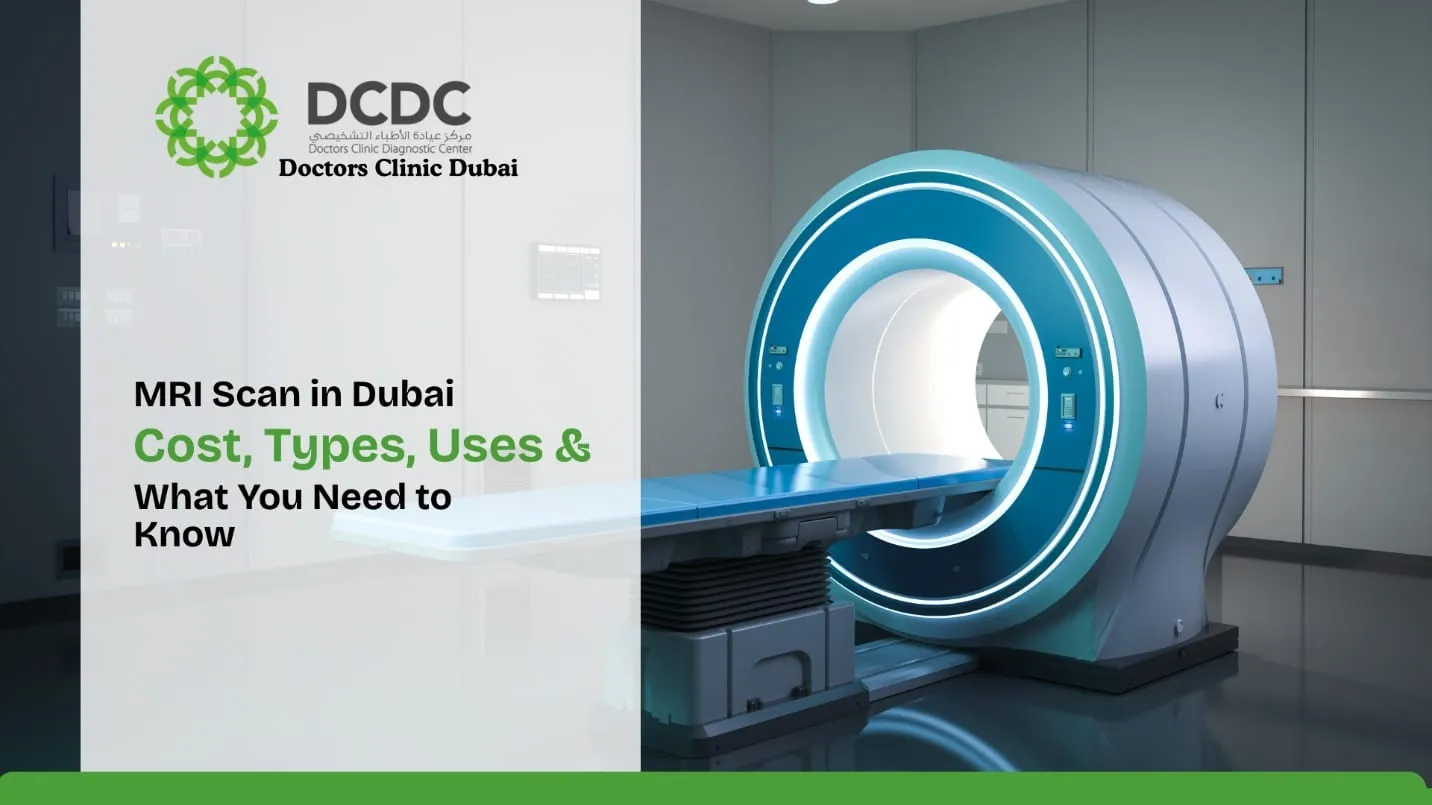
Key Takeaways
- X-Rays are best for bones and fractures; MRI excels at soft tissues like ligaments and organs
- X-Rays take 5-10 minutes and cost from AED 200; MRI takes 20-60 minutes from AED 900
- X-Rays use low-dose radiation; MRI uses magnetic fields with zero radiation
- Your doctor recommends the scan based on the suspected condition, not patient preference
- DCDC offers both digital X-ray and Siemens 1.5T wide-bore MRI under one roof
- Results from subspecialty radiologists within 18-24 hours at DCDC
Should you get an MRI or an X-ray? It is one of the most common questions patients ask when a doctor orders imaging. The short answer: it depends on what your doctor is looking for. X-rays are fast and affordable for bones, while MRIs provide detailed soft-tissue images without radiation. At DCDC in Dubai Healthcare City, both scans are available under one roof with subspecialty radiologist interpretation, digital X-ray from AED 200 and MRI from AED 900. This guide compares MRI and X-ray on every factor that matters, so you and your doctor can choose the right scan for your situation.
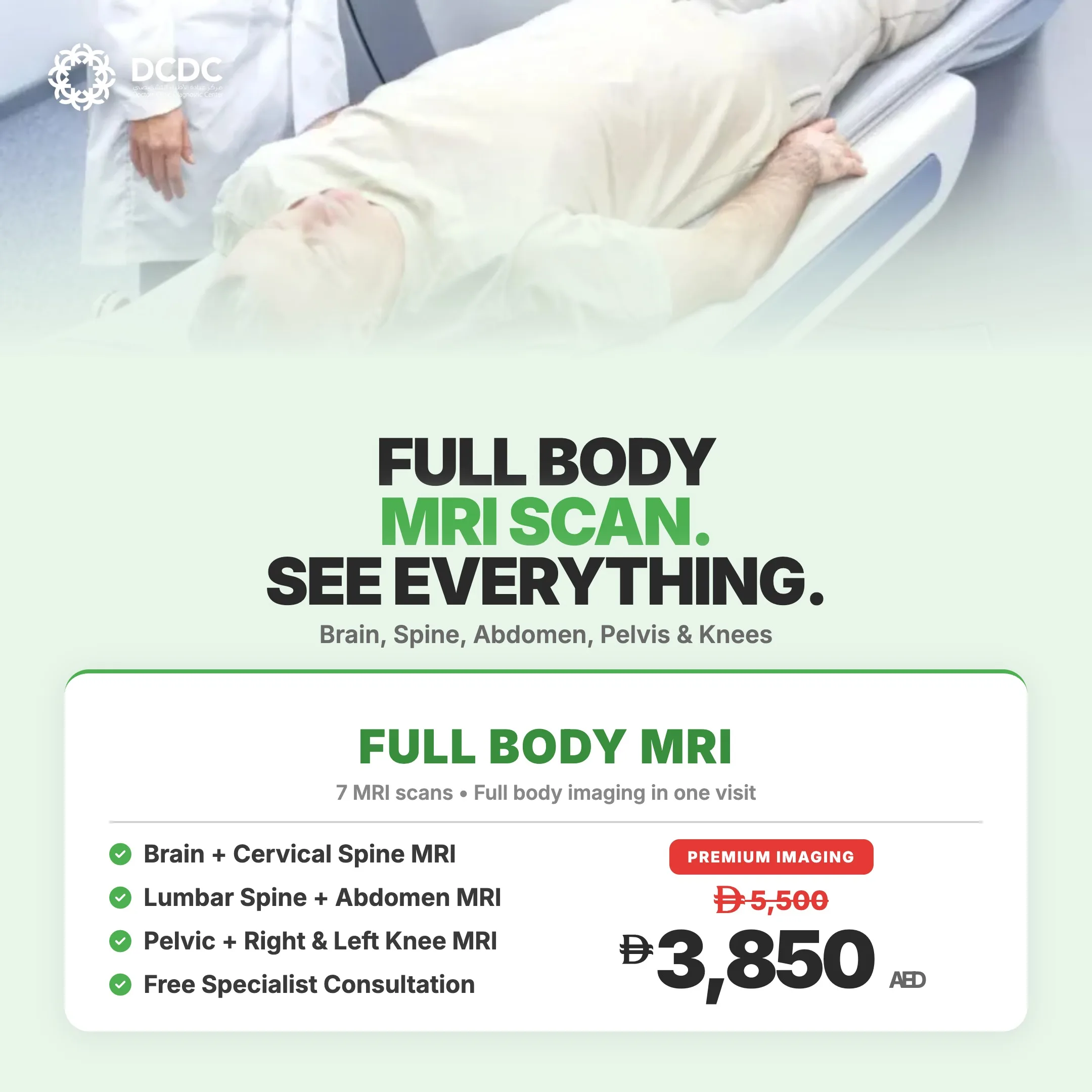


MRI vs X-Ray: Quick Comparison Table
Before diving into the details, here is a side-by-side overview of the two most common imaging modalities. This table covers the key factors patients in Dubai ask about most often.
| Feature | X-Ray | MRI |
|---|---|---|
| Technology | Ionizing radiation (low dose) | Magnetic fields + radio waves (zero radiation) |
| Best for | Bones, fractures, chest, dental | Soft tissues: brain, spine, joints, organs |
| Scan duration | 5-10 minutes | 20-60 minutes |
| Patient comfort | Stand or lie briefly, painless | Lie still inside scanner; may feel enclosed |
| Radiation exposure | Yes (very low dose) | None |
| Contrast agent | Rarely needed | Sometimes (gadolinium-based) |
| Cost at DCDC | From AED 200 | From AED 900 |
| Market price range in Dubai | AED 150-500 | AED 900-5,000+ |
| Results turnaround | 18-24 hours (same-day urgent) | 18-24 hours (same-day urgent) |
| Safe in pregnancy | Generally avoided (low risk) | Yes (no radiation); avoid contrast in first trimester |
| Metal implants | Usually safe | Some implants are MRI-incompatible; screening required |
MRI vs X-Ray comparison at a glance. Prices reflect DCDC Dubai Healthcare City 2026 rates.
What Is an MRI Scan?
MRI (Magnetic Resonance Imaging) uses a powerful magnetic field and radiofrequency pulses to create highly detailed cross-sectional images of the body. Unlike X-rays or CT scans, MRI does not use any ionizing radiation, making it one of the safest advanced imaging tools available.
An MRI scanner contains a large superconducting magnet. When you lie inside it, the magnetic field temporarily aligns hydrogen atoms in your body. Radiofrequency pulses then disturb this alignment, and as the atoms return to their resting state, they emit signals that a computer converts into detailed images. Different tissues emit different signals, which is why MRI is exceptionally good at distinguishing between soft-tissue structures.
What MRI Is Best For
- Brain and spinal cord: Detecting tumors, strokes, multiple sclerosis, and spinal disc herniations
- Joints and ligaments: ACL tears, meniscus injuries, rotator cuff damage, and cartilage assessment
- Abdominal organs: Liver, kidney, and pelvic organ evaluation
- Cardiac imaging: Heart muscle structure and function without catheterization
- Breast imaging: Supplemental screening for high-risk patients alongside mammography
- Vascular assessment: MR angiography for blood vessel abnormalities without iodinated contrast
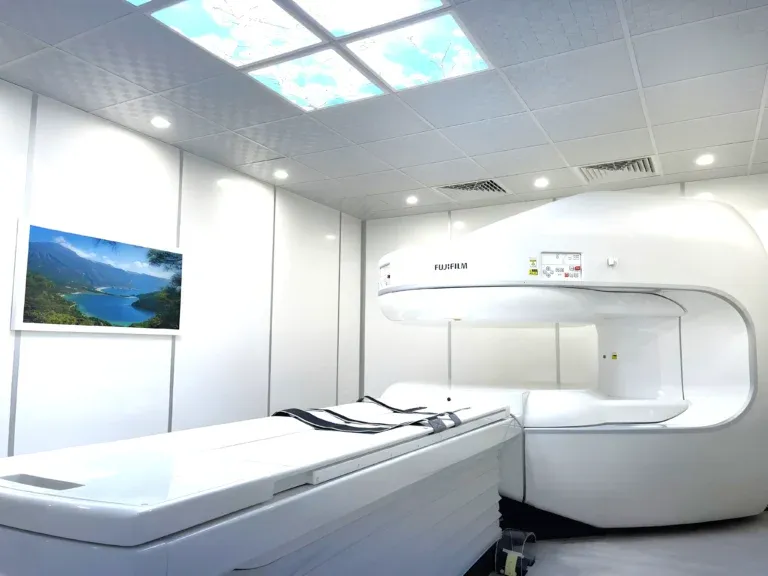
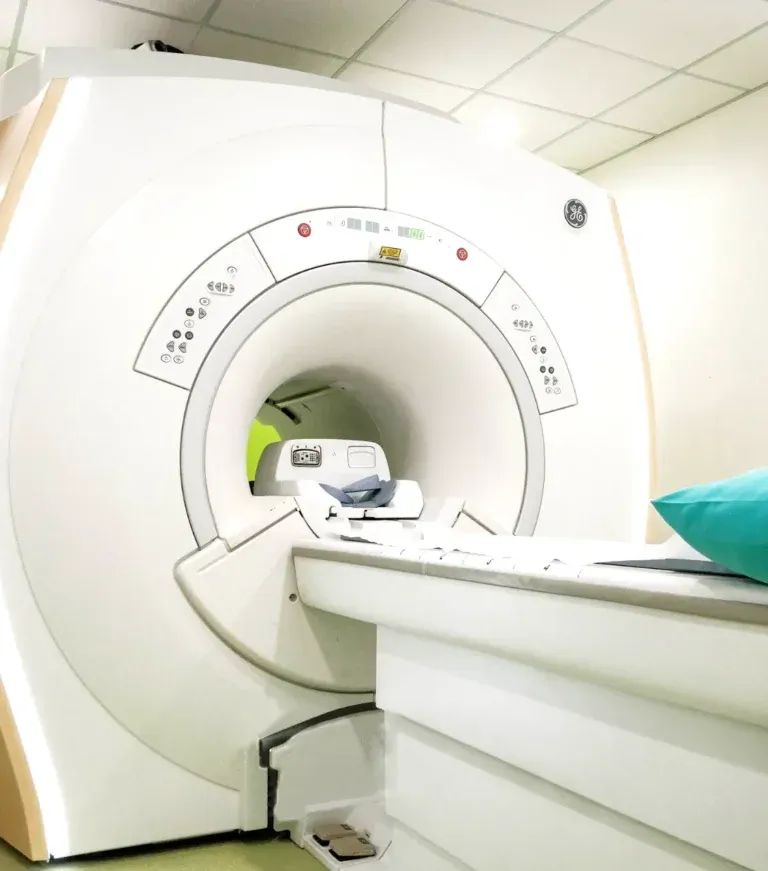
At DCDC, MRI scans are performed on a Siemens 1.5T wide-bore scanner with a 70 cm opening, which is 10 cm wider than standard scanners. This wider bore significantly reduces claustrophobia and accommodates larger patients more comfortably. An open MRI option is also available for patients who experience severe anxiety in enclosed spaces.
What Is an X-Ray?
X-ray (radiography) is the oldest and most widely available medical imaging technique. It works by passing a small, controlled dose of ionizing radiation through the body. Dense structures like bones absorb more radiation and appear white on the image, while softer tissues allow more radiation through and appear in shades of grey.
A standard X-ray takes only seconds to capture and produces a two-dimensional image. It is usually the first imaging test ordered because it is fast, affordable, and highly effective at revealing bone-related problems. Modern digital X-ray systems, like the ones used at DCDC, deliver significantly lower radiation doses than older film-based equipment while producing sharper images.
What X-Ray Is Best For
- Fractures and dislocations: The gold standard for detecting broken bones
- Chest conditions: Pneumonia, lung infections, heart enlargement, and pleural effusion
- Dental assessment: Tooth decay, jaw alignment, and root canal evaluation
- Arthritis: Joint space narrowing, bone spurs, and degenerative changes
- Foreign bodies: Swallowed objects or embedded metal fragments
- Spinal alignment: Scoliosis screening and vertebral positioning
For a detailed look at chest X-ray pricing and what the scan involves, see our Chest X-Ray Cost Dubai guide.
MRI vs X-Ray: Key Differences Explained
While both MRI and X-ray are imaging tools, they work in fundamentally different ways and serve different clinical purposes. Understanding these differences helps you appreciate why your doctor chooses one over the other.
1. Technology and Radiation
The most significant difference is radiation. X-rays use ionizing radiation, though at very low doses. A single chest X-ray exposes you to roughly the same amount of background radiation you receive naturally over about 2.5 days. MRI, on the other hand, uses no radiation whatsoever. It relies entirely on magnetic fields and radio waves, which is why it is considered safe for repeated scanning and is preferred during pregnancy when imaging is essential.
2. Image Detail and Soft Tissue Contrast
X-rays excel at showing dense structures like bone because they create high contrast between bone and surrounding soft tissue. However, X-rays cannot effectively differentiate between different types of soft tissue. MRI is the opposite: its strength lies in extraordinary soft-tissue contrast. It can distinguish between muscle, fat, cartilage, tendons, nerves, and fluid, making it indispensable for diagnosing conditions that X-rays simply cannot see.
3. Scan Duration and Patient Experience
An X-ray is one of the fastest medical tests available. Most exams take between 5 and 10 minutes, including positioning. MRI scans take considerably longer, typically 20 to 60 minutes depending on the body part being scanned and whether contrast is needed. During an MRI, patients must lie still inside the scanner, and the machine produces loud tapping and buzzing sounds. DCDC provides headphones and allows patients to listen to music during the scan.
4. Cost
X-rays are among the most affordable diagnostic tests. At DCDC, digital X-rays start from AED 200, while the Dubai market range is AED 150 to 500 depending on the body part and facility. MRI is a premium imaging modality. At DCDC, MRI scans start from AED 900, with market prices across Dubai ranging from AED 900 to AED 5,000+ depending on the body region, contrast requirements, and facility.
When Do You Need an MRI Instead of an X-Ray?
Your doctor will recommend an MRI over an X-ray when the clinical question involves soft tissues, internal organs, or conditions that X-rays cannot adequately visualize. Common scenarios include:
- Persistent joint pain with a normal X-ray: If your knee or shoulder X-ray looks normal but pain persists, an MRI can reveal ligament tears, cartilage damage, or bone marrow edema that are invisible on X-ray
- Suspected spinal disc herniation: X-rays show the bones of the spine but cannot visualize the discs themselves. MRI is the definitive test for herniated, bulging, or degenerative discs pressing on nerves
- Neurological symptoms: Headaches, vision changes, numbness, or weakness may require a brain MRI to rule out tumors, strokes, or demyelinating diseases
- Sports injuries: ACL tears, meniscus damage, rotator cuff injuries, and muscle strains are best assessed with MRI
- Abdominal and pelvic organ evaluation: When ultrasound is inconclusive, MRI provides detailed organ assessment without radiation
- Cancer staging and monitoring: MRI helps determine tumor size, spread, and response to treatment
For a comprehensive overview of MRI scans in Dubai, including preparation tips and what to expect, read our Complete Guide to MRI Scan in Dubai.
When Is an X-Ray Sufficient?
An X-ray is often the right first step, and in many cases, it is the only imaging test you need. Not every condition requires the detail of an MRI, and ordering advanced imaging when a simple X-ray will provide the answer adds unnecessary cost and wait time.
X-Ray Is Usually Sufficient When:
- You have a suspected fracture: X-ray is the fastest and most accurate way to confirm a broken bone
- Your doctor needs a chest assessment: Chest X-rays effectively detect pneumonia, fluid around the lungs, heart enlargement, and lung masses
- You have joint pain with suspected arthritis: X-rays clearly show joint space narrowing, bone spurs, and calcification, which are hallmarks of osteoarthritis
- Your child swallowed an object: X-rays quickly locate metallic or dense foreign bodies
- Scoliosis assessment: Full-spine X-rays are the standard screening tool for spinal curvature
- Pre-operative clearance: Chest X-rays are often part of routine surgical preparation
If your doctor determines that an X-ray alone does not explain your symptoms, they may then order an MRI or CT scan as a follow-up. This stepwise approach is standard medical practice and helps avoid unnecessary expense.
Wondering how CT scans fit into the picture? Our CT vs MRI Comparison guide explains when each modality is preferred.
MRI vs X-Ray Cost in Dubai
Cost is a major consideration for patients, especially those paying out of pocket. The table below compares typical pricing for common X-ray and MRI exams in Dubai.
| Scan Type | DCDC Price | Dubai Market Range |
|---|---|---|
| Standard X-Ray (single view) | From AED 200 | AED 150-300 |
| Chest X-Ray | From AED 200 | AED 150-350 |
| Spine X-Ray | From AED 200 | AED 200-500 |
| MRI Single Region (e.g., knee, brain) | From AED 900 | AED 900-2,500 |
| MRI with Contrast | From AED 1,200 | AED 1,200-3,500 |
| MRI Multiple Regions | From AED 1,500 | AED 1,500-5,000+ |
| CT Scan (for reference) | From AED 600 | AED 600-3,000 |
Imaging costs at DCDC vs general Dubai market, 2026. DCDC accepts 20+ insurance partners with direct billing.
DCDC partners with more than 20 insurance providers and offers direct billing, so patients do not need to pay out of pocket and claim reimbursement later. If your insurance plan covers diagnostic imaging, the radiology team can verify your coverage before your appointment.
Need an X-Ray or MRI? Book at DCDC
Digital X-ray from AED 200, MRI from AED 900. Subspecialty radiologist interpretation, results within 18-24 hours. View MRI service details.
DCDC Dubai Healthcare City | Building 64, Block A | Open until 10 PM
MRI and X-Ray Safety Compared
Both MRI and X-ray are considered safe medical procedures when used appropriately and under clinical guidance. However, each has specific safety considerations that patients should understand.
X-Ray Safety
X-rays involve exposure to ionizing radiation. The dose from a single diagnostic X-ray is extremely low. For example, a chest X-ray delivers approximately 0.02 mSv, which is less than the background radiation you receive from natural sources over 2.5 days. Modern digital X-ray systems, including those at DCDC, use even lower doses than older film-based equipment. According to the WHO, the diagnostic benefits of medically indicated X-rays far outweigh the minimal radiation risk. However, X-rays are generally avoided during pregnancy unless absolutely necessary, and radiographers always use lead shielding to protect areas not being imaged.
MRI Safety
MRI does not use radiation, which makes it inherently safe from a radiation standpoint. However, the strong magnetic field creates its own set of safety requirements. The most important consideration is metal. Patients with certain metallic implants, such as older pacemakers, cochlear implants, or metal fragments in the eyes, may not be able to undergo MRI. Before every MRI at DCDC, patients complete a detailed safety screening questionnaire. The radiology team verifies implant compatibility using manufacturer databases. DCDC's Siemens 1.5T wide-bore scanner is compatible with many modern MRI-conditional implants.
MRI contrast agents (gadolinium-based) are generally well-tolerated but are used cautiously in patients with severe kidney disease. They are also typically avoided during the first trimester of pregnancy. For a deeper look at MRI safety, see our MRI Safety: Myths vs Facts guide.
What to Expect at DCDC
Whether you are coming in for a quick X-ray or a detailed MRI, DCDC provides a streamlined patient experience at its MOHAP-licensed facility in Dubai Healthcare City. Here is what each journey looks like.
Your X-Ray Visit
- Registration and insurance verification: Bring your doctor's referral letter, Emirates ID, and insurance card. The front desk verifies your coverage with one of DCDC's 20+ insurance partners
- Preparation: You may be asked to change into a gown and remove jewellery or metal objects from the area being imaged. No fasting or special preparation is required for X-rays
- The scan: The radiographer positions you in front of the digital X-ray detector. You hold still for a few seconds while the image is captured. Most X-rays require 1-3 views and the entire process takes 5-10 minutes
- After the scan: You can leave immediately. There are no restrictions on driving, eating, or activities
- Results: A subspecialty radiologist interprets your images. Reports are typically available within 18-24 hours, or same-day for urgent cases. You can access your images and reports digitally through the DCDC patient portal
Your MRI Visit
- Safety screening: You complete a detailed metal safety questionnaire. The MRI team reviews your medical history and any implants to ensure scanner compatibility
- Preparation: Remove all metal items including watches, belts, jewellery, and bank cards. Change into a gown if needed. If contrast is required, an IV line is placed beforehand
- The scan: You lie on a padded table that slides into the Siemens 1.5T wide-bore scanner. The 70 cm opening provides more space than standard 60 cm bore scanners, which helps reduce claustrophobia. You are given headphones and can listen to music. The scan takes 20-60 minutes depending on the body area. The machine makes loud tapping sounds, which is completely normal
- Open MRI alternative: For patients with severe claustrophobia or anxiety, DCDC offers an open MRI option. Discuss this with the radiology team when booking
- After the scan: You can resume normal activities immediately. If contrast was used, drink extra water to help flush it from your system
- Results: Your scan is interpreted by a subspecialty radiologist. Brain MRIs are read by neuroradiologists, and joint MRIs by musculoskeletal (MSK) radiologists. Reports are delivered within 18-24 hours and accessible via the patient portal
DCDC is located in Building 64, Block A, Dubai Healthcare City, with free parking and evening hours until 10 PM. The facility holds a 4.8/5 Google rating from 1,000+ reviews with 98% patient satisfaction.
Planning an MRI and want to know how to prepare? Read our MRI Preparation Guide for step-by-step instructions.
Which Scan Does Your Doctor Recommend?
The decision between MRI and X-ray is always a clinical one. Your doctor considers the suspected diagnosis, your symptoms, and which imaging modality will provide the most useful information. The table below shows common clinical scenarios and the typical first-choice scan.
| Clinical Scenario | First-Choice Scan | Why |
|---|---|---|
| Suspected fracture after a fall | X-Ray | Fast, accurate, and cost-effective for bone breaks |
| Persistent knee pain after sports injury | MRI | Reveals ligament (ACL/MCL) and meniscus tears invisible on X-ray |
| Chronic lower back pain with leg numbness | MRI | Shows disc herniations, nerve compression, and spinal stenosis |
| Cough and fever (suspected pneumonia) | X-Ray (Chest) | Detects lung infections, fluid, and consolidation |
| Headache with neurological symptoms | MRI (Brain) | Best for brain tumors, strokes, MS, and aneurysms |
| Shoulder pain after injury | X-Ray first, then MRI if needed | X-ray rules out fracture; MRI assesses rotator cuff and labrum |
| Abdominal pain, inconclusive ultrasound | MRI (Abdominal) | Detailed organ imaging without radiation |
| Arthritis monitoring | X-Ray | Tracks joint space narrowing and bone changes over time |
| Breast cancer screening (high risk) | MRI (Breast) | Higher sensitivity than mammography alone in dense breast tissue |
| Wrist pain after a fall | X-Ray | Quick fracture detection; MRI only if occult fracture suspected |
Body-part decision matrix: which scan your doctor is likely to recommend based on your symptoms.
A Radiologist's Perspective on Scan Selection
Dr. Osama Elzamzami, MD, FRCR, Diagnostic Radiologist at DCDC, explains: "One of the advantages patients may not realize is that subspecialty interpretation makes a real difference in diagnostic accuracy. At DCDC, we do not have a single radiologist reading every type of scan. Brain MRIs are reviewed by neuroradiologists, joint MRIs by musculoskeletal specialists, and cardiac imaging by cardiovascular radiologists. This subspecialty approach means each scan is read by a physician with focused training in that specific body system, which improves the detection of subtle findings that a generalist might miss. Whether you need a simple chest X-ray or a complex multi-sequence MRI, your images are in the hands of a specialist."
Book Your Scan at DCDC Dubai Healthcare City
Whether your doctor has recommended an X-ray or an MRI, DCDC offers both under one roof with subspecialty radiologist reporting, digital image access, and insurance direct billing. Our facility features a Siemens 1.5T wide-bore MRI scanner, digital X-ray with minimal radiation, and results within 18-24 hours.
- Location: Building 64, Block A, Dubai Healthcare City
- Hours: Open until 10 PM, including evenings
- Parking: Free parking available
- Insurance: 20+ partners with direct billing
- Rating: 4.8/5 from 1,000+ Google reviews
- Licensing: MOHAP Licensed
Book Your X-Ray or MRI at DCDC
Same-day appointments available. Digital X-ray from AED 200, MRI from AED 900. Subspecialty radiologist interpretation with results within 18-24 hours.
Call, WhatsApp, or book online. DCDC Dubai Healthcare City — open until 10 PM.
Related Services at DCDC
Expert care and advanced diagnostics at Dubai Healthcare City
Frequently Asked Questions
Final Thoughts
MRI and X-ray are not competing technologies. They are complementary imaging tools that answer different clinical questions. X-rays are fast, affordable, and ideal for bones and fractures. MRI is detailed, radiation-free, and essential for soft-tissue evaluation. The right scan is always the one that your doctor determines will best explain your symptoms and guide your treatment.
At DCDC in Dubai Healthcare City, both digital X-ray and MRI are available under one roof. What sets DCDC apart is subspecialty radiologist interpretation: your brain MRI is read by a neuroradiologist, your knee MRI by an MSK radiologist, and your chest X-ray by a radiologist trained in thoracic imaging. This approach improves diagnostic accuracy and ensures subtle findings are not overlooked.
If your doctor has recommended imaging, or if you have symptoms that may require a scan, contact DCDC to schedule your appointment. With direct insurance billing, free parking, evening hours until 10 PM, and results within 18-24 hours, the process is designed to be straightforward and efficient.
Sources & References
This article was reviewed by our medical team and references the following sources:
- NHS - X-ray Overview
- Mayo Clinic - MRI Overview
- Cleveland Clinic - X-ray vs MRI
- WHO - Ionizing Radiation and Health Effects
- Radiological Society of North America - MRI Safety
Medical content on this site is reviewed by DHA-licensed physicians. See our editorial policy for more information.

Written by
Dr. Osama Elzamzami
Diagnostic Radiology
MD, FRCR
Dr. Osama Elzamzami is a Diagnostic Radiologist at Doctors Clinic Diagnostic Center (DCDC) in Dubai Healthcare City.
Related Articles
MRI Cost Dubai: Complete Price Guide
CT Scan vs MRI: Which Do You Need?

Chest X-Ray Cost Dubai: From AED 150
1.5T vs 3T vs Open MRI: Which Is Best?
MRI Safety: 10 Myths vs Facts
More in Diagnostic Imaging
CT Scan Cost Dubai: Prices & Types (2026)
Read More
DEXA Scan Dubai: Cost, T-Score & Who Needs It (2026)
Read More![Full Body MRI Cost Dubai: AED 5,000-15,000 [2026]](/wp-media/blog/full-body-mri-scan.webp)
Full Body MRI Cost Dubai: AED 5,000-15,000 [2026]
Read MoreMRI Preparation Dubai: Complete Guide (2026)
Read More
CBCT Scan: 3D Dental Imaging Guide Dubai (2026)
Read More
Ultrasound Preparation Dubai: What to Expect (2026)
Read More© 2026 Doctors Clinic Diagnostic Center (DCDC), Dubai Healthcare City. Originally published at https://doctorsclinicdubai.ae/blog/mri-vs-xray-dubai. All rights reserved. Unauthorized reproduction is prohibited.