मुख्य बातें
- X-ray scans at DCDC start from AED 200, with digital radiography that delivers lower radiation doses than traditional film-based equipment.
- Most X-ray exams take just 5 to 15 minutes, and results are typically available within 18 to 24 hours (same-day for urgent cases).
- Every X-ray at DCDC is interpreted by a subspecialty radiologist — MSK specialists read bone and joint images, chest radiologists read chest films — reducing the risk of missed findings.
- X-rays are the first-line imaging test for fractures, chest infections, joint pain, and foreign body detection. Your doctor may recommend a CT or MRI for more complex cases.
- No special preparation is needed for most X-rays. You simply remove metal objects and jewellery from the area being scanned.
- DCDC accepts walk-ins and same-day appointments with 20+ insurance partners offering direct billing, so you can get an X-ray without financial delays.
An X-ray scan is the most widely used diagnostic imaging tool in medicine, providing rapid and affordable insight into bones, the chest, and certain soft-tissue conditions. Whether you have a suspected fracture after a sports injury, persistent chest symptoms, or chronic joint pain, an X-ray is often the essential first step in reaching the right diagnosis. At Doctors Clinic Diagnostic Center (DCDC) in Dubai Healthcare City, digital X-ray scans start from AED 200, with subspecialty radiologist interpretation and results available within 18 to 24 hours.
This guide covers everything you need to know about getting an X-ray in Dubai — from how the technology works and which body parts can be imaged, to preparation steps, costs by region, insurance coverage, and radiation safety. We also explain how DCDC's subspecialty reading model and digital equipment set a higher standard of care.



What Is an X-Ray Scan and How Does It Work?
An X-ray (radiograph) uses a controlled beam of electromagnetic radiation to create images of structures inside the body. Dense tissues like bone absorb more radiation and appear white on the image, while air-filled structures such as the lungs appear dark. Soft tissues like muscle and fat appear in shades of grey. This contrast allows radiologists to identify fractures, infections, tumours, and foreign objects in seconds.
Modern digital radiography — the technology used at DCDC — captures images on an electronic detector rather than photographic film. Digital X-rays offer three important advantages: lower radiation dose (up to 80% less than older film-based systems), immediate image availability (no developing time), and the ability to digitally enhance contrast and zoom into areas of concern. Your images are stored securely on DCDC's patient portal for convenient access by you and your referring physician.
The entire process is painless and non-invasive. A radiographer positions you against the detector plate, the X-ray tube fires for a fraction of a second, and the image appears on screen almost instantly. Most examinations require two or more views — for example, a chest X-ray typically includes a frontal (PA) view and a lateral view — to give the radiologist a three-dimensional understanding of the anatomy.
Types of X-Ray Scans Available in Dubai
X-rays can image virtually any part of the skeleton and several organ systems. Below is an overview of the most commonly requested X-ray examinations at DCDC, along with what each one evaluates.
Chest X-Ray
The chest X-ray is the single most frequently performed radiological examination worldwide. It evaluates the lungs, heart silhouette, mediastinum, ribs, and diaphragm. Physicians order chest X-rays for cough lasting more than two weeks, shortness of breath, chest pain, suspected pneumonia, tuberculosis screening, and pre-operative clearance. At DCDC, every chest X-ray is read by a chest-subspecialty radiologist who is trained to detect subtle early findings such as small pleural effusions or widened mediastinal contours.
Spine X-Ray
A spine X-ray images the cervical (neck), thoracic (mid-back), or lumbar (lower back) vertebrae to evaluate alignment, disc space narrowing, degenerative changes, compression fractures, and scoliosis. It is typically the first imaging study ordered for acute back or neck pain, especially after trauma.
Knee X-Ray
A knee X-ray is essential for evaluating joint space narrowing (a hallmark of osteoarthritis), fractures of the patella, femoral condyles, or tibial plateau, and loose bodies within the joint. Weight-bearing views provide additional information about cartilage loss that may not be visible when the knee is non-weight-bearing.
Shoulder X-Ray
A shoulder X-ray helps diagnose dislocations, fractures of the humerus or clavicle, acromioclavicular joint separation, and calcific tendinitis. While soft-tissue injuries like rotator cuff tears require MRI, the X-ray remains the first step to exclude bony pathology.
Hand and Wrist X-Ray
A hand and wrist X-ray is indicated for suspected scaphoid fractures (a common wrist injury from falls), metacarpal fractures, rheumatoid arthritis joint changes, and bone age assessment in children. Scaphoid fractures are notoriously difficult to detect on initial X-rays, which is why follow-up imaging or MRI may be recommended if clinical suspicion remains high.
Ankle and Foot X-Ray
An ankle and foot X-ray evaluates fractures, stress fractures, arthritis, and alignment issues such as flat feet or hallux valgus (bunion). The Ottawa Ankle Rules — a validated clinical decision tool — help determine whether an X-ray is needed after an ankle injury, avoiding unnecessary imaging.
Additional X-Ray Types
- Pelvis X-ray: Evaluates hip joints, sacroiliac joints, and pelvic fractures. Essential after falls in elderly patients and for monitoring hip arthritis.
- Hip X-ray: Focuses on the femoral head, neck, and acetabulum. Key for diagnosing fractures, avascular necrosis, and osteoarthritis grading.
- Abdomen X-ray: Detects bowel obstruction patterns, kidney stones (radiopaque), free air under the diaphragm (indicating perforation), and constipation.
- Neck (cervical spine) X-ray: Assesses cervical vertebral alignment, degenerative disc disease, and soft-tissue swelling after trauma.
When Do You Need an X-Ray Scan?
X-rays are the first-line imaging modality for a wide range of clinical scenarios. Your doctor may refer you for an X-ray if you experience any of the following:
- Suspected fracture or dislocation: After a fall, sports injury, or trauma, an X-ray can confirm or rule out a bone break within minutes.
- Persistent joint pain or swelling: X-rays reveal joint space narrowing, bone spurs, and erosions that indicate arthritis or degenerative disease.
- Chronic cough or respiratory symptoms: A chest X-ray is essential for detecting pneumonia, tuberculosis, pleural effusion, and lung masses.
- Back or neck pain: Spinal X-rays assess vertebral alignment, disc space height, and compression fractures.
- Pre-operative assessment: Many surgeries in Dubai require a chest X-ray as part of pre-anaesthesia clearance.
- Foreign body detection: Swallowed objects (especially in children) or retained foreign bodies can be localised with an X-ray.
- Dental and jaw evaluation: Panoramic (OPG) and cephalometric X-rays are used for orthodontic planning and TMJ assessment.
- Follow-up monitoring: Post-surgical hardware checks, fracture healing progress, and treatment response monitoring.
If you have experienced a bone fracture, an X-ray is almost always the first investigation. For persistent issues involving soft tissue — such as ligament tears, disc herniations, or internal organ pathology — your doctor may recommend advancing to CT or MRI after the initial X-ray.
X-Ray vs CT vs MRI: Which Imaging Test Do You Need?
One of the most common questions patients ask is whether they need an X-ray, a CT scan, or an MRI. Each modality has distinct strengths. The table below provides a practical comparison to help you understand when each test is most appropriate.
| Feature | X-Ray | CT Scan | MRI |
|---|---|---|---|
| Best for | Bones, fractures, chest | Complex fractures, internal organs, cancer staging | Soft tissue, brain, spine, joints |
| Scan time | 5–15 minutes | 10–30 minutes | 30–60 minutes |
| Radiation | Very low dose | Moderate dose | None (uses magnetic fields) |
| Cost range (AED) | From 200 | From 800 | From 1,200 |
| Image detail | 2D projection | 3D cross-sectional slices | Highest soft-tissue contrast |
| Contrast agent | Rarely needed | Often used (iodine-based) | Sometimes used (gadolinium) |
| Claustrophobia risk | None (open setup) | Minimal (fast scan) | Higher (enclosed bore) |
| Availability | Immediate, walk-in | Same-day at DCDC | Appointment recommended |
Comparison of X-ray, CT, and MRI imaging modalities at DCDC.
In general, X-rays are the fastest, most affordable, and most widely available imaging test. If an X-ray raises questions that require more detail, your radiologist will recommend the next appropriate step. For a detailed comparison of cross-sectional imaging options, read our guide on MRI vs X-ray: which do you need.
How to Prepare for Your X-Ray Scan
X-rays are among the simplest imaging tests to prepare for. Unlike CT or MRI, most X-ray examinations require no fasting, no contrast injection, and no medication changes. Here is what you should know before your appointment at DCDC:
- Remove metal objects: Jewellery, watches, belt buckles, hairpins, and piercings in the area being scanned can obscure the image. You will be asked to remove them or change into a gown.
- Wear comfortable clothing: Avoid clothing with metal zips, buttons, or underwire bras for chest X-rays. Loose cotton clothing without metal is ideal.
- Inform the radiographer about pregnancy: If you are pregnant or suspect you might be, always inform the team before the scan. Alternative imaging or lead shielding may be used to protect the foetus.
- Bring your referral: If your doctor has provided a referral letter or request form, bring it along. Walk-ins are welcome at DCDC, but a referral helps the radiologist tailor the examination to your clinical question.
- Bring previous imaging: If you have prior X-rays, CT scans, or MRI reports from another facility, bring them for comparison. This helps the radiologist identify interval changes.
- No fasting required: You can eat and drink normally before most X-rays. The only exception is certain abdominal studies where your doctor may request specific bowel preparation.
What to Expect During Your X-Ray at DCDC
Getting an X-ray at Doctors Clinic Diagnostic Center is designed to be quick, comfortable, and efficient. Here is the step-by-step patient journey:
- Step 1 — Arrival and registration: Park in DCDC's free dedicated on-site parking at Building 64, Block A, Al Razi Medical Complex in Dubai Healthcare City. Check in at reception with your Emirates ID or passport. The average wait time is just 15 minutes.
- Step 2 — Insurance verification: If you have insurance with one of DCDC's 20+ direct-billing partners (including Daman, AXA, Bupa, MetLife, and Cigna), the reception team processes your claim on the spot. No upfront payment is needed for covered services.
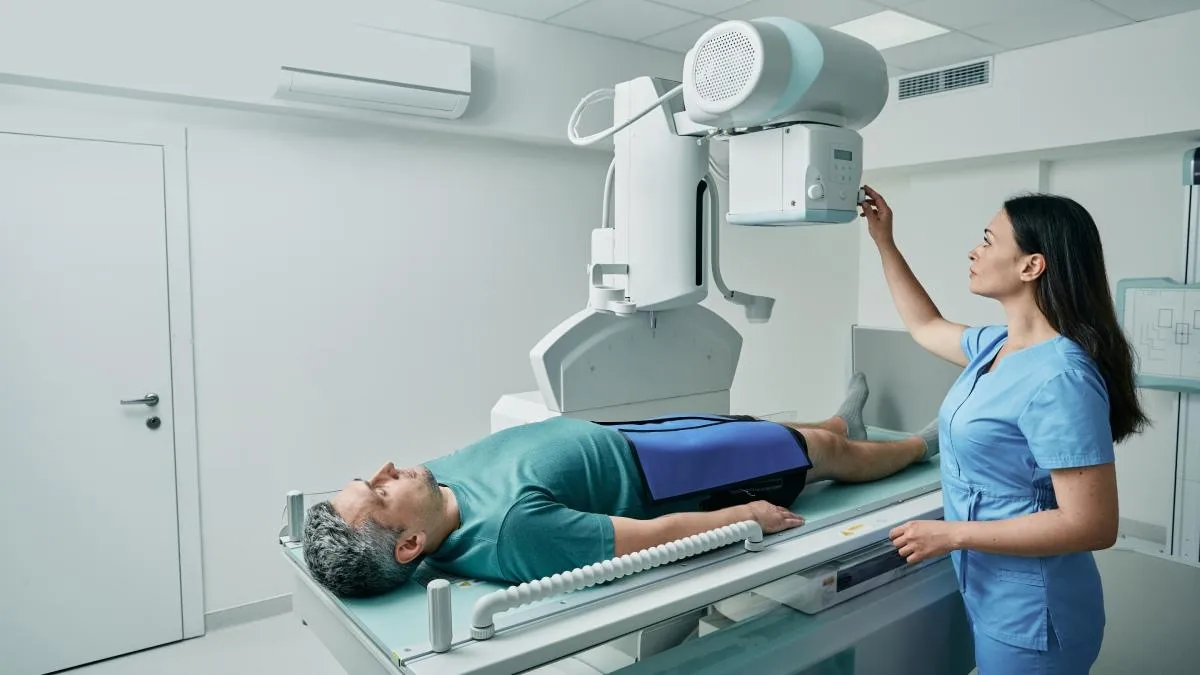
- Step 3 — Preparation: A radiographer escorts you to the X-ray room, confirms the body part to be imaged, and asks you to remove any metal objects from the area. You may be given a lead apron to shield body parts not being scanned.
- Step 4 — The scan: You will be positioned standing, sitting, or lying down depending on the examination. The radiographer aligns the X-ray tube and detector, asks you to hold still (and sometimes hold your breath for chest X-rays), and captures the images. The entire process takes 5 to 15 minutes.
- Step 5 — Subspecialty radiologist interpretation: Your images are reviewed by a subspecialty radiologist. MSK (musculoskeletal) specialists interpret bone and joint X-rays, while chest radiologists read chest films. This targeted expertise reduces the chance of missed or misinterpreted findings.
- Step 6 — Results delivery: Reports are typically available within 18 to 24 hours. For urgent or critical findings, same-day reporting is available. You can access your images and report digitally through DCDC's patient portal.
DCDC is open Saturday through Thursday from 8 AM to 10 PM and Friday from 9 AM to 9 PM. Walk-ins are welcome, and same-day appointments are available — making it easy to get an X-ray without long waits. The clinic holds a 4.8/5 Google rating from over 1,000 verified reviews, with a 98% patient satisfaction rate.
Book Your X-Ray at DCDC
Walk-in or book a same-day appointment at Doctors Clinic Diagnostic Center in Dubai Healthcare City. Digital X-ray scans from AED 200, with subspecialty radiologist interpretation and results within 18–24 hours.
The DCDC Advantage: Subspecialty Radiologist Reads
Not all X-ray interpretations are equal. At many clinics, a single general radiologist reads every type of scan — from chest to spine to paediatric. At DCDC, we follow a subspecialty reading model that mirrors academic medical centres.
"An X-ray is only as good as the radiologist who reads it," explains Dr. Osama Elzamzami (MD, FRCR), Diagnostic Radiologist at DCDC. "A subtle non-displaced fracture, an early pneumothorax, or a small lytic lesion can be invisible to the untrained eye. Subspecialty training allows us to pick up findings that others might miss — and that early detection can change a patient's treatment outcome entirely."
This approach means that when you get a knee X-ray at DCDC, it is read by a musculoskeletal radiologist who reviews hundreds of joint images each month. When you get a chest X-ray, a chest-subspecialty radiologist examines it with the pattern recognition that comes from focused training and high-volume practice. This level of expertise is a key reason DCDC maintains a 98% patient satisfaction rate and is trusted by referring physicians across Dubai.
Understanding Your X-Ray Results
After your X-ray at DCDC, the subspecialty radiologist produces a detailed report that is sent to your referring physician and made available through the patient portal. Here is how to understand the common terminology you may encounter:
- Normal / No acute abnormality: The X-ray shows no fracture, mass, infection, or other significant finding. This is the most common result.
- Fracture: A break in the bone. The report will describe the location, type (transverse, oblique, spiral, comminuted), displacement, and whether the fracture involves a joint surface.
- Degenerative changes / Osteoarthritis: Joint space narrowing, osteophytes (bone spurs), and subchondral sclerosis indicate wear-and-tear arthritis.
- Consolidation / Infiltrate: In chest X-rays, this indicates an area of the lung that is filled with fluid or inflammatory material, suggestive of pneumonia.
- Cardiomegaly: Enlargement of the heart silhouette, which may indicate heart failure, valve disease, or pericardial effusion. Further evaluation with an echocardiogram is typically recommended.
- Soft tissue swelling: Swelling around a bone or joint may indicate inflammation, infection, or an underlying fracture even when the bone appears intact.
- Further imaging recommended: The radiologist may suggest a CT or MRI if the X-ray findings are inconclusive or if a soft-tissue injury is suspected.
If your X-ray reveals an abnormality, DCDC's team can coordinate follow-up imaging — such as a MRI scan or CT — as well as referrals to orthopaedic surgeons, pulmonologists, or other specialists within the same facility.
X-Ray Scan Cost in Dubai: Pricing by Body Part
X-ray pricing in Dubai varies based on the body part, the number of views required, and whether the facility uses digital or film-based equipment. At DCDC, all X-ray scans use digital radiography and include subspecialty radiologist interpretation. Below is a pricing overview:
| X-Ray Type | DCDC Price (AED) | Typical Dubai Range (AED) |
|---|---|---|
| Chest X-ray (PA and lateral) | From 250 | 200 – 500 |
| Lumbar spine X-ray | From 300 | 250 – 600 |
| Cervical spine X-ray | From 250 | 200 – 500 |
| Knee X-ray (both views) | From 250 | 200 – 500 |
| Shoulder X-ray | From 250 | 200 – 500 |
| Hand / Wrist X-ray | From 200 | 150 – 400 |
| Ankle / Foot X-ray | From 200 | 150 – 400 |
| Pelvis X-ray | From 250 | 200 – 500 |
| Hip X-ray | From 250 | 200 – 500 |
| Abdomen X-ray | From 250 | 200 – 500 |
| Full spine series (all regions) | From 500 | 400 – 1,000 |
Prices at DCDC include the radiologist report and digital image access. Prices are indicative; contact DCDC for current rates.
At DCDC, X-ray scans start from AED 200. This includes the use of digital radiography equipment, subspecialty radiologist interpretation, and digital access to your images via the patient portal. For a detailed breakdown of chest imaging costs, see our chest X-ray cost guide.
Insurance Coverage for X-Ray Scans in Dubai
X-ray scans are covered by virtually all health insurance plans in the UAE when ordered by a licensed physician for a medically justified reason. At DCDC, the insurance process is straightforward:
- 20+ direct-billing partners: DCDC works with major insurers including Daman, AXA, Bupa, MetLife, and Cigna. If your plan is on the direct-billing list, you pay nothing upfront — the claim is processed at reception.
- Co-pay or deductible: Depending on your plan, you may have a small co-pay (typically AED 0 to AED 50) for diagnostic imaging. Check your policy schedule of benefits.
- Pre-authorisation: Most X-rays do not require pre-authorisation because they are considered basic diagnostic procedures. However, some plans may require authorisation for multiple-region X-ray series.
- Self-pay option: If you do not have insurance or prefer not to use it, DCDC offers competitive self-pay rates starting from AED 200. Payment can be made by cash, card, or Apple Pay.
- DHA basic plan: The mandatory Dubai Health Authority (DHA) basic health insurance plan covers medically necessary diagnostic imaging including X-rays at approved facilities.
DCDC's reception team can verify your insurance coverage in real time before your scan, so there are no financial surprises. The clinic is MOHAP-licensed, which is a requirement for insurance claim processing in the UAE.
X-Ray Radiation Safety: What Patients Should Know
Radiation safety is a common concern for patients considering an X-ray. Here are the facts that every patient in Dubai should understand:
A standard chest X-ray delivers approximately 0.02 millisieverts (mSv) of radiation — the equivalent of about 2.5 days of natural background radiation from the environment. A limb X-ray (hand, wrist, ankle) delivers even less, at roughly 0.001 to 0.01 mSv. To put this in perspective, the average person receives approximately 2.4 mSv per year from natural sources such as cosmic rays and radon gas.
DCDC's digital radiography equipment further reduces radiation exposure compared to older film-based systems. Digital detectors are more sensitive and require a lower dose to produce a diagnostic-quality image. Additionally, DCDC radiographers follow the ALARA principle (As Low As Reasonably Achievable), using collimation to limit the X-ray beam to only the area of interest and providing lead shielding for adjacent body parts when appropriate.
- Pregnancy: X-rays of the extremities (hands, feet, knees) carry minimal risk to the foetus. Abdominal and pelvic X-rays are generally avoided unless absolutely necessary, and lead shielding is used when possible.
- Children: Paediatric imaging protocols at DCDC use reduced doses calibrated for the child's size and weight. The benefits of a medically indicated X-ray far outweigh the minuscule radiation risk.
- Repeated X-rays: If you require multiple X-rays over time (for example, to monitor fracture healing), the cumulative dose from plain radiography remains extremely low compared to CT scanning.
- Breastfeeding: X-rays do not affect breast milk. You can safely breastfeed immediately after an X-ray examination.
X-Ray Limitations: When You May Need a CT or MRI Instead
While X-rays are an excellent first-line tool, they have inherent limitations. Understanding these helps set realistic expectations and explains why your doctor may recommend advanced imaging after a normal or inconclusive X-ray.
- Soft tissue injuries: X-rays cannot visualise ligaments, tendons, cartilage, or muscles in detail. Conditions like ACL tears, rotator cuff injuries, and disc herniations require MRI for definitive diagnosis.
- Stress fractures: Hairline stress fractures may not be visible on X-ray for 10 to 14 days after injury onset. If clinical suspicion is high and the X-ray is normal, MRI is the preferred follow-up.
- Internal organ detail: While a chest X-ray can detect pneumonia or a lung mass, CT provides far superior detail for staging cancer, evaluating pulmonary embolism, and characterising complex chest pathology.
- Spinal cord and nerve compression: X-rays show bony alignment but cannot visualise the spinal cord, nerve roots, or disc herniations. MRI is essential for evaluating symptoms like sciatica, arm numbness, or myelopathy.
- Early arthritis: X-rays may appear normal in the early stages of inflammatory arthritis (such as rheumatoid arthritis) because bone erosions take time to develop. MRI can detect synovitis and bone marrow oedema months before X-ray changes appear.
At DCDC, your subspecialty radiologist will clearly state in the report if further imaging is recommended. Because DCDC offers X-ray, CT, and MRI under one roof, advancing to the next investigation is seamless — often available on the same day.
Common X-Ray Conditions by Body Part
To help you understand what your X-ray might reveal, here is an overview of the most common findings by body region:
Chest X-Ray Findings
- Pneumonia: Appears as a white consolidation in the lung fields. The pattern (lobar, bronchopneumonia, interstitial) helps determine the likely causative organism.
- Pleural effusion: Fluid collection at the base of the lung, seen as a white-out of the costophrenic angle.
- Cardiomegaly: Heart shadow exceeding 50% of the thoracic diameter on a PA film.
- Lung nodule or mass: A round opacity that may require CT follow-up for further characterisation.
Musculoskeletal X-Ray Findings
- Fractures: Visible as a break in the cortical bone line. Displaced fractures are obvious; non-displaced fractures may require careful scrutiny.
- Osteoarthritis: Joint space narrowing, osteophytes, and subchondral cysts — most commonly seen in the knee, hip, and hand joints.
- Osteoporosis: Generalised decrease in bone density. DEXA (DXA) scanning is more accurate for osteoporosis quantification, but X-rays often raise the initial suspicion. For more information, read our guide on osteoporosis screening and treatment.
- Dislocations: Abnormal position of a bone relative to its joint partner, most commonly seen in the shoulder and finger joints.
Spinal X-Ray Findings
- Degenerative disc disease: Narrowing of the disc space with adjacent osteophytes.
- Spondylolisthesis: Forward slippage of one vertebra over another, best seen on lateral views.
- Compression fracture: Wedge-shaped vertebral body deformity, common in osteoporotic patients after minimal trauma.
- Scoliosis: Lateral curvature of the spine measured by the Cobb angle on a standing full-spine X-ray.
If your X-ray suggests a spinal condition requiring further evaluation, DCDC can arrange a same-day back pain consultation with an orthopaedic or neurosurgical specialist.
Need an X-Ray? Visit DCDC Today
Get a digital X-ray from AED 200 at DCDC in Dubai Healthcare City. Walk-ins welcome, 20+ insurance partners with direct billing, subspecialty radiologist reads, and results within 18–24 hours. Open Sat–Thu 8 AM–10 PM, Fri 9 AM–9 PM.
Free dedicated on-site parking available.
X-Ray for Sports Injuries in Dubai
Dubai's active lifestyle — from padel and football to running and CrossFit — means sports injuries are a common reason for X-ray referrals. X-rays are the first step in evaluating acute injuries such as fractures, dislocations, and stress reactions. They are essential for ruling out bony injury before recommending physiotherapy or advanced imaging.
Common sports-related X-ray indications include ankle fractures after a twisting injury (the Ottawa Ankle Rules guide whether an X-ray is needed), wrist fractures from falls during cycling or skateboarding, stress fractures of the metatarsals in runners, and shoulder dislocations in contact sports. If you have suffered an ankle sprain or shoulder injury, an X-ray at DCDC can provide rapid answers.
DCDC's walk-in X-ray service is particularly valuable for acute sports injuries. There is no need to wait for an appointment — simply arrive during clinic hours, and you can typically have your X-ray completed and results available on the same day for urgent cases.
Frequently Asked Questions About X-Ray Scans in Dubai
DCDC में संबंधित सेवाएं
दुबई हेल्थकेयर सिटी में विशेषज्ञ देखभाल और उन्नत निदान
अक्सर पूछे जाने वाले प्रश्न
Final Thoughts
An X-ray remains the most accessible, fastest, and most cost-effective diagnostic imaging tool available. Whether you need to rule out a fracture after a fall, investigate persistent chest symptoms, or monitor a chronic joint condition, an X-ray provides essential clinical information that guides your treatment plan. For the vast majority of bone and chest-related concerns, it is the right starting point — and when more detail is needed, your radiologist will guide you to the appropriate next step.
At Doctors Clinic Diagnostic Center (DCDC) in Dubai Healthcare City, every X-ray is performed with state-of-the-art digital equipment and interpreted by a subspecialty radiologist — ensuring accurate, reliable results you can trust. With walk-in availability, same-day appointments, 20+ insurance partners with direct billing, and pricing from AED 200, DCDC makes diagnostic imaging straightforward and affordable. Contact us today or visit Building 64, Block A, Al Razi Medical Complex, DHCC to book your X-ray.
स्रोत एवं संदर्भ
यह लेख हमारी चिकित्सा टीम द्वारा समीक्षित है और निम्नलिखित स्रोतों का संदर्भ देता है:
- World Health Organization — Communicating Radiation Risks in Paediatric Imaging
- American College of Radiology — ACR Appropriateness Criteria
- Radiological Society of North America (RSNA) — RadiologyInfo: X-ray (Radiography)
- National Health Service (NHS) — X-ray Overview
- European Society of Radiology — EuroSafe Imaging Campaign
- Stiell IG et al. — Ottawa Ankle Rules (BMJ 1995)
इस साइट पर चिकित्सा सामग्री DHA-लाइसेंस प्राप्त चिकित्सकों द्वारा समीक्षित है। हमारी देखें संपादकीय नीति अधिक जानकारी के लिए।

लेखक
Dr. Osama Elzamzami
Diagnostic Radiology
MD, FRCR
डॉ. ओसामा एलज़ामज़ामी Doctors Clinic Diagnostic Center (DCDC) में रेडियोलॉजिस्ट हैं।
Related Articles

Chest X-Ray Cost Dubai: From AED 250
MRI vs X-Ray Dubai: Which Do You Need?
CT vs MRI Comparison
Bone Fracture Treatment Dubai
Complete Guide to MRI Scan in Dubai
और अधिक Diagnostic Imaging में
CT Scan Cost Dubai: Prices & Types (2026)
और पढ़ें
DEXA Scan Dubai: Cost, T-Score & Who Needs It (2026)
और पढ़ें![Full Body MRI Cost Dubai: AED 5,000-15,000 [2026]](/wp-media/blog/full-body-mri-scan.webp)
Full Body MRI Cost Dubai: AED 5,000-15,000 [2026]
और पढ़ें
MRI Preparation Dubai: Complete Guide (2026)
और पढ़ें
CBCT Scan: 3D Dental Imaging Guide Dubai (2026)
और पढ़ें
Ultrasound Preparation Dubai: What to Expect (2026)
और पढ़ें© 2026 Doctors Clinic Diagnostic Center (DCDC), Dubai Healthcare City. Originally published at https://doctorsclinicdubai.ae/blog/xray-scan-guide-dubai. All rights reserved. Unauthorized reproduction is prohibited.