मुख्य बातें
- 1.5T MRI is the global workhorse scanner, producing excellent image quality suitable for 80-90% of clinical MRI studies
- 3T MRI provides higher resolution and faster scans, most beneficial for brain, musculoskeletal, breast, and prostate imaging
- Open MRI eliminates claustrophobia and accommodates larger patients, but image quality is lower than closed-bore systems
- For most routine scans (spine, knee, shoulder), 1.5T produces clinically equivalent results to 3T at lower cost
- 3T is louder, more sensitive to metal artifacts, and not suitable for all implants, so it is not always the best choice
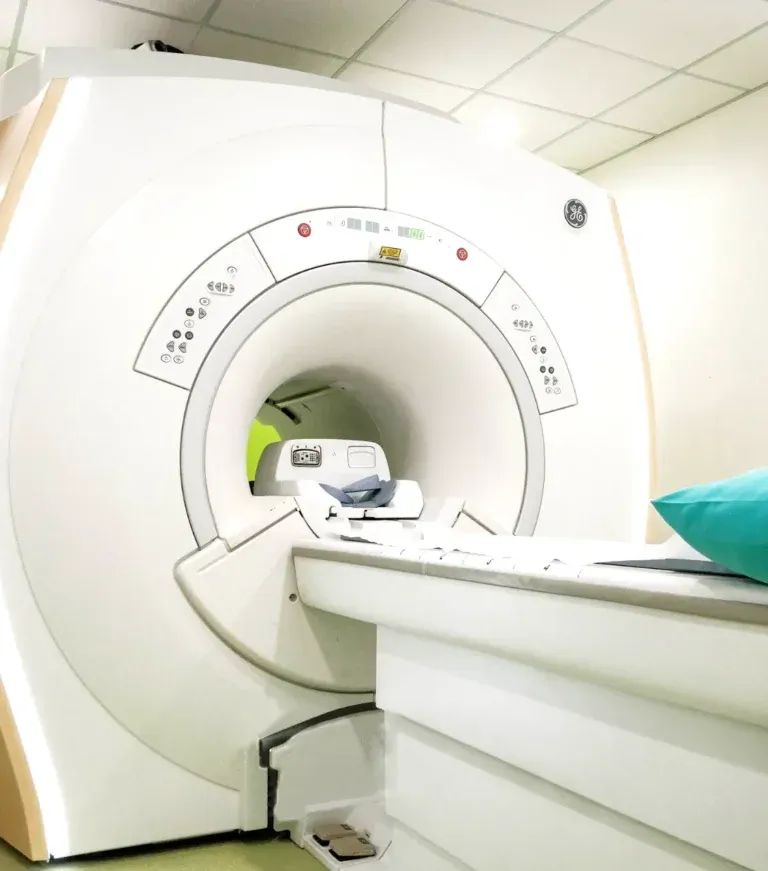
Not all MRI machines are created equal. The "Tesla" rating (T) refers to the strength of the magnetic field, which directly affects image quality, scan speed, and patient experience. When your doctor orders an MRI scan, you may have the option of choosing between a 1.5T closed-bore, 3T closed-bore, or open MRI system. Understanding the practical differences between these scanner types helps you make an informed decision that balances image quality, comfort, and cost.
This guide compares the three main types of MRI scanners available in Dubai, explains when higher field strength actually matters for your specific scan, addresses claustrophobia and patient comfort considerations, and provides cost comparisons to help you choose the best option for your clinical needs and personal preferences.


Understanding MRI Field Strength: What Does Tesla Mean?
Tesla (T) is the unit measuring the strength of a magnetic field. The stronger the magnetic field, the more signal the MRI scanner can capture from hydrogen atoms in your body, which translates to potentially higher image resolution and faster scan times.
To put this in perspective, Earth's natural magnetic field is approximately 0.00005 Tesla. A 1.5T MRI scanner generates a magnetic field 30,000 times stronger than Earth's, while a 3T scanner is 60,000 times stronger. Open MRI systems typically operate at 0.2T to 1.2T, meaning they produce a weaker signal but offer significantly greater patient comfort.
Comprehensive Comparison: 1.5T vs 3T vs Open MRI
| Feature | 1.5T Closed-Bore | 3T Closed-Bore | Open MRI (0.2-1.2T) |
|---|---|---|---|
| Field strength | 1.5 Tesla | 3.0 Tesla | 0.2 - 1.2 Tesla |
| Image quality | Excellent - clinical standard | Superior - higher resolution | Good - adequate for many studies |
| Signal-to-noise ratio (SNR) | Standard baseline | Up to 2x higher than 1.5T | Lower than closed-bore systems |
| Scan time | 30-60 minutes typical | 20-40 minutes (faster sequences) | 40-75 minutes (slower acquisition) |
| Bore (tunnel) diameter | 60-70 cm (enclosed) | 60-70 cm (enclosed) | Open on sides - no tunnel |
| Claustrophobia | Can be an issue | Can be an issue (tunnel similar to 1.5T) | Minimal - open design eliminates confinement |
| Patient weight limit | Up to 200-250 kg | Up to 200-250 kg | Up to 250-300+ kg depending on model |
| Noise level | Moderate | Louder than 1.5T | Quieter than closed-bore |
| Metal artifact | Standard | More sensitive to metal (worse artifacts near implants) | Less sensitive to metal |
| Cost per scan (Dubai AED) | 1,500 - 3,500 | 2,000 - 5,000 | 1,200 - 3,000 |
| Availability in Dubai | Very common | Available at select centers | Available at select centers |
| Best for | Most routine scans | Brain, breast, prostate, MSK detail | Claustrophobic patients, large patients |
1.5T is the most versatile and widely available. 3T excels in specific applications. Open MRI prioritizes patient comfort.
1.5T MRI: The Global Clinical Standard
The 1.5T MRI scanner is the backbone of diagnostic MRI worldwide. It has been in clinical use for over 30 years, and the vast majority of published MRI research, clinical protocols, and diagnostic criteria are based on 1.5T image characteristics. For 80-90% of clinical indications, 1.5T provides all the image quality needed for accurate diagnosis.
Strengths of 1.5T:
- Proven track record with well-established diagnostic protocols for all body regions
- Less sensitive to metal artifacts than 3T, making it better for patients with joint replacements or spinal hardware
- Quieter than 3T scanners
- More widely available and typically less expensive per scan
- Compatible with a wider range of implants and devices than 3T
- Sufficient for routine brain, spine, knee, shoulder, hip, abdomen, and pelvic imaging
If your doctor orders a standard MRI of the knee for a suspected meniscus tear or a spine MRI for disc herniation, a 1.5T scanner will produce all the diagnostic information needed. The clinical outcome is the same as if the scan were performed on a 3T system for these common indications.
3T MRI: When Higher Resolution Matters
3T MRI generates approximately twice the signal of 1.5T, which can be used to produce higher-resolution images or faster scan times (or a combination of both). This additional signal strength provides a meaningful clinical advantage in specific situations but is not necessary for all scans.
When 3T makes a real difference:
- Brain imaging: 3T is superior for detecting small brain lesions, subtle white matter changes, microbleeds, and early-stage brain tumors. Functional MRI (fMRI) and spectroscopy are best performed at 3T. For detailed brain assessment, see our guide on brain MRI in Dubai.
- Musculoskeletal detail: 3T shows cartilage, labral, and ligament micro-tears with greater clarity than 1.5T. For athletes and complex joint injuries, this extra detail can change the diagnosis.
- Breast MRI: 3T improves detection of small breast lesions, particularly important for high-risk screening and characterization of lesions found on mammography.
- Prostate MRI: 3T significantly improves diagnostic accuracy for prostate cancer detection and PI-RADS scoring, often eliminating the need for an endorectal coil.
- Cardiac MRI: Higher signal allows better cardiac wall assessment and faster acquisition, reducing the impact of heart motion on image quality.
- MR angiography: 3T provides higher-resolution images of blood vessels, useful for detecting small aneurysms or vascular malformations.
Limitations of 3T:
- More metal artifacts: The stronger magnetic field amplifies distortion around metallic implants, which can degrade image quality near joint replacements, dental work, or spinal hardware
- Louder: 3T scanners produce more noise during operation, which can increase patient anxiety. Earplugs or headphones are essential.
- More SAR (specific absorption rate): The body absorbs more radiofrequency energy at 3T, which can increase heating effects and may limit certain pulse sequences
- Stricter implant compatibility: Some implants that are 1.5T-compatible are not approved for 3T scanning
- Higher cost: 3T scans typically cost 20-40% more than equivalent 1.5T scans
Open MRI: Comfort Without Compromise
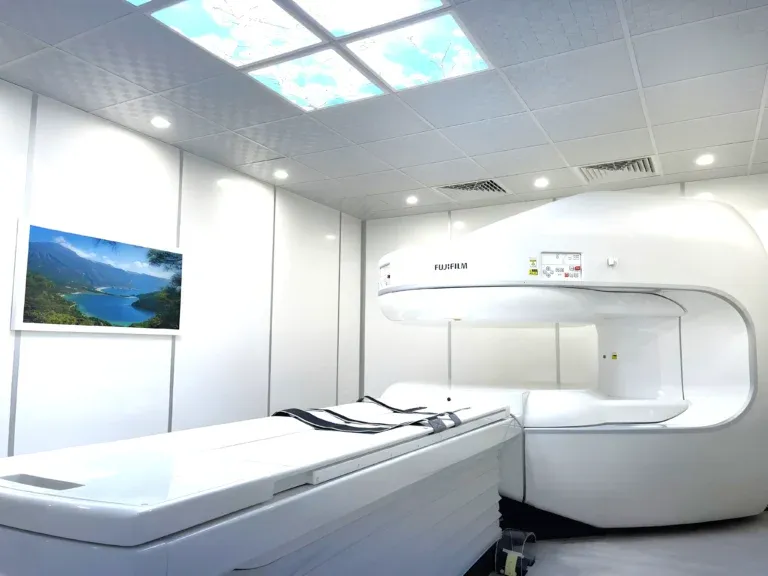
Open MRI scanners address the most common patient complaint about traditional MRI: the enclosed tunnel. Instead of a narrow bore, open MRI systems have the magnet positioned above and below the patient with the sides completely open, eliminating the claustrophobic feeling that causes 5-10% of patients to be unable to complete traditional MRI scans.
Open MRI is ideal for:
- Claustrophobic patients: The open design allows patients to see out to the sides, dramatically reducing anxiety. Many patients who failed traditional MRI complete open MRI scans without any issues.
- Larger patients: Open MRI systems accommodate patients who exceed the weight or girth limitations of closed-bore scanners, with some systems supporting up to 300+ kg.
- Children: The open design allows a parent to stand next to the child during the scan, providing comfort and reducing the need for sedation.
- Elderly patients: Those with mobility limitations or who cannot lie flat in a narrow tunnel for extended periods.
- Patients requiring specific positions: Some open MRI systems allow scanning in sitting or standing positions, which can be valuable for spine conditions that change with posture.
Open MRI limitations:
The main trade-off with open MRI is image quality. Because open systems use lower field strengths (typically 0.2T to 1.2T), the signal-to-noise ratio is lower, which means images are less detailed than those from 1.5T or 3T closed-bore scanners. Scan times are also longer. For routine musculoskeletal, spine, and many brain studies, modern open MRI systems produce adequate diagnostic quality. However, for very fine detail work (small brain lesions, breast MRI, prostate imaging), closed-bore 1.5T or 3T is preferred.
Which MRI Type Do You Need? Decision Guide
| Your Situation | Recommended MRI Type | Why |
|---|---|---|
| Routine knee or shoulder MRI | 1.5T | Excellent image quality, lower cost, widely available |
| Brain tumor evaluation | 3T | Superior detection of small lesions and tissue characterization |
| Spine MRI for disc herniation | 1.5T or 3T | Both produce excellent results; 3T slightly faster |
| Breast MRI screening | 3T preferred | Higher sensitivity for small lesions in breast tissue |
| Prostate cancer evaluation | 3T strongly preferred | Significantly better diagnostic accuracy for PI-RADS |
| Severe claustrophobia | Open MRI | Eliminates tunnel anxiety; consider sedation as alternative |
| Body weight over 200 kg | Open MRI | Accommodates larger body habitus |
| Joint replacement in scan area | 1.5T preferred | Less metal artifact than 3T; open MRI also an option |
| Child under 6 needing MRI | Open MRI or 1.5T with sedation | Open allows parent to be present; closed may need sedation |
| Cardiac MRI | 1.5T or 3T | 1.5T is standard for cardiac; 3T offers advantages in specific protocols |
| MRI with contrast | 1.5T or 3T | Both work well with gadolinium contrast; 3T may show enhancement better |
| Budget is a concern | 1.5T or Open MRI | 3T typically costs 20-40% more per scan |
The best MRI type depends on your clinical need, patient factors, and availability.
MRI Cost Comparison in Dubai
| Body Part | 1.5T Cost (AED) | 3T Cost (AED) | Open MRI Cost (AED) |
|---|---|---|---|
| Brain | 1,500 - 2,500 | 2,000 - 3,500 | 1,200 - 2,200 |
| Spine (single region) | 1,500 - 3,000 | 2,000 - 3,500 | 1,200 - 2,500 |
| Knee | 1,500 - 2,500 | 2,000 - 3,000 | 1,200 - 2,200 |
| Shoulder | 1,500 - 2,500 | 2,000 - 3,000 | 1,200 - 2,200 |
| Abdomen/Pelvis | 2,000 - 4,000 | 2,500 - 5,000 | 1,500 - 3,000 |
| Breast MRI | 2,500 - 4,500 | 3,000 - 5,000 | Not recommended |
3T commands a premium of 20-40% over 1.5T. Open MRI is typically comparable to or slightly less than 1.5T pricing.
Insurance coverage is the same regardless of MRI field strength. The referring physician determines the medical necessity, and insurance approves the MRI based on the clinical indication, not the scanner type. If you choose 3T when 1.5T is adequate, you may need to pay the difference out of pocket depending on your plan.
"The most common misconception I encounter is that 3T MRI is always better than 1.5T. For most clinical scenarios, the diagnostic information is equivalent. Where 3T truly excels, such as brain tumor evaluation, prostate imaging, and breast MRI, I specifically recommend it. But for a standard knee MRI or lumbar spine study, choosing 3T over 1.5T often just means more cost and more noise without clinical benefit," explains Dr. Osama Elzamzami.
MRI Services at DCDC
Our MRI services and open MRI option ensure every patient gets the right scanner for their needs and comfort level.
Expert MRI at DCDC Dubai Healthcare City
At Doctors Clinic Diagnostic Center, our radiologists help you choose the most appropriate MRI type for your specific clinical question. Located in Dubai Healthcare City with flexible scheduling.
DCDC में संबंधित सेवाएं
दुबई हेल्थकेयर सिटी में विशेषज्ञ देखभाल और उन्नत निदान
Frequently Asked Questions
Final Thoughts
Choosing between 1.5T, 3T, and open MRI does not need to be complicated. For most patients and most clinical questions, a modern 1.5T scanner provides all the diagnostic information needed. When your specific condition benefits from higher resolution (brain, prostate, breast), 3T is the right choice. When comfort and claustrophobia are the primary concern, open MRI allows successful scanning for patients who would otherwise be unable to complete the test.
The most important factor in MRI quality is not the machine alone but the combination of appropriate scanner selection, optimized scanning protocols, and expert interpretation by an experienced radiologist. A well-performed 1.5T study interpreted by an expert radiologist outperforms a poorly performed 3T study every time.
For MRI imaging tailored to your needs in Dubai, Doctors Clinic Diagnostic Center in Dubai Healthcare City offers multiple MRI options with experienced radiologists to ensure you get the right scan for the right reason.
स्रोत एवं संदर्भ
यह लेख हमारी चिकित्सा टीम द्वारा समीक्षित है और निम्नलिखित स्रोतों का संदर्भ देता है:
- Radiological Society of North America - MRI Safety and Field Strength
- American College of Radiology - MRI Accreditation Standards
- European Radiology - 1.5T vs 3T Clinical Comparison Studies
- Journal of Magnetic Resonance Imaging - Open MRI Diagnostic Accuracy
- British Journal of Radiology - MRI Technology Advances
इस साइट पर चिकित्सा सामग्री DHA-लाइसेंस प्राप्त चिकित्सकों द्वारा समीक्षित है। हमारी देखें संपादकीय नीति अधिक जानकारी के लिए।

लेखक
Dr. Osama Elzamzami
Consultant Radiologist
MD, Radiology
Dr. Osama Elzamzami is a Consultant Radiologist specializing in diagnostic imaging including MRI, CT, DEXA, and ultrasound at DCDC Dubai Healthcare City.
Related Articles
MRI Cost in Dubai: Complete Guide to Types & Pricing (2026)
Open MRI Dubai: Cost, Benefits & Who Should Choose It
CT Scan vs MRI: Which Do You Need? Complete Comparison
Brain MRI in Dubai: What It Detects, Cost & When You Need One
MRI Safety: 10 Myths vs Facts About MRI Scans
More in Diagnostic Imaging
Neck MRI Dubai: What It Shows & Cost (2026)
और पढ़ें
X-Ray Scan Dubai: Complete Guide (2026)
और पढ़ेंMRI vs Ultrasound Dubai: Which Scan? (2026)
और पढ़ें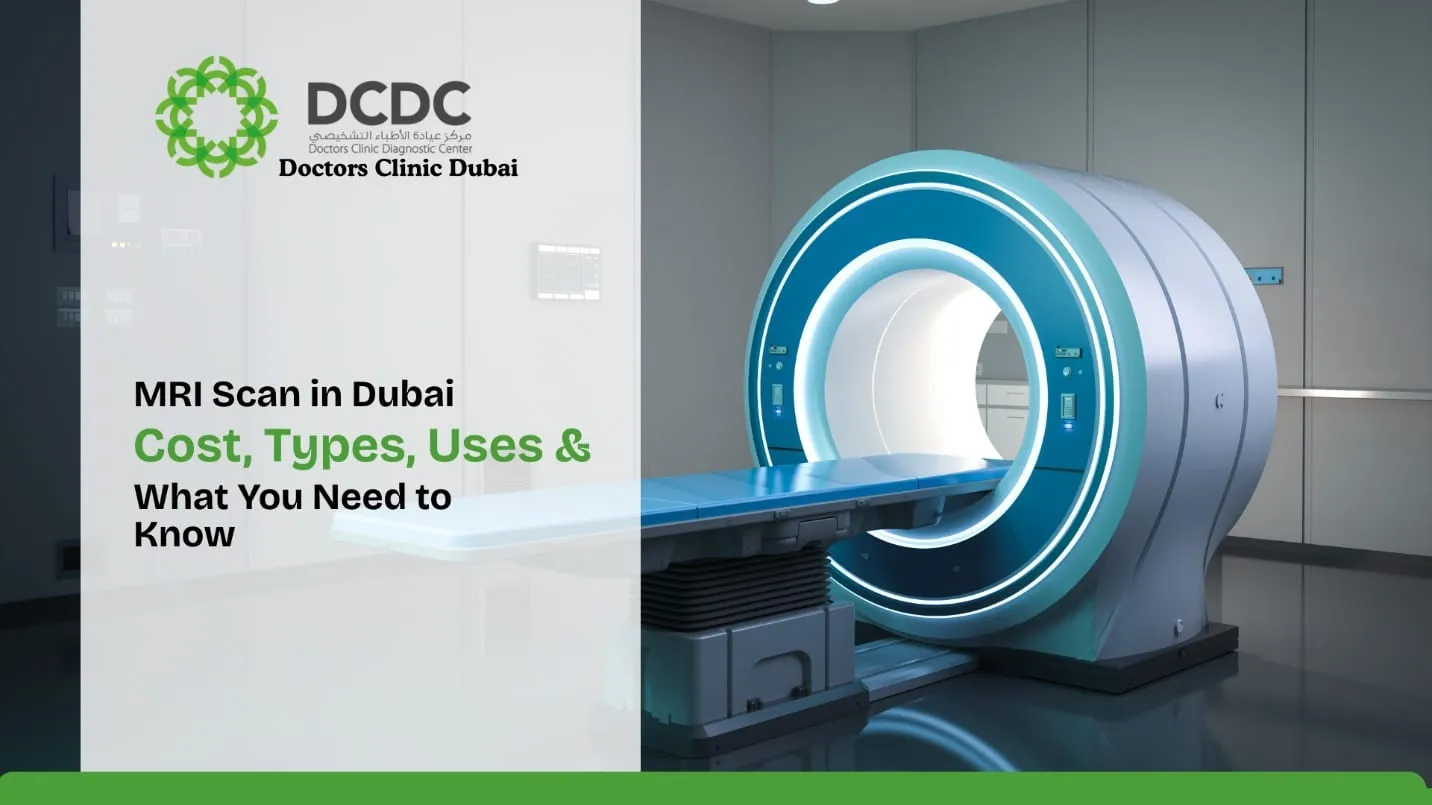
MRI vs X-Ray Dubai: Which Scan Do You Need? (2026)
और पढ़ें
Kidney Ultrasound vs CT Dubai: Which Test? (2026)
और पढ़ेंMRI Preparation Dubai: Complete Guide (2026)
और पढ़ें© 2026 Doctors Clinic Diagnostic Center (DCDC), Dubai Healthcare City. Originally published at https://doctorsclinicdubai.ae/blog/mri-types-compared. All rights reserved. Unauthorized reproduction is prohibited.