Points cles
- Un ECG (électrocardiogramme) — également appelé EKG — est un test indolore de 5 minutes qui enregistre l'activité électrique de votre cœur à l'aide de 10 électrodes autocollantes placées sur votre poitrine, vos bras et vos jambes. C'est l'examen cardiaque le plus courant et le plus abordable.
- L'ECG peut détecter les arythmies (battements cardiaques irréguliers), les crises cardiaques (actuelles ou antérieures), l'hypertrophie des cavités cardiaques, les déséquilibres électrolytiques, la péricardite et les effets des médicaments cardiaques — le tout à partir d'un tracé rapide et non invasif
- Trois types d'ECG sont disponibles : ECG de repos à 12 dérivations (5 minutes, capture un instant), Holter (24-48 heures, capture les schémas quotidiens) et ECG d'effort (pendant l'exercice, détecte les problèmes liés à l'effort)
- Les coûts de l'ECG à Dubaï varient de 100 à 300 AED pour un ECG de repos — l'un des examens cardiaques les plus abordables — avec le Holter à 500-1 500 AED et l'ECG d'effort à 800-1 500 AED
- Un « ECG anormal » ne signifie pas toujours une maladie cardiaque — de nombreuses anomalies sont bénignes, liées à l'âge ou fortuites. Votre cardiologue interprète le tracé dans le contexte de vos symptômes et de votre état de santé général
L'ECG est l'examen cardiaque le plus pratiqué au monde — et pour cause. En moins de 5 minutes, sans aiguilles, sans radiation et sans préparation, un électrocardiogramme à 12 dérivations peut détecter les troubles du rythme cardiaque, les signes d'infarctus du myocarde (actuels ou anciens), l'hypertrophie des cavités cardiaques et les anomalies de conduction électrique. Que votre médecin ait prescrit un ECG, que vous en ayez besoin pour un examen médical de visa, ou que vous ressentiez des palpitations et souhaitiez des réponses — ce guide explique tout.
De ce que mesure réellement un ECG à ce que signifie « rythme sinusal » sur votre rapport, la différence entre ECG et EKG, comment il se compare à un échocardiogramme, ce que signifient les résultats anormaux (et quand ils sont sans danger), les coûts à Dubaï et quand vous avez besoin de plus qu'un ECG de repos. Vérifié par le Dr. Shahoo Mazhari, Cardiologue consultant au DCDC Dubai Healthcare City.
Qu'est-ce qu'un test ECG (EKG) ?
Un électrocardiogramme (ECG) enregistre les signaux électriques qui contrôlent vos battements cardiaques. À chaque battement, une impulsion électrique traverse le muscle cardiaque dans une séquence précise — du nœud sinusal (SA) à travers les oreillettes, au nœud auriculo-ventriculaire (AV), puis vers les ventricules. Cette activité électrique est détectée par des électrodes sur votre peau et affichée sous forme d'onde caractéristique sur papier ou écran.
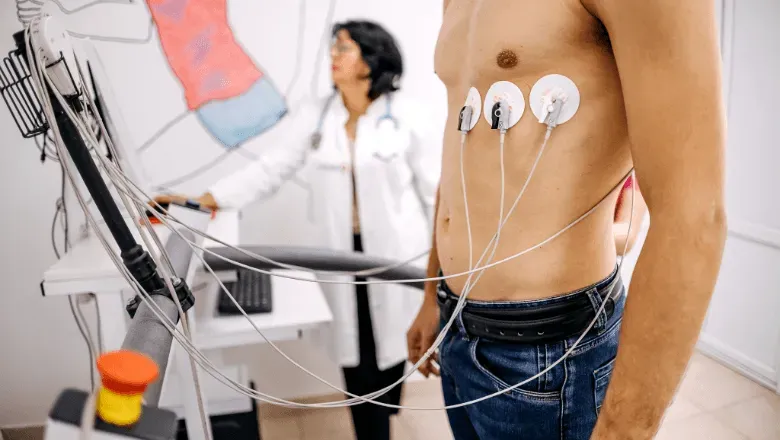
L'ECG standard à 12 dérivations utilise 10 électrodes autocollantes — 6 sur la poitrine et 4 sur les membres — pour créer 12 « vues » différentes de l'activité électrique du cœur sous différents angles. Cela permet à votre cardiologue d'identifier exactement quelle partie du cœur est affectée par une anomalie.
ECG vs EKG : Y a-t-il une différence ?
Non. ECG et EKG sont le même test. ECG vient de l'anglais « electrocardiogram » tandis que EKG vient de l'allemand « Elektrokardiogramm » (le test a été inventé par le médecin néerlandais Willem Einthoven, dont les travaux ont été publiés en allemand). Au Royaume-Uni, en Australie et au Moyen-Orient, « ECG » est plus couramment utilisé. Aux États-Unis, les deux termes sont utilisés de manière interchangeable, « EKG » étant souvent préféré en milieu clinique pour éviter la confusion avec « EEG » (électroencéphalogramme, un test cérébral).
Que peut détecter un ECG ?
- Arythmies : Fibrillation auriculaire, flutter auriculaire, tachycardie supraventriculaire (TSV), tachycardie ventriculaire, bradycardie, bloc cardiaque — tout trouble du rythme cardiaque
- Crise cardiaque (infarctus du myocarde) : Élévation ou dépression du segment ST, modifications de l'onde T et ondes Q indiquant des dommages d'infarctus actuel ou antérieur
- Hypertrophie des cavités cardiaques : Hypertrophie ventriculaire gauche (HVG) due à une hypertension de longue date, surcharge ventriculaire droite due à une maladie pulmonaire
- Anomalies de conduction : Blocs de branche (gauche ou droit), blocs AV (premier, deuxième ou troisième degré), syndrome de Wolff-Parkinson-White
- Déséquilibres électrolytiques : Des niveaux anormaux de potassium, calcium ou magnésium produisent des modifications ECG caractéristiques détectables avant les résultats des analyses sanguines
- Péricardite : L'inflammation de l'enveloppe du cœur produit des modifications ST étendues avec un schéma distinctif
- Effets médicamenteux : La digoxine, les antiarythmiques et certains médicaments psychiatriques produisent des modifications ECG reconnaissables nécessitant une surveillance
- Intervalle QT prolongé : Une condition génétique ou induite par les médicaments qui augmente le risque d'arythmies dangereuses
Ce qu'un ECG ne peut pas détecter
Un ECG est puissant mais a ses limites. Il enregistre l'activité électrique uniquement au moment du test — un ECG de repos normal n'exclut pas la maladie coronarienne, les problèmes valvulaires ou les arythmies intermittentes. Pour ces conditions, des tests supplémentaires comme un échocardiogramme, un Holter ou un test d'effort cardiaque sont nécessaires.
Quand avez-vous besoin d'un test ECG ?
Symptômes
- Douleur ou pression thoracique — la raison la plus courante d'un ECG urgent, pour exclure un infarctus ou une angine
- Palpitations — sensation de cœur qui s'emballe, saute des battements ou papillonne. Même si l'ECG est normal pendant la visite, il fournit une référence ; un Holter peut être recommandé pour les symptômes intermittents
- Vertiges ou évanouissement (syncope) — pour vérifier les arythmies ou le bloc cardiaque pouvant causer une perte de conscience soudaine
- Essoufflement — particulièrement d'apparition récente ou disproportionné par rapport au niveau d'effort
- Fatigue — une fatigue persistante inexpliquée peut parfois être causée par un rythme cardiaque lent (bradycardie) ou une insuffisance cardiaque
Raisons de dépistage et de routine
- Bilan préopératoire : De nombreux chirurgiens exigent un ECG de référence avant l'anesthésie générale, surtout pour les patients de plus de 40 ans ou avec des facteurs de risque cardiaques
- Examen médical de visa : Certaines catégories de visa aux EAU exigent un ECG dans le cadre du bilan de santé
- Bilan de santé annuel : Recommandé dans le cadre du dépistage cardiaque pour les adultes de plus de 40 ans ou souffrant d'hypertension, de diabète ou ayant des antécédents familiaux de maladies cardiaques
- Certificat d'aptitude physique : Avant de commencer un nouveau programme d'exercice vigoureux, particulièrement pour les adultes de plus de 40 ans ou avec des facteurs de risque
- Surveillance médicamenteuse : Des ECG réguliers sont nécessaires pour les patients sous antiarythmiques, médicaments prolongeant le QT ou digoxine
- Suivi après procédures cardiaques : Après pose de stent, pontage ou implantation de pacemaker
Test ECG sans rendez-vous au DCDC Dubaï
Pas besoin de rendez-vous pour un ECG de repos. Résultats en quelques minutes, vérifiés par notre Cardiologue consultant. Réservez une consultation en cardiologie ou venez pour un ECG au DCDC Dubai Healthcare City.
Types de tests ECG disponibles à Dubaï
ECG de repos à 12 dérivations
L'ECG standard. Vous vous allongez sur une table d'examen pendant que 10 électrodes autocollantes sont placées sur votre poitrine, vos bras et vos jambes. L'appareil enregistre l'activité électrique de votre cœur pendant environ 10 secondes — suffisant pour capturer plusieurs battements sous 12 angles différents. L'ensemble du processus prend moins de 5 minutes y compris le placement des électrodes. Aucune préparation nécessaire. Totalement indolore.
Idéal pour : évaluation cardiaque initiale, évaluation de douleur thoracique, bilan préopératoire, examens médicaux de visa, surveillance médicamenteuse et enregistrement de référence.
Holter (ECG continu 24-48 heures)
Un petit appareil d'enregistrement portable porté à la ceinture ou autour du cou, connecté à 3-5 électrodes thoraciques. Il enregistre chaque battement cardiaque en continu pendant 24, 48 ou même 72 heures pendant que vous vaquez à vos activités quotidiennes — dormir, travailler, faire de l'exercice. C'est la référence absolue pour détecter les arythmies intermittentes qui peuvent ne pas apparaître lors d'un bref ECG de repos.
On vous demandera de tenir un journal notant l'heure de tout symptôme (palpitations, vertiges, douleur thoracique) afin que le cardiologue puisse corréler vos symptômes avec l'enregistrement ECG à ce moment précis.
Idéal pour : palpitations intermittentes, suspicion de fibrillation auriculaire, évaluation de l'efficacité des médicaments antiarythmiques, investigation de syncope. En savoir plus sur le Holter au DCDC.
ECG d'effort
Un ECG enregistré pendant que vous faites de l'exercice sur un tapis roulant, avec une charge de travail augmentant progressivement toutes les 3 minutes (protocole de Bruce). Cela révèle les problèmes qui n'apparaissent que lorsque le cœur travaille dur — en particulier, une réduction du flux sanguin due à des blocages des artères coronaires non apparents au repos.
Idéal pour : douleur thoracique à l'effort, essoufflement à l'exercice, évaluation du risque de maladie coronarienne, certificat d'aptitude à l'exercice. Lisez notre guide complet sur le test d'effort cardiaque pour des informations détaillées.
Moniteur d'événements (enregistrement 2-4 semaines)
Similaire à un Holter mais porté pendant 2-4 semaines. Certains moniteurs d'événements enregistrent en continu ; d'autres sont activés par le patient — vous appuyez sur un bouton lorsque vous ressentez des symptômes, et l'appareil sauvegarde l'enregistrement ECG de ce moment plus les 30-60 secondes précédentes. Idéal pour les symptômes qui ne se produisent que quelques fois par mois, les rendant peu susceptibles d'être capturés lors d'un Holter de 24-48 heures.
La procédure ECG : ce qui se passe
Un ECG de repos est l'un des tests médicaux les plus simples que vous aurez jamais. Voici exactement à quoi vous attendre :
- Préparation (aucune nécessaire) : Vous n'avez pas besoin d'être à jeun, d'arrêter vos médicaments ou de faire quoi que ce soit de spécial. On peut vous demander de retirer vos vêtements du haut ou de porter une blouse pour l'accès aux électrodes.
- Placement des électrodes (1-2 minutes) : Un technicien nettoie de petites zones sur votre poitrine avec une compresse d'alcool et place 6 électrodes autocollantes à des positions spécifiques sur votre poitrine, plus 4 sur vos poignets et chevilles. Les hommes avec une pilosité thoracique importante peuvent avoir de petites zones rasées pour un meilleur contact.
- Enregistrement (10-30 secondes) : Vous restez allongé et respirez normalement. L'appareil enregistre l'activité électrique de votre cœur. Vous ne sentirez rien — les électrodes sont des capteurs et ne délivrent aucune électricité.
- Retrait des électrodes (30 secondes) : Les autocollants sont retirés. Vous pouvez avoir une légère rougeur aux endroits des autocollants qui disparaît en une heure.
- Résultats (immédiats) : L'impression ECG est disponible immédiatement. Au DCDC, le tracé est vérifié par un cardiologue avant que les résultats ne vous soient communiqués.
Durée totale : 5 minutes. Aucune douleur. Aucun effet secondaire. Aucun temps de récupération. Vous pouvez conduire, travailler et faire de l'exercice normalement immédiatement après.
Comprendre vos résultats ECG
Un ECG produit une forme d'onde caractéristique avec plusieurs composantes. Votre cardiologue analyse chaque composante systématiquement :
L'ECG normal
Un rapport ECG normal indiquera typiquement « rythme sinusal normal » — signifiant que l'impulsion électrique provient du bon endroit (le nœud sinusal) à une fréquence normale (60-100 battements par minute) avec une conduction normale à travers le cœur. Le rapport confirme des ondes P normales, un intervalle PR normal, des complexes QRS étroits, aucune modification du segment ST et un intervalle QT normal.
Anomalies courantes et leur signification
| Anomalie ECG | Ce que cela signifie | Est-ce grave ? | Prochaines étapes |
|---|---|---|---|
| Tachycardie sinusale | Fréquence cardiaque supérieure à 100 bpm du stimulateur naturel | Généralement non — souvent dû à l'anxiété, la caféine, la déshydratation, la fièvre ou la douleur | Traiter la cause sous-jacente ; rarement besoin d'investigation cardiaque seule |
| Bradycardie sinusale | Fréquence cardiaque inférieure à 60 bpm | Généralement bénin — courant chez les personnes en forme/sportives et pendant le sommeil | Investiguer uniquement si cela cause des symptômes (vertiges, fatigue, évanouissement) |
| Fibrillation auriculaire (FA) | Rythme irrégulier ; les oreillettes frémissent au lieu de se contracter efficacement | Oui — augmente le risque d'AVC de 5 fois ; évaluation d'anticoagulation nécessaire | Orientation cardiologique, échocardiogramme, évaluation du risque d'AVC, anticoagulation |
| Hypertrophie ventriculaire gauche (HVG) | Paroi ventriculaire gauche épaissie (souvent due à une hypertension de longue date) | Modéré — indique que le cœur a travaillé plus dur que la normale | Optimisation de la tension artérielle, échocardiogramme pour confirmer, changements de mode de vie |
| Bloc de branche (BBD ou BBG) | Conduction électrique retardée d'un côté du cœur | BBD souvent bénin chez les jeunes ; BBG peut indiquer une maladie sous-jacente | Échocardiogramme recommandé, surtout pour un nouveau BBG |
| Modifications du segment ST | Élévation ou dépression du segment ST | Potentiellement grave — peut indiquer un infarctus, une ischémie ou une péricardite | Évaluation urgente si nouvelle ou symptomatique ; test sanguin de troponine, imagerie supplémentaire |
| Intervalle QT prolongé | Récupération électrique retardée après chaque battement | Oui — augmente le risque d'arythmies ventriculaires dangereuses | Revoir les médicaments (beaucoup prolongent le QT), tests génétiques, suivi cardiologique |
| Bloc AV du premier degré | Conduction légèrement retardée des oreillettes aux ventricules (PR > 200ms) | Presque toujours bénin — découverte fortuite très courante | Aucun traitement nécessaire ; documenter et surveiller lors des bilans de routine |
Ce tableau couvre les anomalies les plus courantes. De nombreuses anomalies sont bénignes et ne nécessitent aucun traitement.
« ECG anormal » ne signifie PAS toujours maladie cardiaque
C'est l'un des points les plus importants à comprendre. Un rapport ECG signalé comme « anormal » peut causer une anxiété importante — mais de nombreuses anomalies sont cliniquement insignifiantes. Les appareils ECG automatisés sont délibérément sensibles, ce qui signifie qu'ils signalent tout ce qui s'écarte d'un tracé parfait de manuel. Les anomalies bénignes courantes comprennent la bradycardie sinusale chez les athlètes, les modifications ST mineures chez les jeunes femmes, le bloc de branche droit sans symptômes et les modifications non spécifiques de l'onde T. Votre cardiologue interprète le tracé dans le contexte de votre âge, de vos symptômes, de vos médicaments et de vos antécédents médicaux — pas la lecture automatisée de la machine seule.
ECG vs Échocardiogramme : quelle est la différence ?
Ces deux tests sont souvent confondus, mais ils mesurent des choses complètement différentes :
| Facteur | ECG (Électrocardiogramme) | Échocardiogramme (Écho) |
|---|---|---|
| Ce qu'il mesure | Activité électrique du cœur | Structure physique et mouvement du cœur |
| Technologie | Capteurs d'électrodes sur la peau | Ondes ultrasonores (même technologie que les échographies de grossesse) |
| Durée | 5 minutes | 20-30 minutes |
| Ce qu'il détecte | Arythmies, infarctus, blocs de conduction, HVG, prolongation QT | Problèmes valvulaires, force de pompage (fraction d'éjection), mouvement des parois, liquide autour du cœur |
| Préparation | Aucune | Aucune |
| Coût à Dubaï | 100-300 AED | 500-1 200 AED |
| Quand choisir | Palpitations, douleur thoracique, préopératoire, visa médical, surveillance médicamenteuse | Souffle cardiaque, essoufflement, suspicion d'insuffisance cardiaque, évaluation valvulaire |
L'ECG et l'échocardiogramme sont des tests complémentaires — de nombreux patients ont besoin des deux pour un bilan cardiaque complet.
En pratique, une consultation en cardiologie comprend souvent les deux tests. Un ECG vérifie le système électrique, tandis qu'un échocardiogramme vérifie le système mécanique — ensemble, ils fournissent une évaluation de référence complète de la santé cardiaque.
Besoin d'un bilan cardiaque ? Commencez par un ECG
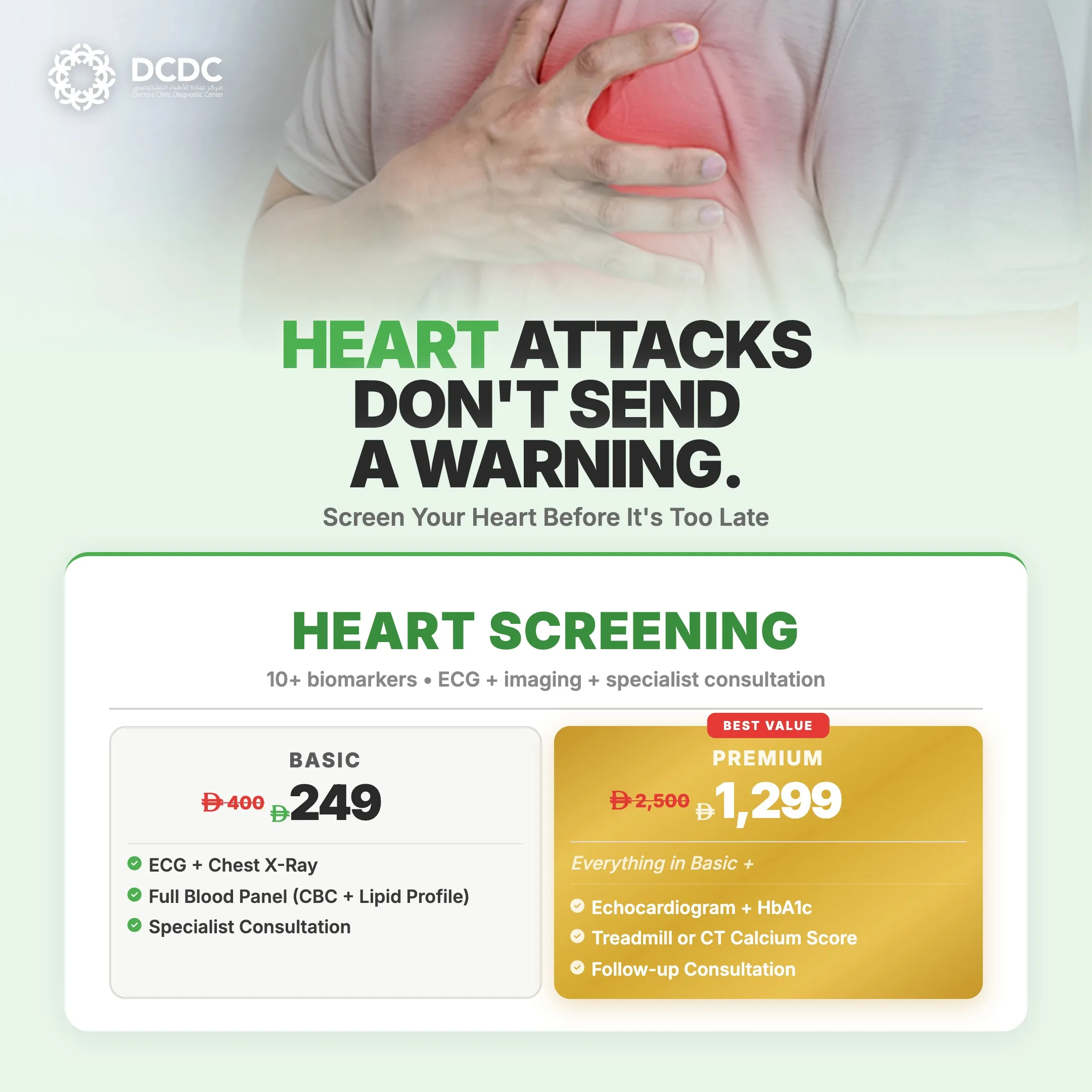
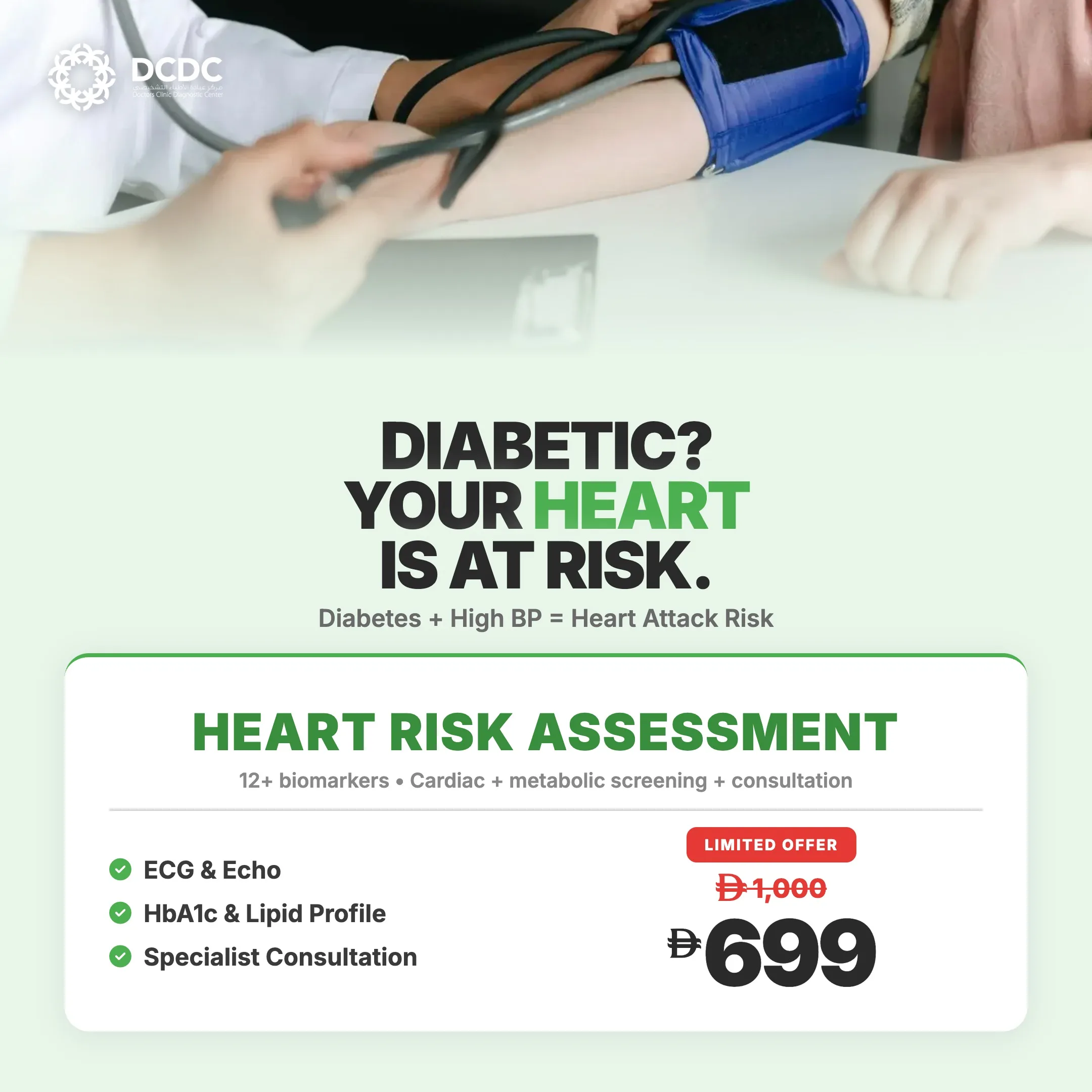
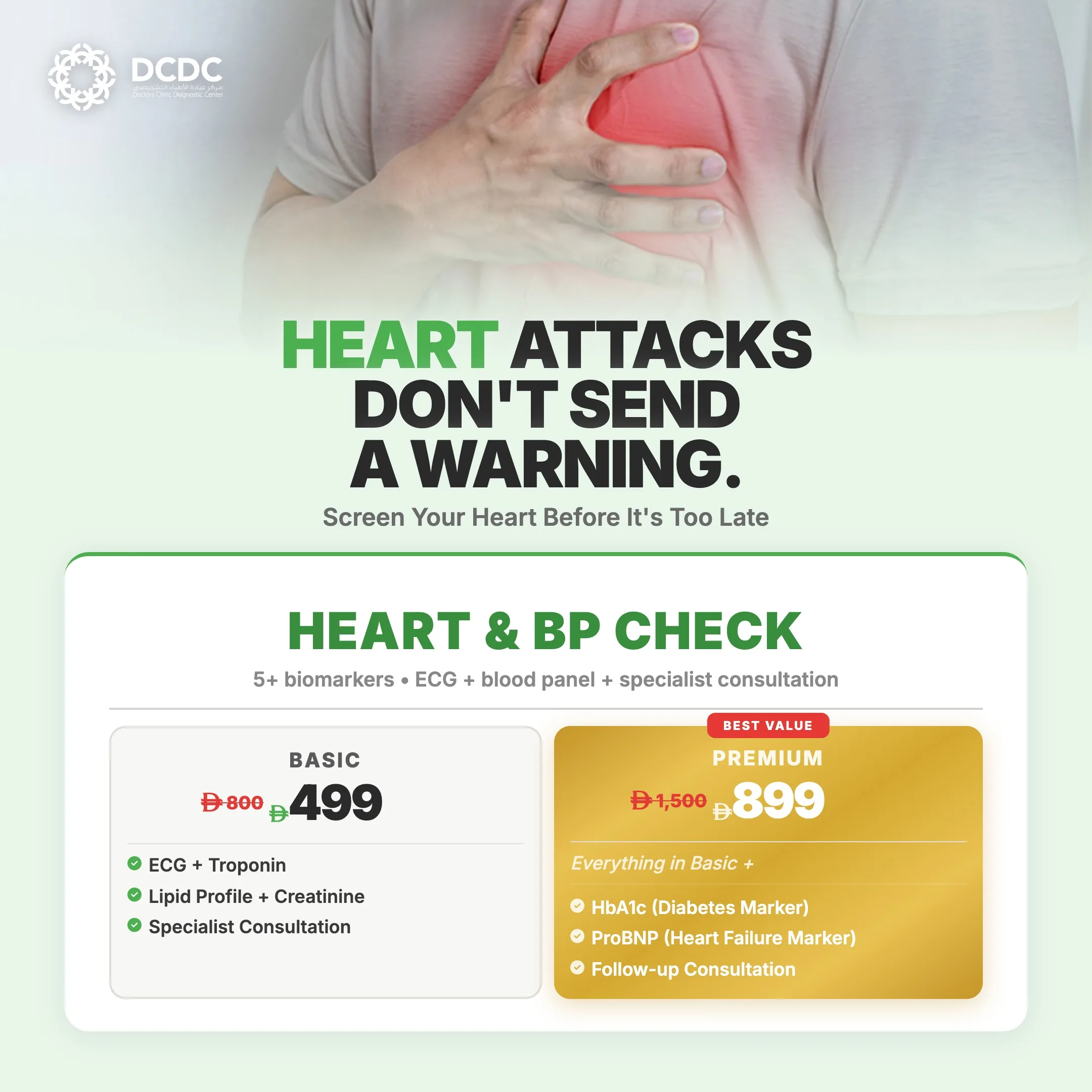
Test ECG sans rendez-vous disponible au DCDC — résultats en minutes, examen par un cardiologue inclus. Pour une évaluation complète, renseignez-vous sur nos forfaits bilan cardiaque (ECG + Écho + Consultation). Réservez une consultation en cardiologie.
Coût du test ECG à Dubaï (2026)
| Type de test ECG | Coût typique à Dubaï (AED) | Ce qui est inclus |
|---|---|---|
| ECG de repos à 12 dérivations | 100 – 300 | Placement des électrodes, enregistrement 12 dérivations, interprétation médicale et rapport |
| Holter (24 heures) | 500 – 1 200 | Installation de l'appareil, enregistrement continu 24 heures, retour de l'appareil, analyse cardiologique de l'enregistrement complet |
| Holter (48 heures) | 800 – 1 500 | Identique au 24 heures avec une période d'enregistrement prolongée pour une meilleure détection des arythmies |
| ECG d'effort | 800 – 1 500 | Exercice sur tapis roulant avec surveillance ECG continue, supervision cardiologique, rapport le jour même |
| ECG dans le cadre d'un bilan de santé | Souvent inclus | De nombreux forfaits bilan de santé executive incluent un ECG de repos sans frais supplémentaires |
L'ECG de repos est l'un des tests cardiaques les plus abordables. L'assurance le couvre généralement avec une prescription.
Couverture d'assurance pour l'ECG à Dubaï
L'ECG de repos est couvert par pratiquement tous les plans d'assurance de Dubaï lorsqu'il est prescrit par un médecin. La participation est généralement de 0 à 50 AED. Le Holter et l'ECG d'effort nécessitent habituellement une autorisation préalable. Les patients en auto-paiement peuvent venir sans ordonnance pour un ECG de repos — contactez-nous pour les tarifs actuels au DCDC.
Tests ECG au DCDC Dubai Healthcare City
Au département de cardiologie du DCDC, les tests ECG sont disponibles en tant que service sans rendez-vous ou dans le cadre d'une consultation cardiologique programmée. Tous les tracés sont vérifiés par le Dr. Shahoo Mazhari, Cardiologue consultant.
- ECG de repos sans rendez-vous disponible — pas besoin de rendez-vous, résultats en quelques minutes
- Interprétation par un cardiologue — chaque ECG est vérifié par le Dr. Shahoo Mazhari, pas seulement une lecture automatisée
- Bilan cardiaque complet en une visite — ECG, échocardiogramme, test d'effort et consultation peuvent être réalisés le même jour
- Holter sur place — installation et analyse de l'appareil réalisées au DCDC
- Assurance acceptée — nous traitons les demandes directement avec tous les grands assureurs de Dubaï
- Établissement agréé DHA — situé dans Dubai Healthcare City, Bâtiment 47
- Dossiers numériques — votre ECG est stocké numériquement pour comparaison lors de visites futures, permettant à votre cardiologue de suivre les changements au fil du temps
Réservez votre ECG ou bilan cardiaque aujourd'hui
Tests ECG sans rendez-vous, Holter, tests d'effort et forfaits cardiaques complets disponibles. Réservez une consultation en cardiologie au DCDC Dubai Healthcare City ou appelez-nous pour un ECG le jour même.
Services associés au DCDC
Soins spécialisés et diagnostics avancés à Dubai Healthcare City
Cardiology Consultation
Expert heart evaluation including ECG interpretation and cardiac workup
Prendre rendez-vousCardiac Stress Test
Exercise ECG stress test for comprehensive heart function assessment
Prendre rendez-vousHolter Monitoring
24-48 hour continuous ECG recording for rhythm abnormalities
Prendre rendez-vousFrequently Asked Questions
Réflexions finales
L'ECG reste l'un des outils les plus précieux en médecine — simple, rapide, indolore, abordable et capable de détecter des conditions potentiellement mortelles en quelques secondes. Aucun autre test cardiaque ne fournit autant d'informations pour si peu de coût et d'inconvénient.
Cependant, un ECG de repos normal n'est pas un bilan cardiaque complet. Il ne capture qu'un instantané de 10 secondes de l'activité électrique de votre cœur. Pour une évaluation cardiaque complète — surtout si vous avez des symptômes, des facteurs de risque ou plus de 40 ans — un ECG est idéalement combiné avec un échocardiogramme (évaluation structurelle) et, si indiqué, un test d'effort (évaluation fonctionnelle sous exercice).
Au Doctors Clinic Diagnostic Center dans Dubai Healthcare City, des tests ECG sans rendez-vous sont disponibles avec examen cardiologique immédiat par le Dr. Shahoo Mazhari. Que vous ayez besoin d'un ECG rapide pour un examen de visa ou d'une évaluation cardiaque complète, nous offrons la gamme complète de diagnostics cardiaques en une seule visite.
Sources et references
Cet article a ete revise par notre equipe medicale et fait reference aux sources suivantes :
- American Heart Association — Comprendre vos résultats ECG/EKG
- Société Européenne de Cardiologie — Directives ESC sur la tachycardie supraventriculaire (2024)
- Braunwald's Heart Disease — Chapitre : Électrocardiographie (12e édition, 2022)
- NHS — Information patient sur l'électrocardiogramme (ECG)
- Dubai Health Authority — Normes de diagnostic cardiaque
Le contenu medical de ce site est revise par des medecins agrees DHA. Voir notre politique editoriale pour plus d'informations.
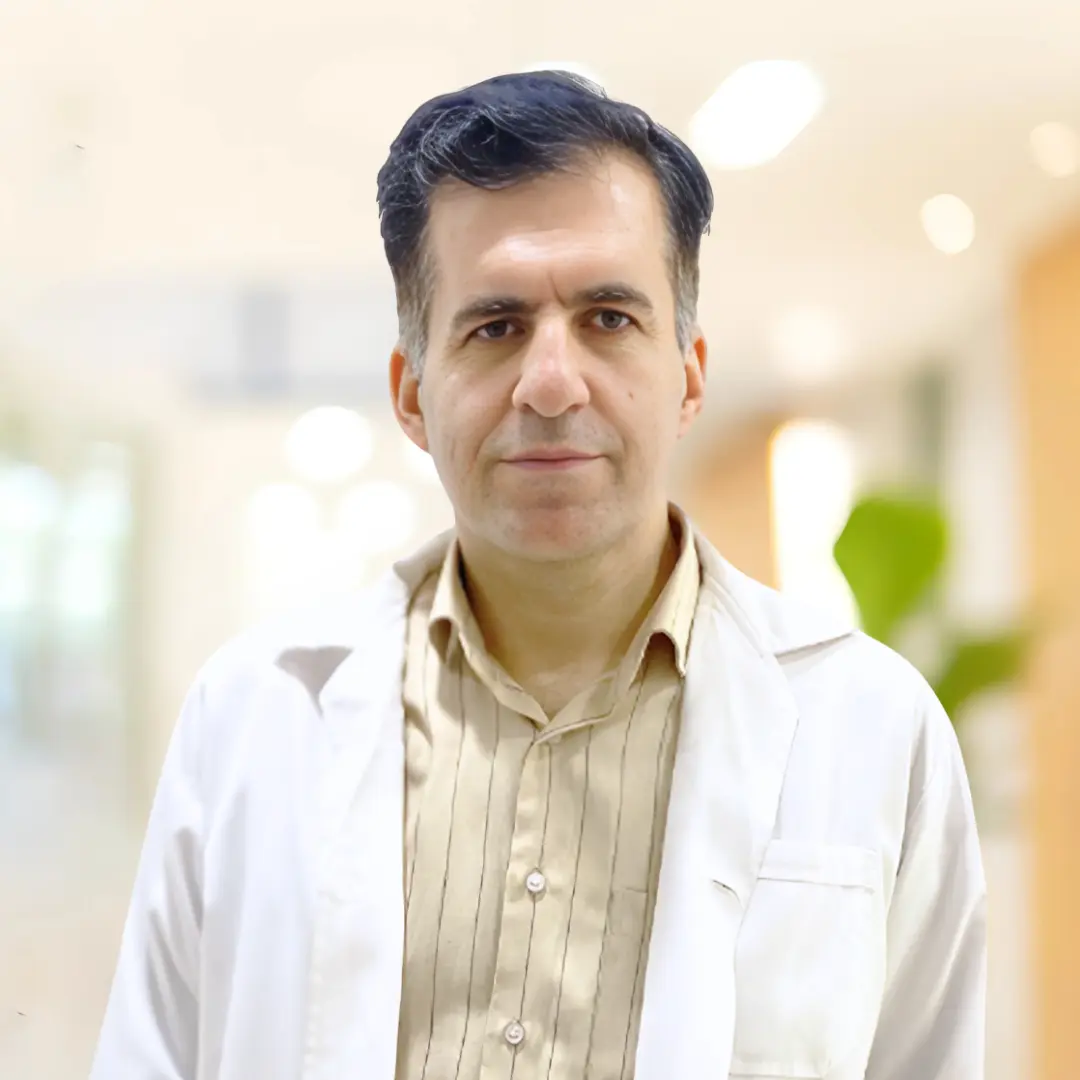
Redige par
Dr. Shahoo Mazhari
Cardiologue consultant
MD, Cardiologie
Le Dr. Shahoo Mazhari est Cardiologue consultant au DCDC Dubai Healthcare City, spécialisé en cardiologie préventive, diagnostics cardiaques et cardiologie interventionnelle. Il vérifie et interprète tous les ECG et tests cardiaques au DCDC.
Articles connexes
Test d'effort cardiaque à Dubaï : Coût, Procédure & À quoi s'attendre

Prévention de la santé cardiaque à Dubaï : Guide complet
Tests cardiaques à Dubaï : ECG vs Écho vs Test d'effort
Test de score calcique : Ce que cela signifie pour votre cœur
Plus dans Cardiology
Angiogram Dubai: Types, Cost & Guide (2026)
Lire la suite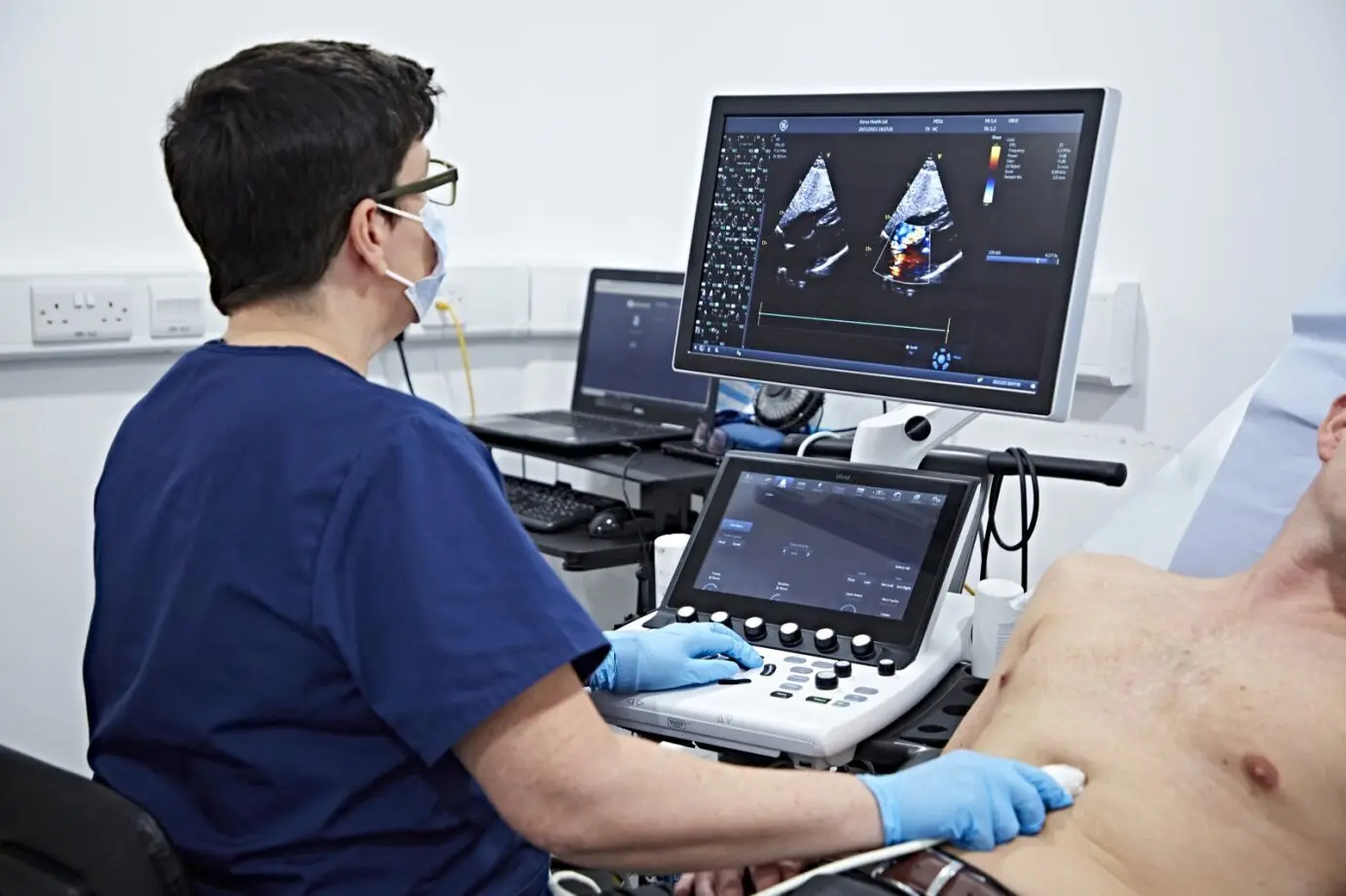
Echocardiogram (Echo) Test in Dubai: Cost, Procedure & What to Expect (2026)
Lire la suiteHolter Monitor Test Dubai: Cost & Guide (2026)
Lire la suiteECG Cost in Dubai: From AED 200 (2026)
Lire la suite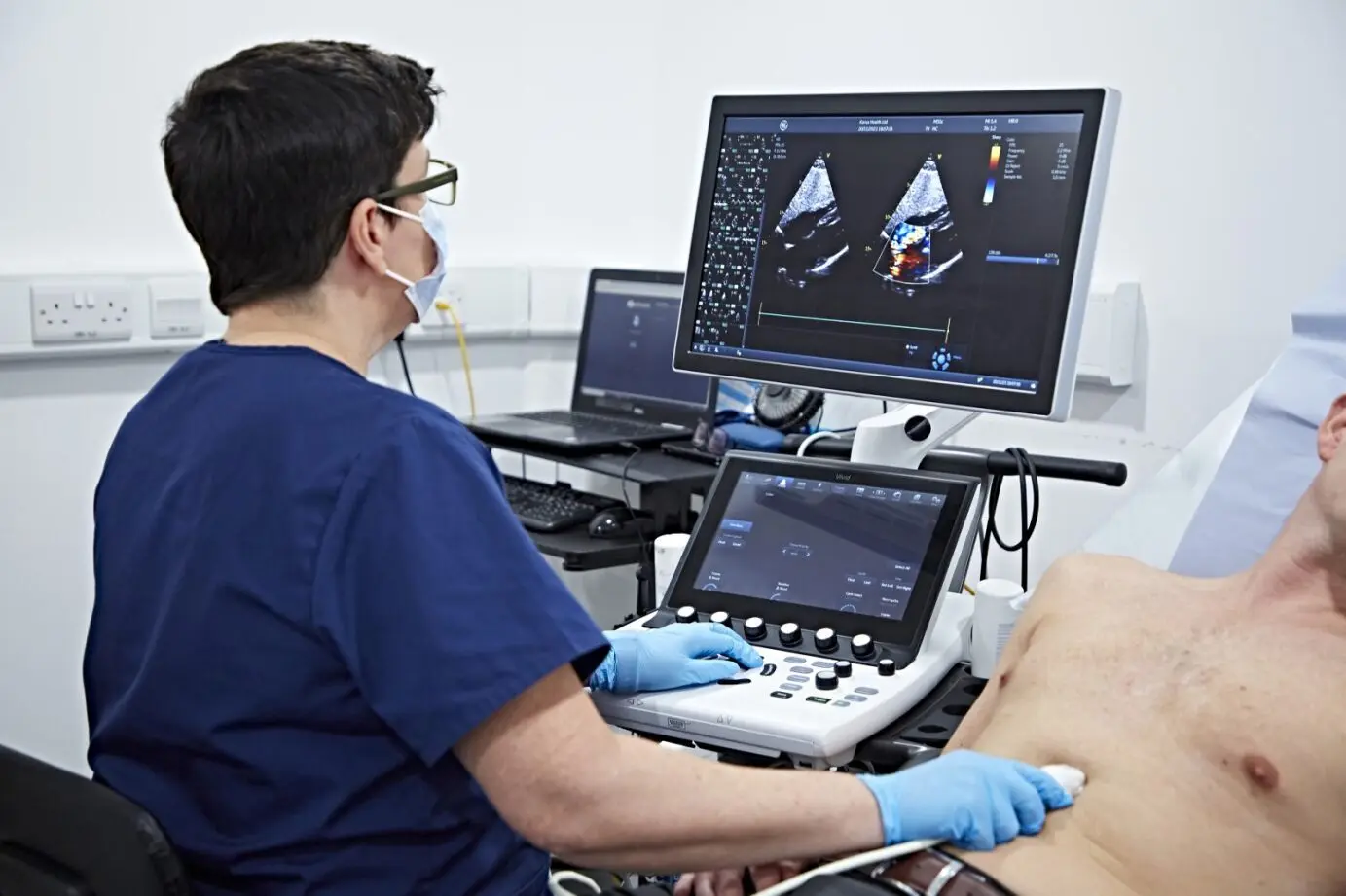
Echo at Home Dubai: From AED 799 (2026)
Lire la suiteECG at Home Dubai: Cost & What to Expect (2026)
Lire la suite© 2026 Doctors Clinic Diagnostic Center (DCDC), Dubai Healthcare City. Originally published at https://doctorsclinicdubai.ae/blog/ecg-test-guide-dubai. All rights reserved. Unauthorized reproduction is prohibited.