نکات کلیدی
- A toothache is never normal — it signals an underlying problem such as decay, infection, gum disease, a cracked tooth, or an impacted wisdom tooth that requires professional diagnosis and treatment
- Seek emergency dental care immediately if you have severe throbbing pain with facial swelling, fever, pus discharge, difficulty breathing or swallowing, or pain that does not respond to over-the-counter medication
- Treatment costs in Dubai vary by cause — dental fillings start from AED 150, root canals from AED 800, dental crowns from AED 800, and wisdom teeth extraction from AED 399 at DCDC in Dubai Healthcare City
- Home remedies such as saltwater rinses, cold compresses, and over-the-counter ibuprofen can provide temporary relief but do not treat the underlying cause — delaying professional care allows the problem to worsen and become more expensive to treat
- Most dental insurance plans in the UAE cover toothache-related treatments including fillings, root canals, and extractions — DCDC works with 20-plus insurance partners including Daman, AXA, Bupa, MetLife, and Cigna with direct billing
- Prevention is the most cost-effective strategy — regular dental cleanings (from AED 200), daily brushing and flossing, and treating small cavities early can prevent the majority of toothaches before they start
A toothache can range from a mild, nagging sensitivity to an unbearable throbbing pain that disrupts sleep, work, and daily life. Whether the discomfort started suddenly or has been building for weeks, understanding the cause is the first step toward lasting relief. At DCDC's dental clinic in Dubai Healthcare City, our team of 6-plus dental specialists diagnoses and treats every type of toothache — from simple cavities to complex dental emergencies — with same-day emergency slots available seven days a week.
This comprehensive guide covers the 10 most common causes of toothache, how to assess the severity of your symptoms, when home remedies are appropriate versus when you need urgent professional care, the full range of treatment options available in Dubai with transparent pricing, and what to expect when you visit DCDC. Whether you are dealing with a dull ache, sharp sensitivity, or a full-blown dental emergency, this guide will help you understand your symptoms and take the right next step.


Toothache Symptom Checklist: Identify Your Pain
Not all tooth pain is the same. The type, intensity, and location of your discomfort can tell you — and your dentist — a great deal about the underlying cause. Before we explore specific causes, use this checklist to characterise your symptoms. This information will be valuable when you describe your pain to a dental professional.
- Sharp, shooting pain when biting down: Suggests a cracked tooth, a loose filling, or decay that has reached the inner dentin layer. The pain is triggered by pressure and may disappear when you release the bite.
- Constant throbbing or pulsating pain: Often indicates pulp inflammation (pulpitis) or an active dental abscess. This pain may radiate to the jaw, ear, or temple and can keep you awake at night.
- Sensitivity to hot or cold that lingers more than 30 seconds: Brief sensitivity that fades quickly is usually harmless enamel sensitivity. Prolonged sensitivity — especially to heat — suggests irreversible pulp damage that may require root canal treatment.
- Dull, persistent ache in the back of the mouth: Common with impacted or partially erupted wisdom teeth, or chronic low-grade infection. The pain may come and go over weeks or months.
- Pain accompanied by swollen, red, or bleeding gums: Points to gum disease (gingivitis or periodontitis), a periodontal abscess, or an infection around a partially erupted tooth (pericoronitis).
- Pain with visible hole, dark spot, or broken tooth: Indicates dental decay (cavity) that has progressed enough to be visible, or a fracture that exposes sensitive tooth structure.
- Facial swelling, fever, or pus drainage near a tooth: These are signs of a dental abscess — a serious infection that requires immediate professional treatment. Do not wait for a scheduled appointment.
- Generalised sensitivity across multiple teeth: May indicate enamel erosion from acidic foods or drinks, teeth grinding (bruxism), aggressive brushing, or gum recession exposing root surfaces.
If you are experiencing any combination of these symptoms, the sections below will help you understand the most likely cause and the urgency of seeking treatment.
10 Common Causes of Toothache
Tooth pain is one of the most common reasons people seek dental care worldwide. According to the World Health Organization, oral diseases affect nearly 3.5 billion people globally, with untreated dental decay being the most prevalent condition. In Dubai, the combination of a diverse population, varied dietary habits, and sometimes deferred dental visits means that toothaches are an everyday concern. Here are the 10 most common causes.
1. Tooth Decay (Cavities)
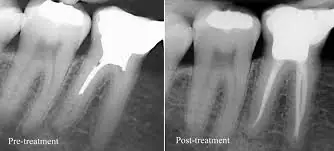
Tooth decay is the single most common cause of toothache worldwide. It occurs when bacteria in dental plaque produce acids that dissolve the tooth's hard outer enamel layer. Once the enamel is breached, the decay progresses into the softer dentin layer, where thousands of microscopic tubules connect directly to the nerve. At this stage, you begin to feel sensitivity and pain — particularly with sweet, hot, or cold foods and drinks. If left untreated, decay reaches the pulp (the nerve and blood vessel tissue at the centre of the tooth), causing severe pain and infection. Treatment for early decay is straightforward: a dental filling (from AED 150 at DCDC). Advanced decay that reaches the pulp requires root canal treatment.
2. Dental Abscess (Tooth Infection)
A dental abscess is a pocket of pus caused by a bacterial infection, either at the tip of the tooth root (periapical abscess) or in the gum alongside the root (periodontal abscess). Abscesses cause intense, throbbing pain that may radiate to the jaw, ear, or neck. You may notice swelling in the face or gum, a foul taste in the mouth from draining pus, fever, and general malaise. A dental abscess is a genuine medical emergency — the infection can spread to the jaw, head, neck, or even the bloodstream (sepsis) if untreated. Treatment involves draining the abscess, antibiotics, and addressing the source of infection through root canal treatment or extraction.
3. Gum Disease (Gingivitis and Periodontitis)
Gum disease is the leading cause of tooth loss in adults and a frequent source of dental discomfort. Gingivitis — the early, reversible stage — causes red, swollen, bleeding gums. If untreated, it progresses to periodontitis, where the infection destroys the bone and connective tissue supporting the teeth. Periodontitis can cause deep, aching pain, loose teeth, receding gums, and pockets of infection between the teeth and gums. Regular professional dental cleanings and good home oral hygiene are essential for prevention and management. For a detailed overview of treatment options and costs, see our guide on gum disease treatment in Dubai.
4. Cracked or Fractured Tooth
Teeth can crack from biting on hard objects, teeth grinding (bruxism), trauma, or large existing fillings that weaken the remaining tooth structure. A cracked tooth causes sharp, erratic pain when biting — often described as pain that comes and goes unpredictably. The pain occurs because the crack opens slightly under biting pressure, irritating the pulp, and then closes when pressure is released. Cracks range from superficial craze lines (harmless) to deep fractures that split the tooth or extend below the gumline. Treatment depends on severity: a dental crown can protect a cracked tooth that has not reached the pulp, while a crack that extends into the pulp may require root canal treatment and a crown.
5. Impacted or Erupting Wisdom Teeth
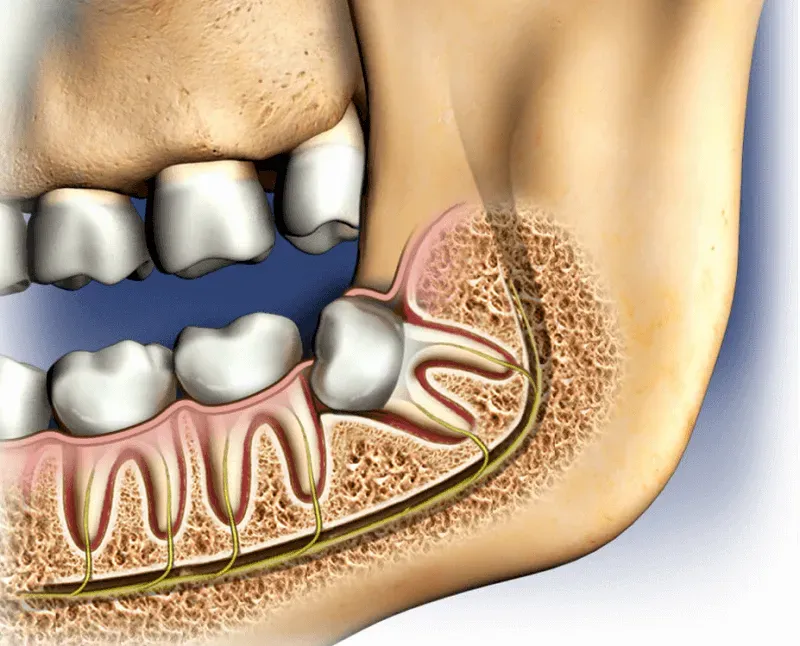
Wisdom teeth (third molars) typically emerge between ages 17 and 25 and are a very common source of toothache in young adults. When there is insufficient space in the jaw, wisdom teeth may become partially or fully impacted — trapped beneath the gum or bone. Impacted wisdom teeth can cause persistent dull pain in the back of the mouth, swelling and infection of the surrounding gum tissue (pericoronitis), pressure pain on adjacent teeth, and even cyst formation. Treatment usually involves extraction. For comprehensive information on the procedure and costs, see our guide on wisdom teeth removal in Dubai.
6. Tooth Sensitivity (Dentin Hypersensitivity)
Tooth sensitivity is a sharp, brief pain triggered by hot, cold, sweet, or acidic foods and drinks. It occurs when the dentin layer becomes exposed, usually due to enamel erosion, gum recession, or worn tooth surfaces. Unlike the prolonged sensitivity of pulpitis, dentin hypersensitivity is brief — lasting only seconds after the stimulus. Causes include aggressive brushing with a hard toothbrush, acidic diet (citrus, carbonated drinks), gum recession, teeth whitening products, and recent dental procedures. Treatment includes desensitising toothpaste, fluoride application, bonding agents, and addressing the underlying cause.
7. Failed or Damaged Dental Restoration
Old fillings, crowns, and other dental restorations can deteriorate over time. A filling that cracks, loosens, or falls out exposes the underlying tooth structure to bacteria and temperature changes, causing pain. A crown with a poor seal can allow bacteria to enter and cause decay underneath. Similarly, a previously root-canal-treated tooth can develop new infection if the restoration fails. If you have dental work that feels loose, rough, or different than usual, see your dentist before the problem escalates. Replacement fillings start from AED 150, and new dental crowns from AED 800 at DCDC. For details on crown options, see our guide on dental crown cost in Dubai.
8. Teeth Grinding and Clenching (Bruxism)
Bruxism — habitual grinding or clenching of the teeth — places excessive force on the teeth, jaw muscles, and temporomandibular joint (TMJ). It commonly occurs during sleep and is often linked to stress, anxiety, or sleep disorders. Bruxism can cause generalised tooth pain, jaw stiffness and soreness (especially in the morning), headaches, worn-down tooth surfaces, cracked teeth, and loosened fillings. Many people are unaware they grind their teeth until a dentist identifies the characteristic wear patterns. Treatment includes a custom night guard to protect the teeth, stress management, and repairing any teeth damaged by grinding.
9. Sinus-Related Tooth Pain
The roots of the upper back teeth (premolars and molars) sit very close to the maxillary sinuses. When the sinuses become inflamed or infected — due to a cold, allergies, or sinusitis — the resulting pressure can mimic a toothache. Sinus-related tooth pain typically affects multiple upper teeth simultaneously, worsens when bending forward, and is accompanied by nasal congestion, facial pressure, and postnasal drip. If your dentist determines that your tooth pain is sinus-related rather than dental in origin, treatment involves addressing the sinus condition with decongestants, nasal sprays, or antibiotics.
10. Trauma or Injury to a Tooth
A direct blow to the face — from sports, falls, or accidents — can damage teeth in several ways: chipping or fracturing the crown, displacing the tooth from its socket, damaging the root, or injuring the pulp even without a visible crack. Some dental injuries cause immediate pain, while others may not produce symptoms for weeks or even months as the damaged pulp slowly dies. Any trauma to the teeth or mouth should be evaluated by a dentist promptly, even if the teeth appear fine. At DCDC, our digital X-ray and CBCT imaging can detect fractures and pulp damage that are not visible to the naked eye.
Toothache Urgency Guide: When to Act
Understanding when to seek immediate care versus when you can safely wait for a scheduled appointment is critical. Use this urgency guide to assess your situation.
| Urgency Level | Symptoms | Recommended Action | Timeframe |
|---|---|---|---|
| Emergency (immediate) | Severe uncontrollable pain, facial or neck swelling, fever with dental pain, difficulty breathing or swallowing, uncontrolled bleeding, knocked-out tooth | Go to emergency dental clinic or hospital A&E immediately | Within hours |
| Urgent (same day) | Moderate-to-severe throbbing pain, pus discharge from gum, broken tooth with sharp edges, lost filling or crown with pain | Call your dentist for a same-day emergency appointment | Same day |
| Soon (within 1-2 days) | Persistent dull ache, sensitivity lasting more than 30 seconds, swollen gums without fever, pain when biting on a specific tooth | Book an appointment within 24-48 hours | 1-2 days |
| Routine (within 1-2 weeks) | Mild intermittent sensitivity, brief cold sensitivity, minor gum irritation, cosmetic chip without pain | Schedule a regular dental appointment | 1-2 weeks |
Toothache urgency assessment guide. When in doubt, call DCDC for professional advice — our team can help you determine the right course of action over the phone.
DCDC offers same-day emergency dental slots seven days a week. Our extended hours — Saturday to Thursday 8 AM to 10 PM and Friday 9 AM to 9 PM — mean you can get emergency dental care outside standard business hours without needing to visit a hospital emergency department.
Home Remedies for Temporary Toothache Relief
While home remedies cannot cure the underlying cause of a toothache, they can provide temporary relief until you see a dentist. The following methods are supported by clinical evidence and recommended by organisations such as the NHS and the American Dental Association.
- Saltwater rinse: Dissolve half a teaspoon of table salt in 250 ml of warm water and rinse gently for 30 seconds. Salt has natural disinfectant properties, reduces inflammation, and helps dislodge food particles trapped between teeth. Repeat two to three times daily as needed.
- Cold compress: Apply a bag of ice wrapped in a thin cloth to the outside of your cheek over the painful area for 15 to 20 minutes at a time. Cold constricts blood vessels, reduces swelling, and numbs the area. This is particularly effective for pain from trauma, swelling, or abscess.
- Over-the-counter pain medication: Ibuprofen (400 to 600 mg every 6 to 8 hours) is the most effective over-the-counter option for dental pain because it reduces both pain and inflammation. Paracetamol (500 to 1,000 mg every 4 to 6 hours) is an alternative if you cannot take ibuprofen. Avoid aspirin for dental pain — it can increase bleeding. Never place aspirin directly on the gum, as it causes chemical burns.
- Clove oil (eugenol): Clove oil contains eugenol, a natural anaesthetic and antiseptic that has been used in dentistry for centuries. Apply a small amount on a cotton ball and hold it against the painful tooth for 30 to 60 seconds. Use sparingly — undiluted clove oil can irritate the gums. Clove oil is available at most pharmacies in Dubai.
- Elevate your head when sleeping: Lying flat increases blood flow to the head, which can intensify throbbing tooth pain at night. Use an extra pillow to keep your head elevated and reduce pressure on the affected area.
- Avoid triggers: Until you see a dentist, avoid very hot, very cold, sweet, or acidic foods and drinks. Chew on the opposite side of your mouth from the painful tooth. Avoid hard, crunchy, or sticky foods that could worsen a crack or dislodge a filling.
Important: Home remedies are a temporary bridge to professional treatment — they do not address the cause. A toothache that requires painkillers for more than two days needs professional dental evaluation. Delaying treatment allows infections to spread, decay to deepen, and costs to escalate.
Toothache Treatment Options and Costs in Dubai
The treatment your dentist recommends depends entirely on the cause of your toothache. Here is a comprehensive overview of the most common treatments, what they involve, and what they cost in Dubai. All prices listed are starting prices at DCDC in Dubai Healthcare City.
| Treatment | Price at DCDC (AED) | Common Indications | Typical Duration |
|---|---|---|---|
| Dental consultation and X-ray | Varies by insurance | Initial diagnosis of any toothache | 20-30 minutes |
| Dental filling (composite) | From 150 | Cavities, minor fractures, replacement of old fillings | 30-45 minutes |
| Dental cleaning (scale and polish) | From 200 | Gum disease, plaque build-up, preventive care | 30-45 minutes |
| Root canal treatment | From 800 | Deep decay, pulp infection, abscess, cracked tooth reaching the nerve | 60-120 minutes |
| Dental crown | From 800 | Cracked tooth, post-root-canal restoration, large filling replacement | 2 visits |
| Wisdom teeth extraction | From 399 | Impacted wisdom teeth, pericoronitis, recurrent infection | 30-60 minutes |
| Abscess drainage and antibiotics | Varies | Acute dental abscess with swelling | 30-45 minutes |
| Night guard (for bruxism) | Varies | Teeth grinding, jaw pain, TMJ symptoms | 2 visits (impression + fitting) |
Toothache treatment costs at DCDC in Dubai Healthcare City. Prices are starting prices and may vary based on case complexity. Insurance may cover part or all of the cost. Contact DCDC for a personalised quote.
As the table shows, treating a toothache early — when the problem is a small cavity requiring a filling from AED 150 — is significantly more affordable than waiting until the decay reaches the nerve and a root canal (from AED 800) plus a crown (from AED 800) is needed. Early intervention is both the healthiest and the most economical approach. For detailed pricing on specific treatments, see our guides on root canal cost in Dubai and dental cleaning cost in Dubai.
Toothache? Get Same-Day Relief at DCDC
Do not suffer through another night of dental pain. Our experienced dental team at Doctors Clinic Diagnostic Center in Dubai Healthcare City provides same-day emergency dental appointments with transparent pricing. Fillings from AED 150, root canals from AED 800, with 20-plus insurance partners accepted and direct billing available.
Call us, WhatsApp, book online, or walk in — Sat-Thu 8 AM-10:30 PM, Fri 9 AM-10 PM. Free parking available.
How a Dentist Diagnoses the Cause of Your Toothache
When you visit a dentist with a toothache, the diagnostic process is systematic and thorough. Understanding what to expect can help reduce anxiety about your appointment.
- Medical and dental history: Your dentist will ask about the nature, location, duration, and intensity of your pain, what makes it better or worse, any recent dental work, medications you take, and your general health. Be as specific as possible — this information is often the most valuable diagnostic tool.
- Visual examination: A thorough inspection of the teeth, gums, tongue, and soft tissues using a dental mirror and explorer. Your dentist will look for visible decay, fractures, swelling, discoloration, gum recession, and signs of infection.
- Percussion and palpation: Gently tapping on individual teeth (percussion) and pressing on the surrounding gums (palpation) helps identify which tooth is causing the pain and whether the infection involves the bone around the root tip.
- Vitality testing: A cold test (placing a cold stimulus on the tooth) or an electric pulp test helps determine whether the tooth's nerve is alive, inflamed, or dead. The response — or lack of response — guides the diagnosis and treatment plan.
- Bite test: Biting on a special instrument (Tooth Slooth or cotton roll) isolates individual cusps to reproduce cracked-tooth pain and identify the exact location of a fracture.
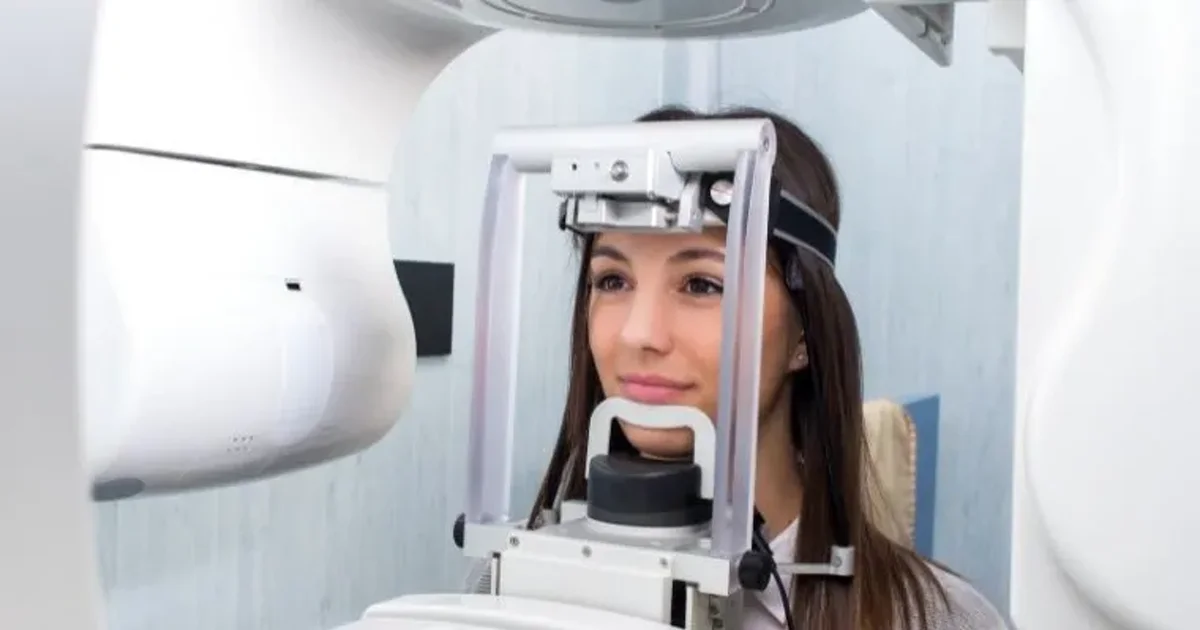
- Digital X-rays: Periapical and bitewing X-rays reveal decay between teeth, bone loss from gum disease, abscesses at the root tip, and the proximity of decay to the nerve. DCDC uses digital X-rays that reduce radiation exposure by up to 80 percent compared to traditional film.
- CBCT scan (when needed): For complex cases — suspected root fractures, difficult anatomy, or pre-surgical planning — a cone beam computed tomography (CBCT) scan provides a detailed three-dimensional view of the teeth, roots, bone, and surrounding structures. DCDC has on-site CBCT and OPG imaging for immediate, comprehensive diagnostics.
Toothache in Children: What Parents Should Know
Toothache is common in children and can be particularly distressing because younger children may struggle to describe or localise their pain. Parents should be aware of the most common causes and appropriate responses.
- Teething pain (6 months to 3 years): The eruption of primary (baby) teeth causes gum soreness, drooling, and irritability. Chilled teething rings and gentle gum massage typically provide relief. Teething does not cause high fever — if your child has a fever, seek medical evaluation.
- Cavities in baby teeth: Baby teeth are more susceptible to decay than permanent teeth because their enamel is thinner. Tooth pain in children is most commonly caused by cavities. Baby teeth with cavities should be treated — not ignored — because untreated infections can damage the developing permanent teeth underneath.
- Trauma: Falls and sports injuries frequently damage children's teeth. Even if a baby tooth appears unharmed after a knock, have it evaluated — damage to the developing permanent tooth underneath may not be immediately apparent.
- Eruption of permanent teeth (ages 6 to 13): Mild discomfort is normal as permanent teeth push through the gums. Significant pain or swelling, however, should be evaluated by a dentist.
- When to seek dental care: Take your child to the dentist if they have persistent tooth pain lasting more than a day, visible decay or a hole in a tooth, swelling of the face or gum, fever with dental pain, or a broken or knocked-out tooth.
Insurance Coverage for Toothache Treatment in Dubai
Most comprehensive dental insurance plans in the UAE cover the treatments needed to resolve a toothache. Understanding your coverage can significantly reduce your out-of-pocket costs.
- Consultations and X-rays: Typically covered under diagnostic and preventive benefits at 80 to 100 percent. Most plans allow two dental check-ups per year.
- Dental fillings: Covered under basic restorative benefits at 70 to 100 percent. Composite (tooth-colored) fillings are accepted by most plans without a surcharge.
- Root canal treatment: Covered under major restorative benefits at 50 to 80 percent. Pre-authorisation from the insurance company is usually required before treatment.
- Dental crowns: Covered under major restorative benefits at 50 to 80 percent. Some plans have a waiting period of 6 to 12 months for crowns.
- Extractions (including wisdom teeth): Simple extractions are typically covered under basic benefits. Surgical extractions (impacted wisdom teeth) are covered under major or surgical benefits.
- Emergency treatment surcharges: Many plans cover emergency dental visits, but some may apply a separate emergency copayment. Check your policy details.
DCDC is an in-network provider for over 20 insurance companies in the UAE, including Daman, AXA, Bupa, MetLife, and Cigna. We handle pre-authorisation and direct billing on your behalf, so you only pay your copayment — not the full fee upfront. For patients without insurance, we provide transparent self-pay pricing with no hidden fees.
What to Expect at DCDC: Your Toothache Visit
At Doctors Clinic Diagnostic Center in Dubai Healthcare City, we understand that a toothache is stressful. Our process is designed to get you out of pain quickly while providing thorough, long-term care. Here is what your visit looks like.
- Arrival and registration: Our clinic is located in Building 64, Block A, Al Razi Medical Complex in DHCC, with free dedicated on-site parking — just 10 minutes from Downtown Dubai. Walk in or arrive for your scheduled appointment. Our multilingual reception team handles registration efficiently, with an average wait time of just 15 minutes.
- Insurance verification: If you have dental insurance, our team verifies your coverage in real-time and handles all pre-authorisation. We work with over 20 insurance partners with direct billing, so you only pay your copayment.
- Examination and diagnosis: Dr. Chadi El Masry or one of our 6-plus dental specialists will examine the affected area, perform vitality testing, and take any necessary digital imaging — including digital X-rays (80 percent less radiation) and CBCT scans when needed. You will receive a clear explanation of the diagnosis.
- Pain relief: If you are in acute pain, immediate relief is the first priority. This may include local anaesthesia to numb the area, drainage of an abscess, removal of a source of irritation, or prescription of appropriate pain medication.
- Treatment plan and pricing: Before any treatment beyond emergency pain relief, your dentist will present a transparent, itemised treatment plan with costs. You will know exactly what is needed, why, and what it will cost before agreeing to proceed.
- Treatment: Many toothache treatments — fillings, root canals, extractions — can be performed on the same day as your emergency visit, eliminating the need for a second appointment in pain. Our dental suites are equipped with advanced rotary instrumentation, electronic apex locators, ultrasonic scalers, and ergonomic chairs.
- Aftercare and follow-up: You will receive detailed aftercare instructions, any necessary prescriptions, and a scheduled follow-up. Our team is available by phone and WhatsApp for any questions during your recovery. Clinic hours: Sat-Thu 8 AM-10:30 PM, Fri 9 AM-10 PM.
With a 4.8 out of 5 Google rating from over 1,000 verified reviews and a 98 percent patient satisfaction rate, DCDC is trusted by patients across Dubai for compassionate, high-quality dental care. Our MOHAP licence (No. NIMY7VY5-240925) confirms our commitment to meeting the highest regulatory standards in the UAE.
Dr. Chadi El Masry's Clinical Perspective on Toothache
"In my experience as a cosmetic and restorative dentistry specialist at DCDC, the most important message I give patients about toothache is this: the pain is your body telling you something is wrong, and it will not resolve on its own. I see patients every week who have been managing tooth pain with painkillers for weeks or months before coming in. By the time they visit, a problem that could have been fixed with a simple filling now requires a root canal, a crown, or even extraction."
"The most common cause of toothache I treat in Dubai is dental decay that has been allowed to progress. Our patient population is diverse, and dietary habits — particularly frequent consumption of sugary beverages and snacking between meals — contribute significantly to the high prevalence of cavities. The good news is that modern dentistry can treat virtually any toothache effectively and comfortably. With digital imaging, advanced anaesthesia techniques, and precise instrumentation, patients are consistently surprised at how painless and quick the treatment actually is. My advice: if you have a toothache, do not wait. The earlier you come in, the simpler, faster, and less expensive the solution will be."
How to Prevent Toothache: Evidence-Based Tips
The vast majority of toothaches are preventable. Following these evidence-based oral hygiene practices — recommended by the World Health Organization, the American Dental Association, and the NHS — can dramatically reduce your risk of developing dental pain.
- Brush twice daily for two minutes with fluoride toothpaste: Fluoride strengthens enamel and helps reverse early demineralisation before it becomes a cavity. Use a soft-bristled toothbrush and replace it every three months.
- Floss daily: Flossing removes plaque and food debris from between teeth and below the gumline — areas your toothbrush cannot reach. Interproximal (between-teeth) decay is one of the most common causes of toothache.
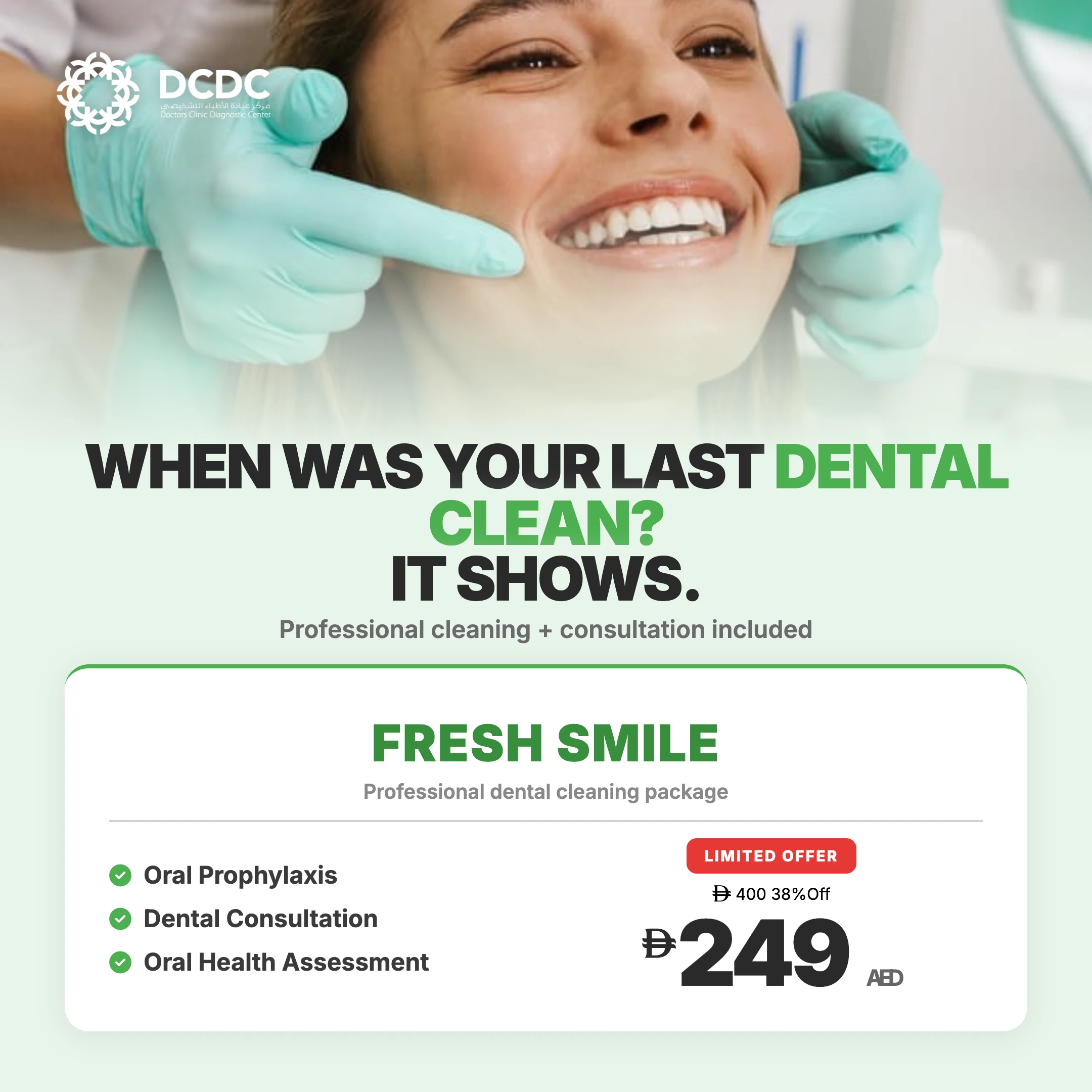
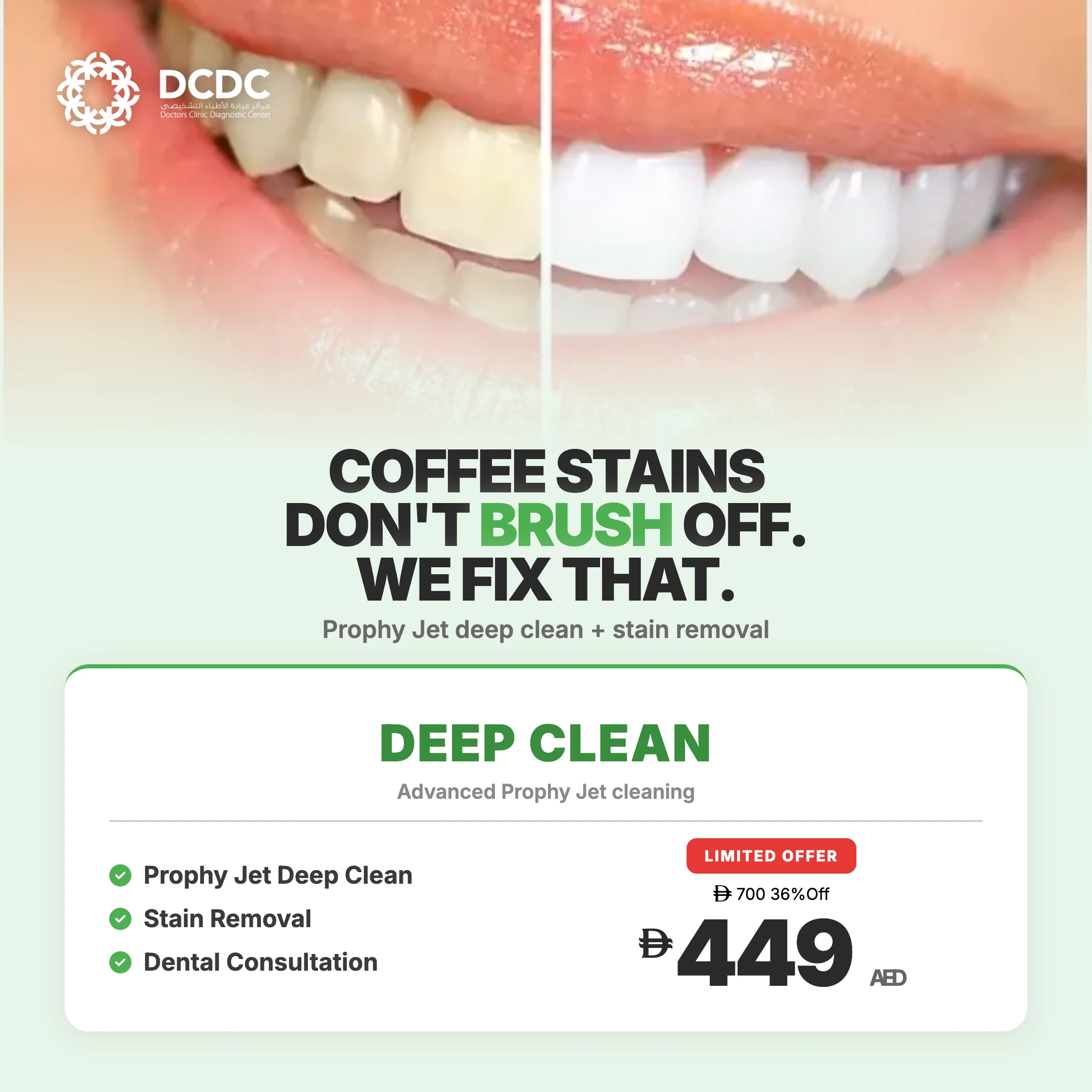
- Get professional dental cleanings every six months: Professional cleaning removes calculus (hardened plaque) that you cannot remove at home and allows your dentist to detect problems early. At DCDC, dental cleaning starts from AED 200 and includes an oral cancer screening. See our guide on dental cleaning cost in Dubai.
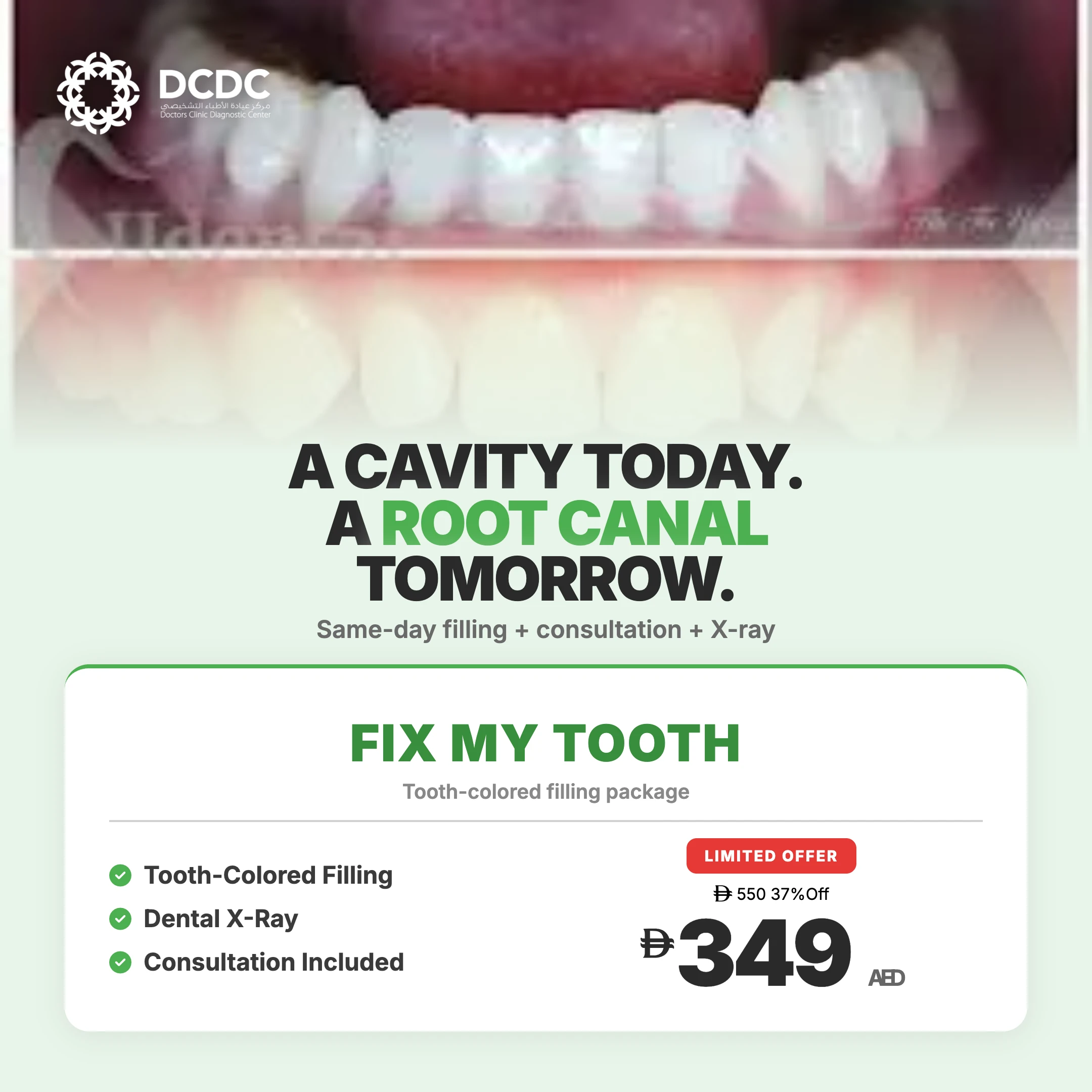
- Treat cavities early: A small filling (from AED 150) takes 30 minutes and prevents the decay from reaching the nerve. Waiting until pain develops often means the cavity has progressed to the point where a root canal (from AED 800) is needed.
- Limit sugar and acidic foods: Frequent sugar consumption feeds the bacteria that produce the acids causing decay. Carbonated drinks, energy drinks, and citrus juices directly erode enamel. Reducing the frequency of sugar and acid exposure is more important than reducing the total amount.
- Wear a mouthguard during sports: A custom-fitted mouthguard protects teeth from trauma during contact sports. A single knocked-out or cracked tooth can cost thousands to treat.
- Address teeth grinding: If you wake with jaw pain, headaches, or your partner reports grinding sounds, talk to your dentist about a custom night guard. Bruxism can crack teeth, wear down enamel, and cause chronic tooth pain.
- Do not use teeth as tools: Opening bottles, tearing packages, or chewing ice puts enormous stress on teeth and is a common cause of cracks and fractures that lead to toothache.
- Stay hydrated: Adequate water intake promotes saliva production, which naturally washes away food particles and neutralises acids. Dry mouth (xerostomia) significantly increases the risk of tooth decay.
Toothache vs Other Types of Facial Pain
Not all pain in the face, jaw, or mouth originates from a tooth. Several other conditions can mimic a toothache, and distinguishing between them is important for getting the right treatment.
- TMJ disorder (temporomandibular joint dysfunction): Pain in the jaw joint, difficulty opening the mouth, clicking or popping sounds when chewing, and pain that radiates to the ear or temple. TMJ pain is often mistaken for a toothache in the back teeth.
- Sinusitis: Inflammation of the maxillary sinuses can cause aching pain in the upper back teeth. The key differentiator is that sinus-related pain typically affects multiple teeth, worsens when bending forward, and is accompanied by nasal congestion.
- Trigeminal neuralgia: A neurological condition causing sudden, severe, electric-shock-like pain in the face. It can be triggered by touching the face, chewing, or speaking. The pain is often mistaken for dental pain, and patients sometimes undergo unnecessary dental procedures before the correct diagnosis is made.
- Ear infection: Pain from an ear infection can radiate to the jaw and teeth, particularly in children. If tooth pain is accompanied by ear pain, hearing changes, or ear discharge, an ear infection should be considered.
- Tension headache or migraine: Severe headaches can cause referred pain to the teeth and jaw. If your tooth pain always coincides with headaches and your dentist finds no dental cause, a neurological evaluation may be warranted.
A thorough dental examination — including X-rays and vitality testing — can definitively determine whether the pain is dental or non-dental in origin. If your dentist rules out a dental cause, they can refer you to the appropriate specialist for further evaluation.
When to Go to the Emergency Room for a Toothache
Most toothaches are best treated by a dentist rather than a hospital emergency room. However, certain situations require immediate emergency medical care. Go to the nearest hospital emergency department if you experience any of the following.
- Difficulty breathing or swallowing — this may indicate that a dental infection has spread to the airway, which is a life-threatening emergency (Ludwig's angina)
- Significant facial swelling that is spreading rapidly — especially swelling that extends to the eye, neck, or floor of the mouth
- High fever (above 38.5 degrees Celsius) with dental pain and swelling — indicating systemic infection that may require intravenous antibiotics
- Uncontrollable bleeding from the mouth after trauma or extraction
- Chest pain or signs of sepsis (rapid heart rate, confusion, extreme fatigue) in combination with a dental infection
For all other toothache emergencies — severe pain, broken teeth, lost fillings, abscesses with localised swelling — a dental clinic with emergency services is more appropriate than a hospital ER. DCDC offers same-day emergency dental appointments during extended clinic hours, and our dental team can provide definitive treatment rather than just pain medication and referral.
Do Not Wait Until a Toothache Becomes an Emergency
Early treatment saves your tooth, your time, and your money. Our team at Doctors Clinic Diagnostic Center in DHCC treats all types of toothache — from simple fillings (from AED 150) to emergency root canals (from AED 800). Rated 4.8/5 from 1,000+ verified reviews. MOHAP Licensed.
Walk in or book today — Sat-Thu 8 AM-10:30 PM, Fri 9 AM-10 PM. 20+ insurance partners with direct billing. Free parking.
خدمات مرتبط در DCDC
مراقبت تخصصی و تشخیص پیشرفته در شهر بهداشت دبی
سؤالات متداول
Final Thoughts
A toothache is your body's signal that something in your mouth needs attention — and it will not resolve on its own. Whether the cause is a small cavity, gum disease, a cracked tooth, an impacted wisdom tooth, or a dental abscess, early professional diagnosis and treatment is always the smartest approach. Treating a small cavity with a filling from AED 150 takes 30 minutes. Waiting until that cavity reaches the nerve means a root canal from AED 800, a crown from AED 800, and two or more appointments. The message is clear: early action saves your tooth, your time, and your money.
At Doctors Clinic Diagnostic Center in Dubai Healthcare City, our team of 6-plus dental specialists — including Dr. Chadi El Masry — provides expert diagnosis and treatment for every type of toothache. With same-day emergency appointments, digital X-rays and on-site CBCT imaging, transparent pricing, direct billing with 20-plus insurance partners, and extended clinic hours (Sat-Thu 8 AM-10:30 PM, Fri 9 AM-10 PM), getting the care you need has never been more accessible. If you have a toothache — mild or severe — contact us today or walk in. Your teeth will thank you.
منابع و مراجع
این مقاله توسط تیم پزشکی ما بررسی شده و به منابع زیر ارجاع میدهد:
- World Health Organization — Oral Health Fact Sheet
- Mayo Clinic — Toothache: First Aid
- Cleveland Clinic — Toothache: Symptoms, Causes & Remedies
- NHS Inform — Toothache: Causes, Symptoms and Treatment
- American Dental Association — Oral Health Topics: Tooth Pain
- American Association of Endodontists — Root Canal Treatment
محتوای پزشکی این سایت توسط پزشکان دارای مجوز DHA بررسی میشود. مشاهده سیاست تحریریه برای اطلاعات بیشتر.

نوشته شده توسط
Dr. Chadi El Masry
Cosmetic & Restorative Dentistry
DDS
دکتر شادی المصری متخصص دندانپزشکی زیبایی و ترمیمی در DCDC دبی است.
Related Articles
Root Canal Cost Dubai: From AED 800 (2026)
Dental Cleaning Cost Dubai: From AED 200 (2026)
Gum Disease Treatment Dubai: From AED 1,000 (2026)
Wisdom Teeth Removal Dubai: From AED 399 (2026)
Dental Fillings Cost Dubai: From AED 150 (2026)
بیشتر در Dental
Bad Breath Dubai: Causes & Treatment (2026)
بیشتر بخوانیدDental Cleaning Cost Dubai: From AED 200 (2026)
بیشتر بخوانید
Dental Crown Cost Dubai: From AED 800 (2026)
بیشتر بخوانیدDental Filling Cost Dubai: From AED 150 (2026)
بیشتر بخوانید
Dental Implant Cost Dubai: From AED 3,000 (2026)
بیشتر بخوانیدDentures Cost Dubai: Types & Prices (2026)
بیشتر بخوانید© 2026 Doctors Clinic Diagnostic Center (DCDC), Dubai Healthcare City. Originally published at https://doctorsclinicdubai.ae/blog/toothache-causes-treatment-dubai. All rights reserved. Unauthorized reproduction is prohibited.