Key Takeaways
- Bad breath (halitosis) affects up to 50 percent of the global population — 85-90 percent of cases originate from the oral cavity, making your dentist the first professional to consult for persistent bad breath
- The most common oral causes are bacterial buildup on the tongue, untreated gum disease (periodontitis), tooth decay, dry mouth, and poor oral hygiene — each requires a different treatment approach
- Halitosis self-testing at home: the wrist test, spoon/gauze test, floss test, and visual tongue inspection can help you assess whether you have bad breath before seeing a dentist
- Medical (non-oral) causes include tonsil stones, GERD (acid reflux), postnasal drip, diabetes (fruity breath), liver disease (musty breath), and kidney failure (ammonia breath) — these require specialist referral after dental causes are ruled out
- Treatment costs in Dubai are accessible: professional dental cleaning from AED 200, deep scaling from AED 500, dental fillings from AED 150, root canal from AED 700 per tooth at DCDC in Dubai Healthcare City
- Prevention requires 5 daily habits: brush twice daily, clean your tongue, floss daily, stay hydrated (especially in Dubai's heat), and schedule professional cleanings every 6 months
Bad breath — known medically as halitosis — is one of the most common yet least discussed oral health concerns. Studies estimate that up to 50 percent of the global population experiences halitosis at some point, and approximately 1 in 4 people suffers from chronic bad breath that does not resolve with brushing alone. If you are self-conscious about your breath or have been told by someone close to you that your breath smells unpleasant, you are not alone — and more importantly, the problem is almost always treatable. At DCDC's dental clinic in Dubai Healthcare City, our team of 6-plus dental specialists identifies and treats the root cause of bad breath, not just the symptom, with same-day consultations available seven days a week.
This comprehensive guide is designed as a symptoms resource. It begins with a self-assessment checklist so you can evaluate your own breath, provides a detailed causes checklist separating dental, medical, and dietary causes, explains when to see a dentist versus a doctor, outlines every treatment option available in Dubai organized by cause with transparent pricing, describes exactly what to expect at DCDC, and closes with 5 daily habits that prevent halitosis from returning.
Bad Breath Self-Assessment: Do You Have Halitosis?
One of the most challenging aspects of bad breath is that most people cannot reliably smell their own. This is due to olfactory adaptation — your brain filters out persistent smells from your own body. The following self-test methods transfer volatile sulphur compounds (VSCs, the primary chemicals responsible for halitosis) to a surface you can smell objectively.
Halitosis Self-Test Methods
- The wrist test: Lick the inside of your wrist with the back of your tongue, wait 10 seconds for the saliva to dry, and smell the area. If it smells unpleasant, you likely have halitosis. This method works because it transfers bacteria and VSCs from the tongue surface.
- The spoon or gauze test: Scrape the back of your tongue with a clean spoon or piece of gauze. Smell the residue after 30 seconds. The back of the tongue is the primary reservoir for odour-causing bacteria, and a foul smell from this test is a strong indicator.
- The floss test: Floss between your back teeth and smell the floss afterwards. An unpleasant odour indicates bacterial buildup and possibly food impaction or early gum disease between teeth.
- The mirror test: Look at your tongue in the mirror under good lighting. A thick white or yellowish coating on the back of your tongue indicates a heavy bacterial biofilm — the single most common source of oral malodour.
- Feedback from others: Social feedback — though uncomfortable — is often the most reliable indicator. Have a trusted person (partner, close friend, family member) honestly assess your breath at different times of day.
If two or more of these tests indicate bad breath, there is a strong likelihood that you have halitosis that would benefit from professional dental evaluation. The good news is that effective treatment is available for virtually every cause.
Bad Breath Causes Checklist: Dental vs Medical vs Dietary
Understanding the cause of your bad breath is essential because treatment depends entirely on the underlying problem. According to research published in the British Dental Journal and confirmed by the Mayo Clinic, approximately 85-90 percent of halitosis originates inside the mouth. The remaining 10-15 percent is caused by medical conditions elsewhere in the body. Here is a comprehensive checklist organized by category.
Dental Causes (85-90% of cases)
| Dental Cause | How It Causes Bad Breath | Key Symptoms | Treatment |
|---|---|---|---|
| Tongue bacteria coating | Bacteria on the rough tongue surface break down proteins to produce VSCs (hydrogen sulphide, methyl mercaptan) | White/yellow tongue coating, foul wrist/spoon test | Tongue scraping daily + professional cleaning |
| Gum disease (gingivitis/periodontitis) | Deep periodontal pockets trap food, bacteria, and pus producing continuous VSCs | Bleeding gums, red/swollen gums, loose teeth, gum recession | Professional cleaning, deep scaling, periodontal surgery if advanced |
| Tooth decay (cavities) | Cavities trap decomposing food particles and bacteria | Visible holes, tooth sensitivity, dark spots on teeth | Dental fillings, crowns, or root canal if deep |
| Dental abscess | Pocket of pus from infected tooth pulp produces intense foul odour | Severe toothache, facial swelling, fever, pus discharge | Root canal treatment or extraction + antibiotics |
| Dry mouth (xerostomia) | Reduced saliva allows bacteria to proliferate unchecked | Sticky dry feeling, cracked lips, difficulty swallowing | Hydration, saliva substitutes, medication review |
| Failed dental restorations | Old or poorly fitting fillings, crowns, and bridges trap bacteria at margins | Rough edges, food getting stuck, dark margins around fillings | Replacement of failed restoration |
| Impacted wisdom teeth | Partially erupted wisdom teeth create food-trapping pockets | Pain/swelling at back of mouth, difficulty opening mouth | Extraction or pericoronitis management |
Dental causes of bad breath with symptoms and treatment approaches. Your dentist can identify which of these applies to your situation during a comprehensive examination.
Medical Causes (10-15% of cases)
- Tonsil stones (tonsilloliths): Small calcified deposits in tonsil crevices harbour bacteria producing intense VSCs. Symptoms include a persistent foul smell, sensation of something stuck in the throat, and visible white/yellow deposits on tonsils. Treatment ranges from self-removal with gentle pressure to tonsillectomy for recurrent cases.
- Gastroesophageal reflux disease (GERD): Chronic acid reflux allows stomach contents to travel up the oesophagus, causing a sour or acidic breath odour. Often accompanied by heartburn, chest discomfort, and a bitter taste. Requires gastroenterologist evaluation.
- Postnasal drip and sinus infections: Mucus draining from sinuses to the back of the throat provides a protein-rich food source for bacteria. Common in Dubai where air conditioning and desert dust contribute to nasal congestion.
- Diabetes (uncontrolled): Produces a distinctive fruity or acetone-like breath from ketone bodies. This is particularly important as a warning sign of diabetic ketoacidosis, a medical emergency.
- Liver disease: Advanced liver disease produces a musty, fishy breath odour called fetor hepaticus.
- Kidney failure: Causes breath that smells of ammonia or urine (uremic fetor) due to waste product buildup.
- Respiratory infections: Bronchitis, pneumonia, lung abscesses, and bronchiectasis can produce foul-smelling breath.
Dietary Causes (temporary)
- Garlic and onions: Absorbed into the bloodstream during digestion and exhaled through the lungs. Odour persists even after brushing because the source is systemic, not oral.
- Coffee and alcohol: Dry the mouth, reducing saliva and allowing bacteria to proliferate. Effect is compounded when consumed regularly.
- Ketogenic/low-carb diets: Produce acetone-like "keto breath" from ketone body production. Resolves when carbohydrate intake normalises.
- Strong spices: Cumin, curry, and certain spice blends can produce lingering breath odour for 24-72 hours.
When to See a Dentist vs Doctor for Bad Breath
Since 85-90 percent of halitosis originates in the mouth, your dentist should always be your first point of contact. However, if dental treatment fully resolves oral causes and bad breath persists, a medical referral is appropriate.
| Urgency Level | Symptoms | See a... | Timeframe |
|---|---|---|---|
| Urgent (same day) | Bad breath with facial/gum swelling, fever, pus discharge, severe tooth pain, difficulty swallowing | Dentist (emergency) | Within 24 hours |
| Soon (within 1 week) | Persistent bad breath >2 weeks despite oral hygiene, bleeding gums, loose teeth, persistent bad taste, gum recession | Dentist | Within 1 week |
| Routine (2-4 weeks) | Occasional bad breath, morning breath not resolving after brushing, mild dry mouth, tongue coating | Dentist | 2-4 weeks |
| Medical referral needed | Bad breath persists after dental treatment, chronic acid reflux, postnasal drip, tonsil stones, fruity/ammonia breath | Gastroenterologist or ENT (after dental clearance) | After dental causes ruled out |
Bad breath urgency assessment guide. When in doubt, contact DCDC for a professional consultation.
Bad Breath Treatment by Cause: Costs in Dubai
The treatment for bad breath depends entirely on the diagnosed cause. The following table organizes treatments by the specific cause they address, so you can see exactly what is needed for your situation. All prices are starting prices at DCDC in Dubai Healthcare City. For patients with dental insurance, most treatments are partially or fully covered — DCDC works with 20+ insurance partners with direct billing. For related information, see our guide on dental cleaning cost in Dubai.
| Cause | Treatment | Price at DCDC (AED) | Duration | Expected Outcome |
|---|---|---|---|---|
| Tongue bacteria + plaque buildup | Professional dental cleaning (scale and polish) | From 200 | 30-45 min | Fresh breath in a single visit for many patients |
| Gum disease (moderate-advanced) | Deep scaling and root planing | From 500 | 60-90 min (may need multiple sessions) | Pocket depth reduction, halitosis improvement over 2-4 weeks |
| Tooth decay (cavities) | Dental filling (composite) | From 150 | 30-45 min | Eliminates bacteria-trapping cavity immediately |
| Infected tooth / abscess | Root canal treatment | From 700 | 60-120 min | Eliminates infection source, resolves pus-related odour |
| Advanced gum disease | Gum surgery (periodontal flap surgery) | From 1,000 | 60-90 min | Access for deep cleaning, pocket reduction |
| Impacted wisdom teeth | Wisdom teeth extraction | From 399 | 30-60 min | Removes food-trapping pocket permanently |
| Failed restoration | Crown/filling replacement | Varies by type | 30-60 min | Seals bacteria-trapping margin |
| Dry mouth | Medication review + saliva substitutes | Consultation fee | Ongoing management | Improved saliva flow, reduced bacterial growth |
Bad breath treatment options and costs at DCDC Dubai Healthcare City, organized by cause. Insurance direct billing available for 20+ providers.
As the pricing shows, treating the underlying cause is often surprisingly affordable. A professional dental cleaning — which resolves halitosis for many patients in a single visit — starts from just AED 200. Even when the cause is gum disease requiring deep scaling (from AED 500), the cost is a worthwhile investment in both oral health and confidence.
Concerned About Your Breath? Get Answers at DCDC
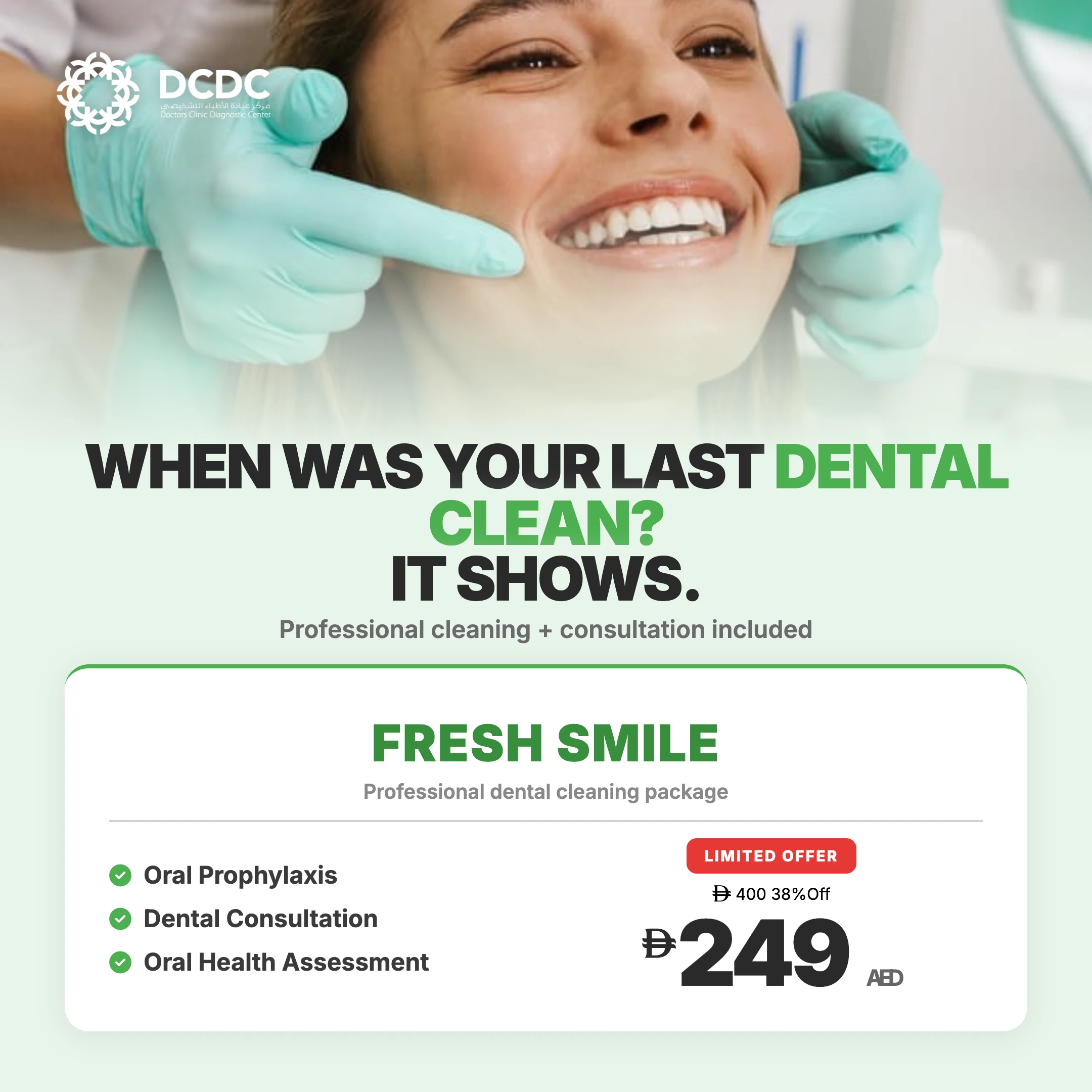
Our experienced dental team at Doctors Clinic Diagnostic Center in Dubai Healthcare City provides comprehensive halitosis diagnosis and treatment. Professional cleaning from AED 200, deep scaling from AED 500, with 20+ insurance partners and direct billing.
Call, WhatsApp, book online, or walk in — Sat-Thu 8 AM-10:30 PM, Fri 9 AM-10 PM. Free parking.
How Bad Breath Is Diagnosed: The Clinical Process
A thorough diagnostic process is essential because effective treatment requires identifying the specific cause. At DCDC, our dental team uses a systematic approach:
- Medical and dental history review: Duration and pattern of bad breath, oral hygiene routine, medications, dietary habits, smoking, medical conditions, and symptoms such as dry mouth, postnasal drip, or acid reflux.
- Organoleptic assessment: The gold standard — the dentist directly evaluates breath smell at close distance, characterizing the odour type (sulphurous, fruity, acidic, faecal) for diagnostic clues.
- Comprehensive oral examination: Inspection of teeth, gums, tongue, palate, and soft tissues for cavities, gum disease, tongue coating, dry mouth signs, and poorly fitting restorations.
- Periodontal probing: Measuring pocket depths between teeth and gums. Pockets deeper than 3-4 mm indicate gum disease and potential odour reservoirs.
- Digital X-rays and CBCT imaging: Radiographs reveal hidden cavities, bone loss, periapical infections, and impacted wisdom teeth. DCDC uses digital X-rays (80% less radiation) with on-site CBCT and OPG imaging.
- Diagnosis and treatment plan: Clear, itemized treatment plan with transparent pricing before any treatment begins.
Tobacco and Bad Breath
Smoking and tobacco use contribute to halitosis through multiple pathways simultaneously. Tobacco smoke leaves persistent stale odour on the breath, teeth, tongue, and soft tissues. Smoking dries the mouth by reducing saliva production, accelerates gum disease by impairing blood flow and suppressing immune response, stains teeth creating rough bacteria-harbouring surfaces, and alters the oral microbiome toward more odour-producing species. According to the World Health Organization, smokers are significantly more likely to develop gum disease and halitosis. Quitting tobacco is one of the most impactful steps for improving breath.
5 Daily Habits to Prevent Bad Breath
Once your dentist treats the underlying cause, maintaining fresh breath requires consistent daily habits. These evidence-based practices, recommended by the American Dental Association and the NHS, form the foundation of halitosis prevention.
- 1. Brush twice daily for two minutes with fluoride toothpaste: Use a soft-bristled toothbrush and pay attention to the gumline and all tooth surfaces. Replace your toothbrush every three months. This removes the bacterial plaque that produces VSCs.
- 2. Clean your tongue daily: Use a dedicated tongue scraper or the back of your toothbrush to clean the entire tongue surface from back to front. Tongue cleaning is arguably the single most effective daily measure against halitosis — studies show it reduces VSC levels by 40-75 percent.
- 3. Floss daily: Flossing removes food particles and plaque from between teeth and below the gumline — areas your toothbrush cannot reach. Decomposing food trapped between teeth is a major contributor to bad breath.
- 4. Stay hydrated throughout the day: Drink water regularly to maintain saliva flow. This is especially critical in Dubai, where high temperatures, air conditioning, and outdoor heat exposure increase dehydration risk. Aim for 2-3 litres daily. Carry a water bottle.
- 5. Schedule professional dental cleanings every 6 months: Professional cleaning removes calculus and bacterial biofilm from areas you cannot clean at home. At DCDC, dental cleaning starts from AED 200 and includes an oral cancer screening. For patients with active gum disease, cleanings every 3-4 months may be recommended until the condition stabilises. For a detailed guide on professional cleaning, see our gum disease treatment guide.
Bonus tips: Use an antimicrobial mouthwash (chlorhexidine or zinc-based) as a supplement to brushing and flossing, not a replacement. Chew sugar-free gum with xylitol to stimulate saliva. Avoid alcohol-based mouthwashes if you have dry mouth. Limit odour-causing foods before social situations.
What to Expect at DCDC: Your Bad Breath Consultation
At Doctors Clinic Diagnostic Center in Dubai Healthcare City, we understand that seeking help for bad breath can feel sensitive. Our team provides professional, non-judgmental consultation focused on identifying the cause and providing effective treatment.
- Arrival and registration: Building 64, Block A, Al Razi Medical Complex in Dubai Healthcare City, with free parking. Walk in during extended hours (Sat-Thu 8 AM-10:30 PM, Fri 9 AM-10 PM).
- Insurance verification: Real-time coverage verification and pre-authorization with 20+ insurance partners including Daman, AXA, Bupa, MetLife, and Cigna. Direct billing so you only pay your copayment.
- Comprehensive examination: Dr. Chadi El Masry or one of our 6+ dental specialists conducts a full clinical examination including tongue assessment, periodontal probing, organoleptic evaluation, and digital imaging.
- Same-day treatment (when appropriate): Many bad breath treatments — professional cleaning, scaling, fillings, tongue debridement — can be performed on the same day. Our ultrasonic scalers provide thorough, comfortable cleaning.
- Follow-up and maintenance plan: Detailed home care instructions, necessary prescriptions, and a recommended follow-up schedule. Our team is available by phone and WhatsApp for questions.
With a 4.8/5 Google rating from over 1,000 verified reviews and a 98% patient satisfaction rate, DCDC is trusted by patients across Dubai. Our MOHAP licence (No. NIMY7VY5-240925) confirms the highest regulatory standards.
Dr. Chadi El Masry's Clinical Perspective
"As a cosmetic and restorative dentistry specialist at DCDC, I see patients for bad breath more often than you might expect. In my experience, the most common cause is a combination of tongue bacteria, early gum disease, and calculus buildup that responds very well to professional cleaning and improved home care. The key is accurate diagnosis. I always perform a systematic evaluation — checking the tongue, measuring periodontal pockets, examining every tooth, and using our digital imaging when needed — because bad breath often has multiple contributing factors that all need to be addressed."
"What I tell patients who are embarrassed about their breath is this: you have taken the most important step by coming in. Bad breath is a medical condition with medical solutions — not a personal failing. With the right diagnosis and treatment, the vast majority of my patients achieve fresh, confident breath within one to two visits."
Bad Breath in Children: What Parents Should Know
- Poor brushing technique: Young children lack dexterity. Supervise until age 7-8 and teach tongue cleaning.
- Mouth breathing: From enlarged adenoids, allergies, or nasal congestion. Causes dry mouth and halitosis. May need ENT evaluation.
- Foreign object in the nose: Young children sometimes insert small objects. Causes foul nasal discharge and bad breath. Requires medical removal.
- Tooth decay: Sugary snacks and drinks increase cavity risk and bacterial odour.
- Tonsil infections: Recurrent tonsillitis or tonsil stones. If chronic sore throats accompany bad breath, an ENT referral may be needed.
If your child's bad breath persists despite good oral hygiene, schedule a dental check-up. At DCDC, our dental team is experienced with paediatric patients. For related dental care guidance, see our toothache causes and treatment guide.
Insurance Coverage for Bad Breath Treatment
- Dental consultations and X-rays: Covered at 80-100% under diagnostic/preventive benefits
- Professional cleaning: Covered at 80-100% under preventive benefits (1-2 per year)
- Deep scaling and root planing: Covered at 50-80% under periodontal benefits (pre-authorization usually required)
- Dental fillings: Covered at 70-100% under basic restorative benefits
- Root canal treatment: Covered at 50-80% under major restorative benefits
- Gum surgery: Covered at 50-70% under surgical/major benefits (pre-authorization required)
DCDC is an in-network provider for over 20 insurance companies. Our insurance team handles pre-authorization and direct billing so you only pay your copayment at the time of visit.
Fresh Breath Starts With a Single Appointment
Take the first step toward confident, fresh breath. Professional cleaning from AED 200, deep scaling from AED 500, with 20+ insurance partners and direct billing. Rated 4.8/5 from 1,000+ verified reviews. MOHAP Licensed.
Walk in or book today — Sat-Thu 8 AM-10:30 PM, Fri 9 AM-10 PM. Free parking.
Related Services at DCDC
Expert care and advanced diagnostics at Dubai Healthcare City
Frequently Asked Questions
Final Thoughts
Bad breath is far more common than most people realise — affecting up to half the population — yet it remains one of the most undertreated conditions because of embarrassment. The most important takeaway is that halitosis is almost always treatable. Whether the cause is tongue bacteria, gum disease, dry mouth, tooth decay, tonsil stones, or a systemic condition, modern dentistry and medicine have effective solutions. A professional dental cleaning (from AED 200) resolves bad breath for many patients in a single visit.
At Doctors Clinic Diagnostic Center in Dubai Healthcare City, our team of 6+ dental specialists provides confidential, non-judgmental halitosis diagnosis and treatment. With same-day appointments, transparent pricing, direct billing with 20+ insurance partners, extended hours (Sat-Thu 8 AM-10:30 PM, Fri 9 AM-10 PM), and free parking, there is no reason to live with bad breath any longer. Your journey to fresh, confident breath starts with a single appointment.
Sources & References
This article was reviewed by our medical team and references the following sources:
- Mayo Clinic — Bad Breath: Symptoms and Causes
- Cleveland Clinic — Halitosis (Bad Breath): Causes, Treatment and Prevention
- NHS — Bad Breath (Halitosis): Overview
- World Health Organization — Oral Health Fact Sheet
- National Institutes of Health (PubMed) — Halitosis: An Overview of Epidemiology, Etiology and Clinical Management
- American Dental Association — Oral Health Topics: Bad Breath
- British Dental Journal — Halitosis: A Systematic Review of Current Practice
Medical content on this site is reviewed by DHA-licensed physicians. See our editorial policy for more information.

Written by
Dr. Chadi El Masry
General & Cosmetic Dentist
DDS
Dr. Chadi El Masry is a General & Cosmetic Dentist at Doctors Clinic Diagnostic Center (DCDC) in Dubai Healthcare City.
Related Articles

Dental Cleaning Cost Dubai: From AED 200 (2026)
Gum Disease Treatment Dubai: From AED 1,000 (2026)
Toothache Dubai: Causes & When to See a Dentist (2026)
Root Canal Cost Dubai: From AED 700 (2026)
Wisdom Teeth Removal Dubai: From AED 399 (2026)
More in Dental
Zirconia vs Porcelain Crown Dubai: Guide (2026)
Read More
Zoom Whitening Cost Dubai: From AED 699 (2026)
Read MoreMouth Ulcers Dubai: Causes & When to Worry (2026)
Read MoreDental Anxiety Dubai: Tips to Overcome Fear (2026)
Read MoreDry Mouth Dubai: Causes & Treatment (2026)
Read MoreChipped Tooth Repair Dubai: What to Do (2026)
Read More© 2026 Doctors Clinic Diagnostic Center (DCDC), Dubai Healthcare City. Originally published at https://doctorsclinicdubai.ae/blog/bad-breath-causes-treatment-dubai. All rights reserved. Unauthorized reproduction is prohibited.