نکات کلیدی
- Back pain affects 50-80% of pregnant women and is not something you simply have to endure -- physiotherapy effectively reduces it
- Lumbar pain and pelvic girdle pain are two distinct conditions with different causes and treatments; identifying which you have changes the management approach
- The hormone relaxin loosens ligaments from the first trimester, making joints less stable and more prone to pain -- this is normal but manageable
- Cat-cow stretches, pelvic tilts, and side-lying glute exercises are safe throughout pregnancy and directly target the mechanisms causing back pain
- Sleeping on your left side with a pillow between your knees and under your belly significantly reduces nocturnal back pain
- Pregnancy support belts (sacroiliac belts) provide meaningful relief for pelvic girdle pain, especially during walking and standing
- Back pain combined with regular tightening, vaginal bleeding, or pressure low in the pelvis may indicate preterm labour -- seek immediate medical attention
- Physiotherapy during pregnancy is safe at all stages when delivered by a practitioner experienced in prenatal care
Your body is doing something remarkable, but it is also asking your spine to handle forces it was never designed for. As your baby grows, your centre of gravity shifts forward, your lumbar curve deepens, your ligaments loosen, and the muscles that normally stabilise your pelvis and lower back are stretched and weakened. The result, for more than half of all pregnant women, is back pain that ranges from a dull ache to genuinely debilitating. The good news is that targeted physiotherapy can reduce this pain significantly -- and safely.
This guide is specifically about treating back pain during pregnancy. It is not a general prenatal exercise guide -- for broader pregnancy fitness recommendations, see our prenatal physiotherapy exercises guide. Here, we focus on why pregnancy causes back pain, how to distinguish lumbar pain from pelvic girdle pain (they require different treatment), safe treatment options by trimester, and the warning signs that back pain may indicate something more serious.
Health Screening Packages
Save with our bundled screening packages — specialist consultation included




Why Does Pregnancy Cause Back Pain?
Pregnancy-related back pain is not simply from "carrying extra weight." It results from a combination of biomechanical, hormonal, and muscular changes that interact in complex ways. Understanding these mechanisms helps explain why specific exercises and treatments work, while generic advice to "rest more" often does not help.
- Centre of gravity shift: As the uterus grows, the centre of gravity moves forward. To compensate, most women increase their lumbar lordosis (lower back curve), which compresses the facet joints and overloads the paraspinal muscles
- Hormone relaxin: Released from the first trimester, relaxin loosens ligaments throughout the body, particularly in the pelvis (sacroiliac joints and pubic symphysis). This is essential for birth but reduces joint stability, making the pelvis and lower back more vulnerable to pain
- Abdominal muscle stretching: The rectus abdominis muscles stretch and may separate (diastasis recti), reducing their ability to support the spine from the front. This transfers load to the back muscles
- Weight gain: A healthy pregnancy involves 10-15 kg of weight gain, increasing the load on the lumbar spine and pelvic joints
- Postural changes: Breast enlargement shifts upper body weight forward, the pelvis tilts anteriorly, and compensatory changes occur throughout the spine
- Vascular compression: In later pregnancy, the enlarged uterus can compress the inferior vena cava when lying supine, causing back discomfort and dizziness
Is Your Pain Lumbar or Pelvic Girdle Pain? Why It Matters
This distinction is clinically important because lumbar pain and pelvic girdle pain have different causes and require different treatment approaches. About one-third of pregnant women with "back pain" actually have pelvic girdle pain, and many have both. A physiotherapist experienced in prenatal care can differentiate between them through specific clinical tests.
| Feature | Lumbar Back Pain | Pelvic Girdle Pain (PGP) |
|---|---|---|
| Location | Lower back, above the waist, around the lumbar spine | Deep in the buttocks, around the sacroiliac joints, and/or at the pubic bone (symphysis) |
| Pain pattern | Constant dull ache, worse with prolonged sitting or standing | Sharp or stabbing with specific movements: turning in bed, climbing stairs, single-leg standing |
| Aggravating activities | Sitting at a desk, bending forward, lifting | Walking (especially on uneven ground), rolling in bed, getting in/out of a car, single-leg activities |
| Typical onset | Usually second or third trimester | Can start as early as first trimester; often worsens as pregnancy progresses |
| Mechanism | Increased lumbar lordosis, facet joint compression, muscle overload | Sacroiliac joint instability from relaxin, pubic symphysis laxity |
| Treatment focus | Core stability, lumbar stretching, posture correction, manual therapy | Pelvic stability exercises, sacroiliac belt, activity modification, manual therapy of SI joints |
| Prevalence | About 50% of pregnant women | About 20-25% of pregnant women (often co-exists with lumbar pain) |
Many women have overlapping symptoms. A prenatal physiotherapy assessment can identify the primary source and tailor treatment accordingly.
What Safe Exercises Relieve Back Pain During Pregnancy?
The following exercises are specifically designed to address the biomechanical causes of pregnancy back pain. They are safe at all stages of pregnancy when performed correctly, but always consult your obstetrician or physiotherapist before starting a new exercise programme during pregnancy. After 20 weeks, avoid exercises performed lying flat on your back for extended periods.
Exercises for Lumbar Back Pain
- Cat-cow stretch (all fours): On hands and knees, alternate between arching your back (cat) and dropping your belly (cow). Move slowly with your breath. 10-15 repetitions, 2-3 times daily. This is the single most effective exercise for pregnancy lumbar pain -- it gently mobilises the spine and relieves compression
- Pelvic tilts (standing or all fours): Gently tuck your pelvis under (flatten your lower back) and hold for 5 seconds, then release. 10-15 repetitions. Strengthens the deep abdominals and relieves lumbar compression
- Child's pose (modified): Kneel with knees wide apart to make room for your belly, sit back toward your heels, and stretch your arms forward. Hold for 30 seconds. Gentle lumbar stretch and relaxation
- Seated rotation stretch: Sit on a chair, gently rotate your upper body to one side, holding the back of the chair. Hold 20 seconds each side. Relieves thoracolumbar stiffness
Exercises for Pelvic Girdle Pain
- Side-lying hip abduction (clamshells): Lie on your side with knees bent, keeping feet together, lift the top knee. 15 repetitions each side. Strengthens the gluteus medius, which is critical for sacroiliac joint stability
- Bridge (to 20 weeks, then modified): Lie on your back (before 20 weeks) or use a wedge pillow, press through your feet to lift your hips. 10-15 repetitions. After 20 weeks, perform against a wall in standing
- Transverse abdominis activation: On all fours, gently draw your lower belly in toward your spine without moving your back. Hold 10 seconds, repeat 10 times. The deepest abdominal muscle that stabilises the pelvis
- Standing pelvic floor squeezes: Contract your pelvic floor muscles (as if stopping urine flow), hold 5-10 seconds, relax fully. 10 repetitions, 3 times daily. Pelvic floor strength directly supports sacroiliac joint stability
How Is Pregnancy Back Pain Treated by Trimester?
Treatment is adjusted throughout pregnancy as the body changes and as certain positions and techniques become inappropriate. A physiotherapist experienced in prenatal care will modify the programme at each stage. Here is what treatment typically looks like by trimester.
| Trimester | Common Presentation | Safe Treatment Approaches | Precautions |
|---|---|---|---|
| First (Weeks 1-12) | Mild lumbar ache, early PGP in some women, fatigue | Core activation, pelvic floor training, gentle stretching, posture education, all exercise positions safe | Avoid overheating; reduce intensity if fatigued or nauseous |
| Second (Weeks 13-27) | Increasing lumbar lordosis, growing belly shifts centre of gravity, PGP may intensify | Cat-cow, clamshells, pelvic tilts, aquatic exercise, manual therapy, sacroiliac belt if indicated | After week 20, avoid prolonged supine lying; modify exercises to side-lying or all-fours positions |
| Third (Weeks 28-40) | Peak pain intensity, significant weight load, sleep disruption from pain, difficulty with daily activities | Modified exercises (standing, side-lying, seated), gentle manual therapy, birth preparation positioning, TENS for pain relief | Avoid deep squats if PGP is severe; listen to body signals; reduce intensity as delivery approaches |
Treatment is progressive and responsive. Your physiotherapist will adapt the plan as your pregnancy advances.
What Are the Best Sleeping Positions for Pregnancy Back Pain?
Sleep disruption from back pain is one of the most frustrating aspects of pregnancy. The right sleeping position can dramatically reduce nocturnal pain, while the wrong one can make morning stiffness unbearable. After 20 weeks, sleeping on your back is not recommended because the weight of the uterus can compress the inferior vena cava, reducing blood flow to you and your baby.
- Left side-lying (preferred): Lie on your left side with a pillow between your knees and a small pillow or folded towel under your belly. This keeps the pelvis aligned, reduces sacroiliac joint strain, and optimises blood flow to the uterus
- Pillow between the knees: A firm pillow between the knees from hip to ankle prevents the top leg from pulling the pelvis into rotation, which is a major cause of nocturnal PGP
- Pregnancy body pillow: A full-length body pillow supports both the belly and the knees simultaneously, and gives you something to "hug" which reduces shoulder and upper back strain
- Getting out of bed: Roll onto your side, push up with your arms while swinging your legs off the bed. Avoid sitting straight up from lying, which strains the abdominals and lower back
Do Pregnancy Support Belts Actually Work?
Pregnancy support belts (particularly sacroiliac belts) have reasonable evidence supporting their use for pelvic girdle pain. They work by externally compressing the sacroiliac joints, providing the stability that relaxin-loosened ligaments cannot. They are most effective for PGP during walking, standing, and weight-bearing activities. For lumbar-dominant pain, the evidence is less clear, but many women report subjective benefit.
- Sacroiliac belt (narrow, positioned low): Best evidence. Worn below the belly around the hips/greater trochanters. Stabilises the SI joints. Most effective for PGP
- Maternity support belt (wide, under belly): Lifts the belly to reduce the forward pull on the lumbar spine. More helpful for lumbar pain than PGP
- When to use: During prolonged standing, walking, or activities that trigger pain. Not recommended for 24-hour wear as the muscles need to maintain their own strength
- Important note: A belt is a supplement to exercise therapy, not a replacement. Strengthening the pelvic stabilisers remains the primary treatment
When Does Pregnancy Back Pain Signal Something Serious?
Most pregnancy back pain is musculoskeletal and benign, but certain patterns of back pain during pregnancy can indicate conditions requiring urgent medical attention. Contact your obstetrician or go to the hospital if you experience any of the following.
- Regular, rhythmic lower back pain (tightening and releasing): Before 37 weeks, this may indicate preterm labour contractions, which can present as back pain rather than abdominal cramping
- Back pain with vaginal bleeding or unusual discharge: May indicate placental problems or preterm labour
- Severe, constant back pain that does not change with position: Could indicate kidney infection (pyelonephritis), which is more common in pregnancy and requires antibiotics
- Back pain with fever: Urinary tract infection or kidney infection
- Back pain with painful or frequent urination: UTI, common in pregnancy, can cause referred back pain
- Sudden, severe back pain with leg weakness or numbness: Although rare in pregnancy, disc herniation requiring urgent evaluation can occur
Struggling with Back Pain During Pregnancy?
You do not have to wait until after delivery for relief. Our physiotherapy team at DCDC Dubai Healthcare City provides safe, evidence-based treatment for pregnancy back pain at every stage. We work alongside our obstetrics team to ensure your care is coordinated and appropriate.
Book a Prenatal Physiotherapy Session
خدمات مرتبط در DCDC
مراقبت تخصصی و تشخیص پیشرفته در شهر بهداشت دبی
Frequently Asked Questions
Final Thoughts
Pregnancy back pain is so common that many women accept it as inevitable and simply endure it. But there is a significant difference between normal discomfort and pain that disrupts your sleep, limits your ability to work, and takes the joy out of pregnancy. Physiotherapy does not eliminate all discomfort, but it can reduce pain to manageable levels and give you tools to cope with the ongoing changes in your body.
The most important takeaway is that treatment should be specific: lumbar pain and pelvic girdle pain require different approaches, exercises should be adapted to your trimester, and any back pain with warning signs (regular tightening, bleeding, fever) needs medical attention rather than physiotherapy. Our team at DCDC Dubai Healthcare City works closely with our obstetrics department to ensure your prenatal care is comprehensive and safe.
منابع و مراجع
این مقاله توسط تیم پزشکی ما بررسی شده و به منابع زیر ارجاع میدهد:
- Cochrane Review - Interventions for Preventing and Treating Pelvic and Back Pain in Pregnancy (2015)
- ACOG - Exercise During Pregnancy (Committee Opinion 804, 2020)
- European Spine Journal - Pelvic Girdle Pain During Pregnancy: Pathophysiology and Treatment (2019)
- British Journal of Sports Medicine - Exercise in Pregnancy: Safety and Evidence (2018)
- WHO - Recommendations on Antenatal Care for a Positive Pregnancy Experience (2016)
- Dubai Health Authority - Maternal and Child Health Standards
محتوای پزشکی این سایت توسط پزشکان دارای مجوز DHA بررسی میشود. مشاهده سیاست تحریریه برای اطلاعات بیشتر.

نوشته شده توسط
Dr. Parisa Dini
Gynecology & Obstetrics
MD, OB-GYN
Dr. Parisa Dini is a Gynecologist at Doctors Clinic Diagnostic Center (DCDC) in Dubai Healthcare City, providing comprehensive women's health care services including prenatal care, screening, and preventive gynecology.
Related Articles
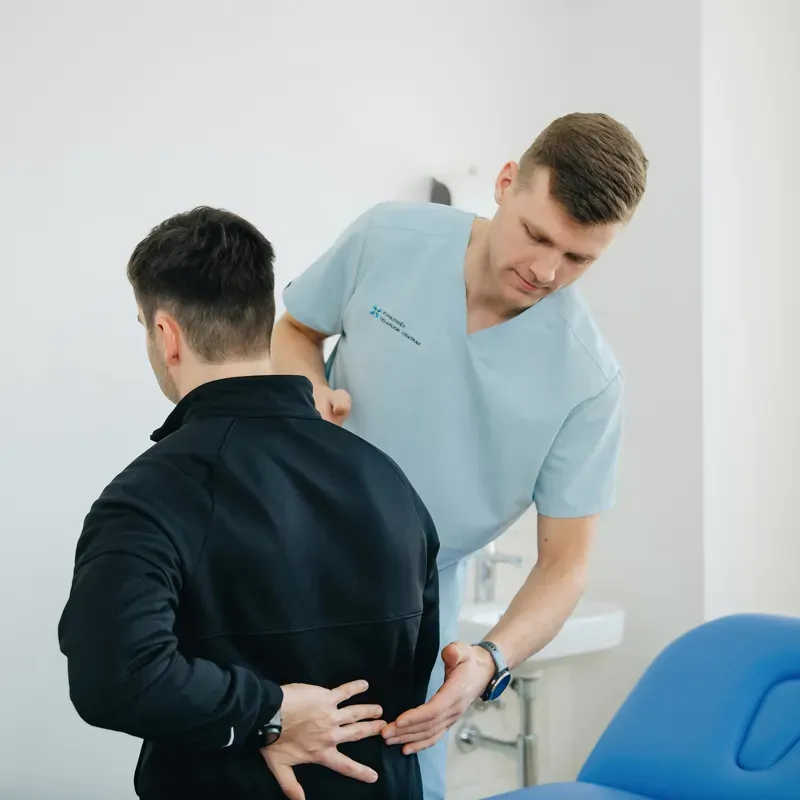
Complete Guide to Physiotherapy in Dubai: Types, Costs & What to Expect

Prenatal Physiotherapy Exercises for a Healthy Pregnancy
Pelvic Floor Physiotherapy Dubai: Complete Guide

Lower Back Pain Exercises: A Physiotherapy Guide
More in Women's Health

Perimenopause vs Menopause Dubai: Signs (2026)
بیشتر بخوانید
Mother & Baby Home Care Dubai: Guide (2026)
بیشتر بخوانید
Gestational Diabetes Dubai: Screening (2026)
بیشتر بخوانید
Mammogram Preparation Dubai: What to Expect (2026)
بیشتر بخوانید
CA-125 Test Dubai: Ovarian Cancer Marker (2026)
بیشتر بخوانیدMammogram vs Breast Ultrasound Dubai (2026)
بیشتر بخوانید© 2026 Doctors Clinic Diagnostic Center (DCDC), Dubai Healthcare City. Originally published at https://doctorsclinicdubai.ae/blog/pregnancy-back-pain-physiotherapy. All rights reserved. Unauthorized reproduction is prohibited.