
نکات کلیدی
- Allergy tests in Dubai include IgE blood panels (from AED 550), skin prick tests (from AED 300), patch tests (from AED 400), and IgG food intolerance panels (from AED 950). The right test depends on your symptoms — a doctor should guide the choice.
- IgE-mediated allergies (true allergies) cause immediate reactions — hives, swelling, breathing difficulty, anaphylaxis — and are diagnosed by specific IgE blood tests or skin prick testing. IgG food intolerance causes delayed, non-life-threatening symptoms like bloating and fatigue.
- Dubai's environment is a hotspot for allergies: dust mites thrive in AC-cooled, carpeted homes; mould grows in poorly maintained AC units; sand and construction dust trigger respiratory allergies; and the expatriate population encounters new allergens not present in their home countries.
- Skin prick tests give results in 15-20 minutes and test 20-40 allergens at once but require stopping antihistamines 5-7 days before the test. IgE blood tests require no preparation, are unaffected by medications, and can test hundreds of specific allergens.
- Food intolerance (IgG) testing is different from food allergy (IgE) testing. Food allergies are potentially life-threatening and involve the immune system's IgE pathway. Food intolerances cause uncomfortable but not dangerous symptoms and involve the IgG pathway or non-immune mechanisms.
- At DCDC Dubai Healthcare City, allergy testing is available as walk-in or by appointment, with results typically available within 24-48 hours for blood tests and immediately for skin prick tests.
If you have been sneezing every time the AC kicks in, breaking out in hives after certain foods, dealing with unexplained eczema flare-ups, or suffering from chronic nasal congestion that antihistamines barely touch — you likely need proper allergy testing rather than guesswork. Dubai's unique mix of dust mites, AC mould, pet dander, and imported foods means allergies are extremely common here — and many residents develop new allergies after moving to the UAE. This guide explains every type of allergy test available in Dubai, what each one costs, how to prepare, and how to interpret your results.
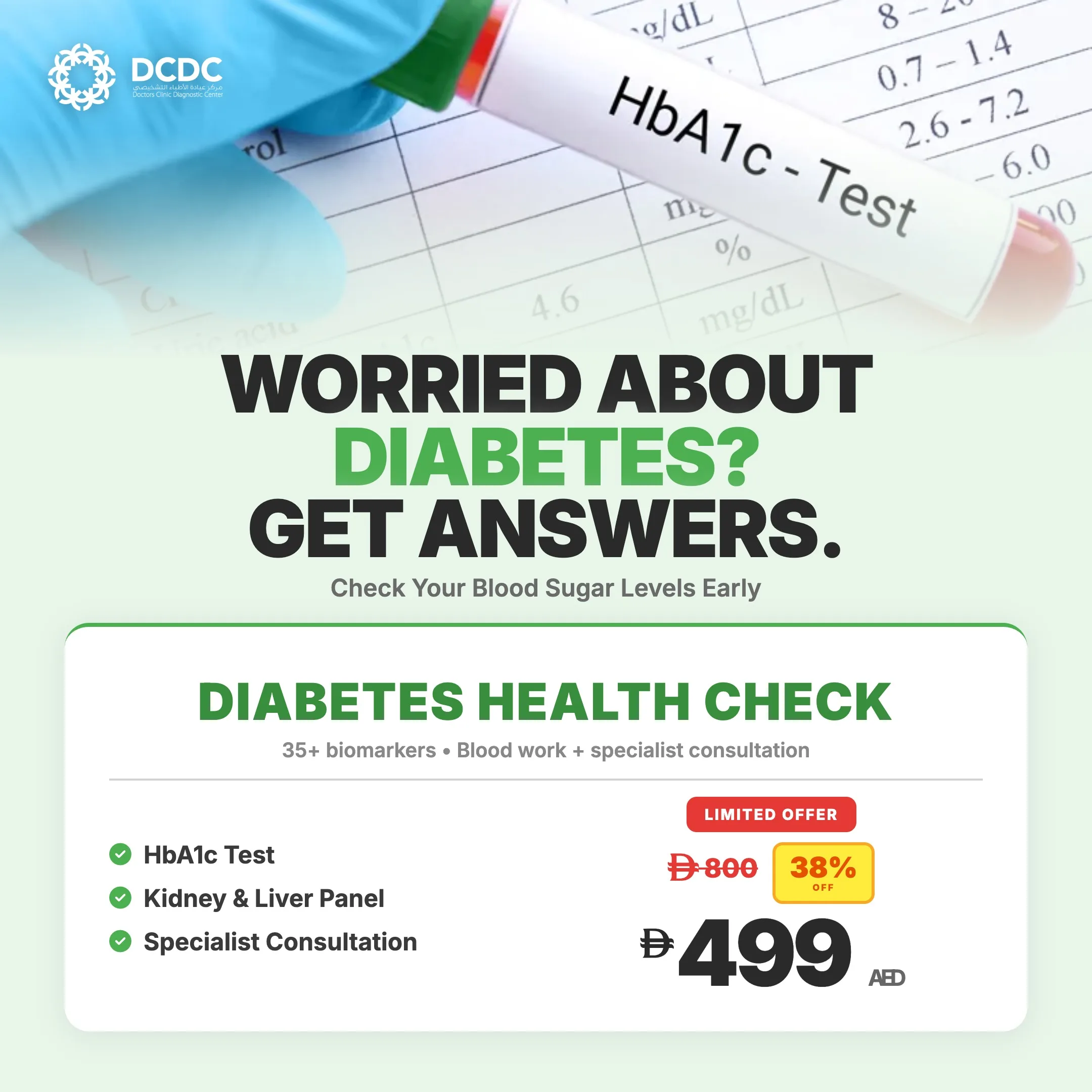
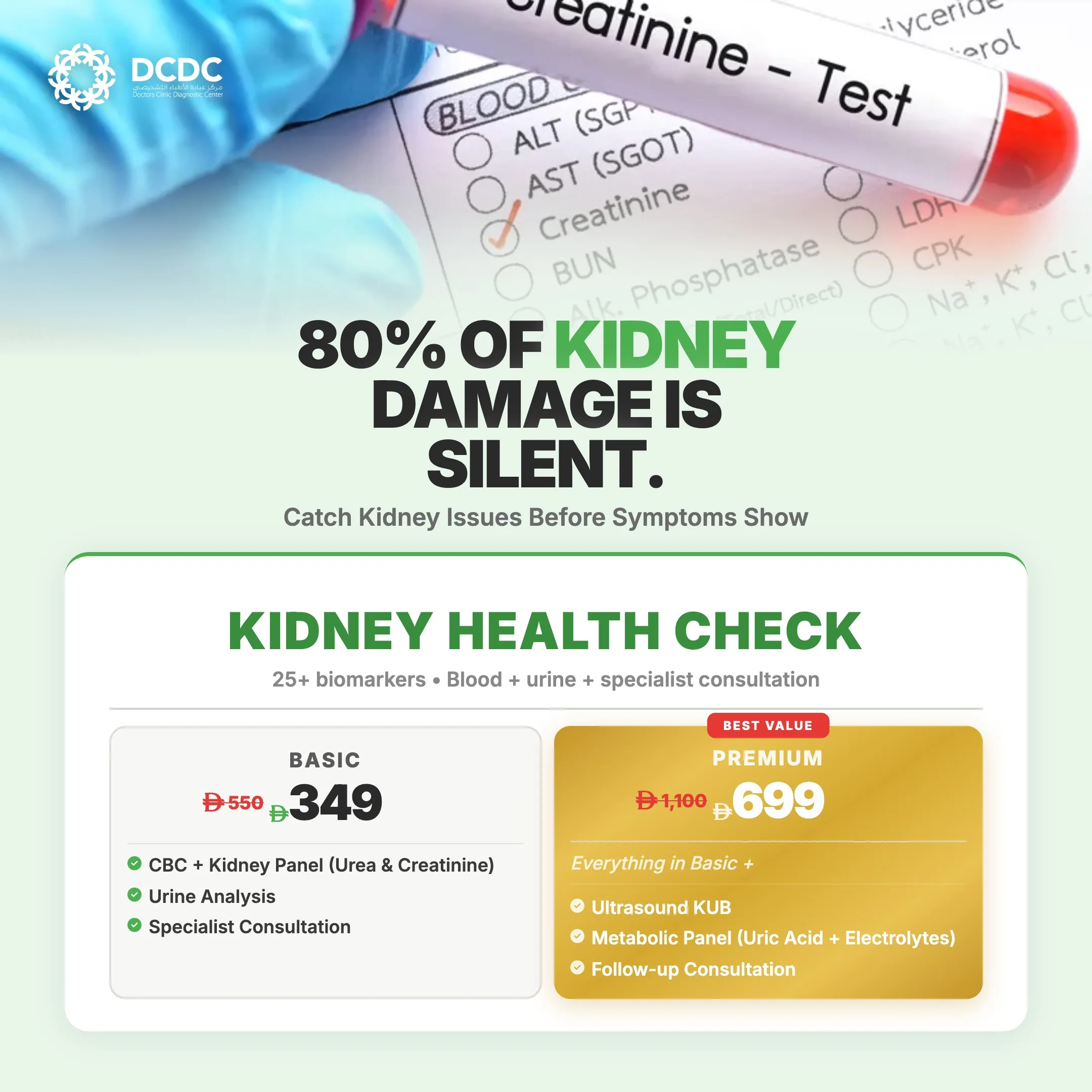
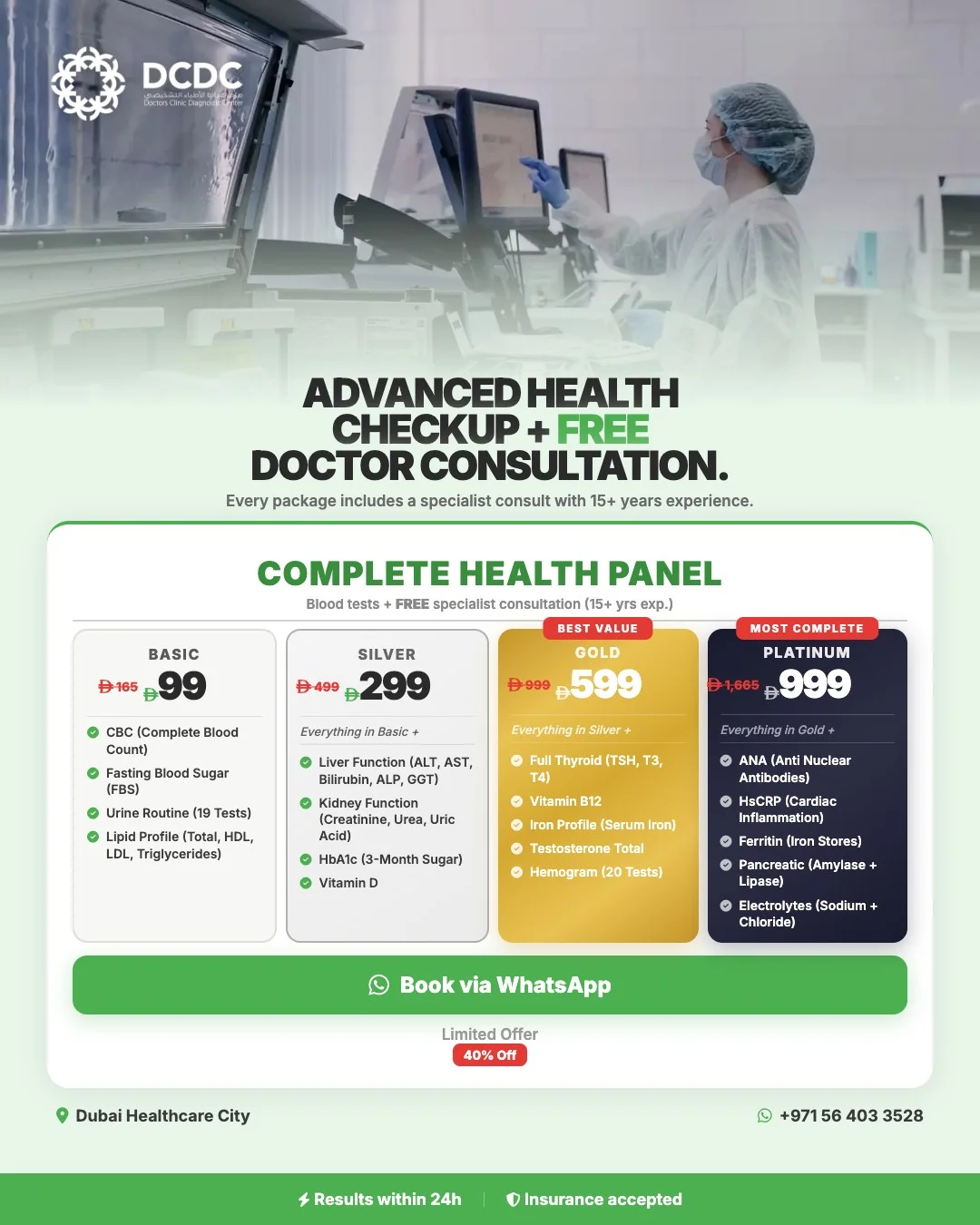
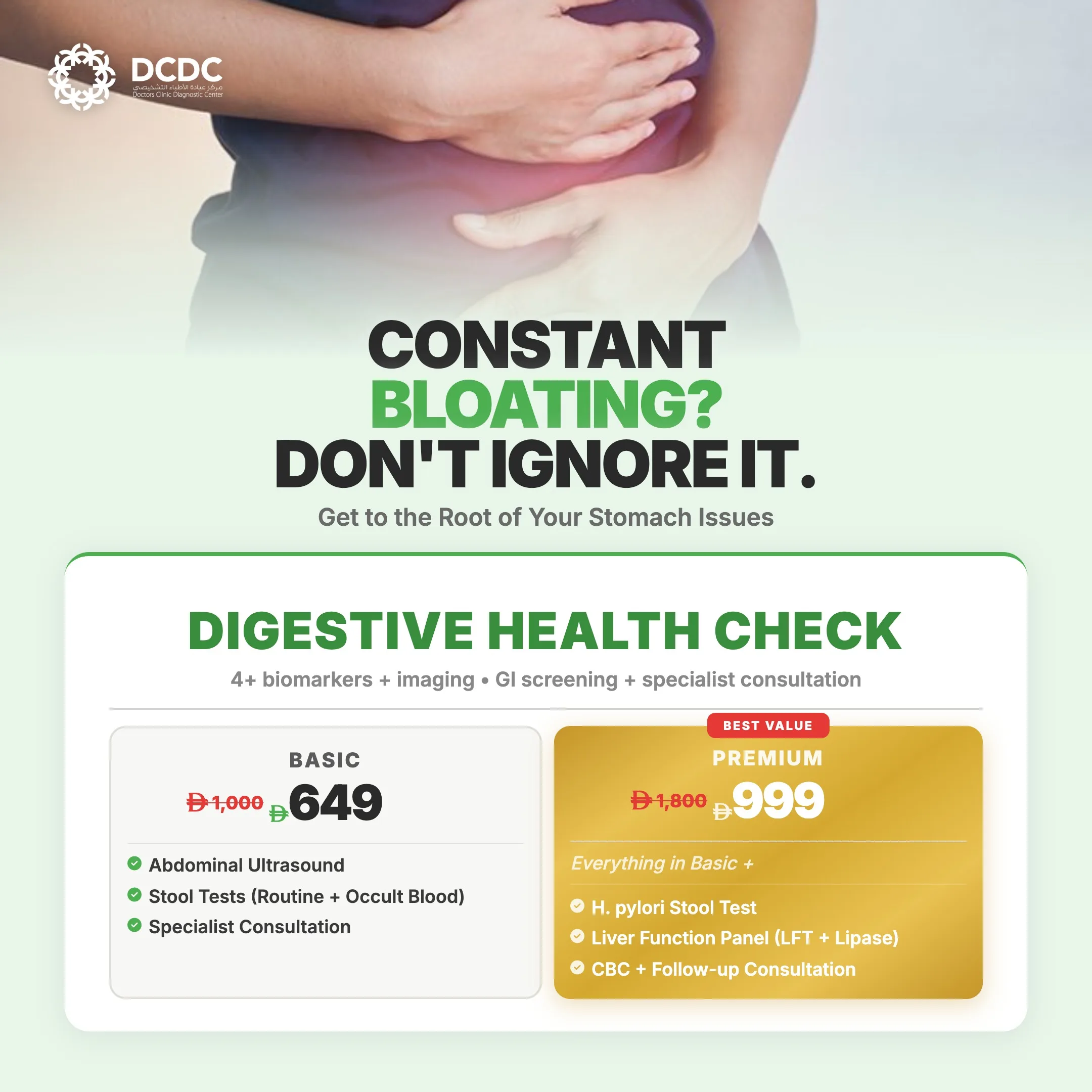
Health Screening Packages
Save with our bundled screening packages — specialist consultation included


Understanding Allergies: IgE vs IgG
Before discussing tests, it is essential to understand the two fundamentally different types of adverse reactions to substances — because the type determines which test you need. A proper diagnosis often starts with blood tests to measure immune markers.
IgE-Mediated Allergy (True Allergy)
Immunoglobulin E (IgE) is the antibody responsible for immediate allergic reactions. When your immune system mistakenly identifies a harmless substance (allergen) as dangerous, it produces specific IgE antibodies. On subsequent exposure, these IgE antibodies trigger mast cells to release histamine and other chemicals, causing symptoms within minutes to 2 hours.
- Symptoms: Hives, itching, swelling (angioedema), sneezing, runny nose, watery eyes, wheezing, throat tightening, vomiting, anaphylaxis
- Severity: Can be life-threatening (anaphylaxis requires emergency epinephrine)
- Common triggers: Peanuts, tree nuts, shellfish, eggs, milk, pollen, dust mites, pet dander, insect stings, medications
- Tests: Specific IgE blood test (formerly RAST test) or skin prick test
IgG-Mediated Food Intolerance
Immunoglobulin G (IgG) food reactions are delayed — symptoms appear 4-72 hours after eating the trigger food — and are not life-threatening. They are technically classified as food intolerances or sensitivities rather than true allergies. The mechanisms are still debated in the medical community, but IgG testing has clinical utility when used alongside an elimination diet.
- Symptoms: Bloating, gas, diarrhoea, constipation, fatigue, headaches, joint pain, skin irritation, brain fog
- Severity: Uncomfortable but not life-threatening — never causes anaphylaxis
- Common triggers: Dairy, wheat/gluten, eggs, soy, corn, certain fruits, yeast
- Tests: IgG food intolerance panel (blood test)
Important: IgE and IgG tests are completely different investigations testing different immune pathways. An IgE food allergy panel will not detect food intolerances, and an IgG panel will not detect true allergies. If you are unsure which test you need, consult an ENT specialist or allergist first.
Types of Allergy Tests Available in Dubai
1. Specific IgE Blood Test (ImmunoCAP)
The specific IgE blood test — performed using the ImmunoCAP or ALEX2 platform — measures the level of IgE antibodies in your blood against specific allergens. A blood sample is drawn from your arm and sent to the laboratory, where it is tested against a panel of allergens.
- How it works: Blood sample tested against individual allergens using fluorescent enzyme immunoassay technology
- What it tests: Environmental allergens (dust mites, mould, pollen, pet dander, cockroach), food allergens (peanut, tree nuts, milk, egg, wheat, soy, fish, shellfish), insect venoms, latex, medications
- Results: Measured in kU/L — Class 0 (negative, <0.35), Class 1 (low), Class 2 (moderate), Class 3-6 (high to very high). Higher levels generally indicate greater sensitisation but do not always correlate with symptom severity
- Turnaround: 24-48 hours for standard panels
- Advantages: No preparation needed, unaffected by antihistamine use, safe for patients with severe eczema or dermographism, can test hundreds of allergens from one blood sample, quantitative results
- Cost: From AED 550 for a standard panel (20-40 allergens)
2. Skin Prick Test (SPT)
The skin prick test is the gold standard for diagnosing IgE-mediated allergies and has been used for over 100 years. A tiny amount of allergen extract is placed on the forearm or back, and the skin is pricked through the drop with a small lancet. If you are allergic, a wheal (raised bump) appears within 15-20 minutes.
- How it works: Allergen extracts applied to skin, skin lightly pricked — positive reaction produces a wheal ≥3mm larger than the negative control
- What it tests: Typically 20-40 common environmental and food allergens in one session
- Results: Available in 15-20 minutes — immediate visual result (wheal size measured in millimetres)
- Preparation: Must stop antihistamines (cetirizine, loratadine, fexofenadine) 5-7 days before the test. Stop tricyclic antidepressants 2 weeks before
- Advantages: Fast results, highly sensitive, tests multiple allergens simultaneously, lower cost than blood panels
- Limitations: Requires stopping antihistamines, not suitable for patients with severe eczema (no clear skin area) or dermographism, small risk of allergic reaction (extremely rare)
- Cost: From AED 300
3. Patch Test (Contact Allergy)
A patch test is specifically designed to diagnose contact dermatitis — skin reactions caused by direct contact with substances like nickel, fragrances, preservatives, hair dye chemicals, or rubber additives. It is completely different from a skin prick test.
- How it works: Small amounts of potential allergens are applied to adhesive patches, which are placed on your back and left in place for 48 hours. The patches are removed and the skin is read at 48 hours and again at 72-96 hours
- What it tests: Contact allergens — metals (nickel, cobalt, chromium), fragrances, preservatives (formaldehyde, methylisothiazolinone), rubber chemicals, hair dyes (PPD), cosmetic ingredients
- Results: Read at 48 and 72-96 hours — graded from negative to strong positive based on the degree of redness, swelling, and vesicle formation
- Preparation: Avoid applying creams to the back, do not shower/swim during the test period, avoid sun exposure to the test area
- Cost: From AED 400
4. IgG Food Intolerance Panel
The IgG food intolerance test measures IgG antibody levels against 96-200+ food items. It identifies foods that may be causing delayed adverse reactions — bloating, fatigue, headaches, skin problems, or digestive issues that occur hours to days after eating.
- How it works: Blood sample tested against a panel of food-specific IgG antibodies using ELISA or microarray technology
- What it tests: 96-200+ foods including dairy, grains, meats, fish, fruits, vegetables, nuts, spices, and additives
- Results: Reported as normal, borderline, elevated, or high reactivity for each food. A personalised elimination-rotation diet is recommended based on results
- Important note: IgG food testing remains debated in mainstream allergy/immunology. Professional societies (AAAI, EAACI) state that elevated IgG to foods may reflect normal exposure rather than intolerance. However, many patients report significant symptom improvement when guided by IgG results combined with a structured elimination diet
- Cost: From AED 950 (96 foods) to AED 1,500+ (200+ foods)
Allergy Test Cost Comparison in Dubai
| Test Type | What It Detects | Results Time | Cost (AED) |
|---|---|---|---|
| Skin Prick Test (SPT) | IgE-mediated allergies (environmental & food) | 15-20 minutes | From AED 300 |
| Specific IgE Blood Panel (20-40 allergens) | IgE-mediated allergies | 24-48 hours | From AED 550 |
| Comprehensive IgE Panel (100+ allergens) | IgE-mediated allergies (extended) | 24-48 hours | From AED 900 |
| Patch Test (Contact Allergy) | Contact dermatitis triggers | 48-96 hours | From AED 400 |
| IgG Food Intolerance (96 foods) | Delayed food sensitivities | 3-5 working days | From AED 950 |
| IgG Food Intolerance (200+ foods) | Extended food sensitivities | 3-5 working days | From AED 1,500 |
| Total IgE (screening) | Overall IgE level (not specific allergens) | 24 hours | From AED 100 |
Allergy test costs in Dubai (2026 pricing)
Common Allergens in Dubai
Dubai's climate and lifestyle create a unique allergen profile. Many residents — especially expatriates — develop new allergies after moving to the UAE because they are exposed to allergens not present in their home countries. A comprehensive health checkup can help identify allergic conditions alongside other health concerns.
Environmental Allergens
- Dust mites (Dermatophagoides pteronyssinus & farinae): The number one allergen in Dubai. Dust mites thrive in the warm, relatively humid indoor environments created by AC systems. They live in mattresses, pillows, carpets, and upholstered furniture. Studies show up to 80% of allergic patients in the Gulf region are sensitised to dust mites
- Mould (Aspergillus, Alternaria, Cladosporium, Penicillium): AC units, especially in older buildings, are significant mould reservoirs. Condensation in AC ducts and filters creates ideal conditions for mould growth, which is then blown directly into living and working spaces
- Pet dander (cat and dog): Dubai has a high rate of pet ownership. Cat allergen (Fel d 1) is particularly persistent — it remains airborne for hours and can be found in homes that have never had a cat, carried on clothing
- Cockroach allergens: Cockroach proteins are a significant allergen in tropical and subtropical climates. They are found in dust even in clean homes and can trigger asthma and allergic rhinitis
- Pollen (Prosopis/Mesquite, date palm, grass): While Dubai is not traditionally considered a high-pollen area, ornamental planting and green development have introduced grass pollens, and native Prosopis (mesquite/ghaf) trees produce allergenic pollen during specific seasons
- Sand and dust particles: While not true allergens, fine sand and dust particles act as irritants that worsen allergic symptoms and can carry adsorbed allergens (pollen, mould spores)
Food Allergens
The most common food allergens worldwide — and in Dubai — are the "Big 8": milk, eggs, peanuts, tree nuts, fish, shellfish, wheat, and soy. In Dubai's multicultural population, additional food allergies are common including sesame (prevalent in Middle Eastern cuisine), chickpea, and various spices. If you suspect nutritional deficiencies related to dietary restrictions caused by food allergies, vitamin testing can help identify gaps.
When Should You Get Allergy Testing?
Allergy testing is recommended in the following situations — particularly when symptoms are affecting your quality of life, are recurrent, or are not responding to empirical treatment.
- Chronic nasal symptoms: Persistent sneezing, runny nose, nasal congestion, and itchy nose — especially if year-round (suggesting dust mite or mould allergy) or seasonal (suggesting pollen). A Doppler ultrasound of the nasal passages can sometimes help assess chronic inflammation
- Recurrent asthma or wheezing: Identifying and avoiding specific triggers can dramatically reduce asthma attacks. An internal medicine specialist can coordinate allergy management with asthma treatment
- Suspected food allergy: Immediate reactions (hives, swelling, breathing difficulty, vomiting) after eating specific foods — accurate identification is essential for avoidance and emergency planning
- Eczema (atopic dermatitis): Up to 30% of children and 10% of adults with eczema have associated food allergies. Identifying triggers can improve skin management. Some patients also benefit from PRP treatment for allergy-related skin and hair conditions
- Chronic digestive symptoms: Bloating, gas, diarrhoea, or abdominal discomfort that may be related to food intolerance — IgG testing combined with elimination diet may help
- Unexplained chronic fatigue or headaches: These can sometimes be linked to undiagnosed food intolerances
- Before immunotherapy: If you are considering allergy immunotherapy (allergy shots or sublingual drops), specific IgE testing is mandatory to guide treatment
- New symptoms after moving to Dubai: Developing allergies for the first time after relocating is extremely common and warrants testing to identify your specific triggers
How to Prepare for Allergy Testing
IgE Blood Test Preparation
- No preparation needed — you do not need to fast
- You can continue taking all medications including antihistamines
- No dietary restrictions before the test
- Stay well hydrated for easier blood draw
Skin Prick Test Preparation
- Stop antihistamines 5-7 days before: Cetirizine (Zyrtec), loratadine (Claritin), fexofenadine (Telfast), desloratadine (Aerius)
- Stop tricyclic antidepressants 2 weeks before: Amitriptyline, nortriptyline (these have antihistamine effects)
- Nasal steroid sprays, asthma inhalers, and other non-antihistamine medications can continue
- Wear a short-sleeved or loose-sleeved top for forearm access
IgG Food Intolerance Test Preparation
- No fasting required
- No medication changes needed
- Important: Eat your normal diet in the 4 weeks before the test — if you have already been avoiding certain foods, IgG levels to those foods may be artificially low, producing false negatives
Understanding Your Allergy Test Results
IgE Blood Test Results
| IgE Level (kU/L) | Class | Interpretation |
|---|---|---|
| <0.35 | 0 | Negative — no sensitisation detected |
| 0.35-0.69 | 1 | Low — equivocal, may or may not cause symptoms |
| 0.70-3.49 | 2 | Moderate — likely clinically relevant |
| 3.50-17.49 | 3 | High — clinically significant sensitisation |
| 17.50-52.49 | 4 | Very high — strong sensitisation |
| 52.50-99.99 | 5 | Very high — strong sensitisation |
| >100 | 6 | Extremely high — very strong sensitisation |
IgE allergy test result classification (ImmunoCAP scale)
Important: A positive IgE result (sensitisation) does not always mean clinical allergy. Some people have elevated IgE to a substance but experience no symptoms on exposure. Conversely, clinical allergy with negative IgE testing can occur (though less commonly). Results must always be interpreted alongside your clinical history by a doctor.
Skin Prick Test Results
A wheal (raised bump) ≥3mm larger than the negative control is considered a positive result. Larger wheals generally indicate stronger sensitisation. A positive and negative control are always included — histamine (positive control, should produce a wheal) and saline (negative control, should produce no wheal) — to ensure the test is valid.
Allergy Testing in Children
Children can be tested for allergies at any age, including infants. The approach depends on the child's age and the suspected allergies. For women experiencing menopause, hormonal changes can sometimes trigger new allergic sensitivities or worsen existing ones.
- IgE blood tests: Preferred for infants and young children because only a small blood sample is needed, the child does not need to stop medications, and there is no risk of allergic reaction during testing
- Skin prick tests: Can be performed from 6 months of age but are generally better tolerated from age 2-3 when the child can be more cooperative. Results may be smaller in young children but are still interpretable
- Common childhood allergies in Dubai: Cow's milk, egg, peanut, and dust mite allergies are the most common in young children. Many children outgrow milk and egg allergies by school age, while peanut and tree nut allergies tend to persist
- Eczema and food allergy: Children with moderate-to-severe eczema should be tested for food allergies (especially milk, egg, peanut, and wheat) as these are common co-existing conditions
Insurance Coverage for Allergy Testing
Most Dubai health insurance plans cover IgE allergy testing when ordered by a doctor for clinical indications (allergic rhinitis, suspected food allergy, eczema, asthma). Skin prick tests are also generally covered when medically indicated.
IgG food intolerance testing is less commonly covered by insurance, as it is considered an investigational or wellness test by many insurers. Check with your provider before booking. At DCDC, we can verify your insurance coverage and advise on out-of-pocket costs before proceeding. An X-ray of the sinuses may also be covered if chronic sinusitis related to allergies is suspected.
Book Your Allergy Test
Comprehensive allergy testing available at DCDC Dubai Healthcare City — IgE blood panels, skin prick tests, and food intolerance panels. Walk-in or appointment.
Allergy testing from AED 300 — results within 24-48 hours
What Happens After Your Allergy Test
Once your allergy test results are available, your doctor will discuss the findings and create a management plan tailored to your specific triggers. In some cases, an ultrasound may be ordered to evaluate swollen lymph nodes or sinus congestion related to chronic allergic inflammation.
Treatment Options Based on Results
- Allergen avoidance: The most effective treatment is avoiding identified triggers. For dust mite allergy — allergen-proof mattress and pillow covers, regular hot washing of bedding, removing carpets, and using HEPA-filter vacuum cleaners
- Medication: Antihistamines (for mild-moderate symptoms), nasal corticosteroid sprays (for allergic rhinitis), epinephrine auto-injector (for severe food allergies with anaphylaxis risk)
- Immunotherapy (desensitisation): For patients with persistent allergic rhinitis or asthma triggered by dust mites, pollen, or insect venom — subcutaneous injections (SCIT) or sublingual tablets/drops (SLIT) over 3-5 years can reduce or eliminate allergic sensitivity
- Dietary modification: For IgG food intolerances — a structured elimination diet removing high-reactivity foods for 8-12 weeks, followed by systematic reintroduction to identify true trigger foods
Allergy Testing vs Elimination Diet: Which Is Better?
For IgE-mediated food allergies, testing is essential — you need to know exactly what you are allergic to for safety and emergency planning. An elimination diet alone is dangerous for true allergies because accidental exposure could cause anaphylaxis. If you suspect hormone-related changes affecting your allergy profile, a hormone test may provide additional insights.
For food intolerances, the gold standard is actually an elimination diet followed by controlled reintroduction. However, this process takes 8-12 weeks and requires strict discipline. IgG food intolerance testing provides a shortcut — it narrows down the likely trigger foods so the elimination phase is more targeted and faster. The best approach combines IgG testing with a guided elimination-reintroduction protocol.
Myths About Allergy Testing
- Myth: "I can diagnose my allergies with an at-home kit." Reality: While some at-home IgG kits exist, they lack the precision and validation of laboratory-based testing. More importantly, results require medical interpretation — a positive result without clinical context can lead to unnecessary dietary restriction
- Myth: "If I am not allergic to something, it will never cause a reaction." Reality: Allergies can develop at any age. Adult-onset food allergies are increasingly common, and moving to a new environment (like Dubai) can trigger new sensitivities
- Myth: "A negative test means I am definitely not allergic." Reality: No test is 100% sensitive. If clinical suspicion remains high despite negative testing, further investigation (supervised oral food challenge) may be needed
- Myth: "Allergy testing is painful." Reality: IgE blood tests involve a standard blood draw. Skin prick tests use a tiny lancet that barely breaks the skin surface — most patients describe it as a mild scratch, not painful. Even children tolerate it well
Struggling with Unexplained Allergic Symptoms?
Get properly tested at DCDC Dubai Healthcare City. Our laboratory offers comprehensive IgE panels, skin prick tests, and food intolerance panels with results interpreted by our medical team.
Walk-in allergy testing available — most insurance accepted
خدمات مرتبط در DCDC
مراقبت تخصصی و تشخیص پیشرفته در شهر بهداشت دبی
Frequently Asked Questions
Final Thoughts
Allergy testing has advanced dramatically — modern IgE panels can identify sensitivities to hundreds of specific allergens from a single blood sample, and skin prick tests give answers in 15 minutes. There is no reason to suffer with chronic sneezing, unexplained hives, digestive discomfort, or eczema flare-ups without knowing your specific triggers.
In Dubai, where dust mites, AC mould, and new environmental exposures make allergies extremely common, proper testing is the first step toward effective management — whether that means targeted avoidance strategies, the right medication, immunotherapy for long-term desensitisation, or dietary modification based on intolerance testing.
At Doctors Clinic Diagnostic Center in Dubai Healthcare City, we offer the full range of allergy testing — IgE blood panels, skin prick testing, and IgG food intolerance panels — with results interpreted by our ENT and medical team. Walk-in testing is available, and most insurance plans are accepted.
منابع و مراجع
این مقاله توسط تیم پزشکی ما بررسی شده و به منابع زیر ارجاع میدهد:
- European Academy of Allergy and Clinical Immunology (EAACI) — Allergen Immunotherapy Guidelines (2022)
- American Academy of Allergy, Asthma & Immunology (AAAAI) — Allergy Testing Guidelines
- World Allergy Organization (WAO) — White Book on Allergy (2024 Update)
- British Society for Allergy and Clinical Immunology (BSACI) — Allergy Diagnosis Guidelines
- Annals of Allergy, Asthma & Immunology — Prevalence of Dust Mite Sensitisation in the Gulf Region
- Dubai Health Authority — Laboratory Standards and Regulations
محتوای پزشکی این سایت توسط پزشکان دارای مجوز DHA بررسی میشود. مشاهده سیاست تحریریه برای اطلاعات بیشتر.

نوشته شده توسط
Dr. Hadeel Elnur
General Practitioner
MD General Practice
Dr. Hadeel Elnur is a General Practitioner at DCDC Dubai Healthcare City with expertise in primary care, preventive medicine, and allergy management. She helps patients identify allergy triggers and develop effective management plans.
Related Articles

ENT Doctor Dubai: When to See a Specialist (2026)
Sleep Apnea & Snoring Dubai: Treatment & Cost Guide
Hearing Test Dubai: Audiometry Types & Cost Guide

Blood Test Dubai: Complete Guide to Lab Tests
More in General Health
Dizziness Causes Dubai: When to Get Checked (2026)
بیشتر بخوانید
Elderly Care at Home Dubai: Full Guide (2026)
بیشتر بخوانید
IV Drip at Home Dubai: From AED 449 (2026)
بیشتر بخوانید
Nurse at Home Dubai: Cost & Services (2026)
بیشتر بخوانید
Stomach Infection Treatment Dubai (2026)
بیشتر بخوانید
Cholesterol Levels by Age Dubai: Chart (2026)
بیشتر بخوانید© 2026 Doctors Clinic Diagnostic Center (DCDC), Dubai Healthcare City. Originally published at https://doctorsclinicdubai.ae/blog/allergy-testing-dubai-guide. All rights reserved. Unauthorized reproduction is prohibited.