Wichtigste Erkenntnisse
- Eine kardiale Belastungsuntersuchung (auch TMT oder Laufbandtest genannt) bewertet, wie Ihr Herz unter körperlicher Anstrengung arbeitet — sie erkennt koronare Herzkrankheiten, Arrhythmien und Belastbarkeit, die Ruhe-EKG und Echokardiogramm nicht aufdecken können
- Der Standard-Laufband-Belastungstest (TMT) dauert 15-20 Minuten tatsächliche Belastung nach dem Bruce-Protokoll, der gesamte Besuch etwa 60-90 Minuten einschließlich Vorbereitung und Erholungsüberwachung
- Die Kosten für Belastungsuntersuchungen in Dubai reichen von AED 800-1.500 für einen Standard-TMT, AED 1.500-2.500 für Stress-Echokardiographie und AED 3.000-5.000 für einen nuklearen Belastungstest
- Sie brauchen eine Belastungsuntersuchung bei Brustschmerzen unter Belastung, unerklärter Atemnot, Diabetes mit kardialen Risikofaktoren, Bluthochdruck, familiärer Vorbelastung mit Herzkrankheiten oder wenn Sie über 40 ein neues Trainingsprogramm beginnen
- Belastungsuntersuchungen sind außerordentlich sicher — schwere Komplikationen treten bei weniger als 1 von 10.000 Tests auf, und der gesamte Eingriff wird unter kontinuierlicher ärztlicher Überwachung durchgeführt
Ihr Herz mag in Ruhe normal erscheinen — normales EKG, normaler Blutdruck, keine Symptome. Aber unter Belastung können versteckte Probleme auftreten. Genau das ist der Zweck einer kardialen Belastungsuntersuchung: zu sehen, wie Ihr Herz arbeitet, wenn es stark beansprucht wird. Auch TMT (Treadmill Medical Test), Belastungs-EKG oder Ergometrie genannt, ist diese Untersuchung der wichtigste Test zur Beurteilung belastungsbezogener Herzsymptome und des Risikos einer koronaren Herzkrankheit.
Ob Ihr Arzt eine Belastungsuntersuchung empfohlen hat, Sie Brustbeschwerden bei Belastung haben oder einfach eine kardiologische Freigabe vor einem neuen Fitnessprogramm wünschen — dieser Ratgeber deckt alles ab. Wie der Test funktioniert, Schritt-für-Schritt-Ablauf, das Bruce-Protokoll erklärt, was Ihre Ergebnisse bedeuten, Kosten in Dubai und wann eine Belastungsuntersuchung wirklich notwendig ist. Geprüft von Dr. Shahoo Mazhari, Facharzt für Kardiologie bei DCDC Dubai Healthcare City.
Was ist eine kardiale Belastungsuntersuchung (TMT)?
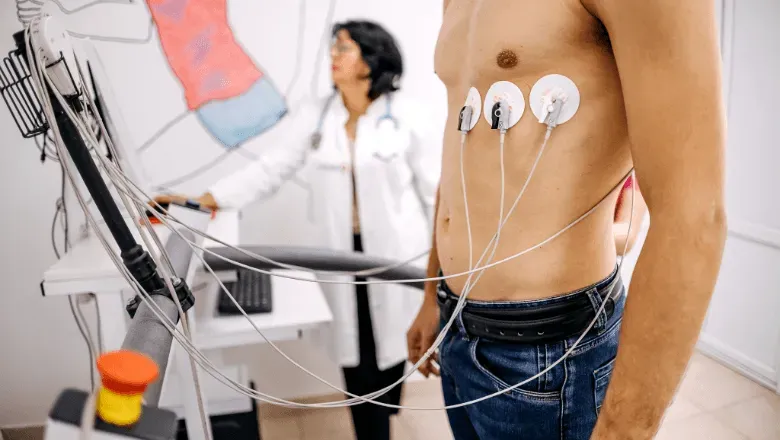
Eine kardiale Belastungsuntersuchung überwacht die elektrische Aktivität Ihres Herzens, den Blutdruck und Symptome, während Sie auf einem Laufband trainieren. Die Belastung steigt allmählich an — Sie gehen alle 3 Minuten schneller und mit steilerer Neigung — bis Sie Ihre Zielherzfrequenz erreichen (typischerweise 85% Ihres altersvorhergesagten Maximums) oder bis Symptome oder EKG-Veränderungen den Test beenden.
Die Logik ist einfach: In Ruhe können selbst erheblich verengte Koronararterien das Herz mit genug Blut versorgen. Unter der erhöhten Belastung beim Sport können dieselben Arterien nicht genug Blut liefern — und der daraus resultierende Sauerstoffmangel zeigt sich als charakteristische Veränderungen in der EKG-Aufzeichnung, Brustschmerzen oder abnormale Blutdruckreaktionen.
Dieser Test wird unter verschiedenen Namen geführt: TMT (Treadmill Medical Test), Belastungs-EKG, Ergometrie oder kardiale Belastungsuntersuchung. Alle beschreiben dieselbe Untersuchung.
Arten von kardialen Belastungsuntersuchungen
Nicht alle Belastungsuntersuchungen beinhalten ein Laufband. Die Art, die Ihr Kardiologe empfiehlt, hängt von Ihren Symptomen, Ihrer körperlichen Fähigkeit und der klinischen Fragestellung ab.
| Belastungstest-Typ | Funktionsweise | Am besten geeignet für | Dauer |
|---|---|---|---|
| Belastungs-EKG (TMT) | Gehen auf dem Laufband mit zunehmender Geschwindigkeit und Neigung bei kontinuierlicher EKG-Aufzeichnung | Beurteilung von Brustschmerzen, Belastbarkeit, Sportfreigabe, allgemeines Koronar-Screening | 15-20 Min. Belastung |
| Stress-Echokardiographie | Echokardiogramm vor und unmittelbar nach Laufbandbelastung — vergleicht Herzwandbewegung in Ruhe vs. Belastung | Erkennung spezifischer Koronararterienverschlüsse, Beurteilung der Klappenfunktion unter Belastung | 30-40 Min. gesamt |
| Pharmakologische Belastungsuntersuchung | IV-Medikament (Dobutamin oder Adenosin) simuliert Belastung — kein Laufband nötig | Patienten, die nicht auf dem Laufband gehen können | 30-45 Min. gesamt |
| Nuklearer Belastungstest (Myokardperfusionsszintigraphie) | Radioaktiver Tracer wird injiziert — Gammakamera kartiert den Blutfluss zum Herzmuskel | Quantifizierung von Durchblutungsstörungen, Interventionsplanung | 3-4 Stunden |
Ihr Kardiologe empfiehlt den für Ihre klinische Situation am besten geeigneten Typ.
Wer braucht eine kardiale Belastungsuntersuchung?
Eine Belastungsuntersuchung ist kein Routine-Screening für jeden — sie richtet sich an Personen mit Symptomen, Risikofaktoren oder spezifischen klinischen Szenarien.
Symptome, die eine Belastungsuntersuchung erfordern können
- Brustschmerzen oder Druck bei Belastung, die in Ruhe nachlassen — das klassische Angina-Muster
- Unerklärte Atemnot bei körperlicher Aktivität
- Herzrasen oder unregelmäßiger Herzschlag bei Belastung
- Schwindel oder Beinahe-Ohnmacht bei körperlicher Anstrengung
- Unerklärte Müdigkeit bei Belastung
Risikofaktoren, die eine Belastungsuntersuchung rechtfertigen
- Diabetes mellitus — besonders bei 10+ Jahren Dauer
- Bluthochdruck seit mehreren Jahren
- Erhöhtes Cholesterin kombiniert mit anderen Risikofaktoren
- Familiäre Vorbelastung mit vorzeitiger Herzkrankheit
- Starker Raucher (aktiv oder ehemalig) mit 10+ Packungsjahren
- Erwachsene über 40, die ein neues intensives Trainingsprogramm beginnen
Weitere häufige Gründe für Belastungsuntersuchungen
- Präoperative kardiale Freigabe
- Nachkontrolle — nach Koronarstent-Einlage oder Bypass-Operation
- Beurteilung der Behandlungseffektivität
- Belastungsrezept — sichere Belastungsintensität für Rehabilitationspatienten
- Berufliche Fitness — einige Berufe erfordern periodische kardiale Belastungstests
Buchen Sie Ihre kardiale Belastungsuntersuchung bei DCDC Dubai
Ergebnisse am selben Tag mit Facharzt für Kardiologie Dr. Shahoo Mazhari. Walk-in oder Termin. Versicherung akzeptiert. Buchen Sie Ihre kardiale Belastungsuntersuchung noch heute.
Vorbereitung auf eine kardiale Belastungsuntersuchung
Eine ordnungsgemäße Vorbereitung gewährleistet genaue Ergebnisse und einen reibungslosen Ablauf.
24-48 Stunden vor dem Test
- Abzusetzende Medikamente (mit ärztlicher Genehmigung): Betablocker werden gewöhnlich 48 Stunden vorher abgesetzt. Setzen Sie Medikamente nie ohne ärztliche Anweisung ab.
- Kein Koffein für 24 Stunden: Kaffee, Tee, Energydrinks, Schokolade
- Kein Rauchen für 24 Stunden
Am Tag des Tests
- Nur leichte Mahlzeit: 2-3 Stunden vorher eine leichte Mahlzeit
- Bequeme Kleidung: Lockeres Oberteil, bequeme Laufschuhe
- Medikamentenliste mitbringen
- 15-20 Minuten früher ankommen
Medikamente, die Sie weiterhin einnehmen sollten
Sofern nicht anders von Ihrem Kardiologen angewiesen, nehmen Sie weiterhin: Blutdruckmedikamente (außer Betablocker), Diabetesmedikamente, Blutverdünner und Statine.
Der Belastungstest: Schritt für Schritt
Schritt 1: Vorbereitung (10-15 Minuten)
10 EKG-Elektroden werden auf Brust, Arme und Beine platziert. Eine Blutdruckmanschette wird am Oberarm angelegt. Ruhe-EKG und Blutdruck werden aufgezeichnet.
Schritt 2: Das Bruce-Protokoll — Belastungsphase (8-15 Minuten)
Das Laufband beginnt mit einem sanften Schritttempo. Alle 3 Minuten steigen Geschwindigkeit und Neigung gemäß dem Bruce-Protokoll. Ihr Kardiologe und Techniker überwachen kontinuierlich EKG, Blutdruck und Symptome.
| Bruce-Protokoll-Stufe | Geschwindigkeit (km/h) | Geschwindigkeit (mph) | Neigung (%) | Ungefähre Anstrengung |
|---|---|---|---|---|
| Stufe 1 (0-3 Min.) | 2,7 | 1,7 | 10% | Langsames Gehen bergauf |
| Stufe 2 (3-6 Min.) | 4,0 | 2,5 | 12% | Zügiges Gehen bergauf |
| Stufe 3 (6-9 Min.) | 5,5 | 3,4 | 14% | Schnelles Gehen / leichtes Joggen |
| Stufe 4 (9-12 Min.) | 6,8 | 4,2 | 16% | Joggen |
| Stufe 5 (12-15 Min.) | 8,0 | 5,0 | 18% | Laufen |
| Stufe 6+ (15+ Min.) | 8,8+ | 5,5+ | 20%+ | Intensives Laufen (selten erreicht) |
Die meisten Patienten absolvieren 3-4 Stufen. Ein modifiziertes Bruce-Protokoll (langsamerer Start) ist für ältere oder dekonditionierte Patienten verfügbar.
Das Ziel ist, mindestens 85% Ihrer altersvorhergesagten maximalen Herzfrequenz zu erreichen (berechnet als 220 minus Ihr Alter).
Schritt 3: Wann der Test endet
Der Test endet, wenn Sie Ihre Zielherzfrequenz erreichen, oder er kann früher gestoppt werden bei:
- Signifikanten ST-Strecken-Veränderungen im EKG
- Brustschmerzen, schwerer Atemnot oder Schwindel
- Abnormalem Blutdruckabfall während der Belastung
- Gefährlichen Arrhythmien (selten)
- Auf Ihren Wunsch wegen Müdigkeit oder Beinschmerzen
Schritt 4: Erholungsüberwachung (5-10 Minuten)
Das Laufband verlangsamt sich. Sie bleiben 5-10 Minuten am EKG-Monitor, während sich Herzfrequenz und Blutdruck normalisieren. Diese Erholungsphase ist diagnostisch wichtig.
Ihre Belastungstest-Ergebnisse verstehen
Ihr Kardiologe bespricht die Ergebnisse unmittelbar nach dem Test mit Ihnen.
Normaler (negativer) Belastungstest
Ein normales Ergebnis bedeutet, dass Sie Ihre Zielherzfrequenz ohne signifikante EKG-Veränderungen, Brustschmerzen oder abnormale Blutdruckreaktion erreicht haben. Ein negativer Belastungstest hat einen negativen prädiktiven Wert von etwa 95-98% für signifikante koronare Herzkrankheit.
Abnormaler (positiver) Belastungstest
Ein abnormales Ergebnis bedeutet nicht automatisch einen drohenden Herzinfarkt. Es bedeutet, dass Befunde auf eine mögliche Durchblutungsstörung des Herzmuskels hindeuten.
- ST-Strecken-Senkung ≥1mm: Häufigster Indikator für Myokardischämie
- Brustschmerzen während der Belastung
- Abnormale Blutdruckreaktion: Ein Blutdruckabfall während der Belastung
- Belastungsinduzierte Arrhythmien
- Schlechte Belastungskapazität: Unfähigkeit, die Zielherzfrequenz zu erreichen
Was nach einem abnormalen Ergebnis passiert
Ein abnormaler Belastungstest bedeutet nicht sofortige Operation. Ihr Kardiologe kann empfehlen:
- Stress-Echokardiographie
- CT-Koronarangiographie
- Kalzium-Score CT
- Medikamentenoptimierung
- Invasive Koronarangiographie
Nicht schlüssiger Belastungstest
Ein Belastungstest kann nicht schlüssig sein, wenn Sie 85% Ihrer Zielherzfrequenz nicht erreicht haben oder wenn Basis-EKG-Abnormalitäten die Interpretation erschweren.
Besorgt um Ihr Herz? Lassen Sie sich testen
Kardiale Belastungsuntersuchungen bei DCDC werden von Dr. Shahoo Mazhari durchgeführt. Ergebnisse am selben Tag, Versicherung akzeptiert. Buchen Sie eine kardiologische Beratung.
Ist eine kardiale Belastungsuntersuchung sicher?
Kardiale Belastungsuntersuchungen gehören zu den sichersten Untersuchungen in der Kardiologie. Das Risiko einer schweren Komplikation beträgt ungefähr 1 von 10.000 Tests.
Die Sicherheit wird durch mehrere Schutzebenen gewährleistet:
- Kontinuierliche 12-Kanal-EKG-Überwachung
- Blutdruckmessung bei jeder Stufe
- Kardiologe und geschulter Techniker jederzeit anwesend
- Notfall-Reanimationsausrüstung sofort verfügbar
- Klare Abbruchkriterien
Wer sollte KEINE Belastungsuntersuchung haben?
- Akuter Herzinfarkt (innerhalb von 48 Stunden)
- Instabile Angina, nicht stabilisiert
- Unkontrollierte Herzinsuffizienz
- Schwere symptomatische Aortenstenose
- Aktive Myokarditis oder Perikarditis
- Akute Lungenembolie oder tiefe Venenthrombose
- Akute Aortendissektion
Für Patienten, die nicht auf dem Laufband trainieren können, ist eine pharmakologische Belastungsuntersuchung eine sichere Alternative.
Kosten der kardialen Belastungsuntersuchung in Dubai (2026)
| Belastungstest-Typ | Typische Kosten in Dubai (AED) | Was enthalten ist |
|---|---|---|
| Belastungs-EKG (TMT) | 800 – 1.500 | Laufbandbelastung, EKG-Überwachung, Blutdrucküberwachung, kardiologische Supervision und Interpretation |
| Stress-Echokardiographie | 1.500 – 2.500 | TMT + Echokardiogramm vor und nach Belastung |
| Pharmakologische Belastungsuntersuchung | 1.500 – 3.000 | IV-Medikament + Echokardiogramm oder nukleare Bildgebung |
| Nuklearer Belastungstest (MPI) | 3.000 – 5.000 | Radioaktive Tracer-Injektion + zwei Kameraaufnahme-Sitzungen |
Preise spiegeln typische Marktpreise in Dubai wider.
Versicherungsabdeckung für Belastungsuntersuchungen in Dubai
Die meisten Dubai-Versicherungspläne decken kardiale Belastungsuntersuchungen ab, wenn sie medizinisch indiziert und von einem Arzt angeordnet sind.
Kardiale Checkup-Pakete
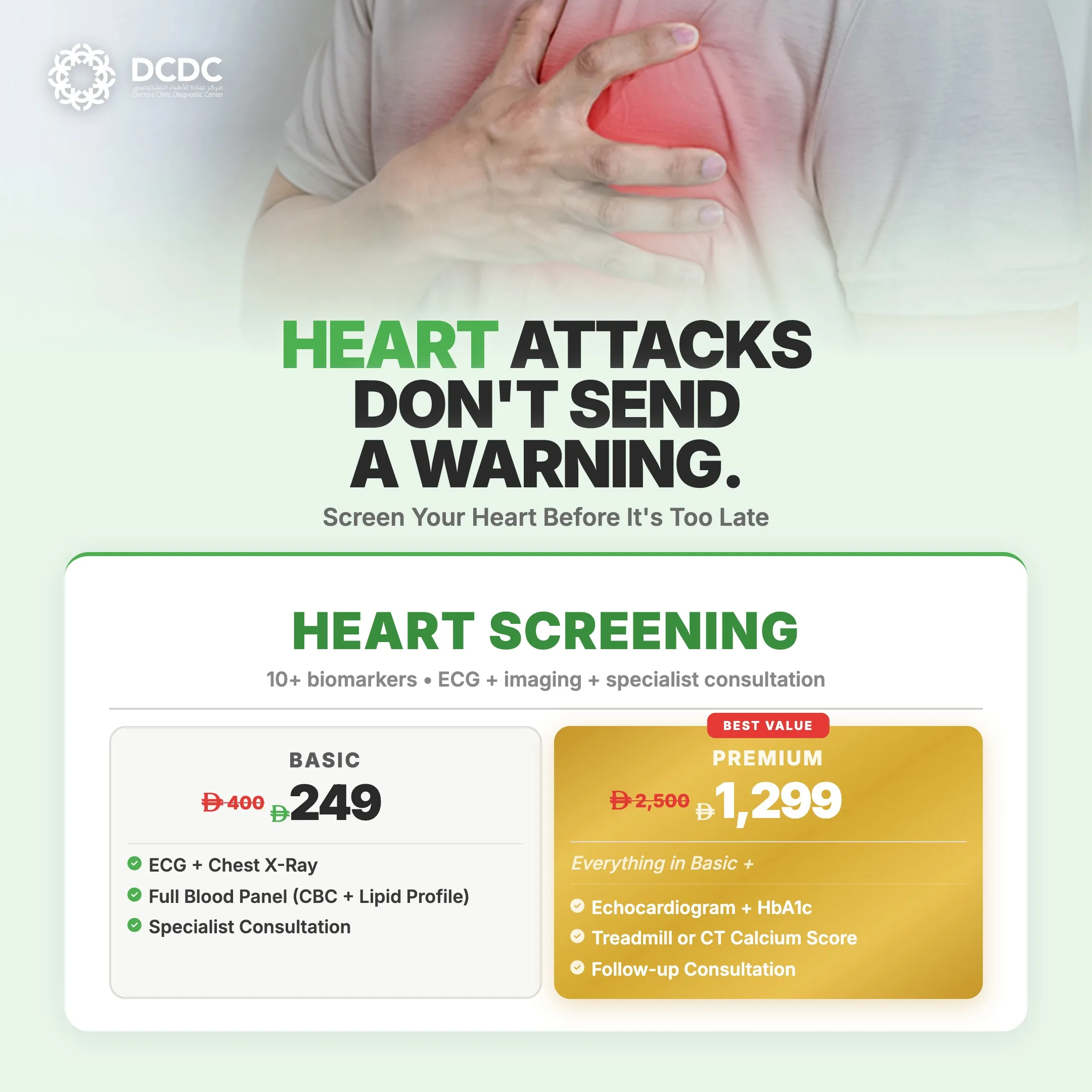
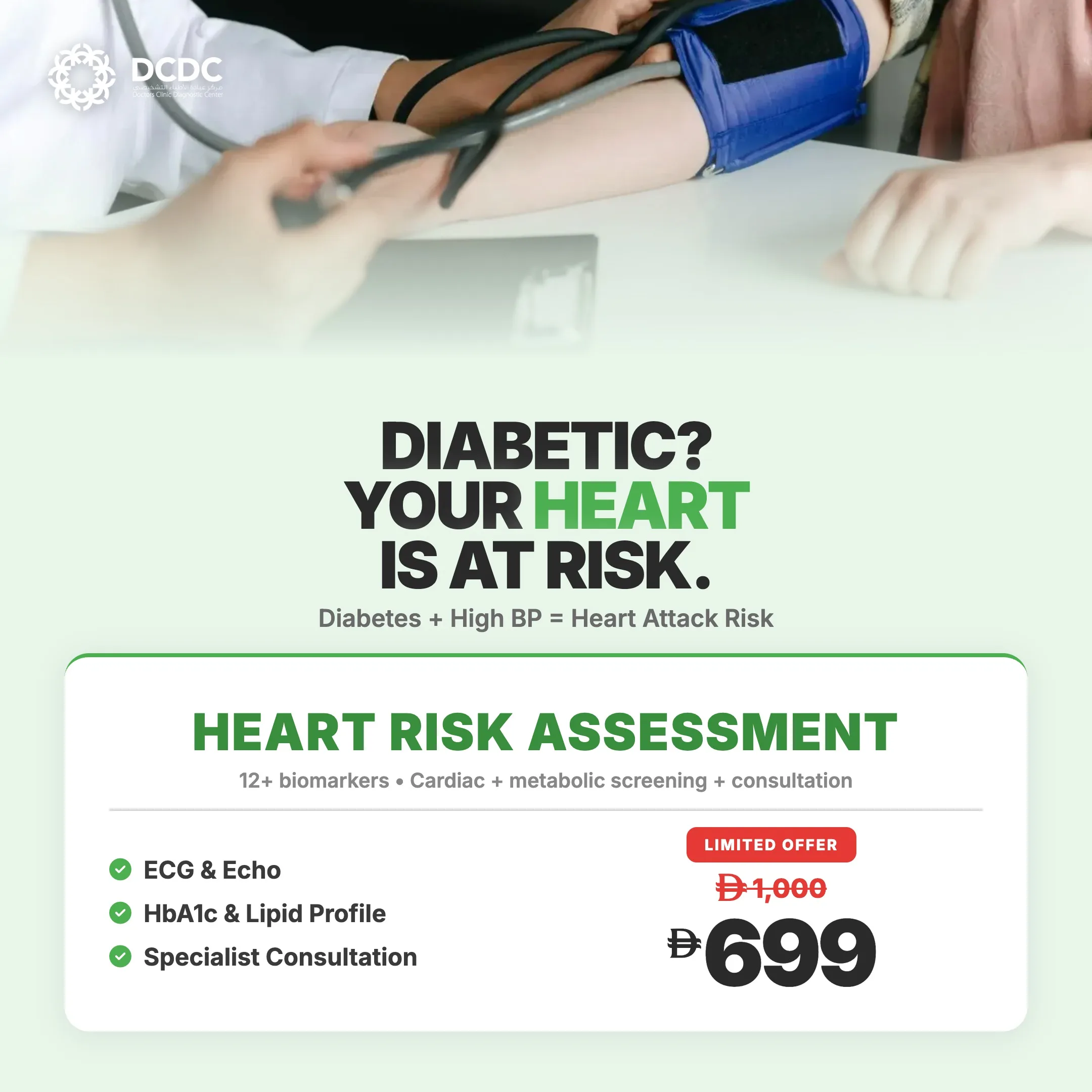
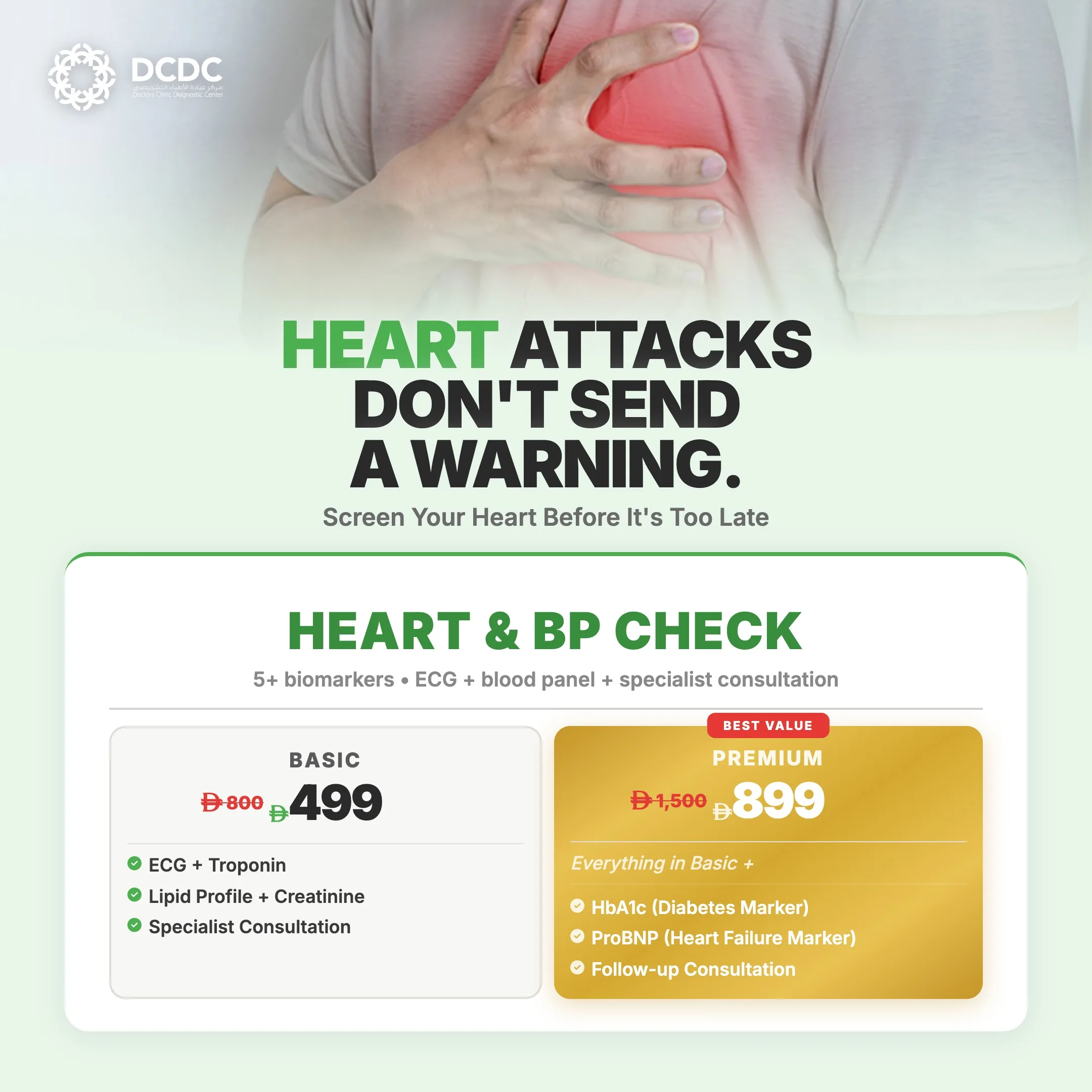
DCDC bietet Herz-Checkup-Pakete an, die kardiologische Beratung, Ruhe-EKG, Echokardiogramm und Belastungstest zu einem reduzierten Kombinationspreis bündeln.
Belastungstest vs. andere Herzuntersuchungen: Was brauchen Sie?
| Test | Was er zeigt | Wann wählen | Einschränkungen |
|---|---|---|---|
| Ruhe-EKG | Herzrhythmus und elektrische Aktivität in Ruhe | Erster Test bei Herzrasen, Brustschmerzen | Kann Probleme nicht erkennen, die nur bei Belastung auftreten |
| Echokardiogramm | Herzstruktur, Klappenfunktion, Pumpleistung | Herzgeräusche, Atemnot, Herzinsuffizienz-Verdacht | Bewertet nicht den koronaren Blutfluss |
| Belastungstest (TMT) | Herzfunktion unter Belastung | Brustschmerzen bei Belastung, KHK-Screening | Kann genaue Blockade-Stelle nicht lokalisieren |
| CT-Angiogramm | Direkte Darstellung der Koronararterien | Mittleres Risiko, junge Patienten | Strahlenexposition, Kontrastmittel nötig |
| Holter-Monitor | Kontinuierliches EKG für 24-48 Stunden | Intermittierendes Herzrasen, Arrhythmie-Erkennung | Bewertet nicht Belastbarkeit oder koronaren Blutfluss |
Viele Patienten brauchen mehr als einen Test. Ihr Kardiologe empfiehlt die richtige Kombination.
In der Praxis beginnt eine typische kardiale Beurteilung oft mit einem Ruhe-EKG und Echokardiogramm, mit Belastungstest bei Belastungssymptomen oder KHK-Risikofaktoren.
Kardiale Belastungsuntersuchung bei DCDC Dubai Healthcare City
In der Kardiologie-Abteilung von DCDC werden Belastungsuntersuchungen von Dr. Shahoo Mazhari durchgeführt.
- Facharzt für Kardiologie vor Ort — Dr. Shahoo Mazhari überwacht und interpretiert jeden Belastungstest persönlich
- Ergebnisse am selben Tag — erhalten Sie Ihren Bericht und besprechen Sie die Ergebnisse sofort
- Vollständige kardiale Beurteilung verfügbar — EKG, Echokardiogramm und Belastungstest in einem Besuch
- Versicherung akzeptiert — wir arbeiten mit allen großen Dubai-Versicherern zusammen
- DHA-lizenzierte Einrichtung — in Dubai Healthcare City, Gebäude 47
- Walk-in oder Termin — Verfügbarkeit in derselben Woche
- Vollständiger Nachsorgeweg — CT-Angiographie, Holter-Monitoring und Überweisungen werden nahtlos koordiniert
Buchen Sie Ihre kardiale Belastungsuntersuchung heute
Belastungs-EKG, Stress-Echokardiographie und umfassende Herz-Pakete verfügbar. Buchen Sie Ihren Belastungstest bei DCDC Dubai Healthcare City.
Verwandte Leistungen im DCDC
Fachkundige Betreuung und moderne Diagnostik in Dubai Healthcare City
Cardiology Consultation
Expert cardiac evaluation and personalized heart care
Termin buchenCardiac Stress Test
Treadmill exercise stress test with real-time ECG monitoring
Termin buchenEchocardiogram
Heart ultrasound to evaluate cardiac structure and function
Termin buchenPreventive Cardiology
Proactive heart disease risk assessment and prevention programs
Termin buchenFrequently Asked Questions
Fazit
Eine kardiale Belastungsuntersuchung ist eines der wertvollsten Werkzeuge in der Kardiologie — sie zeigt, wie Ihr Herz unter den Bedingungen arbeitet, die am meisten zählen: bei körperlicher Aktivität. Ein normales Ruhe-EKG schließt eine koronare Herzkrankheit nicht aus, aber ein Belastungstest, der die Zielherzfrequenz ohne Auffälligkeiten erreicht, gibt starke Beruhigung.
Wenn Sie Belastungssymptome, kardiale Risikofaktoren haben oder ein intensives Trainingsprogramm planen, gibt Ihnen ein Belastungstest die Informationen, die Sie und Ihr Kardiologe brauchen.
Bei Doctors Clinic Diagnostic Center in Dubai Healthcare City werden kardiale Belastungsuntersuchungen von Facharzt für Kardiologie Dr. Shahoo Mazhari mit Ergebnissen am selben Tag durchgeführt. Ob Sie einen einzelnen Belastungstest oder eine umfassende kardiale Beurteilung brauchen, wir bieten das volle Spektrum der diagnostischen Kardiologie in einem Besuch.
Quellen und Referenzen
Dieser Artikel wurde von unserem medizinischen Team überprüft und bezieht sich auf folgende Quellen:
- American Heart Association — Wissenschaftliche Stellungnahme zum Belastungstest
- Europäische Gesellschaft für Kardiologie — Leitlinien 2019 zu chronischen Koronarsyndromen
- ACC/AHA — Leitlinien 2021 zur Beurteilung von Brustschmerzen
- ACSM — Leitlinien für Belastungstests und Verordnung (11. Auflage)
- Dubai Health Authority — Standards für kardiale Diagnostikdienste
Medizinische Inhalte auf dieser Website werden von DHA-lizenzierten Ärzten überprüft. Siehe unsere redaktionelle Richtlinien für weitere Informationen.

Verfasst von
Dr. Shahoo Mazhari
Facharzt für Kardiologie
MD, Cardiology
Dr. Shahoo Mazhari ist Facharzt für Kardiologie bei DCDC Dubai Healthcare City, spezialisiert auf präventive Kardiologie, kardiale Diagnostik und interventionelle Kardiologie. Er führt alle kardialen Belastungsuntersuchungen bei DCDC durch und interpretiert sie.
Verwandte Artikel

EKG-Test in Dubai: Kosten, Typen, Ergebnisse & Was Sie erwartet
Herzgesundheits-Prävention in Dubai: Kompletter Ratgeber
Herztests Dubai: EKG vs. Echo vs. Belastungstest Vergleich
CT-Angiogramm Kosten in Dubai: Kompletter Ratgeber
More in Cardiology

Cardiac Rehabilitation Dubai: Recovery (2026)
Weiterlesen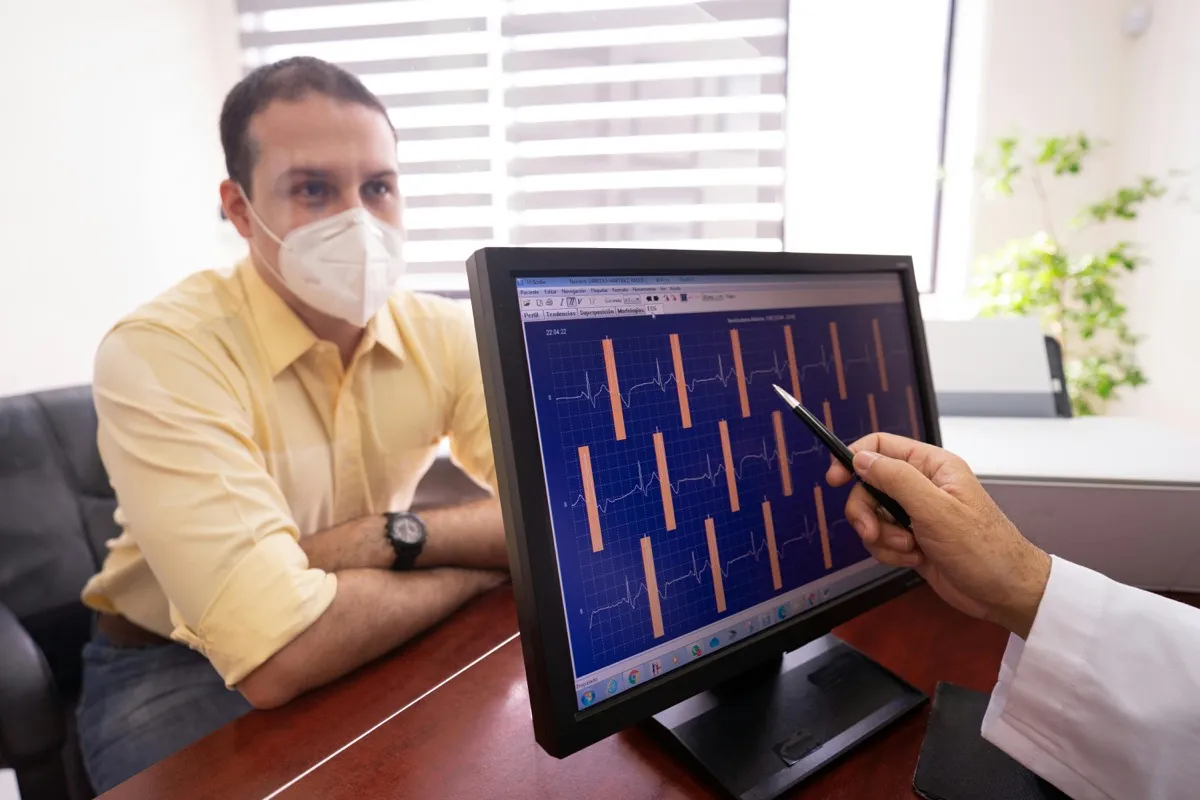
Troponin Test Dubai: Heart Attack Marker (2026)
Weiterlesen
Best Cardiologist in Dubai: Dr. Shahoo Mazhari at DCDC (2026)
WeiterlesenCardiologist in Dubai Healthcare City: Dr. Shahoo Mazhari at DCDC (2026)
Weiterlesen
Echocardiogram (Echo) Test in Dubai: Cost, Procedure & What to Expect (2026)
WeiterlesenIranian Cardiologist in Dubai: Dr. Shahoo Mazhari at DCDC (2026)
Weiterlesen© 2026 Doctors Clinic Diagnostic Center (DCDC), Dubai Healthcare City. Originally published at https://doctorsclinicdubai.ae/blog/stress-test-dubai. All rights reserved. Unauthorized reproduction is prohibited.