Wichtigste Erkenntnisse
- The UAE mandates three core newborn screening tests for every baby: the heel prick blood spot test, newborn hearing screening, and pulse oximetry for critical congenital heart defects
- The heel prick test screens for over 20 metabolic, endocrine, and genetic conditions — including congenital hypothyroidism, sickle cell disease, cystic fibrosis, and phenylketonuria — ideally performed 24 to 72 hours after birth
- Early detection through newborn screening can prevent intellectual disability, organ damage, and life-threatening crises when treatment begins within the first weeks of life
- DCDC in Dubai Healthcare City offers comprehensive newborn screening follow-up, on-site blood work with same-day results, and pediatric consultations from AED 300 with direct insurance billing
- The UAE National Newborn Screening Guidelines align with international standards from the WHO, AAP, and NHS to ensure every baby receives standardized, evidence-based screening
- Parents should keep their baby's screening results and bring them to every pediatric visit — these records form the baseline for lifelong health monitoring
Every year, thousands of babies are born in Dubai, and for every one of them, the first few days of life include a series of simple but potentially life-saving tests. Newborn screening is a public health program designed to identify serious genetic, metabolic, and congenital conditions before symptoms appear — when early treatment can prevent permanent disability or death. If you have recently had a baby or are expecting one, understanding what these tests involve, when they happen, and what the results mean is one of the most important things you can do as a parent. Our paediatric services at Doctors Clinic Diagnostic Center (DCDC) in Dubai Healthcare City support families through newborn screening follow-up, confirmatory testing, and ongoing infant health monitoring — all under one roof.
This guide covers every newborn screening test required or recommended in the UAE, explains the conditions each test detects, walks you through what to expect during and after screening, and provides practical information about costs and next steps. Dr. Hadeel Elnur, a general practitioner at DCDC who coordinates pediatric workups and serves as the first point of contact for new parents, reviewed this guide to ensure it reflects current clinical practice and UAE regulatory requirements.
Health Screening Packages
Save with our bundled screening packages — specialist consultation included


What Is Newborn Screening and Why Does It Matter?
Newborn screening is a systematic public health program that tests every baby shortly after birth for a panel of serious but treatable conditions. The concept is straightforward: many genetic and metabolic disorders cause no visible symptoms at birth, but if left undetected, they can lead to intellectual disability, organ failure, developmental delays, or death within weeks or months. When these same conditions are identified through screening and treatment begins immediately, outcomes improve dramatically — in many cases, the child develops completely normally.
The UAE has operated a national newborn screening program since 1995, initially through the Ministry of Health's Maternal and Child Health Department. Over the past three decades, the program has expanded significantly. The Ministry of Health and Prevention (MoHAP) launched updated National Newborn Screening Guidelines that standardize the list of required laboratory and clinical tests, identify designated reference laboratories, and align UAE practices with international best practices from the World Health Organization, American Academy of Pediatrics, and the UK National Health Service.
For parents in Dubai, this means that your baby will be screened before leaving the hospital, regardless of whether you deliver in a government or private facility. However, understanding what these tests are, what they detect, and what happens next gives you the knowledge to advocate for your child's health and follow up appropriately.
The Three Core Newborn Screening Tests in Dubai
The UAE requires three core screening tests for every newborn. Each test targets a different category of conditions and uses a different method. Together, they form a comprehensive first line of defense against conditions that would otherwise go undetected until symptoms — and potentially irreversible damage — appear.
| Screening Test | Method | What It Detects | Timing |
|---|---|---|---|
| Heel Prick Blood Spot Test | A few drops of blood from the baby's heel collected on a filter card | 20+ metabolic, endocrine, and genetic conditions including congenital hypothyroidism, PKU, sickle cell disease, cystic fibrosis, and congenital adrenal hyperplasia | 24-72 hours after birth |
| Newborn Hearing Screening (OAE/ABR) | Small earphones or sensors placed on the baby's head and ears while sleeping | Congenital hearing loss, auditory nerve dysfunction | Before hospital discharge, ideally within 1 month |
| Pulse Oximetry (CCHD Screening) | A small sensor wrapped around the baby's right hand and one foot | Critical congenital heart defects (7 primary conditions including hypoplastic left heart, transposition of great arteries, tetralogy of Fallot) | 24-48 hours after birth |
| Physical Examination | Head-to-toe clinical examination by a pediatrician or neonatologist | Hip dysplasia, undescended testes, cleft palate, jaundice, neurological abnormalities, eye abnormalities | Within 72 hours of birth and again at 6-8 weeks |
Core newborn screening tests as required under UAE National Newborn Screening Guidelines. Exact panels may vary slightly between hospitals. Additional genetic screening may be offered separately.
Heel Prick Blood Spot Test: What Parents Need to Know
The heel prick test — also called the newborn blood spot test or Guthrie test — is the most comprehensive of the three core screens. A healthcare professional pricks the baby's heel with a small lancet and collects several drops of blood onto a special filter paper card. This blood sample is then sent to a reference laboratory where it is analyzed for a panel of metabolic, endocrine, and genetic conditions. The test is quick, taking less than five minutes, and while the baby may cry briefly from the prick, there is no lasting discomfort.
The timing of the heel prick is important. It is ideally performed between 24 and 72 hours after birth. Testing too early (before 24 hours) can produce false results because some metabolic markers need time to accumulate in the baby's blood after they begin feeding. Testing too late increases the risk of delayed diagnosis for time-sensitive conditions. In most Dubai hospitals, the test is performed before discharge.
The conditions screened by the heel prick test fall into several categories. Endocrine disorders such as congenital hypothyroidism (affecting approximately 1 in 3,000 newborns) can cause severe intellectual disability if untreated but are completely manageable with daily thyroid hormone replacement started in the first two weeks of life. Metabolic disorders such as phenylketonuria (PKU), maple syrup urine disease (MSUD), and glutaric aciduria can cause brain damage if dietary interventions are not started early. Hemoglobin disorders such as sickle cell disease require early monitoring and preventive care to avoid life-threatening infections and pain crises. If you are planning your baby's complete health journey, our child health checkup guide outlines the full schedule of well-child visits from birth through age 18.
Newborn Hearing Screening in Dubai
Hearing loss is one of the most common congenital conditions, affecting approximately 1 to 3 per 1,000 newborns. The UAE's MoHAP launched a dedicated Hearing Early Screening Program for newborns, recognizing that undetected hearing loss can significantly delay speech, language, and cognitive development. When hearing loss is identified and intervention begins before six months of age — through hearing aids, cochlear implants, or speech therapy — children achieve language development comparable to their hearing peers.
There are two types of newborn hearing tests. Otoacoustic Emissions (OAE) testing involves placing a small probe in the baby's ear that emits soft sounds and measures the echo produced by a healthy inner ear. Auditory Brainstem Response (ABR) testing places small sensors on the baby's head that measure how the auditory nerve responds to sound. Both tests are painless, take 5 to 15 minutes, and are typically performed while the baby is sleeping. A 'pass' result means hearing is functioning normally. A 'refer' result does not necessarily mean the baby has hearing loss — it means further testing is needed, as fluid in the ear canal, ambient noise, or a restless baby can all affect results.
If your baby receives a 'refer' result, do not panic. Approximately 2 to 10 percent of babies are referred for follow-up testing, and the majority of these turn out to have normal hearing on retest. However, it is critical that you attend the follow-up appointment — typically scheduled within 2 to 4 weeks — to confirm the result. Delayed follow-up is the most common reason that congenital hearing loss is diagnosed late.
Pulse Oximetry: Screening for Critical Heart Defects
Critical congenital heart defects (CCHD) affect approximately 1 in 500 newborns and are the leading cause of infant death from birth defects. Pulse oximetry screening is a simple, painless, non-invasive test that measures the oxygen saturation level in the baby's blood. A small sensor is placed on the baby's right hand (pre-ductal) and one foot (post-ductal), and readings are compared. Babies with certain critical heart defects will have lower-than-normal oxygen levels, even though they may appear completely healthy.
The American Academy of Pediatrics updated its clinical recommendations for CCHD screening in 2025, refining the screening algorithm to improve detection rates. Current evidence shows that pulse oximetry has a sensitivity of approximately 76 percent and a specificity of 99.9 percent for detecting critical congenital heart defects. This means the test rarely produces false positives, and when it flags a concern, it warrants immediate investigation. The seven primary conditions targeted include hypoplastic left heart syndrome, pulmonary atresia, tetralogy of Fallot, total anomalous pulmonary venous return, transposition of the great arteries, tricuspid atresia, and truncus arteriosus.
The test is performed after 24 hours of age to allow the baby's circulatory system to transition from fetal to newborn physiology. Results are available immediately. An oxygen saturation below 95 percent in either limb, or a difference of more than 3 percent between the hand and foot readings, triggers further evaluation, typically an echocardiogram. Early detection of CCHD is critical because many of these conditions require surgical intervention within the first days or weeks of life, and outcomes are significantly better when the diagnosis is made before the baby develops symptoms.
Conditions Detected by Newborn Screening
The full panel of conditions screened in UAE newborn programs covers multiple categories. Understanding what each category means helps parents appreciate why screening is so important, even when there is no family history of genetic conditions. Many of these disorders are autosomal recessive, meaning both parents can be healthy carriers with no idea they carry the gene. To ensure your baby stays on track with all recommended immunizations alongside screening follow-ups, refer to our child vaccination schedule for Dubai.
- Endocrine disorders: Congenital hypothyroidism (CH) and congenital adrenal hyperplasia (CAH). CH is the most commonly detected condition and occurs when the thyroid gland does not produce enough hormones for normal brain and body development. Untreated CH leads to intellectual disability, but daily thyroid medication started within the first two weeks of life results in normal development. CAH affects the adrenal glands and can cause life-threatening salt-wasting crises in the first weeks of life if not identified.
- Amino acid disorders: Phenylketonuria (PKU), maple syrup urine disease (MSUD), homocystinuria (HCU), and tyrosinemia. These conditions involve the body's inability to break down certain amino acids from protein. Without dietary management, toxic byproducts accumulate and cause brain damage. With early dietary intervention, children with these conditions develop normally.
- Fatty acid oxidation disorders: Medium-chain acyl-CoA dehydrogenase deficiency (MCADD) and other fatty acid metabolism disorders. MCADD affects the body's ability to convert fat into energy during fasting. Without diagnosis, a simple illness that causes a child to stop eating can trigger a metabolic crisis. With diagnosis, parents learn to manage fasting risks and the child lives a normal life.
- Organic acid disorders: Glutaric aciduria type 1 (GA1), isovaleric acidaemia (IVA), and propionic acidemia. These involve the buildup of organic acids that can damage the brain and organs. Dietary management and emergency protocols prevent crises.
- Hemoglobin disorders: Sickle cell disease (SCD) and thalassemia. Sickle cell disease causes red blood cells to become misshapen, leading to pain crises, infections, and organ damage. Early diagnosis allows for prophylactic antibiotics, parental education, and monitoring that significantly reduces complications.
- Cystic fibrosis: An inherited condition that affects the lungs and digestive system. Early detection allows for nutritional support, respiratory therapies, and monitoring that improve quality of life and lifespan.
- Severe Combined Immunodeficiency (SCID): A group of conditions where the immune system is severely compromised. Without treatment, affected babies are vulnerable to life-threatening infections. With early detection, bone marrow transplant or gene therapy can be curative.
- Critical congenital heart defects: Detected via pulse oximetry. Structural heart abnormalities that require surgical intervention, often within the first weeks of life.
- Hearing loss: Detected via OAE or ABR. Early fitting of hearing aids or cochlear implants and initiation of speech therapy allow language development on track with hearing peers.
Understanding Your Baby's Screening Results
Newborn screening results are typically categorized as 'normal' (also called 'negative' or 'screen negative'), 'abnormal' (also called 'positive' or 'screen positive'), or 'inconclusive' (requiring a repeat test). Understanding what each result means can help parents manage their anxiety and respond appropriately.
Normal result: This means no markers for the screened conditions were found at abnormal levels. No further action is needed for those specific conditions, but routine well-child visits should continue as scheduled. It is important to understand that newborn screening does not test for every possible condition — it targets specific disorders where early detection changes outcomes.
Abnormal or positive result: This does not mean your baby definitely has the condition. It means the screening detected a marker that warrants further investigation. False positives do occur — the screening is designed to be highly sensitive, which means it catches all true positives but may also flag some healthy babies. Confirmatory diagnostic testing (such as a repeat blood test, enzyme assay, or genetic test) will be ordered to determine whether your baby truly has the condition. Until confirmatory results are in, try to stay calm and work closely with your pediatrician.
Inconclusive result: Sometimes a test needs to be repeated. This can happen if the blood sample was insufficient, collected too early, or if the baby was premature. An inconclusive result is not a cause for alarm, but the repeat test should be completed promptly — typically within 1 to 2 weeks.
Newborn Screening Costs in Dubai
In the UAE, the three core newborn screening tests (heel prick blood spot, hearing screening, and pulse oximetry) are typically performed at the hospital where the baby is born and are included in the delivery or postnatal care package. For babies who need follow-up testing, confirmatory diagnostics, or extended screening panels, the following cost ranges apply in Dubai. For a detailed breakdown of all pediatric visit costs in Dubai, our pediatrician cost guide provides a comprehensive overview.
| Service | Price Range | Details |
|---|---|---|
| Pediatrician / GP Consultation | From AED 300 | Newborn assessment, screening review, feeding guidance, developmental check |
| Newborn Blood Tests (confirmatory panels) | AED 200-600 | Thyroid function, hemoglobin electrophoresis, metabolic panels — on-site at DCDC with same-day results |
| Extended Metabolic Screening Panel | AED 500-1,000 | Expanded panel testing for 40+ metabolic and genetic conditions beyond the standard heel prick screen |
| Newborn Hearing Retest (OAE/ABR) | AED 300-800 | Follow-up hearing assessment for babies who received a 'refer' result on initial screening |
| Echocardiogram (if pulse oximetry abnormal) | AED 800-1,500 | Ultrasound of the heart to evaluate structure and function — referral to pediatric cardiologist |
| Whole Genome Sequencing (optional advanced screening) | From AED 1,000 | Screens for 800+ genetic conditions. Available in select Abu Dhabi and Dubai facilities |
Prices are indicative and may vary by provider. Most insurance plans cover standard newborn screening. Contact DCDC for current pricing and insurance verification.
Most comprehensive health insurance plans in Dubai cover standard newborn screening as part of maternity or postnatal benefits. DCDC works with over 20 insurance partners — including Daman, AXA, Bupa, Cigna, and MetLife — with direct billing, so families typically pay only their copay. Our reception team verifies your coverage before the appointment and advises on any out-of-pocket costs.
What to Expect at DCDC for Newborn Screening Follow-Up
While the initial screening tests are typically performed at the hospital where your baby is born, many parents need follow-up care — whether for a repeat test, confirmatory diagnostics, or their baby's first well-child visit. At Doctors Clinic Diagnostic Center in Dubai Healthcare City, we have designed the newborn visit experience to be thorough, gentle, and convenient for new parents who are navigating the early days with a newborn.
Arrival and parking: DCDC is located in Building 64, Block A, Al Razi Medical Complex in DHCC, with free dedicated parking. The building is easily accessible, and most families are parked and at the clinic within 5 minutes. For parents recovering from delivery, ground-level access and elevator availability make the visit manageable.
Check-in and waiting: Our reception team handles registration and insurance verification quickly. Our average wait time is approximately 15 minutes, and we schedule newborn appointments to minimize exposure to other patients. The clinic environment is clean, quiet, and child-friendly.
The consultation: Dr. Hadeel Elnur and our clinical team take a calm, unhurried approach with newborns. The doctor will review your baby's screening results, perform a thorough physical examination, assess feeding and weight gain, check for jaundice, and discuss any parental concerns. The examination is performed on a padded surface with the parent present and involved throughout.
On-site blood work: If confirmatory blood tests are needed — thyroid function, hemoglobin electrophoresis, metabolic panels, bilirubin levels — these are collected on-site in our laboratory. Our phlebotomists are experienced with newborn blood draws, using the smallest possible needles and gentle techniques. Same-day results are available for routine tests, and results are communicated to you promptly with a clear explanation.
After the visit: You receive a clear summary of all findings, any prescriptions, a feeding plan if needed, and a schedule for upcoming visits. If your baby needs specialist referral (pediatric cardiologist, audiologist, endocrinologist), Dr. Hadeel Elnur coordinates the referral so you do not have to navigate the system on your own.
According to Dr. Hadeel Elnur: "As a GP who serves as the first point of contact for newborn patients at DCDC, I have seen firsthand how early screening catches conditions that would otherwise go unnoticed for months. Congenital hypothyroidism is a perfect example — the baby looks entirely normal at birth, but without the heel prick test, the diagnosis would be delayed until developmental delays become apparent. By then, some damage is irreversible. I always reassure new parents that screening is routine, the tests are quick and safe, and the vast majority of results come back normal. But for the small number of babies where something is detected, that early diagnosis can truly be life-changing."
Book Your Baby's Newborn Screening Follow-Up at DCDC
Doctors Clinic Diagnostic Center in Dubai Healthcare City offers comprehensive newborn health assessments, on-site blood work with same-day results, and same-day appointments for new parents. Rated 4.8/5 from 1,000+ verified reviews with 98% patient satisfaction. Book online or message us on WhatsApp — we prioritize newborn appointments.
MOHAP Licensed (License No. NIMY7VY5-240925). 20+ insurance partners with direct billing. Free dedicated parking. Open Sat-Thu 8 AM - 10 PM, Fri 9 AM - 9 PM.
When to Seek Urgent Care After Newborn Screening
While most newborn screening results are normal, there are situations in the first weeks of life where parents should seek immediate medical attention, regardless of screening results. Newborn screening catches specific conditions, but it does not test for everything. The following symptoms in a newborn warrant urgent evaluation.
- Persistent jaundice beyond 2 weeks: Yellowing of the skin and whites of the eyes is common in the first few days and usually resolves on its own. If jaundice persists beyond 14 days, worsens, or is accompanied by pale stools and dark urine, a bilirubin test and liver function assessment are needed.
- Fever of 38C or above in a baby under 3 months: This is always a medical urgency in a newborn. Their immune system is immature, and a fever can indicate a serious infection. Do not wait — bring the baby in or go to the emergency department. Our child fever management guide explains temperature thresholds by age and when to seek immediate care.
- Poor feeding or refusal to feed for more than 8 hours: Newborns need to feed every 2 to 3 hours. If your baby is consistently refusing feeds, feeding very weakly, or has fewer than 6 wet diapers in 24 hours after day 4, dehydration or an underlying condition may be the cause.
- Blue or grey skin color (cyanosis): Blueness around the lips, tongue, or fingertips can indicate a heart or respiratory problem. While brief blueness of the hands and feet is normal in the first 24 hours, persistent or central cyanosis requires immediate evaluation.
- Lethargy or excessive sleepiness: While newborns sleep 16 to 17 hours a day, a baby who is unusually difficult to wake, floppy, or unresponsive needs urgent assessment.
- Breathing difficulties: Grunting, rapid breathing (more than 60 breaths per minute), nasal flaring, or chest retractions (skin pulling in between the ribs) are signs of respiratory distress.
Advanced and Optional Newborn Screening in the UAE
Beyond the three core screening tests, the UAE has invested heavily in advanced genetic screening programs. Abu Dhabi's Department of Health launched the Newborn Genetic Screening Programme, which offers whole genome sequencing capable of screening for over 815 treatable childhood genetic conditions — making it one of the most comprehensive newborn genetic screening programs in the world. While this program is currently available primarily in Abu Dhabi, similar expanded screening options are becoming increasingly accessible in Dubai through private laboratories and specialized clinics.
Extended metabolic screening panels are available from AED 500 to AED 1,000 at private labs in Dubai, including DNA Labs UAE and specialist facilities. These panels test for 40 to 60 additional metabolic conditions beyond the standard heel prick screen. Parents with a family history of genetic conditions, consanguineous marriages, or a previous child with a metabolic disorder may benefit from extended screening. Your pediatrician can advise whether extended screening is appropriate for your baby based on your family history and risk factors.
Carrier screening for parents is another option that is gaining popularity in the UAE. If both parents are carriers of a recessive gene (such as for sickle cell disease, thalassemia, or cystic fibrosis), each pregnancy carries a 25 percent chance of an affected child. Pre-conception or early-pregnancy carrier screening allows families to plan and prepare. For families dealing with common childhood health issues in Dubai, our guide to common childhood illnesses covers what to watch for in the first years of life.
Tips for Parents: Before, During, and After Screening
Newborn screening can feel overwhelming, especially for first-time parents who are already adjusting to life with a newborn. Here are practical tips to help you navigate the process smoothly.
- Before birth: Ask your hospital which screening tests are included in your delivery package and whether any optional tests are available. Prepare a folder for your baby's medical documents — you will accumulate screening results, vaccination records, and clinic notes quickly.
- During the heel prick: Skin-to-skin contact or breastfeeding during the test has been shown to reduce infant pain and distress. Hold your baby close and stay calm — your baby takes cues from your emotional state.
- Timing matters: Ensure the heel prick test is performed between 24 and 72 hours after birth. If your baby is discharged early (within 24 hours, which is rare but possible), confirm with your hospital when and where the test will be completed.
- Ask for copies: Request a copy of all screening results before leaving the hospital. Some hospitals send results electronically; others provide paper copies. If you do not receive results within 2 weeks, contact the hospital — never assume 'no news is good news' with newborn screening.
- Follow up on referrals: If any test returns a 'refer' or abnormal result, attend the follow-up appointment as scheduled. Delays in confirmatory testing can delay treatment for conditions where timing is critical.
- Bring screening results to your first pediatric visit: Your pediatrician needs these baseline results to build your baby's health profile. At DCDC, we integrate screening data into your baby's file so it is available at every subsequent visit.
- Know that most results are normal: The vast majority of newborn screening results come back negative. The anxiety of waiting is normal, but the statistical likelihood is overwhelmingly in your favor.
How Dubai's Newborn Screening Compares to International Standards
Dubai's newborn screening program aligns with and in some areas exceeds international benchmarks. The American Academy of Pediatrics recommends screening for at least 35 core conditions through the Recommended Uniform Screening Panel (RUSP). The UK NHS screens for 9 conditions via the blood spot test, plus hearing and physical examination. The UAE's National Newborn Screening Guidelines, updated by MoHAP, standardize screening across government and private hospitals and include the three modalities (blood spot, hearing, pulse oximetry) recommended by all major international bodies.
The UAE's investment in whole genome sequencing for newborns through Abu Dhabi's program — screening for over 815 conditions — places the country at the forefront of neonatal screening globally. The WHO's Eastern Mediterranean Regional Office has documented the expansion of the UAE's comprehensive neonatal screening program from 1995 to the present, noting its alignment with international best practices and its role as a model for the region.
For parents who have relocated to Dubai from countries with different screening protocols, it is worth discussing with your pediatrician whether any additional tests should be performed based on your ethnic background or country of origin. Certain conditions are more prevalent in specific populations — sickle cell disease in families with African, Middle Eastern, or Mediterranean heritage; thalassemia in South Asian and Mediterranean populations; and Tay-Sachs disease in Ashkenazi Jewish families. A brief discussion with your pediatrician can determine whether targeted screening is advisable.
Schedule Your Newborn's First Pediatric Visit at DCDC
Whether your baby needs screening follow-up, a first well-child visit, or ongoing pediatric care, DCDC in Dubai Healthcare City is here for your family. On-site lab, same-day results, multilingual staff (Arabic, English, Farsi, Urdu, Hindi), and consultations from AED 300. Book online or send us a WhatsApp message: "Hi, I would like to schedule newborn screening tests for my baby at DCDC."
Building 64, Block A, Al Razi Medical Complex, Dubai Healthcare City. Open Sat-Thu 8 AM - 10 PM, Fri 9 AM - 9 PM. Free parking. Rated 4.8/5 from 1,000+ reviews.
Verwandte Leistungen im DCDC
Fachkundige Betreuung und moderne Diagnostik in Dubai Healthcare City
Häufig gestellte Fragen
Newborn Screening: A Small Test With Lifelong Impact
Newborn screening is one of the most effective public health interventions in modern medicine. A few drops of blood, a brief hearing check, and a simple oxygen sensor — tests that together take less than 30 minutes — can identify conditions that, without early treatment, would cause irreversible harm. The UAE's investment in a comprehensive national screening program, aligned with international standards from the WHO, AAP, and NHS, means that every baby born in Dubai has access to this critical safety net.
At Doctors Clinic Diagnostic Center in Dubai Healthcare City, we support families from the moment of screening follow-up through every well-child visit, vaccination appointment, and acute illness. Our on-site laboratory provides same-day results for routine blood work, our team is experienced with newborn care, and our multilingual staff (Arabic, English, Farsi, Urdu, Hindi) ensures clear communication with every family. With pediatric consultations from AED 300, direct billing with 20+ insurance providers, same-day appointments, and a 4.8/5 rating from over 1,000 patient reviews, DCDC is here to give your baby the best possible start. Book online, call us, or send a WhatsApp message to schedule your baby's visit today.
Quellen und Referenzen
Dieser Artikel wurde von unserem medizinischen Team überprüft und bezieht sich auf folgende Quellen:
- UAE Ministry of Health and Prevention — National Newborn Screening Guidelines
- American Academy of Pediatrics — Newborn Screening Tests (HealthyChildren.org)
- NHS — Newborn Blood Spot Test
- Centers for Disease Control and Prevention — Screening for Critical Congenital Heart Defects
- WHO EMRO — Expanding the Comprehensive National Neonatal Screening Programme in the UAE
- UAE Ministry of Health and Prevention — Hearing Early Screening Program for Newborn Children
Medizinische Inhalte auf dieser Website werden von DHA-lizenzierten Ärzten überprüft. Siehe unsere redaktionelle Richtlinien für weitere Informationen.

Verfasst von
Dr. Hadeel Elnur
General Practitioner
MD, General Practice
Dr. Hadeel Elnur is a General Practitioner at Doctors Clinic Diagnostic Center (DCDC) in Dubai Healthcare City.
Related Articles
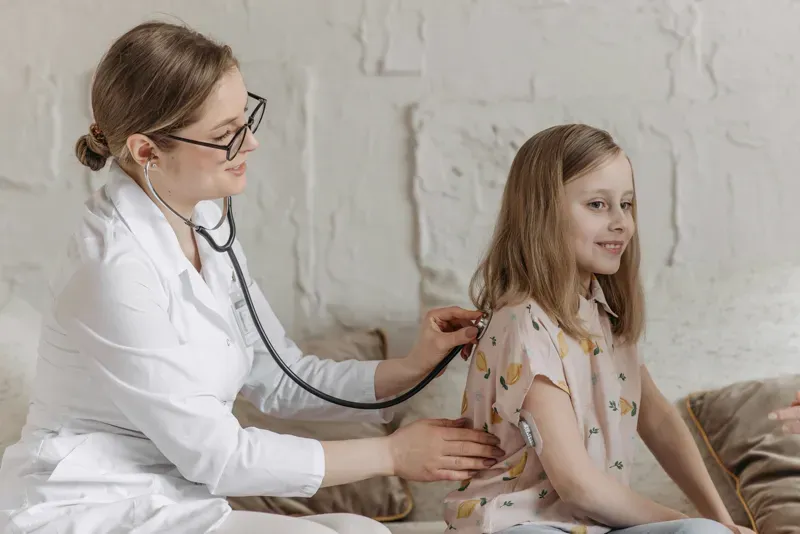
Child Health Checkup Dubai: Full Guide (2026)
Child Vaccination Schedule Dubai: Full Guide (2026)
Pediatrician Cost Dubai: From AED 300 (2026)

Child Fever: When to Worry & What to Do (2026)

Common Childhood Illnesses in Dubai (2026)
More in General Health
Nasal Polyps Dubai: Symptoms & Treatment (2026)
Weiterlesen
Neuropathy Symptoms Dubai: Causes & Signs (2026)
WeiterlesenWell Baby Checkup Dubai: Ages & Cost (2026)
WeiterlesenSchool Health Check Dubai: Guide & Cost (2026)
Weiterlesen
Cortisol Test Dubai: Levels & Cost Guide (2026)
Weiterlesen
Dubai Clinic Without Insurance: Cost Guide (2026)
Weiterlesen© 2026 Doctors Clinic Diagnostic Center (DCDC), Dubai Healthcare City. Originally published at https://doctorsclinicdubai.ae/blog/newborn-screening-tests-dubai. All rights reserved. Unauthorized reproduction is prohibited.