Key Takeaways
- HIV screening at DCDC Dubai Healthcare City starts from AED 249 using a 4th-generation Ag/Ab combination assay — significantly below the Dubai average of AED 200-500 at hospitals and other private clinics
- The 4th-generation HIV test detects both p24 antigen and HIV-1/HIV-2 antibodies simultaneously, with a sensitivity exceeding 99.9% and a shortened window period of just 2-4 weeks post-exposure
- A definitive negative result is confirmed at 12 weeks (84 days) post-exposure — no further testing is needed after a negative result at this point
- HIV testing in Dubai is strictly confidential under UAE Federal Law No. 2 of 2019 — results cannot be shared with employers, immigration authorities, or any third party without your explicit written consent
- HIV screening is mandatory in the UAE as part of the employment visa and residency permit medical examination process
- Results at DCDC are available within 24 hours, processed in our on-site MOHAP-licensed laboratory by experienced laboratory technicians with follow-up consultation available for every result
HIV testing is one of the most important screening investigations available in modern preventive medicine. Early detection through routine screening enables timely access to treatment, prevents onward transmission, and provides the reassurance that comes with knowing your status. At DCDC Dubai Healthcare City, our confidential HIV testing service uses 4th-generation antigen/antibody combination assays processed in our on-site MOHAP-licensed laboratory, with results available within 24 hours and pricing starting from AED 249 — making accurate, confidential HIV screening accessible and affordable for every patient in Dubai.
This guide covers everything you need to know about HIV testing in Dubai: how much it costs across different facilities, which test types are available, how the window period works, what your results mean, how confidentiality is protected under UAE law, and what to expect when you visit DCDC for your test. Written in a clear, factual, and non-stigmatising clinical framework, and reviewed by Dr. Hadeel Elnur, General Practitioner at DCDC Dubai Healthcare City.
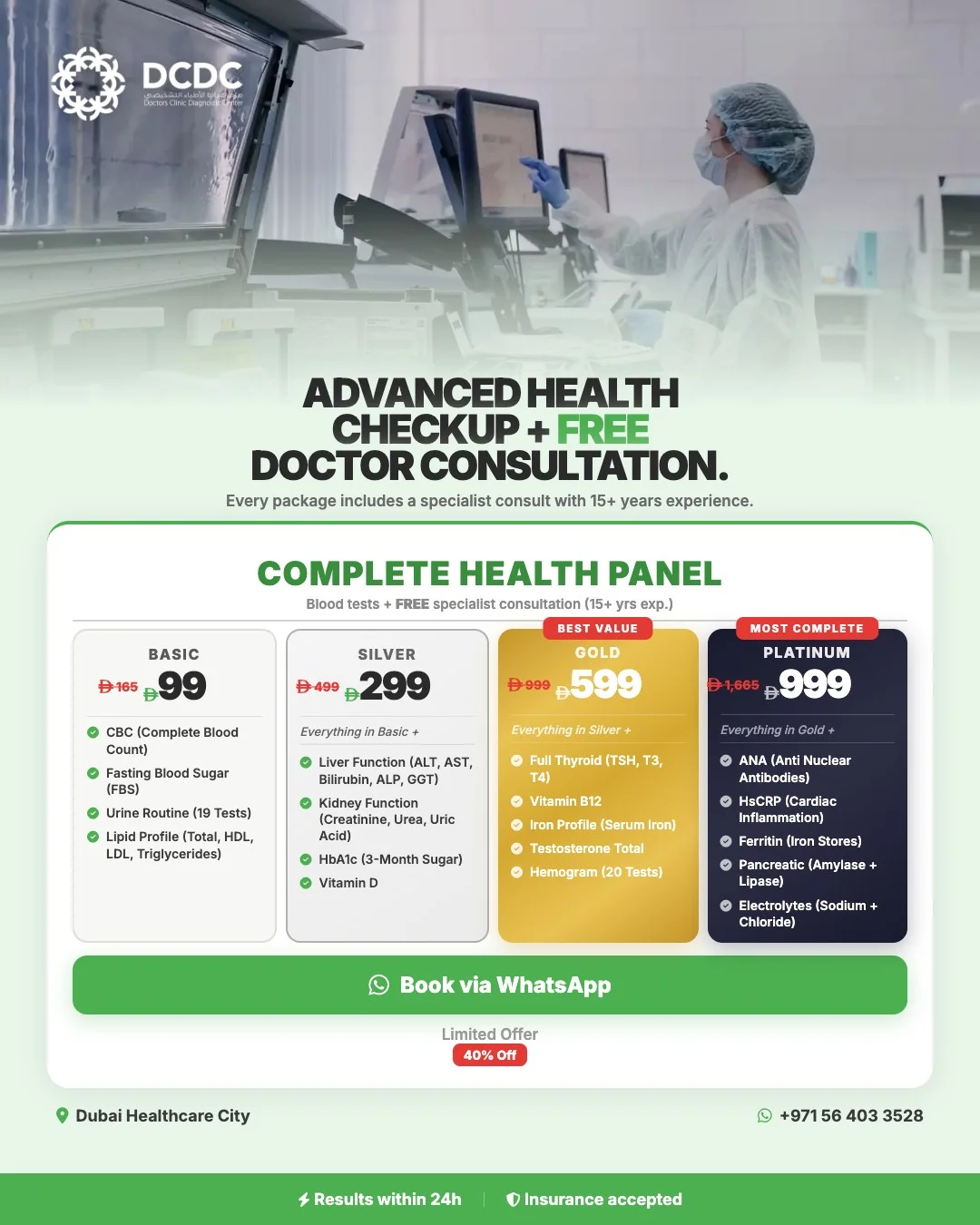
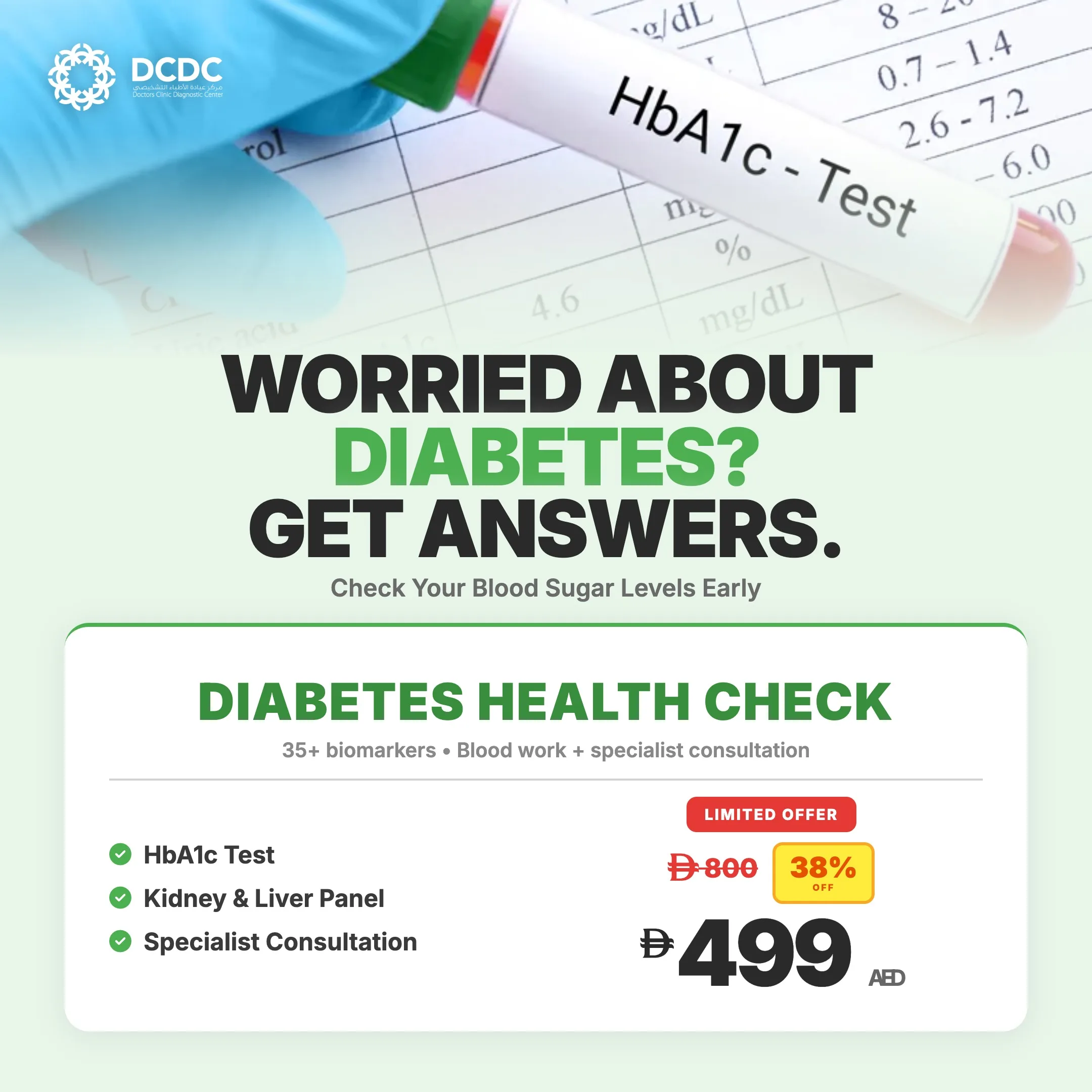
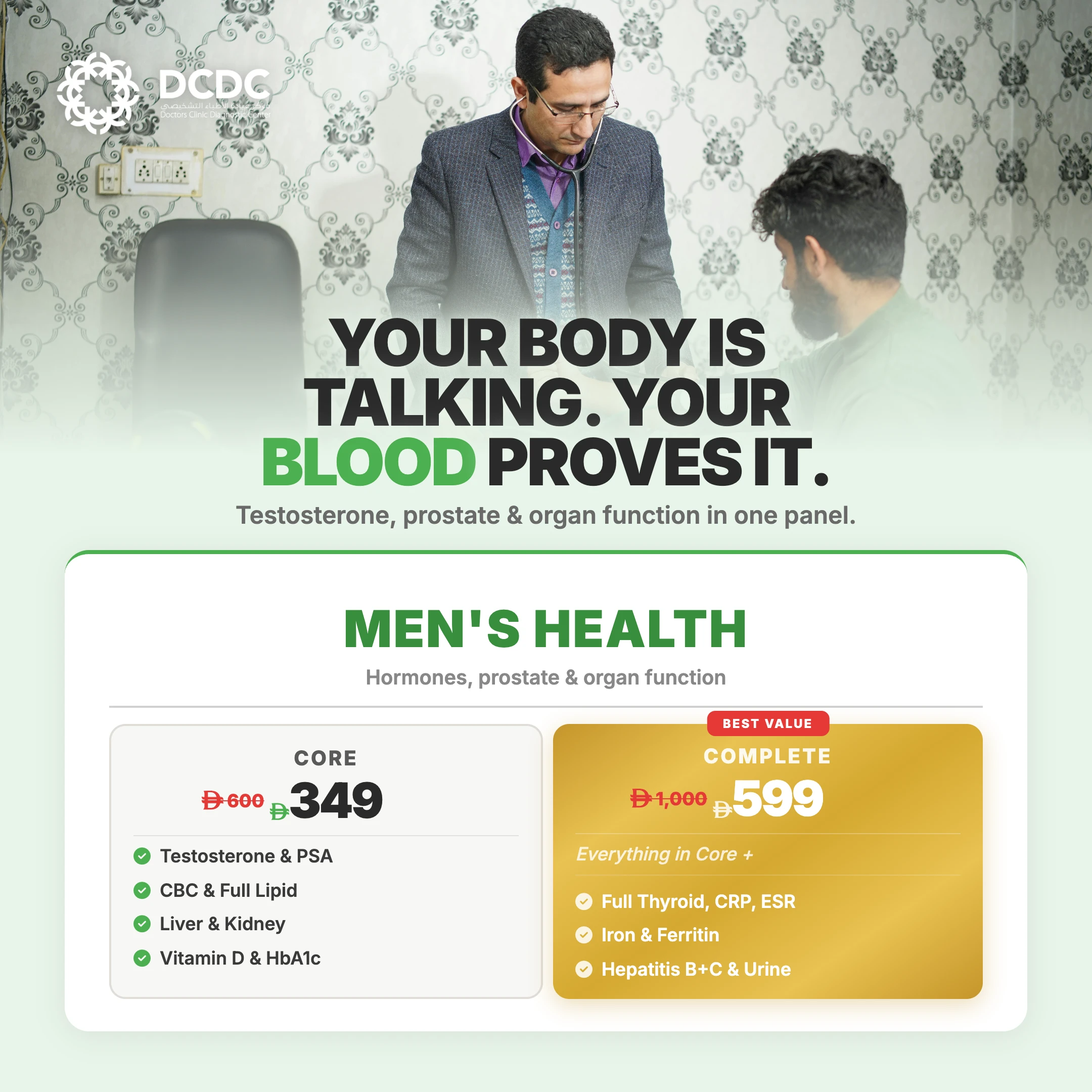
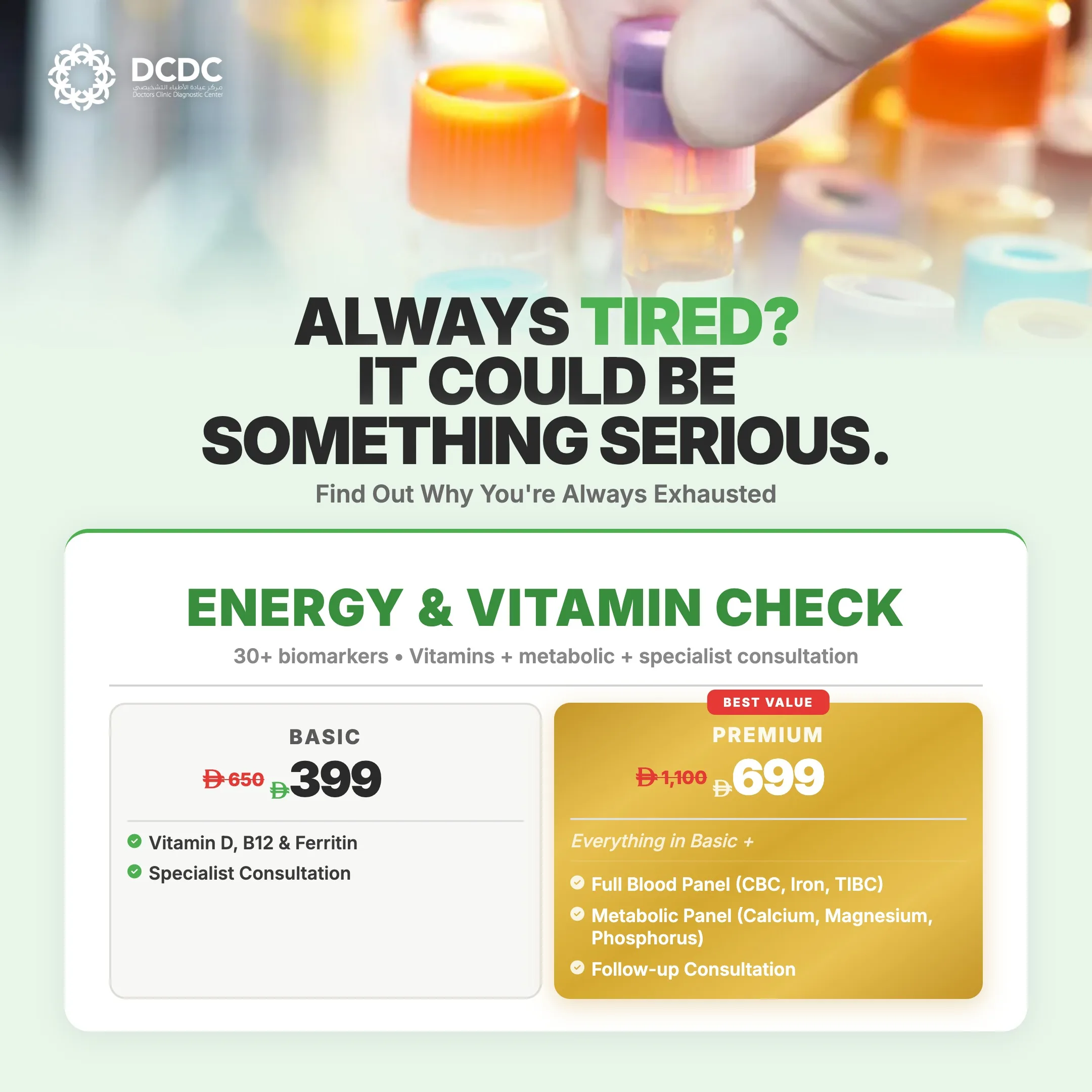
Health Screening Packages
Save with our bundled screening packages — specialist consultation included
How Much Does an HIV Test Cost in Dubai?
HIV test pricing in Dubai varies considerably depending on where you are tested, the type of test performed, and whether the test is part of a broader screening panel. Understanding these price differences helps you make an informed decision without compromising on test quality or clinical standards.
At DCDC Dubai Healthcare City, HIV screening using the 4th-generation Ag/Ab combination assay starts from AED 249 — one of the most competitive prices available at any accredited private clinic in Dubai. This price includes the blood draw, laboratory processing in our on-site MOHAP-licensed laboratory, and results delivered within 24 hours. No hidden fees, no consultation surcharges for straightforward screening, and no referral required.
According to Dr. Hadeel Elnur, General Practitioner at DCDC: "The 4th-generation HIV test has transformed early detection by detecting both the p24 antigen and HIV antibodies simultaneously, shortening the window period to as little as 2-4 weeks. This means patients can receive a highly reliable result much sooner after a potential exposure than was previously possible with older antibody-only tests — and at DCDC we have made this gold-standard test accessible from AED 249 to remove cost as a barrier to testing."
| Facility Type | HIV Test Type | Typical Price Range (AED) | Turnaround Time |
|---|---|---|---|
| DCDC Dubai Healthcare City | 4th-gen Ag/Ab combination assay | From AED 249 | Within 24 hours |
| Private hospitals (Dubai) | 4th-gen Ag/Ab combination assay | AED 200-500 | Same day to 48 hours |
| Other private clinics (Dubai) | 3rd or 4th-gen test (varies) | AED 200-400 | 24-72 hours |
| Government health centres | 4th-gen Ag/Ab (for eligible residents) | AED 50-150 (subsidised) | 3-7 days |
| Home collection services | Varies by provider | AED 199 (incl. home visit fee) | 24-72 hours |
HIV test pricing comparison across Dubai facilities (2026). DCDC pricing is DHA-regulated and includes blood draw, lab processing, and results.
Several factors influence the final cost of your HIV test: the type of assay used (4th-generation is the current standard), whether additional confirmatory testing is required (in the event of a reactive screening result), whether the test is part of a broader panel (STI screen or health checkup), and whether you are using insurance or paying self-pay. At DCDC, the from AED 249 price applies to self-pay patients for the standard 4th-generation screening test.
Types of HIV Tests Available in Dubai
Not all HIV tests are equal. The type of test determines how early after exposure a reliable result can be obtained, and how accurately the test differentiates between HIV-1 and HIV-2. Understanding the differences helps you ensure you are receiving the most appropriate and accurate test for your situation.
4th-Generation HIV Test (Ag/Ab Combination Assay)
The 4th-generation HIV test is the current gold standard for HIV screening worldwide. It detects two things simultaneously: p24 antigen (a viral protein produced during the earliest stage of HIV infection, before the body has mounted an antibody response) and HIV-1/HIV-2 antibodies (produced by the immune system in response to infection). By detecting both antigen and antibody, the 4th-generation test shortens the window period to approximately 2-4 weeks post-exposure, compared to 6-12 weeks for older antibody-only tests. Sensitivity exceeds 99.9% when used after the window period. This is the test used at DCDC Dubai Healthcare City.
3rd-Generation HIV Test (Antibody-Only)
The 3rd-generation test detects only HIV antibodies (IgM and IgG), not p24 antigen. This means it cannot detect the very earliest phase of infection when only antigen is present. The window period is longer — typically 4-6 weeks for initial detection, with definitive results at 12 weeks. While still accurate when used after the window period, the 3rd-generation test is now considered clinically inferior to the 4th-generation assay and is no longer the recommended first-line test in most clinical guidelines.
Rapid HIV Test (Point-of-Care)
Rapid HIV tests use a finger-prick blood sample or oral fluid and provide results within 15-30 minutes. While convenient, rapid tests are typically antibody-only (3rd-generation equivalent) and have a longer window period and slightly lower sensitivity than laboratory-based 4th-generation assays. A reactive rapid test always requires confirmatory laboratory testing. Rapid tests are useful in specific clinical scenarios — such as emergency departments or outreach settings — but are not the optimal choice for routine screening when laboratory access is available.
HIV RNA PCR (NAT/Nucleic Acid Test)
The HIV RNA PCR test (nucleic acid amplification test) directly detects viral genetic material and can identify infection as early as 10-14 days post-exposure — the shortest window period of any HIV test. However, it is significantly more expensive (typically AED 500-1,200) and is not used as a standard screening test. It is reserved for specific clinical situations: acute HIV infection suspected with a negative 4th-gen result, neonatal HIV diagnosis, blood bank screening, and monitoring viral load in patients already on antiretroviral therapy.
| Test Type | What It Detects | Window Period | Sensitivity | Best For |
|---|---|---|---|---|
| 4th-gen Ag/Ab combo (DCDC standard) | p24 antigen + HIV-1/HIV-2 antibodies | 2-4 weeks | >99.9% | Routine screening (gold standard) |
| 3rd-gen antibody-only | HIV antibodies (IgM/IgG) only | 4-6 weeks | >99.5% | Older test, still used at some facilities |
| Rapid test (point-of-care) | HIV antibodies (finger-prick or oral) | 4-12 weeks | 98-99% | Emergency or outreach settings |
| HIV RNA PCR (NAT) | Viral RNA (genetic material) | 10-14 days | >99.9% | Acute infection, neonatal, blood bank |
Comparison of HIV test types available in Dubai. The 4th-generation Ag/Ab combination assay is the recommended screening test at accredited laboratories.
Understanding the HIV Test Window Period
The window period is the interval between HIV exposure and the point at which a test can reliably detect the infection. Testing during the window period can produce a false negative — a negative result despite actual infection. Understanding window periods is essential for interpreting your results correctly and knowing when to test.
With the 4th-generation Ag/Ab combination test used at DCDC, the p24 antigen component becomes detectable approximately 2-4 weeks after exposure, before the immune system has produced antibodies. Antibodies typically appear from 3-6 weeks post-exposure. Because the 4th-generation test detects both, it captures infection at the earliest reliably detectable point.
The widely accepted clinical consensus — endorsed by the CDC, WHO, and BASHH — is that a negative 4th-generation HIV test at 6 weeks (42 days) post-exposure is highly reassuring, and a negative result at 12 weeks (84 days) is considered definitive. No further testing is required after a negative result at 12 weeks for a specific exposure event.
| Time Since Exposure | 4th-Gen Test Reliability | Clinical Interpretation |
|---|---|---|
| Less than 2 weeks | Not reliable — too early for antigen detection | If high-risk exposure within 72 hours, consider PEP immediately |
| 2-4 weeks | Increasingly reliable — p24 antigen may be detectable | A reactive result is significant; a negative result needs follow-up testing |
| 4-6 weeks | Highly reliable — both antigen and antibodies detectable | Negative result is highly reassuring (>95% of infections detected) |
| 6-12 weeks | Very high reliability | Negative result provides strong reassurance |
| 12 weeks (84 days) or later | Definitive — window period has fully closed | A negative result at 12 weeks is conclusive. No further testing needed |
HIV test window period timeline for 4th-generation Ag/Ab combination assay. Source: CDC and WHO guidelines.
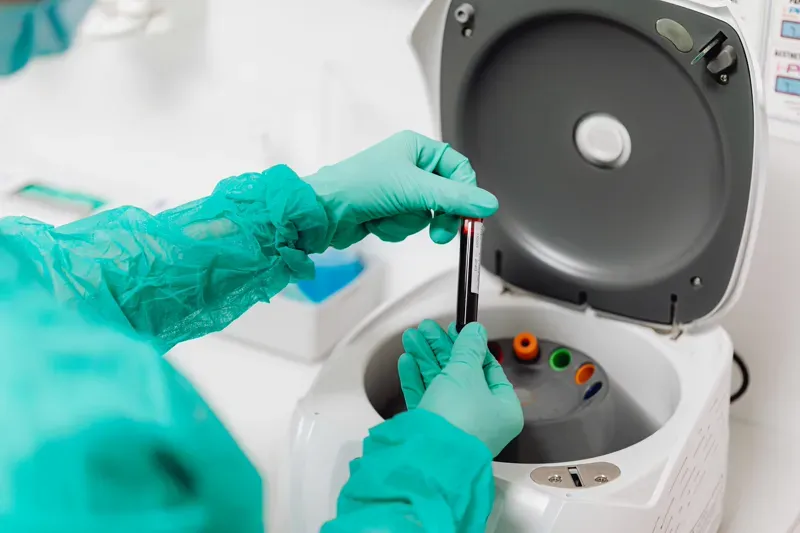
For those seeking comprehensive sexual health screening beyond HIV, our complete STD testing guide for Dubai covers window periods, test types, and pricing for all commonly screened sexually transmitted infections including syphilis, hepatitis, chlamydia, and gonorrhoea.
Who Should Get an HIV Test in Dubai?
The CDC, WHO, and UNAIDS all recommend that HIV testing should be normalised as a routine part of healthcare for all adults — not reserved for people who perceive themselves as being at elevated risk. UNAIDS estimates that approximately 39 million people worldwide are living with HIV, and a significant proportion remain undiagnosed. Early detection is the cornerstone of effective treatment and prevention of onward transmission.
The following groups should be tested routinely or at specific intervals:
- All adults aged 15-65: The CDC recommends at least one HIV test in a lifetime for all adults in this age range, regardless of perceived risk factors
- Sexually active individuals: Anyone with a new sexual partner, multiple partners, or a partner whose HIV status is unknown should be tested at least annually
- Following a specific exposure event: Unprotected sexual contact, condom failure, or needle-stick injury — test at 4-6 weeks and again at 12 weeks
- People who inject drugs: At least annual testing, more frequently if sharing needles or equipment
- Healthcare workers: After occupational exposure (needle-stick, mucous membrane contact with potentially infected blood or body fluids)
- Pregnant women: Routine HIV screening is recommended in the first trimester as part of antenatal care — early detection enables interventions that reduce mother-to-child transmission to below 1%
- Visa and residency applicants: HIV testing is part of the mandatory medical examination for UAE employment visas and residency permits
- Anyone who wants to know their status: No specific risk factor is required. Knowledge of your HIV status is a fundamental part of responsible health management
Confidentiality and Privacy: HIV Testing Laws in Dubai
One of the most common concerns people have about HIV testing in Dubai is whether results are truly confidential. The answer is unequivocal: yes. HIV test results at licensed private healthcare facilities in the UAE are protected by comprehensive legal frameworks that ensure medical confidentiality.
Under UAE Federal Law No. 2 of 2019 (Concerning the Use of Information and Communication Technology in Healthcare), all medical records — including HIV test results — are classified as confidential patient health information. This means:
- Your HIV test results cannot be shared with your employer — even if your employer sponsors your health insurance
- Results are not reported to immigration authorities when testing is performed voluntarily at a private clinic (this is distinct from mandatory government visa screening)
- Results cannot be disclosed to family members, partners, or any third party without your explicit written consent
- Breach of medical confidentiality is a criminal offence under UAE law, carrying penalties including fines and imprisonment
- Your medical file, including test results, is stored in encrypted electronic health record systems accessible only to authorised clinical staff
At DCDC, strict confidentiality protocols are followed for all laboratory investigations, and HIV testing is subject to the same rigorous data protection standards as every other medical test. Our clinic has maintained a 4.8/5 Google rating from over 1,000 patient reviews, with confidentiality and professionalism consistently cited as core strengths.
It is important to distinguish between voluntary HIV testing at a private clinic (fully confidential, results controlled by you) and mandatory government health screening for visa and residency applications (conducted at designated government-approved centres, with results reported to the relevant authorities as required by immigration law). These are entirely separate systems, and voluntary testing at DCDC does not feed into the government screening process.
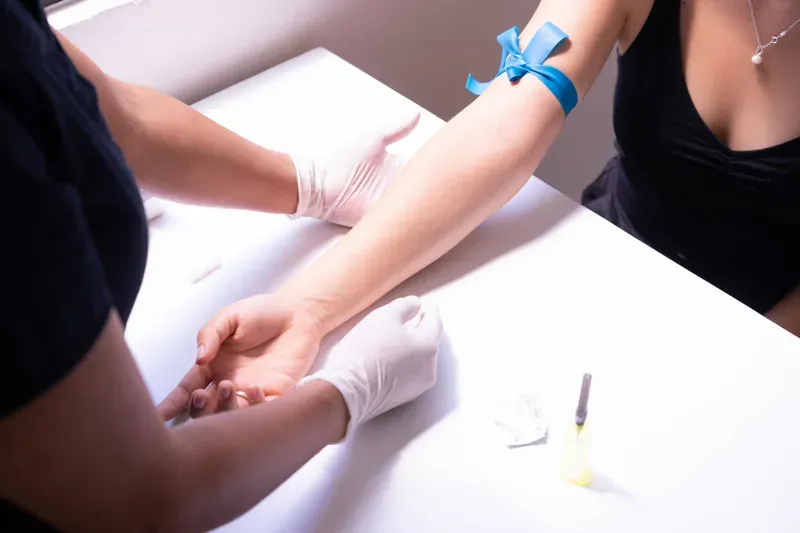
For those who also need hepatitis screening — commonly done alongside HIV testing — our hepatitis B screening guide for Dubai explains the testing process, costs, and what your results mean in detail.
What to Expect at DCDC: Your HIV Testing Experience
Knowing exactly what will happen when you arrive for your test removes uncertainty and makes the process straightforward. Here is the step-by-step patient journey for HIV testing at DCDC Dubai Healthcare City:
Step 1: Arrival and Registration
DCDC is located in DHCC Building 64, Block A, Dubai Healthcare City. Free parking is available in the building. When you arrive, proceed to our reception desk for registration. If you are a returning patient, your file is retrieved electronically. New patients complete a brief registration form. The process is confidential from the moment you walk in — no one in the waiting area will know the nature of your visit.
Step 2: Confidential Check-In
If you are attending for a standalone HIV test (no consultation required), you will be directed to the laboratory area. If you have requested a physician consultation — for example, because you want to discuss window periods, post-exposure concerns, or which tests are appropriate — you will be seen by a general practitioner in a private consultation room first.
Step 3: Blood Draw
The HIV test requires a standard venous blood draw from the arm. An experienced phlebotomist will collect the sample — the entire procedure takes 5-10 minutes including preparation, blood draw, and labelling. The process is quick and involves only a brief sting during needle insertion. No special preparation or fasting is required for an HIV test.
Step 4: On-Site Laboratory Processing
Your blood sample is processed in DCDC's on-site MOHAP-licensed laboratory — it does not leave the building. Our laboratory uses a 4th-generation HIV Ag/Ab combination assay capable of simultaneously detecting p24 antigen and HIV-1/HIV-2 antibodies. On-site processing means faster turnaround and tighter chain-of-custody control compared to clinics that outsource samples to external laboratories.
Step 5: Results Within 24 Hours
Results are typically available within 24 hours. You can receive your results via your preferred method: in person at a follow-up visit, by phone from a clinician, or through our secure patient portal. All results are communicated by a qualified healthcare professional — never sent as a text message or email without clinical context.
Step 6: Follow-Up and Support
For a non-reactive (negative) result: your clinician will confirm the result and advise whether follow-up testing is recommended based on your exposure timeline and the window period. For a reactive (positive) screening result: confirmatory testing (HIV-1/HIV-2 differentiation assay) is performed automatically. If confirmed, you will be seen by a physician for a private, supportive consultation covering what the diagnosis means, next steps, referral to an infectious disease specialist, and treatment options including antiretroviral therapy (ART).
Book Your Confidential HIV Test at DCDC
4th-generation HIV screening from AED 249. Results within 24 hours. On-site MOHAP-licensed lab. Strict confidentiality. No referral needed.
Walk-in available or book ahead via WhatsApp, phone, or online.
Understanding Your HIV Test Results
HIV test results can feel overwhelming, but understanding the terminology makes interpretation straightforward. Here is what each possible result means:
Non-Reactive (Negative)
A non-reactive result means no HIV antigen or antibodies were detected in your blood sample. If sufficient time has passed since your last potential exposure (at least 12 weeks for definitive results), a non-reactive result means you are HIV-negative. If you tested within the window period, your physician may recommend a follow-up test at the 12-week mark to confirm. The vast majority of people who test for HIV receive a non-reactive result.
Reactive (Preliminary Positive)
A reactive screening result means the test has detected HIV antigen and/or antibodies. However, a reactive screening test is not yet a confirmed diagnosis — all reactive screening results must be followed by confirmatory testing. At DCDC, confirmatory testing is initiated automatically. The confirmatory test (HIV-1/HIV-2 differentiation immunoassay) distinguishes between HIV-1 and HIV-2 and confirms the screening result. In rare cases, a screening test may produce a false positive — a reactive result that is not confirmed on follow-up testing. This is why confirmation is mandatory.
Indeterminate
An indeterminate result means the test produced an ambiguous signal that cannot be classified as clearly reactive or non-reactive. This can occur during very early infection (seroconversion), when the immune system is beginning to produce antibodies but has not yet reached detectable thresholds. Indeterminate results require repeat testing after 2-4 weeks and may warrant an HIV RNA PCR test to resolve the ambiguity.
It is critical to understand that a positive HIV diagnosis is not the outcome it was decades ago. Modern antiretroviral therapy (ART) enables people living with HIV to achieve an undetectable viral load, maintain normal life expectancy, and — when viral load is consistently undetectable — present effectively zero risk of sexual transmission (the U=U principle: Undetectable = Untransmittable).
Insurance Coverage for HIV Testing in Dubai
Whether your health insurance covers HIV testing depends on the specific terms of your policy, the clinical context, and whether the test is classified as diagnostic (investigating symptoms or a documented exposure) or elective screening.
- Physician-ordered diagnostic testing: When an HIV test is ordered by a physician to investigate symptoms (e.g., unexplained weight loss, recurrent infections, lymphadenopathy) or following a documented exposure event, most insurance policies in Dubai cover the test as a medically necessary investigation
- Antenatal screening: HIV testing as part of pregnancy care is typically covered by most maternity insurance plans
- Elective screening: Routine HIV screening requested by the patient without specific symptoms or exposure may not be covered by all policies, though many comprehensive plans include preventive screening benefits
- Self-pay: At DCDC, self-pay HIV testing starts from AED 249 with no referral, no prior approval, and no hidden charges. This is often more cost-effective than processing a claim on a plan with a high co-pay or deductible
DCDC offers direct billing with 20+ insurance providers in the UAE. Our reception team can verify your coverage at the time of visit and advise whether direct billing or self-pay is more advantageous for your specific test. With a 98% patient satisfaction rate, transparent DHA-regulated pricing, and extended clinic hours, DCDC makes accessing HIV testing as straightforward as possible regardless of your insurance status.
For a broader overview of blood test pricing, insurance coverage, and fasting requirements across all laboratory investigations available in Dubai, see our comprehensive blood test guide for Dubai.
How to Reduce Your HIV Test Cost
While HIV testing at DCDC is already competitively priced from AED 249, there are several strategies that can further reduce your out-of-pocket cost or provide better value:
- Bundle with other tests: If you need multiple screening tests (e.g., HIV + hepatitis B + hepatitis C + syphilis for a standard sexual health panel), bundled packages are significantly more cost-effective than ordering individual tests. DCDC's standard sexual health panel starts from AED 400 and includes all four tests
- Use your insurance preventive care benefit: Check whether your insurance plan includes a preventive screening allowance — many comprehensive plans cover one annual screening panel
- Include HIV in your annual health checkup: Adding an HIV test to an existing health checkup package is typically less expensive than a standalone test
- Couples testing: DCDC offers coordinated couples panels at a reduced combined rate, making it more affordable for both partners to test simultaneously
- Choose a clinic with on-site lab: Clinics that process samples on-site (like DCDC) eliminate external laboratory fees and middleman markups, which is one reason our pricing starts lower than many competitors
Post-Exposure Testing: PEP and Follow-Up Schedule
If you believe you have been exposed to HIV — through unprotected sexual contact, needle-stick injury, condom failure, or any other route of potential transmission — time-sensitive action may be required. Here is what you need to know about post-exposure prophylaxis (PEP) and the recommended testing schedule.
Post-Exposure Prophylaxis (PEP)
PEP is a course of antiretroviral medications taken after a potential HIV exposure to prevent infection from establishing. PEP must be started as soon as possible — ideally within 2 hours of exposure and no later than 72 hours (3 days). It is taken daily for 28 days. PEP is approximately 80-90% effective when started promptly and taken as prescribed. If you believe you have had a high-risk exposure, seek medical attention immediately — do not wait for a test result before starting PEP.
Recommended Post-Exposure Testing Schedule
After a specific exposure event (with or without PEP), the following testing schedule is recommended to ensure accurate results:
- Baseline (day of exposure or ASAP): HIV test to establish your status at the time of exposure — this confirms you were HIV-negative before the event
- 4-6 weeks post-exposure: 4th-generation HIV Ag/Ab test. A negative result at this point is highly reassuring (>95% of infections will be detected)
- 12 weeks (84 days) post-exposure: Definitive 4th-generation HIV test. A negative result at 12 weeks is considered conclusive — the window period has fully closed
- 6 months post-exposure (if PEP was taken): Some guidelines recommend an additional test at 6 months if PEP was used, as PEP can delay seroconversion in rare cases
At DCDC, we can manage your entire post-exposure testing schedule — from baseline through definitive 12-week testing — with consistent use of the same 4th-generation assay, same laboratory, and same clinical team, ensuring continuity of care and accurate serial comparison of results.
HIV Testing and Prevention Resources in Dubai
Dubai provides several pathways for HIV testing, prevention, and support. Being aware of available resources ensures you can access the right service at the right time:
- DCDC Dubai Healthcare City: Walk-in and appointment-based 4th-generation HIV testing from AED 249. On-site MOHAP-licensed lab, results within 24 hours, full confidentiality, direct billing with 20+ insurers. Open extended hours including evenings
- Dubai Health Authority (DHA) health centres: Government-subsidised HIV testing is available for eligible residents, though waiting times are typically longer and appointment availability may be limited
- Rashid Hospital and Dubai Hospital: Public hospital HIV testing is available, typically within the context of clinical referral or emergency presentations
- MOHAP-approved visa screening centres: For mandatory government health screening (visa/residency applications), testing is conducted at designated centres approved by the Ministry of Health and Prevention
- PEP access: Post-exposure prophylaxis is available through hospital emergency departments in Dubai. If you believe you have had a high-risk exposure within the last 72 hours, attend the nearest emergency department immediately
Prevention remains the most effective strategy against HIV. Key prevention measures include consistent condom use, pre-exposure prophylaxis (PrEP) for individuals at ongoing elevated risk, regular testing and early treatment (treatment as prevention), safe injection practices, and mother-to-child transmission prevention through antenatal screening and treatment. If you have questions about HIV prevention strategies relevant to your situation, a consultation with a general practitioner at DCDC can provide personalised guidance.
Get Tested with Confidence at DCDC
HIV screening from AED 249 with results in 24 hours. 4th-generation accuracy, full confidentiality, and compassionate care at Dubai Healthcare City.
Book online, call, or WhatsApp. Walk-ins welcome. Insurance accepted.
HIV Test Preparation: What You Need to Know Before Your Test
One of the advantages of HIV testing is that it requires minimal preparation. Here is what you should know before your appointment:
- No fasting required: You can eat and drink normally before an HIV test. Fasting is not needed and does not affect the accuracy of the assay
- No medication changes: Continue all regular medications as prescribed. Standard medications do not interfere with HIV test results (note: if you are taking PEP or PrEP, inform your clinician as this may affect the testing strategy and interpretation)
- Bring your Emirates ID or passport: Required for registration and laboratory records
- Bring your insurance card (if applicable): If you plan to use insurance, bring your insurance card for coverage verification at reception
- Know your exposure timeline: If you are testing after a specific exposure event, knowing the approximate date helps your clinician assess whether you are within or beyond the window period and advise on appropriate follow-up
- Stay hydrated: Drinking water before your blood draw makes the venipuncture easier and quicker — this is standard advice for any blood test, not specific to HIV
Related Services at DCDC
Expert care and advanced diagnostics at Dubai Healthcare City
Frequently Asked Questions
Final Thoughts
HIV testing is one of the most straightforward, affordable, and impactful screening tests available in modern healthcare. With the 4th-generation Ag/Ab combination assay, a reliable result can be obtained as early as 2-4 weeks after exposure, and a definitive negative is confirmed at 12 weeks. At DCDC Dubai Healthcare City, confidential HIV screening starts from AED 249, uses a gold-standard laboratory assay processed in our on-site MOHAP-licensed facility, and delivers results within 24 hours. No referral is needed, no fasting is required, and the entire process — from registration to blood draw — takes approximately 15 minutes.
Whether you are testing for peace of mind, following a specific exposure, or as a routine component of annual health maintenance, knowing your HIV status is a fundamental part of responsible healthcare. The science of HIV detection, treatment, and prevention has advanced enormously — early detection through testing is the single most important step in accessing the full benefit of these advances. If you have been considering getting tested, there is no clinical or practical reason to delay.
To book your confidential HIV test at DCDC, contact us via WhatsApp, phone, or online booking. Walk-in appointments are available during extended clinic hours. For comprehensive sexual health screening that includes HIV alongside other key STIs, ask about our bundled sexual health panels for the best value.
Sources & References
This article was reviewed by our medical team and references the following sources:
- World Health Organization — HIV/AIDS: Key Facts and Global Estimates
- UNAIDS — Global HIV & AIDS Statistics: Fact Sheet 2024
- Centers for Disease Control and Prevention — HIV Testing Overview and Recommendations
- NHS — HIV and AIDS: Testing and Diagnosis
- Mayo Clinic — HIV/AIDS: Diagnosis and Treatment
- British Association for Sexual Health and HIV (BASHH) — HIV Testing Guidelines
- UAE Federal Law No. 2 of 2019 — Health Information Technology and Patient Privacy
Medical content on this site is reviewed by DHA-licensed physicians. See our editorial policy for more information.

Written by
Dr. Hadeel Elnur
General Practitioner
MD, General Practice
Dr. Hadeel Elnur is a General Practitioner at Doctors Clinic Diagnostic Center (DCDC) in Dubai Healthcare City.
Related Articles
STD Test Guide Dubai
Hepatitis B Screening Dubai
Blood Test Dubai Guide
More in Laboratory

Fitness Blood Tests Dubai: What to Check (2026)
Read More
HbA1c vs Fasting Blood Sugar Dubai: Guide (2026)
Read More
TB Test Cost Dubai: From AED 100–690 (2026)
Read MorePaternity Test Dubai: How It Works (2026)
Read MoreBlood Test Results Dubai: What's Normal (2026)
Read More
Stool Test Dubai: Types, Results & Cost (2026)
Read More© 2026 Doctors Clinic Diagnostic Center (DCDC), Dubai Healthcare City. Originally published at https://doctorsclinicdubai.ae/blog/hiv-test-cost-dubai. All rights reserved. Unauthorized reproduction is prohibited.