Key Takeaways
- Ferritin is the most sensitive marker for iron stores, detecting deficiency months before anemia appears on a CBC
- Normal ferritin ranges differ by gender: 30-300 ng/mL for men and 15-150 ng/mL for premenopausal women
- Ferritin test price in Dubai starts from AED 149 at DCDC with results typically within 24 hours
- Low ferritin (below 30 ng/mL) causes fatigue, hair loss, and brain fog even when hemoglobin is normal
- High ferritin can indicate iron overload (hemochromatosis), inflammation, liver disease, or infection
- Iron-rich foods (red meat, spinach, lentils) and vitamin C improve iron absorption, while tea and coffee inhibit it
The ferritin test measures your body's iron storage levels and is the single most reliable way to detect iron deficiency before it progresses to full-blown anemia. If you have been experiencing unexplained fatigue, hair loss, difficulty concentrating, or restless legs, a low ferritin level may be the hidden cause. This guide covers everything Dubai residents need to know about ferritin testing: what normal levels look like, what happens when ferritin is too low or too high, how it differs from other iron tests, and where to get accurate, affordable results.
At Doctors Clinic Diagnostic Center (DCDC) in Dubai Healthcare City, ferritin testing is available from AED 149 as a standalone test or as part of a complete iron studies panel. With on-site sample collection, MOHAP-licensed laboratory processing, and results typically within 24 hours, DCDC makes iron assessment accessible and convenient.
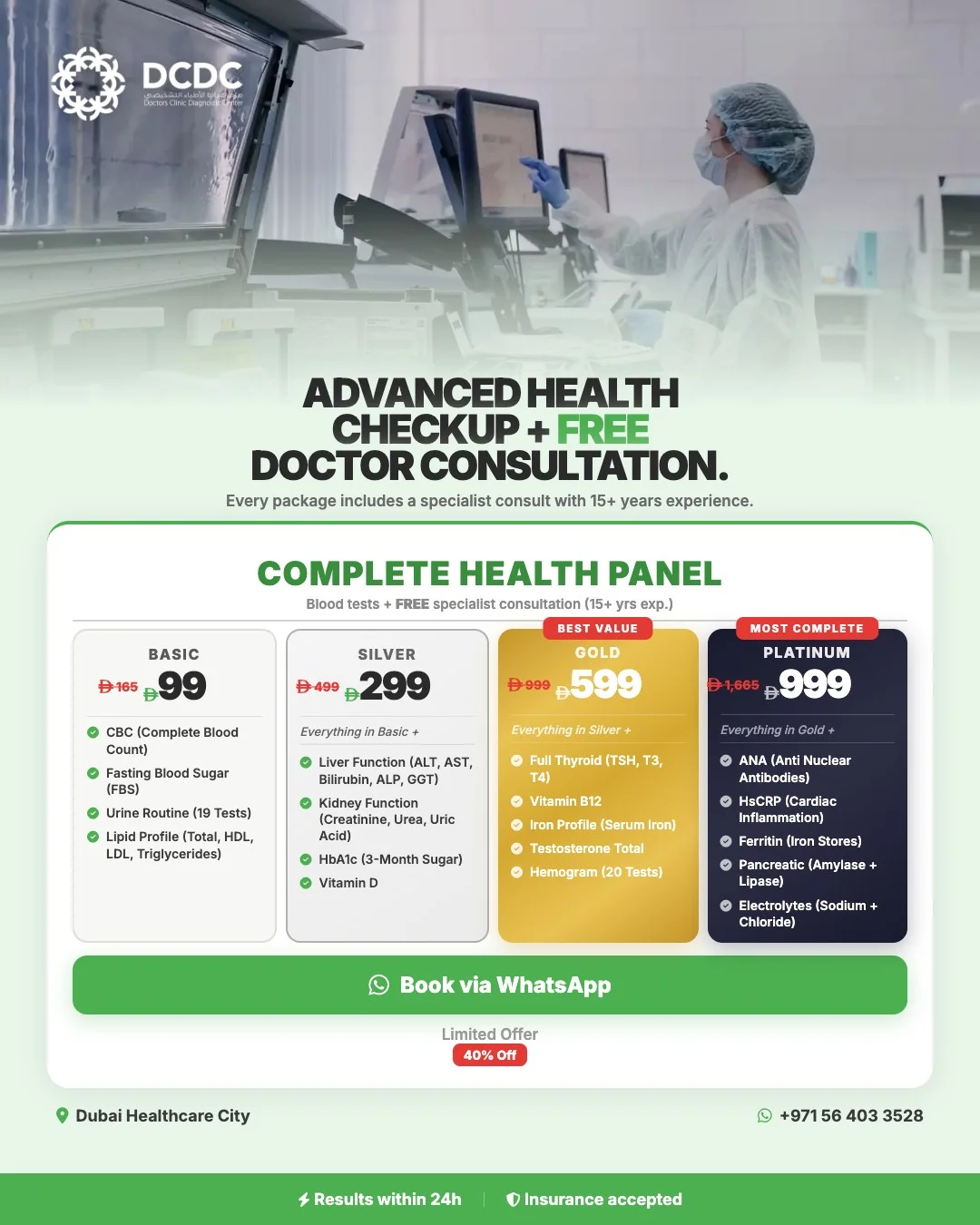
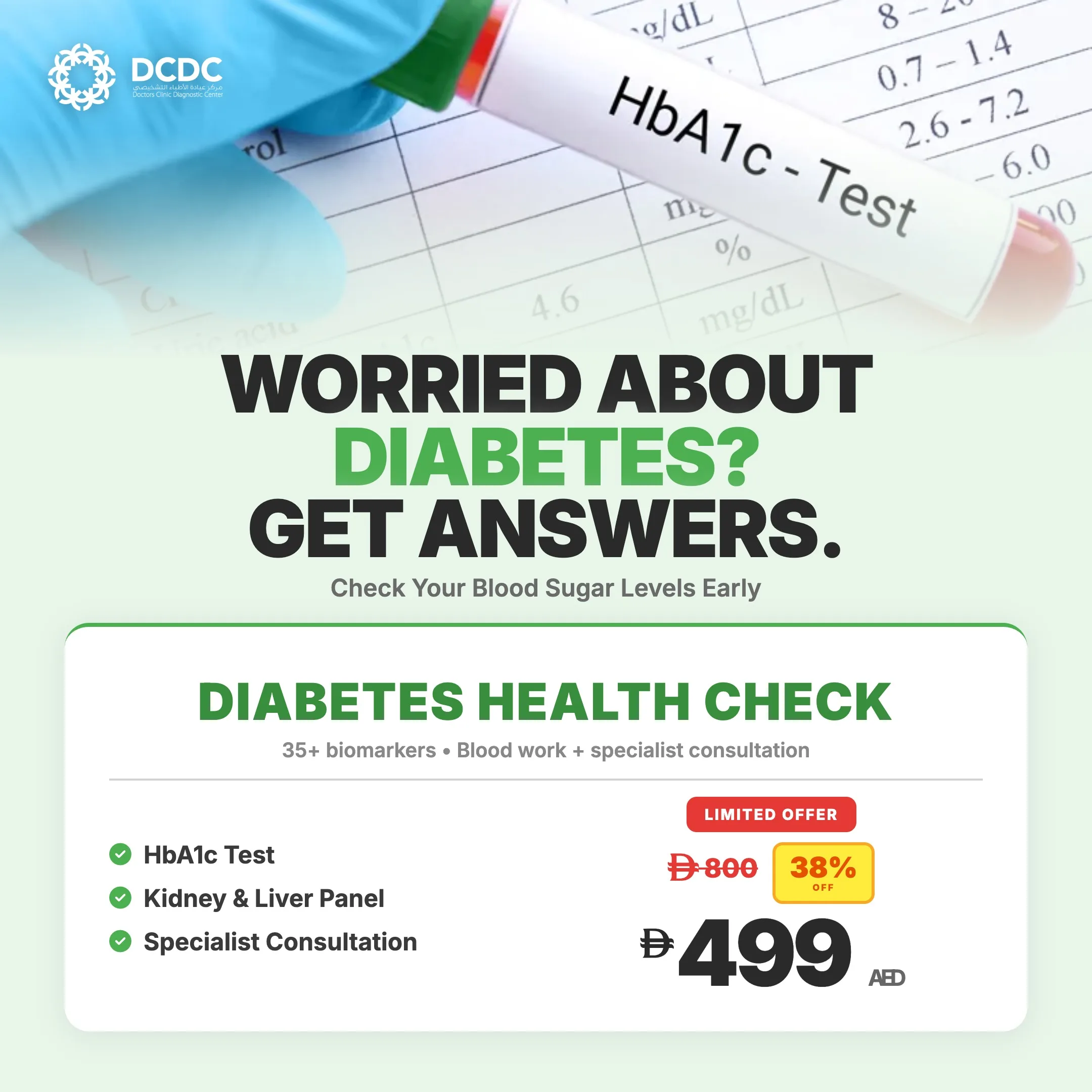
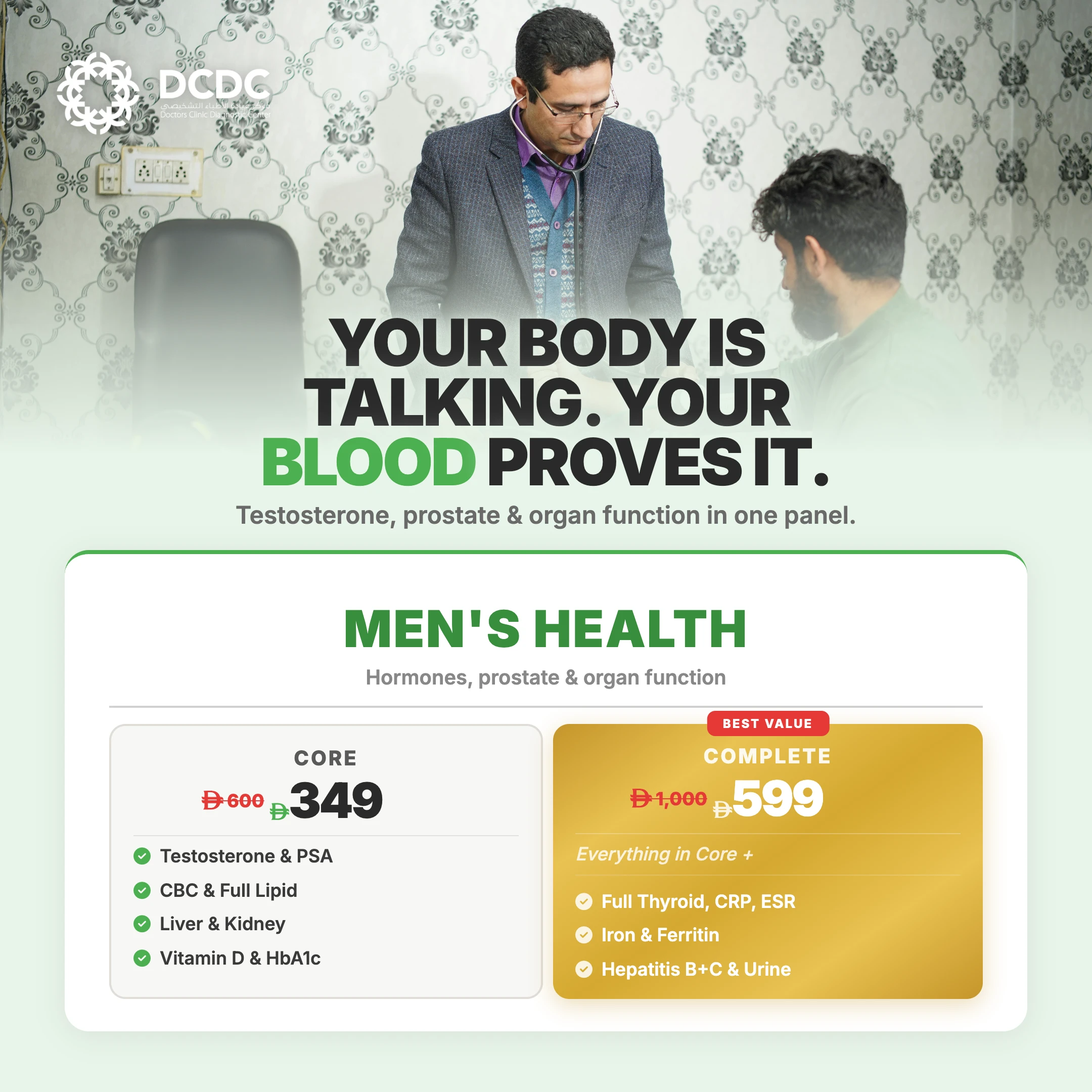
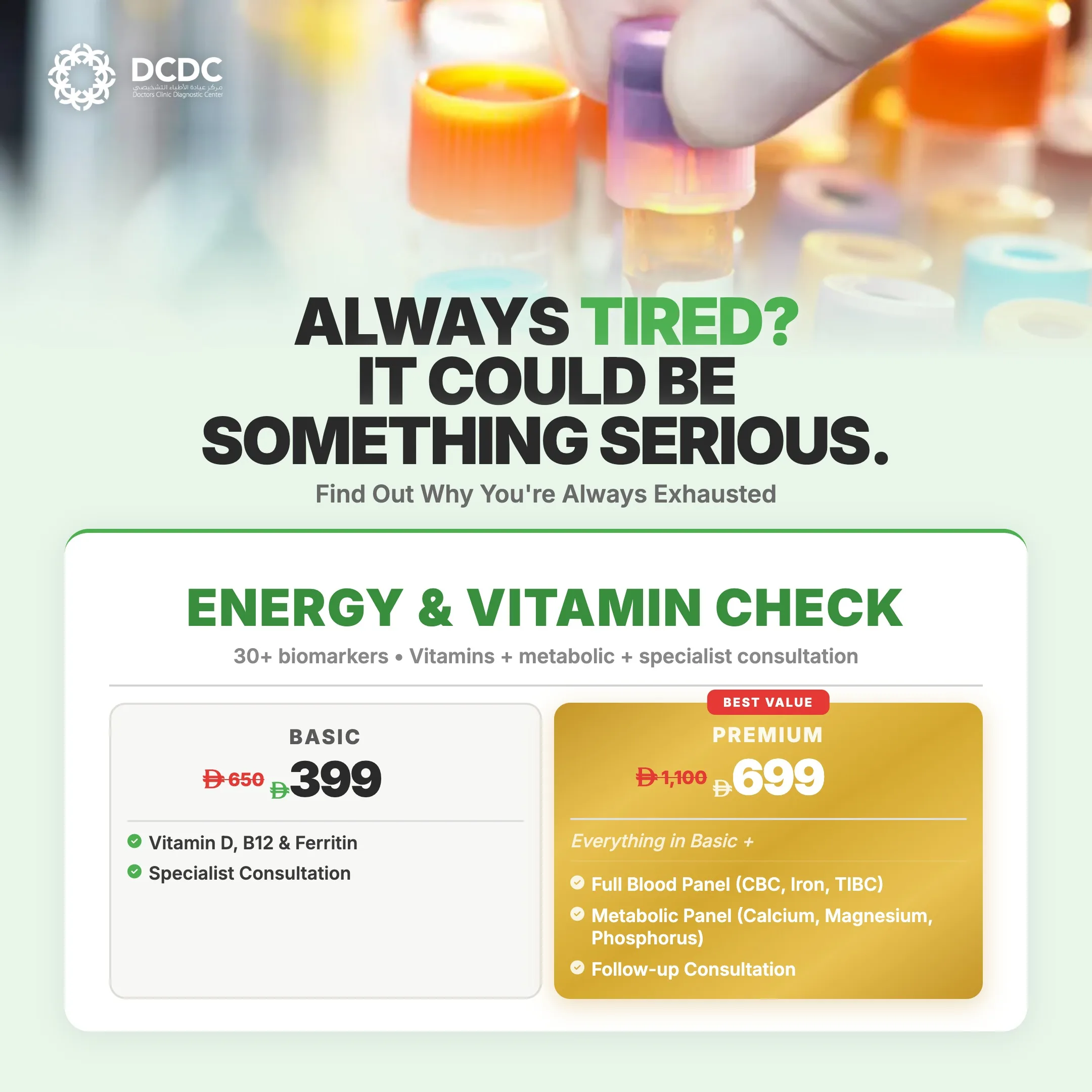
Health Screening Packages
Save with our bundled screening packages — specialist consultation included

What Is Ferritin and Why Does It Matter?
Ferritin is a protein that stores iron inside your cells, primarily in the liver, spleen, and bone marrow. Think of ferritin as your body's iron savings account — while serum iron measures the iron currently circulating in your bloodstream (your checking account), ferritin tells you how much iron you have in reserve. When your body needs iron to make new red blood cells, transport oxygen, or support energy metabolism, it draws from these ferritin stores.
This distinction is clinically critical. Serum iron fluctuates throughout the day based on meals, time of day, and even stress levels, making it an unreliable snapshot. Ferritin, by contrast, reflects the cumulative state of your iron reserves over weeks to months. This is why ferritin is the first marker to drop when iron intake falls short of iron demand — it declines steadily as stores are depleted, providing an early warning signal long before hemoglobin falls and your CBC shows anemia.
The Three Stages of Iron Deficiency
- Stage 1 — Iron depletion: Ferritin drops below 30 ng/mL, but hemoglobin and serum iron remain normal. Most people already feel fatigued at this stage.
- Stage 2 — Iron-deficient erythropoiesis: Serum iron falls, TIBC rises, and transferrin saturation drops. Red blood cell production begins to suffer.
- Stage 3 — Iron deficiency anemia: Hemoglobin drops below normal, MCV decreases, and full clinical anemia is present.
According to the World Health Organization, iron deficiency is the most common nutritional deficiency globally, affecting an estimated 2 billion people. In the UAE, studies have shown that 25% to 40% of women of reproductive age have iron deficiency, many without realizing it because they have never had their ferritin checked.
Ferritin Normal Range: Men, Women & Children
Ferritin reference ranges vary by age, sex, and laboratory. The table below shows the standard ranges used at DCDC and most accredited Dubai laboratories. Always compare your result to the specific reference range printed on your lab report.
| Group | Normal Ferritin Range | Optimal Level | Deficient |
|---|---|---|---|
| Adult men | 30–300 ng/mL | Above 100 ng/mL | Below 30 ng/mL |
| Premenopausal women | 15–150 ng/mL | Above 50 ng/mL | Below 30 ng/mL |
| Postmenopausal women | 30–300 ng/mL | Above 50 ng/mL | Below 30 ng/mL |
| Pregnant women | Varies by trimester | Above 30 ng/mL | Below 15 ng/mL |
| Children (1–5 years) | 7–140 ng/mL | Above 20 ng/mL | Below 12 ng/mL |
| Children (6–15 years) | 10–150 ng/mL | Above 20 ng/mL | Below 15 ng/mL |
| Newborns | 25–200 ng/mL | — | Below 25 ng/mL |
Ferritin normal ranges by age and gender — optimal levels recommended for symptom-free function
A critical nuance: the laboratory reference range for women (15–150 ng/mL) defines what is statistically common, not necessarily what is optimal. Many haematologists and iron specialists now consider ferritin below 30 ng/mL as functionally deficient regardless of the lab's lower cutoff, because symptoms like fatigue, hair loss, and poor concentration frequently resolve only after ferritin is restored above 50 ng/mL.
According to Dr. Hadeel Elnur, General Practitioner at DCDC, "I see many women in Dubai with ferritin levels of 15 to 25 ng/mL who have been told their results are 'normal' because they fall within the lab reference range. When we treat them to raise ferritin above 50, their energy, hair quality, and cognitive function often improve dramatically. The standard reference range does not tell the whole story."
Symptoms of Low Ferritin (Iron Deficiency)
Low ferritin does not have to reach the point of anemia to cause debilitating symptoms. Many people — especially women in Dubai — live with iron deficiency without anemia (IDWA), a condition where ferritin is low but hemoglobin remains normal. Here are the symptoms to watch for.
- Persistent fatigue and exhaustion — the hallmark symptom; not relieved by rest or sleep
- Hair loss and thinning — iron is essential for hair follicle cell division; low ferritin is the most common reversible cause of hair loss in women
- Brain fog and poor concentration — iron supports neurotransmitter synthesis and cognitive function
- Restless leg syndrome — an irresistible urge to move the legs, especially at night; strongly linked to low ferritin
- Brittle nails and koilonychia — nails become thin, brittle, or spoon-shaped with advanced iron deficiency
- Shortness of breath on exertion — especially during exercise or climbing stairs
- Pale skin, inner eyelids, and nail beds — reduced hemoglobin production affects tissue colour
- Frequent infections — iron supports immune cell function
- Cold intolerance — iron is involved in thermoregulation
- Pica (craving ice, chalk, or dirt) — an unusual but recognized symptom of severe iron deficiency
If you are experiencing several of these symptoms, a ferritin test — not just a CBC — is essential. A normal CBC does not rule out iron deficiency. For a comprehensive overview of anemia testing, see our guide on iron deficiency and anemia testing in Dubai.
What Causes High Ferritin Levels?
While low ferritin gets most of the attention, elevated ferritin is also clinically significant and requires investigation. High ferritin does not always mean excess iron — it can be a marker of inflammation, liver damage, or metabolic disease.
Iron Overload Conditions
- Hereditary hemochromatosis — a genetic condition causing excessive iron absorption; affects roughly 1 in 200 people of Northern European descent
- Transfusion iron overload — patients receiving regular blood transfusions (e.g., for thalassemia major) accumulate iron
- Excessive iron supplementation — taking high-dose iron supplements without monitoring
Non-Iron Causes of Elevated Ferritin
- Chronic inflammation — ferritin is an acute-phase reactant that rises with any inflammatory process (arthritis, IBD, chronic infections)
- Liver disease — hepatitis, fatty liver, and cirrhosis release stored ferritin into the bloodstream
- Metabolic syndrome and obesity — adipose tissue inflammation elevates ferritin
- Alcohol excess — chronic alcohol consumption raises ferritin independently of iron stores
- Malignancy — certain cancers produce ferritin as a tumor marker
- Hyperthyroidism — overactive thyroid can elevate ferritin levels
When ferritin is elevated, your doctor will typically order transferrin saturation to determine whether the elevation is due to true iron overload (high saturation) or inflammation (normal or low saturation).
Ferritin Test Price in Dubai: Complete Pricing
Ferritin testing is affordable and widely available across Dubai. At DCDC, a standalone ferritin test starts from AED 149, and complete iron studies (ferritin + serum iron + TIBC + transferrin saturation) are available at a bundled price.
| Test / Panel | DCDC Price | Market Range |
|---|---|---|
| Ferritin test (standalone) | From AED 149 | AED 100–250 |
| Complete iron studies | From AED 299 | AED 200–450 |
| Ferritin + CBC | From AED 150 | AED 150–350 |
| Ferritin + B12 + Folate | From AED 250 | AED 250–500 |
| Health checkup (ferritin included) | From AED 399 | AED 400–1,200 |
Ferritin test pricing comparison in Dubai — 2026
DCDC offers direct billing with 20+ insurance providers including Daman, AXA, Bupa, and MetLife. With a physician referral, most insurance plans cover ferritin testing at zero out-of-pocket cost. For a broader pricing overview, see our cheapest blood test price guide for Dubai.
Check Your Ferritin Levels at DCDC
Book a ferritin test or complete iron studies panel at DCDC in Dubai Healthcare City. Results within 24 hours. Direct insurance billing available.
Call +971 54 219 5008 or WhatsApp us
Ferritin Test vs Iron Test vs TIBC: What Is the Difference?
Iron status cannot be assessed by a single test. Each iron marker measures a different aspect of iron metabolism, and together they provide the complete picture. Here is how they compare.
| Marker | What It Measures | Best For | Limitation |
|---|---|---|---|
| Ferritin | Iron stores (total body iron reserve) | Early detection of iron deficiency or overload | Falsely elevated by inflammation, liver disease, infection |
| Serum Iron | Iron currently in the blood | Snapshot of circulating iron availability | Fluctuates with meals, time of day, supplements |
| TIBC | Iron transport capacity of transferrin | Confirming iron deficiency (rises when iron is low) | Not useful in isolation; needs ferritin context |
| Transferrin Saturation | Percentage of transferrin carrying iron | Distinguishing true overload from inflammatory elevation | Calculated from serum iron and TIBC |
Iron test markers compared — each measures a different aspect of iron metabolism
For most patients, a standalone ferritin test is sufficient for screening. If ferritin is abnormal — low or high — your doctor will likely order the full iron studies panel (ferritin + serum iron + TIBC + transferrin saturation) to characterize the problem fully. For a detailed comparison, visit our guide on ferritin vs iron test.
When Should You Get a Ferritin Test?
Ferritin testing is recommended for anyone with symptoms of iron deficiency, risk factors for iron depletion, or conditions that require ongoing iron monitoring.
High-Risk Groups
- Women with heavy menstrual periods — menstrual blood loss is the leading cause of iron deficiency in premenopausal women
- Pregnant women — iron demands increase by 50% during pregnancy to support fetal development and expanded blood volume
- Vegetarians and vegans — plant-based iron (non-heme) is absorbed at only 2-5% efficiency compared to 15-35% for animal-based iron (heme)
- Frequent blood donors — each donation removes approximately 250 mg of iron
- Endurance athletes — exercise-induced iron loss through sweat, GI microbleeding, and red cell destruction (foot-strike hemolysis)
- Children and adolescents — rapid growth increases iron requirements
- Patients with GI conditions — celiac disease, Crohn's disease, and gastric bypass reduce iron absorption
- Chronic kidney disease patients — impaired erythropoietin production and iron utilization
Recommended Testing Frequency
- Healthy adults: annually as part of a comprehensive blood panel
- Women with risk factors: every 6 months
- Pregnant women: at booking, 28 weeks, and if symptomatic
- Patients on iron supplements: every 3 months to monitor response
- Hemochromatosis patients: every 3-6 months
What to Expect at DCDC for Your Ferritin Test
Getting a ferritin test at DCDC follows a simple, streamlined process designed for your convenience.
- Preparation — fasting is not strictly required for a standalone ferritin test. However, if your doctor is ordering a full iron studies panel (which includes serum iron), morning fasting is preferred as serum iron levels peak after meals.
- Arrival — walk into DCDC in Building 64, Block A, Al Razi Medical Complex, Dubai Healthcare City. Free parking available. Open Saturday to Thursday 8 AM to 10 PM, Friday 9 AM to 9 PM.
- Registration — bring Emirates ID and insurance card. Direct billing processed in under 5 minutes.
- Blood draw — a small blood sample is collected by an experienced phlebotomist. The draw takes 5 to 10 minutes.
- Processing — the sample is analyzed in DCDC's on-site MOHAP-licensed laboratory. Your blood never leaves the building.
- Results — ferritin results are typically available within 24 hours. Full iron studies may take slightly longer. Results are sent to your patient portal and referring doctor.
- Follow-up — if results are abnormal, DCDC's on-site physicians can discuss treatment options the same day, from oral iron supplementation to IV iron infusion for severe deficiency.
DCDC's one-stop diagnostic model means that if your ferritin test reveals deficiency, you can start treatment immediately without being referred to another facility. The clinic's 98% patient satisfaction rate and average wait time of 15 minutes reflect this efficient, patient-centred approach.
How to Improve Low Ferritin Levels
Restoring ferritin levels requires a two-pronged approach: increasing iron intake and maximizing absorption. The timeline depends on the severity of depletion.
Dietary Sources of Iron
| Food Source | Iron Content (per 100g) | Iron Type |
|---|---|---|
| Liver (beef) | 6.5 mg | Heme (high absorption) |
| Red meat (beef) | 2.7 mg | Heme (high absorption) |
| Dark chicken meat | 1.3 mg | Heme (high absorption) |
| Spinach (cooked) | 3.6 mg | Non-heme (low absorption) |
| Lentils (cooked) | 3.3 mg | Non-heme (low absorption) |
| Chickpeas (cooked) | 2.9 mg | Non-heme (low absorption) |
| Pumpkin seeds | 8.8 mg | Non-heme (low absorption) |
| Dark chocolate (70%+) | 11.9 mg | Non-heme (low absorption) |
Iron content of common foods — heme iron from animal sources is absorbed 5-10x more efficiently
Iron Absorption Enhancers and Inhibitors
- Enhancers: Vitamin C (oranges, bell peppers, tomatoes) taken with iron-rich meals increases absorption by up to 3-6 times
- Enhancers: Meat/fish/poultry consumed alongside plant-based iron improves non-heme absorption
- Inhibitors: Tea and coffee contain tannins and polyphenols that reduce iron absorption by 50-90% — avoid within 1 hour of meals
- Inhibitors: Calcium supplements and dairy products compete with iron for absorption — take at different times
- Inhibitors: Phytates in whole grains and legumes bind iron — soaking and cooking reduces phytate content
Iron Supplementation
When dietary changes alone are insufficient, iron supplements are prescribed. Current evidence suggests that alternate-day dosing (e.g., taking iron every other day rather than daily) is better absorbed and causes fewer GI side effects. Hemoglobin typically improves within 2 to 4 weeks, but replenishing ferritin stores takes 3 to 6 months of consistent supplementation. For severe deficiency (ferritin below 15 ng/mL) or when oral iron is not tolerated, IV iron infusion at DCDC provides rapid repletion.
Ferritin During Pregnancy: Special Considerations
Pregnancy places extraordinary demands on iron stores. Blood volume increases by 40-50%, the growing fetus requires approximately 300 mg of iron, and the placenta needs an additional 50-100 mg. Total iron requirements during pregnancy reach 800-1,200 mg, far exceeding what most women store.
The WHO recommends universal iron supplementation during pregnancy (30-60 mg elemental iron daily), but monitoring ferritin levels ensures supplementation is adequate. Low maternal ferritin is associated with preterm birth, low birth weight, and increased risk of postpartum depression. Ideally, women planning pregnancy should have ferritin checked and optimized (above 30 ng/mL, preferably above 50 ng/mL) before conception.
Ferritin and Hair Loss: The Dubai Connection
Hair loss is one of the top reasons women in Dubai request ferritin testing. The hair follicle is one of the most metabolically active structures in the body, and its rapid cell division makes it particularly sensitive to iron depletion. Multiple studies have shown that low ferritin — even when above the laboratory's lower reference limit — correlates with increased hair shedding (telogen effluvium).
Dermatologists specializing in hair loss generally recommend maintaining ferritin above 40-70 ng/mL for optimal hair health. In Dubai's climate, where many residents spend limited time outdoors and may have concurrent vitamin D deficiency, addressing both ferritin and vitamin D can produce synergistic improvements in hair density and quality. For vitamin testing options, see our guide on vitamin D and B12 testing costs in Dubai.
Worried About Low Iron? Get Tested Today
Book a ferritin test or complete iron studies panel at DCDC. Walk-ins welcome at Dubai Healthcare City. Results within 24 hours.
WhatsApp +971 50 970 3884 to book
Related Services at DCDC
Expert care and advanced diagnostics at Dubai Healthcare City
Frequently Asked Questions
Final Thoughts
Ferritin is the most sensitive and earliest marker for iron deficiency, capable of detecting depleted stores months before anemia appears on a standard CBC. If you are living with unexplained fatigue, hair loss, brain fog, or restless legs, a normal CBC does not rule out iron deficiency — only a ferritin test can. Understanding your ferritin level and what optimal ranges look like (not just 'normal' ranges) empowers you to address deficiency before it progresses.
At DCDC in Dubai Healthcare City, ferritin testing starts from AED 149 with results typically within 24 hours. Whether you need a standalone ferritin check or a complete iron studies panel, our MOHAP-licensed laboratory and on-site physicians provide accurate diagnosis and immediate treatment options, including IV iron infusion for severe cases. Call +971 54 219 5008 or WhatsApp us to book your ferritin test today.
Sources & References
This article was reviewed by our medical team and references the following sources:
- WHO - Iron Deficiency Anaemia: Assessment, Prevention and Control
- Mayo Clinic - Ferritin Test
- Cleveland Clinic - Ferritin Blood Test
- NHS - Iron Deficiency Anaemia
- Journal of the American Academy of Dermatology - Iron Deficiency and Hair Loss
- Lancet - Iron Deficiency Without Anaemia
Medical content on this site is reviewed by DHA-licensed physicians. See our editorial policy for more information.

Written by
Dr. Hadeel Elnur
General Practitioner
MD, General Practice
Dr. Hadeel Elnur is a General Practitioner at Doctors Clinic Diagnostic Center (DCDC) in Dubai Healthcare City.
Related Articles
Iron Deficiency & Anemia Test Dubai: Guide (2026)

Anemia Treatment Dubai: Types & Causes (2026)
Blood Test Dubai: Types, Cost & Fasting Guide (2026)
Vitamin D & B12 Test Dubai: From AED 199 (2026)
Ferritin vs Iron Test: Which Do You Need? (2026)
More in Laboratory

Fitness Blood Tests Dubai: What to Check (2026)
Read More
HbA1c vs Fasting Blood Sugar Dubai: Guide (2026)
Read More
TB Test Cost Dubai: From AED 100–690 (2026)
Read MoreHIV Test Cost Dubai: Pricing & Guide (2026)
Read MorePaternity Test Dubai: How It Works (2026)
Read More
Blood Test Results Dubai: What's Normal (2026)
Read More© 2026 Doctors Clinic Diagnostic Center (DCDC), Dubai Healthcare City. Originally published at https://doctorsclinicdubai.ae/blog/ferritin-test-dubai-guide. All rights reserved. Unauthorized reproduction is prohibited.