النقاط الرئيسية
- الكرياتينين منتج ثانوي لأيض العضلات تُرشّحه الكلى السليمة من الدم — ارتفاع مستوياته هو من أوائل المؤشرات الكاشفة لتراجع وظيفة الكلى، غير أن قراءة مرتفعة واحدة لا تدل دائماً على مرض كلوي
- تختلف نطاقات الكرياتينين الطبيعية بحسب العمر والجنس: 0.7–1.3 ملغم/ديسيلتر للرجال البالغين و0.6–1.1 ملغم/ديسيلتر للنساء البالغات. قد يختلف الأطفال وكبار السن والأفراد ذوو الكتلة العضلية المنخفضة عن هذه القيم
- من الأسباب الشائعة لارتفاع الكرياتينين: الفشل الكلوي المزمن، والسكري غير المضبوط، وارتفاع ضغط الدم، والجفاف، وبعض الأدوية (NSAIDs، ومثبطات الإنزيم المحوّل للأنجيوتنسين)، والوجبات الغنية بالبروتين — لكن ليست كل الأسباب تستوجب القلق
- يُحسب معدل الترشيح الكبيبي التقديري (eGFR) من الكرياتينين ويُوفّر مقياساً سريرياً أكثر دلالة — eGFR أقل من 60 مل/دقيقة لمدة ثلاثة أشهر أو أكثر يُشير إلى فشل كلوي مزمن
- في مركز DCDC بمدينة دبي الطبية، يبدأ فحص وظائف الكلى الشامل من 249 درهم مع نتائج في نفس اليوم وجمع العينات على الموقع وفوترة مباشرة مع أكثر من 20 شريك تأمين
- يُمكّن الكشف المبكر من خلال الفحص الكلوي الدوري من إبطاء أو منع تقدم مرض الكلى — وانتشار السكري وارتفاع ضغط الدم في الإمارات يجعل متابعة الكرياتينين وeGFR بانتظام أمراً بالغ الأهمية
قد يُثير نتيجة فحص الكرياتينين في الدم التي تأتي أعلى من المتوقع قلقاً حقيقياً. بالنسبة لكثير من المرضى في دبي، يطرح هذا الرقم الواحد في تقرير المختبر أسئلة فورية: هل يعني ذلك أن كليتيّ تفشلان، هل أحتاج إلى زيارة متخصص، وما الخطوة التالية؟ الواقع أكثر دقةً مما يمكن لقيمة واحدة أن تُعبّر عنه. الكرياتينين هو منتج ثانوي تنتجه عضلاتك بمعدل ثابت نسبياً، وتضطلع كليتاك بمهمة ترشيحه من الدم. حين يتباطأ الترشيح الكلوي يتراكم الكرياتينين، غير أن الارتفاع المؤقت يمكن أن ينجم أيضاً عن الجفاف أو التمارين المكثفة أو وجبات الغذاء عالية البروتين أو بعض الأدوية. إن فهم ما تعنيه مستويات الكرياتينين فعلاً، وكيف ترتبط بعمرك وجنسك، ومتى تستوجب قلقاً حقيقياً، هو الخطوة الأولى نحو حماية صحة كليتيك. في مركز DCDC بمدينة دبي الطبية، تُقدّم خدمات فحص وظائف الكلى تحليلاً شاملاً للكرياتينين و BUN و eGFR من 249 درهم مع نتائج في نفس اليوم.
يشرح هذا الدليل المبني على الأدلة كل ما تحتاج معرفته عن ارتفاع مستويات الكرياتينين: ما هو الكرياتينين ولماذا يهم، والمعدلات المرجعية الطبيعية حسب العمر والجنس، وأكثر أسباب ارتفاع الكرياتينين شيوعاً، وكيف يرتبط بـ eGFR ومراحل مرض الكلى، والأعراض التي تستدعي الانتباه، وتكاليف الفحوصات في دبي، والخطوات العملية التي يمكنك اتخاذها لدعم صحة الكلى. مراجعة الدكتورة هديل النور، طبيبة عامة في مركز DCDC بمدينة دبي الطبية.
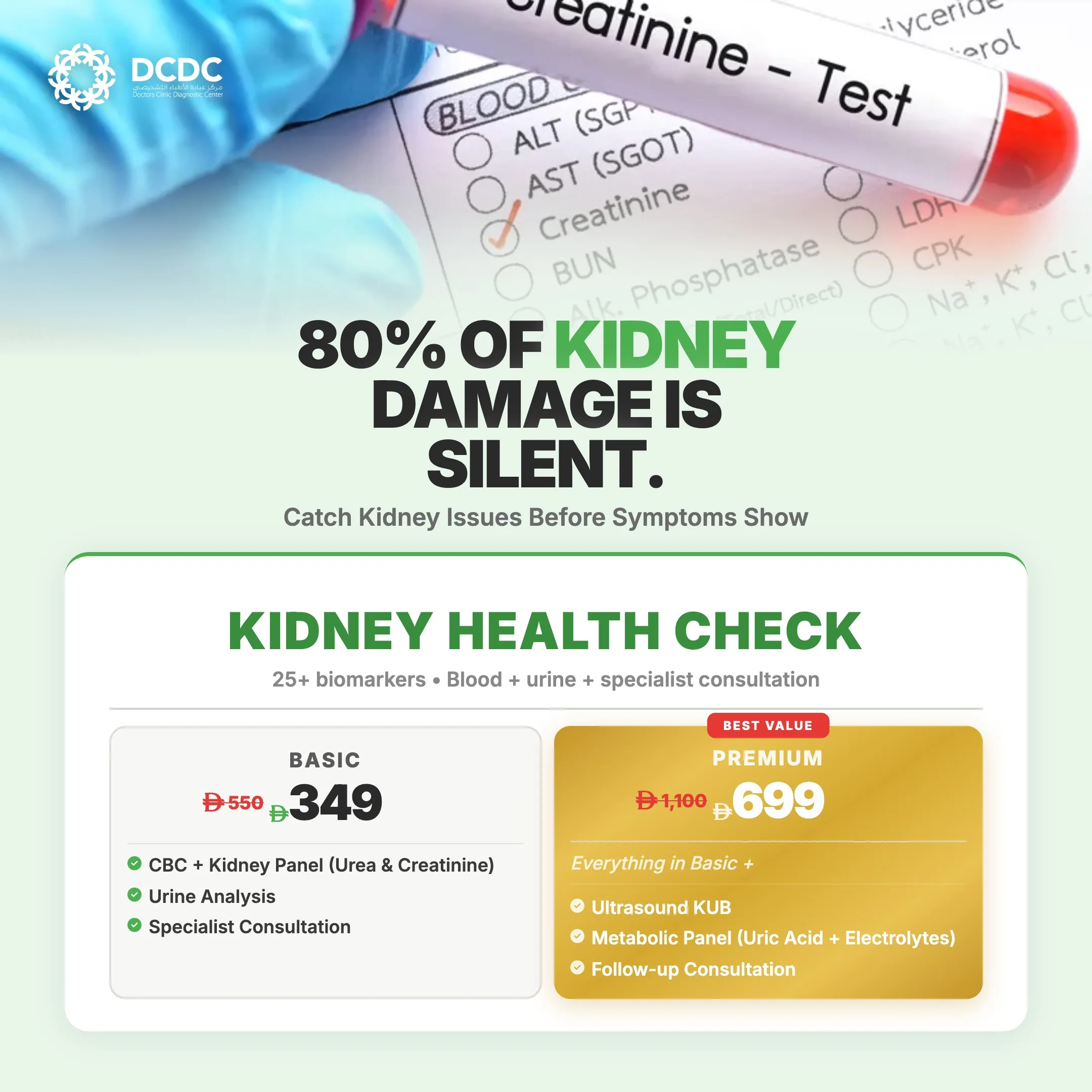


ما هو الكرياتينين ولماذا يهم
الكرياتينين منتجٌ ثانوي كيميائي ناجمٌ عن الأيض الطبيعي المستمر لفوسفات الكرياتين في عضلاتك. في كل مرة تنقبض فيها عضلة — سواء كنت تمشي أو ترفع أشياء أو تكتب أو حتى تتنفس — يتحلل فوسفات الكرياتين لإنتاج الطاقة اللازمة لهذا الانقباض، ويتبقى الكرياتينين كمنتج ثانوي. ونظراً لأن أيض العضلات يجري باستمرار وبمعدل قابل للتنبؤ نسبياً، يُنتج الجسم الكرياتينين بوتيرة ثابتة طوال اليوم.
في الظروف الطبيعية، ينتقل هذا الكرياتينين عبر مجرى الدم إلى الكلى، حيث تُرشّحه ملايين الوحدات الترشيحية الدقيقة المعروفة بالنيفرونات، وتُطرحه مع البول. وتتسم الكلى السليمة بكفاءة استثنائية في هذه المهمة، إذ تُزيل الكرياتينين من الدم بشكل شبه كامل، وتُبقي مستوياته في مصل الدم ضمن نطاق ضيق وقابل للتنبؤ. وحين تتضرر الكلى أو تبدأ في فقدان قدرتها التصفوية، يعجز الجسم عن إزالة الكرياتينين بالكفاءة ذاتها، فترتفع مستوياته في الدم.
لهذا السبب يُعدّ فحص الكرياتينين في الدم أحد أكثر أدوات الكشف المستخدمة على مستوى العالم للكشف عن صحة الكلى. وفقاً لـ مؤسسة الكلى الوطنية، يُعدّ الكرياتينين في المصل المدخل الرئيسي لحساب معدل الترشيح الكبيبي التقديري (eGFR) — المقياس السريري الذهبي لتقييم كفاءة الكلى في الترشيح. غير أنه من المهم فهم أن مستويات الكرياتينين يمكن أن تتأثر بعوامل تتجاوز وظيفة الكلى، منها الكتلة العضلية والنظام الغذائي وحالة الترطيب وبعض الأدوية. تأخذ الصورة السريرية الكاملة الكرياتينين بعين الاعتبار دائماً إلى جانب eGFR وتحليل البول والتاريخ الطبي للمريض. للاطلاع على نظرة شاملة حول جميع مؤشرات فحوصات الكلى الدموية، راجع دليل فحص وظائف الكلى في دبي.
مستويات الكرياتينين الطبيعية حسب العمر والجنس
من أكثر الأسئلة شيوعاً التي يطرحها المرضى بعد استلام نتائج المختبر: هل مستوى الكرياتينين لديّ طبيعي؟ تعتمد الإجابة على عدة عوامل، أهمها العمر والجنس البيولوجي والكتلة العضلية. يملك الرجال عموماً مستويات كرياتينين أعلى من النساء لأنهم يحملون كتلة عضلية أكبر، وكلما زادت العضلات زاد تحول فوسفات الكرياتين وبالتالي زاد إنتاج الكرياتينين. وبالمثل، يميل البالغون الأصغر سناً ذوو الكتلة العضلية الأكبر إلى امتلاك مستويات كرياتينين أعلى قليلاً من المرضى المسنين الذين انخفضت كتلتهم العضلية بشكل طبيعي.
يُظهر الجدول التالي نطاقات المرجع القياسية المستخدمة في المختبرات المعتمدة في الإمارات، متوافقةً مع المبادئ التوجيهية الدولية لمجموعة مرض الكلى لتحسين النتائج العالمية (KDIGO) ومؤسسة الكلى الوطنية:
| الفئة العمرية / الفئة | النطاق الطبيعي للكرياتينين (ملغم/ديسيلتر) | ملاحظات رئيسية |
|---|---|---|
| حديثو الولادة (0-30 يوماً) | 0.3 – 1.0 | يعكس كرياتينين الأم في البداية؛ يستقر خلال أيام |
| الرضع (1-12 شهراً) | 0.2 – 0.4 | منخفض بسبب انخفاض الكتلة العضلية |
| الأطفال (1-10 سنوات) | 0.3 – 0.7 | يرتفع تدريجياً مع النمو وزيادة العضلات |
| المراهقون (11-17 سنة) | 0.5 – 1.0 | أعلى لدى الأولاد مقارنة بالبنات من البلوغ فصاعداً |
| الرجال البالغون (18-60) | 0.7 – 1.3 | خط أساس أعلى بسبب كتلة عضلية أكبر |
| النساء البالغات (18-60) | 0.6 – 1.1 | خط أساس أقل؛ قد ينخفض أكثر في الحمل |
| الرجال فوق 60 | 0.7 – 1.2 | قد ينخفض قليلاً مع فقدان العضلات المرتبط بالعمر |
| النساء فوق 60 | 0.6 – 1.0 | نطاق أقل قليلاً؛ يُفسَّر جنباً إلى جنب مع eGFR |
نطاقات مرجعية قياسية لكرياتينين المصل حسب العمر والجنس. المصدر: إرشادات KDIGO والمرجع السريري لمؤسسة الكلى الوطنية.
من الضروري جداً فهم أن مستوى الكرياتينين عند الحد الأعلى من النطاق الطبيعي لا يعني بالضرورة الأمان. وفقاً لـ Mayo Clinic، يمكن أن يبقى الكرياتينين ضمن النطاق الطبيعي في المراحل المبكرة من مرض الكلى، لأن النيفرونات السليمة المتبقية تعوّض بالعمل بجهد أكبر. لهذا السبب تحديداً يُعدّ eGFR — الذي يأخذ العمر والجنس بعين الاعتبار — مؤشراً أكثر حساسية من الكرياتينين الخام وحده. مستوى كرياتينين 1.2 ملغم/ديسيلتر في رجل يبلغ من العمر 30 عاماً يتمتع ببنية عضلية قوية يختلف اختلافاً جذرياً عن الدلالة السريرية لنفس القيمة في امرأة تبلغ 75 عاماً ذات كتلة عضلية منخفضة.
ما الذي يسبب ارتفاع مستويات الكرياتينين
يمكن أن ينجم ارتفاع الكرياتينين في المصل عن مجموعة واسعة من الأسباب — بعضها مرتبط مباشرةً بتضرر الكلى، وبعضها حميد وعابر. إن فهم هذا التمييز أمر ضروري لتفادي القلق غير المبرر مع الإدراك في الوقت ذاته بمتى تستدعي الحالة تدخلاً طبياً فورياً. تقول الدكتورة هديل النور، طبيبة عامة في مركز DCDC: "ارتفاع الكرياتينين في قراءة واحدة لا يعني دائماً مرض الكلى. ننظر إلى الاتجاه العام عبر الزمن، إلى جانب eGFR وسائر المؤشرات، لنمنح المريض صورة شاملة عن صحة كليتيه."
أسباب مرتبطة بالكلى
- مرض الكلى المزمن (CKD) — السبب الأكثر أهمية سريرياً. ارتفاع الكرياتينين المستدام مصحوباً بانخفاض eGFR على مدى ثلاثة أشهر أو أكثر هو السمة المميزة لمرض الكلى المزمن. يحركه غالباً السكري أو ارتفاع ضغط الدم، وكلاهما شائع جداً في الإمارات
- الإصابة الكلوية الحادة (AKI) — ارتفاع مفاجئ وسريع في الكرياتينين (يتضاعف في كثير من الأحيان خلال 48 ساعة) ناجم عن الجفاف الشديد أو فقدان الدم الكبير أو الإنتان أو تفاعلات الصبغة التباينية أو سمية الأدوية. الإصابة الكلوية الحادة حالة طارئة طبية تستلزم علاجاً فورياً
- التهابات الكلى (التهاب الحويضة والكلية) — يمكن للعدوى البكتيرية التي تتلف نسيج الكلى أن ترفع الكرياتينين بشكل مؤقت أو دائم إذا كانت شديدة أو متكررة
- التهاب الكبيبات — التهاب وحدات الترشيح في الكلى (الكبيبات) بسبب حالات المناعة الذاتية أو العدوى أو التهاب الأوعية الدموية
- انسداد المسالك البولية — حصى الكلى أو تضخم البروستاتا أو الأورام التي تعيق تدفق البول يمكن أن ترفع الكرياتينين مع تلف الكلى بسبب الضغط العكسي
أسباب غير كلوية (مؤقتة أو حميدة)
- الجفاف — انخفاض حجم الدم يُركّز الكرياتينين في الدم. هذا مهم بشكل خاص في حرارة دبي الشديدة، حيث يمكن أن تكون خسائر السوائل كبيرة حتى مع النشاط الخارجي المعتدل
- النظام الغذائي الغني بالبروتين — تناول كميات كبيرة من اللحوم الحمراء أو مكملات البروتين يمكن أن يرفع الكرياتينين مؤقتاً، إذ يُنتج تحلل البروتين المشتق من العضلات مزيداً من سلائف الكرياتينين
- التمارين المكثفة — يُسبب النشاط البدني الشديد انهياراً حاداً للعضلات (انحلال الربيدات في الحالات الشديدة)، مما يُطلق الكرياتينين في مجرى الدم
- الأدوية — بعض الأدوية ترفع الكرياتينين دون أن تُلحق الضرر بالكلى فعلياً. مضادات الالتهاب غير الستيرويدية (إيبوبروفين، ديكلوفيناك)، ومثبطات الإنزيم المحوّل للأنجيوتنسين، وحاصرات مستقبلات الأنجيوتنسين، والتريميثوبريم، والسيميتيدين كلها يمكن أن ترفع الكرياتينين في المصل عبر آليات مختلفة
- مكملات الكرياتين — المستخدمة على نطاق واسع في ثقافة اللياقة البدنية في دبي، تزيد مكملات كرياتين مونوهيدرات من إنتاج الكرياتينين ويمكن أن ترفع مستوياته في الدم دون أي ضعف في الكلى
- الكتلة العضلية الكبيرة — الرياضيون وكمال الأجسام والأفراد ذوو الكتلة العضلية الكبيرة بطبيعتهم ينتجون كرياتيناً أكثر وقد يكون لديهم مستويات خط أساس أعلى تقع خارج النطاق المرجعي القياسي دون أي مرض كلوي
للاطلاع على فهم أعمق لكيفية تطور مرض الكلى المزمن وتطوره عبر مراحله، اقرأ دليلنا الشامل حول مراحل الفشل الكلوي المزمن.
أعراض ارتفاع الكرياتينين التي ينبغي معرفتها
أحد أخطر جوانب ارتفاع الكرياتينين وتراجع وظائف الكلى هو أن المراحل الأولى تكاد تكون صامتة تماماً. معظم من يعانون من ارتفاع طفيف في الكرياتينين يشعرون بصحة جيدة تماماً، وكثير من حالات الفشل الكلوي المزمن تُكتشف بالصدفة خلال فحوصات الدم الروتينية التي تُجرى لأسباب أخرى. لهذا يؤكد كلٌّ من المعهد الوطني للسكري وأمراض الجهاز الهضمي والكلى (NIDDK) وهيئة الخدمات الصحية الوطنية (NHS) أن الفحص الدوري — لا الأعراض — هو الأداة الرئيسية للكشف المبكر عن أمراض الكلى.
مع استمرار ارتفاع الكرياتينين وتراجع وظائف الكلى أكثر (عادةً حين ينخفض eGFR عن 30)، يبدأ تراكم الفضلات وخلل توازن السوائل في إنتاج أعراض ملحوظة:
- التورم (الوذمة) — احتباس السوائل في الكاحلين والقدمين والساقين أو حول العينين، ويكون ملحوظاً بشكل خاص في الصباح
- التعب والضعف — ضعف إنتاج الكلى للإريثروبويتين يؤدي إلى فقر الدم، مما يسبب تعباً مستمراً لا يتحسن مع الراحة
- التغيرات في التبول — كثرة التبول (خاصةً ليلاً)، أو إنتاج بول رغوي أو فقاعي (يُشير إلى تسرب البروتين)، أو إنتاج كمية قليلة جداً من البول
- الغثيان وفقدان الشهية — البولينا (تراكم اليوريا والسموم الأخرى) تسبب طعماً معدنياً في الفم وغثياناً وفقداناً للشهية
- ضيق التنفس — زيادة السوائل في الرئتين أو فقر الدم الشديد يجعل التنفس صعباً، خاصةً عند المجهود
- الحكة المستمرة (الحكاك) — اختلال توازن الفوسفور والكالسيوم في مرض الكلى المزمن المتقدم يُهيّج النهايات العصبية في الجلد
- تشنجات العضلات — اضطرابات الكهارل، وخاصةً انخفاض الكالسيوم وارتفاع البوتاسيوم، يمكن أن تُثير تشنجات عضلية مؤلمة
- صعوبة التركيز — الضبابية المعرفية، التي تُسمى أحياناً «ضباب الدماغ»، مرتبطة بتراكم سموم البولينا
- ارتفاع ضغط الدم — تلعب الكلى دوراً محورياً في تنظيم ضغط الدم؛ تراجع الوظيفة يُسبب غالباً ارتفاع ضغط الدم الذي يُسرّع بدوره المزيد من تلف الكلى
هذه الأعراض تشير إلى تراكم كبير في الفضلات وتدهور ملحوظ في وظيفة الكلى، وتستدعي تقييماً طبياً فورياً. للمزيد عن الأعراض المرتبطة بأمراض الكلى وما تعنيه، راجع دليلنا حول أعراض الفشل الكلوي المزمن في دبي.
ارتفاع الكرياتينين ومرض الكلى المزمن: ما الذي تعنيه eGFR
يُعدّ معدل الترشيح الكبيبي التقديري (eGFR) أهم أداة سريرية لتفسير نتائج الكرياتينين. بدلاً من مجرد قياس الكرياتينين بشكل منفرد، يحسب eGFR مقدار الدم الذي تُرشّحه كليتاك في الدقيقة الواحدة، مع الأخذ بعين الاعتبار عمرك وجنسك وبنيتك الجسمية. يُوفّر هذا حكماً سريرياً أكثر دقة من الكرياتينين وحده ويُستخدم لتصنيف مرض الكلى المزمن ضمن خمس مراحل.
eGFR فوق 90 مل/دقيقة: وظائف كلى طبيعية دون أو مع تراجع طفيف في القدرة الترشيحية.
- الاتجاه عبر الزمن — يُحقَّق في قراءة واحدة مرتفعة، لكن مرض الكلى المزمن يُشخَّص رسمياً فقط عندما يستمر انخفاض eGFR أو علامات تلف الكلى لـثلاثة أشهر أو أكثر
- حساب eGFR — معادلة CKD-EPI تحوّل الكرياتينين إلى معدل ترشيح تقديري مضبوط حسب العمر والجنس، مما يوفر رقماً ذا معنى سريري أكبر من الكرياتينين الخام
- نسبة الألبومين إلى الكرياتينين في البول (ACR) — تسرب البروتين إلى البول هو علامة مباشرة على تلف الكبيبات ويمكن أن يكون موجوداً حتى عندما يكون الكرياتينين لا يزال طبيعياً
- السياق السريري — كرياتينين بمقدار 1.5 ملغم/ديسيلتر في مريض مرطّب جيداً يعاني من السكري وارتفاع ضغط الدم له معنى مختلف تماماً عن نفس القيمة في لاعب كمال أجسام أنهى للتو تمريناً مكثفاً
- التصوير — يمكن لموجات الكلى فوق الصوتية الكشف عن شذوذات بنيوية (كلى صغيرة، أكياس، انسداد) تدعم أو تنفي تشخيص مرض الكلى المزمن
eGFR بين 30 و59: تراجع معتدل إلى شديد في وظائف الكلى — مرض الكلى المزمن في المرحلتين 3a و3b.
قلق بشأن مستويات الكرياتينين لديك؟
احجز فحص وظائف الكلى في DCDC مدينة دبي الطبية. فحص وظائف الكلى الشامل من 249 درهم مع نتائج في نفس اليوم وجمع العينات على الموقع وفوترة مباشرة مع أكثر من 20 شريك تأمين.
بدون موعد أو احجز عبر الإنترنت — السبت إلى الخميس 8 ص – 10 م، الجمعة 9 ص – 9 م
eGFR أقل من 15: فشل كلوي — مرض الكلى المزمن في المرحلة 5، يستلزم علاجاً بديلاً للكلى.
من المهم فهم أن مرض الكلى المزمن يُشخَّص بعد ثلاثة أشهر أو أكثر من انخفاض eGFR وليس من قياس واحد فقط. قراءة eGFR المنخفضة الواحدة بسبب الجفاف الحاد أو المرض لا تُمثّل بالضرورة مرض الكلى المزمن.
فحوصات التشخيص لارتفاع الكرياتينين في دبي
| نطاق eGFR (مل/دقيقة/1.73م²) | مرحلة مرض الكلى المزمن | مستوى وظيفة الكلى | الإجراء السريري |
|---|---|---|---|
| 90 أو أعلى | المرحلة 1 | طبيعي أو مرتفع (مع علامات أخرى لتلف الكلى) | المراقبة سنوياً؛ إدارة عوامل الخطر (السكري، ضغط الدم) |
| 60 – 89 | المرحلة 2 | انخفاض طفيف | المراقبة كل 6-12 شهراً؛ تحسين خطر القلب والأوعية الدموية |
| 45 – 59 | المرحلة 3a | انخفاض طفيف إلى معتدل | يُنصح بإحالة إلى طبيب الكلى؛ مراجعة الأدوية |
| 30 – 44 | المرحلة 3b | انخفاض معتدل إلى شديد | إدارة فعالة من طبيب الكلى؛ تعديلات غذائية |
| 15 – 29 | المرحلة 4 | انخفاض شديد | التحضير للعلاج البديل للكلى (الغسيل الكلوي أو الزرع) |
| أقل من 15 | المرحلة 5 | فشل كلوي | الغسيل الكلوي أو زرع الكلى مطلوب |
تصنيف مرحلة مرض الكلى المزمن حسب eGFR بناءً على إرشادات KDIGO 2024. المرحلة 1 تستلزم علامات إضافية لتلف الكلى (مثل البروتينية) جنباً إلى جنب مع eGFR الطبيعي.
عملياً، يُبلّغ طبيبك دائماً عن الكرياتينين وeGFR معاً. إذا كان كرياتينينك مرتفعاً بشكل طفيف لكن eGFR أعلى من 90، ولا يوجد بروتين في بولك، فهذا كثيراً ما يكون مطمئناً — قد يكون الارتفاع مرتبطاً بكتلة العضلات أو النظام الغذائي أو الترطيب لا بمرض الكلى. في المقابل، إذا انخفض eGFR إلى ما دون 60 في فحوصات متكررة على مدى ثلاثة أشهر، فهذا يؤكد وجود مرض الكلى المزمن بصرف النظر عن مدى قرب الكرياتينين من النطاق الطبيعي.
يُنجز مختبرنا الداخلي المرخص من وزارة الصحة ووقاية المجتمع جميع الفحوصات الروتينية في نفس اليوم. تتوفر نتائج الكرياتينين و BUN و eGFR والإلكتروليتات عادةً خلال ساعات من سحب الدم، مما يعني أنك قادر في معظم الأحيان على مناقشة النتائج ووضع خطة علاجية في الزيارة ذاتها. للاطلاع على دليل شامل حول ما يشمله الفحص الكلوي في دبي، اقرأ دليلنا عن <a href="/blog/kidney-function-test-cost-dubai" class="text-primary-600 hover:underline">تكلفة فحص وظائف الكلى في دبي</a>.
التحضير لفحص الكرياتينين في دبي
| نوع الفحص | ما يشمله | نطاق السعر النموذجي في دبي | سعر DCDC |
|---|---|---|---|
| فحص الكرياتينين الأساسي | كرياتينين المصل فقط | 50 – 150 درهم | مشمول في باقة KFT |
| فحص وظائف الكلى (KFT) | الكرياتينين، BUN، eGFR | 149 درهم | من 149 درهم |
| لوحة الكلى الشاملة | KFT + الكهارل (Na، K، Cl، HCO3) + حمض اليوريك | 200 – 500 درهم | من 199 درهم |
| فحص الكلى الكامل + نسبة ACR في البول | لوحة الكلى + تحليل البول + نسبة الألبومين إلى الكرياتينين في البول | 300 – 600 درهم | من 299 درهم |
| استشارة طبيب الكلى + الفحوصات | تقييم متخصص + لوحة الكلى الشاملة | 500 – 1,200 درهم | من 400 درهم |
أسعار فحص وظائف الكلى في دبي (2026). أسعار DCDC منظمة من هيئة الصحة بدبي وقابلة للتغيير. تغطي معظم خطط التأمين في دبي فحص وظائف الكلى عند وجود مبرر سريري.
في DCDC، يبدأ فحص وظائف الكلى من 149 درهماً للباقة القياسية. تقبل العيادة الفوترة المباشرة مع أكثر من 20 شريكاً تأمينياً — بما في ذلك داماً وAXA وبوبا وميتلايف وسيغنا — ما يُلغي حاجة المرضى للدفع مقدّماً والمطالبة بالتعويض. التسعير مُنظَّم من قِبَل هيئة الصحة في دبي، وتعمل DCDC بموجب رخصة MOHAP رقم NIMY7VY5-240925.
ماذا تتوقع في مركز DCDC: رحلتك لفحص الكرياتينين
التحضير لفحص الكرياتينين بسيط، وتجربة مركز DCDC مصممة لتكون سريعة وسلسة قدر الإمكان. إليك ما يمكن توقعه طوال الزيارة:
الوصول وموقف السيارات
يقع مركز DCDC في المبنى 64، الجناح A، المجمع الطبي الرازي داخل مدينة دبي الطبية. يُوفّر المركز مواقف سيارات مجانية خاصة على الموقع. يعمل المركز من السبت إلى الخميس من الساعة 8 صباحاً حتى 10 مساءً، والجمعة من الساعة 9 صباحاً حتى 9 مساءً — مما يُتيح جدولة فحص الدم قبل العمل أو خلال استراحة الغداء أو في المساء.
تسجيل الوصول والتسجيل
عند الوصول، يقوم فريق الاستقبال بتسجيلك والتحقق من بيانات تأمينك إن وُجد. يتعاون مركز DCDC مع أكثر من 20 شركة تأمين للفوترة المباشرة. متوسط وقت الانتظار في DCDC نحو 15 دقيقة، ويحتفظ المركز بتقييم 4.8 من 5 على Google من أكثر من 1,000 مراجعة، ونسبة رضا المرضى 98%.
سحب الدم وجمع العينات
يستلزم فحص وظائف الكلى سحب عينة دم وريدية بسيطة من ذراعك، وعادةً ما يستغرق الأمر أقل من خمس دقائق. يتميز مركز DCDC بجمع العينات على الموقع مع نتائج في نفس اليوم للفحوصات الروتينية، بما فيها فحص الكرياتينين وباقة KFT القياسية. لا يُشترط الصيام لإجراء فحص وظائف الكلى الأساسي.
النتائج والمتابعة
تتوفر نتائج KFT الروتينية — بما فيها الكرياتينين و BUN و eGFR والإلكتروليتات — عادةً في نفس اليوم. يمكن الاطلاع على النتائج عبر بوابة المرضى الرقمية في مركز DCDC. وإن كانت أي قيم غير طبيعية، يتصل بك الفريق الطبي لمناقشة النتائج وترتيب المتابعة المناسبة.
كيف تخفض مستويات الكرياتينين بشكل طبيعي
إذا كان الكرياتينين مرتفعاً بشكل طفيف وأكد طبيبك أنه لا يوجد مرض كلوي خطير، فإن ثمة تعديلات في نمط الحياة مبنية على الأدلة قادرة على المساعدة في الحفاظ على مستويات كرياتينين صحية. للمزيد من استراتيجيات الوقاية، راجع دليلنا حول نصائح الوقاية من أمراض الكلى.
الحفاظ على ترطيب كافٍ
يُعدّ الترطيب الكافي أبسط الطرق وأكثرها فاعليةً لدعم وظيفة الكلى. في مناخ دبي الحار، ينبغي زيادة كمية السوائل اليومية إلى 2.5 إلى 3.5 لتر يومياً.
تعديل تناول البروتين
إن الاستهلاك المفرط للبروتين — لا سيما من اللحوم الحمراء — يزيد من إنتاج الكرياتينين ويُرهق الكلى في عملية الترشيح. توصي المعهد الوطني للسكري وأمراض الجهاز الهضمي والكلى (NIDDK) بأن يحدّ الأفراد ذوو الكرياتينين المرتفع أو الفشل الكلوي المزمن المبكر من تناول البروتين إلى نحو 0.8 غرام لكل كيلوغرام من وزن الجسم يومياً.
تقليل الصوديوم في النظام الغذائي
يُسبّب الصوديوم المرتفع احتباس السوائل ورفع ضغط الدم، وكلاهما يُجهد الكلى. توصي منظمة الصحة العالمية بالحدّ من الصوديوم بما يقل عن 2,000 ملغم يومياً، أي ما يعادل نحو 5 غرامات من الملح.
ممارسة الرياضة بانتظام وبشكل معتدل
تدعم الرياضة المعتدلة المنتظمة صحة القلب والأوعية الدموية وضبط ضغط الدم والسكر والحفاظ على تكوين جسمي صحي. غير أن التمارين المكثفة جداً يمكن أن تُسبّب ارتفاعاً حاداً في الكرياتينين. استهدف 150 دقيقة أسبوعياً من النشاط المعتدل كالمشي السريع والسباحة وركوب الدراجات.
السيطرة على الأمراض الكامنة
السكري وارتفاع ضغط الدم هما السببان الرئيسيان للفشل الكلوي المزمن، وكلاهما شائعان بشكل استثنائي في الإمارات. يُعدّ التحكم الجيد في مستوى السكر (HbA1c أقل من 7٪) وإدارة ضغط الدم (أقل من 130/80) من أكثر التدخلات فاعليةً.
مراجعة أدويتك
تتسبب عدة أدوية شائعة في رفع مستويات الكرياتينين. مضادات الالتهاب غير الستيرويدية (NSAIDs) كالإيبوبروفين والديكلوفيناك متوفرة بسهولة دون وصفة طبية في دبي. ناقش مع طبيبك كل دواء ومكمل غذائي تتناوله.
متى تزور طبيب الكلى في دبي
لا يستلزم كل ارتفاع في الكرياتينين استشارة متخصص. يستطيع طبيبك العام إدارة معظم الحالات الخفيفة. غير أن الإحالة إلى طبيب الكلى تصبح مهمة عند تجاوز عتبات سريرية محددة. للتفاصيل راجع دليلنا.
ينبغي زيارة طبيب الكلى إذا انطبق عليك أي مما يلي:
- eGFR أقل من 30 مل/دقيقة/1.73م² (مرض الكلى المزمن المرحلة 4 أو 5) — قد يكون التخطيط للعلاج البديل للكلى ضرورياً
- eGFR في انخفاض سريع — انخفاض مستمر يزيد عن 5 مل/دقيقة في السنة أو انخفاض بنسبة 25% من خط الأساس يستدعي تقييماً متخصصاً
- بيلة بروتينية مستمرة — نسبة الألبومين إلى الكرياتينين في البول فوق 30 ملغم/غرام في مناسبتين أو أكثر، مما يُشير إلى تلف كبيبي مستمر
- ارتفاع الكرياتينين رغم العلاج — إذا استمر الكرياتينين في الارتفاع رغم تحسين ضغط الدم والسيطرة على السكر وتعديل الأدوية
- الاشتباه بالتهاب الكبيبات أو مرض جهازي — وجود دم في البول أو رواسب بولية نشطة أو الاشتباه بحالة مناعة ذاتية تؤثر على الكلى
- شذوذات الكهارل — ارتفاع البوتاسيوم المستمر (فرط بوتاسيوم الدم)، أو الحماض الاستقلابي، أو ارتفاع ضغط الدم الذي لا يستجيب للعلاج
- مرض الكلى في المرضى الشباب — ضعف الكلى غير المُفسَّر في المرضى دون 40 عاماً قد يُشير إلى حالات وراثية (الكلى متعددة الكيسات، متلازمة ألبورت) تستلزم تقييماً وراثياً متخصصاً
فهم نتائج فحص الكرياتينين
حين تستلم نتائج فحص الكرياتينين، يعرض تقرير المختبر عادةً قيمة الكرياتينين في المصل إلى جانب نطاق المرجع وeGFR المحسوب وعلامات الإشارة إلى القيم خارج النطاق الطبيعي. إليك إطاراً عملياً لتفسير ما تعنيه هذه الأرقام:
الكرياتينين ضمن النطاق الطبيعي و eGFR فوق 90
هذه النتيجة المثالية. كليتاك تُرشّحان بكفاءة ولا قلق فورياً. إن وُجدت عوامل خطر، واصل الفحص السنوي.
الكرياتينين مرتفع قليلاً، eGFR بين 60 و89
يشير هذا النطاق إلى ضعف طفيف في وظيفة الكلى. من المرجح أن يطلب منك طبيبك إعادة الفحص بعد ثلاثة أشهر. ابدأ تعديلات نمط الحياة: الترطيب، تناول البروتين المعتدل، السيطرة على ضغط الدم، ومراجعة الأدوية السامة للكلى.
الكرياتينين مرتفع، eGFR بين 30 و59
يمثّل هذا الفشل الكلوي المزمن المعتدل (المرحلة 3a أو 3b) ويستوجب الإحالة إلى طبيب الكلى. يصبح تعديل الأدوية والتغييرات الغذائية والمتابعة الأقرب ضرورة.
الكرياتينين مرتفع بشكل ملحوظ، eGFR أقل من 30
eGFR أقل من 30 يشير إلى ضعف شديد في الكلى (المرحلة 4) أو فشل كلوي (المرحلة 5 إذا كان أقل من 15). هذه حالة سريرية طارئة تتطلب إدارة متخصصة.
حماية صحة كليتيك في دبي
تُسجّل الإمارات من أعلى معدلات الإصابة بالسكري في العالم — ما نسبته 16.3٪ من البالغين مصابون بالسكري. يُصيب ارتفاع ضغط الدم نحو 29٪ من البالغين. يتسبّب هذان المرضان في الغالبية العظمى من حالات الفشل الكلوي المزمن.
تُضيف العوامل البيئية ونمط الحياة في دبي اعتبارات إضافية على صعيد صحة الكلى. تُسرّع الحرارة الصيفية الشديدة الجفاف، الذي يُعدّ السبب الأكثر شيوعاً للارتفاع المؤقت في الكرياتينين.
أكثر استراتيجيات حماية الكلى فاعليةً: أجرِ فحص الكرياتينين و eGFR سنوياً إذا كنت تعاني من أي عوامل خطر. فحص وظائف الكلى يستغرق دقائق ويكلف من 149 درهم، ويكشف عن مشاكل قبل ظهور الأعراض بسنوات.
احجز فحص وظائف الكلى اليوم
يقدم DCDC مدينة دبي الطبية فحص وظائف الكلى الشامل من 149 درهم مع نتائج في نفس اليوم. مختبر مرخص من وزارة الصحة ووقاية المجتمع، جمع العينات على الموقع، ونتائج رقمية عبر بوابة المرضى. تقييم 4.8/5 من أكثر من 1,000 مراجعة.
مواقف سيارات مجانية — المبنى 64، الجناح A، المجمع الطبي الرازي، مدينة دبي الطبية
خدمات ذات صلة في DCDC
رعاية متخصصة وتشخيص متقدم في مدينة دبي الطبية
الأسئلة الشائعة
خلاصة القول
كثيراً ما يُسمّى مرض الكلى "الوباء الصامت" لأن معظم المصابين بتلف في مراحله الأولى لا يشعرون بأي أعراض. فحص وظائف الكلى الشامل الذي يبدأ من 249 درهم يكشف عن المشاكل قبل سنوات من ظهور الأعراض.
في بلد يُصاب فيه 1 من كل 6 بالغين بالسكري ويعاني ما يقرب من 1 من كل 3 من ارتفاع ضغط الدم، لا يُعدّ الفحص الكلوي خياراً — بل ضرورة طبية وقائية. في مركز DCDC بمدينة دبي الطبية، جعلنا فحص وظائف الكلى سهل المنال وميسور التكلفة وسريع الإنجاز.
سواء كنت تُجري أول فحص للكلى أو تُراقب حالة قائمة، فريق مركز DCDC — بما يشمل الدكتورة هديل النور وقسم طب الكلى المتخصص — هنا لإرشادك. تواصل معنا بالهاتف أو واتساب لحجز فحص وظائف الكلى، أو تفضّل بزيارتنا في المبنى 64، الجناح A، المجمع الطبي الرازي، مدينة دبي الطبية.
في DCDC، نجمع الفحوصات المخبرية المرخّصة من MOHAP مع نتائج نفس اليوم والوصول الرقمي والفوترة المباشرة للتأمين لجعل مراقبة صحة الكلى في متناول الجميع وبالقدر الممكن من الراحة. سواء كنت بحاجة إلى فحص اعتيادي أو تُدير حالة كلوية معروفة، فريقنا هنا لدعمك في كل مرحلة.

كتبه
Dr. Hadeel Elnur
طبيبة عامة
دكتوراه في الطب، الطب العام
الدكتورة هديل النور طبيبة عامة في مركز أطباء العيادات التشخيصي (DCDC) بمدينة دبي الطبية.
مقالات ذات صلة
فحص وظائف الكلى في دبي: دليل KFT
مرض الكلى المزمن في دبي: المراحل والأعراض والعلاج

صحة الكلى في دبي: نصائح الوقاية
طبيب الكلى في دبي: دليل الاستشارة
المزيد في Nephrology

Urinary Incontinence Dubai: Causes & Care (2026)
اقرأ المزيد
Kidney Cyst Dubai: Types & When to Worry (2026)
اقرأ المزيدKidney Stones vs UTI Dubai: Key Differences (2026)
اقرأ المزيد
Diabetic Nephropathy Dubai: Prevention Guide (2026)
اقرأ المزيدKidney Stone Symptoms Dubai: Warning Signs (2026)
اقرأ المزيدWhen to See a Nephrologist Dubai: Key Signs (2026)
اقرأ المزيد© 2026 Doctors Clinic Diagnostic Center (DCDC), Dubai Healthcare City. Originally published at https://doctorsclinicdubai.ae/blog/high-creatinine-levels-dubai. All rights reserved. Unauthorized reproduction is prohibited.