اہم نکات
- Five out of six children will have at least one ear infection by age 3, making it the most common reason children visit healthcare providers and the leading cause of pediatric antibiotic prescriptions worldwide
- Babies cannot tell you their ears hurt. The most reliable signs in infants under 12 months are ear drainage, feeding difficulties, sleep disruption, and inconsolable crying that worsens when lying down. Ear tugging alone is not a reliable indicator
- Dubai's year-round swimming, aggressive air conditioning, high summer humidity, and desert dust all increase ear infection risk in children compared to temperate climates
- Not all ear infections need antibiotics. AAP guidelines recommend watchful waiting for 48-72 hours in children over 6 months with mild, one-sided symptoms. Around 66% of children improve without antibiotics
- Ear infection and teething overlap in age and symptoms, but key differences include fever pattern, one-sided vs bilateral symptoms, and whether pain worsens when lying down
- Recurrent ear infections, defined as 3 or more episodes in 6 months or 4 or more in 12 months, may warrant referral to an ENT specialist to discuss ear tube surgery (grommets)
- Emergency signs include fever above 39 degrees C unresponsive to medication, pus or blood draining from the ear, facial weakness, extreme lethargy, and any fever above 38 degrees C in babies under 3 months
- Pediatric ear infection consultations at DCDC start from AED 300, with same-day appointments frequently available and on-site ENT referral when needed
Your toddler has been fussy all day, refuses dinner, and now at bedtime is pulling at one ear and screaming. You suspect an ear infection but are not sure. Is it teething? A cold? Something that needs antibiotics tonight? If this scene sounds familiar, you are not alone. Ear infections are the single most common reason children visit doctors worldwide, and Dubai's climate of year-round swimming, relentless air conditioning, and high humidity makes local children especially susceptible. This guide covers exactly how to spot ear infection signs at every age, what makes Dubai different, when you need a doctor versus the emergency room, and what treatment actually looks like in 2026. Our pediatric acute care team at DCDC in Dubai Healthcare City offers same-day appointments for children with suspected ear infections.
Whether your baby is 4 months old and you are trying to decode their crying, or your 5-year-old is complaining of ear pain after swim class, this guide will help you understand the three types of ear infections, recognise age-specific symptoms, navigate Dubai-specific risk factors, and make confident decisions about when and where to seek care.



Why Ear Infections Are So Common in Children
Ear infections are overwhelmingly a childhood problem, and the anatomy of a young child's ear explains why. The eustachian tube connects the middle ear to the back of the throat and is responsible for draining fluid and equalising air pressure. In adults, this tube is angled downward, allowing fluid to drain easily. In children, particularly those under 3 years old, the eustachian tube is shorter, narrower, and more horizontal, meaning fluid drains poorly and bacteria from upper respiratory infections travel more easily into the middle ear.
The statistics reflect this anatomical reality. According to the National Institute on Deafness and Other Communication Disorders (NIDCD), 5 out of 6 children (83%) will have at least one ear infection by age 3. In the post-vaccine era, with widespread pneumococcal vaccination (PCV13), this figure has improved to approximately 60% by age 3, with multiple episodes reduced to around 24%. Even so, acute otitis media remains the most common bacterial infection in children and the leading cause of pediatric antibiotic prescriptions globally.
Peak incidence occurs between 6 and 24 months of age, precisely when the eustachian tube is at its shortest and the immune system is still developing. Globally, there are an estimated 709 million cases of acute otitis media each year, with 51% occurring in children under 5. For a broader look at conditions affecting young children in Dubai, see our guide to common childhood illnesses.
Types of Ear Infections Every Parent Should Know
Not all ear infections are the same. Understanding the three main types helps you describe symptoms accurately to your doctor and understand why treatments differ. For a broader overview of ear infections in both adults and children, see our complete guide to ear infection treatment in Dubai.
| Feature | Acute Otitis Media (AOM) | Otitis Media with Effusion (OME) | Otitis Externa |
|---|---|---|---|
| Common name | Middle ear infection | Glue ear | Swimmer's ear |
| Location | Behind the eardrum | Behind the eardrum | Outer ear canal |
| Cause | Bacteria (S. pneumoniae 40-50%, H. influenzae 20-30%, M. catarrhalis 10-15%) following a viral cold | Fluid remains after infection or builds up without infection | Trapped water, bacteria, or fungi in ear canal |
| Age most affected | 6-24 months (peak) | All ages; 90% of children have it at least once by age 10 | Older children, teens, swimmers |
| Pain level | Moderate to severe, often sudden onset | Usually minimal or absent | Significant, especially when outer ear is touched |
| Fever | Common (but 1 in 3 children have no fever) | Rare | Rare unless infection spreads |
| Hearing impact | Temporary muffled hearing | Hearing loss in 75-90% of cases | Minimal unless canal is swollen shut |
| Key diagnostic sign | Bulging, red or white eardrum with decreased mobility | Retracted or neutral eardrum, amber/gray/blue colour, air-fluid levels visible | Swollen ear canal, pain on tragal manipulation, normal eardrum |
| Treatment | Pain relief first; antibiotics if severe or bilateral in young children | Usually resolves on its own in 3 months; ear tubes if persistent | Antibiotic or antifungal ear drops; keep ear dry |
Comparison of the three main types of ear infections in children
Signs of Ear Infection by Age Group
One of the biggest challenges with ear infections in young children is that they cannot tell you what hurts. The signs you need to watch for change as your child grows, and some commonly assumed indicators, such as ear tugging, are less reliable than parents believe.
Babies (0-12 Months)
Ear infections in babies are the hardest to detect because every symptom overlaps with other common infant complaints. The key is looking for a cluster of signs rather than any single symptom.
- Ear drainage: This is the most specific sign. Yellow, white, or blood-tinged fluid leaking from the ear almost always indicates an ear infection with a ruptured eardrum. While it looks alarming, the rupture usually relieves pain and heals on its own
- Feeding difficulties: Sucking and swallowing changes pressure in the middle ear, causing pain. A baby who suddenly refuses the breast or bottle, or pulls away crying during feeds, may have ear pain
- Inconsolable crying that worsens lying down: The horizontal position increases pressure on the middle ear. A baby who calms when held upright but screams when placed in the cot is showing a classic ear infection pattern
- Sleep disruption: Ear pain intensifies at night and when lying flat. A baby who previously slept well and suddenly wakes repeatedly, especially in the second half of the night, should be evaluated
- Fever: Present in approximately two-thirds of cases, but importantly, 1 in 3 babies with an ear infection have no fever at all. The absence of fever does not rule out infection
- Irritability and fussiness: General fussiness is common in ear infections but is also the least specific symptom, as it accompanies teething, tiredness, and many other conditions
- Ear tugging or pulling: While frequently cited, research shows that ear tugging alone is not a reliable indicator of ear infection. Babies pull at their ears when tired, teething, exploring, or self-soothing. It becomes meaningful only when accompanied by other symptoms on this list
- Vomiting or diarrhea: The same viruses that trigger ear infections can cause gastrointestinal symptoms. If your baby has vomiting and diarrhea alongside ear-related signs, keep them hydrated and see our guide on managing fever in children
Toddlers (1-3 Years)
Toddlers are slightly easier to read because they begin to localise pain and show more intentional behaviour, though they still cannot articulate what they feel.
- Deliberate ear holding or pointing: Unlike random infant ear tugging, toddlers with ear infections often press a hand firmly against the affected ear or point to it when asked where it hurts
- Balance problems and clumsiness: The vestibular system (balance centre) is located in the inner ear, adjacent to the middle ear. Swelling and fluid from an infection can affect balance, causing a toddler who was walking steadily to stumble or seem uncoordinated
- Increased crying, especially when lying down: A toddler who fights bedtime or naptime with unusual intensity, particularly if they were recently sick with a cold, is likely experiencing positional ear pain
- Fluid drainage from the ear: Same significance as in infants, and remains one of the most specific signs
- Head rolling or banging on the pillow: Some toddlers try to relieve ear pressure by rolling their head side to side on their pillow or cot mattress
- Not responding to sounds: If your toddler seems to ignore you or turns up the volume on devices, temporary hearing loss from middle ear fluid may be the reason
Older Children (4+ Years)
Children over 4 can usually tell you something is wrong, making diagnosis more straightforward. Common complaints include:
- Verbal complaints of ear pain: "My ear hurts" is the most direct sign. Pain may be sharp and sudden (AOM) or a dull fullness (OME)
- Reports of muffled or "underwater" hearing: Children may say sounds are quiet or that their ear feels blocked
- Ear fullness or a "plugged" feeling: Often described as pressure inside the ear
- Headache: Particularly on the same side as the affected ear
- Decreased energy and appetite: Even older children may become unusually quiet, clingy, or refuse food when dealing with ear pain
Ear Infection vs Teething: How to Tell the Difference
This is one of the most common diagnostic dilemmas for parents. Ear infections and teething overlap in age (both peak between 6 and 24 months), share several symptoms (irritability, ear pulling, sleep disruption, low-grade fever), and often occur simultaneously because teething does not protect against infection. Here is how to distinguish them:
| Feature | Ear Infection | Teething |
|---|---|---|
| Fever | Often above 38.5 degrees C; can exceed 39 degrees C | Low-grade, rarely above 38 degrees C |
| Ear pulling | Usually one-sided; accompanied by pain signs | Both sides; casual, not distressed |
| Drooling | Not a feature unless coinciding with teething age | Excessive drooling is hallmark |
| Gum appearance | Normal | Swollen, red gums; you may see or feel a tooth bud |
| Timing | Usually follows a cold (runny nose for 3-5 days before) | Predictable pattern with visible dental development |
| Pain pattern | Worse when lying down; often worse at night | Relatively constant; improved by chewing on objects |
| Feeding | Refuses bottle/breast due to sucking pain | May refuse solids but accepts chilled teethers |
| Ear drainage | Possible (yellow, white, or blood-tinged fluid) | Never |
| Cold symptoms | Often preceded by runny nose, cough, or congestion | No respiratory symptoms |
Distinguishing ear infection from teething in infants and toddlers
The most important differentiator is preceding cold symptoms. Most middle ear infections develop 3 to 5 days after a viral upper respiratory infection. If your baby has had a runny nose and is now showing ear pain signs, an ear infection is far more likely than teething. When in doubt, a quick examination with a pediatrician can settle the question.
Why Dubai's Climate Makes Ear Infections More Common
Parents who have lived in temperate climates often notice their children get more ear infections after moving to Dubai. This is not coincidence. Several factors unique to the UAE conspire to increase ear infection risk in children.
Year-Round Swimming
Dubai's warm climate means pools, water parks, and beaches are used almost year-round. Compound pools, beach clubs, Aquaventure, Wild Wadi, and daily swim classes at school create constant water exposure. For children prone to otitis externa (swimmer's ear), this is a significant and relentless risk factor. Water that remains trapped in the ear canal creates a moist environment where bacteria, particularly Pseudomonas aeruginosa, thrive.
Air Conditioning and Temperature Shock
Air conditioning in Dubai runs 24 hours a day from May through October, and often well beyond. AC dries out the nasal passages and the lining of the eustachian tube, impairing the natural drainage mechanism that keeps the middle ear clear. More significantly, the temperature shock of moving from 43 degrees C outdoor heat into 18-22 degrees C indoor environments causes the body to produce excess mucus and catarrh. This thick mucus can block the already-narrow eustachian tubes of young children, trapping fluid in the middle ear where bacteria multiply.
Summer Humidity
Dubai's summer humidity swings from around 30% during the day to 85-90% at night. This extreme nighttime humidity means ear canals that got wet during daytime swimming may not dry properly overnight, extending the window for bacterial growth and increasing the risk of otitis externa.
Desert Dust and Sand
Fine desert dust and sand particles irritate the ear canal lining and the nasal passages. Irritated nasal lining swells, which in turn compresses the eustachian tube openings and impairs drainage. During sandstorms, this effect is particularly pronounced.
Daycare and Nursery Exposure
Many expatriate families in Dubai enrol children in nurseries and daycare from an early age. Group daycare is associated with approximately a 2.5-fold increase in recurrent ear infections due to the constant circulation of respiratory viruses among young children in close contact.
How Ear Infections Are Diagnosed
Diagnosing an ear infection requires a physical examination. There is no reliable home test, and symptoms alone cannot confirm the diagnosis. Here is what happens during a typical evaluation.
Pneumatic Otoscopy
The gold standard for diagnosing middle ear infections is pneumatic otoscopy, which has 70-90% sensitivity and specificity for detecting middle ear effusion. The doctor uses a handheld otoscope with a small rubber bulb to look at the eardrum and gently puff air against it. A healthy eardrum moves freely in response to the puff. An infected or fluid-filled middle ear restricts eardrum movement.
What the Doctor Sees
- Acute otitis media (AOM): A bulging eardrum that appears red, white, or yellow with decreased mobility. The bulging eardrum is the most important diagnostic finding
- Otitis media with effusion (OME): A retracted or neutral eardrum with an amber, gray, or blue colour. Air-fluid levels or bubbles may be visible behind the membrane
- Otitis externa: A swollen, red ear canal with debris. Pain is reproduced when the doctor gently presses the tragus (the small flap of cartilage in front of the ear canal) or pulls the outer ear. The eardrum itself typically appears normal
If your child has recurrent ear infections or suspected hearing loss from persistent fluid, your doctor may recommend a formal hearing test to assess whether middle ear fluid is affecting hearing and speech development.
Treatment: Do Ear Infections Always Need Antibiotics?
This is one of the most important questions parents ask, and the answer has changed significantly over the past decade. The short answer is no: not all ear infections require antibiotics, and current evidence-based guidelines actively recommend avoiding them in many cases.
Pain Management Comes First
Regardless of whether antibiotics are prescribed, pain management is the first priority. Ear infections hurt, and a child in pain cannot sleep, eat, or recover efficiently. Paracetamol (acetaminophen) and ibuprofen are both safe and effective for ear infection pain. Ibuprofen is often preferred for children over 6 months because it has anti-inflammatory properties that can reduce middle ear swelling.
When Antibiotics Are Recommended (AAP 2013 Guidelines)
The American Academy of Pediatrics guidelines, which are followed by most pediatricians in Dubai, specify antibiotics for:
- Bilateral or unilateral AOM in children 6 months and older with severe signs: Moderate to severe ear pain, symptoms lasting 48 hours or longer, or temperature of 39 degrees C or higher
- Bilateral nonsevere AOM in children 6-23 months: Even if symptoms are mild, bilateral infection in this age group warrants antibiotics because of the higher risk of complications
- Any AOM in children under 6 months: The youngest infants always receive antibiotics due to their immature immune system
When Watchful Waiting Is Appropriate
The same guidelines support a watchful waiting approach (withholding antibiotics and reassessing in 48-72 hours) for:
- Unilateral nonsevere AOM in children 6-23 months: One ear, mild pain, less than 48 hours of symptoms, temperature below 39 degrees C
- Any nonsevere AOM in children 24 months and older: Regardless of whether the infection is one-sided or bilateral, older children with mild symptoms can be observed before committing to antibiotics
Research shows that approximately 66% of children managed with watchful waiting improve without antibiotics. The NHS and NICE guidelines go further, noting that most ear infections clear up within 3 days without antibiotic treatment. When antibiotics are needed, amoxicillin remains the first-line choice with a treatment failure rate of only 1.7%.
It is important to understand that watchful waiting does not mean doing nothing. It means treating pain, monitoring closely, and having a plan. Your doctor may write a "safety net" prescription that you fill only if symptoms worsen or fail to improve within 48-72 hours.
Home Care: What You Can Do Tonight
If your child develops ear pain in the evening or on a weekend and you are waiting for a clinic appointment, there are several evidence-based steps you can take at home to provide relief.
- Give age-appropriate pain relief: Paracetamol or ibuprofen at the correct weight-based dose. Ibuprofen (for children over 6 months) is often more effective for ear pain because of its anti-inflammatory action
- Elevate the head: For babies, elevate the head of the cot slightly (place a folded towel under the mattress, not under the baby). For toddlers and older children, use an extra pillow. Elevation helps fluid drain from the middle ear and reduces pain
- Apply a warm compress: Hold a warm (not hot) washcloth against the affected ear for 10-15 minutes. The warmth increases blood flow and can relieve pain. Never use a heating pad directly on a child's skin
- Keep fluids up: Swallowing helps open the eustachian tubes and encourages drainage. Offer frequent small drinks. For breastfed babies, nurse on demand
- Try an upright position: If your baby will not settle in the cot, hold them upright against your chest. Many parents find that a baby carrier or rocking chair helps during the worst of the nighttime pain
- Do not put anything in the ear: No cotton buds, no ear drops (unless prescribed by a doctor), no olive oil, and no garlic. Inserting anything into the ear canal can worsen infection or cause damage
- Watch for worsening signs: If pain medications do not bring any relief, your child develops a high fever, or you notice drainage from the ear, move up your timeline to see a doctor
Swimmer's Ear vs Middle Ear Infection in Children
In Dubai, where children swim frequently, parents often confuse swimmer's ear (otitis externa) with a middle ear infection (otitis media). The distinction matters because the causes, treatment, and prevention are completely different.
| Feature | Middle Ear Infection (Otitis Media) | Swimmer's Ear (Otitis Externa) |
|---|---|---|
| Typical age | 6 months to 3 years (peak) | Older children, teens, and adults who swim regularly |
| Usual trigger | Cold or upper respiratory infection 3-5 days prior | Water trapped in ear canal after swimming or bathing |
| Pain character | Deep, throbbing pain inside the ear | Pain worsens when outer ear is touched, pulled, or when chewing |
| Fever | Common | Unusual unless infection spreads |
| Drainage | Possible if eardrum ruptures (comes from inside) | Common — from the ear canal itself |
| Hearing loss | Muffled hearing from fluid behind eardrum | Only if canal swells shut |
| Simple test at home | Pulling the outer ear does NOT increase pain | Pulling the outer ear or pressing the tragus causes sharp pain |
| Treatment | Oral antibiotics if indicated; pain relief | Antibiotic or antifungal ear drops; keep ear completely dry |
| Prevention | Vaccines, hand hygiene, manage colds | Dry ears after swimming, earplugs, avoid cotton buds |
Key differences between middle ear infection and swimmer's ear in children
The simplest home test is the tragus press. Gently press the small cartilage flap in front of your child's ear canal. If this causes a sharp increase in pain, swimmer's ear is far more likely. If pressing the tragus does not bother them but they are clearly in pain, think middle ear infection. For a comprehensive overview of ear infection management including adult-specific guidance, see our ENT doctor guide.
When to See a Doctor vs When to Go to the ER
Knowing whether your child needs a routine clinic visit or an emergency department trip can save hours of waiting, reduce stress, and ensure the right level of care.
A Clinic Visit Is Appropriate When:
- Your child is tugging at their ear or complaining of mild to moderate ear pain
- There is a low-grade fever below 38.9 degrees C (102 degrees F)
- Symptoms started within the last 24-48 hours
- Your child is uncomfortable but drinking fluids and reasonably consolable
- Pain is manageable with paracetamol or ibuprofen
- You suspect an ear infection following a recent cold
Go to the Emergency Room When:
- Fever above 39 degrees C (102.2 degrees F) that does not respond to paracetamol or ibuprofen within 1 hour
- Severe, inconsolable pain that no position change or pain relief alleviates
- Pus or blood draining from the ear — while eardrum rupture itself is usually not an emergency, blood-tinged or foul-smelling discharge requires urgent evaluation
- Extreme lethargy: A child who is difficult to rouse or seems limp and unresponsive
- Facial weakness: Drooping on one side of the face, which can indicate the infection has affected the facial nerve
- Swelling, redness, or tenderness behind the ear: This may signal mastoiditis, a serious complication where infection spreads to the bone behind the ear
- Breathing difficulties or stiff neck: These suggest the infection may have spread beyond the ear
Special Rule for Young Infants
Babies 0-3 months with any fever above 38 degrees C (100.4 degrees F) combined with ear-related symptoms should be taken to the emergency room immediately. Young infants' immune systems cannot be relied upon to contain infections, and what appears to be a simple ear infection may be part of a more serious systemic infection. This is a non-negotiable guideline that all pediatricians in Dubai follow.
Recurrent Ear Infections: When to Consider Ear Tubes
Between 5% and 30% of children develop recurrent acute otitis media, defined as 3 or more ear infections within 6 months, or 4 or more within 12 months. For these children, each new infection means more pain, more disrupted sleep, more missed nursery days, and more concern about the cumulative effects on hearing and language development.
What Are Ear Tubes (Grommets)?
Ear tubes, called grommets or tympanostomy tubes, are tiny cylinders inserted through the eardrum during a brief surgical procedure under general anaesthesia. They allow air to enter the middle ear directly, bypassing the dysfunctional eustachian tube, and enable fluid to drain outward. The procedure takes approximately 10-15 minutes, and most children go home the same day.
When Are Ear Tubes Recommended?
- Recurrent AOM: 3 or more episodes in 6 months, or 4 or more in 12 months, despite preventive measures
- Persistent OME with hearing loss: Fluid behind the eardrum lasting 3 months or longer with documented hearing loss on audiometry, particularly if speech and language development is being affected
- Chronic or recurrent ear infections in a child who cannot tolerate or has not responded to antibiotic prophylaxis
- Significant impact on quality of life: Frequent night waking, school absences, or repeated courses of antibiotics
At DCDC, children with recurrent ear infections can be referred to our on-site ENT department without needing a separate facility. The ENT specialist will review your child's history, perform tympanometry and a hearing assessment, and discuss whether tubes are the right option. In Dubai, ear tube surgery (grommets) typically costs AED 13,000-20,000, though most health insurance plans cover this procedure when medically indicated.
Prevention: Protecting Your Child's Ears in Dubai
While no strategy eliminates ear infections entirely, several evidence-based measures significantly reduce the frequency and severity of episodes. These are especially relevant for families living in Dubai's unique environment.
Vaccination
- Pneumococcal vaccine (PCV13): This vaccine has been one of the most significant advances in ear infection prevention. It reduced the percentage of children experiencing ear infections from approximately 80% to 60% by age 3. The vaccine is part of the standard childhood vaccination schedule in Dubai
- Annual influenza vaccine: Because many ear infections follow influenza, annual flu vaccination reduces secondary ear infections. The flu vaccine is available at DCDC each autumn season
Breastfeeding
Breastfeeding for a minimum of 3 months provides a measurable protective effect against ear infections. Studies show a relative risk of 0.87 for acute otitis media and 0.69 for recurrent ear infections among breastfed infants. The antibodies in breast milk help fight the respiratory infections that lead to ear infections, and the mechanics of breastfeeding promote better eustachian tube function compared to bottle-feeding.
Ear Protection During Swimming
- Dry ears thoroughly after every swim: Tilt each ear toward the ground and gently pull the earlobe to help water drain. Use a soft towel to pat dry. Never use cotton buds
- Consider earplugs: For children who are prone to swimmer's ear, custom-fit or over-the-counter swimming earplugs can prevent water from entering the ear canal
- Swim cap: A snug-fitting swim cap adds another layer of protection, particularly for children with ear tubes
Environmental and Lifestyle Factors
- Avoid secondhand smoke: Cigarette smoke irritates the eustachian tube lining and is a well-documented risk factor for recurrent ear infections
- Limit pacifier use: Pacifier use in children under 2 increases ear infection risk by a factor of 1.6, rising to 2.9 for children aged 2-3. If your child uses a pacifier, consider weaning by 12 months
- Avoid bottle-feeding while lying flat: When a baby drinks from a bottle while supine, milk can flow into the eustachian tube and promote bacterial growth. Always hold your baby at a 30-degree angle or greater during feeds
- Manage indoor humidity: If your home AC dries the air significantly, a humidifier in the bedroom can help keep nasal and eustachian tube passages moist
- Good hand hygiene: Regular handwashing reduces the respiratory infections that are the most common trigger for middle ear infections
Cost of Ear Infection Treatment in Dubai
Understanding costs upfront helps you plan and reduces stress during a stressful time. Health insurance is mandatory for all children in Dubai, and most plans cover pediatric consultations and ear infection treatment. Below is a breakdown of typical costs. For a detailed look at pediatric visit costs and what is included, read our guide on pediatrician costs in Dubai.
| Service | Typical Cost | Insurance Coverage |
|---|---|---|
| Pediatrician consultation | From AED 300 | Covered; copay AED 50-150 per visit |
| ENT specialist consultation | From AED 300 | Covered; may require referral depending on plan |
| Emergency room visit | AED 500-3,000 | Covered with higher copay; varies by plan |
| Oral antibiotics (amoxicillin) | From AED 38 per course | Usually covered under pharmacy benefit |
| Antibiotic ear drops | AED 30-80 per bottle | Usually covered under pharmacy benefit |
| Hearing test (audiometry) | From AED 200 | Covered when medically indicated |
| Ear tube surgery (grommets) | AED 13,000-20,000 | Covered when medically indicated with pre-authorisation |
Typical costs for ear infection treatment in Dubai (2026)
DCDC partners with 20+ insurance providers and offers direct billing, meaning you pay only your copay at the time of the visit rather than paying out of pocket and waiting for reimbursement. For families without insurance or those seeking care before their insurance is active, our clinic is also accessible as a clinic without insurance.
What to Expect at DCDC
When you bring your child to Doctors Clinic Diagnostic Center for a suspected ear infection, here is what a typical visit looks like:
- Average wait time of 15 minutes: We know a child with ear pain should not be waiting in a crowded reception area. Same-day pediatric appointments are frequently available, and our average wait time from check-in to consultation is 15 minutes
- Thorough ear examination: Our physicians use pneumatic otoscopy to examine the eardrum and middle ear, determine the type and severity of infection, and check for complications
- Clear explanation for parents: You will understand exactly what type of infection your child has, whether antibiotics are needed, and what to watch for at home. We explain the reasoning behind the treatment plan, not just the prescription
- On-site ENT referral when needed: If your child has recurrent infections, suspected hearing loss, or needs specialist evaluation, we can arrange an ENT consultation within the same facility, saving you a separate trip to another clinic
- Prescription and pharmacy: If medication is needed, your prescription can be filled at nearby pharmacies, and we ensure direct billing with your insurer where applicable
- Follow-up plan: We schedule a reassessment if using the watchful waiting approach, or a follow-up visit to confirm resolution of infection. For recurrent cases, we create a longer-term management plan that may include hearing assessments and ENT referral
DCDC is located in Dubai Healthcare City, Building 64, Block A, with free parking and multilingual staff. We are MOHAP licensed, hold a 4.8 out of 5 Google rating from over 1,000 reviews, and maintain a 98% patient satisfaction rate. Our operating hours are Saturday to Thursday 8 AM to 10 PM and Friday 9 AM to 9 PM.
Risk Factors: Which Children Are Most Vulnerable?
Certain children are more susceptible to ear infections than others. Understanding risk factors helps you take targeted preventive action and explains why some children seem to get ear infections repeatedly while their siblings do not.
- Age 6-24 months: The highest risk window due to eustachian tube anatomy and developing immunity
- Group daycare attendance: Approximately 2.5 times higher risk of recurrent ear infections compared to children cared for at home, due to increased respiratory virus exposure
- Pacifier use: Relative risk of 1.6 in children under 2, increasing to 2.9 between ages 2 and 3
- Not breastfed or breastfed for less than 3 months: Breastfeeding provides protective antibodies and improves eustachian tube function
- Secondhand smoke exposure: Smoke irritates the eustachian tube lining and increases mucus production
- Incomplete vaccination: Children who have not received the pneumococcal vaccine (PCV13) are at significantly higher risk
- Bottle-feeding while lying down: Allows milk to pool near the eustachian tube opening
- Fall and winter seasons: Upper respiratory infections that trigger ear infections are more common in cooler months, including Dubai's relatively mild winter
- Family history: Ear infections have a genetic component — children whose parents had frequent ear infections are more likely to experience them
Worried About Your Child's Ears?
At Doctors Clinic Diagnostic Center in Dubai Healthcare City, we offer same-day pediatric appointments for children with ear pain, suspected infection, or hearing concerns. Our physicians provide thorough examinations, clear explanations, and evidence-based treatment plans. On-site ENT referral is available when needed.
Pediatric consultations from AED 300 with direct insurance billing. Call or book online today.
DCDC میں متعلقہ خدمات
دبئی ہیلتھ کیئر سٹی میں ماہرانہ دیکھ بھال اور جدید تشخیص
Frequently Asked Questions
Final Thoughts
Ear infections are an almost universal part of childhood, and in Dubai's climate of year-round swimming, persistent air conditioning, and high humidity, they are even more common. The good news is that the vast majority of ear infections resolve without complications, and current medical evidence supports a more conservative approach than the automatic antibiotic prescriptions of previous decades. Knowing which signs to look for at each age, understanding when watchful waiting is safe, and recognising the red flags that require urgent care puts you in a strong position to help your child through these episodes confidently.
If your child is showing signs of an ear infection, or if recurrent infections are disrupting sleep, feeding, and daily life, our pediatric team and ENT specialists at DCDC in Dubai Healthcare City are here to help. From a straightforward same-day consultation to a comprehensive management plan for recurrent infections and ear tube evaluation, you and your child will receive clear, evidence-based care under one roof.
ذرائع اور حوالہ جات
یہ مضمون ہماری طبی ٹیم نے جائزہ لیا ہے اور درج ذیل ذرائع کا حوالہ دیتا ہے:
- National Institute on Deafness and Other Communication Disorders (NIDCD) — Ear Infections in Children
- American Academy of Pediatrics — Clinical Practice Guideline: Diagnosis and Management of Acute Otitis Media
- Mayo Clinic — Ear Infection (Middle Ear)
- Centers for Disease Control and Prevention (CDC) — Ear Infection
- Cleveland Clinic — Ear Infections in Children
- NHS — Ear Infections in Children
- World Health Organization (WHO) — Chronic Suppurative Otitis Media: Burden of Illness and Management Options
- National Institute for Health and Care Excellence (NICE) — Otitis Media: Acute
- Stanford Medicine — Otitis Media with Effusion
اس سائٹ پر طبی مواد کا جائزہ DHA لائسنس یافتہ ڈاکٹرز نے لیا ہے۔ ہماری دیکھیں تحریری پالیسی مزید معلومات کے لیے۔

تحریر
Dr. Hadeel Elnur
General Practice & Internal Medicine
MD, General Practice
Dr. Hadeel Elnur is a DHA-licensed general practitioner at DCDC in Dubai Healthcare City. She serves as the first point of contact for families seeking pediatric consultations, coordinating comprehensive assessments and specialist referrals when needed.
Related Articles
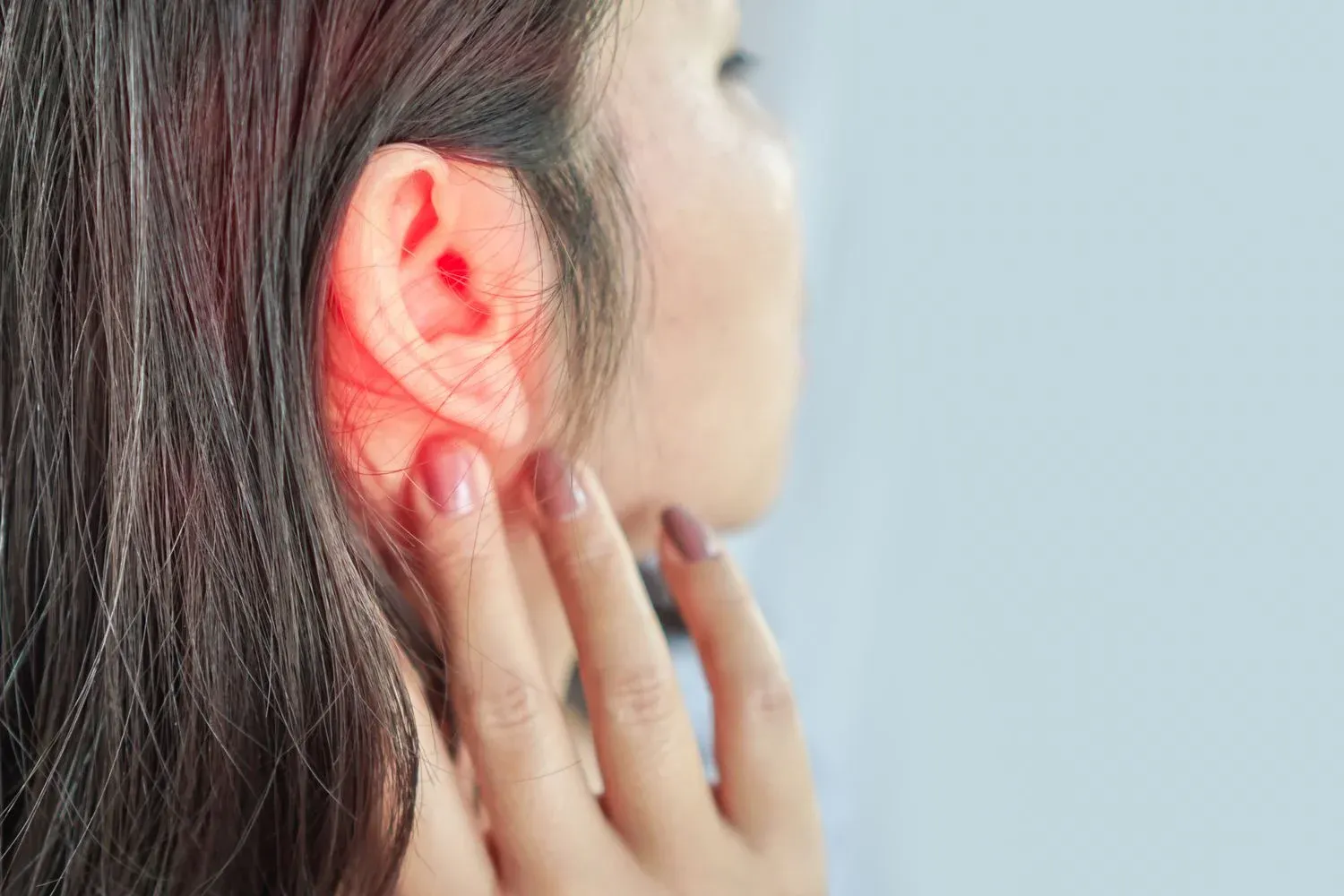
Ear Infection Treatment Dubai: Causes & Care

Child Fever: When to Worry & What to Do

Common Childhood Illnesses in Dubai: A Guide

Hearing Test Dubai: Complete Guide

Pediatrician Cost Dubai: What to Expect
ENT Doctor Dubai: Complete Guide
More in Pediatrics

© 2026 Doctors Clinic Diagnostic Center (DCDC), Dubai Healthcare City. Originally published at https://doctorsclinicdubai.ae/blog/child-ear-infection-signs-dubai. All rights reserved. Unauthorized reproduction is prohibited.